2025-12-09 07:06
BRUSSELS, Dec 9 (Reuters) - This year is set to be the world's second or third-warmest on record, potentially surpassed only by 2024'S record-breaking heat, the European Union's Copernicus Climate Change Service (C3S) said on Tuesday. The data is the latest from C3S following last month's COP30 climate summit, where governments failed to agree to substantial new measures to reduce greenhouse gas emissions, reflecting strained geopolitics as the U.S. rolls back its efforts, and some countries seek to weaken CO2-cutting measures. Sign up here. This year will also likely round out the first three-year period in which the average global temperature exceeded 1.5 degrees Celsius (2.7 degrees Fahrenheit) above the 1850-1900 pre-industrial period, when humans began burning fossil fuels on an industrial scale, C3S said in a monthly bulletin. "These milestones are not abstract – they reflect the accelerating pace of climate change," said Samantha Burgess, strategic lead for climate at C3S. Extreme weather continued to hit regions around the globe this year. Typhoon Kalmaegi killed more than 200 people in the Philippines last month. Spain suffered its worst wildfires for three decades because of weather conditions that scientists confirmed were made more likely by climate change. Last year was the planet's hottest on record. While natural weather patterns mean temperatures fluctuate year to year, scientists have documented a clear warming trend in global temperatures over time, and confirmed that the main cause of this warming is greenhouse gas emissions from burning fossil fuels. The last 10 years have been the 10 warmest years since records began, the World Meteorological Organization said earlier this year. The global threshold of 1.5 Celsius is the limit of warming which countries vowed under the 2015 Paris climate agreement to try to prevent, to avoid the worst consequences of warming. The world has not yet technically breached that target - which refers to an average global temperature of 1.5 Celsius over decades. But the U.N. said this year that the 1.5 Celsius goal can no longer realistically be met and urged governments to cut CO2 emissions faster, to limit overshooting the target. C3S's records go back to 1940, and are cross-checked with global temperature records going back to 1850. https://www.reuters.com/sustainability/cop/2025-will-be-worlds-second-or-third-hottest-year-record-eu-scientists-say-2025-12-09/

2025-12-09 07:05
PARIS, Dec 9 (Reuters) - French fund Eiffel Investment Group has raised 1.2 billion euros ($1.40 billion) for a new energy-focused fund, named Eiffel Energy Transition III, as Europe aims to get more financing for environmentally-friendly energy projects. "Eiffel is a key partner for renewable energy developers," said Fabrice Dumonteil, Chairman of Eiffel Investment Group. Sign up here. The energy-focused fund, named Eiffel Energy Transition III will provide short-term debt to green energy assets for example to finance their construction. Even though rising electricity costs have hindered the decarbonisation plans of some countries such as Britain, many governments and companies remain committed to investing more in projects such as hydrogen and solar power. ($1 = 0.8584 euros) https://www.reuters.com/sustainability/climate-energy/eiffel-investment-group-raises-12-bln-euros-new-energy-focused-fund-2025-12-09/

2025-12-09 07:03
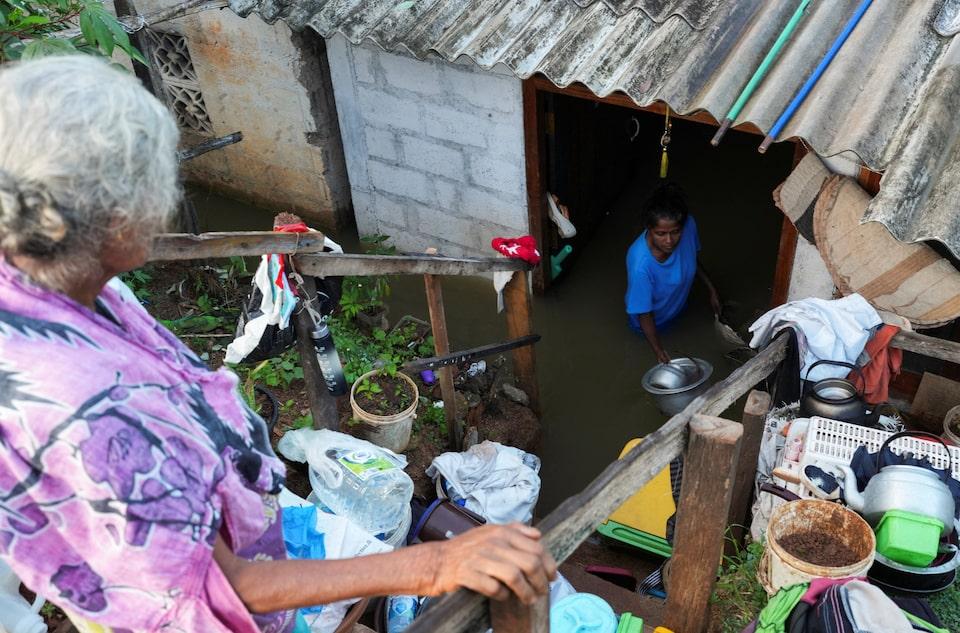
Ditwah devastates infrastructure, key crops like rice and tea Rebuilding costs could reach $7 billion, government estimates Official urges multilateral partners, donors to step in Tea, rice industries face losses, hits employment and exports COLOMBO, Dec 9 (Reuters) - Sri Lanka's fragile economic recovery will be delayed as Cyclone Ditwah's devastation of homes, roads and vital crops pushes more families into poverty, with officials warning the bill to rebuild could soar to $7 billion. The worst economic crisis in decades, which peaked in 2022, had already doubled Sri Lanka's poverty rate to nearly 25% of its 22 million people. A $2.9 billion IMF bailout sparked a tentative rebound, with growth seen at 4.5% this year, but analysts say growth will slow to about 3% in 2026 due to Ditwah. Sign up here. Striking in late-November, Ditwah is the country's deadliest natural disaster since the 2004 tsunami, killing 635 people and affecting about 10% of the population. It wrecked critical infrastructure and key crops such as rice and tea. "Cyclone Ditwah struck regions already weakened by years of economic stress," said Azusa Kubota, United Nations Development Programme (UNDP) Resident Representative in Sri Lanka. Recovery is likely to be slower and more costly in regions where high "flooding and high vulnerability overlap", she added. BIG REBUILDING BILL The rebuilding bill could hit $7 billion, said Prabath Chandrakeerthi, Sri Lanka's Commissioner General of Essential Services, urging multilateral partners and donors to step in. The government has sought $200 million in emergency funds from the IMF, which is reviewing the request. An IMF team will visit in January for a fresh assessment before releasing the sixth tranche of the original programme. New UNDP analysis shows cyclone floodwaters have inundated almost 20% of Sri Lanka's land area and an estimated 2.3 million people living in flooded areas. Sri Lanka cannot shoulder more debt for rebuilding, Kubota warned as she called on international partners for affordable financing to prevent the "country falling off the debt cliff". Analysts say reforms such as restructuring loss-making state firms may be delayed as Colombo prioritises cyclone recovery. DAMAGE TO TEA, RICE CROPS Sri Lanka's $5 billion apparel and $1.5 billion tea industries, together employing more than a million people, are reeling in the wake of the cyclone, with factories reporting low attendance for two weeks, industry officials said. "Due to rains, floods and soil erosion, tea output will fall by 3–4 million kilos in December," said Roshan Rajadurai, spokesperson for the Planters' Association. The country typically produces 20 million kg of tea in December, and 200 million to 250 million kg annually, which is exported to countries such as Iraq, Russia, and Turkey. Thousands of paddy farmers had just planted for the main cultivation season when the cyclone struck. The UN estimates 575,000 hectares of paddy have been destroyed, out of about 800,000 hectares nationwide. Floods wiped out irrigation canals and filled fields with silt and debris, said K.K.G. Thilakabandara, chairman of Sri Lanka's largest rice farming association. "Farmers don't have funds to replant," he said. "Authorities must act fast and release funds so crops can be replanted. Otherwise, there is no hope for farmers to recover their crop and finances." https://www.reuters.com/business/environment/cyclone-ditwah-delay-sri-lankas-fragile-recovery-worsen-poverty-2025-12-09/
2025-12-09 06:33
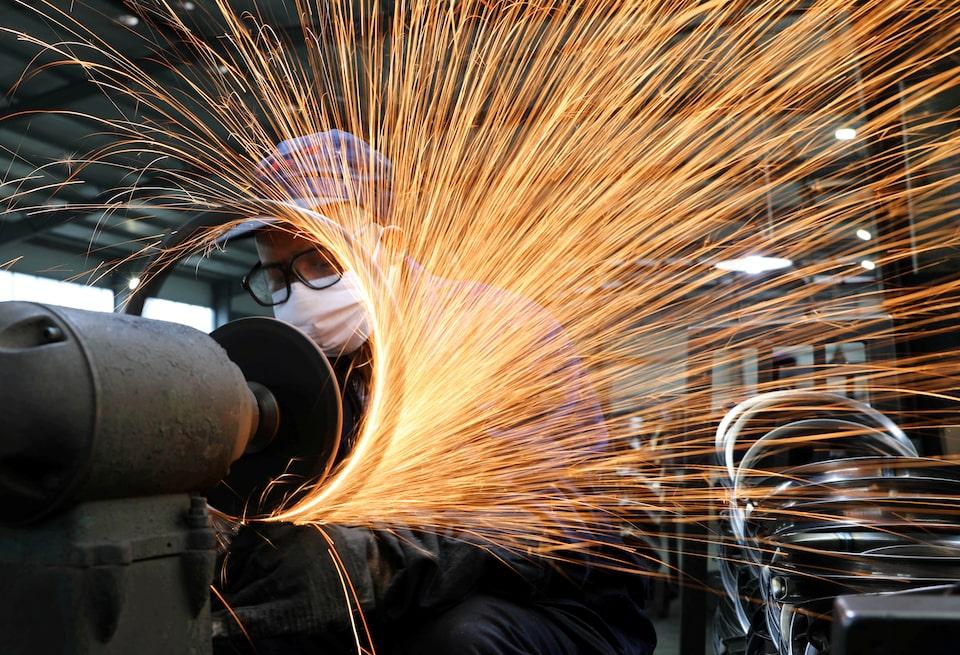
LAUNCESTON, Australia, Dec 9 (Reuters) - China's exports of steel products have surged this year as domestic demand - particularly from property development - slumps, while those of aluminium have tumbled on rising activity from the manufacturing and energy sectors. China produces more than half of the world's steel and aluminium. But in an effort to rein in overcapacity, Beijing has set informal production ceilings, which both sectors are likely to brush up against. Sign up here. Steel production is informally capped at no more than the previous year's 1.005 billion metric tons, and given production for the first 10 months of the year was 817.87 million tons, it's likely that 2025 output will dip below 1 billion tons, the first time this has happened since 2019. Ongoing weakness in the property construction sector is blamed for soft steel demand, and mills have tried to compensate by exporting more. China's exports of steel products rose 6.7% to 107.72 million tons in the first 11 months of the year compared to the same period in 2024, according to customs data released on Monday. Assuming December exports are around the average for the year, it would mean China's steel shipments will be in the region of 117 million tons, which would mark a record high, eclipsing the 112.39 million tons from 2015. Exports currently make sense for steel mills, as domestic prices are languishing near five-year lows, with Shanghai exchange rebar ending at 3,128 yuan ($442.43) a ton on Monday, having traded mostly sideways since a low of 3,012 yuan hit in early June. Chinese steel is priced competitively against other benchmarks, with LME contracts on Turkish rebar ending at $560.50 a ton last week. China has managed to boost steel exports despite several countries placing tariffs on imports in order to protect domestic producers. It should be noted that much of China's steel heads to other Asian countries, especially those with limited domestic steel production, meaning it makes economic sense to purchase cheaper Chinese steel products. ALUMINIUM SLUMP In contrast to steel's export growth, China's shipments of refined aluminium and products have dropped, with exports for the first 11 months of the year falling 9.2% to 5.59 million tons. China's aluminium production is expected to come in very close to the 45 million ton annual cap, and more demand from the country's manufacturing and energy sectors has meant there is less available metal for export. The loss of Chinese aluminium in global markets lifted benchmark London prices to $2,920 a ton on December 5, the highest since May 2022. The contract has jumped 27% since its 2025 low of $2,300 in early April. Rising prices have given some reprieve to Western-based smelters, which have struggled to remain competitive in recent years, especially those in Europe and Australia that have faced rising energy costs. If Beijing keeps the annual aluminium output cap at 45 million tons, it's likely to tighten global supplies further in 2026. The question is whether China's steel sector is likely to follow in aluminium's footsteps. If the assumption is that Beijing will limit annual steel production to a maximum of 1 billion tons, it will depend on how quickly domestic demand recovers. As long as construction remains a drag, it's likely that China's steel mills will continue to try to export their way to profitability, or lower capacity through retiring old furnaces. Enjoying this column? Check out Reuters Open Interest (ROI), your essential new source for global financial commentary. ROI delivers thought-provoking, data-driven analysis of everything from swap rates to soybeans. Markets are moving faster than ever. ROI can help you keep up. Follow ROI on LinkedIn , opens new tab and X , opens new tab. The views expressed here are those of the author, a columnist for Reuters. https://www.reuters.com/markets/commodities/china-steel-exports-surge-aluminium-shipments-slide-2025-12-09/
2025-12-09 06:29
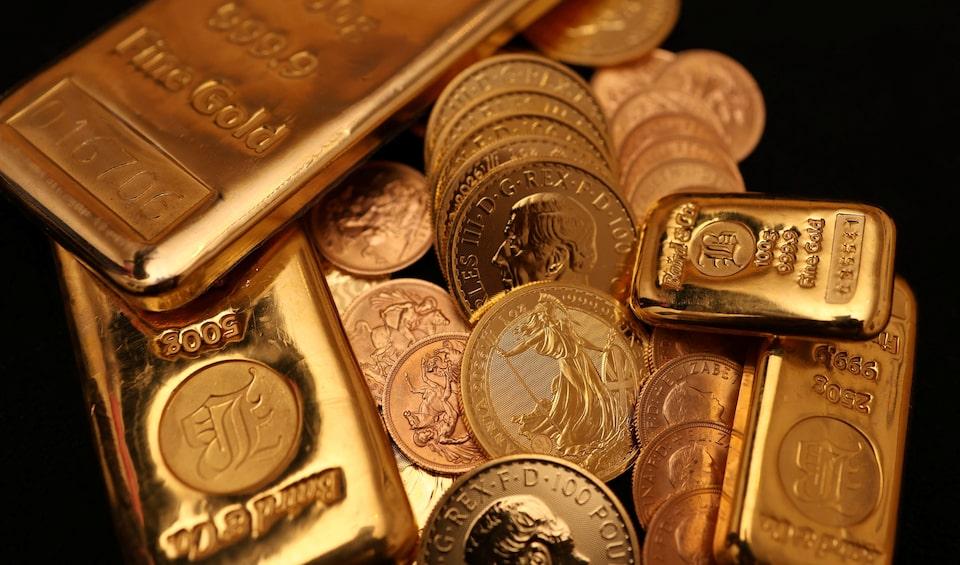
Silver hits all-time high of $60.74/oz FOMC policy meeting on December 9-10 Traders see 87.4% chance of a December rate cut Data shows U.S. job openings increased marginally in October Dec 9 (Reuters) - Gold gained on Tuesday as traders remained optimistic ahead of the U.S. Federal Reserve's interest rate decision, while silver rose to hit an unprecedented $60 per ounce milestone amid supply constraints. Spot gold rose 0.6% to $4,211.77 per ounce by 03:21 p.m. ET (2021 GMT). U.S. gold futures for February delivery settled 0.4% higher at $4,236.2 per ounce. Sign up here. Spot silver climbed 4.3% to $60.74 per ounce, hitting an all-time high. "People are anticipating that there's going to be strong industrial demand for silver for years to come, which is why it's been bid up, the silver price," said Fawad Razaqzada, market analyst at City Index and FOREX.com, adding that the buying momentum is strong at the moment. Sectors including solar energy, electric vehicles and their infrastructure, and data centers and artificial intelligence will drive industrial demand higher through 2030, the Silver Institute industry association said in a research report. Silver prices have also been supported by persistently low supplies and dwindling global inventories, expectations of the Fed easing interest rates, as well as its recent addition to the U.S. critical minerals list. "Metals are volatile by nature, but unless we fix the deficit, silver only has one way to go, and that is up," said Maria Smirnova, senior portfolio manager and chief investment officer at Sprott Asset Management. On the U.S. policy front, the Fed's two-day meeting ends with a decision on Wednesday. Traders now see an 87.4% chance of a 25-basis-point cut this week. "The move in gold right now is attributed to the big spike in silver and the high expectations for another quarter-point cut," said RJO Futures senior market strategist Bob Haberkorn. Meanwhile, the U.S. Labor Department's JOLTS report showed job openings rose to 7.67 million in October, beating forecasts of 7.15 million, indicating a strong labor market. Gold has shrugged off the jobs report, Haberkorn said, adding "we could see silver trade over $70 an ounce in the first half of 2026, and gold is on a path towards $5,000 an ounce." Platinum gained 2.8% to $1,688.39/oz, while palladium rose 2.6% to $1,503.74/oz. https://www.reuters.com/world/india/gold-prices-steady-markets-brace-hawkish-fed-tone-2025-12-09/
2025-12-09 06:20
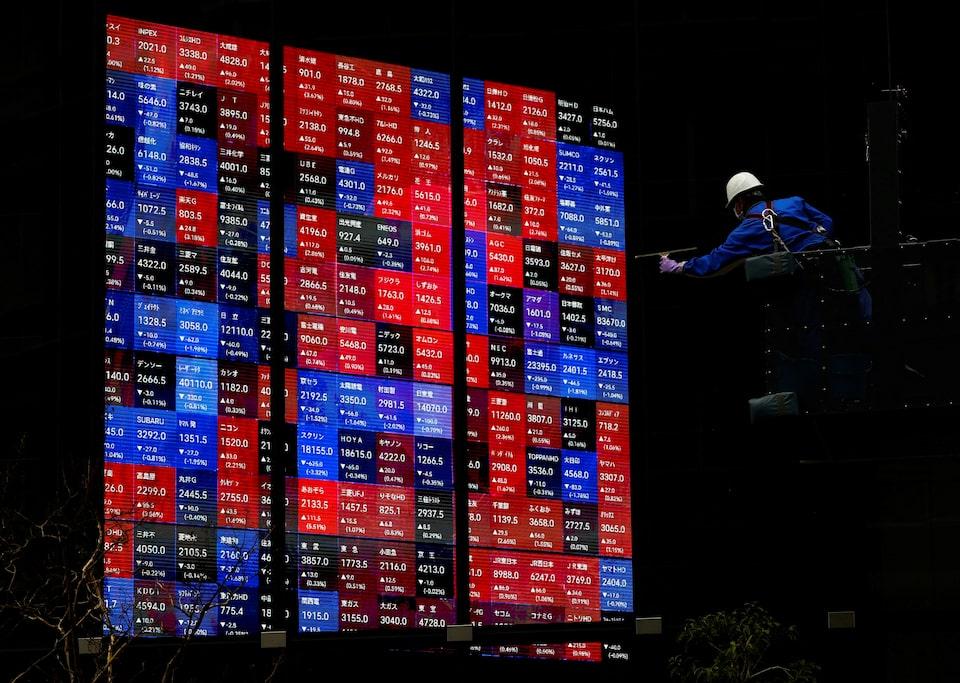
Investors consider Nvidia decision Investors cautious ahead of central bank meetings Fed rate cut all but certain, focus moves to outlook NEW YORK, Dec 9 (Reuters) - Most major stock indexes dipped, while the dollar and U.S. Treasury yields edged higher on Tuesday before a likely interest rate cut from the Federal Reserve but also possibly hawkish comments from policymakers. Treasury yields and the dollar gained after the release of U.S. labor market data, which showed U.S. job openings increased modestly in October while hiring remained subdued. Sign up here. The Fed is widely expected to announce on Wednesday a rate cut, but investors expect policymakers to remain divided. Some policymakers have warned that price pressures could easily pick up again, while others have been more concerned about the labor market's health. "It's the quiet before the storm. We have a big Fed meeting tomorrow - a big catalyst," and so it is normal to have mild market moves right now, said Adam Sarhan, chief executive of 50 Park Investments in New York. Earlier, the Reserve Bank of Australia held rates steady as expected on Tuesday. More notably, however, it ruled out further policy easing and warned that rates could move higher if inflation pressures prove stubborn. The Australian dollar advanced 0.3% to US$0.6641. The Bank of Canada and Swiss National Bank are both expected to hold rates steady when they meet on Wednesday and Thursday, respectively. Investors also digested news that Washington will allow Nvidia's (NVDA.O) , opens new tab H200 processors, its second-best artificial intelligence chips, to be exported to China, collecting a 25% fee on such sales. Shares of Nvidia were down 0.3%. Shares of JPMorgan Chase (JPM.N) , opens new tab fell 4.7%. JPMorgan Chase's consumer and community banking chief Marianne Lake said the bank expects expenses to climb to The Dow Jones Industrial Average (.DJI) , opens new tab fell 179.03 points, or 0.38%, to 47,560.29, the S&P 500 (.SPX) , opens new tab fell 6.00 points, or 0.09%, to 6,840.51 and the Nasdaq Composite (.IXIC) , opens new tab rose 30.58 points, or 0.13%, to 23,576.49. MSCI's gauge of stocks across the globe (.MIWD00000PUS) , opens new tab fell 1.60 points, or 0.16%, to 1,006.44. The pan-European STOXX 600 (.STOXX) , opens new tab index eased 0.1%. OUTLOOK FOR RATES The dollar index , which measures the greenback against a basket of currencies including the yen and the euro, rose 0.15% to 99.22. Investors are also thinking about the outlook for rates in 2026, not just with the Fed but outside the United States. "A hawkish repricing is rolling across curves elsewhere - rate hikes are getting priced in for Australia, Canada, and the euro zone in 2026 - so the dollar could come under pressure if (Fed Chair Jerome) Powell fails to out-hawk markets," said Karl Schamotta, chief market strategist, at Corpay in Toronto. In the Treasury market, the yield on the benchmark U.S. 10-year Treasury note rose 1.4 basis points to 4.186% after hitting a session low of 4.141% and was on pace for its first four-session streak of gains in five weeks. Oil prices fell as investors focused on Russia and Ukraine peace talks. Brent crude futures fell 55 cents, or 0.88%, to settle at $61.94 a barrel. U.S. West Texas Intermediate crude fell 63 cents, or 1.07%, to $58.25. Also in the foreign exchange market, the yen was softer. It weakened immediately in the wake of a powerful earthquake that rocked Japan on Monday. https://www.reuters.com/world/china/global-markets-wrapup-1-2025-12-09/