2025-10-17 09:15
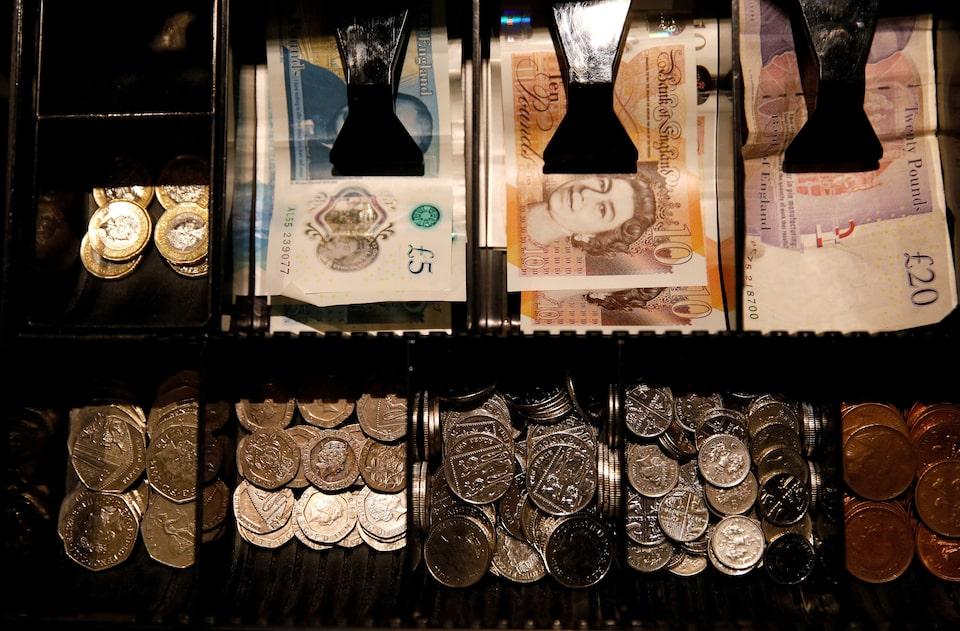
LONDON, Oct 17 (Reuters) - Sterling fell on Friday, as investors rushed to safe-haven currencies like the Swiss franc and Japanese yen in light of growing anxiety over the outlook for the U.S. economy, regional banks and global trade tensions. The pound fell 0.13% to $1.34225, though it was still headed for a weekly rise of 0.7%. Against the Swiss franc , the pound fell 0.5% to 1.0594 francs, its weakest since late 2022. Sign up here. The dollar came under broad pressure, partly from investors seeking what they perceive to be a safer alternative currency, but also from the expectation that the Federal Reserve will need to cut rates by a percentage point in the coming six months. A government shutdown has cut off the supply of key data releases, but other metrics are pointing to a slowing labour market and more muted economic activity. The British economy, meanwhile, just about managed to return to growth in August, offering finance minister Rachel Reeves some relief ahead of her budget that is due in late November. That said, the International Monetary Fund said this week that Britain's economy was on course to have the second-fastest growth among the Group of Seven nations in 2025, after the United States, and the Bank of England should be cautious in its approach to rate cuts. The BOE, which is juggling persistent inflation with meagre economic growth, is not expected to cut rates again until at least February or March. "With a sparse UK calendar today, sterling's path will depend on U.S. speaker tones and any Bank of England observations amid looming fiscal budget preparations," strategists at Monex said. A slower pace of cuts from the BOE has provided support to sterling, which is up by nearly 7.5% against the dollar this year. Yet deep-seated concern among investors about the ability of Reeves to keep Britain's finances on track have tempered gains and weighed on the government bond market this year. Her November budget is expected to bring with it more tax increases and spending cuts, which in turn may stifle things like consumer spending and business activity. https://www.reuters.com/world/uk/pound-struggles-investors-flock-safe-havens-2025-10-17/
2025-10-17 08:27
LONDON, Oct 17 (Reuters) - Shares of Man Group (EMG.L) , opens new tab hit a six-month high on Friday, after the hedge fund posted a 22% increase in assets under management to a record $213.9 billion in the 12 months to September 30, beating expectations, over a year of intense market volatility. Analysts had expected a rise in assets to $201.7 billion, according to Jefferies (JEF.N) , opens new tab. Sign up here. Shares in Man Group were recently up 2.6% in London, at their highest point since early April. Man Group took in $10 billion of investment performance, a 177% jump from the previous quarter, accounting for half of the capital that was added to its assets under management since the second quarter of 2025. "It was a big quarter for net flows, easily exceeding our - or market - expectations," Rae Maile, a research analyst at broker Panmure Liberum, said. "Importantly there was no 'one big win' in this quarter, but (there is) evidence of continued strong growth in areas which the company did not play in a few years ago, most notably credit," Maile said. Assets under management (AUM) include a combination of new client flows, performance and leverage. Man Group, which operates a host of different strategies and funds, posted its strongest performance in its long-only strategies. These funds trade emerging and developed markets equities and bonds, only betting that these assets will rise in value. Man Group's systematic long-only funds added $4.8 billion in investment performance and saw $6.5 billion in new client cash. Hedge fund returns so far this year show a stark divide between those that have been able to navigate U.S. President Donald Trump's erratic decision making and switch tactics quickly and those hemmed in by algorithmic strategies. Systematic hedge funds, whose algorithms ride market trends until they peter out, have clawed back earlier losses, but are still down around 2% for the year to September-end, according to a Societe Generale report this week. Hedge funds tracked by research firm PivotalPath, which covers the wider industry, returned over 8% in the nine months to the end of September. https://www.reuters.com/business/finance/man-group-shares-jump-assets-under-management-rise-22-record-2025-10-17/
2025-10-17 07:09
Oil prices set for weekly loss, IEA forecasts rising glut Trump and Putin plan summit on Ukraine, cease-fire halts fighting in Gaza Concerns mount over economic slowdown, lower energy demand HOUSTON, Oct 17 (Reuters) - Oil prices managed small gains on Friday but were headed for a weekly loss of nearly 3% after the IEA forecast a growing glut and U.S. President Donald Trump and Russian President Vladimir Putin agreed to meet again to discuss Ukraine. Brent crude futures settled at $61.29 a barrel, up 23 cents, or 0.38%. U.S. West Texas Intermediate futures finished at $57.54 a barrel, up 8 cents, or 0.14%. Sign up here. Trump and Putin agreed on Thursday to another summit on the war in Ukraine, to be held in the next two weeks in Hungary. That comes on top of a cease-fire agreement ending, at least temporarily, the fighting in Gaza between Israel and Hamas. was headed to the White House on Friday to push for more military support, including U.S.-made long-range Tomahawk missiles, while Washington pressured India and China to stop buying Russian oil. "We've had the once-in-a-generation peace deal in the Middle East, Iran is neutralized and now Ukraine; an unprecedented amount of risk has come out of the market," said Phil Flynn, senior analyst with Price Futures Group. This week's decline was also partly due to rising trade tensions between the U.S. and China, which added to concerns about an economic slowdown and lower energy demand. "It just demolishes confidence," said Jorge Montepeque, managing director at Onyx Capital Group, who expects the U.S. economy will quickly be affected. On Friday, a fire overnight at BP Plc's (BP.L) , opens new tab Whiting, Indiana, refinery was expected to affect only the Midwest market, Flynn said. Patrick DeHaan, head of petroleum analysis for GasBuddy, said the market around the Great Lakes was expected to jump. "Great Lakes spot gasoline prices spiking on the BP refinery fire overnight, could lead to prices cycling soon," DeHaan posted on X. "For now, wholesale prices pointing to about a 20 cent a gallon rise." Limiting crude prices was the International Energy Agency's outlook for a growing supply glut in 2026. The U.S. Energy Information Administration said on Thursday that U.S. crude inventories increased by 3.5 million barrels last week, to 423.8 million barrels, compared with analysts' expectations in a Reuters poll for a 288,000-barrel rise. The bigger-than-expected build in crude inventory was largely due to lower refining utilization as refineries go into autumn turnarounds. The data also showed a rise in U.S. production to 13.636 million barrels per day, the highest on record. https://www.reuters.com/business/energy/oil-set-weekly-loss-trump-putin-summit-looms-2025-10-17/
2025-10-17 07:05
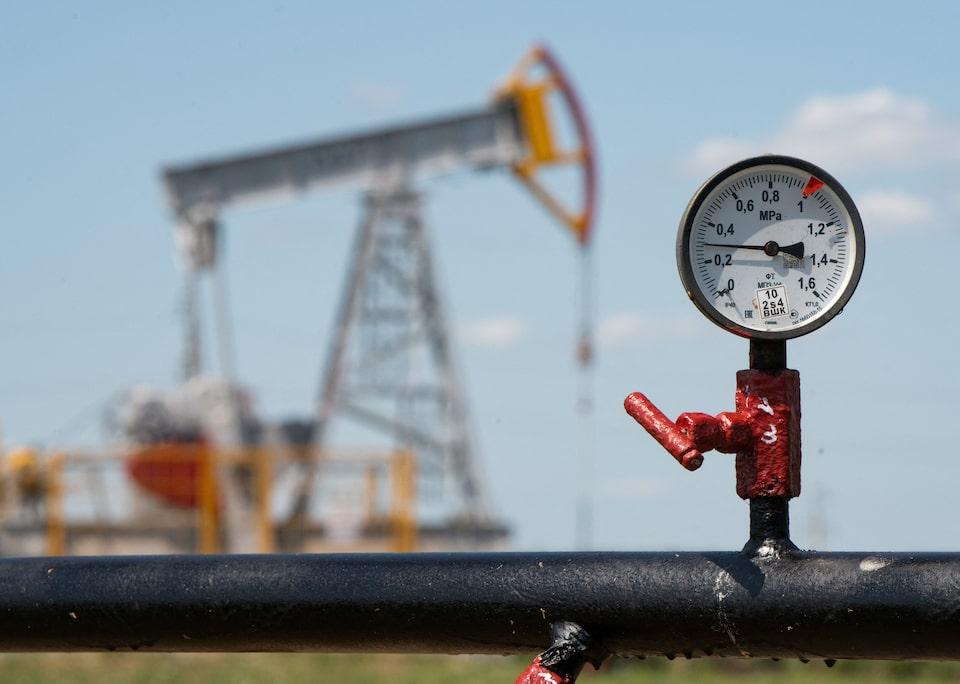
Oct 17 (Reuters) - Oilfield services provider Petrofac (PFC.L) , opens new tab said on Friday its ongoing restructuring would leave existing shareholders with no residual value, as it moves to complete the process by November-end. Petrofac is restructuring its finances under pressure from rising costs and delayed payments, a move that reflects wider challenges facing oilfield service firms in a volatile energy market. Sign up here. It said its chosen restructuring route, aimed to support operational capability and ongoing delivery, is progressing well, with a lock-up agreement expected shortly. The company develops and operates infrastructure for oil, gas, refining, petrochemicals, and renewable energy. In its October 1 update, Petrofac had said it was pursuing multiple restructuring routes, some potentially leaving shareholders with no residual value, and that the final path would be determined by creditor input. https://www.reuters.com/business/energy/uks-petrofacs-restructuring-plan-leave-shareholders-empty-handed-2025-10-17/

2025-10-17 07:02
LONDON, Oct 17 (Reuters) - The U.S. government shutdown extends into another week, earnings season is in full swing, U.S.-China trade tensions are high, and there's plenty of data to mull over. Japan's parliament, meanwhile, may vote on a new prime minister, and an election in Bolivia has ended almost 20 years of leftist rule. Sign up here. Here's all you need to know about the week ahead in world markets by Lewis Krauskopf in New York, Rocky Swift in Tokyo and Amanda Cooper, Naomi Rovnick and Marc Jones in London. 1/ US EARNINGS, INFLATION UPDATE ON WAY U.S. corporate earnings rev up, with Tesla (TSLA.O) , opens new tab and Netflix (NFLX.O) , opens new tab, while this week will end with a delayed U.S. inflation release. After major banks kicked off Q3 earnings, this week sees reports from an array of industries, including consumer companies Procter & Gamble (PG.N) , opens new tab and Coca-Cola (KO.N) , opens new tab, aerospace and defence giant RTX (RTX.N) , opens new tab and tech stalwart IBM (IBM.N) , opens new tab. Investors have also been confronting a government data blackout due to the federal shutdown that began on October 1. While key data including the monthly employment report have been delayed, the government plans to publish September CPI numbers on Friday, allowing the Social Security Administration to meet deadlines related to payment of benefits. The CPI release comes just ahead of the Federal Reserve's October 28-29 meeting, when the central bank is widely expected to cut rates by a quarter percentage point. 2/ BIG MOMENT FOR TAKAICHI Japanese markets await an expected parliamentary vote this week that may spur another leg up in a record stocks run. The blue-chip Nikkei hit all-time highs after Sanae Takaichi, a devotee of the "Abenomics" stimulus policies of the late Shinzo Abe, won a ruling Liberal Democratic Party election on October 4. After a rift with a long-time coalition party, Takaichi and the LDP last week sought a new partner in the right-leaning Japan Innovation Party, known as Ishin. On Monday, Ishin leader Hirofumi Yoshimura said the two sides would formalise a coalition deal, ahead of a vote in parliament on Tuesday to decide the next prime minister. Not surprisingly, the Nikkei is back at record highs. 3/ EARLY WARNING SIGNS It has been six months since U.S. President Donald Trump unveiled his "Liberation Day" tariffs. There are trade deals in place and investors and companies have some certainty. Or at least, they did until recently. Tensions have been flaring again between Washington and Beijing, prompting tit-for-tat fees on cargo ships and ports and a tightening on two-way supplies of key tech-sector materials and parts, though there has been some more conciliatory rhetoric in recent days. Europe hasn't yet seen evidence of the big spending that national governments, led by Germany, promised earlier this year. China, where growth is slowing too, holds a closed-door meeting of its leaders starting Monday. The upcoming surveys of business activity for Germany, France, the UK, the U.S. and the euro zone, among other regions, in October could start to reflect some of that renewed angst. 4/ STILL HIGH UK INFLATION? UK inflation data this week could be pivotal for Britain's gilt markets, sterling and finance minister Rachel Reeves' ability to limit unpopular tax hikes and spending cuts in her November 26 budget. With Britain's fiscal hole widening because of surging debt payments, Wednesday's September consumer prices report could fuel rate cut bets and offer Reeves some relief if the annualised print comes below the Bank of England's 4% forecast. But a higher-than-expected increase could keep the BoE cautious and Britain's finances looking precarious, in a threat to sterling's recent strong run against the dollar. Gilt markets are exhibiting optimism so far, with UK borrowing costs falling to over two-month lows as traders priced a 90% probability of a quarter-point rate cut by February. 5/ VOTING AND VULTURES Centrist Rodrigo Paz has won Bolivia's presidential runoff, defeating conservative rival Jorge "Tuto" Quiroga, as the country's worst economic crisis in a generation helped propel the end of nearly two decades of leftist rule. The debt market vultures will be watching closely. The economy is in deep disarray, with inflation running at nearly 25%, fuel shortages rife and the country's foreign exchange reserves now barely covering two months of basic imports. Paz has advocated a gradualist approach, fully aware of the country's long history of violent unrest at times of economic pain. His moderate platform — pledging to maintain social programmes while promoting private sector-led growth — appeared to resonate with left-leaning voters disillusioned by the ruling Socialists. https://www.reuters.com/business/take-five/global-markets-themes-takealook-2025-10-17/

2025-10-17 06:36
Russian oil a top irritant in US-India trade talks India has pledged to boost US energy purchases India could cut Russian oil imports from Dec-Jan, sources say India is biggest buyer of Russian seaborne oil US says Russia uses oil revenue to fund war in Ukraine WASHINGTON/NEW DELHI, Oct 17 (Reuters) - India has halved its purchases of Russian oil, a White House official said, but Indian sources said no immediate reduction had been seen, as President Donald Trump's administration presses New Delhi and other nations to buy less Russian crude. Russian oil is a main irritant for Trump in prolonged trade talks with India - half of his 50% tariffs on Indian goods are in retaliation for those purchases. His administration says Moscow is using petroleum revenue to fund its war in Ukraine. Sign up here. The White House official told Reuters on Thursday that talks with an Indian delegation in Washington this week have been productive and that Indian refiners were already cutting Russian oil imports by 50%. But Indian industry sources said on Friday that New Delhi had not informed refiners of any request to cut Russian imports. TRUMP SAYS MODI PLEDGED TO HALT RUSSIAN OIL PURCHASES Refiners have already placed orders for November loading, including some cargoes for December arrival, so any cut could be visible in December or January import numbers, said the sources, who asked not to be identified as they were not authorised to speak to the media. Indeed, India's imports of Russian oil are set to rise about 20% this month to 1.9 million barrels per day, according to estimates from commodities data firm Kpler, as Russia ramps up exports after Ukrainian drones hit its refineries. The Indian oil ministry and refiners that buy Russian oil did not immediately respond to Reuters requests for comment. Trump said Prime Minister Narendra Modi had assured him on Wednesday that India would stop buying Russian oil. India's foreign ministry did not respond to Trump's assertion except to say it was not aware of any telephone conversation between the two leaders that day. Still, India's oil minister on Thursday sought data on Russian oil imports from all the refiners, including their loadings and arrivals tied up for November and December. Oil prices fell on Friday, with Brent crude futures down 48 cents, or 0.79%, to $60.58 a barrel at 0720 GMT, amid uncertainty over global supply as Trump and Russian President Vladimir Putin prepared to discuss ending the war. US-INDIA TRADE TALKS HAVE FLOUNDERED India has become the biggest buyer of seaborne Russian oil sold at a discount after Western nations shunned purchases and imposed sanctions on Moscow for its 2022 invasion of its neighbour. New Delhi initially hoped to secure a quick trade deal with the U.S. due to Modi's warm relationship with Trump, but the talks have floundered and the president has slapped some of the highest levies in his global tariff regime on India's products. When Modi visited Trump in February, India pledged to more than double its annual U.S. energy purchases to $25 billion, with both nations targeting $500 billion in bilateral trade by 2030. U.S. negotiators have said curbing India's Russian crude purchases would be crucial to reducing its tariff rate and sealing a trade deal. Indian refiners are looking to buy at least 10% of their liquefied petroleum gas needs from the U.S. to help narrow India's bilateral trade surplus, sources told Reuters this week. Russia accounted for 36% of India's oil imports, some 1.75 million barrels per day, in the six months through September, trade data shows. Moscow said on Thursday it was confident its energy partnership with India would continue. Kremlin spokesman Dmitry Peskov said Russia could supply oil more cheaply to countries that Trump is trying to persuade to stop buying Russian oil. https://www.reuters.com/business/energy/india-already-cutting-russian-oil-imports-by-50-after-us-talks-white-house-2025-10-16/