2025-10-17 06:35
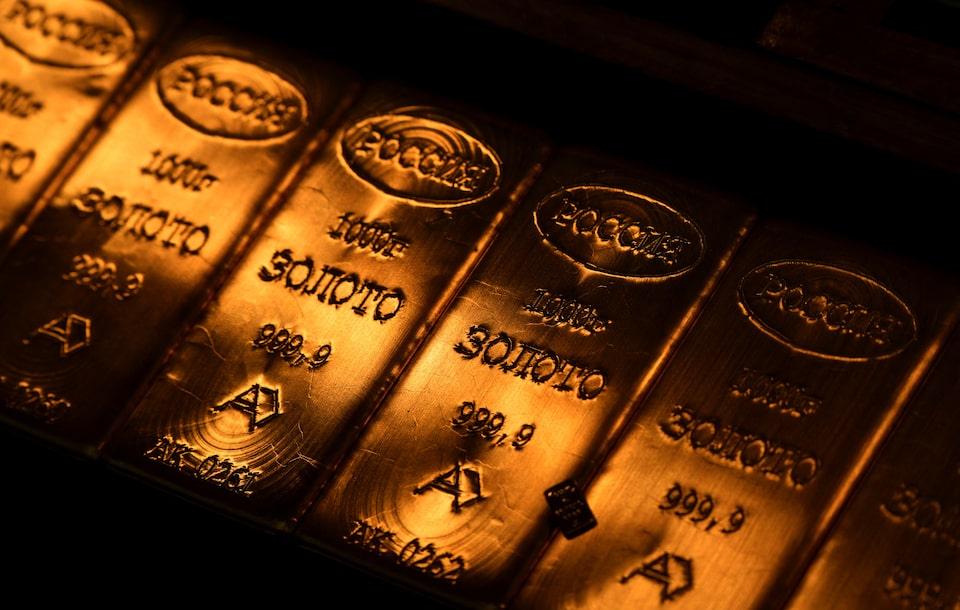
Trump says 100% tariffs on China not sustainable Gold is up about 7.2% so far this week Silver hits record high of $54.47/oz SPDR gold trust holdings hit highest level since July 2022 Oct 17 (Reuters) - Gold prices fell on Friday after notching a record high above the $4,300 an ounce level earlier in the session, after U.S. President Donald Trump said his proposed 100% tariff on goods from China would not be sustainable. Spot gold fell 0.4% to $4,309.63 per ounce, as of 1237 GMT, after scaling another record high of $4,378.69 earlier in the session. U.S. gold futures for December delivery was up 0.4% to $4,320.70. Sign up here. Gold has gained about 7.2% so far this week. Earlier in the session, gold had temporarily been on track for its biggest gain since September 2008 when the collapse of Lehman Brothers fuelled the global financial crisis. Wall Street futures trimmed losses on Friday after Trump confirmed that his meeting with Chinese President Xi Jinping was still on, easing investor concerns over worsening trade tensions between the two largest economies. "Equity indices have bounced off their lows on the back of a couple of bullish-looking comments from Donald Trump... we've seen gold prices come down a little bit on the back of those comments," said Fawad Razaqzada, market analyst at City Index and FOREX.com. Gold is traditionally considered a hedge during times of uncertainty and thrives in a lower interest rate environment. U.S. Federal Reserve Governor Christopher Waller voiced support for another rate cut. Investors expect a 25-basis-point reduction at the Fed's October 29-30 meeting and another reduction in December. Bullion has surged over 64% this year, driven by geopolitical tensions, rate cut bets, central bank buying, de-dollarisation and robust exchange-traded-fund inflows. "I believe resilient and huge ETF flows are pulling prices up," said Michael Haigh, global head of commodities research at Societe Generale. HSBC raised its 2025 average gold price forecast by $100 to $3,455 per ounce, and projected gold to reach $5,000 an ounce in 2026, supported by elevated risks. Spot silver fell 1.7% to $53.32 per ounce, after hitting a record high of $54.47, tracking the rally in gold and a short squeeze in the spot market. Platinum fell 3.9% to $1,646.50 and palladium lost 4.4% to $1,542.10. https://www.reuters.com/world/india/gold-rallies-beyond-4300oz-set-best-week-five-years-2025-10-17/
2025-10-17 06:35
Russia intensifies attacks on Ukrainian power sector Prolonged power cuts are becoming more common in many areas Nurseries in Chernihiv operate without heating Ukraine braces for tough winter as temperatures start to drop CHERNIHIV, Ukraine, Oct 17 (Reuters) - Ukrainian cook Natalia Meshok leaves home at 2 a.m. for the nursery where she works, using night-time hours when power supply is more or less stable to prepare food for dozens of children. Meshok, 59, lives and works in the northern city of Chernihiv, which has been hammered by repeated Russian drone and missile attacks on its power infrastructure in recent weeks, causing regular blackouts and disrupting daily life. Sign up here. "Completely empty and dark. It's a bit scary, but you realise you have to go because there are children here," she said, standing in a dark kitchen where pots of food rested on the stove ready to be served when the kindergarten opened. Chernihiv was one of the first cities to feel the brunt of intensifying Russian strikes on electricity and gas facilities across Ukraine, including in the capital Kyiv where hundreds of thousands of households lost power after an Oct. 10 attack. RUSSIA TAKES AIM AT POWER SECTOR, HEATING Officials say the frequency and accuracy of such attacks have increased during the last two months, leading some to predict a particularly hard 2025/26 winter as the war approaches its fourth anniversary. "We are preparing for various scenarios, including the worst-case ones," energy minister Svitlana Hrynchuk said just before the Oct. 10 attack. President Volodymyr Zelenskiy said Russia launched 3,100 drones and 92 missiles at Ukraine in just one week starting on Oct. 6. Russia denies targeting civilians, saying that its objective is to degrade Ukraine's military capabilities. Meshok was glad the electricity lasted longer than the usual couple of hours that night, meaning that she and her fellow cooks managed to prepare lunch for the children - aged from 2 years and up - as well as breakfast. "Do you know why children are in the nursery? Because their parents are working. No one has cancelled that. They need to go to work," said Yevheniia Savchenko, director of the nursery, a municipal facility. It had been raining in Chernihiv for almost a week when Reuters visited in early October, and the temperature in the nursery was 14 degrees Celsius (57 F). The basement, which doubles as an air raid shelter, was slightly warmer. Savchenko said she did not know when the heating would be turned on. In peacetime, Ukraine provided heating to state facilities in time for the so-called "heating season" that starts in mid-October when temperatures typically begin to drop. MANY CHILDREN KEPT AT HOME FOR WARMTH Frequent air raid sirens mean the children at Chernihiv's kindergarten No. 72 spend much of their days in the basement, playing, singing and eating. At one point the brightly lit space was plunged into darkness, prompting excited shouts from some of the toddlers, before a generator kicked in and the lights came back on to cheers. The generator can provide light, but not heating. Savchenko said only about 65 children were attending the kindergarten out of a total of 170 registered there. "As long as there is no lighting and no heat, they (some parents) try to keep the child at home, because there they can heat the room a little with gas," she said. HITS TO POWER GENERATION, ELECTRICITY TRANSMISSION, GAS Russia has been targeting Ukraine's energy system throughout the war, and this autumn it has hit both power generation and electricity transmission systems, as well as gas production facilities. Earlier this month, Russian forces struck Ukraine's main gas fields, and the energy minister, Hrynchuk, said "significant" damage could force Kyiv to increase its gas imports by a third. Ukraine, which says it does not attack civilian infrastructure, has in turn stepped up attacks on Russian oil refineries, causing a drop in oil processing and creating fuel shortages in many regions. During the heating season, Ukraine uses gas mainly for the centralised urban heating system that is left over from Soviet times, without which millions would be living in cold homes as temperatures outside frequently drop below freezing. If that system is unable to function fully, the electricity supply will not be able to compensate. Some politicians are urging city dwellers to find winter accommodation in villages where they can use direct natural gas supplies to households or wood for heating. There have been such warnings in previous years. But this year the energy minister announced for the first time since the war began in February 2022 that the government is prepared to restrict gas supplies to the population if needed, not just electricity. "They want to break us, but just as Ukraine is not broken, neither are Ukrainians," Meshok said of the Russians. "We will endure ... and we will prevail, without fail. Faith in the future is essential. Because if there is no faith in the future, then what is the point of our endeavours?" https://www.reuters.com/world/europe/russia-pounds-ukraines-power-supply-one-nursery-battles-provide-food-warmth-2025-10-17/

2025-10-17 06:33
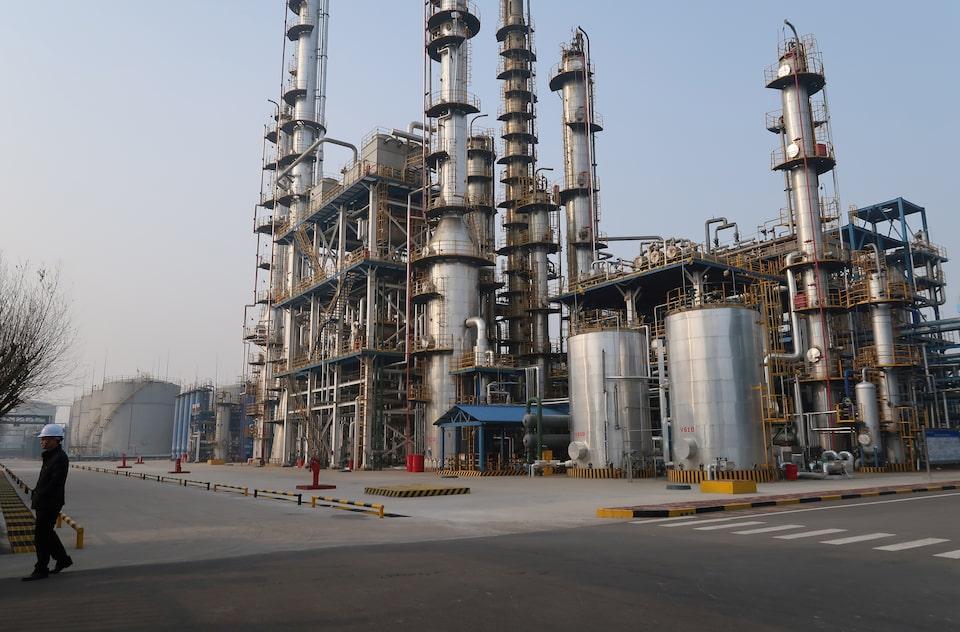
SINGAPORE, Oct 17 (Reuters) - China has approved another three biofuel refiners to export sustainable aviation fuel (SAF) by issuing them quotas, according to trade sources and a Chinese consultancy, a move that could see exports to Europe increase. While Europe, the world's second-largest aviation fuel market, has yet to set a mandate for the usage of greener fuel, Chinese biofuel firms are building more SAF plants and targeting the continent as a top export destination. Sign up here. China's Ministry of Commerce, which is responsible for quota issues, did not immediately respond to a Reuters request for comment. Shandong Haike Chemical, Shandong Sanju Bioenergy and Bain Capital-backed EcoCeres were awarded export quotas for a total of 788,000-828,000 metric tons a year, according to three industry and trade sources, and Chinese commodities consultancy JLC in a report. Shandong Sanju Bioenergy was allotted around 158,000 tons and Shandong Haike Chemical 370,000 tons, while EcoCeres received 260,000-300,000 tons of export permits, the sources and JLC said. This brings the total amount of SAF quotas issued so far in 2025 to around 1.2 million tons, including the first such permits alloted to Zhejiang Jiaao Enprotech. It is not compulsory for the new recipients to fully utilise the allotted permits by the end of 2025, according to the JLC report, but it is also unclear if the companies need to re-apply for quotas next year. Zhejiang Jiaao exported its first cargo in early May. https://www.reuters.com/sustainability/climate-energy/china-allows-more-biofuel-firms-export-green-aviation-fuel-sources-say-2025-10-17/
2025-10-17 06:18
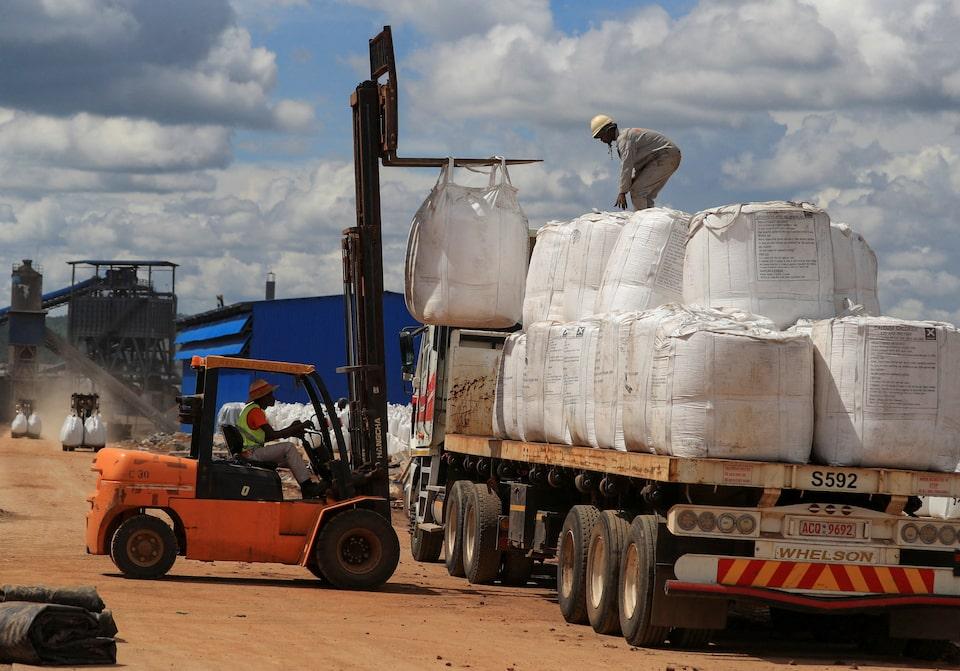
HARARE, Oct 17 (Reuters) - China's Zhejiang Huayou Cobalt (603799.SS) , opens new tab will start producing lithium sulphate during the first quarter of 2026 from its new $400 million plant in Zimbabwe, the company said on Thursday, as the African country pushes for more local processing. The newly completed plant at Huayou's wholly owned Prospect Lithium Zimbabwe's Arcadia mine has capacity to exceed 50,000 metric tons of lithium sulphate annually, an executive said during a tour of the operation. Sign up here. Lithium sulphate is an intermediate product which can be refined into a battery-grade material such as lithium hydroxide or lithium carbonate used in battery manufacturing. "We will start the first production from the beginning of next year," Prospect Lithium Zimbabwe general manager Henry Zhu told reporters. "The quantity of the lithium sulphate should be more than 60,000 metric tons, but it will depend on the configuration of the plant, because it is brand new," Zhu added. Zimbabwe, Africa's top lithium producer, has been nudging miners to process the mineral in the country in order to help lift its economy. Huayou, which acquired Arcadia lithium mine for $422 million in 2022, commissioned a $300 million lithium concentrator in 2023. The company and other Chinese metals firms Sinomine (002738.SZ) , opens new tab, Chengxin Lithium Group (002240.SZ) , opens new tab, Yahua Group (002497.SZ) , opens new tab, and Tsingshan Holding dominate Zimbabwe's lithium mining, producing concentrates and shipping them to their home country. Huayou exported 400,000 tons of lithium concentrate from Zimbabwe in 2024. The southern African country will ban the export of lithium concentrates from 2027 as it pushes for more local processing. Sinomine has also announced plans to build a $500 million lithium sulphate plant at its Bikita mine in Zimbabwe. https://www.reuters.com/world/africa/huayou-start-zimbabwe-lithium-sulphate-production-early-2026-2025-10-17/
2025-10-17 06:17
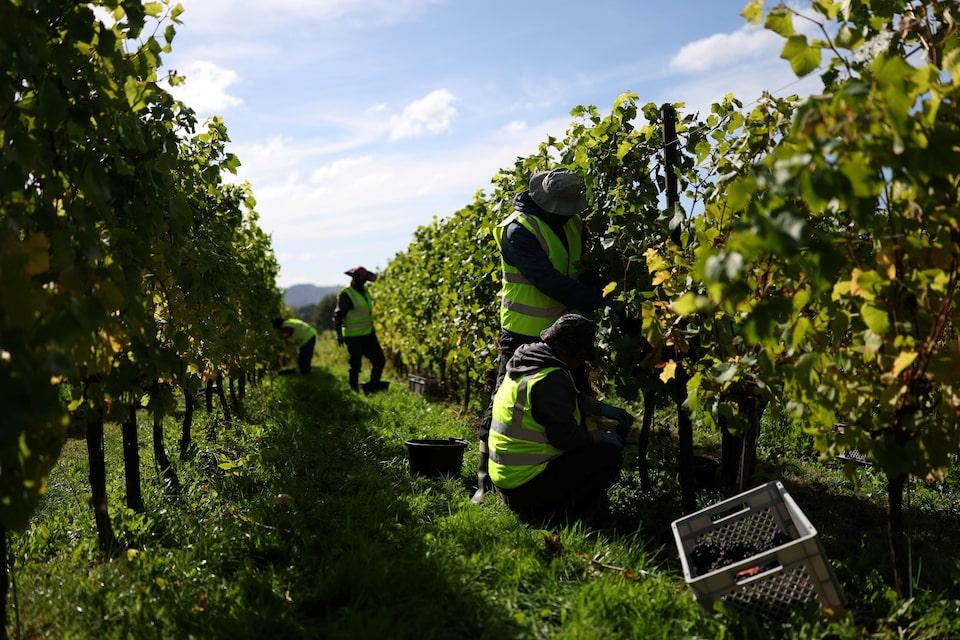
Local appetite for sparkling wine levelling off More vines being planted, international firms snapping up land Producers eye markets like Norway for growth Warmest summer means higher quality wines produced WEST CHILTINGTON, England/OSLO, Oct 17 (Reuters) - English winemakers are betting that surging exports can sustain their once novelty product after domestic sales growth slowed, hoping for a boost from Britain's warmest summer on record this year as climate change optimised conditions. Days before pickers started to harvest this year's crop, sparkling wine from southern England beat French Champagne to win one of the industry's most prestigious awards, lifting its prospects in markets like Norway, Japan and China. Sign up here. Foreign sales have become more important as a subdued economy at home weighs on demand for a premium product. International producers are snapping up the country's increasingly attractive land to produce wine to sell home and abroad. "Export is where the real growth is in the coming period," said Brad Greatrix, senior winemaker at Nyetimber, the English company which became the first non-French winner of the International Wine Challenge sparkling wine award in September. FROM FAIRWAYS TO VINEYARDS English wineries started to emerge in the 1990s as adventurous landowners took advantage of warmer summers. Now, on chalky slopes across southern England, vines are being planted on land once used for crops, apple orchards and golf courses. Since 2000, English wine production has risen by an average 7% per year, and is set to keep growing after land dedicated to vines jumped by 30% between 2020 and 2024. However, while British demand has driven growth so far, last year sparkling wine sales - which at 6.2 million bottles accounted for 70% of total wine sales - were flat, down from 11% growth the previous year. In September, Chapel Down, Britain's biggest wine producer, cancelled plans to build a new winery. Nicola Bates, CEO of industry body WineGB, said steady sales were an achievement when restaurants and bars were struggling, and when Champagne shipments to Britain fell 13% last year. For many consumers English fizz is a luxury product, with the biggest brands Chapel Down and Nyetimber costing 30 pounds ($40) and 42 pounds respectively per bottle, similar to Champagnes. With more vines being planted, Bates said, "we need to be growing sales at a faster pace for mid- to long-term health". NORWEGIANS REQUESTING ENGLISH WINE Though some winemakers will not sell this year's prized vintage for several years, exports are a bright spot they hope to build on. Export volumes grew 35% to account for 9% of total sales of English wine in 2024, and Bates said she was targeting doubling that figure by 2030. Norway tops the list of buyers by volume. Its imports of English sparkling wine jumped to 111,639 litres last year from 451 litres in 2015, according to its wine monopoly, the single state body allowed to import wine and spirits. That growth is far ahead of rises from other countries, said Arnt Egil Nordlien, the monopoly's head of product. Aleksander Iversen, a sommelier at Brasserie Coucou in Oslo, says Norwegians are open-minded and curious about wine. Some customers specifically request English wines while others discover it on recommendation. "Most are surprised by the quality, they often remark that it rivals top Champagne, but with its own unique character," he said. MORE UNPREDICTABLE WEATHER This year, English vineyards have experienced "almost perfect growing season conditions", said Alistair Nesbitt, chief executive at Vinescapes, a viticulture consultancy. The average temperature in southern England during the spring to autumn grape growing season has increased by 1 to 1.5 degrees Celsius over the last 40 to 50 years, he said, but it's not always straightforward. Climate change means more unpredictable weather events and that is also affecting England. Persistent wet weather in 2024, for example, hit the grape harvest, cutting production by half compared to the previous year. While climate change means more variability for wine producers globally, Nesbitt said cooler climates like England have the advantage over areas in southern Europe, which are being hit by more frequent droughts and heatwaves. Wine producers from the U.S., France and Australia started buying English land around a decade ago, with French Champagne house Taittinger acquiring a site in 2015 and California's Jackson Family Wines establishing a presence in 2023. "If you're in a real climate-stressed area of the world, and you want to keep your wine production enterprise going, you look to cooler areas like the UK," he said. ($1 = 0.7493 pounds) https://www.reuters.com/business/english-winemakers-hope-export-boost-as-they-toast-warmest-summer-2025-10-17/
2025-10-17 06:07
CNPC and Niger government have yet to agree on localisation push Negotiations under way to tackle disputes after expulsion of CNPC executives in March CNPC has exported 32 million bbls of oil from new development of Agadem field Oct 17 (Reuters) - China's CNPC has continued to export crude from a newly expanded oilfield in Niger that has generated more than $2 billion in revenue despite disputes with government officials over hiring more local workers and improving their benefits, sources with knowledge of the situation said. The Chinese state oil giant has been negotiating with the Nigerien government for months to tackle those issues, the sources said, after three of its senior executives were expelled in March due to disputes over a pay gap between local workers and Chinese expatriates. Sign up here. CNPC's crude sales and the status of the negotiations have not been previously reported. CNPC and a Niger government spokesperson did not respond to requests for comment. The expulsions, which were followed by government letters in May ordering experienced Chinese expatriates to leave Niger, dealt a blow to CNPC. Niger is a showcase of CNPC's ability to build an oil industry from scratch in an impoverished nation. It invested more than $5 billion there, developing an oilfield, building a refinery and a 1,950-km (1,212-mile) pipeline, Africa's longest. Oil minister Sahabi Oumarou initially asked CNPC and its refinery, SORAZ, to terminate the contracts of expatriates who had been working in Niger for more than four years, but that action has not been carried out, three Niamey-based sources told Reuters. Among the key disputes was the Nigerien government's request to increase local hires at CNPC-led projects to 80% versus less than 30% at present, a goal that CNPC believed to be unrealistic due to a lack of trained, skilled local staff, the people said. The sources spoke on the condition of anonymity due to the sensitivity of the matter. MELECK CRUDE EXPORTS Despite the dispute, CNPC has made progress in marketing new production from the phase-2 development of the Agadem oilfield, which is now pumping at a full capacity of 90,000 barrels a day. The crude is exported via a CNPC-built pipeline linking the oilfield with the Cotonou port in Benin. CNPC holds a 65% stake in the Agadem field, Taiwanese state firm CPC owns 20% and the Nigerien government holds the remaining 15%. So far, CNPC has exported 32 million barrels of Meleck crude, ideal for making low-sulphur marine fuel, to customers in Europe and Asia, according to one of the sources and a separate trading executive. Priced at $65 to $70 a barrel, with buyers including global trading houses and CNPC's trading arm Chinaoil, the exports have generated revenue of more than $2 billion, the sources estimated. CNPC began producing oil at Agadem, in southeastern Niger, in 2011 under a phase-1 development with agreement from the then-civilian government. The 20,000 bpd production feeds the Soraz refinery in southern Niger, which was built and is 60% owned by CNPC, which supplies fuel to Niger. Niger's current junta government came to power in 2023 in a military coup and has, like several other governments in the Sahel region of north-central Africa, been seeking greater control over its natural resources. https://www.reuters.com/business/energy/cnpc-keeps-oil-flowing-niger-negotiations-seek-tackle-disputes-sources-say-2025-10-17/