2025-10-17 06:06
All three major US stock indexes gain on the week Trump confirms meeting with President Xi Jinping Gold presses pause on record-breaking run Treasury yields gain, dollar strengthens NEW YORK, Oct 17 (Reuters) - Wall Street stocks advanced and U.S. Treasury yields rebounded on Friday as investors assessed the health of regional banks and President Donald Trump said his face-to-face trade talks with Chinese President Xi Jinping were still on. All three major U.S. stock indexes closed in positive territory after struggling for direction in early trading, and all three notched weekly gains. Sign up here. Benchmark Treasury yields and the dollar turned higher, while gold pulled back after a record run sent the precious metal to all-time highs. Worries over potential systemic credit problems in the banking sector abated the day after Zions (ZION.O) , opens new tab disclosed it would take a $50 million loan loss in the third quarter and Western Alliance (WAL.N) , opens new tab initiated a lawsuit alleging fraud by an investment firm. The KBW Regional Banking index (.KRX) , opens new tab advanced 1.7% in a partial recovery from Thursday's 5.0% plunge. "It took a night to sleep on it, but some calm has come in over the probably overblown worries in the regional bank area," said Ryan Detrick, chief market strategist at Carson Group in Omaha. "The truth is the financial sector is likely still on firm footing; just a couple companies had some bad news, but it's not systemic." Trade tensions between Washington and Beijing were calmed by Trump's assurances that his proposed 100% tariff on Chinese imports would not be sustainable. He confirmed he would meet with Chinese President Xi Jinping in two weeks in South Korea. "We've seen this movie before," Detrick added. "A week ago, President Trump was talking 100% tariffs and the market had its worst selloff in months and now today he's clearly putting some water on that fire, saying he and President Xi have a good relationship." The first official week of the third-quarter earnings season is in the books, with 58% of companies in the S&P 500 having reported. Of those, 86% have delivered stronger-than-expected results. Analysts now expect third-quarter S&P 500 earnings growth of 9.3% year-on-year, up from 8.8% as of October 1, according to LSEG data. The Dow Jones Industrial Average (.DJI) , opens new tab rose 238.37 points, or 0.52%, to 46,190.61, the S&P 500 (.SPX) , opens new tab rose 34.94 points, or 0.53%, to 6,664.01 and the Nasdaq Composite (.IXIC) , opens new tab rose 117.44 points, or 0.52%, to 22,679.98. European stocks closed lower as signs of credit stress in U.S. regional banks dampened investor risk appetite, driving them to safe-haven assets. MSCI's gauge of stocks across the globe (.MIWD00000PUS) , opens new tab fell 0.21 points, or 0.02%, to 984.18. The pan-European STOXX 600 (.STOXX) , opens new tab index fell 0.95%, while Europe's broad FTSEurofirst 300 index (.FTEU3) , opens new tab fell 20.72 points, or 0.91%. Emerging market stocks (.MSCIEF) , opens new tab fell 16.86 points, or 1.22%, to 1,362.10. MSCI's broadest index of Asia-Pacific shares outside Japan (.MIAPJ0000PUS) , opens new tab closed lower by 1.24%, to 706.04, while Japan's Nikkei (.N225) , opens new tab fell 695.59 points, or 1.44%, to 47,582.15. U.S. Treasury yields rose and the dollar strengthened as worries stemming from the escalating trade war and regional banks' credit quality ebbed. The greenback, however, remained on track for a weekly loss. The yield on benchmark U.S. 10-year notes rose 2.9 basis points to 4.005%, from 3.976% late on Thursday. The 30-year bond yield rose 1.7 basis points to 4.6005% from 4.583% late on Thursday. The 2-year note yield, which typically moves in step with interest rate expectations for the Federal Reserve, rose 3.3 basis points to 3.459%, from 3.426% late on Thursday. The dollar index , which measures the greenback against a basket of currencies including the yen and the euro, rose 0.16% to 98.42, with the euro down 0.15% at $1.1669. Against the Japanese yen , the dollar strengthened 0.04% to 150.48. Oil prices inched higher but lost ground on the week amid the fog of global supply uncertainty. U.S. crude rose 0.14% to settle at $57.54 per barrel, while Brent settled at $61.29 per barrel, up 0.38% on the day. Gold prices pulled back from record highs, pressured by a firmer dollar. Spot gold fell 2.19% to $4,230.60 an ounce. U.S. gold futures fell 1.3% to $4,224.60 an ounce. https://www.reuters.com/world/china/global-markets-wrapup-1-2025-10-17/
2025-10-17 05:56
MUMBAI, Oct 17 (Reuters) - A pre-open push from the Reserve Bank of India helped the rupee start on a firmer footing on Friday, although importer hedging and a weak tone across Asia tempered the support. The rupee was last quoted at 87.8550 against the U.S. dollar, having hit an intraday high of 87.75. The currency had briefly weakened past 88.00 mark in pre-open trade ahead of the Indian central bank's likely U.S. dollar sales through state-run banks. Sign up here. The rupee has rallied more than 1% in the last two sessions, in what is being seen a deliberate attempt by the RBI to push the currency pair down. The central bank is estimated to have sold $3 billion to $5 billion in spot and non-deliverable forward markets to support the rupee on Wednesday, marking its largest intervention in months, according to traders. While the RBI is "showing resolve in backing the rupee, importers are not holding back in their hedges - which is what you would expect at these levels," a FX salesperson at a private sector bank said. Meanwhile, Asian currencies were mostly lower on Friday, weighed by tepid risk appetite. Regional units struggled to find support despite a more dovish tilt in the Federal Reserve's rate outlook. Futures now imply a small probability that the Fed could cut rates by a cumulative 50 basis points over its next two meetings this year. Fed Governor Christopher Waller said he supports another rate cut this month, citing mixed signals from the labour market. https://www.reuters.com/world/india/rupee-rally-set-hit-speed-bump-soggy-asia-fx-risk-off-tone-2025-10-17/

2025-10-17 05:15
Dollar index set for weekly loss Bank stocks rebound after losses unnerve investors Safe-haven Swiss franc gain and yen flat Euro set for biggest weekly gain against dollar in nine weeks NEW YORK/LONDON, Oct 17 (Reuters) - The U.S. dollar was headed for a weekly loss against the Swiss franc and yen on Friday, amid concern about trade tensions and unease among some regional American banks. The U.S. federal government shutdown has also choked off the release of key macroeconomic data, leaving investors with less certainty than usual about what is happening in the economy. Sign up here. U.S. President Donald Trump said his proposed 100% tariff on goods from China would not be sustainable, but blamed Beijing for the latest impasse in trade talks that began with Chinese authorities tightening control over rare earth exports. Trump also confirmed he would meet with Chinese President Xi Jinping in two weeks in South Korea in an attempt to ease trade tensions. "There's a bit of safe-haven selling of the dollar," said Steve Englander, Standard Chartered's global head of G10 FX research. "I think there's the news on China, which has been partly but not fully walked back, and the news on regional banks and credit more broadly are sort of hurting the dollar." The U.S. dollar fell to its weakest level against the Swiss franc in a month while the yen erased earlier gains following Bank of Japan Governor Kazuo Ueda's discussion of factors that could lead to a rate increase this month. The dollar fell 0.08% to 0.7925 against the Swiss franc , dropping to its lowest level since mid-September and was set for the biggest weekly loss since June. "The market is responding to a week where we are now 17 days into a U.S. government shutdown and we're missing initial claims and the jobs data - we are flying with limited visibility and the Fed also feels like that," said Amo Sahota, director at Klarity FX in San Francisco. "And then we had the trade tension that escalated although Trump did try to calm things down . . . I believe this is all game theory and negotiating tactics," Sahota added. Fed Governor Christopher Waller said he is on board for another interest rate cut at the U.S. central bank's meeting later this month because of the mixed readings on the state of the job market. The euro was down 0.17% at $1.16678. It was on course for its biggest weekly gain against the dollar in nine weeks. The dollar index , which tracks the U.S. currency against six of its counterparts, headed for a 0.43% slide this week, although it was up 0.17% on the day to 98.43. Japan's lower house scheduling committee board has agreed to hold a parliamentary vote to select the next prime minister on October 21. The yen has been on the defensive since fiscal dove Sanae Takaichi was elected to head Japan's ruling Liberal Democratic Party this month. But a vote to install her as prime minister was delayed after a split with the LDP's coalition partner. Against the Japanese yen , the U.S. dollar was flat at 150.49, on track to notch a weekly loss. Meanwhile, BOJ Governor Ueda said in Washington on Thursday that the central bank remains ready to increase its key policy rate if the likelihood of its growth and price forecasts materializing increases. Sterling was down 0.02% at $1.3433, heading for a weekly gain. https://www.reuters.com/world/asia-pacific/dollar-set-weekly-slide-trade-shutdown-concerns-weigh-2025-10-17/
2025-10-17 05:14
MUMBAI, Oct 17 (Reuters) - The Reserve Bank of India sold U.S. dollars through state-run banks before the spot market opened on Friday, traders said, repeating its midweek pre-market intervention and underscoring its intent to support the rupee. The RBI's intervention helped the rupee open firmer against the U.S. dollar despite pre-market signals of weakness. Quotes in the interbank order-matching system had pointed to a possible dip past the 88 level before state-run banks stepped in to sell dollars on the central bank's behalf. Sign up here. The rupee climbed to a high of 87.75 on the back of the intervention, after settling at 87.82 on Thursday. The currency has rallied more than 1% over the last two sessions. The RBI had intervened in a similar way on Wednesday, surprising the market with aggressive dollar sales, which helped squeeze out speculative long-dollar positions. Bankers said Friday’s move builds on that momentum, reinforcing the view that the central bank will stay active in supporting the rupee. "Would it be fair to say the RBI is signalling that 88 is now the floor (for rupee), or are they just emphasizing intent by following up on Wednesday’s move?", a currency trader at a mid-sized private sector bank said. Until this week, the RBI's interventions were largely aimed at defending the 88.80 level. The latest pre-market actions mark a shift - intervening with the intent of pulling dollar/rupee lower and intervening before the market opens to set the tone, bankers said. The RBI’s move was probably a reaction to what it saw as speculative pressure building on the rupee, HDFC Bank said in a note. The lender expects USD/INR to trade in the 87.50–89.00 range in the near term, and said that a favourable outcome on the U.S.-India trade deal could help the rupee appreciate, and push the pair below the lower side of that band. https://www.reuters.com/world/india/india-central-bank-repeats-pre-market-dollar-sales-reinforcing-support-rupee-2025-10-17/
2025-10-17 05:01
AI investments in Sweden and UK create demand for local currency Sweden and UK rank third and fourth in global AI investment Microsoft, Meta, Alphabet choose Sweden for data centres US-UK tech pact impacts sterling sentiment LONDON, Oct 17 (Reuters) - The boom in investment in artificial intelligence is starting to be felt for the first time in currency markets across Europe, and analysts reckon the Swedish crown and sterling stand to benefit the most. Trading in the almost $10 trillion-a-day FX markets this year has been driven by broad dollar weakness given tariff-related concerns and U.S. rate cut expectations. Sign up here. But dig deeper and the impact of AI, which has helped drive stocks to record highs, is rippling across to currencies. According to JPMorgan, the resilience of the Swedish crown , or krona, and sterling in recent months may be partially attributable to tech as Sweden and Britain stand out on measures of AI investment and their currencies are receiving a tailwind from this dynamic, even if only a small one. By one measure, the UK and Sweden received just over $4 billion each last year in private AI investments, ranking third and fourth in a Stanford University AI index of biggest beneficiaries of such investments, behind the United States and China. Sweden's krona is the strongest-performing major European currency against a weak dollar so far this year, having climbed almost 15%. Sterling has rallied 7%. Dissecting the exact impact of AI on currency moves is hard, analysts say, given other factors at play such as interest rate expectations or fiscal unease, especially with sterling. "Large AI investments have been announced for both countries," said Rabobank's head of FX strategy Jane Foley. "The inward investment could certainly have created some demand for sterling and Swedish crown respectively and created some resilience". The crown is also up against the euro and other Scandinavian currencies. Sterling, hurt by fiscal worries, is down against the euro and Swiss franc, however. Investments in Swedish AI companies, which bring higher demand for crowns, would cause a visible spike in the currency, while the impact of such investments on sterling would be less visible because it is already so heavily traded, Rabobank's Foley said. Sterling is the world's fourth most-traded currency, accounting for just over 10% of all trades, while Sweden's crown accounts for less than 2%, according to the Bank for International Settlements. BIG PROMISES Britain and the United States last month agreed a technology pact, with top U.S. firms led by Microsoft (MSFT.O) , opens new tab pledging 31 billion pounds ($42 billion) in UK investments. AI giant Nvidia (NVDA.O) , opens new tab plans to provide its data centre platform to Swedish companies including telecoms gear maker Ericsson (ERICb.ST) , opens new tab, and drug developer AstraZeneca (AZN.L) , opens new tab. Microsoft, Facebook's owner Meta (META.O) , opens new tab, Google's owner Alphabet (GOOGL.O) , opens new tab and Canada's Brookfield Asset Management (BAM.TO) , opens new tab plan data centres in Sweden given the country's reliable electricity supplies and infrastructure. While it's too soon to say what impact AI will have on economic growth or unemployment, which could potentially add to strains on public finances, the announcements offered a favourable backdrop for the krona and sterling, analysts said. A report by SEB released earlier this year looking at major Swedish participants in the FX market showed their net overweight position in the crown was close to record highs. Societe Generale head of corporate research for FX and rates Kenneth Broux said U.S. tech investment pledges can diminish pessimism ahead of Britain's November budget, when taxes are expected to rise, lifting sterling's appeal. Latest CFTC positioning shows investors are neither heavily in favour nor against sterling. Speculators have eroded bullish dollar positions against the pound from August's almost three-year high of $3.3 billion to just $165 million, reflecting waning conviction that the greenback will rally against sterling. "What AI does potentially change is the outlook for productivity growth, the Achilles' heel of the UK economy", said Broux. An aging population in the West opens the door to “reskilling and upskilling” which can help keep a lid on welfare payments and potential unemployment benefits caused by AI, he added. Some are broadly positive on sterling. Investment firm St James's Place has an overweight position. Deutsche Bank expects sterling to rise to $1.45 over the next couple of years, compared with roughly $1.34 currently. And HSBC Private Bank's global CIO Willem Sels said that while his near-term view on sterling was not too positive given the looming budget, he sensed that investor sentiment towards the UK was more "constructive" than it appears. "One of the reasons for that is that people see the UK as a relatively interesting destination for AI-related investment," Sels said. "This is why we also saw (Nvidia CEO) Jensen Huang sitting next to the Prime Minister (Keir Starmer earlier this year) and talking about the strength of the UK." https://www.reuters.com/world/europe/ai-boom-rippling-across-britains-pound-swedish-crown-2025-10-17/
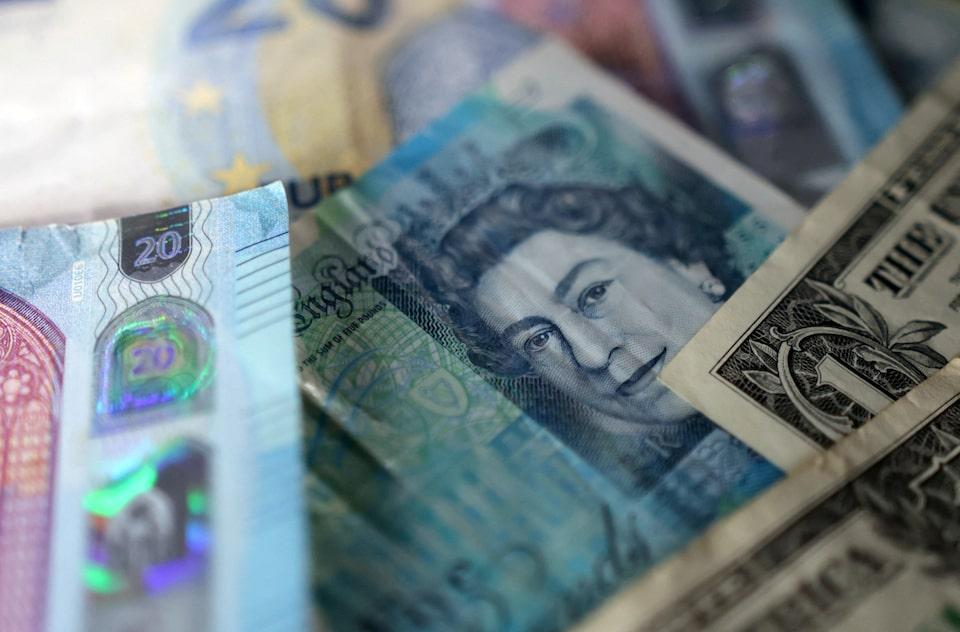
2025-10-17 04:33
A look at the day ahead in European and global markets from Stella Qiu It was already a troubling set-up for stocks, with valuations stretched, the whiff of an AI bubble, a shut U.S. government and the ongoing break-up between Washington and Beijing. Now, add in jitters about U.S. regional banks. Sign up here. Overnight, Zions (ZION.O) , opens new tab sank 13% after disclosing it would take a $50 million loss in the third quarter on two loans from its California division. Western Alliance's (WAL.N) , opens new tab stock slumped 11% after it initiated a lawsuit alleging fraud by Cantor Group V, LLC. The banks' selloff comes more than two years after Silicon Valley Bank's 2023 failure, when high interest rates drove paper losses on its bonds, sparking a fatal deposit run that felled Signature Bank days later. Worries of a repeat drove shares in the red and had markets baying for more U.S. rate cuts. MSCI's broadest index of Asia-Pacific shares outside Japan (.MIAPJ0000PUS) , opens new tab fell 0.9% on Friday and Japan's Nikkei (.N225) , opens new tab slid 1.1% as its banking index tumbled. Wall Street futures fell 0.4% ahead of more earnings from U.S. regional banks later in the day. European stock futures lost 0.8%, while FTSE futures dropped 1%. The flight to safety saw gold hit a record of $4,378.69 per ounce and was poised to finish the week 8.9% higher - the biggest weekly rise since September 2008 when the collapse of Lehman Brothers fuelled the global financial crisis. How is that not ominous? Treasuries also found their safe-haven mojo back, rallying for a third straight week. Two-year Treasury yields hit a fresh three-year trough of 3.3890% as investors bet the Federal Reserve will have to cut rates twice by year end, with some chance of an outsized 50 bps move. While financial stability risks seem contained for now, Jamie Dimon has said "When you see one cockroach, there are probably more, and so everyone should be forewarned." Investors assume the Fed will ride to the rescue, because of course it will. But cutting rates when inflation is at 3% and the full impact of tariffs on prices is only starting to be felt could be just a taster of what to expect when Trump gets to appoint his very own Fed chair. Key developments that could influence markets on Friday: - Little data released as US government is shut - Fed official Alberto G. Musalem speaks, as well as Bank of Japan's Deputy Governor Shinichi Uchida - US earnings include American Express, State Street and more regional banks https://www.reuters.com/business/finance/global-markets-view-europe-2025-10-17/