2025-10-17 00:48
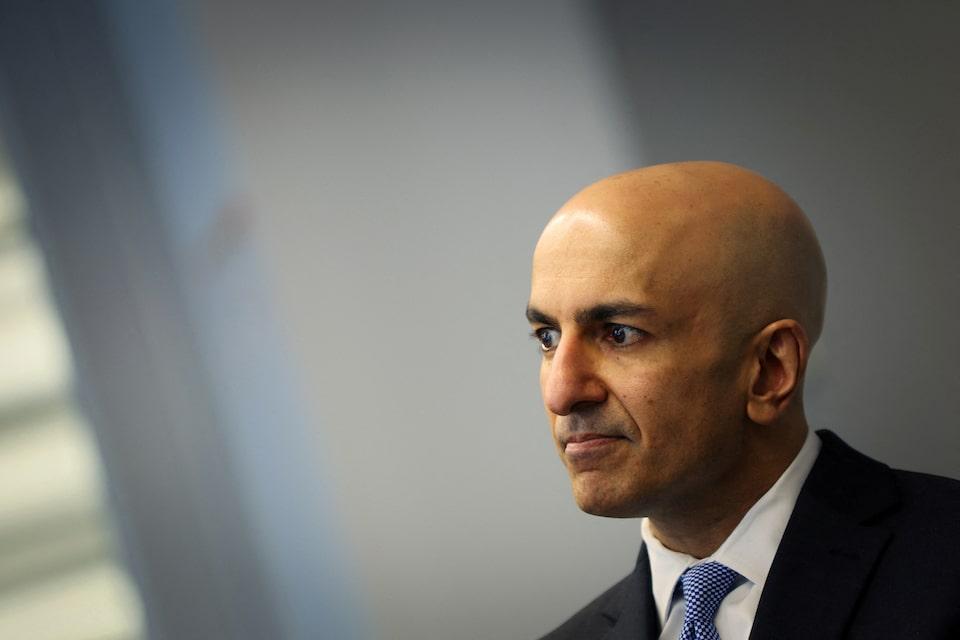
Kashkari sees more risk of labor market downturn than inflation surge Sees rate cuts as insurance against unlikely dire outcomes The longer government shutdown, the less confident in read on economy: Kashkari Oct 16 (Reuters) - Minneapolis Federal Reserve President Neel Kashkari said Thursday he does not think that there is a big chance the labor market will weaken sharply or inflation will surge, though of the two, "there's more risk of a labor market negative surprise than a big uptick in inflation." "On the other hand, if I were to guess which mistake we're more likely making, I think we're more likely betting that the economy is really slowing more than it really is," Kashkari told a town hall in Rapid City, South Dakota. Sign up here. Kashkari supported the Fed's quarter-point interest-rate cut in September and feels two more such cuts will be warranted by the end of the year, he said last month. Like many of his colleagues, he sees the rate cuts as a form of insurance against dire outcomes that may not actually materialize. Last year, for instance, the Fed cut rates to shore up what many policymakers feared was a rapidly softening labor market, and the economy proved to be unexpectedly resilient, he said. As for inflation, Kashkari said Thursday that he thinks it is unlikely the inflation rate will rise to 4% or 5%, "because we can do the math of what tariff rates translate into what inflation. So I think the risk of inflation is more of one of persistence - that it's not so much of a one time event, but that it stays at 3% for an extended period of time." The Fed targets 2% inflation; in August it was 2.7% by the Fed's targeted measure. Some of Kashkari's policymaking colleagues say the Fed should be cautious about cutting rates when the inflation rate is too-high and rising Though the ongoing federal government shutdown is delaying the publication of economic data, Fed policymakers have enough unofficial data through private sources and their own community and business outreach efforts to have a pretty good idea of economic conditions, Kashkari said. "We can make our way through while the shutdown is happening," Kashkari said. "But the longer it goes on, the less confidence I have that we are reading the economy appropriately, because there's no substitute for the gold standard government data that we rely on." https://www.reuters.com/markets/us/feds-kashkari-economy-may-not-be-slowing-much-we-think-2025-10-16/
2025-10-16 23:30
Laos to prioritise power for metals refining, AI, EVs Laos in talks with Vietnam to boost power exports Laos expects Singapore exports to resume soon KUALA LUMPUR, Oct 16 (Reuters) - Laos is considering halting electricity supply to cryptocurrency miners by the first quarter of 2026, as it seeks to redirect domestic power to industries that contribute more to economic growth, the country's deputy energy minister told Reuters. Crypto operators, drawn by cheap non-fossil energy, flocked to the landlocked Southeast Asian nation following a 2021 policy shift that triggered a rapid expansion in mining activity. Sign up here. But the government now aims to prioritise power for sectors such as AI data centres, metals refining and electric vehicles, its deputy energy minister Chanthaboun Soukaloun said on Thursday. Laos has already begun scaling back supply to crypto miners, who currently consume around 150 megawatts of electricity, down 70% from a peak of 500 MW in 2021 and 2022, Soukaloun said. BETTER VALUE FOUND ELSEWHERE "Crypto doesn't create value compared to supplying it to industrial or commercial consumers. We proposed to the government in 2021 to supply to crypto mining due to the oversupply of electricity domestically," Soukaloun told Reuters, adding that the industry creates few jobs and does not have a supply chain that benefits the economy. Soukaloun said that Laos had initially planned to end supply this year, but continued due to abundant rainfall that boosted hydropower output and enabled increased exports to neighbouring Thailand and Vietnam. "I think by the end of the first quarter of 2026, we might stop (supply to crypto) entirely," he said on the sidelines of the ASEAN energy ministers meeting. Reuters was unable to find associations representing the crypto mining industry, or ascertain which miners operate there. Laos, often dubbed the "battery of Southeast Asia" for its hydropower export potential, plays a key role in the region’s clean energy transition. Hydropower exports are crucial for decarbonising neighbouring countries that face challenges scaling up solar and wind. Laos, which exports most of its hydropower to independent power producers in cross-border deals with Thailand and Vietnam, is considering further increasing its bilateral export capacity to Vietnam from 8,000 MW currently, Soukaloun said. CHINA ARBITRATION, EXPORTS TO SINGAPORE Soukaloun said Laos has had bilateral talks with China about an arbitration suit filed by a unit of state-owned Power Construction Corp of China against its state utility Electricite du Laos (EDL), seeking $555 million in unpaid dues from its $2.73 billion hydropower project. "It's their right to do so (sue) under the power purchase agreement. We have to move on until the process is completed or unless the claimant withdraws the claim," Soukaloun said. He declined to comment on whether Laos had sought a revision of the claims, citing confidentiality, but said the dues stemmed from a mismatch between projected and actual demand. Laos also expects exports to Singapore through the Lao-Thailand-Malaysia-Singapore (LTMS) power transmission corridor to "resume soon," Soukaloun said, without providing further details. Exports through the corridor had been halted as Thailand is yet to finalise terms of an extension to the deal, Thai and Singapore authorities said last year. On Thursday, the four countries issued a joint statement reaffirming their commitment to continue advancing multilateral cross-border power trade and continue discussions, but did not specify when exports would resume. https://www.reuters.com/sustainability/boards-policy-regulation/laos-plans-pull-plug-crypto-miners-by-early-2026-2025-10-16/

2025-10-16 23:05
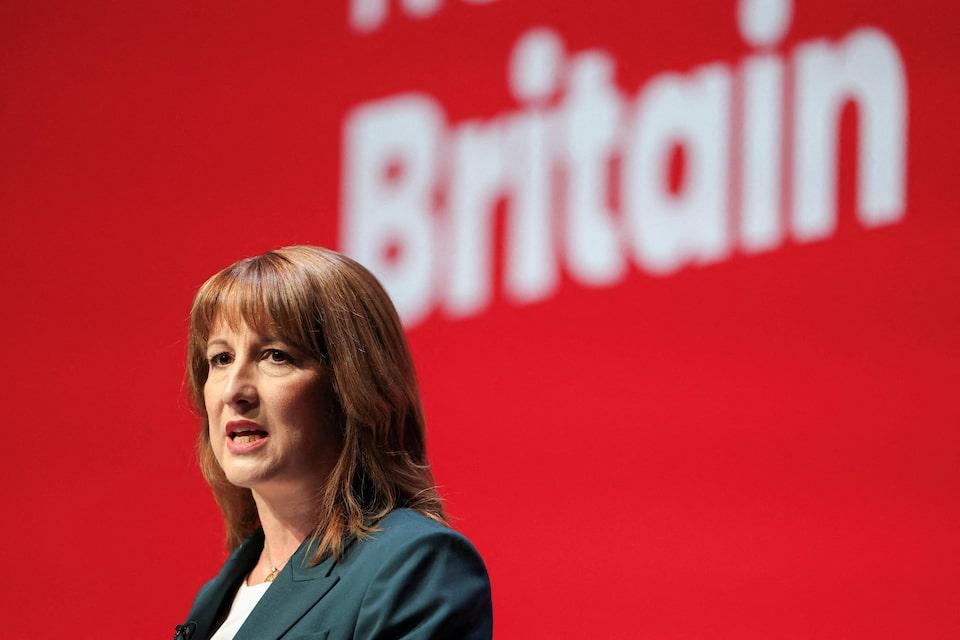
WASHINGTON, Oct 17 (Reuters) - Britain's government said on Friday it has launched what it hopes will be one-stop, concierge service to make it easier for financial services firms to invest in the country. The new Office for Investment: Financial Services will seek to attract investment to cities around Britain, finance minister Rachel Reeves said. The service will include helping investors pick locations and navigate British regulation. Sign up here. Reeves announced the plan earlier this year as part of a broader push to reduce regulatory uncertainty. The new agency will involve the Treasury, financial regulators and the City of London Corporation. On Thursday, Reeves said she did not disagree with arguments from finance firms that taxes on them in Britain were relatively high, suggesting they will not bear the brunt of tax increases she is expected to announce in her November 26 budget. https://www.reuters.com/business/finance/uk-opens-new-concierge-service-bid-woo-more-finance-investment-2025-10-16/
2025-10-16 22:30
Fiscal 2025 tariff revenues rise to record $195 billion Department of Education bears brunt of Trump's spending cuts Outlays on Social Security, health care, interest on debt continue to climb Treasury Department reports monthly surplus of $198 billion in September WASHINGTON, Oct 16 (Reuters) - The U.S. budget deficit shrank by $41 billion to $1.775 trillion in the 2025 fiscal year as an increase in revenue from President Donald Trump's tariffs and cuts to education spending helped offset higher outlays on healthcare and retirement programs and interest on the debt, the Treasury Department said on Thursday. The results for the year ended September 30, which include nearly nine months of Trump's second term in the White House, compared to a $1.817 trillion deficit in fiscal 2024. It was the first time the annual deficit had fallen since 2022, when the unwinding of COVID-19 relief programs brought spending down. Sign up here. The smaller deficit was aided by a record $195 billion in net customs receipts for the fiscal year, an increase of $118 billion from the prior year as new Trump tariffs rolled in. Customs receipts in September reached a new record high of $29.7 billion, but the pace of increase slowed from August, when $29.5 billion was collected. Customs receipts were $7.3 billion in September 2024. But this powerful new revenue source was partly offset by a $79 billion reduction in gross corporate tax collections for fiscal 2025, to $486 billion. About $45 billion of that reduction occurred in September, reflecting implementation of full capital equipment expensing and research deductions made retroactive to January 1 in the spending and tax-cut bill passed by the Republican-controlled Congress in July. Total receipts for fiscal 2025 were a record $5.235 trillion, up $317 billion, or 6%, from fiscal 2024, largely driven by increases in withheld and non-withheld individual tax collections. Fiscal 2025 outlays also were a record at $7.01 trillion, up $275 billion, or 4%, from the prior year. A U.S. Treasury official said the department calculated an estimated deficit-to-GDP ratio of 5.9% for fiscal 2025, compared to an actual fiscal 2024 ratio of 6.3%. The official declined to say what GDP estimate was used to calculate the ratio. Data on third-quarter GDP, which would be close out the 2025 fiscal year, has been delayed by the partial U.S. government shutdown. U.S. Treasury Secretary Scott Bessent said on Wednesday that he wants to bring the ratio down to the 3% range by boosting economic growth and cutting or constraining spending. Budget analysts said the number released on Thursday showed little progress toward that goal. "Most of the fiscal policy changes are simply replacing tax revenue and spending with other sources without lowering the deficit," said Kent Smetters, director of the University of Pennsylvania's Penn Wharton Budget Model analysis group. "So, we are still very much on an unsustainable path." TREASURY REPORTS SURPLUS FOR SEPTEMBER For the 2025 fiscal year's final month of September, the Treasury reported a record surplus of $198 billion, up $118 billion, or 147%, from the same month in the prior year. September is often a month of surplus due to quarterly tax filing deadlines for companies and individuals. Receipts last month were up $17 billion, or 3%, to $544 billion, while outlays were down $101 billion, or 23%, to $346 billion. The latest monthly surplus was boosted by a $131 billion cut to the Department of Education budget that was mandated in the recent spending and tax bill. For September, the education outlays were $123 billion lower than in September 2024. For the full 2025 fiscal year, the Department of Education suffered the biggest cut in outlays, down $233 billion, or 87% from the prior year to just $35 billion. That cut and the higher customs receipts masked continued increases in outlays for the Social Security retirement plan, the Medicare and Medicaid healthcare programs and interest on the U.S. federal debt. The interest expenditure reached a record $1.216 trillion for the full fiscal year, up $83 billion, or 7%, from fiscal 2024, making it the second-largest expenditure item after Social Security. Expenses for that program reached $1.647 trillion, up $127 billion, or 8%, from the prior fiscal year. "There's good news that the tariffs are generating higher revenue, but all major categories of spending are higher with mandatory spending and interest significantly so. The fundamentals remain deeply troubling," said Maya MacGuineas, president of the Committee for a Responsible Federal Budget. https://www.reuters.com/world/us/us-budget-deficit-falls-41-billion-1775-trillion-fiscal-2025-2025-10-16/

2025-10-16 22:23
CHISINAU, Oct 16 (Reuters) - Gas flows will resume to Moldova's separatist Transdniestria region, the head of the country's largest energy company said on Thursday, averting a repeat of the crisis that left the area with severe shortages of heat and power last January. "From 17th October, full-scale shipments of natural gas will resume to Moldova's Transdniestria region according to contract volumes needed to provide for the needs of all consumers," Vadim Ceban, Moldovagaz's acting chairman of the board, said on Telegram. Sign up here. "This will allow for the resumption of supplies of hot water and work towards the beginning of the winter heating season." The pro-Russian separatist region, which broke away from Moldova before the 1991 collapse of Soviet rule, this month restricted gas use after difficulties with payments prompted cuts in daily shipments to 1.2 million cubic metres from 3.1 million. Deputy Moldovan Prime Minister Roman Rosca had warned on Wednesday that the region was on the brink of running out of gas and offered to help deal with the shortages. But he said the separatist government had failed to request any assistance. For two weeks last January, Transdniestria's 350,000 residents suffered long power blackouts and shortages of heat after neighbouring Ukraine refused to renew an agreement to allow Russian gas to transit across its territory. The region secured supplies with purchases by the Hungarian company MET and payment provided by a company in Dubai acting on behalf of Russia. Shipments are overseen by Moldovagaz once the gas reaches the Moldovan border. Transdniestria has existed side by side with the post-Soviet Moldovan state for more than 30 years and attempts to resolve the separatist dispute have made little progress. Tensions occasionally rise between the two sides, though incidents of unrest or violence are almost unknown. (This story has been corrected to fix attribution to Moldovagaz's, not Moldova's, acting chairman of the board, and to fix the spelling of 'Transdniestria' in paragraph 2) https://www.reuters.com/business/energy/renewed-gas-flow-averts-new-energy-crisis-moldovan-rebel-region-2025-10-16/

2025-10-16 22:23
WASHINGTON, Oct 16 (Reuters) - U.S. President Donald Trump said on Friday that his administration was working to lower the price of beef in the country. "We are working on beef, and I think we have a deal on beef," Trump told reporters at the White House. Sign up here. The price of beef is "higher than we want it, and that's going to be coming down pretty soon too. We did something," Trump added, without elaborating. Beef prices have climbed to record highs after cattle ranchers slashed their herds due to a yearslong drought in the western United States that dried up lands used for grazing and raised feeding costs. By the beginning of the year, the herd had dwindled to 86.7 million cattle, the smallest number for the time period since 1951, according to U.S. government data. The Meat Institute, which represents meatpacking companies, said it needed to learn more about Trump's plans to lower prices. The administration of former President Joe Biden blamed meatpacking companies for rising food costs. Last week, processors Tyson Foods (TSN.N) , opens new tab and Cargill agreed to pay a combined $87.5 million to settle a federal lawsuit brought by consumers who accused the companies of conspiring to inflate beef prices by restricting supply. The companies have denied wrongdoing. Meatpackers such as Tyson have lost money in their beef businesses as tight cattle supplies force them to pay more to buy animals to slaughter. Supplies tightened further this year after the U.S. Department of Agriculture halted imports of Mexican livestock to keep out a damaging pest spreading in Mexico. Mexican cattle were formerly imported to be fattened in U.S. feedlots and slaughtered in U.S. processing plants. Tariffs that Trump imposed on Brazilian goods have also slowed U.S. imports of Brazilian beef that was mixed with U.S. supplies to make hamburger meat. Recently, some U.S. ranchers have begun taking initial steps to start rebuilding the herd. However, it takes about two years before beef output rises after they make the first moves to expand because that is how long it takes to raise full-grown cattle, ranchers said. Last month, U.S. Agriculture Secretary Brooke Rollins said the USDA in mid-October would provide details on a plan to revitalize the decimated herd that would not include payments to producers. https://www.reuters.com/business/trump-says-his-administration-is-working-lowering-beef-prices-2025-10-16/