2025-10-16 22:30
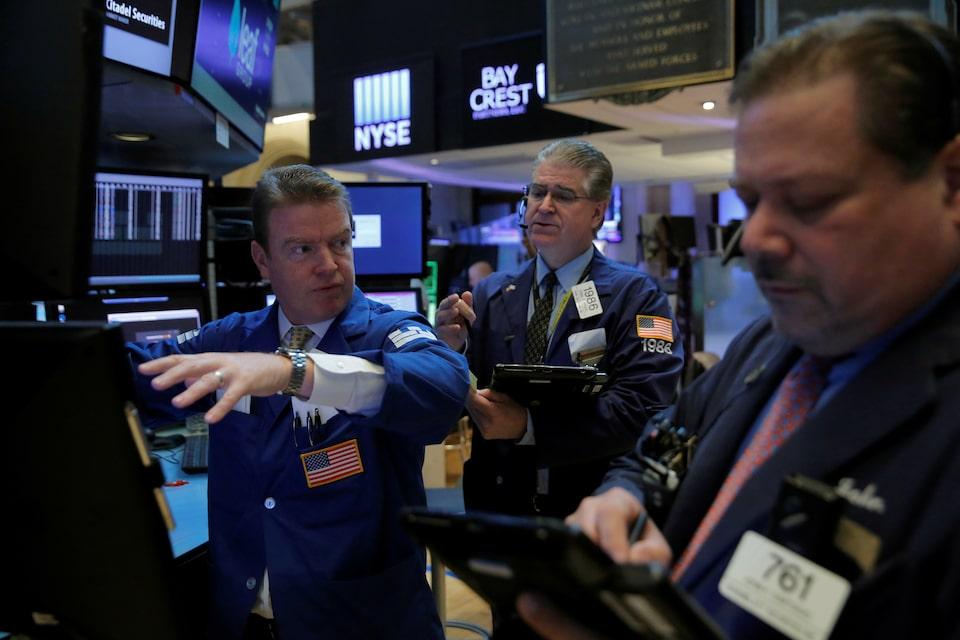
Fiscal 2025 tariff revenues rise to record $195 billion Department of Education bears brunt of Trump's spending cuts Outlays on Social Security, health care, interest on debt continue to climb Treasury Department reports monthly surplus of $198 billion in September WASHINGTON, Oct 16 (Reuters) - The U.S. budget deficit shrank by $41 billion to $1.775 trillion in the 2025 fiscal year as an increase in revenue from President Donald Trump's tariffs and cuts to education spending helped offset higher outlays on healthcare and retirement programs and interest on the debt, the Treasury Department said on Thursday. The results for the year ended September 30, which include nearly nine months of Trump's second term in the White House, compared to a $1.817 trillion deficit in fiscal 2024. It was the first time the annual deficit had fallen since 2022, when the unwinding of COVID-19 relief programs brought spending down. Sign up here. The smaller deficit was aided by a record $195 billion in net customs receipts for the fiscal year, an increase of $118 billion from the prior year as new Trump tariffs rolled in. Customs receipts in September reached a new record high of $29.7 billion, but the pace of increase slowed from August, when $29.5 billion was collected. Customs receipts were $7.3 billion in September 2024. But this powerful new revenue source was partly offset by a $79 billion reduction in gross corporate tax collections for fiscal 2025, to $486 billion. About $45 billion of that reduction occurred in September, reflecting implementation of full capital equipment expensing and research deductions made retroactive to January 1 in the spending and tax-cut bill passed by the Republican-controlled Congress in July. Total receipts for fiscal 2025 were a record $5.235 trillion, up $317 billion, or 6%, from fiscal 2024, largely driven by increases in withheld and non-withheld individual tax collections. Fiscal 2025 outlays also were a record at $7.01 trillion, up $275 billion, or 4%, from the prior year. A U.S. Treasury official said the department calculated an estimated deficit-to-GDP ratio of 5.9% for fiscal 2025, compared to an actual fiscal 2024 ratio of 6.3%. The official declined to say what GDP estimate was used to calculate the ratio. Data on third-quarter GDP, which would be close out the 2025 fiscal year, has been delayed by the partial U.S. government shutdown. U.S. Treasury Secretary Scott Bessent said on Wednesday that he wants to bring the ratio down to the 3% range by boosting economic growth and cutting or constraining spending. Budget analysts said the number released on Thursday showed little progress toward that goal. "Most of the fiscal policy changes are simply replacing tax revenue and spending with other sources without lowering the deficit," said Kent Smetters, director of the University of Pennsylvania's Penn Wharton Budget Model analysis group. "So, we are still very much on an unsustainable path." TREASURY REPORTS SURPLUS FOR SEPTEMBER For the 2025 fiscal year's final month of September, the Treasury reported a record surplus of $198 billion, up $118 billion, or 147%, from the same month in the prior year. September is often a month of surplus due to quarterly tax filing deadlines for companies and individuals. Receipts last month were up $17 billion, or 3%, to $544 billion, while outlays were down $101 billion, or 23%, to $346 billion. The latest monthly surplus was boosted by a $131 billion cut to the Department of Education budget that was mandated in the recent spending and tax bill. For September, the education outlays were $123 billion lower than in September 2024. For the full 2025 fiscal year, the Department of Education suffered the biggest cut in outlays, down $233 billion, or 87% from the prior year to just $35 billion. That cut and the higher customs receipts masked continued increases in outlays for the Social Security retirement plan, the Medicare and Medicaid healthcare programs and interest on the U.S. federal debt. The interest expenditure reached a record $1.216 trillion for the full fiscal year, up $83 billion, or 7%, from fiscal 2024, making it the second-largest expenditure item after Social Security. Expenses for that program reached $1.647 trillion, up $127 billion, or 8%, from the prior fiscal year. "There's good news that the tariffs are generating higher revenue, but all major categories of spending are higher with mandatory spending and interest significantly so. The fundamentals remain deeply troubling," said Maya MacGuineas, president of the Committee for a Responsible Federal Budget. https://www.reuters.com/world/us/us-budget-deficit-falls-41-billion-1775-trillion-fiscal-2025-2025-10-16/

2025-10-16 22:23
CHISINAU, Oct 16 (Reuters) - Gas flows will resume to Moldova's separatist Transdniestria region, the head of the country's largest energy company said on Thursday, averting a repeat of the crisis that left the area with severe shortages of heat and power last January. "From 17th October, full-scale shipments of natural gas will resume to Moldova's Transdniestria region according to contract volumes needed to provide for the needs of all consumers," Vadim Ceban, Moldovagaz's acting chairman of the board, said on Telegram. Sign up here. "This will allow for the resumption of supplies of hot water and work towards the beginning of the winter heating season." The pro-Russian separatist region, which broke away from Moldova before the 1991 collapse of Soviet rule, this month restricted gas use after difficulties with payments prompted cuts in daily shipments to 1.2 million cubic metres from 3.1 million. Deputy Moldovan Prime Minister Roman Rosca had warned on Wednesday that the region was on the brink of running out of gas and offered to help deal with the shortages. But he said the separatist government had failed to request any assistance. For two weeks last January, Transdniestria's 350,000 residents suffered long power blackouts and shortages of heat after neighbouring Ukraine refused to renew an agreement to allow Russian gas to transit across its territory. The region secured supplies with purchases by the Hungarian company MET and payment provided by a company in Dubai acting on behalf of Russia. Shipments are overseen by Moldovagaz once the gas reaches the Moldovan border. Transdniestria has existed side by side with the post-Soviet Moldovan state for more than 30 years and attempts to resolve the separatist dispute have made little progress. Tensions occasionally rise between the two sides, though incidents of unrest or violence are almost unknown. (This story has been corrected to fix attribution to Moldovagaz's, not Moldova's, acting chairman of the board, and to fix the spelling of 'Transdniestria' in paragraph 2) https://www.reuters.com/business/energy/renewed-gas-flow-averts-new-energy-crisis-moldovan-rebel-region-2025-10-16/

2025-10-16 22:23
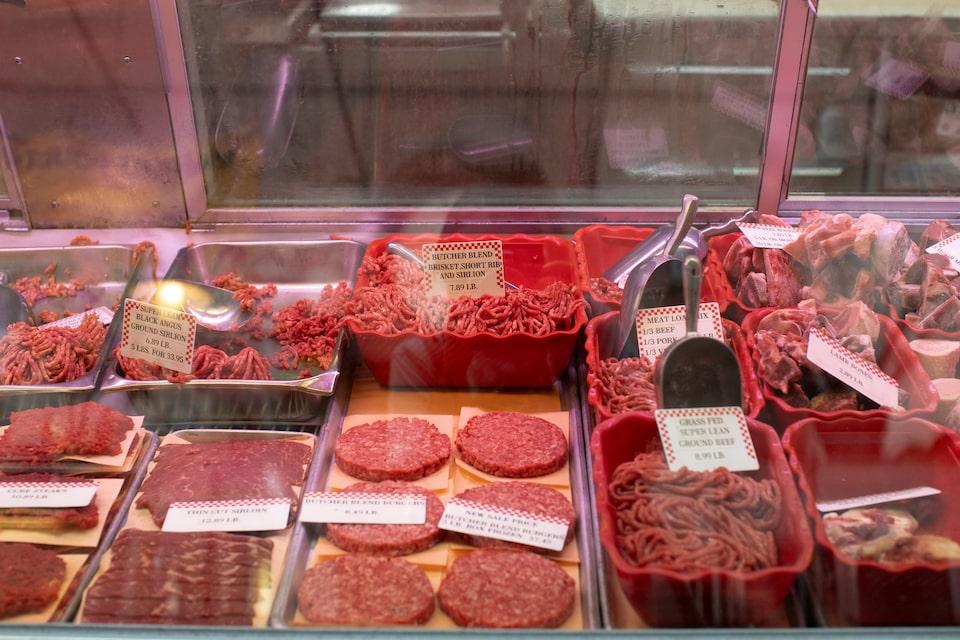
WASHINGTON, Oct 16 (Reuters) - U.S. President Donald Trump said on Friday that his administration was working to lower the price of beef in the country. "We are working on beef, and I think we have a deal on beef," Trump told reporters at the White House. Sign up here. The price of beef is "higher than we want it, and that's going to be coming down pretty soon too. We did something," Trump added, without elaborating. Beef prices have climbed to record highs after cattle ranchers slashed their herds due to a yearslong drought in the western United States that dried up lands used for grazing and raised feeding costs. By the beginning of the year, the herd had dwindled to 86.7 million cattle, the smallest number for the time period since 1951, according to U.S. government data. The Meat Institute, which represents meatpacking companies, said it needed to learn more about Trump's plans to lower prices. The administration of former President Joe Biden blamed meatpacking companies for rising food costs. Last week, processors Tyson Foods (TSN.N) , opens new tab and Cargill agreed to pay a combined $87.5 million to settle a federal lawsuit brought by consumers who accused the companies of conspiring to inflate beef prices by restricting supply. The companies have denied wrongdoing. Meatpackers such as Tyson have lost money in their beef businesses as tight cattle supplies force them to pay more to buy animals to slaughter. Supplies tightened further this year after the U.S. Department of Agriculture halted imports of Mexican livestock to keep out a damaging pest spreading in Mexico. Mexican cattle were formerly imported to be fattened in U.S. feedlots and slaughtered in U.S. processing plants. Tariffs that Trump imposed on Brazilian goods have also slowed U.S. imports of Brazilian beef that was mixed with U.S. supplies to make hamburger meat. Recently, some U.S. ranchers have begun taking initial steps to start rebuilding the herd. However, it takes about two years before beef output rises after they make the first moves to expand because that is how long it takes to raise full-grown cattle, ranchers said. Last month, U.S. Agriculture Secretary Brooke Rollins said the USDA in mid-October would provide details on a plan to revitalize the decimated herd that would not include payments to producers. https://www.reuters.com/business/trump-says-his-administration-is-working-lowering-beef-prices-2025-10-16/
2025-10-16 21:41
Oct 16 (Reuters) - U.S. liquefied natural gas producer NextDecade (NEXT.O) , opens new tab said on Thursday it had reached a positive final investment decision (FID) on the fifth liquefaction plant, known as a train, of its Rio Grande export project in Texas. Shares of the company rose over 4% in extended trading, as the announcement marked the fifth positive FID for an LNG development project in the U.S. — the world's largest exporter of the superchilled fuel. Sign up here. The U.S. LNG sector has seen a revival in commercial activity after President Donald Trump lifted the moratorium on new export permits for LNG shortly after taking office in January. LNG developers typically reach an FID on projects once they have secured enough supply deals to obtain the necessary financing for construction. Train 5 has the expected LNG production capacity of about 6 million tonnes per annum, bringing the total expected LNG production capacity under construction to about 30 MTPA at Rio Grande LNG, the company said. The completion date for Train 5, as well as the first commercial delivery date under the Train 5 LNG deals, is anticipated to be in the first half of 2031, the company added. Total project costs associated with Train 5 and related infrastructure are expected to be about $6.7 billion. The company said Train 5 is commercially supported by 4.5 MTPA of 20-year agreements with JERA, EQT Corp(EQT.N) , opens new tab and ConocoPhillips (COP.N) , opens new tab. TotalEnergies (TTEF.PA) , opens new tab, which has a 17.1% stake in NextDecade, had decided not to invest in the company's Train 5, prioritizing lower-cost projects elsewhere as it reassesses its global LNG strategy, Reuters reported in August. NextDecade in September announced positive FID for its fourth liquefaction plant in the same project in Texas, which is expected to be completed in the second half of 2030. https://www.reuters.com/business/energy/nextdecade-reaches-positive-fid-train-5-rio-grande-lng-project-2025-10-16/

2025-10-16 21:28
Oct 16 (Reuters) - A new underground transmission line was approved by the New York State Public Service Commission linking an existing Clay substation with Micron Technology's (MU.O) , opens new tab proposed semiconductor megafab facility in Onondaga County, Governor Kathy Hochul announced on Thursday. The two-mile, 345-kilovolt line is a key piece of infrastructure for Micron’s planned $100 billion investment in Central New York, the largest private investment in the state’s history, Hochul's press release said. Sign up here. The project is expected to create more than 50,000 jobs over the next two decades, including 9,000 direct positions at Micron. "This project is set to transform Central New York — and we're moving quickly ahead with all due speed and deliberation," Hochul said. The transmission line approval follows a 2022 agreement between Micron and New York State, when the chipmaker selected the region for its advanced manufacturing facility. The megafab aims to produce one in four of all U.S.-made semiconductors by 2030. The commission also approved environmental and construction plans for the first phase of the project, including the eastern expansion of the Clay substation and installation of equipment linking it to the Micron facility. https://www.reuters.com/sustainability/boards-policy-regulation/new-york-approves-power-line-microns-100-billion-semiconductor-plant-2025-10-16/

2025-10-16 21:18
NEW YORK, Oct 16 (Reuters) - Making sense of the forces driving global marketsBy Alden Bentley, Editor in Charge, Americas Finance and MarketsJamie is enjoying some well-deserved time-off, but the Reuters markets team will still keep you up to date on what markets were focused on today and why they took a breather. I'd love to hear from you so please feel free to reach out at [email protected] , opens new tab Today's Key Reads Sign up here. Today's Key Talking Points Regionals spoil the banking party Tumbling financial stocks stole the punchbowl from the S&P's cautious recovery. Zions Bancorp disclosed a $50 million third-quarter loss on souring California loans, which was enough to sap the remaining bullishness from strong earnings reports from six of the nation's largest banks on Tuesday and Wednesday. The S&P 500 Banks index fell 3.5%, more than reversing a 1.2% gain the previous session. The KBW regional bank index (.KRX) , opens new tab fell 7%. Meanwhile, optimism about artificial intelligence was not sufficient to hold the market together. An early rally by chipmakers buoyed things after Taiwan's TSMC 2330.TW , opens new tab, the world's largest maker of advanced semiconductors, raised its full-year revenue forecast on a for AI spending. The market was fragile given the recent downward spiral in U.S.-China trade relations, even as the big banks provided hopeful signs of economic resilience, at a time when economic data, good or bad, is in short supply due to the ongoing . Greenback in the red The U.S. dollar logged its third consecutive down session against major currencies including the euro, yen and Swiss franc amid . China the U.S. of stoking panic over its rare earth controls and said Treasury Secretary Scott Bessent had made "grossly distorted" remarks about a top Chinese trade negotiator, rejecting a White House call to roll back the curbs. Dollar/yen extended its loss after U.S. midday after Seiichi Shimizu, the Bank of Japan's assistant governor, said the central bank must be careful when normalizing monetary policy due to uncertainty about how the economy would react to a new environment of positive interest rates. Fed Governor Christopher Waller said he supported an in October due to mixed readings on the state of the job market. A parade of Fed speakers this week, including Chair Jerome Powell, did not dampen conviction that the Fed policy meeting at the end of the month will end with another rate cut. The blackout period starts Saturday and the last speaker before things go quiet is St. Louis Fed President Alberto Musalem on Friday. Stars aligned for gold Gold hit a record high for the fourth straight session. The venerated safe-haven metal has gained over 60% year-to-date, driven by geopolitical tensions, aggressive rate-cut bets, central bank buying, de-dollarization and robust ETF inflows. What could move markets tomorrow? Opinions expressed are those of the author. They do not reflect the views of Reuters News, which, under the Trust Principles, is committed to integrity, independence, and freedom from bias. Trading Day is also sent by email every weekday morning. Think your friend or colleague should know about us? Forward this newsletter to them. They can also sign up here. https://www.reuters.com/world/china/trading-day-regionals-spoil-banking-party-2025-10-16/