2025-10-16 09:49
Some indicators support cuts but cenbank worried about demand Inflation rate at 2.5% in September, within 1-3% target range Official says central bank is not behind the curve 2025 growth forecast of 2.5% could be revised higher JERUSALEM, Oct 16 (Reuters) - Israel's central bank should not rush to cut interest rates in response to the Gaza ceasefire and last month's inflation dip as the economy is doing well and improving consumer demand could stoke price rises, its deputy governor said on Thursday. Israeli policymakers have come under pressure from politicians, industrialists and mortgage holders to finally loosen the reins after more than three years of high interest rates, which remained at 4.5% during most of the two years of war between Israel and Palestinian militant group Hamas. Sign up here. Officials hesitated to lower rates during the war but the U.S.-brokered deal has halted the fighting. In the face of receding inflation, markets have begun anticipating near-term rate cuts at the central bank's Nov. 24 meeting, or even before. But Andrew Abir told Reuters that while some indicators supported the case for rate cuts, such as easing inflation and a lower risk premium, the Bank of Israel would remain cautious. Inflation declined in September to 2.5%, within the 1-3% target and the downward trend could be abetted by an end to labour supply constraints, which had stoked prices, as military reservists return home to day jobs following the ceasefire. Abir cautioned, however, that a likely rise in consumer demand with the war over could stimulate inflation again. "You could expect sort of a demand-side bonanza given the change in sentiment and the two forces (supply and demand) are obviously acting in different ways on inflation. It's very difficult ... to know which will have a stronger effect." While also worried about overheating the housing market, Abir said, the central bank was sticking to policy that so far has succeeded in bringing inflation back to the target and maintaining market stability. "We don't want to ruin that, so we are still going to be cautious going forward about adjusting our monetary policy for the new environment," he said. "We live in the Middle East and things can change quickly so we are not going to rush ahead with (lowering rates) just because there has been a cessation of hostilities for the last week or so." NOT BEHIND THE CURVE Abir said an inflation rate of 2.5% was still near the upper end of the range while the economy has performed better than he had believed it would throughout the war. Where consumer demand will be in the next six to 12 months will drive the monetary policy debate, he said, both in terms of the "direction of interest rates and the pace of the change", especially with the economy near full employment. "These are not things that signal we are behind the curve. We need to make on estimate (on demand) to be able to set what tightness of monetary policy is needed to make sure inflation stays with the range." Abir said that with the Gaza war having seemingly stopped earlier than expected, the bank's 2.5% growth estimate for 2025 could be revised higher. "We are not in a terrible situation where we have to rush into cutting rates big time. The economy is doing well," he said, also pointing to solid investment. Abir said the end to fighting should also benefit fiscal policy due to lower defence spending, a situation the government should use to cut debt levels. He said that despite the shekel , intervention is not needed since markets are functioning well. https://www.reuters.com/world/middle-east/bank-israel-stay-cautious-rates-despite-gaza-deal-official-says-2025-10-16/
2025-10-16 07:40
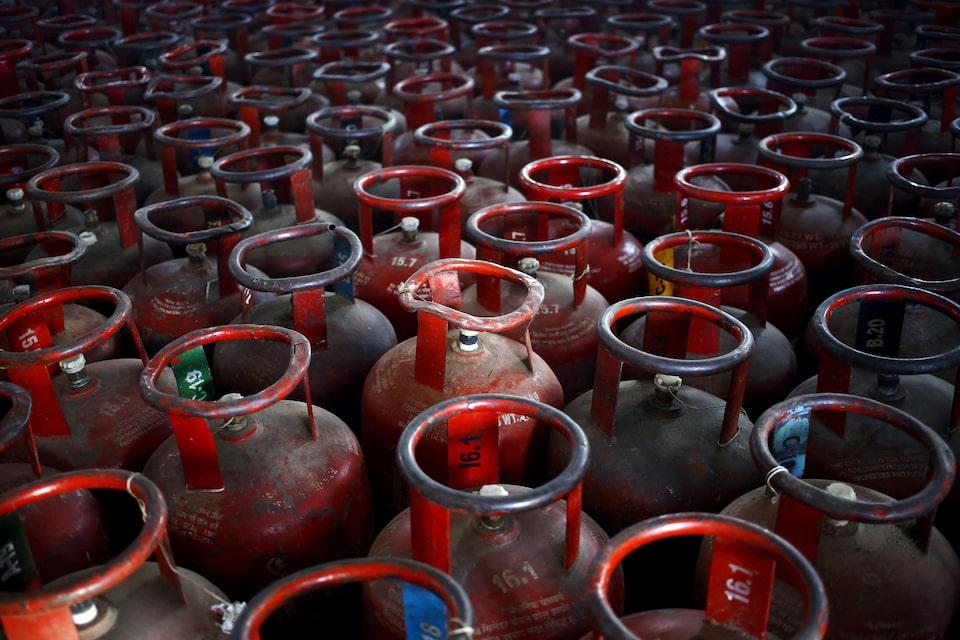
India buys 90% of its LPG imports from the Middle East Indian refiners informed Middle East suppliers of a likely cut India wants to boost energy imports from the US NEW DELHI, Oct 16 (Reuters) - India plans to cut imports of liquefied petroleum gas from the Middle East as its state refiners look to boost purchases from the U.S., sources with knowledge of the matter said, bolstering New Delhi's efforts to secure a broader trade deal with Washington. The state refiners have already informed their traditional suppliers of LPG in Saudi Arabia, United Arab Emirates, Kuwait and Qatar about the likely cut in LPG purchases, the sources, who spoke on condition of anonymity, said. Sign up here. The planned size of the LPG supply reduction from the Middle East wasn't clear, but Reuters reported in July that India aims to source about 10% of its cooking gas imports from the U.S. beginning in 2026. During Prime Minister Narendra Modi’s visit to Washington in February, India pledged to raise U.S. energy purchases from $10 billion to $25 billion, with both nations targeting $500 billion in bilateral trade by 2030. Indian officials are currently in Washington for trade talks. India's trade surplus with the U.S. is a key irritant for President Donald Trump, who has imposed a 50% tariff on Indian goods - with 25 percentage points of that total specifically levied to penalise New Delhi for purchases of Russian oil. Washington says Moscow is using petroleum revenue to fund its war against Ukraine. Trump on Wednesday said Modi has assured that India will stop buying Russian oil. Indian state refiners and Middle Eastern producers in Kuwait, Qatar and UAE did not respond to Reuters emails seeking comment. Saudi Aramco declined comment. The sources said LPG will be sourced on a delivered basis from the U.S. LPG is a mix of propane and butane used as cooking fuel and is mainly imported by state retailers Indian Oil Corp (IOC.NS) , opens new tab, Bharat Petroleum Corp (BPCL.NS) , opens new tab and Hindustan Petroleum Corp (HPCL.NS) , opens new tab and sold at a subsidised price to households. Indian state refiners are jointly seeking to buy about 2 million metric tons of U.S. LPG in 2026 through tenders. In 2024, the South Asian nation imported about 65% of its LPG consumption of 31 million tons, according to the government data. The refiners imported about 90% of their 20.4 million tons under term deals with countries including the UAE, Qatar, Kuwait, and Saudi Arabia. This year, India has bought some parcels of U.S. LPG, taking advantage of the arbitrage window as China, locked in a tariff war with Washington, slowed purchases. In April, Reuters reported that India plans to scrap import tax on some U.S. products, including LPG, as part of a broader trade deal. In 2024, India imported 8.1 million tons of LPG from UAE, 5 million tons from Qatar, 3.4 million tons from Kuwait, and 3.3 million tons from Saudi Arabia, the sources said. The nation also bought small quantities from Bahrain and Oman. https://www.reuters.com/business/energy/india-refiners-buy-more-us-lpg-2026-cut-middle-east-imports-sources-say-2025-10-16/
2025-10-16 07:28
NEW DELHI, Oct 16 (Reuters) - India's Mangalore Refineries and Petrochemicals (MRPL.NS) , opens new tab is scouting for oil from alternative sources sold at a discount while hoping to continue buying Russian oil, its managing director Mundkur Shyamprasad Kamath said on Wednesday. U.S. President Donald Trump on Wednesday said Prime Minister Narendra Modi had assured that India will stop buying oil from Russia, India's top source of imported oil. Washington wants to curb revenue to Moscow in the hope of ending its war on Ukraine. Sign up here. Indian refiners have taken advantage of the discounted prices Russia has been forced to accept for its oil after the U.S. and the European Union imposed sanctions on Moscow in 2022. Russian oil accounted for about 35% to 40% of MRPL's overall oil imports in the September quarter, he said. MRPL operates a 300,000 barrels per day refinery in the southern state of Karnataka. "We have already started looking at other crudes which are available on discount by our own methods of sourcing crude," Kamath told analysts on a call, adding the government has maintained that India will continue to favour the lowest cost sources. "So we are confident that it will continue in the near future," he said, referring to Russian oil imports. He said his company would look at buying U.S. oil, but it had not been attractive in previous quarters. "And on an economic basis, I am confident that we will be able to sail through," he said. https://www.reuters.com/business/energy/indias-mrpl-seeks-cheaper-oil-amid-us-pressure-hopes-keep-buying-russian-2025-10-16/

2025-10-16 07:12
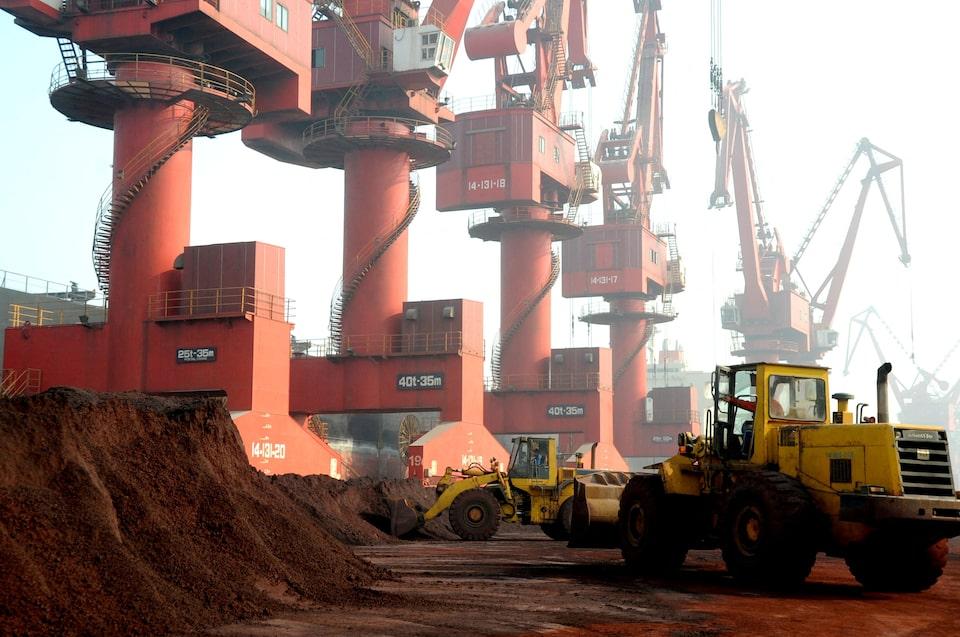
China rebuts US calls to ease rare earth export controls US intentionally stoked global panic, says commerce ministry US accuses China of supply-chain power grab amid tariff threats Beijing says export controls align with international practices BEIJING, Oct 16 (Reuters) - China on Thursday accused the U.S. of stoking panic over its rare earth controls and said Treasury Secretary Scott Bessent had made "grossly distorted" remarks about a top Chinese trade negotiator, rejecting a White House call to roll back the curbs. The official newspaper of the governing Communist Party also issued a seven-point rebuttal after top U.S. negotiators suggested Beijing could avert President Donald Trump's threat to impose 100% tariffs on Chinese goods by scrapping the measures set to take effect on November 8. Sign up here. While investors are relieved the world's top two economies have avoided the retaliatory tariff hikes of March and April, each exchange risks derailing a meeting between Trump and Chinese leader Xi Jinping in South Korea later this month -- a fixed point that has so far helped anchor market stability. "The U.S.' interpretation seriously distorts and exaggerates China's (rare earths export control) measures, deliberately stirring up unnecessary misunderstanding and panic, He Yongqian, a commerce ministry spokesperson, told a news conference. "Provided the export licence applications are compliant and intended for civilian use, they will be approved," she added. Beijing's expanded rare earths export controls left trade negotiators and analysts the world over wondering whether China intends to require manufacturers of any product anywhere in the world containing even trace amounts of Chinese rare earths to apply for a licence to ship it to its final destination. He Yongqian told reporters that was not the case. U.S. Trade Representative Jamieson Greer on Wednesday called China's new measures "a global supply-chain power grab," and said that he expected Beijing not to implement them, while Bessent suggested another extension to the current 90-day tariff truce - which is set to expire around November 9 - could be possible. U.S.-China trade relations had appeared relatively stable following a September 19 call between Trump and Xi, which came after a Madrid summit widely viewed as a success thanks to its breakthrough TikTok deal. TRADING ACCUSATIONS Beijing attributes the unexpected ramping up of rhetoric to the U.S. Commerce Department's surprise expansion of its "Entity List" in late September to include companies in China and elsewhere that use subsidiaries to bypass export restrictions on chipmaking equipment and other high-tech goods. Washington pins the start to China's critical minerals move, which Trump described as "shocking." The Chinese side maintains it not only notified Washington before announcing the new licensing regime, but that the controls are also consistent with measures long in place in other major economies. "The United States has long overstated national security concerns and abused controls, adopting discriminatory practices against China," read one of seven infographics published by the official People's Daily. The poster added that Washington maintains a control list over 3,000 items long, compared to the 900 on Beijing's catalogue. "Implementing such export controls is consistent with international practice," the first poster said, reiterating Beijing's stance on the measures since their announcement. Washington has had similar rules since the 1950s, and has been using them in recent years to stop foreign semiconductor companies selling chips to China if they are made using U.S. technology. TRADE POLICY TURNS PERSONAL Shifting from trade policy to the personal, Bessent on Wednesday described China's chief trade negotiator Li Chenggang as "slightly unhinged" and "disrespectful", alleging that he had threatened to "unleash chaos on the global system" if the U.S. went ahead with the port fees increases, and that he had invited himself to Washington for talks in August. "The relevant remarks of the U.S. side seriously distort the facts," He Yongqian said when asked about Bessent's remarks, adding that China was "taking the initiative to negotiate and communicate with the United States." "Perhaps the vice minister who showed up here with very incendiary language on August 28 has gone rogue," Bessent said. The Treasury chief added that the level of trust between Trump and Xi had prevented tensions from escalating and kept the two men on track to meet in Korea, preserving a pathway for the superpowers to come to an understanding despite the apparent disagreement between their lead negotiators. "It is hoped the U.S. will cherish the achievements of the earlier economic and trade talks and immediately correct its wrongdoings," He Yongqian said. https://www.reuters.com/world/china/rare-earths-tensions-rise-us-china-trade-barbs-2025-10-16/
2025-10-16 07:11
Oct 16 (Reuters) - British specialty chemicals maker Croda International (CRDA.L) , opens new tab flagged on Thursday a continued challenging trading environment for the rest of the year as U.S. tariffs were hurting exports of its pharmaceutical and agricultural customers in some regions. The company, which provides ingredients for the beauty, agriculture, and pharmaceutical industries, pointed to low visibility in its order book as levies by the U.S. government add to the volatility in its markets. Sign up here. However, Croda reaffirmed its outlook for 2025 on a boost from cost cuts, as the company posted a 6.5% rise in third-quarter sales at constant currency rates, helped by steadier demand in the beauty and crop‑sciences sectors. The company's shares were up about 3.5% in early trading. Croda has been cutting costs by streamlining operations and sites, tightening procurement, and in April said it would pass on tariff surcharges to customers, while it also faces some destocking. Tariffs have hurt exports of its customers in the pharmaceutical and industrial markets in Asia and agricultural markets in Latin America, it said on Thursday. The Yorkshire-based company also forecast fourth-quarter sales to be seasonally lower than the first three quarters, citing reduced customer spending towards the end of the year. Croda reported sales of 424.7 million pounds ($569.6 million) for the three-month period ended September 30, up from 406.6 million pounds a year earlier. ($1 = 0.7456 pounds) https://www.reuters.com/business/chemicals-maker-croda-warns-tough-trading-us-tariffs-pressure-customers-2025-10-16/

2025-10-16 06:59
MUMBAI, October 16 (Reuters) - The Reserve Bank of India (RBI) is estimated to have sold $3 billion to $5 billion in spot and non-deliverable forward markets to support the rupee on Wednesday, traders said, marking its largest intervention in months. Seven traders from private, state-run and foreign banks provided the estimates, with two suggesting sales of $5 billion, citing significant activity in the non-deliverable forward market. The RBI did not respond to an emailed request for comment. Sign up here. The interventions helped the rupee post its biggest single-day advance in four months on Wednesday. The rally continued into Thursday, with the currency reaching an intraday high of 87.70 per U.S. dollar. The rupee had come under pressure in recent weeks due to punitive U.S. tariffs, weak equity flows, and demand for gold imports. Prior to the central bank stepping in, the rupee was hovering near its all-time low of 88.80. INTERVENTION COULD MARK TURNING POINT The rupee had depreciated "beyond expectations, and yesterday's central bank move, though bigger, was not entirely surprising," said Alok Singh, group head of treasury at CSB Bank in Mumbai. From here, "the rupee should appreciate," he added. The exact scale of the RBI's intervention is difficult to determine since it operates through multiple state-run banks, and non-deliverable forward activity is harder to measure. Traders rely on market volumes, price action, and the behaviour of banks handling RBI flows to estimate intervention levels. Brokers provide post-market clues about volumes executed by specific banks. Interbank market and broker volumes spiked on Wednesday amid the volatility triggered by the RBI's actions, bankers said. https://www.reuters.com/world/india/india-central-bank-deployed-5-billion-life-jacket-aid-struggling-rupee-bankers-2025-10-16/