2025-10-16 06:45
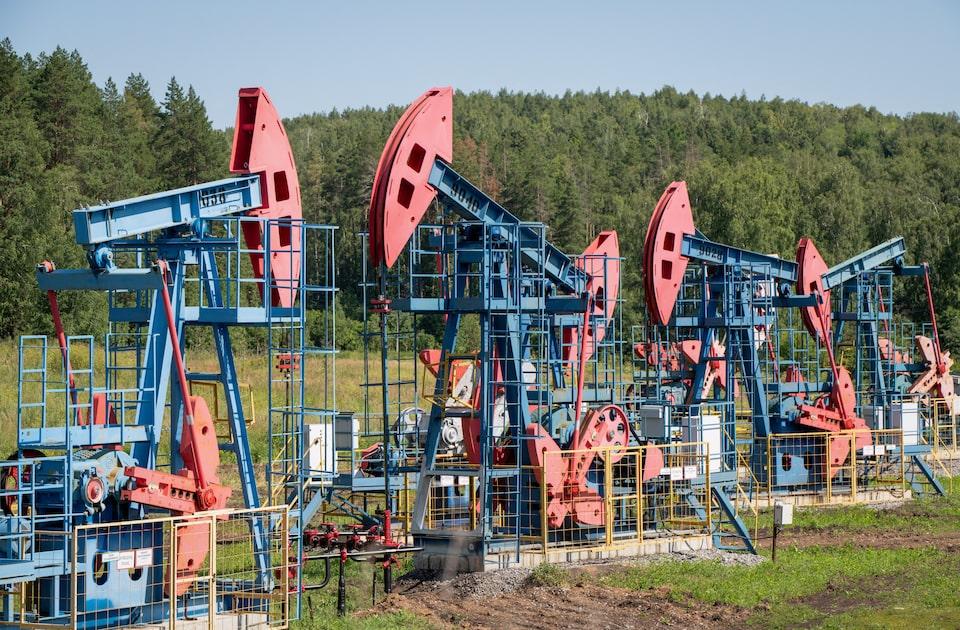
Trump says Modi has assured him that India will stop its buying Russia remains India's top source of oil imports NEW DELHI, Oct 16 (Reuters) - Some Indian refiners are preparing to cut Russian oil imports, three sources told Reuters on Thursday, after U.S. President Donald Trump said India had given an assurance it would stop its buying to help end the war in Ukraine. India and China are the biggest buyers of Russian sea-borne crude, taking advantage of discounted prices Russia was forced to offer after losing sales to Europe following Moscow's invasion of Ukraine in 2022. Sign up here. Indian refiners are preparing to shift away from Russian oil, with a drop in purchases possible from December given orders for November have already been placed, the sources with knowledge of the matter said. Refiners have not been formally told by the government to stop buying Russian oil, said the sources, who declined to be identified as they are not authorised to speak to media. DEEPER CO-OPERATION Indian officials are in Washington for trade talks, with the U.S. having doubled tariffs on Indian goods. U.S. negotiators have said curbing its Russian crude purchases would be crucial to reducing India's tariff rate and sealing a trade deal. A foreign ministry spokesman said it was discussing deeper energy co-operation with the United States. "The current (U.S.) administration has shown interest in deepening energy cooperation with India. Discussions are ongoing," Randhir Jaiswal said in a statement. Trump on Wednesday said he had spoken to Prime Minister Narendra Modi about India's purchases of Russian oil as part of his efforts to raises pressure on Moscow to negotiate a peace deal with Ukraine. "I was not happy that India was buying oil, and he (Modi)assured me today that they will not be buying oil from Russia," Trump told reporters during a White House event. "That’s a big step. Now we’re going to get China to do the same thing." India's foreign ministry said on Thursday that it was not aware of any telephone conversation between Modi and Trump on Wednesday. Oil prices were stable on Thursday as market traders saw a potential slowdown in India's buying of Russian crude boosting demand for supply from elsewhere. Russia accounted for 36% of India's oil imports in the six months through September, or some 1.75 million barrels per day, trade data showed. Imports are set to rise in October to 1.9 million bpd, Kpler data showed, as Russia ramped up exports after Ukrainian drones hit its refineries. RUSSIA STILL CONFIDENT Russia said on Thursday it was confident its energy partnership with India would continue. "Our energy resource is in demand, it's economically advantageous and practical, and I'm confident that our partners will continue to work with us," Deputy Prime Minister Alexander Novak said, referring to India. India's Mangalore Refineries and Petrochemicals (MRPL.NS) , opens new tab said it was hunting for alternative sources sold at a discount while hoping to continue buying Russian oil. Kremlin spokesman Dmitry Peskov said Moscow was able to supply oil at lower prices to countries that Trump is trying to persuade to stop buying Russian oil. Peskov said the principles of free trade would be violated if such countries were deprived of the right to buy what they wanted. https://www.reuters.com/business/energy/some-indian-refiners-prepare-cut-russian-oil-imports-sources-say-2025-10-16/
2025-10-16 06:44
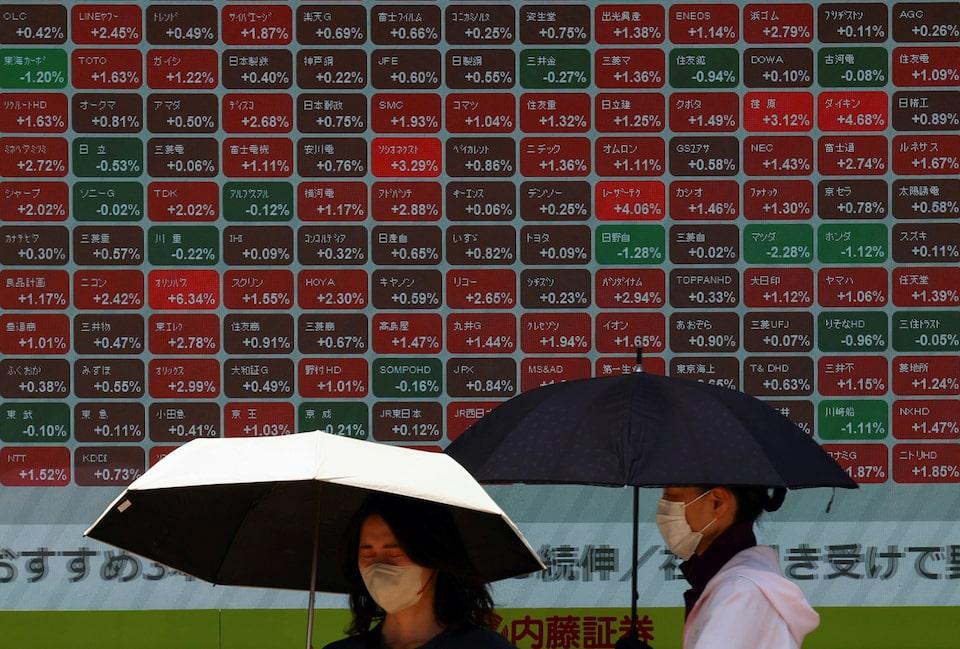
U.S. equity indexes pulled lower by financial shares European stocks and euro inch higher as France passes test Gold surpasses $4,300/oz, dollar sputters amid U.S.-China trade tensions, government shutdown Oil settles lower, giving up earlier gains after India halts Russian imports NEW YORK, Oct 16 (Reuters) - Wall Street stocks ended lower while gold prices surged on Thursday as declining financial shares and simmering trade tensions between the United States and China dampened investor enthusiasm. All three major U.S. stock indexes reversed earlier gains to end the session in negative territory while safe-haven investors continued to send gold to new highs. Sign up here. Disappointing results from Travelers (TRV.N) , opens new tab and the disclosure by Zions Bancorp (ZION.O) , opens new tab that it would take a $50 million loss in the third quarter pulled the financial index (.SPXBK) , opens new tab down 2.75%. "In the absence of data, the banks are going to be providing the sort of data substitute," said Chuck Carlson, chief executive officer at Horizon Investment Services in Hammond, Indiana. "We're seeing hefty declines in some of these banks and financials that are especially credit sensitive, so maybe credit quality is deteriorating." "The dollar's pretty weak today, and crypto's getting killed, too," Carlson added. "It's a risk-off day. Signs of a dampening labor market appear to be making the case for easing monetary policy. Federal Reserve Governor Christopher Waller said on Thursday that "based on all the data we have ... I believe that (the Fed) should reduce the policy rate another 25 basis points" at the conclusion of this month's monetary policy meeting on October 29. Investors were eying the latest developments in the escalating U.S.-China trade dispute. Top U.S. trade officials condemned China's expansion of export controls on rare earths, while Beijing accused Washington of stoking global panic over supply chain disruption. Trade uncertainty is one driver helping to launch gold prices to all-time highs, according to Sam Stovall, chief investment strategist of CFRA Research in New York. "Because of the trade tensions, a lot of central banks, global central banks are buying gold and that is being helped by lower interest rates as well as the weakening U.S. dollar," Stovall said. "It's not a reaction to worries about the global economy, but rather political uncertainty." The Dow Jones Industrial Average (.DJI) , opens new tab fell 301.07 points, or 0.65%, to 45,952.24, the S&P 500 (.SPX) , opens new tab fell 41.98 points, or 0.63%, to 6,629.08 and the Nasdaq Composite (.IXIC) , opens new tab fell 107.54 points, or 0.47%, to 22,562.54. European stocks advanced as investors took largely upbeat corporate earnings to heart amid easing political tensions after French Prime Minister Sebastien Lecornu survived a confidence vote. French blue-chip shares (.FCHI) , opens new tab advanced 1.4%. MSCI's gauge of stocks across the globe (.MIWD00000PUS) , opens new tab fell 0.93 points, or 0.10%, to 984.48. The pan-European STOXX 600 (.STOXX) , opens new tab index rose 0.69%, while Europe's broad FTSEurofirst 300 index (.FTEU3) , opens new tab rose 15.27 points, or 0.68%. The dollar edged lower against the euro and the yen as market participants watched tariff negotiations and parsed dovish comments from Federal Reserve officials. The dollar index , which measures the greenback against a basket of currencies including the yen and the euro, fell 0.33% to 98.35, with the euro up 0.36% at $1.1688. Against the Japanese yen , the dollar weakened 0.43% to 150.39. Treasury yields dropped with the yield on the two-year note hitting its lowest level in more than three years amid trade concerns and credit market worries. The yield on benchmark U.S. 10-year notes fell 6.9 basis points to 3.976%, from 4.045% late on Wednesday. The 30-year bond yield fell 5 basis points to 4.5891% from 4.639% late on Wednesday. The 2-year note yield, which typically moves in step with interest rate expectations for the Federal Reserve, fell 8.4 basis points to 3.422%, from 3.506% late on Wednesday. Oil prices turned lower, weighed down by concerns over softening demand as investors dismissed supply issues arising after U.S. President Donald Trump said India's Prime Minister Narendra Modi pledged to halt Russian oil imports. U.S. crude dropped 1.39% to settle at $57.46 a barrel, while Brent settled at $61.06 per barrel, down 1.37% on the day. Gold breached the $4,300 mark for the first time as the precious metal benefited from trade tensions and the U.S. government shutdown. Spot gold rose 2.4% to $4,308.51 an ounce. U.S. gold futures rose 2.95% to $4,300.00 an ounce. https://www.reuters.com/world/china/global-markets-wrapup-1-2025-10-16/
2025-10-16 06:41
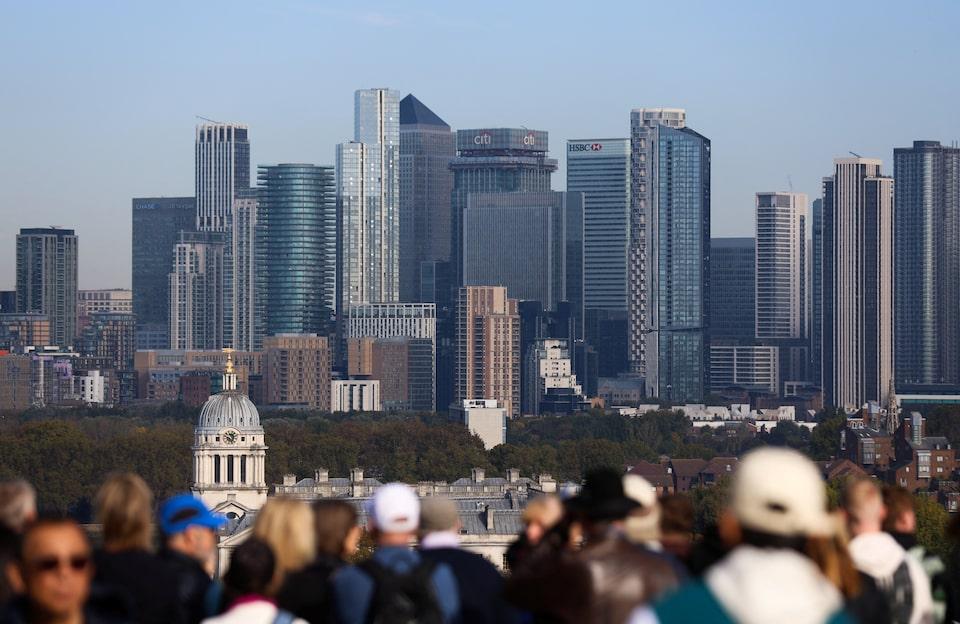
UK GDP grows 0.1% in August, revised July data shows 0.1% fall Economists predict limited growth in Q3, budget uncertainty impacts spending Bank of England faces high inflation, weak growth LONDON, Oct 16 (Reuters) - Britain's economy returned to growth in August when it expanded by a marginal 0.1% from July, official data showed on Thursday, offering a little bit of relief to finance minister Rachel Reeves as she prepares her November budget. However, gross domestic product in July was revised to show a 0.1% fall from June having previously been seen as unchanged, the Office for National Statistics said. Sign up here. Britain's economy is on course to have the second-fastest growth among the Group of Seven nations in 2025 after the United States, the International Monetary Fund said this week. But at 1.3% its annual pace of expansion is not enough to avoid the need for tax increases in Reeves' budget. Fergus Jimenez-England, an associate economist with the National Institute of Economic and Social Research, a think tank, said early indicators for September pointed to limited growth in the third quarter. "Regaining momentum hinges on restoring business confidence and reducing uncertainty, which the government can support by setting aside a larger fiscal buffer in the upcoming budget," Jimenez-England said. Sanjay Raja, chief UK economist at Deutsche Bank, said the data showed that the services and construction sectors were in a "pre-budget funk" and he thought growth in the third quarter would be about half the Bank of England's estimate of 0.4%. "The UK economy has yet to see the full ramifications of the U.S. trade war," Raja said. "Budget uncertainty is hitting its peak too – likely dampening discretionary household and business spending." Economists polled by Reuters before Thursday's data release had forecast that GDP would expand by 0.1% in August. In the three months to August, growth picked up slightly to 0.3% from 0.2% in the three months to July, boosted by public health service work while consumer-facing services shrank, the ONS said. BoE policymakers, who held interest rates at 4% in September, are trying to steer their way between stubbornly high inflation and weak growth. Governor Andrew Bailey said on Tuesday that the jobs market was softening and inflation pressures were cooling after official data showed unemployment rose to its highest since 2021 and private sector wage growth slowed. Monetary Policy Committee member Alan Taylor, also speaking on Tuesday, said the British economy risked a "bumpy landing", partly due to the impact of U.S. President Donald Trump's trade tariffs. Data published earlier this week showed weak growth in retail sales, partly reflecting worries about possible tax increases in Reeves' budget on November 26. https://www.reuters.com/sustainability/sustainable-finance-reporting/uk-economy-grows-01-august-ons-says-2025-10-16/
2025-10-16 06:34
French markets ride high on political progress Investor focus remains on fiscal outlook Suspension of pension reform a longer term concern LONDON, Oct 16 (Reuters) - France's financial markets are riding a roller-coaster, as the country grapples with one of its worst political crises in decades, and while sentiment is improving, the bumpy ride is not over. French Prime Minister Sebastien Lecornu has promised to suspend a landmark pension reform until after the 2027 election, sacrificing one of President Emmanuel Macron's achievements to ensure the government's survival. Sign up here. He is facing no confidence votes in parliament Thursday but appears likely to survive. Here's a look at where markets stand, and what comes next. BOND VIGILANTES IN HIDING? The gap between 10-year French and German bond yields, the premium investors require to lend to France, is around 77 basis points , down from almost 90 bps last week. It could tighten towards 75 bps, said Citi's senior rate strategist Aman Bansal. It narrowed as investors focused on political stability over long-term fiscal worries. Lecornu's plan to suspend pension reform means he'll likely stay in his job, avoiding snap elections, even if some parties have called a no-confidence vote for Thursday. RBC BlueBay Asset Management senior portfolio manager Kaspar Hense said the firm had closed out of its short position - a bet on price falls - in French bonds last week on expectations a political compromise would be found. "Demand for OATs (French bonds) remains strong at these levels of real and nominal yields," said Reinout De Bock, head of European rate strategy at UBS. RATINGS WATCH French borrowing costs remain among the highest in the euro zone, and because suspending the key pension reforms keeps pressure on public finances, France is vulnerable to further ratings downgrades. Lecornu says the suspension would cost 400 million euros ($463 million) in 2026 and 1.8 billion euros in 2027. Without offsetting measures, France's debt-to-GDP ratio would fail to stabilise, analysts say. Goldman Sachs reckons permanent suspension of the pension reform would add 0.5% of GDP to the deficit by 2035, so debt as a share of GDP over the next decade stabilises closer to 130% compared to around 113% now. Moody's, which rates France at Aa3 with a stable outlook, reviews its long-term rating on October 24. "We expect some downgrade pressure but this is priced in by markets," said BlueBay's Hense. STOCKS SOAR France's blue chip share index (.FCHI) , opens new tab rose 2% on Wednesday, its best day since early May, but that's not much to do with politics -- luxury giant LVMH (LVMH.PA) , opens new tab surged 12% after results. French midcaps (.CACMD) , opens new tab are up around 0.25% but have underperformed longer term, up 9% in the past two years, compared to 15% for the blue chip index, and 26% for the overall European benchmark. (.STOXX) , opens new tab And that could continue. Claudia Panseri, chief investment officer at UBS Wealth Management France, said that even if politics stabilises, fiscal and political challenges would still hang over domestic stocks. "European investors may prefer to focus on more internationally diversified companies within the CAC 40, which are less exposed to domestic risks," she said. BANKS BOUNCE BACK But politics does matter for French banks. "Banks have been the most sensitive sector to the political situation in France, and the most (bond) spread sensitive as well," said Barclays head of European equities strategy Emmanuel Cau. Higher spreads typically mean higher wholesale funding costs for banks, hurting profits. Societe Generale (SOGN.PA) , opens new tab, BNP Paribas (BNPP.PA) , opens new tab and Credit Agricole (CAGR.PA) , opens new tab shares jumped over 2% in early trade Wednesday before steadying, having underperformed other European banks and broader French stocks last week when Lecornu stepped down. Societe Generale's share price has doubled this year and any underperformance in banks may present a buying opportunity. EURO RECOVERS FROM A COLD A stellar euro rally has been dented by the political turmoil and it too is expected to benefit from stability. ING currency strategist Francesco Pesole said the euro was looking less "fragile" with the French/German bond spread below 80 bps, adding he was watching no-confidence motions. "If Lecornu survives the no-confidence vote, euro/dollar could edge higher and potentially build strong support around $1.160," he said. It's trading around $1.166 , up 12% this year. https://www.reuters.com/business/finance/markets-relieved-frances-fiscal-fire-still-burns-2025-10-15/
2025-10-16 06:28
Silver hits record high of $54.15 /oz HSBC lifts 2025 gold forecast to $3,355/oz U.S. shutdown halts data; Treasury warns $15 bln weekly hit Traders see 25 bps Fed cuts in Oct and Dec Oct 16 (Reuters) - Gold hit a record high for the fourth straight session on Thursday and soared past $4,300 an ounce as investors flocked to the safe-haven metal on brewing U.S.-China trade tensions and the U.S. government shutdown, with rate cut bets fueling the momentum. Spot gold was up 2.6% at $4,316.99 per ounce as of 4:07 p.m. ET (2007 GMT) after bullion touched a record high of $4,318.75 earlier. Sign up here. U.S. gold futures for December delivery settled 2.5% higher at $4,304.60, after touching a record high of $4,335/oz. The yellow metal has gained over 60% year-to-date, driven by geopolitical tensions, aggressive rate-cut bets, central bank buying, de-dollarisation and robust ETF inflows. "Gold's trajectory will hinge on the rate-cut picture heading into 2026 as well as the developments around U.S.-China. If no deal is reached between the U.S.-China and the relationship continues to deteriorate, that could be the spark gold needs to cross the $5,000/oz barrier," said Zain Vawda, analyst at MarketPulse by OANDA. Investors this week have stayed focused on the simmering U.S.-China trade spat, with Washington on Wednesday criticizing China's expanded rare earth export controls as a threat to global supply chains. Meanwhile, Donald Trump said he and Russian President Vladimir Putin agreed on Thursday to another summit to discuss ending the war in Ukraine, one day before the U.S. president was due to speak with Ukrainian leader Volodymyr Zelenskiy. Traders are pricing in a 25 basis-point U.S. Federal Reserve rate cut in October, and another in December, with probabilities of 98% and 95%, respectively. Non-yielding gold typically performs well in a low-interest-rate environment. Short-term pullbacks in gold are likely to be temporary, as bullish investors tend to use dips to re-enter positions, Vawda said. HSBC raised its 2025 average gold price forecast to $3,355 an ounce on Wednesday, citing safe-haven demand from geopolitical tensions, economic uncertainty and a weaker U.S. dollar. Meanwhile, the ongoing U.S. government shutdown has halted scheduled economic data, with a Treasury official warning it could cost the economy up to $15 billion a week in lost output. Spot silver rose 1.8% to $54.04 per ounce, after hitting a record high of $54.15 earlier in the session, tracking gold's rally and supported by tightness in the spot market. Platinum rose 3.2% to $1,706.65 and palladium climbed 4.6% to $1,606.00. https://www.reuters.com/world/china/gold-extends-record-rally-us-china-tensions-rate-outlook-2025-10-16/

2025-10-16 06:20
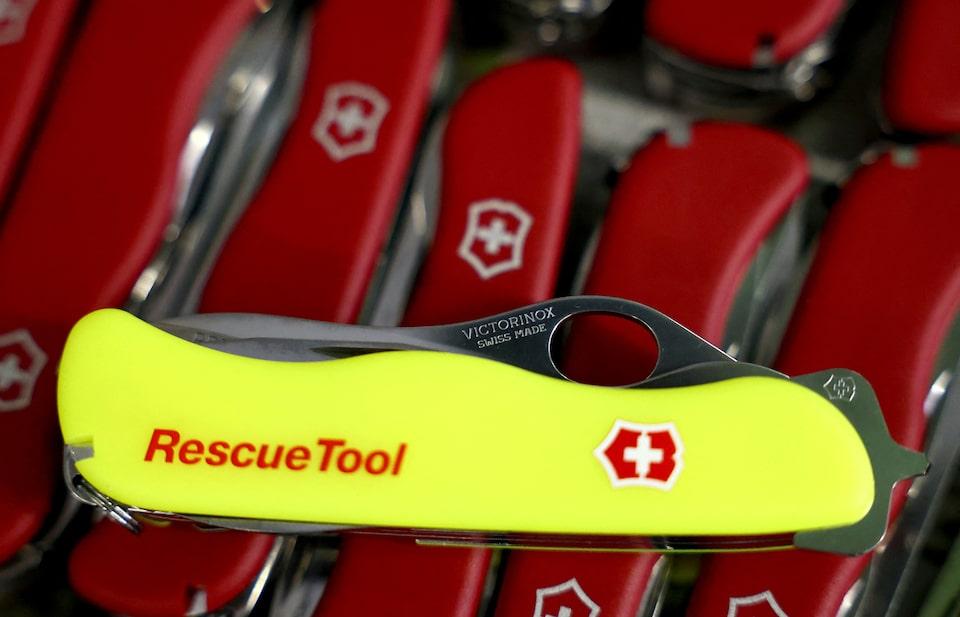
Victorinox boosts US inventory to mitigate tariff impact Survey finds 45% of Swiss firms report declining orders Firm considers US end-of-line work to cut dutiable value IBACH, Switzerland, Oct 16 (Reuters) - Swiss Army Knife maker Victorinox is trying to hold down its U.S. prices, while exploring new markets, as it experiments with new tools to navigate President Donald Trump's trade tariffs. Popularised in the United States by soldiers who were based in Europe after World War Two, the distinctive red-and-silver multi-tool is made at a factory in Ibach, central Switzerland. Sign up here. There, rolls of stainless steel are punched into blades, which are rounded with abrasive ceramic stones and baked at more than 1,000 degrees Celsius before being sharpened. Victorinox, which produces 10 million Swiss Army Knives a year alongside kitchen and commercial knives, watches and luggage, is one of many Swiss manufacturers worried about the higher cost of doing business with the United States. Trump imposed tariffs of 39% on imports of goods from Switzerland in August in a bid to cut the U.S. trade deficit with the country. "If the tariffs stay in place, that's an exceptionally challenging situation," said CEO Carl Elsener, whose great-grandfather founded the company in 1884, adding the higher levy would cost Victorinox some $13 million a year. The U.S. accounted for around 13% of Victorinox's 417 million Swiss franc ($519 million) sales in 2024 and if the 39% tariff stays in place every product it ships to the U.S. will lose money, Elsener told Reuters. Victorinox has responded by sending extra stock to the U.S. to build up inventories and pushing efficiencies at its Swiss plants. It is also considering doing some polishing and packaging work in the U.S. to lower its cost at time of import. "We are trying to reduce our dependence on the U.S. market by trying to expand more strongly in other markets like Latin America and Asia," Elsener said of Victorinox, which has around 100 U.S. staff in sales, marketing and logistics. AVOIDING US PRICE HIKES Family-owned Victorinox is not alone in feeling the pinch. A survey last month by the Swiss Mechanic trade body showed 45% of Swiss small- and medium-sized manufacturing companies had experienced lower order intakes since the U.S. tariffs. Swiss firms' profit margins are already being eroded by a 12% rise in the franc against the dollar this year. Novartis (NOVN.S) , opens new tab and Roche (ROG.S) , opens new tab are among those potentially in the firing line if the tariffs extend to drugmakers, while Swiss watchmakers like Omega-owner Swatch Group, as well as food giant Nestle (NESN.S) , opens new tab, which exports Nespresso capsules, are already being hit. "Our priority is to defend market share while the situation is so unpredictable," said Elsener, adding: "Our investment in the United States right now is to avoid price increases and accept the losses - that's our sacrifice to keep market share." Victorinox sent two extra 40‑foot containers with about 200,000 Swiss Army Knives, plus 200,000 kitchen and commercial knives, to the United States in February and March. That should mean it has sufficient stock in the U.S. until the end of this year, and up until March for some products, and be able to keep prices there steady into 2026. MAKING SWISS ARMY KNIVES ABROAD 'NOT AN OPTION' Victorinox - which is raising some targeted prices - is accelerating automation and efficiency programmes at its Ibach facility, where 25 members of the family still work. It considered moving some production to the United States or elsewhere in Europe to lessen the tariffs impact, but ultimately decided against this because it lacks the scale, Elsener said. Instead, it is looking at limited end-of-line work in the U.S. — such as cleaning and packaging of commercial knives — to cut the dutiable value, he added. What it cannot do is make its products elsewhere, as to qualify for the coveted Swiss-made label, at least 60% of manufacturing costs must be in Switzerland. "Producing the Swiss Army Knife abroad is not an option," said Elsener, adding the brand depends on its Swiss heritage. Nevertheless, he is confident for the future. "We got through the First World War, the Depression, the Second World War, the global economic crisis, the oil crisis," he said. "This is just the latest challenging situation, which I'm confident we can overcome." ($1 = 0.8034 Swiss francs) https://www.reuters.com/business/autos-transportation/swiss-army-knife-maker-tries-new-tools-blunt-trump-tariff-blow-2025-10-16/