2025-10-16 06:00
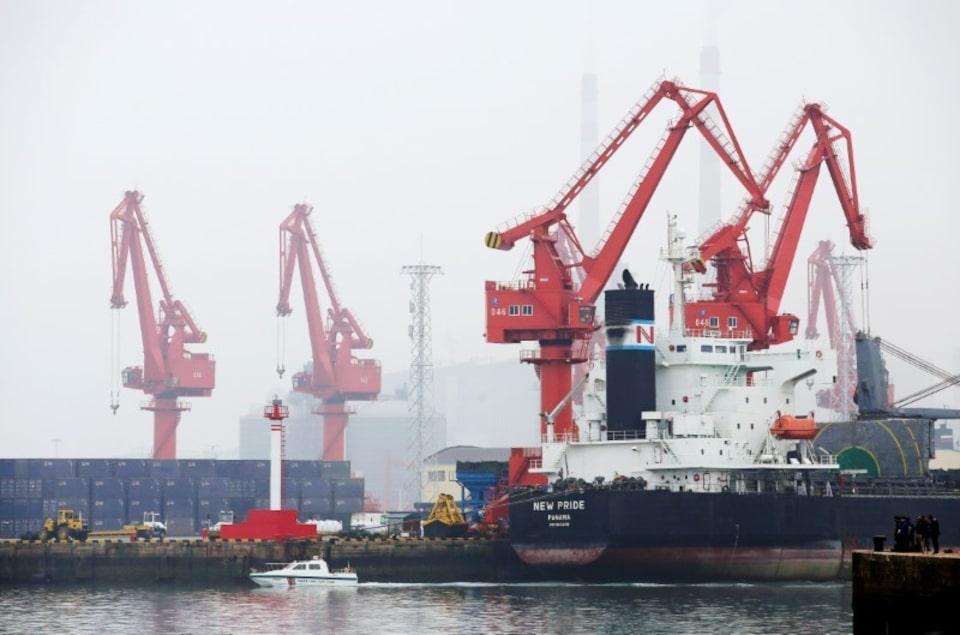
International Energy Agency expects heavy oversupply in oil market Agency however reports 1.5 million bpd of 'unaccounted' oil in August IEA bearish outlook clashes with OPEC forecasts LONDON, Oct 16 (Reuters) - The International Energy Agency continues to forecast a significant supply glut in the oil market, but uncertainty over the whereabouts of almost 1.5 million barrels per day of crude oil is throwing this projection into doubt. The oil market has struggled for months to establish a clear direction, keeping prices stuck in a narrow range, as traders have sought to make sense of starkly divergent supply and demand projections from the IEA, OPEC and other forecasting agencies. Sign up here. The IEA has long forecast a severe oil glut this year and next due to rising global production. In its latest report released on Tuesday, the Paris-based agency provided an even more bearish outlook, forecasting a surplus of 2.35 million barrels per day in 2025 and 4 million bpd - or nearly 4% of global demand - next year. OPEC, on the other hand, expects global oil supply to closely track demand through 2026. Given that we're already in the fourth quarter of 2025, this difference is striking, with few precedents in the long history of the world's largest commodity market. MISSING BARRELS The murky crude picture got even muddier on Tuesday when the IEA report also noted that it was unable to account for 1.47 million bpd of oil in its global balances for August, the equivalent of 1.4% of annual demand. By comparison, the IEA "unaccounted for balance" figure for July was 850,000 bpd, or 370,000 bpd for the second quarter overall. This 1.47 million bpd figure is a staggeringly big blind spot with significant implications for the overall balance between global supply and demand. The IEA's figures show supply outstripping demand by 2.04 million bpd in August, meaning that the oversupply could, in theory, grow to 3.5 million bpd or shrink to 500,000 bpd. That's a huge difference that could have a meaningful effect on crude prices. The IEA calculates global oil balances using official government data as well as figures from private companies and analysts on production, consumption, exports and storage. It is quite common for forecasters to have "holes" in their calculations due to delays in government reporting and the periodic absence of some data sets given the sheer size of the global oil market. Indeed, the IEA regularly updates historical data. In its monthly report in May, the agency made significant upward revisions to recent years' oil demand, including increasing 2024 oil consumption by 350,000 bpd, thereby flipping a previously reported surplus into a deficit. But the sheer scale of the missing barrels in the IEA's August report should give traders and investors pause, particularly because this is coming at a time when the market is already trying to make sense of forecasters' wildly divergent projections. DISAPPEARING BARRELS The IEA said the August discrepancy “may stem from the time-lag of reported data or unavailable data for non-OECD countries." Fully accounting for the missing barrels will take time. But it is reasonable to assume that the gap may be due, in large part, to two factors that have been confounding the crude market all year: the trading of heavily sanctioned oil and China's vast stockpiling. First, there's the question of how much sanctioned oil is actually being traded. The volume of seaborne crude oil last week hit 1.25 billion barrels, the highest since the start of the Covid-19 pandemic, according to analytics firm Kpler. Excluding the pandemic era, oil being held at sea - or "oil on water" - has never been higher. This maritime buildup could well be a precursor to a sharp increase in overland storage - and thus significant global oversupply. Yet the picture is complicated by the fact that over a quarter of oil on water comes from three countries facing western sanctions: Russia, Iran and Venezuela. The majority of the oil from these producers is transported on so-called "shadow fleet" tankers that evade sanctions, often hiding their whereabouts by switching off satellite transponders. This makes it harder to track seaborne oil movements, potentially accounting for some of the IEA's missing barrels. CRUDE HOARDING Next, there is the uncertainty surrounding China's massive oil storage volumes. Global observed inventories - oil in storage and in vessels - swelled by 225 million barrels between January and August to the highest level in four years, according to the IEA, which expects stocks to rise further in September. A large part of the inventory build clearly took place in China, the world's largest oil importer. However, Beijing does not officially disclose the scale of its oil storage capacity or changes in inventories. In the absence of government data, traders rely on secondary sources to estimate the size and fill rate of China's rapidly expanding storage network. The IEA estimates that Chinese crude stocks rose by 110 million barrels between April and August 2025, citing data from satellite analytics firm Kayrros. But given the lack of firm data, it is possible that China's crude stocks have increased much more than this, accounting for another part of the IEA's missing barrels. Calculating production, consumption, exports and storage in the massive global oil market has never been easy, but the IEA's missing barrels mystery may be an indication that it is going to get even harder moving forward as geopolitics obscure large parts of the market. Want to receive my column in your inbox every Monday and Thursday, along with additional energy insights and links to trending stories? Sign up for my Power Up newsletter here. The opinions expressed here are those of the author, a columnist for Reuters Enjoying this column? Check out Reuters Open Interest (ROI), , opens new tab your essential new source for global financial commentary. ROI delivers thought-provoking, data-driven analysis. Markets are moving faster than ever. ROI , opens new tab can help you keep up. Follow ROI on LinkedIn , opens new tab and X. , opens new tab https://www.reuters.com/business/energy/where-are-oil-barrels-iea-gap-deepens-confusion-over-looming-glut-2025-10-16/
2025-10-16 05:54
Pernod's results show absence of green shoots, analysts say U.S. and Chinese markets experience steep declines Overall 7.6% drop slightly worse than expected Shares broadly flat in early trade PARIS, Oct 16 (Reuters) - French spirits maker Pernod Ricard (PERP.PA) , opens new tab endured steep declines in all but one of its key markets in the first quarter, it said on Thursday, as global tariffs and weak economies further pressure the embattled spirits sector. Pernod, the world's second-biggest Western spirits group behind Diageo (DGE.L) , opens new tab, said it still expected sales to improve in the current fiscal year to June 30, 2026, while reporting a well-flagged 7.6% fall in first-quarter sales, blaming weak consumer demand and destocking in China and the United States. Sign up here. Pernod said it continued to expect the improving sales trends to be skewed towards the second half of the year, boosted by higher sales of cognac in duty-free stores and an easier base of comparison against a year ago. However, it remained cautious on the key Chinese market ahead of the festive Chinese New Year season that starts in mid-February. The owner of Martell cognac, Mumm champagne and Absolut vodka brands reported sales of 2.384 billion euros ($2.78 billion) from July to September, marking a deeper like-for-like decline than a 7.1% drop forecast by analysts in a company-compiled poll. Pernod Ricard's fiscal year started on July 1. Edward Mundy, analyst at Jefferies, said Pernod's first quarter showed an "absence of clear green shoots" that might disappoint investors. The company's shares were up 0.6% by 0715 GMT. Pernod Ricard and its rivals have suffered amid falling sales and tariff uncertainty in the key markets of China and the United States. A deal removing steep tariffs on European cognac exports to China was reached in July, while the U.S. and European Union also agreed a 15% tariff rate that month. Even before tariffs, spirits companies were grappling with a widespread downturn as a sales boom seen after the COVID-19 pandemic went into reverse. Some investors have worried that a societal shift towards lower alcohol consumption could drive long-term declines, but spirits executives say current trends are more driven by economic difficulties than by fundamental changes in how much people drink. In the United States, where tariff uncertainty led distributors to boost inventory levels at the end of fiscal year 2025, adjustments continued in the quarter, with sales falling 16%. In China, sales fell 27% as consumer demand stayed soft over the summer and into the Mid-Autumn Festival. In India, another key market for Pernod, sales rose 3% despite adverse changes in excise tax in the nation's second-most populous state of Maharashtra, in July. Pernod - which has launched a restructuring plan to cut costs - reiterated its guidance for between 3% and 6% annual organic sales growth for 2027-2029, along with annual organic margin expansion. ($1 = 0.8579 euros) https://www.reuters.com/world/china/weak-chinese-us-markets-weigh-pernod-ricard-q1-sales-2025-10-16/

2025-10-16 05:37
PARIS Oct 16 (Reuters) - Ardian has raised a record $20 billion for its next-generation fund dedicated to energy, transport and digital connectivity in Europe, showing strong investor interest in critical infrastructure, the French private equity firm said on Thursday. With U.S. President Donald Trump reshaping global alliances and trade policies, Europe is seeking private investment to pursue new avenues for economic growth and strengthen its independence in infrastructure, defence, energy and data centres. Sign up here. "Volatility is so high today, and events are so surprising and so violent that investors feel they have finally rediscovered the virtues of diversification," Ardian France CEO Mathias Burghardt told journalists, referring to U.S. and other international investors. INTERNATIONAL BACKING Burghardt said Ardian Infrastructure Fund VI (ZAEFKX.O) , opens new tab was targeting physical and virtual connectivity, attracting growing investments from the United States. The fund, backed by 229 investors, represents the investment firm's largest infrastructure platform, with a 90% increase from Ardian Infrastructure Fund V (ZAEFJX.O) , opens new tab. Investors from Asia-Pacific countries contributed 32% of investments in the fund, Ardian said. Its fundraising comes after Sweden's EQT closed its flagship EQT Infrastructure VI fund at 21.5 billion euros earlier this year, 35% more than its predecessor. https://www.reuters.com/business/private-equity-firm-ardian-raises-20-billion-infrastructure-europe-2025-10-16/

2025-10-16 05:26
China-US trade spat leaves dollar on back foot Dollar extends losses against yen after BOJ official comments France’s political drama barely dents euro Aussie drops after employment data NEW YORK, Oct 16 (Reuters) - The U.S. dollar fell, on track for a third consecutive session of losses against major currencies including the euro, yen and Swiss franc on Thursday, amid U.S.-China tensions and as markets assess remarks from Federal Reserve officials. China accused the U.S. of stoking panic over its rare earth controls, rejecting a White House call to roll back the curbs. Sign up here. "The dominant story line is still U.S.-China trade tensions," said Matt Weller, head of market research at StoneX. "It seems like China is ratcheting up the pressure ahead of the expected meeting between President Xi Jinping and President Donald Trump at the end of the month. The key question is if that is just an attempt to get some negotiating leverage or China is ready to more meaningfully decouple." The dollar weakened 0.49% to 0.793 against the Swiss franc . Federal Reserve Governor Christopher Waller said he is on board with another interest rate cut at the U.S. central bank's policy meeting later this month because of the mixed readings on the state of the job market. The Fed's newest governor, Stephen Miran, reiterated his support for a more aggressive rate cut path for 2025 than the one favored by some of his colleagues. The Fed’s Beige Book offered little support to U.S. rates, pointing to emerging signs of economic weakness, including rising layoffs and reduced spending among middle and lower-income households. The dollar index , which measures the greenback against six other currencies, fell 0.33% to 98.35. U.S. Treasury yields hovered near multi-week lows, with the benchmark 10-year just above 4%, pressuring the dollar as investors also weighed a prolonged U.S. government shutdown. "We are kind of in a holding pattern here especially with the U.S. government shutdown, which is predicted to last almost 40 days. The impacts to the economy tend to be exponential the longer shutdown lasts. That going on with the U.S.-China trade tensions, I think, has left traders in an awkward spot as they decide how those will play out," Weller said. FRENCH POLITICAL DRAMA French Prime Minister Sebastien Lecornu survived two no-confidence votes in parliament, winning a temporary reprieve for his days-old government and the chance to deliver a budget for the euro zone's second-largest economy. Lecornu had earlier this week pledged to suspend President Emmanuel Macron's controversial pension reform. The euro touched a one-week high and was up 0.36% at $1.1688. The Bank of Japan must be careful when normalizing monetary policy due to uncertainty about how the economy would react to a new environment of positive interest rates, Seiichi Shimizu, the central bank's assistant governor, said on Thursday. The dollar extended losses against the yen following Shimizu's comment and was last down 0.46% at 151.35. The Australian dollar was down 0.48% at $0.6479 after data showed unemployment hit a near four-year high in September, adding to the case for interest rate cuts. The Aussie, often considered a proxy for risk appetite, remains hostage to China-related news and its good fundamentals could crumble in a major trade war. Goldman Sachs analysts expect the Reserve Bank of Australia to deliver a final 25 basis-point cut at its November meeting in the wake of comments by Governor Michele Bullock, which signal the central bank sees an end to its rate-cutting cycle in the near term. "Today’s employment data also pushes in that direction, though AUD/USD has retraced the initial move lower, and U.S.-China trade tensions will likely remain the key driver for the pair in the coming days," the Goldman analysts led by Stuart Jenkins said in an investor note. China's yuan firmed to a two-week high against the dollar after the central bank set its strongest daily midpoint in a year. The Chinese yuan was last up 0.09% against the greenback to 7.124 per dollar. New Zealand's kiwi was down 0.02% against the dollar to $0.5722. https://www.reuters.com/world/asia-pacific/dollar-soft-sino-us-trade-tension-weighs-2025-10-16/
2025-10-16 05:08
LITTLETON, Colorado, Oct 16 (Reuters) - After years-long beat-downs, several U.S.-listed clean energy stocks are on a tear and are handily outperforming most established energy majors despite U.S. President Donald Trump's policy push away from clean energy since retaking office. Many of the gainers are being dragged higher by the ongoing AI boom, as the urgent need to generate more electricity to power data centers is buoying the stock prices of firms tied to boosting energy supplies. Sign up here. Others are benefiting from the worsening trade tensions between the United States and China, especially firms that can produce materials and components deemed critical for the energy, technology and defense industries. Discerning which stocks are likely long-term winners is tricky. Only some of the firms are actually generating profits from ongoing business, while others are climbing on hopes for product or process breakthroughs that may be decades away. To help explore the range of companies caught in the current clean energy upturn, below are seven stocks that have notched eye-catching gains so far in 2025, and have the potential to emerge as mainstream stock market darlings in the years ahead. NUCLEAR PROMISE Among the swath of clean energy companies that have seen share prices surge, two firms tied to the U.S. nuclear power sector stand out prominently: Centrus Energy Corp (.LEU) , opens new tab and Oklo Inc (.OKLO.N) , opens new tab. Centrus Energy's stock price has surged by more than 550% so far in 2025, largely on the back of the Trump administration's support for fast-tracking the development of nuclear reactors. Centrus was the first U.S. company licensed to produce High-Assay Low-Enriched Uranium (HALEU), which is a critical fuel for the next generation of nuclear reactors. Oklo's share price has surged more than 700% year-to-date, and the company has benefited from the upbeat outlook for its small reactors that it is marketing to data centers as a source of reliable, clean power. However, while Centrus and Oklo are currently riding high on widespread optimism for nuclear power in the United States, both companies face the challenge of turning potential sales into bankable revenues. The years-long development times for new nuclear reactors remain a sore point for businesses that need more power immediately, and could work against nuclear developers if deployment delays mount up. If utilities and data center developers find other, quicker ways of fulfilling their power needs, the order books for both Centrus' uranium and Oklo's reactors could thin out fast. RARE-ISH RESOURCES While heavily trailing the stock price gains of their nuclear peers, U.S.-based materials producers U.S. Antimony Corp (.UAMY.K) , opens new tab and American Resources Corp (AREC.O) , opens new tab have both seen share prices hit multi-year highs in 2025. UAMY specializes in producing antimony - used extensively in battery energy storage systems - while AREC focuses on refining rare earths to generate high-purity materials used in magnets, batteries and heat-resistant applications. UAMY's shares are up around 690% year-to-date, while AREC's shares are up around 390%. Both companies have received support from the U.S. government as suppliers of critical resources, and so stand to benefit from growing demand from customers needing to find non-Chinese vendors of those materials. However, due to China's dominance in the production and supply of those same materials, both UAMY and AREC may struggle to grow their businesses outside the U.S. in markets where their Chinese peers compete directly. CHARGING AHEAD Other notable U.S.-based clean energy stocks this year include Bloom Energy (.BE) , opens new tab, which makes fuel cells that can generate electricity directly at business sites, and Solid Power Inc (SLDP.O) , opens new tab, which manufactures solid-state batteries for electric vehicles and energy storage networks. Bloom Energy's shares are up over 400% year-to-date, thanks in part to a deal with Brookfield Asset Management (BAM.TO) , opens new tab to become the preferred onsite power provider at its AI factories. Solid Power's shares are up around 275%, and given the upbeat demand outlook for grid-scale batteries it looks primed for additional sales growth over the near to medium term. However, both firms face stiff competition from rivals offering similar capabilities and will take a hit from any potential slowdown in the pace of construction of energy storage systems and AI data centers. Another notable stock price gainer so far in 2025 has been SolarEdge Technologies (SEDG.O) , opens new tab, which makes inverters that optimize the power flow from solar panels. SolarEdge shares are up roughly 200% year-to-date. As an Israel-based firm, SolarEdge is not a U.S. company. However, it has rapidly expanded its U.S. manufacturing base and so stands to benefit from strong demand for locally-made components as the U.S. power grid continues to add more solar systems. All told, while the seven stocks listed above all play quite distinct roles within the U.S. clean energy space, they have all benefited from the rising tide of investor interest in the sector so far in 2025. Each firm also has distinct competitive advantages compared to many rivals, which could broaden their appeal among general investors and potentially see them vie for portfolio share with the likes of tech giants and chipmakers over the long run. The opinions expressed here are those of the author, a columnist for Reuters. Enjoying this column? Check out Reuters Open Interest (ROI), your essential new source for global financial commentary. ROI delivers thought-provoking, data-driven analysis of everything from swap rates to soybeans. Markets are moving faster than ever. ROI can help you keep up. Follow ROI on LinkedIn , opens new tab and X , opens new tab. https://www.reuters.com/business/energy/seven-possibly-magnificent-us-clean-energy-stocks-2025-10-16/

2025-10-16 04:32
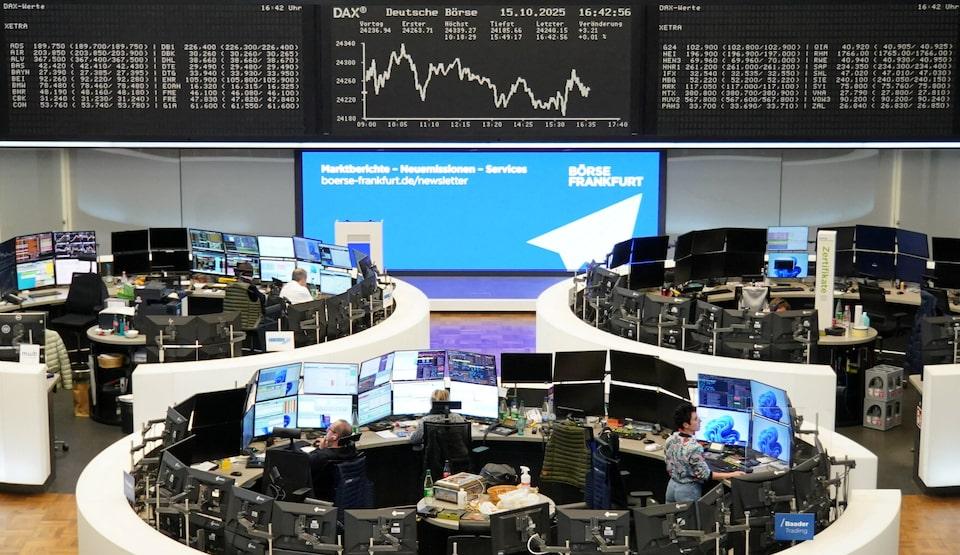
A look at the day ahead in European and global markets from Kevin Buckland With this much newsflow, it's hard for investors to know where to look. Sign up here. As a result, investors are gazing in several directions at once - and it's creating a quite clean split between asset classes. Stock markets are rallying around Asia on Thursday, with bourses from Taipei to Seoul and Sydney climbing to fresh all-time peaks. In tech-heavy North Asian markets, that's due in large part to the persistent AI euphoria that also drove the Philadelphia SE semiconductor index (.SOX) , opens new tab - or SOX - up 3% overnight. The latest bullish signal came from Dutch semiconductor equipment maker ASML (ASML.AS) , opens new tab, with third-quarter bookings beating market forecasts on Wednesday. That's stoked expectations for strong results from Taiwan's TSMC (2330.TW) , opens new tab, a major ASML customer, later today. Moreover, the big banks have kicked off U.S. earnings season with robust results that paint a broader picture of a resilient U.S. economy. And those figures are garnering more attention than usual in the absence of official macro data due to the government shutdown. At the same time, however, gold has been soaring to ever-greater record heights, and the dollar is spiralling lower, particularly against traditional safe havens the yen and Swiss franc . That's because, outside of equities, traders are antsy about a flare-up in trade tensions between Washington and Beijing. President Donald Trump declared they are "in a trade war" late on Wednesday, even as his Treasury and trade chiefs offered some hopes for de-escalation. Treasury Secretary Scott Bessent, for example, hinted at an extension to tariff reprieves, and said Trump still expects to meet Chinese leader Xi Jinping in South Korea this month, although without offering a date. Market tug-of-wars like this create an intrinsic tension, and raise the risk of something - or several things - snapping back. European stock futures are currently pointing lower, so a rebalancing could already be under way. Key developments that could influence markets on Thursday: -UK GDP estimate, services, industrial output, manufacturing output (all August) -Italy CPI (September) -Euro area trade balance (August) https://www.reuters.com/world/china/global-markets-view-europe-2025-10-16/