2025-10-16 03:11
MUMBAI, Oct 16 (Reuters) - The Indian rupee touched a one-month high on Thursday, as firm central bank intervention in the previous session and nascent optimism above U.S.-India trade negotiations helped the local currency find its footing on the stronger side of the 88-handle. The rupee rose to a peak of 87.70 in early trading before trimming gains to end the session at 87.82, up 0.3% on the day. Sign up here. The local unit has climbed about 1% from its closing level on Tuesday as heavy-handed intervention by the central bank knocked speculative wagers against the currency off the board. Signs of thaw in U.S.-India trade negotiations also helped sentiment. Bankers estimate that the Reserve Bank of India sold up to $5 billion to shore up the rupee on Wednesday, sparking a positive shift in sentiment for the rupee in the currency options market. During the stalemate near 88.80 over the last two weeks, some offshore market participants had bet on the rupee falling below 90 using options, but the intervention has sent a strong message, a senior trader at a foreign bank said. While this is likely to spur a reduction of short INR positions in the near-term, over the medium-term, "we still think that some modest FX weakness is not a bad thing for India," Michael Wan, senior currency analyst at MUFG, said in a note. The firm will be inclined to "look for opportunities to go long USD/INR later depending on where the FX settle," the note added. Elsewhere, U.S. President Donald Trump said on Wednesday that Indian Prime Minister Narendra Modi has pledged to stop buying oil from Russia. Meanwhile, Indian officials on Thursday said discussions were ongoing with the United States on deepening energy co-operation between the two countries. Traders reckon that a breakthrough in U.S.-India trade negotiations is likely to spark a rally in the rupee, even though it may prove to be transient. Moves in broader FX markets were contained on Thursday with the dollar index flat at 98.6 as were most Asian currencies. https://www.reuters.com/world/india/rupee-poised-extend-rally-trumps-oil-remark-central-banks-heavy-defence-2025-10-16/
2025-10-16 01:01
Oct 15 (Reuters) - Alphabet-owned (GOOGL.O) , opens new tab YouTube said on Wednesday that it has resolved an issue impacting video streaming services for several thousand users globally. YouTube said in a post on X that users should now be able to play videos on YouTube Music, YouTube TV and its main platform — without specifying what caused the issue. Sign up here. At its peak, at 7:55 p.m. ET, 366,172 users in the U.S. had reported issues with YouTube, according to Downdetector, which tracks outages by collating status reports from a number of sources. Thousands of outages were also reported in the UK, Canada, and Australia, Downdetector showed. Downdetector's numbers are based on user-submitted reports. The actual number of affected users may vary. https://www.reuters.com/technology/youtube-down-thousands-users-us-downdetector-shows-2025-10-16/

2025-10-16 00:54
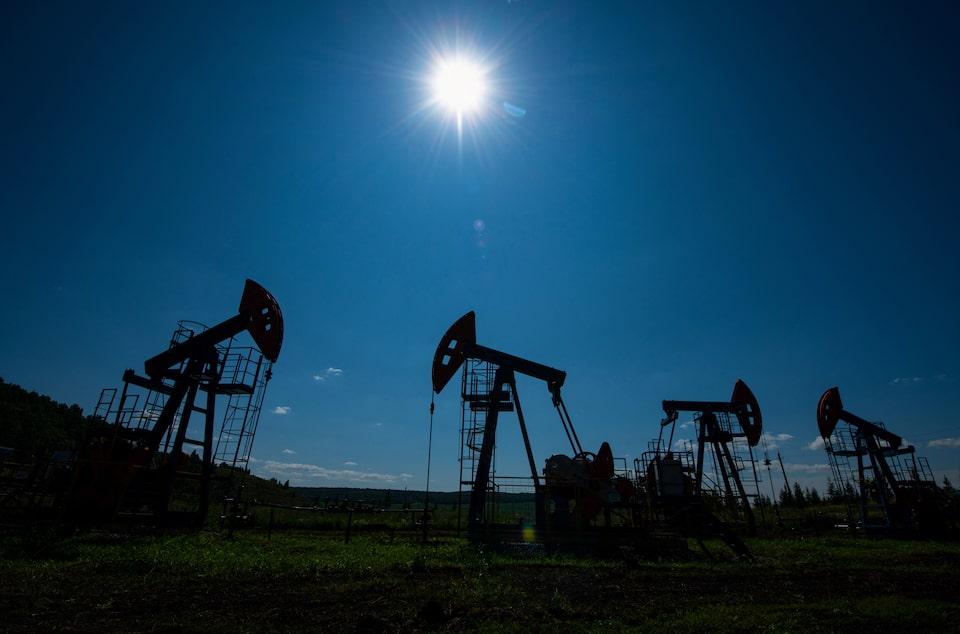
Trump, Putin to meet in Budapest Trump says India will halt Russian oil purchases US crude oil inventories rose more than expected last week - EIA NEW YORK, Oct 16 (Reuters) - Oil prices fell more than 1% on Thursday after U.S. President Donald Trump said he and Russian President Vladimir Putin agreed to meet in Hungary soon to discuss ending the war in Ukraine, casting uncertainty over global energy supplies. Brent crude futures settled 85 cents, or 1.37%, lower at $61.06 a barrel. U.S. West Texas Intermediate futures closed 81 cents, or 1.39%, lower at $57.46. Those were the lowest settlements for both benchmarks since May 5. Sign up here. Trump said he and Putin agreed on Thursday to meet in Budapest soon to discuss ending the war in Ukraine, one day before the U.S. president was due to speak with Ukrainian leader Volodymyr Zelenskiy. The date of the summit was not provided. "The geopolitical tension between Russia, the United States and Ukraine is beginning to redevelop," said Tim Snyder, chief economist at Matador Economics, pushing some market participants to unwind their positions. Also weighing on prices, the Energy Information Administration said U.S. crude inventories increased by 3.5 million barrels to 423.8 million barrels last week, compared with analysts' expectations in a Reuters poll for a 288,000-barrel rise. The bigger-than-expected build in crude inventory was largely due to lower refining utilization as refineries go into fall turnarounds. [ "A modestly bearish report, with a large crude build being offset by a large distillate draw, but with implied oil demand considerably weaker than last week," said UBS analyst Giovanni Staunovo. The data also showed a rise in U.S. production to 13.636 million barrels per day, the highest on record. Meanwhile, traders were also looking for a potential halt to India's Russian oil imports, which could reshape flows and boost demand for supplies from elsewhere. President Trump said Prime Minister Narendra Modi had pledged on Wednesday that India would stop buying from Russia, which is India's top oil supplier, accounting for about one-third of its oil imports. "This is a positive development for the crude oil price as it would remove a big buyer of Russian oil," said Tony Sycamore, a market analyst at IG. Both contracts on Wednesday touched their lowest since early May on U.S.-China trade tensions and concerns about a looming supply glut. Some Indian refiners are preparing to cut Russian oil imports, with expectations of a gradual reduction, three sources familiar with the matter told Reuters. However, India said on Thursday that its two main goals were to ensure stable energy prices and secure supply, making no reference to Trump's comments. Russia said it was confident that its energy partnership with India would continue. The British government announced new sanctions on Wednesday, directly targeting Russia's Rosneft and Lukoil - two of the world's biggest energy companies. https://www.reuters.com/business/energy/brent-crude-futures-up-1-after-trump-says-india-promised-stop-buying-russian-oil-2025-10-16/
2025-10-16 00:53
Unemployment rate at 4.5%, up from 4.3% in August The economy adds 14,900 jobs but labour force grows by bigger 48,800 Investors see November rate cut at 72% chance, up from 40% SYDNEY, Oct 16 (Reuters) - Australia's unemployment rate spiked unexpectedly to a near four-year high in September as more people went looking for work, a weak result that revived hopes for more policy easing. Investors ramped up bets for a rate cut from the Reserve Bank of Australia in November to 72%, from just 40% before the data. Prospects for more easing had faded as policymakers fret about sticky inflation and a sharp revival in consumer spending. Sign up here. The Australian dollar slipped 0.2% to $0.6497, while three-year bond futures rallied 10 ticks to 96.62. The heightened expectations of a rate cut pushed the local stock benchmark (.AXJO) , opens new tab to a record high. Figures from the Australian Bureau of Statistics out on Thursday showed net employment rose 14,900 in September from August, when it fell a revised 11,800. That was under market forecasts for a 20,000 gain. Most crucially, the jobless rate jumped to 4.5%, the highest since November 2021 and against forecasts of 4.3%, which was the peak forecast by the RBA. The central bank has said the monthly jobs reports are volatile but employment growth has slowed sharply this year to just 1.3% in September, compared with 3.5% in January. "The RBA is increasingly caught between a rock and a hard place," said Harry Murphy Cruise, head of economic research for Oxford Economics Australia. "Inflation looks set to come in hotter than the Bank’s latest forecasts, while the labour market is weaker than expected ... We maintain our view that a rate cut is warranted in November." The RBA held rates steady at 3.60% in September, having cut three times so far this year, awaiting more inflation data. Core inflation had fallen to 2.7% in the second quarter, back in the RBA's target range of 2% to 3%, but recent monthly data pointed to a risk it had not declined further in the third quarter. The central bank had judged the labour market to be nearly in balance, while demand in some industries was still running hot. However, the latest private data showed the number of job ads dropped 3.3% in September, the biggest monthly decline since early 2024. "The RBA have noted that some cooling within the labour force was expected. But nowhere within its most recent forecasts did they project the unemployment rate rising to anywhere near 4.5% - not this year, not next year and not in 2027," said Tony Sycamore, analyst at IG. "The RBA now finds itself in a very awkward position." Much focus is now on the third quarter inflation report due at the end of October where any downside surprises may pave the way for a rate cut in November. Earlier in the day, Governor Michele Bullock said a pickup in consumer spending and higher readings on some parts of inflation had given policymakers pause to consider whether further interest rate cuts were needed. Thursday's report showed the labour force grew a sizable 48,800 as more people went looking for work. Full-time jobs gained 8,700 after a steep drop the previous month, while part-time roles rose by 6,000. Hours worked rose 0.5%, reversing a drop in August. https://www.reuters.com/world/asia-pacific/australia-unemployment-rate-jumps-four-year-high-september-2025-10-16/

2025-10-16 00:35
SEOUL, Oct 16 (Reuters) - Shares of South Korean chipmaker Samsung Electronics (005930.KS) , opens new tab rose as much as 2% on Thursday to an all-time high on investor optimism surrounding the semiconductor industry. Shares of the world's leading memory chip maker were up 0.95% at 95,900 won ($67.52) per share as of 0022 GMT, after hitting a record 96,900 won earlier in the session, surpassing the previous record of 96,800 won on January 11, 2021. Sign up here. Samsung Electronics shares have risen 80% so far this year. ($1 = 1,420.2400 won) https://www.reuters.com/world/asia-pacific/samsung-electronics-shares-hit-record-high-2025-10-16/

2025-10-16 00:31
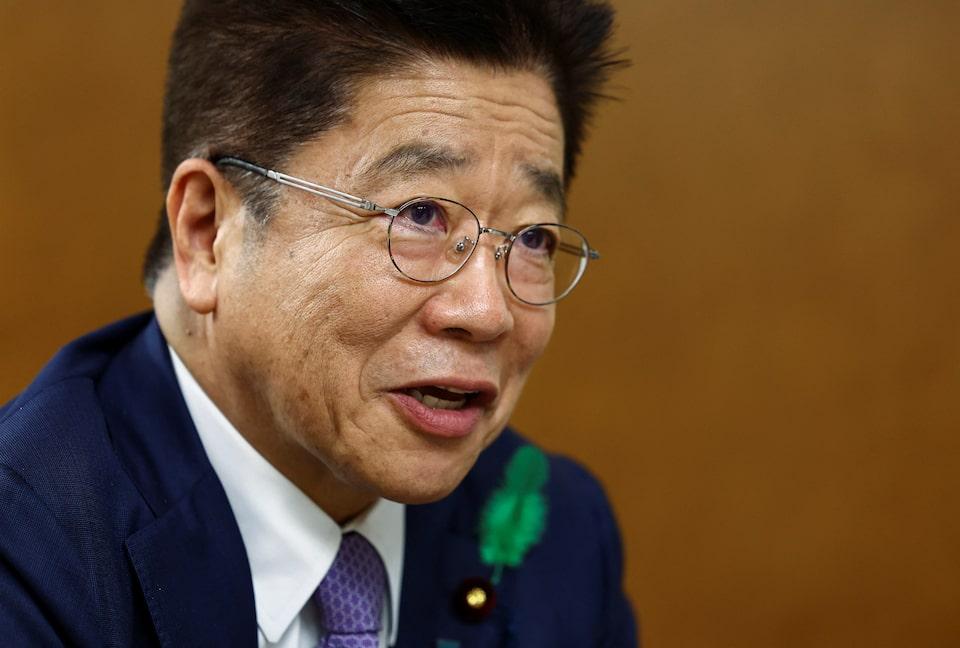
Japan, US re-confirms agreement on FX policy Kato says rapid yen falls seen lately, warns against volatility Hard to judge how weak yen affecting inflation recently WASHINGTON, Oct 15 (Reuters) - Japan told its G7 counterparts that policymakers must be vigilant against excessively volatile and disorderly moves in the currency market, Finance Minister Katsunobu Kato said on Wednesday. Kato also said he confirmed with U.S. Treasury Secretary Scott Bessent an agreement made last month on exchange-rate policy during bilateral talks, held on the sidelines of the G7 and G20 finance leaders' gathering in Washington. Sign up here. "We've seen some rapid yen falls since last week. It's desirable for exchange rates to move stably. We are vigilant to any excessive volatility in the currency market," Kato told reporters. The yen has whipsawed in recent days due in part to Japan's political uncertainty, as new ruling party leader Sanae Takaichi's bid to become the country's first female prime minister was thrown into doubt when her ruling party's junior coalition partner quit. Kato said he would not comment on what was driving recent exchange-rate moves, when asked how Japan's political turmoil was affecting yen moves, but said in general political stability was desirable for the economy. In a joint statement issued last month, Japan and the U.S. reaffirmed their commitment to "market determined" currency rates, while agreeing that foreign exchange interventions should be reserved for combating excess volatility. A weak yen has become a political pain point for Japanese policymakers as it inflates the cost of living for households by boosting import prices for raw material and fuel. The Bank of Japan's exit from a decade-long, massive stimulus last year and past two interest rate hikes came in the wake of political calls for measures to combat sharp yen falls. While sticky food inflation has led some hawkish board members to call for a near-term rate hike, the BOJ has kept rates steady since raising them to 0.5% in January as it focuses on scrutinising downside risks to the economy from U.S. tariffs. "It's something the BOJ ought to decide," Kato said when asked how the central bank should respond to rising living costs from a weak yen. While the weak yen and rising crude oil prices likely played a part in driving up prices in the past few years, it was hard to judge how yen falls were affecting prices recently, he added. https://www.reuters.com/world/asia-pacific/japan-urges-g7-stay-vigilant-excessive-fx-volatility-2025-10-16/