2025-10-15 23:01
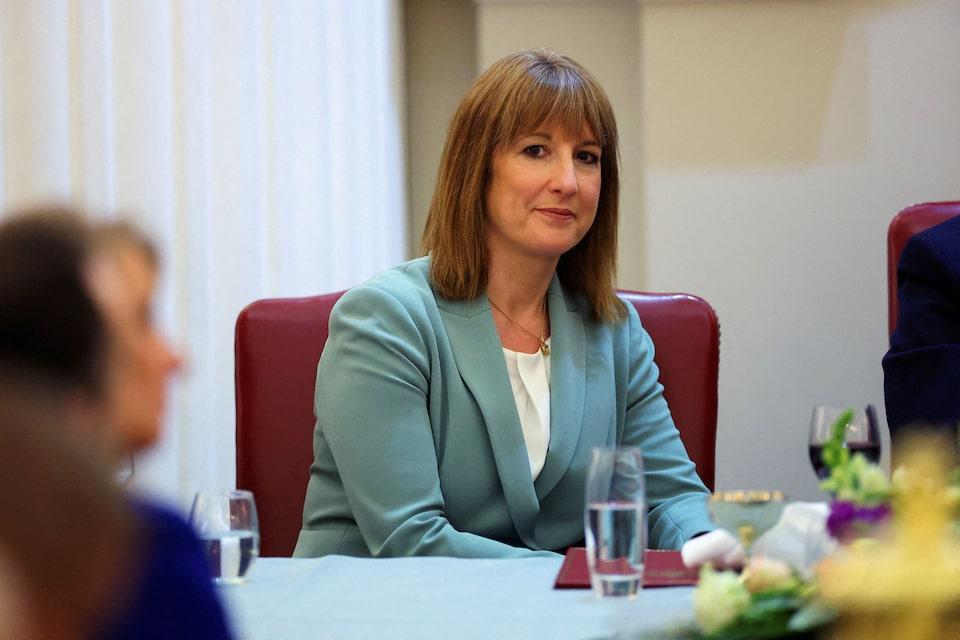
LONDON, Oct 16 (Reuters) - British finance minister Rachel Reeves should raise taxes by a lot in next month's budget to exit the "Groundhog Day scenario" of continuously having to find measures to patch up the public finances, a think tank said on Thursday. The Institute for Fiscal Studies urged Reeves to stop giving herself only minimal headroom for meeting her fiscal targets which can lead to rushed policy changes. Sign up here. "There is a strong case to do something big enough that you don't keep getting back into fiscal Groundhog Day," IFS director Helen Miller said. "It's sucking the life out of other things that we should be talking about such as how to get growth up." Reeves - despite raising taxes by about 40 billion pounds ($53.45 billion) in her first budget last year - is probably 22 billion pounds off course to meet her rule that day-to-day spending is in balance with tax revenues by the end of the decade, the IFS estimated. She must also choose how much headroom she gives herself for meeting that target. Reeves is considering enlarging the relatively small 9.9 billion-pound buffer that she has previously set, according to a Treasury official. Reeves' options on November 26 are complicated by her promise to voters in the 2024 election that she would not raise the main rates of taxation on them. On spending, an attempt to cut the welfare bill by 6 billion pounds a year ran into opposition within Prime Minister Keir Starmer's Labour Party and was dropped in July. The IFS said earlier this week that Reeves should reform the taxation system to raise more money, for example by making wealth-related and property taxes more effective. Jack Meaning, chief UK economist at Barclays whose forecasts were used by the IFS, predicted Reeves would announce measures that would not stoke inflation, but tax increases that push up prices - such as on alcohol and tobacco - could force the Bank of England to keep interest rates higher and slow the economy. ($1 = 0.7484 pounds) https://www.reuters.com/world/uk/uks-reeves-should-go-big-tax-increases-november-think-tank-says-2025-10-15/
2025-10-15 22:19
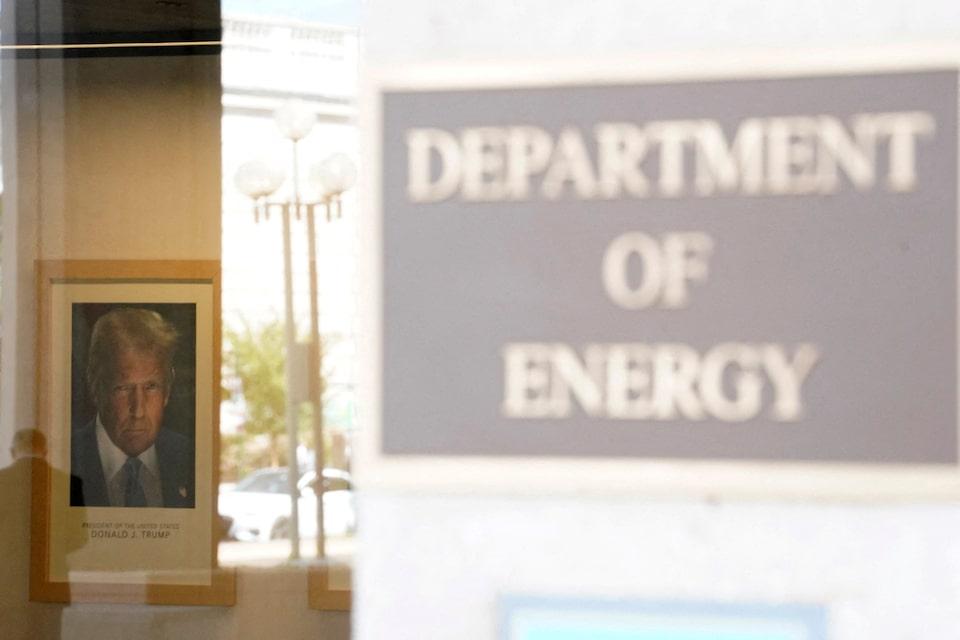
Oct 15 (Reuters) - American Battery Technology (ABAT.O) , opens new tab said on Wednesday the U.S. Department of Energy has terminated its grant for the setting up of a facility for the manufacturing of battery cathode grade lithium hydroxide. Under the grant, DOE's Manufacturing Energy Supply Chain office would contribute $57.7 million, while the company would put in an equal amount towards the facility. Sign up here. Reimbursable DOE funds of about $52 million remained as of October 9, the company said. The termination followed a May notice that all MESC grants would undergo audits under a DOE memorandum. The company said it has appealed the termination and plans to pursue dispute resolution remedies. Despite the setback, the company said it has raised over $52 million from public markets this year and will continue the project without changes to its timeline or scope. In April, the company received a letter of interest from U.S. Export-Import bank for $900 million in financing to support construction of its Nevada-based lithium mine and refinery. https://www.reuters.com/legal/litigation/us-energy-department-ends-grant-american-batterys-lithium-hydroxide-project-2025-10-15/
2025-10-15 21:52
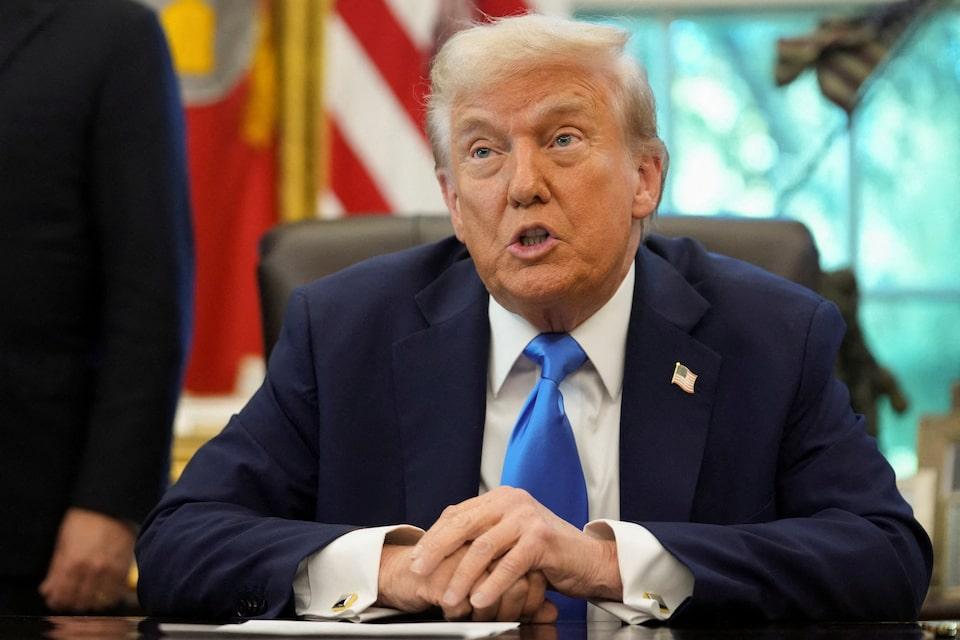
Trump orders Pentagon chief to pay troops during shutdown 1.3 million active-duty military risked missing paychecks Democrats and Republicans blame each other for standoff WASHINGTON, Oct 15 (Reuters) - U.S. President Donald Trump signed an order on Wednesday directing the Pentagon to ensure active-duty military personnel are paid despite the federal government shutdown, the White House said, addressing one of the most sensitive issues in the bitter standoff over federal spending. Trump directed Pentagon chief Pete Hegseth "to use for the purpose of pay and allowances any funds appropriated by the Congress that remain available for expenditure in Fiscal Year 2026 to accomplish the scheduled disbursement of military pay and allowances for active duty military personnel," according to text of the executive order shared by the White House on social media. Sign up here. As the standoff between Trump's Republicans and congressional Democrats stretched into a third week, 1.3 million active-duty military risked missing their mid-month paychecks. Service members remain on duty despite the shutdown that began on October 1. Their work is deemed essential for national security. TROOPS WERE PAID IN PAST SHUTDOWNS Members of Congress pride themselves on supporting service members, who put their lives on the line for national security. In past shutdowns, they passed bills to ensure the troops would be paid. Trump had promised the service members would get their pay, and his administration said on Saturday it would use unspent Department of Defense research and development funds to cover the checks. However, it was not clear where funds would come from to cover the military's next paychecks at the end of October. House of Representatives Speaker Mike Johnson accused Democrats of holding the troops "hostage" by refusing to agree to a Republican spending plan to reopen the government. "The most pro-shutdown Democrats actually represent the most active duty service members back home, whom they have taken hostage in this insidious political game," Johnson told a press conference on Wednesday, referring to lawmakers from states that are home to large numbers of troops. Democrats blamed the Republicans for refusing to even discuss any compromise. Republicans control the House, Senate, and White House, but would need Democratic votes in the Senate to advance the measure. Democrats say any funding package to reopen the government must also extend healthcare subsidies for about 24 million Americans that are due to expire at the end of the year. When government offices closed in 2013, members of the military were paid because Congress passed a separate "Pay Our Military Act." This year, Republican Representative Jen Kiggans introduced a similar bill, the "Pay Our Troops Act," but it did not pass before Johnson sent the House home last month. https://www.reuters.com/world/us/trump-signs-order-pay-troops-during-us-government-shutdown-2025-10-15/
2025-10-15 21:46
Oct 15 (Reuters) - Core Scientific's (CORZ.O) , opens new tab board urged its shareholders on Wednesday to vote for the crypto miner's proposed sale to CoreWeave (CRWV.O) , opens new tab as the company expects a number of benefits from the deal. CoreWeave announced its intention to buy Core Scientific in an all-stock deal valued at about $9 billion in July, valuing it at $20.40 per share. However, the proposed deal faces opposition from Two Seas Capital, the crypto miner's biggest shareholder. Sign up here. Two Seas Capital, which owns roughly 6.3% of Core Scientific, said in August it would vote against the sale as it "materially undervalues" the crypto miner and unnecessarily exposes its shareholders to substantial economic risk. Core Scientific's board has "unanimously determined" that the deal represents the best alternative for all its stockholders, it said in an investor presentation on Wednesday. The combined company will benefit from several potential cost savings and synergies, while de-risking Core Scientific's growth and providing upsides to the latter's shareholders, according to the presentation. CoreWeave provides access to data centers and Nvidia-powered AI chips to companies seeking to train large language models. Bitcoin miners' energy-intensive sites and power contracts, built during the crypto boom, have emerged as prime targets for AI companies expanding their computing infrastructure. https://www.reuters.com/business/core-scientifics-board-urges-shareholders-vote-coreweave-deal-2025-10-15/

2025-10-15 21:31
Japan's growth risks skewed to downside due to trade uncertainty, IMF's Choueiri says She says BOJ not behind the curve, risks to inflation balanced Any spending plan must be temporary and targeted, Choueiri says WASHINGTON, Oct 15 (Reuters) - The Bank of Japan must keep monetary policy loose and move very gradually in raising interest rates as global trade uncertainty clouds the economic outlook, a senior International Monetary Fund official said on Wednesday. Japan's economy has performed better than expected so far this year on robust consumption and exports, with Tokyo's trade deal with Washington easing some uncertainty, said Nada Choueiri, deputy director of the IMF's Asia and Pacific Department. Sign up here. But risks to growth are skewed to the downside on lingering uncertainty over the fate of U.S.-China trade talks, and the possibility of a reversal in loose global financial conditions, she said. There is also uncertainty on whether domestic wages will continue to increase and underpin consumption enough to keep inflation sustainably around the BOJ's 2% target, Choueiri said. "Going forward, gradualism is very important because of the degree of uncertainty," she told Reuters in an interview during the IMF and World Bank annual meetings in Washington. "It's important to be gradual, very gradual, and look at all the data that is coming through," she said, when asked about dominant market views that the BOJ will likely raise rates again by next January. POLITICAL UNCERTAINTY CLOUDS ECONOMIC OUTLOOK The BOJ will hold its next monetary policy meeting on October 29-30, followed by meetings in December and January. Japan's central bank exited a decade-long, massive stimulus program last year and raised its key interest rate to 0.5% in January on the view that the country was on the cusp of durably hitting its 2% inflation target. While BOJ Governor Kazuo Ueda has signaled the central bank's readiness to keep raising rates, he has stressed the need to tread cautiously to scrutinize the economic impact of U.S. tariffs. But sticky food inflation, blamed in part on rising import costs from a weak yen, has complicated the BOJ's decision on how soon to raise rates. Two of its nine-member board unsuccessfully proposed a rate hike in September, in a sign of policymakers' growing focus on broadening inflationary pressure. Choueiri said risks to the price outlook were balanced, adding that the weak yen's pass-through on inflation was limited. "We have not seen worrisome signs of overheating in terms of consumption and underlying inflation," Choueiri said. "I would disagree that they are behind the curve." Political uncertainty has added to the risks for the fragile Japanese economy. New ruling party leader Sanae Takaichi's bid to become Japan's first female prime minister was thrown into doubt last week when her ruling party's junior coalition partner quit. The ruling party also suffered a defeat in an upper house election in July amid public discontent over rising inflation. Ruling and opposition parties alike have proposed ramping up spending to cushion the blow to households. Given its already huge public debt, Japan must come up with a fiscal consolidation plan and ensure any spending plans are temporary and targeted to low-income households, Choueiri said. "Once food prices stabilize and there is no more inflation, you should start withdrawing the support," she said. "The kind of proposals made like VAT (value-added tax) cuts, or blanket subsidies that are not targeted would not serve Japan well at this juncture, because it would put a lot of burden on the deficit." https://www.reuters.com/world/asia-pacific/imf-urges-bank-japan-move-very-gradually-with-rate-hikes-2025-10-15/

2025-10-15 21:23
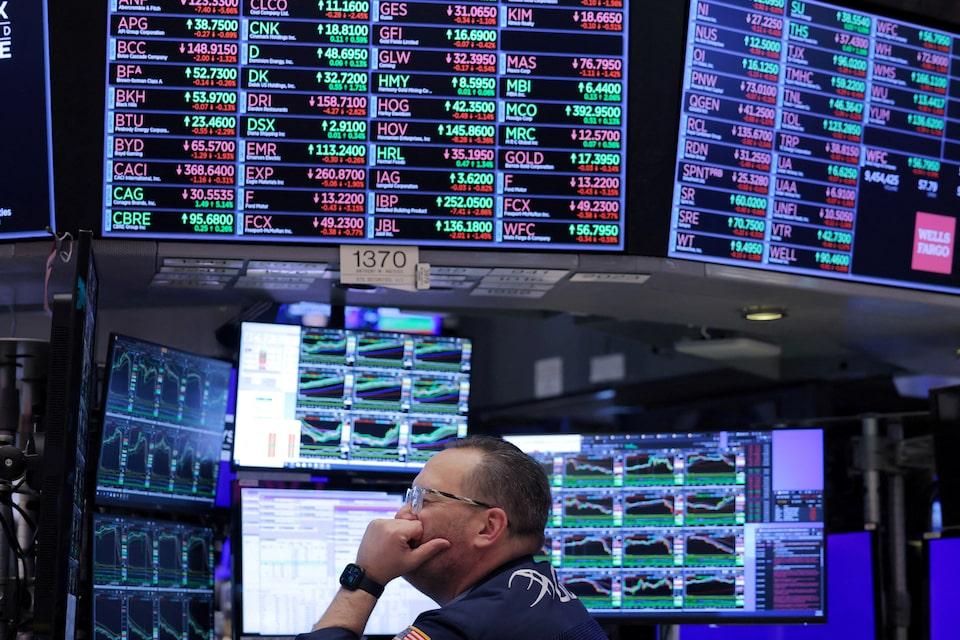
NEW YORK, Oct 15 (Reuters) - Making sense of the forces driving global markets By Alden Bentley, Editor in Charge, Americas Finance and Markets Sign up here. Jamie McGeever is enjoying some well-deserved time off, but the Reuters markets team will still keep you up to date on what's happening in markets. I'd love to hear from you, so please reach out to me with comments at [email protected] , opens new tab Today's Key Reads 1. US officials blast China's actions on rare earths, urge Beijing to back down 2. Data darkness in US spreads a global shadow 3. Investors on guard for risks that could derail the AI gravy train 4. Morgan Stanley profit beats estimates on dealmaking boost, shares soar 5. Gold extends record run past $4,200 on rate-cut hopes, safe-haven fervor Today's Key Market Moves *STOCKS: The S&P 500 (.SPX) , opens new tab closed up 0.4% and Nasdaq (.IXIC) , opens new tab was 0.6% higher. The Dow (.DJI) , opens new tab was about flat. *SHARES/SECTORS: Morgan Stanley (MS.N) , opens new tab shares hit a record high, while Bank of America (BAC.N) , opens new tab also rose sharply after the top lenders beat Wall Street estimates for third-quarter profit on dealmaking strength. But financials overall were one of four S&P 500 sectors to show a decline. Real Estate was the biggest winner and tech was also up. *FX: The U.S. dollar weakened on the continuing trade standoff between the U.S. and China. *BONDS: U.S. Treasury yields were choppy. The benchmark 10-year was last 1.8 bp higher at 4.0397% *COMMODITIES: U.S. oil futures eased and the price of gold bullion jumped 1.65% to $4,208.49 an ounce. *CRYPTO: Bitcoin was down 1.35% at $111,530 Today's Key Talking Points *Shaking off trade jitters Wall Street shares rose on the back of solid earnings from Morgan Stanley and Bank of America that concluded a two-day run of strong bank results and raised hopes for company third-quarter reporting over the coming weeks. The S&P 500 banking index (.SPXBK) , opens new tab was set to log its first three-day winning streak in more than three weeks. Earnings have only partially overshadowed trade as a focus, with the resurfacing of tensions between the two largest economies roiling the market in recent days. A day after U.S. President Donald Trump said cutting some trade ties with China was under consideration, notably related to cooking oil, while the rivals began imposing port fees on each other, Treasury Secretary on Wednesday told CNBC that there was no desire to escalate a trade conflict with China. The release of the Federal Reserve's Beige Book did not give the data-starved market much to think about, noting that across the Fed's 12 districts economic activity was little changed. Fed Governor Stephen Miran at a CNBC event said "two more cuts this year sounds realistic", noting that the labor market has clearly weakened. Fed Chair Jerome Powell had also left the door open to rate cuts on Tuesday. *But safe havens still in play While stocks had a risk-on tilt through much of the session, bonds and gold traded like safe havens in an uncertain world of trade blow-ups and government shutdowns. Benchmark 10-year Treasury yields initially dipped below 4% on doubts about prospects for an agreement with China, before the bond market retreated in choppy trading. U.S. Trade Representative Jamieson Greer and Treasury Secretary Scott Bessent both took China to task over its restrictions on exports of rare earth minerals. Bessent did soften the tone, saying he doesn't believe Beijing wants to be an "agent of chaos." Gold looked like an over crowded trade, extending its record-breaking rally above $4,200 on the specter of further U.S. easing and the U.S./China trade row. *While crude is in decline Meanwhile, oil prices are at their lowest levels since May. While the tit-for-tat trade moves could disrupt global shipping, they could also impact global growth at the same time as the International Energy Agency is predicting a supply surplus next year. Graphics What could move markets tomorrow? *No major U.S. corporate earnings or economic data Opinions expressed are those of the author. They do not reflect the views of Reuters News, which, under the Trust Principles, is committed to integrity, independence, and freedom from bias. Trading Day is also sent by email every weekday morning. Think your friend or colleague should know about us? Forward this newsletter to them. They can also sign up here. https://www.reuters.com/world/china/global-markets-trading-day-2025-10-15/