2025-10-15 20:39
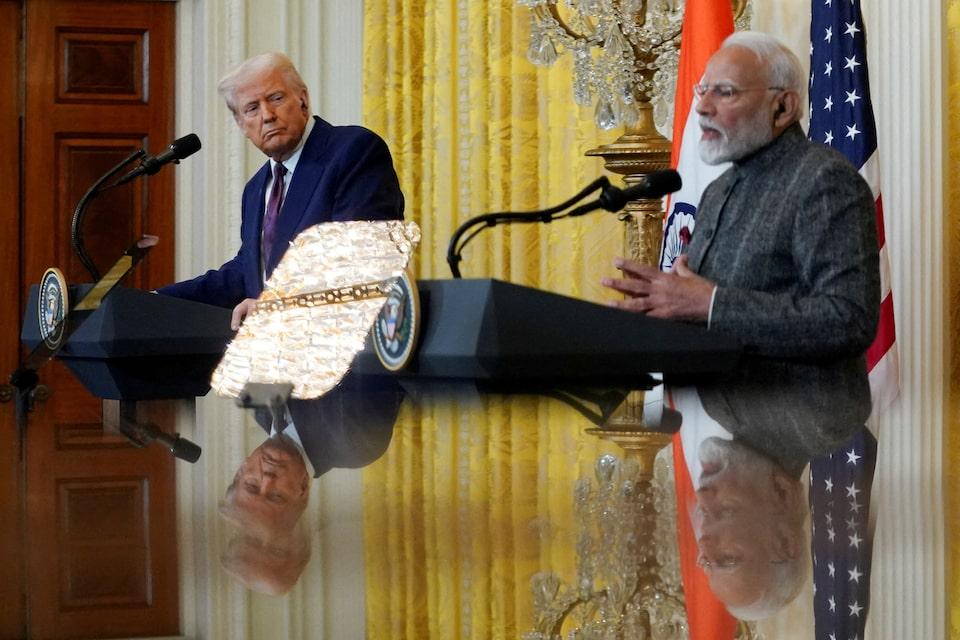
Indian embassy in Washington has not yet confirmed agreement Lower global oil prices could mute economic impact for India Trump says India cannot halt Russian shipments 'immediately' WASHINGTON, Oct 15 (Reuters) - U.S. President Donald Trump said on Wednesday that Indian Prime Minister Narendra Modi has pledged to stop buying oil from Russia, and Trump said he would next try to get China to do the same as Washington intensifies efforts to cut off Moscow’s energy revenues. India and China are the two top buyers of Russian seaborne crude exports, taking advantage of the discounted prices Russia has been forced to accept after European buyers shunned purchases and the U.S. and the European Union imposed sanctions on Moscow for its invasion of Ukraine in February 2022. Sign up here. Trump has recently targeted India for its Russian oil purchases, imposing tariffs on Indian exports to the U.S. to discourage the country's crude buying as he seeks to choke off Russia's oil revenues and pressure Moscow to negotiate a peace deal in Ukraine. “So I was not happy that India was buying oil, and he assured me today that they will not be buying oil from Russia,” Trump told reporters during a White House event. “That’s a big step. Now we’re going to get China to do the same thing.” The Indian embassy in Washington did not immediately respond to emailed questions about whether Modi had made such a commitment to Trump. Russia is India's top oil supplier. Moscow exported 1.62 million barrels per day to India in September, roughly one third of the country's oil imports. For months, Modi resisted U.S. pressure, with Indian officials defending the purchases as vital to national energy security. While imports from other producers would likely cost India more, lower oil prices would temper the impact. Benchmark Brent crude futures hit a five-month low on Wednesday on concerns about a growing surplus in the market. A move by India to stop imports would signal a major shift by one of Moscow’s top energy customers and could reshape the calculus for other nations still importing Russian crude. Trump wants to leverage bilateral relationships to enforce economic isolation on Russia, rather than relying solely on multilateral sanctions. The announcement comes just days after Trump’s new pick for Indian ambassador, Sergio Gor, met with Modi. The two discussed defense, trade and technology issues. The appointment of Gor, a close confidant to Trump, was widely seen as a positive move for the U.S.-India bilateral relationship. During his comments to reporters, Trump added that India could not "immediately" halt shipments, calling it "a little bit of a process, but that process will be over soon." Despite his push on India, Trump has largely avoided placing similar pressure on China. The U.S. trade war with Beijing has complicated diplomatic efforts, with Trump reluctant to risk further escalation by demanding a halt to Chinese energy imports from Russia. Trump imposed a 25 percent tariff on India this summer after the two countries failed to reach an initial trade agreement. He followed up with an additional 25 percent because of the country’s purchases of Russian oil. India chafed at the move because no other top purchasers of Russian oil, like China or Turkey, were hit with similar tariffs. https://www.reuters.com/world/india/trump-says-modi-has-assured-him-india-will-not-buy-russian-oil-2025-10-15/
2025-10-15 20:26
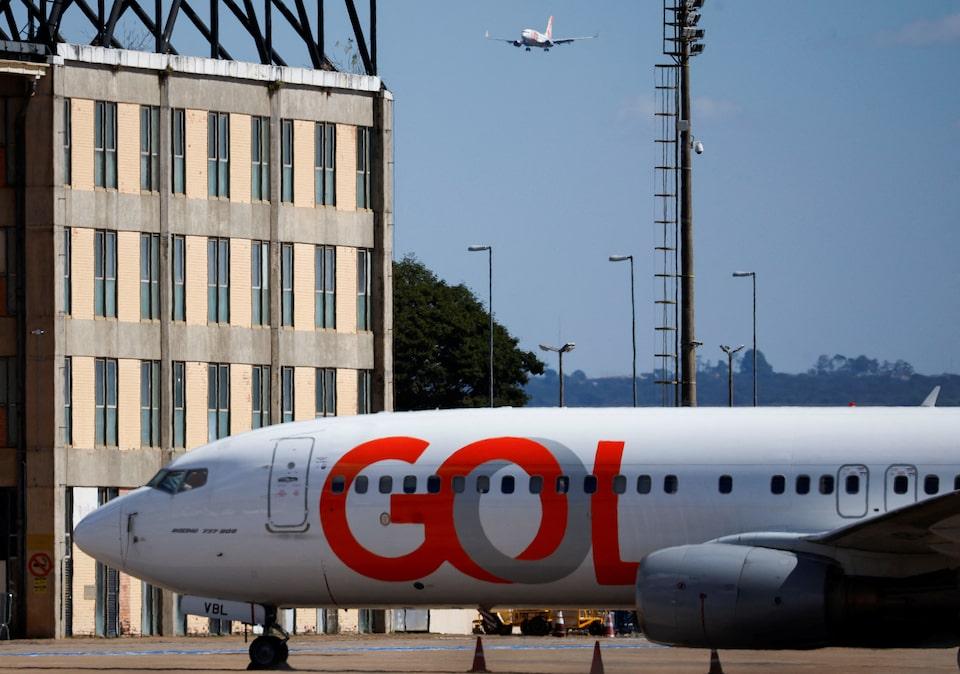
SAO PAULO, Oct 15 (Reuters) - Abra Group, which controls Brazilian airline Gol (GOLL54.SA) , opens new tab and Colombia's Avianca, intends to confidentially submit a draft registration statement for a proposed initial public offering in the United States, it said on Wednesday. Abra Group said that the draft registration statement is for an offer of ordinary shares, but added the deal is subject to market conditions and conclusion of the review process. Sign up here. Gol recently announced plans to go private as part of a corporate reorganization process. The Brazilian airline said it intends to delist shares from Sao Paulo-based stock exchange B3. Abra was created in 2022, when Gol and Avianca announced they were combining under the roof of a common holding company. ($1 = 5.4574 reais) https://www.reuters.com/world/americas/airline-group-abra-submit-draft-registration-statement-us-ipo-2025-10-15/
2025-10-15 20:03
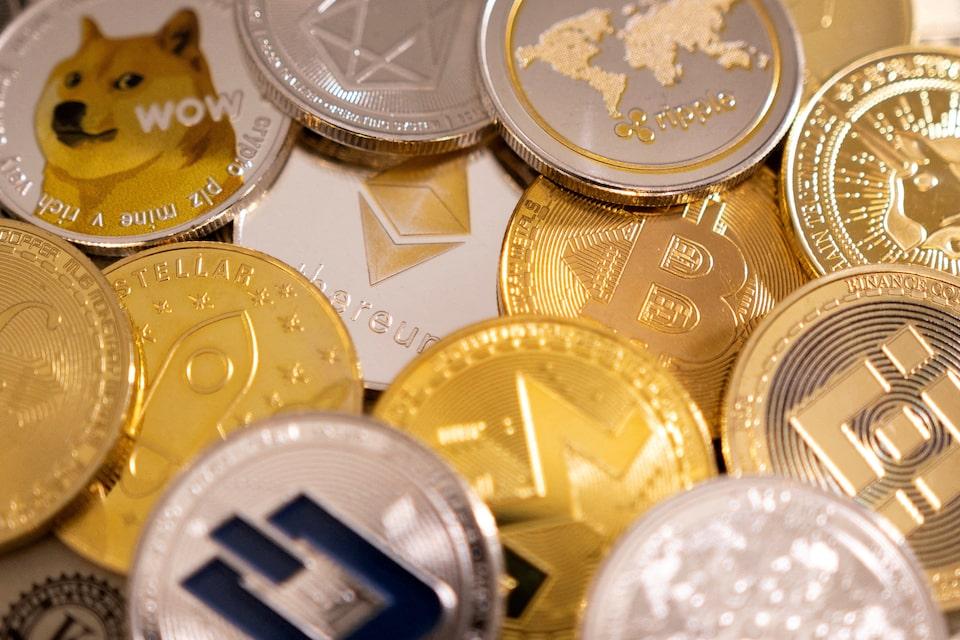
Oct 15 (Reuters) - U.S. Bancorp (USB.N) , opens new tab said on Wednesday it had formed a new unit focused on digital assets and money movement to speed up development as well as grow the revenue from emerging digital products and services. Jamie Walker, a U.S. Bancorp veteran of more than 20 years, will lead the new unit. Sign up here. WHY IT'S IMPORTANT The goal of the new organization is to develop digital products and make more money from the growing areas in finance such as stablecoin issuance, cryptocurrency custody, asset tokenization and digital money movement. KEY QUOTE "Clients increasingly want to understand how digital assets can help them safely move money, store deposits and use tokenized assets, among other potential use cases," said Dominic Venturo, chief digital officer at U.S. Bancorp. CONTEXT More companies have been trying to cash in on better crypto prices and U.S. President Donald Trump's support for the crypto industry. https://www.reuters.com/business/finance/us-bancorp-forms-dedicated-unit-digital-assets-money-movement-2025-10-15/
2025-10-15 20:02
USTR's Greer says China's actions were repudiation of trade agreements Treasury Secretary Bessent suggests longer US-China truce extension is possible US will act if China proves to be 'unreliable partner,' Bessent says WASHINGTON, Oct 15 (Reuters) - Top U.S. officials on Wednesday blasted China's major expansion of rare earth export controls as a threat to global supply chains, but said Beijing could still change course and avoid steps by Washington to decouple from the world's second-largest economy. U.S. Trade Representative Jamieson Greer told a press conference that China's new export restrictions were a "global supply-chain power grab" and the U.S. and its allies would not accept the restrictions. However, Greer and Treasury Secretary Scott Bessent also stressed that Washington did not want to escalate the conflict, which has roiled financial markets and sent U.S.-China relations into a tailspin. Sign up here. As of Tuesday night, U.S. President Donald Trump was still expecting to meet with Chinese President Xi Jinping in South Korea later this month, Bessent said. Greer said China has not yet implemented the revised regulatory system for rare earths and could still back away, just as the U.S. had not implemented a retaliatory 100% increase in tariffs on Chinese imports. "These are drafted, or in draft, so it's quite real, but our expectation is that they won't implement this and that we'll be able to be back to where we were a week ago where we had the tariff levels we've agreed to and we have the flow of rare earths that we agreed to," Greer said. Neither official would discuss possible outcomes for negotiations aimed at averting the restrictions and U.S. retaliation, which includes a threat by Trump to increase tariffs on Chinese imports by an additional 100%. The two sides have maintained lower tariffs and continued Chinese rare earth flows under a delicate, six-month truce that has been repeatedly extended for 90 days at a time. Bessent suggested a longer extension was possible. "We are currently in a 90-day roll on the tariffs, so is it possible that we could go for a longer roll in return for a delay? Perhaps, but all that's going to be negotiated in the coming weeks before the leaders meet in Korea," he said. TRADE WAR CLOUDS OUTLOOK Their comments came hours after the U.S. and China rolled out tit-for-tat port fees , opens new tab on each other's ships, opening a new front in their bitter trade fight. Escalation of U.S.-China trade tensions overshadowed the International Monetary Fund and World Bank meetings in Washington. In its World Economic Outlook released on Tuesday, the IMF had upgraded its global growth forecast in part due to the superpowers' recent detente. Japanese Finance Minister Katsunobu Kato said he expressed "strong concern" over China's expansion of rare earth export controls in a meeting with his G7 counterparts in Washington on Wednesday. "I told my counterparts the G7 must work together and respond strongly against China," Kato told reporters after the meeting. "I also said if our response leads to a spiral of retaliatory measures, that could have an adverse impact on global markets," he added. Kato said he was not aware of any G7 plan to issue a joint communique. He said the group did discuss China's export curbs and a possible response, but did not reveal details. Bessent said U.S. and Chinese officials were meeting on the sidelines of the IMF-World Bank gathering to arrange the Trump-Xi meeting, adding that it was the level of trust between the two leaders that had prevented escalation of the tariffs in the past. Greer and Bessent, who have met personally with senior Chinese officials four times in four different European cities in recent months, called China's actions a "clear repudiation" of prior U.S.-China agreements. UNRELIABLE SUPPLIER? The U.S. does not want to economically decouple from China, but would have to take action if Beijing proved to be an unreliable supplier, Bessent said, noting that Chinese officials recently told U.S. auto companies that a slowdown in shipments of rare earth magnets was "probably something" to do with a holiday. "Not only is China fueling Russia's war (in Ukraine), but China's actions have once again demonstrated the risk of being dependent on them, on rare earths and for that matter, anything," Bessent said, adding, "If China wants to be an unreliable partner to the world, then the world will have to decouple." He said Washington had further measures it could deploy, including export controls, if Beijing proceeded, and was also ready to tariff China over its purchases of Russian oil, as long as European partners joined in. The U.S. has slapped additional tariffs on India over its smaller purchases of Russian oil, but has refrained for now from taking action against China. "While there are substantial actions we can take, we'd rather not. I believe China's open to discussion and I am optimistic that this can be de-escalated," Bessent said. The U.S. would also produce photographs supplied by the Ukrainian government that showed Chinese parts were used in Russian drones operating in Ukraine, Bessent said through a spokesperson. Earlier on Wednesday, he told a CNBC event that China had clearly intended to take action "all along," rejecting Beijing's claim that the actions were a response to U.S. actions, including the new U.S. port fees. Bessent said a senior Chinese trade official had threatened as early as August to "unleash chaos on the global system" if the U.S. went ahead with the port fee increases. He named the official as Li Chenggang, China's chief trade negotiator and a subordinate of Vice Premier He Lifeng, who has participated in all the U.S.-China talks. https://www.reuters.com/world/china/us-officials-blast-chinas-actions-rare-earths-urge-beijing-back-down-2025-10-15/
2025-10-15 19:54
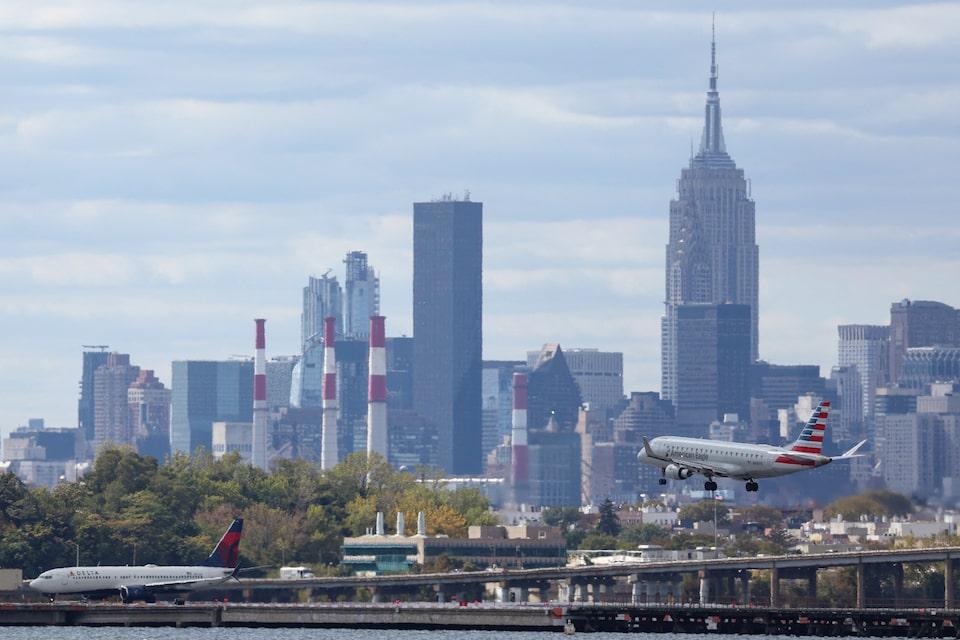
WASHINGTON, Oct 15 (Reuters) - The head of a U.S. airline trade group urged an end to the 15-day government shutdown, citing concerns about rising pressure faced by air traffic controllers working without pay. "It's got to stop like now, because every day that goes by, the pressures get higher, the risks get higher," Chris Sununu, CEO of Airlines for America, a major trade group representing carriers American Airlines (AAL.O) , opens new tab, Delta Air Lines (DAL.N) , opens new tab and United Airlines (UAL.O) , opens new tab, said in an interview. "You're getting closer and closer to those air traffic controllers just feeling financial pressures." Sign up here. Aviation groups are growing more worried about the potential impact of a longer government shutdown after mounting sick calls by controllers have resulted in thousands of delays since the shutdown began. The Air Line Pilots Association and National Air Traffic Controllers Association have both called for a quick end to the shutdown. More than 13,000 air traffic controllers and 50,000 Transportation Security Administration officers received a partial paycheck in recent days and will not get paid later this month if the standoff is not resolved. Sununu, a former New Hampshire governor, said things could worsen. "I think it'll really hit ahead, probably about a week and a half from now, when that first zero paycheck comes," Sununu said. "Most people can survive a couple but after three weeks, that just puts real strain on the system." Sununu wants a continuing resolution to reopen the government but acknowledged the need for a healthcare debate sought by Democrats. "I don't care about the politics. I just care about the easiest way to make sure the system has resilience," Sununu said. "If the system comes to a screeching halt for whatever reason, that's felt on a worldwide scale. ... Hopefully they'll realize it before we get there." In 2019, during a 35-day shutdown, the number of absences by controllers and TSA officers rose as workers missed paychecks, extending checkpoint wait times at some airports. The Federal Aviation Administration was forced to slow air traffic in New York, which put pressure on lawmakers to quickly end the standoff. https://www.reuters.com/world/us/us-airline-group-urges-end-government-shutdown-citing-aviation-risks-2025-10-15/
2025-10-15 18:43
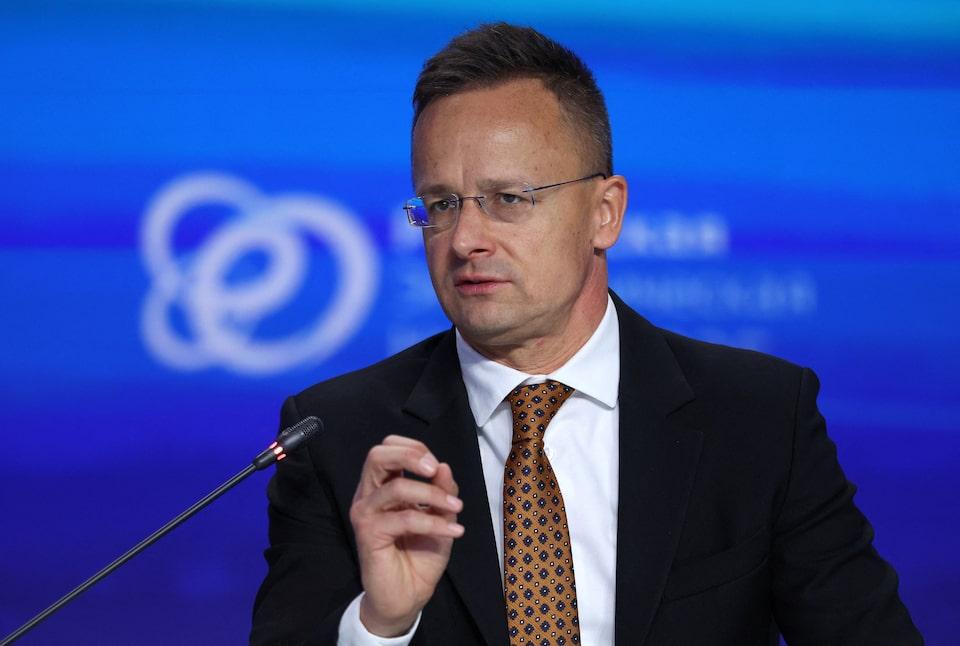
Hungary has maintained reliance on Russian energy Hungarian foreign minister in Moscow as NATO meets in Brussels Hungary expects to keep up oil imports from Russia in 2026 MOSCOW, Oct 15 (Reuters) - Hungary would suffer if it were cut off from Russian energy, Budapest's foreign minister said during a visit to Moscow on Wednesday, reiterating that the country would not accept outside pressure when it came to decisions on its energy supplies. Peter Szijjarto was attending the Russian Energy Week forum as NATO defence ministers met in Brussels to discuss military aid for Ukraine, underlining Budapest's differences with most other members of the alliance when it comes to dealing with Moscow. Sign up here. Hungary has maintained its reliance on Russian energy since the start of the conflict in Ukraine, prompting criticism from several European Union and NATO allies. Szijjarto told reporters in Moscow that national interest was paramount for Budapest when it came to energy supplies. "We have never been let down (by Russia). The deliveries have always arrived... Contracts were always respected. And my question is only why we should cut this relationship," Szijjarto said. Separately, he was quoted saying by Interfax news agency that Russia has supplied around 3.6 million metric tons of oil to Hungary so far this year and will export between 5 million tons, or 100,000 barrels per day, and 5.5 million tons in 2025. He also said Hungary plans to maintain that level in 2026. HUNGARY'S RIFT WITH BRUSSELS DEEPENS Hungary has pushed back against plans by the European Commission to phase out the EU's imports of all Russian gas and liquefied natural gas by the end of 2027, deepening a rift with Brussels over relations with Moscow. Hungary signed a 15-year deal in 2021 with Russia to buy 4.5 billion cubic metres of gas annually, and increased purchases from Gazprom last year, importing some 7.5 billion cubic metres of Russian gas via the Turkstream pipeline. Hungary has received more than 6 billion cubic meters of Russian gas so far this year, Szijjarto said in a separate Facebook post on Wednesday. The country also imports most of its crude from Russia via the Druzhba pipeline, which runs through Belarus and Ukraine to Hungary and Slovakia. Croatian pipeline operator JANAF also transports crude oil to Hungarian energy group MOL's refineries. "Brussels wants us to cut one of the two (pipelines) under the phenomenon of diversification," Szijjarto said. "How can you consider having one pipeline rather than two safer? This is insane," he said. U.S. President Donald Trump said last month he would urge Hungary to stop buying Russian oil, part of a push to pressure NATO allies to cut energy ties with Moscow over its war with Ukraine. Hungarian Prime Minister Viktor Orban said dropping Russian energy would be a disaster for Hungary's economy. https://www.reuters.com/business/energy/hungary-attacks-eu-energy-policy-moscow-conference-2025-10-15/