2025-12-09 05:08
Bitcoin's correlation with equities strengthening, driven by retail and institutional adoption After October crash, bitcoin has struggled; may end down for the year AI stock volatility affects crypto movements, raising bubble concerns Fed rate cut expectations influence crypto market sentiment Dec 9 (Reuters) - With a series of record highs and crushing sell-offs, 2025 has been a rollercoaster ride for bitcoin, the world's largest cryptocurrency, which is at risk of ending the year with its first annual decline since 2022. The world's main stock benchmarks have also had a turbulent year, repeatedly hitting record peaks and then pulling back as worries over tariffs, interest rates and a possible AI bubble whipsawed markets. While equities are mostly up year-to-date, bitcoin's overall correlation with share prices has strengthened markedly this year. Sign up here. Analysts say bitcoin's gyrations increasingly tracked stock market sentiment as traditional retail and institutional investors jumped into cryptocurrencies, which next year may be even more closely tethered to factors driving stocks and other risk assets, such as monetary policy shifts and nervousness over the lofty valuations of AI-related stocks. "Crypto reacting to broader equities has been a consistent theme in 2025," said Jasper De Maere, desk strategist at crypto algorithmic trading firm Wintermute. Bitcoin was hovering around $89,000 on Monday. After soaring earlier this year with the election of crypto-friendly U.S. President Donald Trump, cryptocurrencies - along with stocks - plummeted in April on his tariff announcements, but quickly rebounded. Bitcoin went on to hit an all-time peak above $126,000 in early October. But just days later, on October 10, the market plunged again when Trump announced a new tariff on Chinese imports and threatened export controls on critical software. That sparked more than $19 billion worth of liquidations across leveraged crypto market positions, the largest liquidation in crypto history. Bitcoin has struggled to regain its footing ever since and in November experienced its biggest monthly drop since mid-2021, although options market bearishness has ebbed a little in recent weeks, according to options platform Derive.xyz. Traders as of late last week had assigned a 15% probability that bitcoin will finish the year below $80,000, compared with the 20% probability they had assigned just a few weeks ago. That's still a blow for crypto bulls, including Michael Saylor's Strategy, the world's biggest bitcoin hoarding company, which had projected as recently as October 30 that the token would hit $150,000 this year. Analysts at Standard Chartered last year forecast bitcoin would hit $200,000 by the end of 2025, due in part to flows into bitcoin exchange-traded funds. In a change of tune, Strategy CEO Phong Le warned on a podcast last month of a possible "bitcoin winter." In October, Standard Chartered forecast bitcoin would fall below $100,000 but said that may be the last time it will hit that low, according to media reports. Saylor, speaking to Reuters last week, said his company could survive a 95% fall in the price of bitcoin. EQUITIES CORRELATION Those April and October plunges highlighted the growing correlation between bitcoin and equities, and in particular, artificial intelligence stocks, which share similar attributes and have been hit by worries that valuations are in bubble territory. Historically, bitcoin and stocks did not move in tandem because crypto was seen as an alternative investment. But with broader crypto adoption by traditional retail investors and some institutions, the correlation looks to be strengthening, analysts said. Correlation is measured from -1 to 1, with figures above zero indicating a positive correlation. In 2025, the average correlation between bitcoin and the S&P 500 (.SPX) , opens new tab - which tracks a broad basket of companies - was 0.5, compared with an average correlation in 2024 of 0.29, LSEG data shows. For the tech-heavy NASDAQ 100 index (.NDX) , opens new tab, the average correlation this year was 0.52, compared with 0.23 in 2024, according to LSEG data. Crypto has grown especially sensitive to AI stock moves partly because they have been drivers of broader equity markets, and partly because, like crypto, they are currently seen as somewhat speculative investments, largely dependent on investor sentiment and risk appetite, analysts said. "Crypto (was) already a little weak after October 10," said Cosmo Jiang, a general partner at Pantera Capital, a crypto investor. "Things really started to break in risk markets in the recent weeks, because of the AI bull case coming under question." RATE CUT QUESTIONS Like stocks, cryptocurrencies also appear increasingly sensitive to the path of interest rates. Fidelity research from last year found that, while there is little historical data to indicate that the price of bitcoin increases when the Federal Reserve cuts rates, some analysts have observed that crypto tends to rally in line with dovish signals from the central bank. Analysts also point out that hawkish Fed signals from October onwards weighed on bitcoin. Since then, the release of fresh economic data has the market pricing an 86% chance of a 25-basis-point cut this week. That rate decision, along with the outlook for AI stocks, will likely be a key driver for crypto prices in the near term, analysts said. "The Fed's support of monetary supply in this particular scenario is going to be an indicator that crypto is all looking at," said Mo Shaikh, co-founder and general partner at Maximum Frequency Ventures. https://www.reuters.com/business/finance/bitcoins-2025-rollercoaster-may-end-low-2025-12-09/

2025-12-09 05:03
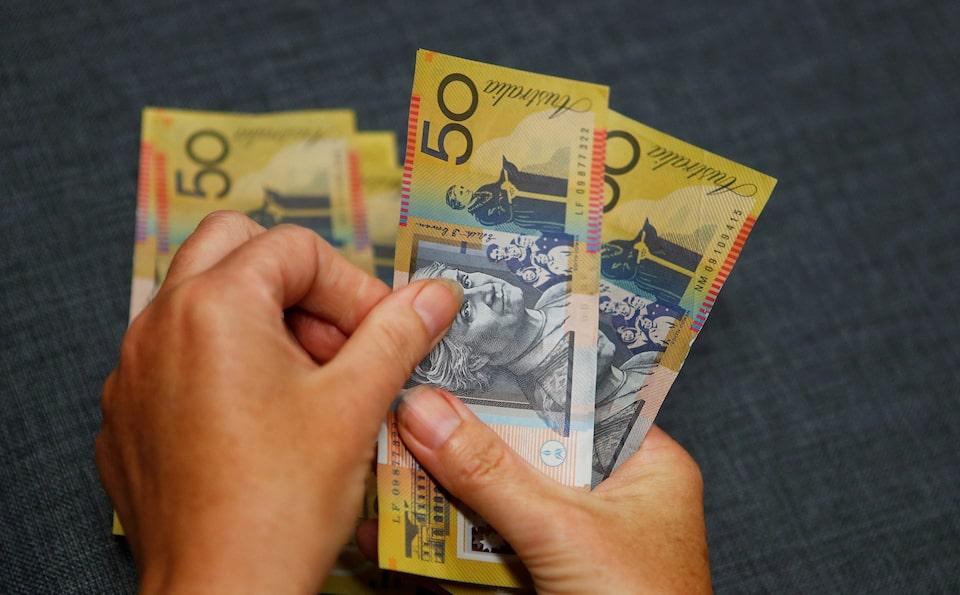
Focus on Fed meeting, with rate cut all but priced in Investor confidence brittle after earthquake strikes Japan Aussie dollar gains as RBA rules out easing Cryptocurrencies rally: bitcoin, ether up NEW YORK, Dec 9 (Reuters) - The U.S. dollar advanced on Tuesday as better-than-expected job-market figures underscored a still resilient labor market ahead of the Federal Reserve's anticipated rate cut, with policymakers likely to emphasize inflation risks that could constrain further easing moves. Markets are also bracing for several more central bank decisions before the weekend. On Tuesday, the Reserve Bank of Australia kept rates on hold ruled and ruled out more rate declines, pushing the Aussie dollar higher. Sign up here. The greenback, on the other hand, extended gains after data showed U.S. job openings increased modestly in October, while hiring remained subdued. Job openings, a measure of labor demand, were up 12,000 to 7.670 million by the last day of October, according to the Job Openings and Labor Turnover Survey, or JOLTS report, on Tuesday. Economists polled by Reuters had forecast 7.150 million unfilled jobs. The dollar rose after the report, climbing to two-week highs versus the yen near 157 yen and was last up 0.6% at to 156.845 n . It also gained against the euro, which slipped 0.1% to $1.1629 . With the data out of the way, the market has turned its focus once again to the Fed. Investors are dialing back expectations of rate cuts in 2026 as skepticism mounts that Kevin Hassett, the frontrunner to succeed Jerome Powell, whose eight-year term as Fed chair ends in May, will prove as dovish as hoped by U.S. President Donald Trump. "There's a lot of uncertainty about what we're going to get tomorrow. Rate cuts are pretty much nailed on at this point," said Shaun Osborne, chief FX strategist, at Scotiabank in Toronto. "But beyond that, there's a lot of moving parts to what the Fed can do tomorrow. I think there seems to be an expectation that Powell is going to try and set the bar relatively high for another cut, but I'm not sure that's really going to give the dollar that much." The U.S. dollar index , which measures the greenback's strength against a basket of six currencies, edged up 0.1% at 99.21. US OUTLOOK IN 2026 With markets seeing that Fed policy easing this week is a near-certainty, attention is also turning to the outlook for the year ahead. "Everyone will be looking at the dot plot," said Commerzbank FX analyst Michael Pfister. "We are seeing decision-makers with diverging views now," he said, adding that if the dot plots are lower than the last time, this will probably not be helpful for the dollar. The "dots" from the September meeting, when the Fed resumed its easing cycle with a 25 basis-point cut, showed a policy rate of 3.6% by the end of 2025, 3.4% at the end of 2026, and 3.1% by the conclusion of 2027. "A hawkish repricing is rolling across curves elsewhere — rate hikes are getting priced in for Australia, Canada, and the euro area in 2026 — so the dollar could come under pressure if Powell fails to out-hawk markets," said Karl Schamotta, chief market strategist, at Corpay in Toronto. Elsewhere, the euro slipped following Monday's selloff in bund markets, after European Central Banks board member Isabel Schnabel told Bloomberg News the bank's next move may be an interest rate hike rather than a cut as some expect, but added that it would not happen in the near future. AUSSIE DOLLAR GETS LIFT; QUAKE SHAKES YEN The Australian dollar advanced 0.3% to US$0.6641 after the central bank held rates for a third consecutive month at 3.6% as widely expected, and warned that a pickup in inflation could be persistent. It accelerated gains as RBA Governor Michele Bullock said in a press conference that more rate cuts were not needed. The yen earlier in Asia firmed after a powerful 7.5-magnitude earthquake struck Japan's northeast overnight. That added to the risk-averse mood ahead of the Fed meeting and expected policy decisions from several other central banks, while an auction of five-year government bonds attracted robust demand. The Chinese yuan trading offshore in Hong Kong drifted 0.1% higher against the greenback to at 7.0617 per dollar, as markets deemed the statement from the latest Politburo meeting released on Monday indicated that policymakers showed little urgency to roll out additional stimulus measures. In other currencies, the British pound was slightly down at $1.3303, while the New Zealand dollar was modestly up at US$0.5781. In cryptocurrencies, bitcoin rose 2.6% to $93.704.38, while ether rose 6.4% to $3,350.32. https://www.reuters.com/world/asia-pacific/yen-resilient-after-earthquake-hits-japan-fed-rba-view-2025-12-09/
2025-12-09 05:03
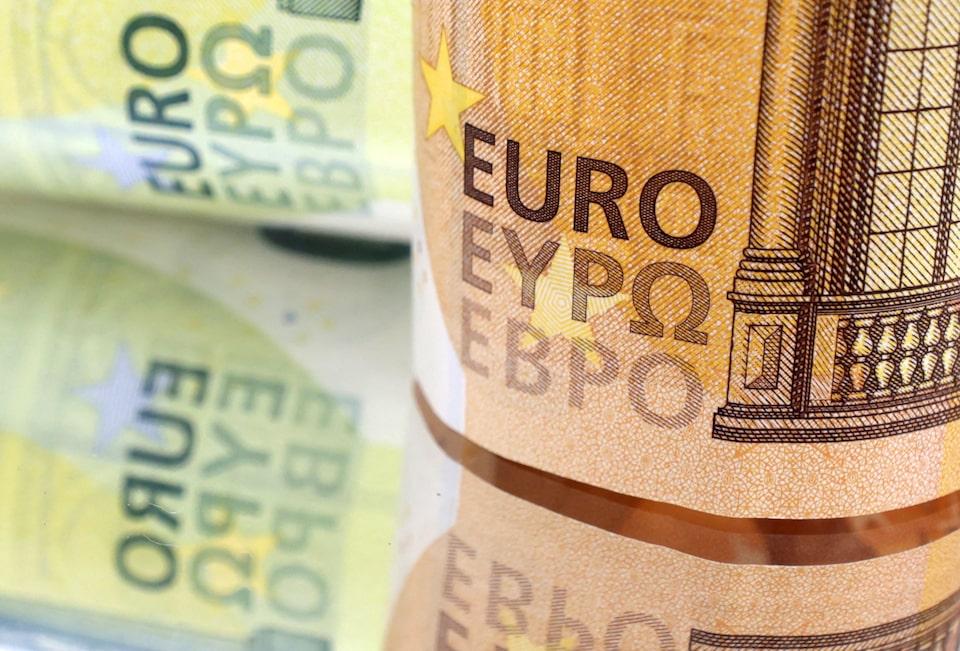
Dec 9 (Reuters) - The strength of the euro is amplifying the deflationary effect of China’s export machine, which may end up being the catalyst that could jolt the European Central Bank out of its "good place" and into more interest rate cuts. The euro is around $1.166, having hit a four-year high of $1.1918 in September and set for a gain of nearly 13% this year, the most since 2017. Sign up here. EURO MORE EXPENSIVE THAN MEETS THE EYE The ECB's euro real effective exchange rate - essentially the basket of key trading partner currencies adjusted for inflation - hit a high of 98.68 in September, the most since May 2014. It was at 97.81 in November . The nominal rate , which is around 129.96, hit a record 130.87 in September, having risen 5.7% so far in 2025. "The euro is a lot more expensive than meets the eye," said Themos Fiotakis, Barclays global head of forex strategy. "If you look at the euro on a trade-weighted basis, and also against some of its more direct competitors, you’ll see that the euro is at historically high levels," he argued, adding that factoring in U.S. tariffs offers a euro rate closer to $1.28. One of the main drivers of the rise in the trade-weighted euro has been the 7% drop in the Chinese yuan in the offshore market this year . China is Europe's largest trading partner. The most recent data show the euro zone had a trade deficit of 33 billion euros with China in September, compared with a 22.2-billion euro surplus with the United States, the region's second-largest partner. ONE OR TWO RATE CUTS STILL POSSIBLE Goldman Sachs recently delivered its biggest upgrade to China's growth outlook in a decade, saying Beijing’s push to flood markets with cheap goods could stoke deflation, particularly in Europe. Chinese exporters will be looking to expand their footprint in markets other than the United States and, given the country's grip on supply of critical rare earth materials, there may be little room for trade barriers. ECB Vice President Luis de Guindos said in July the central bank can ignore an appreciation of the euro up to $1.20, but it would get "much more complicated" above that level. "We’re seeing only limited pass-through from the exchange rate so far, as margins are still being rebuilt—and that process may not be complete yet,” said Simon Wells, chief European economist at HSBC. "If the trade-weighted euro were to appreciate sharply from here, say by around 5%, that could well trigger further policy easing,” he added, noting that in this case there would likely be more than one cut. ECB official Martin Kocher said in September the exchange rate wasn't a risk, but further euro appreciation could "become problematic" for exporters, while Martins Kazaks recently said the exchange rate and Chinese trade flows were key risks to the central bank's policy outlook. “What I’m telling clients is that our base case remains that rates will be unchanged, but the likelihood that the ECB will cut one or two more times between now and the summer of next year is still pretty high,” said Carsten Brzeski, global head of macro research and chief euro zone economist at ING. “The China story could be the tipping factor to push the ECB into rate cuts.” BETS ON ECB RATES SENSITIVE TO TRADE TENSIONS Markets show traders expect the ECB to be firmly on hold until at least March 2027. But tariffs and fears of a global trade war have seen that pricing come back from a low in April of 1.55%, when Trump slapped tariffs on all major trading partners. Strategists say the outlook for the euro will remain dominated by the difference between euro zone and U.S. interest rates. The Federal Reserve is widely expected to deliver a series of cuts next year that could weigh on the dollar and, in turn, boost the euro. “Lower rates and a weaker dollar go hand in hand,” said Andreas Koenig, head of global currency management at Amundi Asset Management, arguing that Trump will influence the Fed toward more easing ahead of mid-term elections. "I think that the first sequence is a lower dollar, then an accelerating (U.S.) economy." https://www.reuters.com/world/china/euros-hidden-strength-could-muddy-ecbs-good-place-2025-12-09/
2025-12-09 00:23
Dec 9 (Reuters) - Russian drones attacked the northern Ukrainian city of Sumy late on Monday in the second major strike on the city in 24 hours, triggering a power outage, the regional governor said. "In the space of half an hour, the Russians launched more than 10 drone strikes on the city," Governor Oleh Hryhorov wrote on Telegram. "There is no electricity in Sumy. Some critical infrastructure is operating on reserve power sources." Sign up here. Hryhorov said officials were checking for casualties and that power would be restored as soon as it was safe for crews to do so. Sumy, a city of around 250,000 before war broke out in February 2022, has been a frequent target of Russian attacks. Earlier on Monday, Hryhorov said, Russian drones struck an apartment block in the city, injuring seven people. Russian attacks on Ukraine have for months focused on energy targets in the run-up to winter. https://www.reuters.com/world/europe/russian-drone-attacks-cut-power-sumy-northern-ukraine-2025-12-09/

2025-12-09 00:11
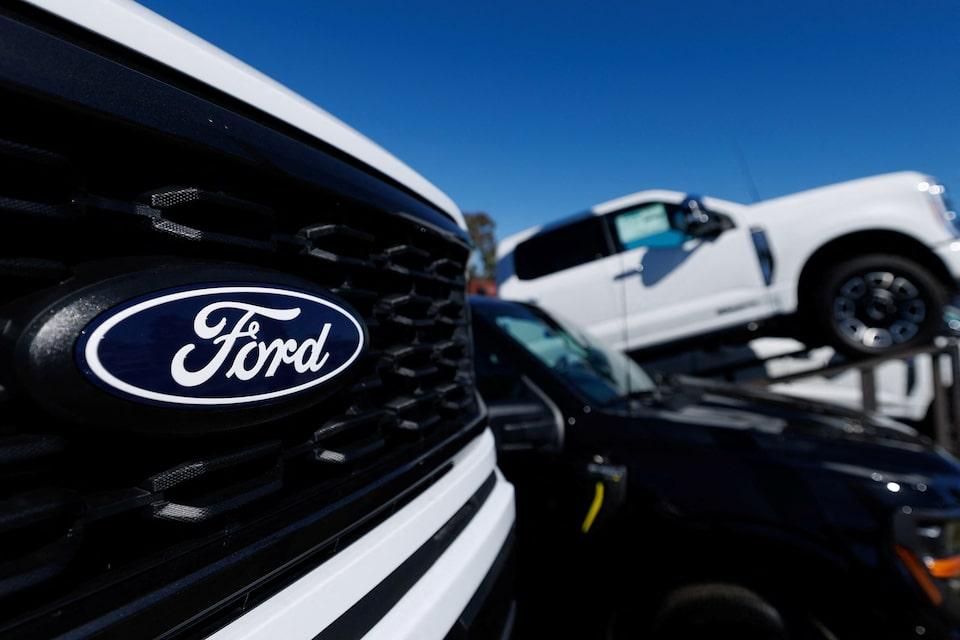
Trump administration vehicle efficiency rule rollback would reduce upfront car costs by $930 Upfront car cost savings would evaporate quickly due to fuel, repair costs, analysts say WASHINGTON, Dec 8 (Reuters) - The Trump administration's proposal to roll back Biden-era vehicle fuel-efficiency standards may save automakers in the U.S. tens of billions of dollars and potentially lower upfront purchase costs for American car buyers. But any savings for car buyers will vanish quickly as drivers are forced to shell out more cash at the fuel pump, according to industry experts who analyzed the administration’s proposal as well as the administration's own projections. Sign up here. The National Highway Traffic Safety Administration and the Environmental Protection Agency last Wednesday proposed cutting the fuel-economy requirements for cars to 34.5 miles per gallon on average by 2031, down from the 50.4 miles per gallon (21.4 km per liter) set by former President Joe Biden. AUTOMAKERS SAVE BILLIONS As a result, automakers would save $35 billion through 2031 and average upfront vehicle costs would decline by about $930, assuming the automakers pass along the savings, according to NHTSA’s economic analysis in support of the proposal. But the NHTSA’s same economic analysis said the proposal would raise fuel consumption by around 100 billion gallons through 2050 relative to the Biden standard, costing Americans up to $185 billion. "The Department of Transportation is now estimating larger upfront savings on technology costs, but they are also estimating even larger losses in fuel savings," said Jason Schwartz, legal director at New York University's Institute for Policy Integrity. "As for just how quickly any upfront savings will evaporate in the face of more money spent at the gas pump, very quickly indeed," he said. Car buyers with long-term financing may not feel even the short-term benefits, as purchase savings would be spread out over time alongside the higher fuel bills. "From the very first day of driving, it will cost consumers more to operate their less-efficient cars: more for gas, more for repairs, more time wasted pumping gas," he said. WHITE HOUSE DEFENDS ROLLBACKS The Trump administration touted the fuel economy rollback proposal as a boost to the auto industry and a benefit for consumers by potentially allowing for the comeback of less-efficient vehicles such as station wagons, a staple of 1970s and 1980s family travel. It criticized Biden’s standards as a mandate for more electric vehicles that are more expensive, and which American automakers have struggled to produce profitably at scale. Some of the biggest beneficiaries of the proposal include U.S. automakers Ford (F.N) , opens new tab and GM (GM.N) , opens new tab, along with Europe-based Stellantis (STLAM.MI) , opens new tab, which produces vehicles under the Chrysler, Dodge and Ram brands in the United States, according to the NHTSA’s analysis. The administration has said that longer-term cost estimates including fuel prices are more speculative and that its cost-benefit analysis did not factor in maintenance costs. "Under our proposal, initial vehicle owners will save more upfront relative to fuel costs. Moreover, that savings calculation does not include savings from reduced fines [from non compliance with higher CAFE standards]," an NHSTA spokesperson said. SCIENTISTS CHALLENGE ANALYSIS Dave Cooke, a senior scientist for the clean transportation program at Union of Concerned Scientists, said he believed the proposal amounted to a financial hit to consumers. "It shows that consumers will be paying more in lifetime fuel costs than saved in technology costs beginning in model year 2027 in every single one of their three alternative (scenarios) compared to the original standards under Biden," he said of the NHTSA analysis. He also criticized the administration’s analysis for omitting the foregone financial benefits associated with increased tailpipe pollution and greenhouse gas emissions. The NHTSA’s analysis showed the proposal would raise vehicle carbon dioxide emissions by around 5% relative to the Biden standards. Transport is the top source of U.S. carbon dioxide output, according to the EPA. Trump has called global warming a "con job" and pulled the United States out of international efforts to combat it. The EPA said its administrator, Lee Zeldin, had made revitalizing the American auto industry one of his priorities. "EPA is committed to delivering on this promise and giving consumers choice through rulemaking within EPA’s jurisdiction," the agency said in a statement. Analysts for Edmunds, a consumer research guide for car buyers, said it may be too early to forecast how quickly the projected upfront savings on vehicles might be offset by higher fuel costs. Edmunds told Reuters that product development cycles are typically planned years in advance, so any meaningful impact would take quite a while to materialize. https://www.reuters.com/sustainability/climate-energy/trump-fuel-economy-rollback-may-make-cars-cheaper-higher-gas-bills-will-absorb-2025-12-08/
2025-12-09 00:10
LONDON, Dec 9 (Reuters) - Britain launched its second-ever carbon capture licensing round on Tuesday for 14 locations that could potentially store up to 2 gigatons of carbon dioxide, the North Sea Transition Authority regulator said. Carbon capture technology can help to decarbonise industrial sites such as gas-fired power plants by filtering emissions before they reach the air and storing the CO2 in depleted oil and gas fields or other underground rock structures. Sign up here. But making such projects commercially viable is difficult in the context of a fragmented carbon price landscape, typically leaving them dependent on government subsidies. Britain awarded 21 carbon capture licenses in 2023. In terms of receiving actual permits to proceed towards CO2 injection, so far only two projects - Endurance and HyNet, which predate the 2023 licensing round - have reached that stage. The new licensing round will run until March 24, 2026, the NSTA said, adding licensing would likely be awarded in early 2027. https://www.reuters.com/sustainability/climate-energy/britain-launches-second-carbon-capture-licensing-round-2025-12-09/