2025-10-15 05:53
MUMBAI, Oct 15 (Reuters) - The Indian rupee soared to post its best one-day gain in nearly four months on Wednesday, powered by firm central bank intervention supporting the currency while traders also cited unwinding of bearish wagers on the currency. The rupee closed at 88.0750 against the U.S. dollar, up 0.8% on the day, its strongest performance since June 25. Sign up here. The local unit had touched a peak of 87.9250 in early trading after the Reserve Bank of India stepped in forcefully to curb pressure on the rupee across both the local spot and non-deliverable forwards market, traders said. Worries over the drag from steep U.S. trade tariffs, patchy foreign portfolio flows and a surge in precious metal prices had pinned the rupee close to its all-time low of 88.80 over the last two weeks but traders reckon that the pressure could ease following the central bank's intervention. "The market was a bit unfair in testing the central bank's patience at these levels because nothing in the underlying balance of payments had changed to warrant this kind of weakening so far," said Dhiraj Nim, an economist and FX strategist at ANZ. The rupee had declined 2.8% over the year so far while India's balance of payments position stood at a surplus of $4.5 billion in the April-June quarter, compared with a surplus of $5.2 billion a year earlier. Meanwhile, data released on Wednesday showed that India's merchandise trade deficit widened to an 11-month high of $32.15 billion in September, higher than economists' forecast of $25.13 billion in a Reuters poll. India's trade negotiation team is currently in Washington and to hold talks with U.S. officials, a senior trade official said on Wednesday. Elsewhere, the dollar index was down 0.2% at 98.8 after comments from Federal Reserve Chair Jerome Powell bolstered bets on a series of rate cuts in coming months. https://www.reuters.com/world/india/rupee-ride-relief-wave-dovish-powell-cooling-dollar-heat-2025-10-15/

2025-10-15 05:17
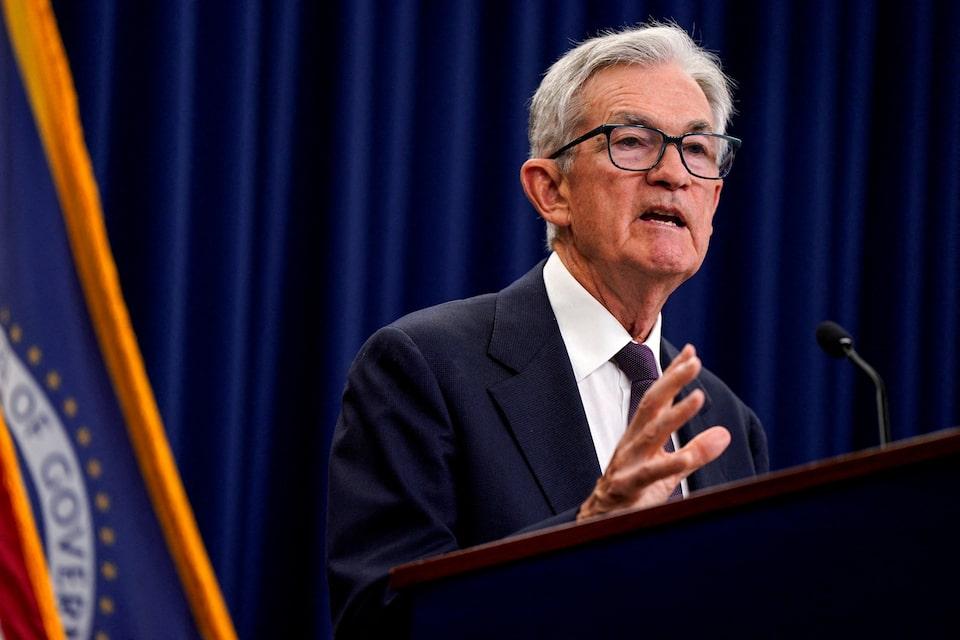
Lack of US data a concern abroad as well as in US Shutdown seen as symptomatic of larger issues World Bank, IMF cite loss of institutional trust as a downside risk TOKYO/WASHINGTON, Oct 15 (Reuters) - The U.S. government shutdown that has turned off the official flow of data could begin clouding the view for policymakers in Japan and other countries where insight into the fortunes of the world's biggest economy informs the outlook for their own currencies, trade performance and inflation. What happens in America, in other words, doesn't stay in America, and global officials say being left data-blind by the shutdown over time could complicate their own policymaking and boost the risk of a mistake at a moment when countries are already adjusting to the Trump administration's efforts to remake global trade. Sign up here. "It's a serious problem. We hope this gets fixed soon," Bank of Japan Governor Kazuo Ueda told a news briefing on October 3, as he discussed the hurdles the BOJ faces in deciding when to resume interest rate hikes. One Japanese policymaker went further. "It's a joke. (Federal Reserve Chair Jerome) Powell keeps on saying the Fed's policy is data-dependent but there's no data to depend upon," said the official, who declined to be named as he was not authorized to speak publicly. Bank of England policy member Catherine Mann said the questions surrounding U.S. data, the controversy over the Fed's independence, and other issues don’t figure as directly into BOE policy debate as the shifts in trade policy, for example, which directly affect things like prices and the export outlook. But she noted how over time the British pound lost its central status in the world, a process that took decades and was driven by multiple forces she referred to as “termites” that weakened the pound’s role over time. Policy changes that could degrade the dollar's standing or erode the Fed's independence, “are things that we have in our mind but they’re not front and center,” Mann said. But “they are the termites, as opposed to something that is imminent.” Finance and economic leaders from around the world are gathered in Washington this week for meetings of the World Bank and the International Monetary Fund, and - in a world beset by an ongoing European land war, tensions and violence in the Middle East, and long-term issues like climate change - much of the meeting's oxygen is likely to be consumed by discussion of U.S. President Donald Trump's plans for the world, his performance in office so far, and, now, the sudden stop of official information about a $30 trillion economy that accounts for roughly one-fourth of world output. The shutdown could end at any time and the flow of data resume. But the episode is nonetheless symptomatic of a deeper set of issues around U.S. governance and data reliability, including Trump's efforts to gain new influence over the Federal Reserve and his firing of the head of the Bureau of Labor Statistics because he was angry over a jobs report that the IMF cited among the "downside risks" facing the world right now. "Intensification of political pressure on policy institutions...could erode hard-won public confidence in their ability to fulfill their mandates," the World Economic Outlook published Tuesday by the IMF stated. "Pressures on technocratic institutions mandated with data collection and dissemination could also erode the public’s and markets’ trust in statistics from official sources, significantly complicating the tasks of central banks and policymakers in making policy decisions...It also raises the likelihood of policy mistakes if political interference leads to compromise in data quality, reliability, and timeliness." 'THE RISK OF ERROR RISES' It is not as if all data has disappeared. The U.S. Federal Reserve, self-funded and not affected by the shutdown, continues to survey its extensive network of contacts about the economy, and private data services provide alternatives that policymakers have learned to knit into serviceable, if imperfect, substitutes at least for short-term analysis. “The month-to-month data flow in the U.S. gets talked about but never is a decisive factor," for other central banks, said Adam Posen, president of the Peterson Institute for International Economics and a former Bank of England policymaker. But Posen said that the shutdown itself and the tumult around BLS "contributes to the general skepticism about the governance of the U.S. and the reliability of the U.S....And that is important. It eventually feeds into reserve management and currency decisions and feeds into volatility outlooks for the U.S. that were not there before." If the spring IMF and World Bank meetings were all about the uncertainty posed by Trump's plans for higher tariffs and rising protectionism, attention is now fixed on how companies, countries and consumers are coping with the new landscape. Short answer: Not as bad as expected when Trump first took office, at least through September, but still adjusting, according to the IMF's WEO update that found "a significant, though not massive, impact of shifting policies on the economic outlook." After trimming its global growth outlook by a half percentage point in April to 2.8%, the IMF in its latest projection published on Tuesday clawed most of that back, with global growth now seen at 3.2% for the year. But now, with a major hole in the flow of data covering around a quarter of global economic output, the view will get foggier the longer the shutdown lasts. "Certainly, there is still a great deal of information out there, and policymakers are dedicating substantial effort to gather micro data and anecdotal evidence," about the U.S. said Robert Kahn, director of global macro at Eurasia Group. "But how best to put it together, and importantly how markets will react to such news, are critical unknowns. As time goes on, the risk of error rises as uncertainties compound.” https://www.reuters.com/world/asia-pacific/data-darkness-us-spreads-global-shadow-2025-10-15/

2025-10-15 05:12
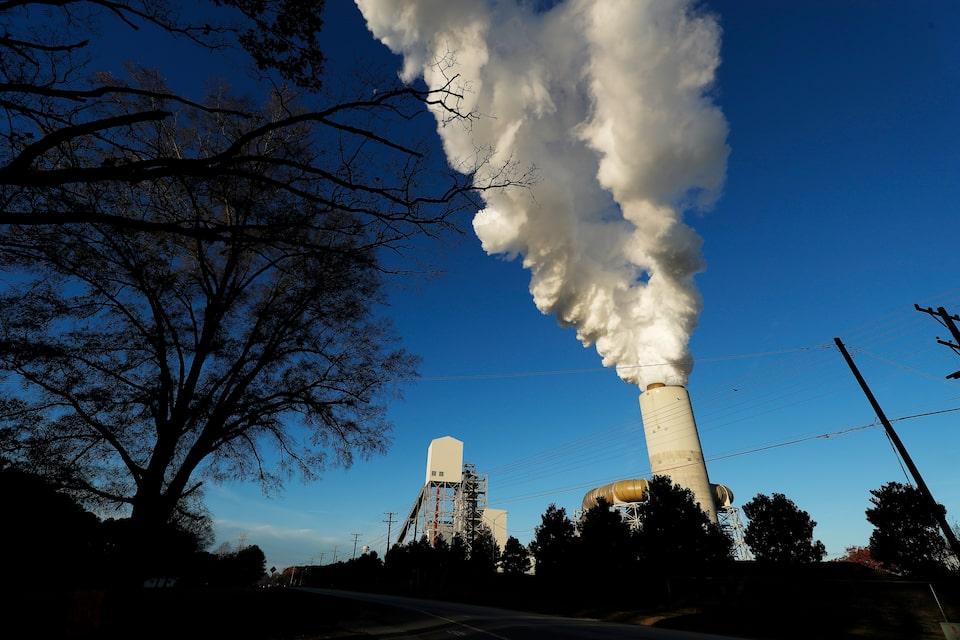
LITTLETON, Colorado, Oct 15 (Reuters) - The abrupt cuts to U.S. federal clean energy incentives alongside fresh support for coal and gas-fired power will trigger a swell in North America's emissions in the coming decades as the U.S. generation mix remains fossil fuel reliant. Indeed, consultancy DNV projects that North America's power emissions from 2025 to 2050 will be 3 billion metric tons more than was projected in 2022, when the previous U.S. administration rolled out aggressive clean power goals. Sign up here. The higher pollution totals reflect a combination of slower growth in U.S. clean power generation - now stifled by the planned phase-out of tax breaks - and the extended use of coal and gas-fired power plants planned by the Trump administration. Expanded use of fossil fuels, however, will result in a faster climb in total power generation from now through 2040 compared to 2022's projections, which contained a steep drop-off in estimated coal-fired output over the coming years. COAL'S LONGER LIFE North American power generation by fossil fuel power sources from 2025 to 2050 will grow by around 8% compared to DNV's 2022 estimates, due mainly to the Trump administration's stated expansions to coal and gas-fired power. Coal-fired power generation from now through 2050 is projected to be 46% more than was estimated by DNV in 2022, following the Trump administration's new policies that will extend the life of U.S. coal power plants by several years. North American gas-fired generation through 2050 will grow by around 5% from DNV's 2022 estimate, due in large part to expectations that new gas capacity will be developed over the coming decade in response to gas-friendly policies in the U.S. WIND WOES Generation from clean power sources during 2025 to 2050 will decline by around 3% from 2022's estimates, again due to U.S. policy changes that have resulted in sharp drops to federal incentives for clean power deployment. Total power generation from wind farms in North America is estimated to fall by around 24% from DNV's 2022 estimate, following the aggressive slashing of U.S. federal support for wind development since President Trump returned to office. Power generation from solar photovoltaic installations is also expected to shrink compared to 2022's estimates due to the Trump policy u-turn, although only by 5%. Steady declines in solar system costs, coupled with the fact that solar systems remain the fastest source of new electricity for grid managers, are expected to keep solar capacity growth relatively firm despite the policy shifts. Continued federal support for battery systems going forward is expected to result in a 71% surge in generation from solar-plus-storage systems compared to DNV's 2022 estimates. Sharply lower battery costs compared to 2022 are another factor driving expected solar-plus-storage uptake compared to 2022. EMISSIONS IMPACT In its 2022 outlook for global energy generation and emissions, DNV estimated that North America's power emissions after carbon capture sequestration and storage were likely to steadily decline from around 1.2 billion tons of CO2 a year in the 2020s to around 360 million tons a year by the 2040s. In its 2025 report, however, those emissions estimates veer higher for the next decade or so due to the extension of coal use within the United States, and average around 100 million tons of CO2 more than the 2022 emissions estimates. Emissions from coal-fired generation had been projected to average around 310 million tons of CO2 a year through 2035 in the DNV 2022 report. In this year's report, coal-fired emissions are seen averaging around 470 million tons a year through 2035, which marks a more than a 50% increase. Between 2025 and 2050, that sustained higher level of coal-fired generation is expected to result in 2.6 billion tons of CO2 more than was projected in 2022, and around 3.2 billion tons more of total power sector emissions. To justify the extended use of coal plants, the Trump administration has argued that rapidly rising electricity demand from data centres and other businesses could result in potential power shortages unless output from fossil fuel plants increased. And it is clear from DNV's generation projections that total power output in North America will rise faster through 2040 under the current administration's policy scenario than under the policies that governed DNV's projections in 2022. A major takeaway, however, is that the higher generation peak comes with a sharp rise in power emissions that could be avoided if a cleaner power mix was deployed instead. The opinions expressed here are those of the author, a columnist for Reuters. Enjoying this column? Check out Reuters Open Interest (ROI), your essential new source for global financial commentary. ROI delivers thought-provoking, data-driven analysis of everything from swap rates to soybeans. Markets are moving faster than ever. ROI can help you keep up. Follow ROI on LinkedIn , opens new tab and X , opens new tab. https://www.reuters.com/business/energy/us-clean-power-reversal-comes-with-hefty-emissions-price-tag-2025-10-15/
2025-10-15 05:02
Stocks pare gains on simmering US-China trade tensions Oil reverses gains, US Treasury yields move higher Dollar slips as trade tensions dampen sentiment Gold crosses $4,200 for first time NEW YORK, Oct 15 (Reuters) - The S&P 500 and the Nasdaq closed higher on Wednesday while gold resumed its ascent as investors weighed upbeat earnings against mounting trade tensions between the United States and China. All three major U.S. stock indexes ended well below session highs as the day progressed and risk appetite cooled. The blue-chip Dow ended the day with a nominal loss. Sign up here. Crude prices forfeited earlier gains and safe-haven gold hit new highs as Washington and Beijing ramped up the rhetoric in their ongoing tariff dispute. U.S. President Donald Trump said he was considering cutting some trade ties with Beijing in response to China not buying U.S. soybeans. This followed China's ramped-up restrictions on crucial rare earth exports. U.S. Trade Representative Jamieson Greer blasted China's move on Wednesday, calling its expansion of rare earth export controls "a global supply-chain power grab," but along with Treasury Secretary Scott Bessent, stressed that Washington did not want to escalate the conflict. "There’s fear out there and we really don't know how tariffs and the slower employment is going to affect consumer spending and company financials going forward," said Peter Tuz, president of Chase Investment Counsel in Charlottesville, Virginia. "I hope they get together and find a solution that is amenable to both parties, because this escalation isn't good for markets. It's probably not good for either economy." Earlier in the session, upbeat third-quarter results from Morgan Stanley (MS.N) , opens new tab and Bank of America (BAC.N) , opens new tab buoyed investor sentiment. The Dow Jones Industrial Average (.DJI) , opens new tab fell 17.15 points, or 0.04%, to 46,253.31, the S&P 500 (.SPX) , opens new tab rose 26.75 points, or 0.40%, to 6,671.06 and the Nasdaq Composite (.IXIC) , opens new tab rose 148.38 points, or 0.66%, to 22,670.08. European stocks ended higher as upbeat results from France's LVMH (LVMH.PA) , opens new tab sparked a rally in luxury goods, soothing worries that slowing global economic growth and ongoing tariff wars are dampening corporate health. MSCI's gauge of stocks across the globe (.MIWD00000PUS) , opens new tab rose 7.36 points, or 0.75%, to 985.67. The pan-European STOXX 600 (.STOXX) , opens new tab index rose 0.57%, while Europe's broad FTSEurofirst 300 index (.FTEU3) , opens new tab rose 14.31 points, or 0.64% Emerging market stocks (.MSCIEF) , opens new tab rose 26.33 points, or 1.97%, to 1,365.31. MSCI's broadest index of Asia-Pacific shares outside Japan (.MIAPJ0000PUS) , opens new tab closed higher by 1.95%, to 708.31, while Japan's Nikkei (.N225) , opens new tab rose 825.35 points, or 1.76%, to 47,672.67. The dollar slipped against its peers as market sentiment weakened in the face of the continuing U.S.-China trade skirmish. The dollar index , which measures the greenback against a basket of currencies including the yen and the euro, fell 0.36% to 98.71, with the euro up 0.34% at $1.1645. Against the Japanese yen , the dollar weakened 0.37% to 151.27. U.S. Treasury yields turned higher as investors digested the latest development in the U.S.-China trade dispute. The yield on benchmark U.S. 10-year notes rose 1.8 basis points to 4.04%, from 4.022% late on Tuesday. The 30-year bond yield rose 0.9 basis points to 4.633% from 4.624% late on Tuesday. The 2-year note yield, which typically moves in step with interest rate expectations for the Federal Reserve, rose 2.2 basis points to 3.501%, from 3.479% late on Tuesday. Oil prices reversed earlier gains, drifting near a five-month low after the International Energy Agency projected a 2025 supply surplus, and amid the escalating trade dispute between the world's two largest economies. U.S. crude dipped 0.73% to settle at $58.27 per barrel, while Brent settled at $61.91 per barrel, down 0.77% on the day. Gold extended its record run, breached the $4,200 per oz level for the first time as the safe haven metal continued to benefit from geopolitical tensions. Spot gold rose 1.66% to $4,210.13 an ounce. U.S. gold futures rose 1.48% to $4,200.10 an ounce. https://www.reuters.com/world/china/global-markets-wrapup-1-2025-10-15/

2025-10-15 04:43
MUMBAI, Oct 15 (Reuters) - The Reserve Bank of India intervened heavily in the currency market on Wednesday to shore up the rupee, traders said, adding the move was straight from the central bank's script defending the local currency back in February. The RBI stepped in forcefully to stem pressure on the rupee, kicking off dollar sales through state-run banks before the usual 9:00 a.m. market open, traders told Reuters, adding that it was a sign of the central bank's intent to draw a firm line under the rupee's slide. Sign up here. Traders described heavy offers hitting the market in a span of just minutes, pushing the dollar-rupee pair significantly lower. "There was heavy activity from them in NDF as well as spot market right from open. Sentiment is expected to change for the rupee," said VRC Reddy, treasury head at Karur Vysya Bank. The rupee opened at 88.26 to the dollar, well past Tuesday's level of 88.7975 — which was only a shade away from its all-time low of 88.80. Momentum quickly built with stop-loss orders on long dollar positions triggered, complementing the RBI's intervention and extending the rally to a high of 87.75 on the interbank order-matching system. There were not any major flows in the market — the pullback on dollar/rupee was entirely RBI-led, with stop-losses amplifying the move, said a FX salesperson at a foreign bank. It looked like the RBI wanted to flush out speculative shorts that had built up against the rupee, the salesperson said, adding that importers were already reaching out following the drop in the pair. The scale and timing of Wednesday's move, traders noted, bore a striking resemblance to the central bank's aggressive defence in February, when it had similarly acted to prop up the rupee. Wednesday's intervention comes after several sessions of the RBI quietly defending the 88.80 level, selling dollars intermittently to cap further weakness in the rupee, according to traders. The RBI's pre-emptive move on Wednesday marked a shift in tactics — from passive defence to an assertive push aimed at resetting market positioning, they said. https://www.reuters.com/world/india/aggressive-central-bank-intervention-helps-rupee-rise-above-88usd-traders-say-2025-10-15/

2025-10-15 04:33
A look at the day ahead in European and global markets from Rae Wee Investors have chosen, at least for now, to look past simmering U.S.-China trade tensions, taking comfort instead from Federal Reserve Chair Jerome Powell's remarks hinting at more rate cuts on the horizon. Sign up here. Global shares were once again upbeat on Wednesday, with European futures pointing to a sharply higher open, after a volatile session the previous day owing largely to trade whiplash. Markets may have Powell to thank for the reprieve, after his comments on Tuesday reinforced expectations of further easing this year, alongside a potential end to the Fed's balance sheet drawdown some time soon. That in turn left the dollar down and gold extending its record run once again, with futures now pointing to roughly 48 basis points worth of rate cuts by December. But if anything, the bouts of market volatility over the past few sessions are a reminder of how fragile investor sentiment remains. The U.S. and China continue to trade volleys in their ongoing tariff spat, the latest being Trump's warning that he might terminate some trade ties with Beijing, including in relation to cooking oil. The tariff shock from Friday - when Trump threatened additional levies of 100% on China's U.S.-bound exports - continues to ripple through markets, though each wave has been smaller as investors assume the two sides will keep shoving each other but not come to blows. U.S. Trade Representative Jamieson Greer on Tuesday said it depended on China whether the heightened tariffs kick in on November 1 or sooner, but acknowledged it might be hard for Beijing to find an off-ramp. Politics also loom large around the world. Japan's parliamentary scheduling committee could not agree on holding a vote to select the next prime minister on October 21, local media reported on Wednesday, prolonging the uncertainty over Sanae Takaichi's bid to become the nation's first female premier. And in France, eyes will be on what comes next for the government, after French Prime Minister Sebastien Lecornu promised to suspend a landmark pension reform until after the 2027 election. Over on Wall Street, earnings from Bank of America (BAC.N) , opens new tab and Morgan Stanley (MS.N) , opens new tab are due later in the day. Expectations are running high after their peers reported a solid set of results on Tuesday. Top U.S. bankers predicted business would continue to boom as equity markets surged over the last quarter and the economy and consumer spending held up despite sweeping tariffs. Key developments that could influence markets on Wednesday: - French political developments - Bank of America, Morgan Stanley earnings - Fed's Miran, Bostic, Schmid speak - Release of Fed's Beige Book https://www.reuters.com/world/china/global-markets-view-europe-2025-10-15/