2025-10-14 19:18
Oct 14 (Reuters) - A Russian official said on Tuesday that work would begin this week to restore external power links to the Russian-held Zaporizhzhia nuclear power station, which has been running on emergency diesel generators for three weeks. Russian forces seized the Zaporizhzhia plant in the first weeks of Moscow's February 2022 invasion of Ukraine. Each side has accused the other of conducting military action that caused the last external line to go down on July 23. Sign up here. "Active preparations are underway at this time," Mikhail Ulyanov, Russia's permanent representative to international bodies in Vienna, told the Russian state news agency RIA. "We expect the repair work on both power transmission lines to start at the end of this week." In order for the work to be carried out, Ulyanov said, "it is vital to agree on a local ceasefire in areas where the repair work is to be carried out". The Vienna-based U.N. nuclear watchdog, the International Atomic Energy Agency, has repeatedly called on both sides to refrain from actions compromising nuclear safety. The plant, Europe's largest with six reactors, produces no electricity at the moment, but needs power to keep fuel inside it cool and prevent any possibility of a meltdown. Rafael Grossi, the IAEA's Director General, has said the diesel generators are providing the power needed and has been working with both sides to get the external links restored. Ukraine's foreign minister accused Russia on Sunday of deliberately severing the external power line to the station in order to link it to Moscow's power grid. A top Russian diplomat this month denied that Russia had any intention of restarting the plant. https://www.reuters.com/business/energy/work-restore-link-zaporizhzhia-nuclear-plant-begins-this-week-russian-official-2025-10-14/

2025-10-14 18:36
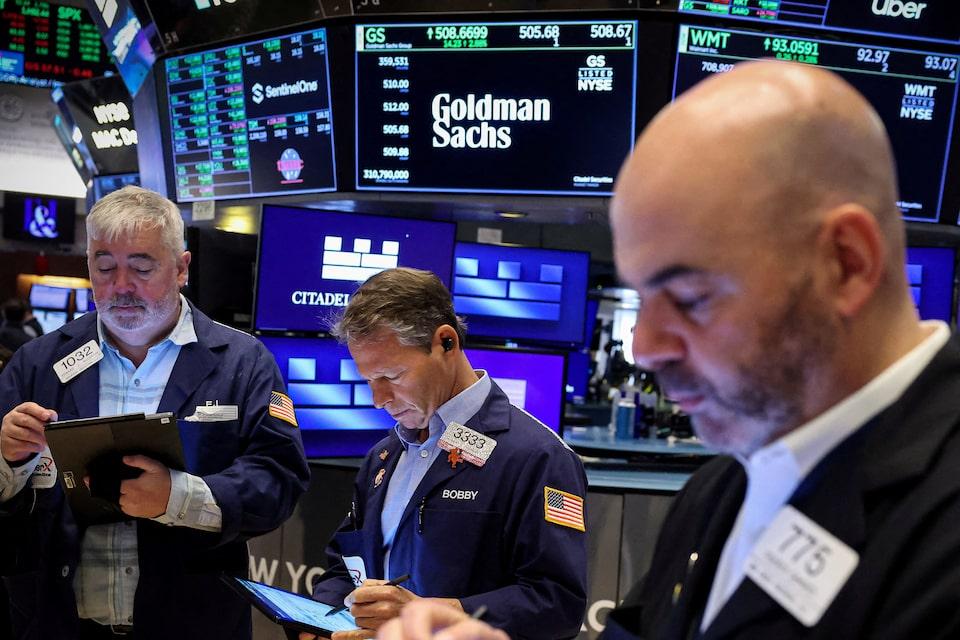
Cboe Volatility Index rises to near five-month high before retreating Investors add protection amid US-China trade concerns VIX futures curve suggests short-lived volatility NEW YORK, Oct 14 (Reuters) - Wall Street's most watched gauge of investor anxiety rose to a near five-month high before paring gains on Tuesday as U.S. stocks whipsawed on renewed concerns over a U.S.-China trade conflict. The Cboe Volatility Index (.VIX) , opens new tab - an options-based indicator that reflects demand for protection against drops in the stock market - was last up 0.7 points to 19.68. The index had reached 22.94, its highest since May 23, earlier in the day. Sign up here. A reading of 20 or higher on the VIX is associated with robust demand for options protection. The recent rise in the index - often called the "Wall Street fear gauge" - pointed to investors waking up to the risks that lurk for stocks after an extended period of market calm that enveloped markets even as equities logged new record highs. Tuesday's market moves follow a sharper selloff on Friday when the S&P 500 dropped 2.7%, its largest drop in six months. On Tuesday, the benchmark index fell as much as 1.5% before recovering to trade up 0.2%, after Federal Reserve Chair Jerome Powell said the central bank may soon end its balance sheet runoff, easing investor concerns over tight financial conditions. "It had been really, really quiet and so all those people who were asleep had to wake up," said Jim Carroll, senior wealth advisor and portfolio manager at Ballast Rock Private Wealth in Charleston, South Carolina. "Part of what we saw on Friday was a scramble for protection ... once the scramble starts then it becomes, you know, chasing protection instead of chasing returns and you get this big VIX pop," Carroll said. Some investors have been opportunistically adding protection to their portfolios. At least one trader took advantage of Monday's retreat in volatility to buy short-term hedges via October 24 put spreads in both the S&P 500 index-tracking SPDR S&P 500 ETF Trust and the Nasdaq-100 index-tracking QQQ ETF, according to a note by Susquehanna International Group derivatives strategist Christopher Jacobson. Put options convey the right to sell stock at a fixed price in the future. While investors remained nervous about the near-term outlook for stocks, there was little sign of outright panic in the market. The VIX futures curve, a snapshot of prices of futures contracts on the volatility index across different expirations, painted a less fearful picture. "It's very flat," said Joe Tigay, portfolio manager for Rational Equity Armor Fund. "It kind of is saying that this volatility might be short-lived," said Tigay, who has been taking advantage of the jump in market swings to sell volatility even as he stands ready to pick up more protection if stocks were to recover and markets turn calm again. https://www.reuters.com/world/china/wall-streets-fear-gauge-climbs-us-china-trade-fears-rise-2025-10-14/
2025-10-14 18:32
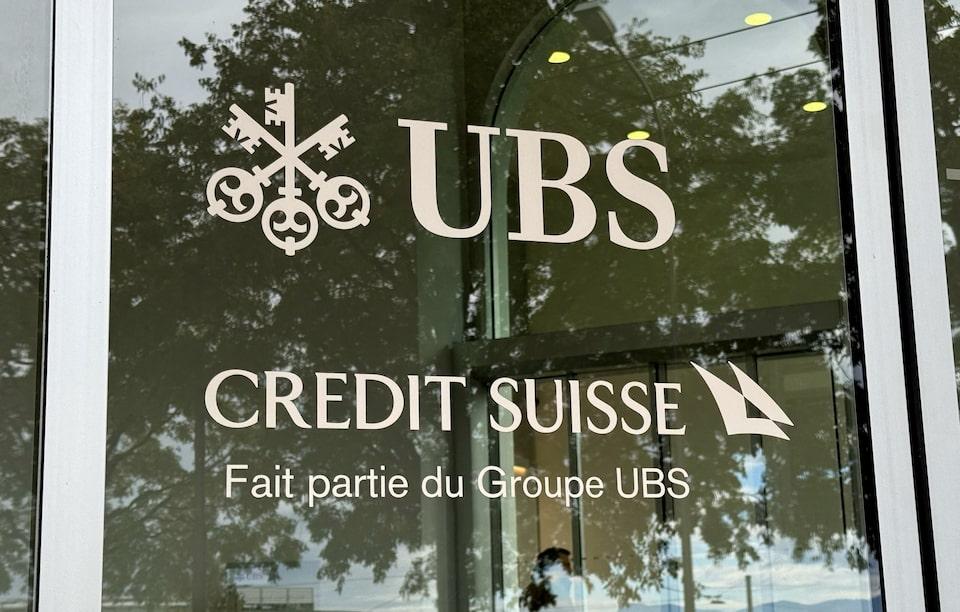
Court rules Credit Suisse bond write-off lacked legal basis UBS shares fall over 3.5% after court decision 3,000 complainants filed appeals against FINMA's decree ZURICH, Oct 14 (Reuters) - Writing off 16.5 billion Swiss francs ($20.53 billion) in Credit Suisse bonds was unlawful, a Swiss court ruled on Tuesday, boosting bondholders' hopes of recouping losses and raising fresh questions about how authorities handled the bank's rescue. Swiss market regulator FINMA's decision in March 2023 to wipe out Credit Suisse's Additional Tier 1 (AT1) bonds during the state-engineered takeover by its rival UBS (UBSG.S) , opens new tab triggered an investor backlash and legal challenges. Sign up here. Shares in UBS, which faces tougher banking regulations that could oblige it to hold billions of dollars in additional capital, fell by more than 3.5% following the ruling, which can be appealed at Switzerland's top court. Analysts said the Federal Administrative Court's decision was likely to be appealed and even if legal challenges failed, investors were not guaranteed to recover the entire sum because the bonds had lost value before Credit Suisse's collapse. "The repayment, if an appeal is unsuccessful, could be much less than the full 16 billion, as the market value of the bonds was much less than their nominal value at the time of the rescue," said Hans Gersbach, a banking and economics professor at ETH University in Zurich. Peter V Kunz, a business law professor at the University of Bern forecast the bonds would eventually need to be re-issued once a legal process he saw lasting up to six years played out. But the fact that actions taken by Swiss authorities had created a potential headache for UBS could win the bank sympathy in its efforts to lobby for lower capital requirements, he said. If UBS did have to re-instate the AT1 bonds it could seek to have the government share the burden, Kunz added. In a partial decision, the administrative court said the 2023 AT1 bond write-off lacked a legal basis. "It considered that the bondholders' property rights were seriously interfered with, which would have required a clear and formal legal basis. But no such basis existed," the court said. AT1 bonds, introduced after the 2008 financial crisis, are hybrid debt instruments which banks issue to bolster their capital buffers and absorb losses in times of stress. The Swiss finance ministry and FINMA both said they would analyse the court's decision. UBS declined to comment. 2023 DECISION LEFT MARKETS STUNNED The 2023 write-off stunned markets by prioritizing shareholder compensation over bondholder claims, upending the normal capital structure hierarchy. When Credit Suisse was taken over, shareholders received UBS stock valued at around $3.25 billion. AT1 holders were left with nothing, prompting lawsuits in Switzerland, the U.S., and investor-state arbitration under bilateral treaties. Around 3,000 complainants lodged appeals with the court over FINMA's decree in about 360 cases, the court said. In essence, complainants requested that the decree be revoked, and that the write-off be reversed, it added. The court made a partial decision in one appeal case and revoked FINMA's decree. It has not yet decided on the reversal request. The other cases are now suspended until a decision regarding the revocation of the decree has become final. Jonas Hertner, a Zurich-based lawyer who previously represented Credit Suisse AT1 clients at law firm Quinn Emanuel, expected FINMA and UBS to appeal the decision, which he said essentially held that bondholders were expropriated. "Under Swiss law, expropriation requires full compensation. This decision is a step to restore investor confidence in the Swiss legal system," he said. ($1 = 0.8038 Swiss francs) https://www.reuters.com/business/finance/swiss-authorities-analyse-court-decision-credit-suisse-bond-write-off-2025-10-14/
2025-10-14 18:18
WASHINGTON, Oct 14 (Reuters) - China must rebalance its economic growth model towards domestic demand, which has been weak for some time due to the country's property bust, the International Monetary Fund said on Tuesday, highlighting a message it has long delivered to Beijing. The renewed public emphasis in the IMF's World Economic Outlook is significant following U.S. Treasury Secretary Scott Bessent's calls for the global lender to step up its criticism of China's economic policies as part of a back-to-basics directive in April. Bessent's former chief of staff, Dan Katz, has recently taken over the IMF's influential No. 2 position. Sign up here. The IMF's chief economist, Pierre-Olivier Gourinchas, told a news conference that China continues to produce higher volumes of manufactured goods for export, but prices of these goods are falling. "And that suggests that somehow the market has limited capacity to draw all that is being produced," he said, adding that China's export growth engine is sputtering. "Our advice to the Chinese authorities for some time now has been to rebalance towards a sustainable domestic demand," Gourinchas said. In a blog posting accompanying the IMF's forecasts, Gourinchas described China's outlook as "worrisome." "Financial stability risks are elevated and rising as real estate investment continues to contract, overall credit demand remains weak, and the economy teeters on the edge of a debt-deflation trap," he wrote. He told reporters that China's domestic demand has been weak for more than four years because of a still-unresolved property crisis that has left the banking sector saddled with non-performing loans and which is weighing on consumer and business sentiment. Gourinchas also said China's pivot to subsidize investment in strategic sectors such as electric vehicles has had mixed results, fueling growth in these sectors but contributing to a broader misallocation of resources and significant fiscal costs. https://www.reuters.com/world/asia-pacific/imf-says-china-must-work-boost-domestic-demand-property-sector-still-an-issue-2025-10-14/

2025-10-14 17:44
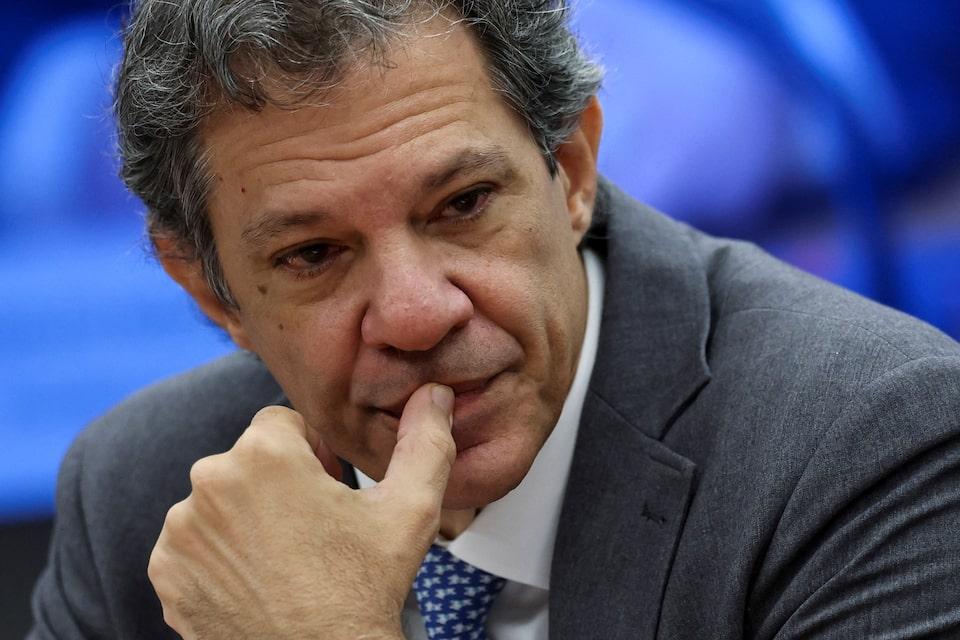
Haddad says betting firms should contribute more Debate on alternatives to start after Lula's return from Italy More income tax tweaks may be presented in the future BRASILIA, Oct 14 (Reuters) - Brazil's government said it would start discussing on Wednesday measures to offset Congress' shelving of a proposal that would have overhauled taxation on investments while also raising taxes on betting and fintech companies to boost revenue. The proposal was deemed crucial to help the government meet its fiscal goal of a zero primary deficit this year and a 2026 primary surplus of 0.25% of gross domestic product. Sign up here. At the Senate's Economic Affairs Committee, Finance Minister Fernando Haddad said on Tuesday that lawmakers had expressed interest in finding ways to replace the dropped proposal, as the government seeks support for its budget. He also signaled the government may push ahead with plans to raise taxes on online betting firms, saying they must help address the side effects of an entertainment that can lead to addiction. Discussions on fiscal alternatives had been on hold pending President Luiz Inacio Lula da Silva's return from a trip to Italy on Tuesday. Senator Humberto Costa, a member of Lula's Workers Party, said it was "extremely important" for the government to decide whether to send Congress a new proposal to tax betting firms. "I think we can make it move forward. We shouldn't consider the issue of betting taxation as settled," he said. The government had expected a fiscal gain of 14.8 billion reais ($2.69 billion) this year and 36.2 billion reais in 2026 from changes sent to Congress via an executive order that needed approval by last Wednesday to remain in force. But the Lower House failed to vote on the proposal before the deadline, causing it to expire. Lawmakers said they would not support another tax hike by Lula's leftist government. The measure would still have required Senate approval. Of the total fiscal impact, only 284.9 million reais this year and 1.7 billion reais next year would have come from raising the gross gaming revenue (GGR) tax on online betting companies to 18% from 12%, as originally proposed by the government. Amid last week's negotiations, the government agreed to erase that provision, and the version that reached the Lower House no longer included the higher rate - a sign of the betting sector's lobbying power, despite broad public support for higher taxation on such firms. Most of the expected fiscal gain from the shelved proposal would have come from tighter rules on companies' use of tax credits, projected to raise an additional 10 billion reais this year and the same in 2026. MORE INCOME TAX TWEAKS Haddad said further work is needed on income tax changes, after the Lower House passed a government bill that raises income tax exemptions for the middle class while introducing a minimum levy on the wealthy, which is still pending Senate approval. According to the minister, the next steps would include changes to payroll taxation, followed by a reform targeting "pejotizacao," a common practice in Brazil of hiring workers as legal entities without formal employment ties, resulting in substantially lower taxation. "If we send everything from the Finance Ministry's kitchen at once, it'll be chaos," he said, without specifying when the new proposals could be submitted. ($1 = 5.5014 reais) https://www.reuters.com/world/americas/brazil-start-debating-fiscal-measures-after-congress-setback-finance-minister-2025-10-14/
2025-10-14 16:04
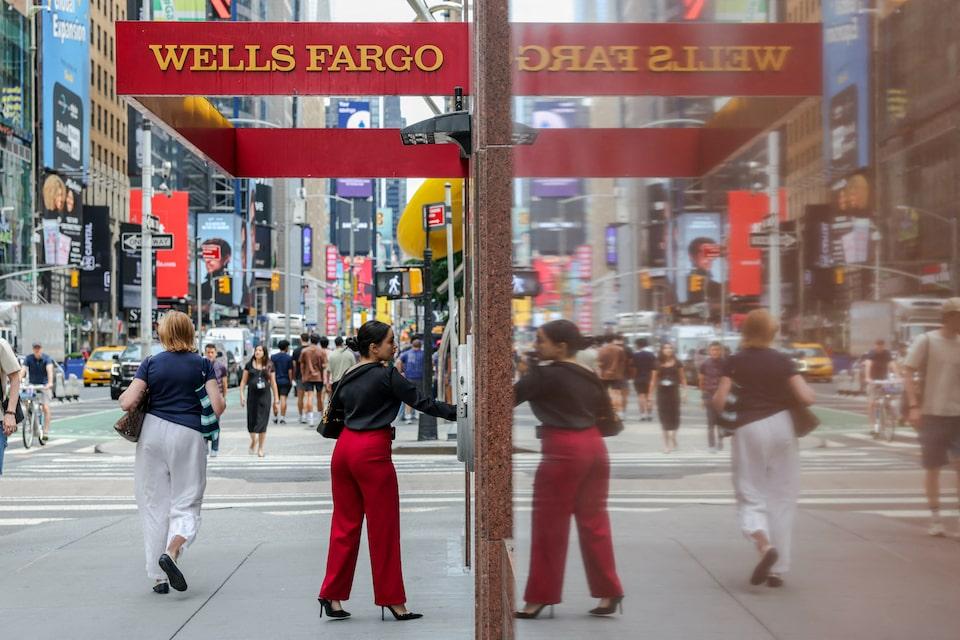
Wells Fargo raises ROTCE target to 17-18% in medium-term Credit quality strong across the board, CFO says Investment banking fees jump 25% Shares rise 7.6% in midday trading Oct 14 (Reuters) - Wells Fargo (WFC.N) , opens new tab on Tuesday beat Wall Street estimates for third-quarter profit and raised its closely watched profitability target after regulators removed an asset cap on the bank, paving the way for it to pursue growth. The U.S. Federal Reserve lifted the lender's seven-year, $1.95 trillion asset cap in June, drawing a line under its fake accounts scandal and freeing it to accelerate CEO Charlie Scharf's growth plans. Sign up here. Shares of the bank jumped 7.6% in afternoon trading. Until Monday's close, the stock had gained 12.4% this year, underperforming rivals JPMorgan Chase (JPM.N) , opens new tab and Citigroup (C.N) , opens new tab. GROWTH ASPIRATIONS Wells Fargo is now targeting a 17% to 18% return on tangible common equity (ROTCE) over the medium term, compared with its earlier expectations of 15%. "Wells Fargo, without the regulatory constraints and with the changes we have made, is a significantly more attractive company than what we were several years ago and we believe this positions us for continued higher growth and returns," CEO Charlie Scharf told analysts on a conference call. "We are now on a path to grow more broadly with the lifting of the asset cap." Scharf said Wells Fargo was aiming to become the top U.S. consumer and small business bank and wealth manager, as well as a top five U.S. investment bank. Wall Street had been anticipating the bank to raise the target following the removal of the cap, a punishment that restricted its expansion. Wells Fargo met its 15% return target in both the second and third quarters. "Management is acting with a newer urgency and addressing concerns that WFC is not moving fast enough from defense to offense," said Piper Sandler analysts, referring to the new ROTCE target. Profit jumped to $5.59 billion, or $1.66 per share, in the three months ended September 30, beating expectations of $1.55 per share, according to estimates compiled by LSEG. The fourth-largest U.S. lender has closed seven regulatory punishments, known as consent orders, this year and 13 since 2019. It still has one remaining consent order from 2018. "This was an encouraging quarter as the company started to show off why the asset cap limitation was holding them back. We've been impressed by the continued upward trajectory of the company's ROTCE," said David Wagner, head of equity & portfolio manager at Aptus Capital Advisors. The bank's total assets also surged past $2 trillion in the quarter for the first time in its history as it registered the highest loan growth in over three years relative to the previous quarter. STRONG CREDIT QUALITY U.S. consumers continue to spend money and repay their loans on time, reflecting strong credit quality. Still, uncertainty looms as the labor market is showing signs of softening. "While some economic uncertainty remains, the U.S. economy has been resilient and the financial health of our clients and customers remains strong," Scharf said in a statement. Provision for credit losses shrank to $681 million in the quarter from $1.07 billion a year earlier. "It (credit quality) was strong across the board, and I think it's been very consistent now with what we've been seeing," Chief Financial Officer Santomassimo told journalists. Asked about the recent developments in the auto market, Santomassimo said the bank was not a big player in the subprime auto market and the performance in its auto portfolio continues to be good. While bankruptcies in the auto sector have raised new concerns about hidden risks in parts of the credit market, analysts have said the episodes are idiosyncratic problems. INVESTMENT BANKING SHINES Dealmaking has rebounded as corporate boardrooms shrugged off persistent uncertainty from President Donald Trump's trade policies and chased big-ticket purchases in their pursuit of scale. Global dealmaking surged past the $3 trillion mark in the first nine months of 2025, lifted by a 33% surge in U.S. M&A volumes, according to data from Mergermarket. Wells Fargo's investment banking fees jumped 25% to a quarterly record of $840 million. They have surged 19% through the first nine months of 2025, from a year earlier. "Pipelines look good, the activity levels are good, and the conversations are constructive across the client set," Santomassimo said. Rivals Goldman Sachs (GS.N) , opens new tab and JPMorgan Chase (JPM.N) , opens new tab also beat profit estimates on Tuesday as bankers cashed in on big deals. Wells Fargo has been steadily building out its investment banking business, tapping dealmakers from rivals to bolster its ranks. Santomassimo said the bank had added 80 to 100 people in investment banking in the last few years and will continue to hire. Wells Fargo clinched a major win in the third quarter, advising freight rail giant Union Pacific (UNP.N) , opens new tab on its $85 billion acquisition of smaller rival Norfolk Southern (NSC.N) , opens new tab - the largest deal announced globally this year. Scharf said the bank was increasingly winning bigger and more complex M&A deals, adding that Wells Fargo advised on half of the top industrial deals announced or closed in 2025. https://www.reuters.com/business/finance/wells-fargo-profit-rises-higher-interest-income-2025-10-14/