2025-10-14 05:10
MUMBAI, Oct 14 (Reuters) - The rupee was anchored near its record low for much of the session on Tuesday as risk appetite waned amid renewed U.S.-China trade tensions, though likely central bank intervention kept the local unit from dipping past its all-time low. The rupee closed at 88.7975 against the U.S. dollar, down 0.14% on day and within touching distance of its record low of 88.80. Sign up here. Traders cited persistent dollar sales by state-run banks, most likely on behalf of the Reserve Bank of India, mirroring intervention patterns seen in the last couple of weeks. A large private bank was also spotted offering dollars near the 88.80 mark, while bids were dominated by foreign banks, an FX trader at a Mumbai-based bank said. Asian currencies were mostly weaker as well, with the Korean won falling and Thai baht leading declines with a 0.6% and 0.9% fall, respectively. Global equities were in the red as well, with India's benchmark Nifty 50 (.NSEI) , opens new tab down 0.3% but faring better than the MSCI's gauge of Asian shares outside of Japan (.MIAPJ0000PUS) , opens new tab, which was down 1%. Safe-haven currencies, including the Japanese yen and Swiss-franc , nudged higher on Tuesday. Weak risk appetite globally added to the headwinds that the rupee is facing on account of steep U.S. tariffs, tighter immigration policies and a sharp rally in precious metals such as gold and silver. "We think India will eventually secure a lower tariff rate, which should benefit INR over three to six months but for now, the prevailing uncertainty may continue to dampen investor sentiment," analysts at ING said in a note. Their counterparts at HSBC also expect the rupee to recover once a breakthrough occurs in U.S.-India trade negotiations but limited visibility on that has prompted them to temper their year-end rupee forecast to 87.50, weaker than the 87 level pencilled in earlier. https://www.reuters.com/world/india/rupees-modest-recovery-us-trade-talks-contend-with-dollar-headwinds-2025-10-14/

2025-10-14 04:56
SoftBank gauging investor interest since mid-September, sources say Investors see 2 trillion yen as baseline valuation, sources say Investors' views vary on foreign expansion prospects, source says TOKYO/NEW YORK, Oct 14 (Reuters) - Investors expect the valuation of PayPay could exceed 3 trillion yen ($20 billion) as SoftBank (9984.T) , opens new tab prepares for an initial public offering of the Japanese payments app operator in the United States as early as December, according to two sources. SoftBank has been meeting with institutional investors since mid-September to discuss potential valuations in the IPO, the sources, who are familiar with the matter, said. Sign up here. Investors see 2 trillion yen as a baseline but expect the valuation could top 3 trillion yen, according to the sources. The potential valuation and the views of investors are being reported by Reuters for the first time. PayPay declined to comment. The sources declined to be named as the information is not public, and cautioned that deliberations are continuing and factors including valuation remain subject to market conditions. The deliberations come as the U.S. IPO market enjoyed its busiest quarter since the fourth quarter of 2021, with companies raising $24 billion through first-time share sales in the third quarter, according to Dealogic. The baseline valuation is based on expansion of PayPay's Japanese business but there is a range of views among investors about its prospects for growing its overseas footprint, which could support a higher valuation, one of the sources said. PayPay announced last month that users would be able to make payments abroad, beginning with South Korea, which is a popular foreign destination for Japanese travellers. "The key focus going forward will be to what extent overseas expansion can be realistically pictured as a growth story, given the lack of business foundations not only in the U.S. but also in Asia," said the source. PayPay has played a role in encouraging Japanese consumers to move away from a long-standing preference for cash by offering rebates on payments through its mobile app. It is the market leader in QR code payments and also offers services including banking and credit cards. Reuters reported in August SoftBank has selected investment banks for the potential IPO. Japan's cashless payments ratio exceeded 40% last year, compared to more than 80% in South Korea and China. The industry ministry aims to lift that further, as part of efforts to cut costs and address labour shortages. SoftBank's telecoms arm reported that operating profit at its financial segment, which includes PayPay, more than doubled to 18.1 billion yen in the April-June quarter. "Structural profit improvement is progressing, and future growth can be anticipated," said SBI Securities analyst Yukari Housui. PayPay is taking steps to bolster its cryptocurrency business. Last week PayPay said it has acquired a 40% stake in the Japanese business of Binance and plans to launch new crypto services. PayPay's ownership is split between a number of SoftBank entities: wireless carrier SoftBank Corp (9434.T) , opens new tab, the Vision Fund investment arm, and internet business LY Corp (4689.T) , opens new tab, which is a joint venture between SoftBank and Naver Corp (035420.KS) , opens new tab. Companies around the world are looking to list in the U.S. as they seek higher valuations. Around 20 Japanese companies have listed there in the last five years although in some cases they have underperformed and later delisted. Round One (4680.T) , opens new tab, an operator of amusement attractions, is considering overseas listings for two subsidiaries as it expands in the U.S. and looks to boost its brand recognition. ($1 = 153.0800 yen) https://www.reuters.com/business/finance/paypay-valuation-could-exceed-20-billion-planned-december-us-ipo-sources-say-2025-10-14/
2025-10-14 04:55
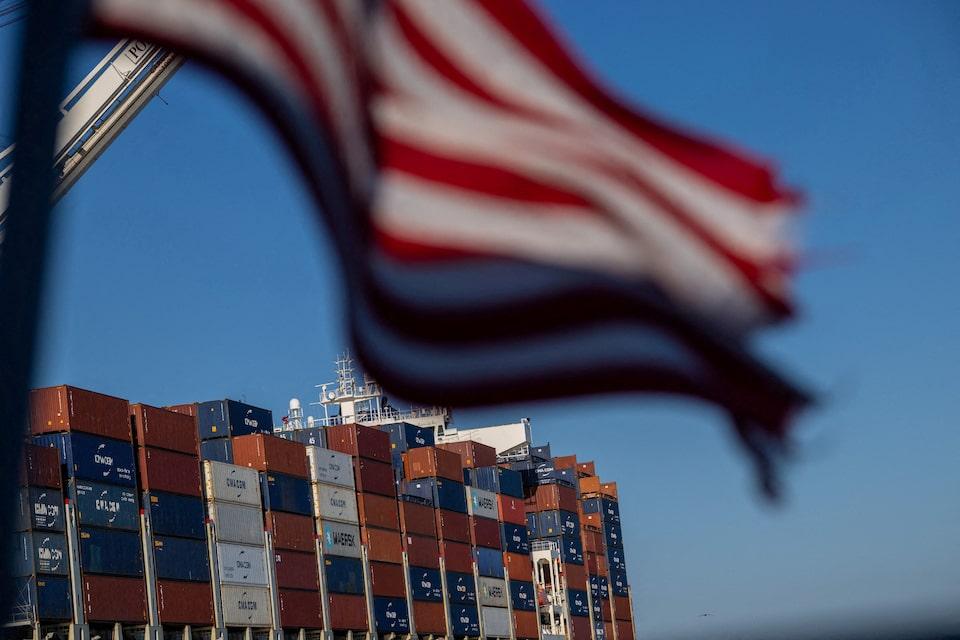
A look at the day ahead in European and global markets from Gregor Stuart Hunter: Container ports are the new economic battlegrounds. As negotiations between the U.S. and China intensify, the two nations will from today begin charging port fees on ocean shipping firms that move everything from toys to crude oil. Sign up here. S&P 500 futures erased earlier gains to fall as much as 0.4% after China's commerce ministry fired off another broadside, saying the U.S. cannot seek talks while also making threats. That came after President Donald Trump on Friday announced additional tariffs on Chinese goods from November 1. The trade worries snuffed out a rebound for stocks that began on Wall Street on Monday after U.S. Treasury Secretary Scott Bessent said Trump remains on track to meet Chinese leader Xi Jinping in South Korea in late October. A rally in Asia's tech sector briefly kept regional equities (.MIAPJ0000PUS) , opens new tab above water after OpenAI said it partnered with Broadcom (AVGO.O) , opens new tab to produce its first in-house artificial intelligence processors. That pushed Taiwan Semiconductor Manufacturing Company (2330.TW) , opens new tab shares to a record, while South Korea's Kospi (.KS11) , opens new tab gained 0.9% after Samsung Electronics (005930.KS) , opens new tab projected a 32% rise in third-quarter profit, beating estimates. China's No. 1 automaker BYD (002594.SZ) , opens new tab rose 1% after tipping Spain as its top candidate for a third car factory to serve the European market, sources told Reuters. The yen firmed a tad against the dollar after Japan's finance minister warned the country needs a new economic strategy that deals with inflation, rather than deflation, which was yesterday's villain. Gold gained 1.3% to $4,164.90 per ounce, showing little sign of pausing for breath as precious metals continue to set records. The same could not be said for digital gold, with bitcoin last down 1.8% at $113,719.84, while ether slipped 3% to $4,161.86. In early European trade, pan-region futures were last up 0.2%, German DAX futures rose 0.1% and FTSE futures were down 0.1%. Key developments that could influence markets on Tuesday: Economic data: Germany: CPI and HICP for September, ZEW Economic Sentiment and Current Conditions for October United Kingdom: Unemployment Claimant Count Change and HMRC Payrolls Change for September, ILO Unemployment Rate and Average Weekly Earnings for August Debt auctions Germany: 2-year government debt auction https://www.reuters.com/world/china/global-markets-view-europe-2025-10-14/
2025-10-14 03:45
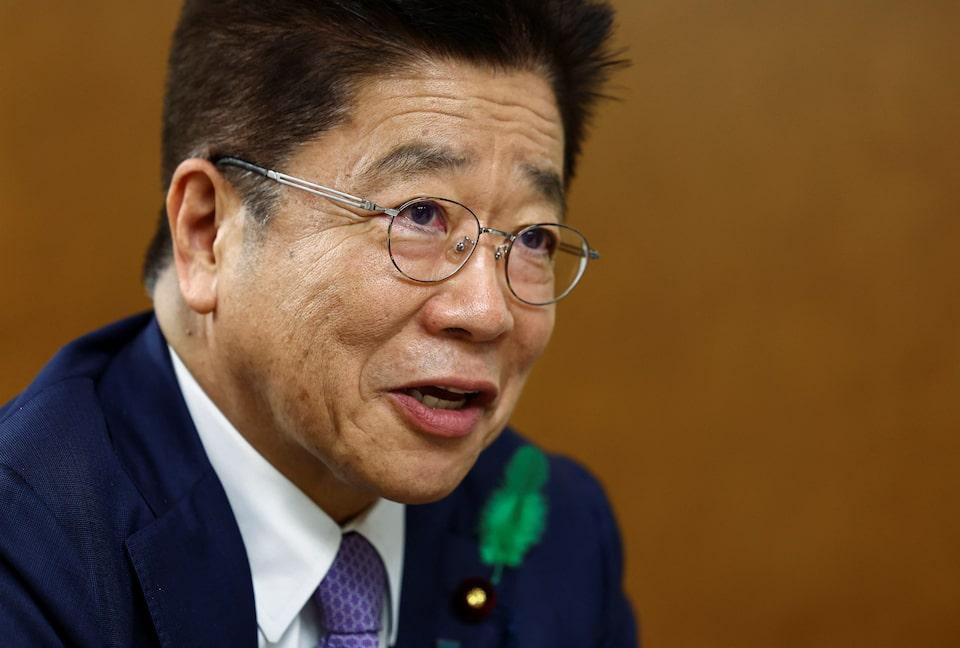
TOKYO, Oct 14 (Reuters) - Japan needs to come up with a new economic strategy that suits the current situation where inflation, instead of deflation, has become a concern unlike the times of "Abenomics" stimulus policies, Finance Minister Katsunobu Kato said on Tuesday. "It goes without saying that the situation has changed," Kato said at a regular press conference when asked about his views on the policies that former Prime Minister Shinzo Abe deployed in 2013. Sign up here. The moves were a mix of bold monetary easing, flexible fiscal policy and reform which helped the economy escape more than a decade of deflation but ran up the government's massive debt. "Inflation, rather than deflation, has become a challenge for us now. In light of this, I believe it is necessary to develop policies that are appropriate for the current circumstances," he said. Kato's comments come as the ruling Liberal Democratic Party's newly elected leader Sanae Takaichi, known for her staunch support of Abenomics, is widely expected to pursue reflationary policies. Takaichi's selection as the LDP's new leader last week dampened market expectations for a near-term interest rate hike, sending stocks higher and weakening the yen. Asked about the yen's weakness, Kato reiterated that the government will thoroughly monitor for excessive fluctuations and disorderly movements in the forex market. "We have been seeing rapid moves in the direction of a weaker yen since last week," Kato said. "It's important that exchange rates move in a stable manner, reflecting economic fundamentals," he added. https://www.reuters.com/world/asia-pacific/japan-finance-minister-calls-economic-strategies-that-fit-inflation-era-2025-10-14/
2025-10-14 00:59
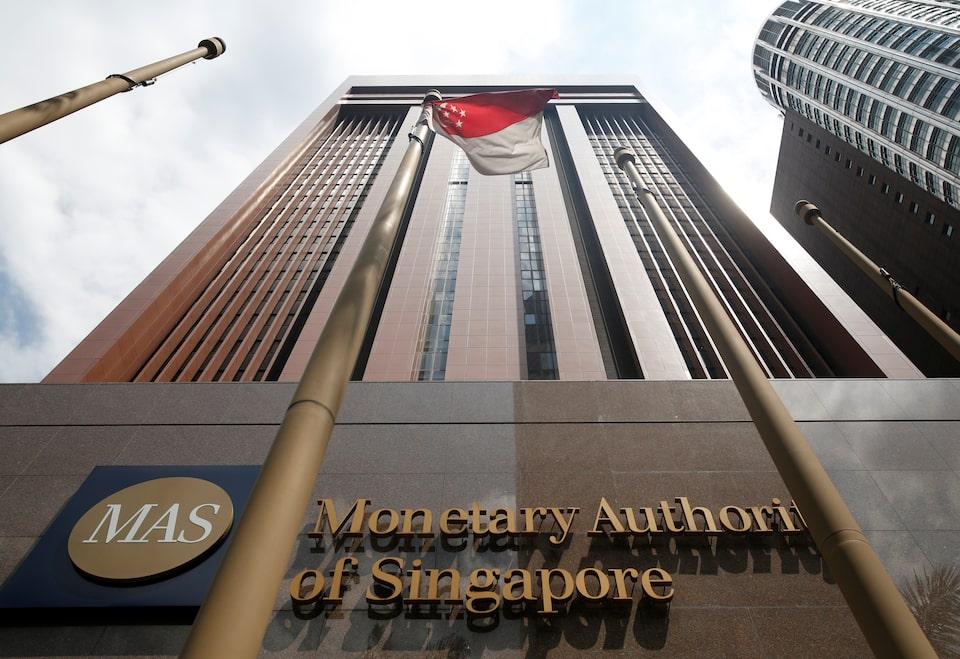
Singapore's growth stronger than expected: MAS Policy settings held as 10 of 14 analysts forecasted Q3 GDP 2.9% versus 1.9% in poll Economists predict GDP growth between 3% and 3.5% SINGAPORE, Oct 14 (Reuters) - Singapore's central bank kept its monetary policy settings unchanged on Tuesday, as expected, as growth in the city-state remained resilient despite challenges from U.S. tariffs. Ten of 14 analysts polled by Reuters ahead of the review expected the MAS to keep policy settings unchanged, while the other four expected an easing. Sign up here. The Monetary Authority of Singapore (MAS) said it will maintain the prevailing rate of appreciation of its exchange rate-based policy band. There would be no change to the width of the band or the level at which it is centred. "Singapore’s economic growth has turned out stronger than expected and the output gap will remain positive in 2025 and come in around 0% next year," the central bank said in a statement. OCBC economist Selena Ling said the headwinds from U.S. President Donald Trump's sweeping tariffs were not as bad as previously feared. "Tariff concerns, while lingering, have subsided slightly since April's 'liberation day'," Ling said. "Front loading has gone on longer, tariffs have come down from April levels, the U.S. economy has been a bit more resilient despite the slowdown." At its last review in July, the MAS held policy steady, after easing its reviews in April and January. The decision came as preliminary government data on Tuesday showed the economy doing better than expected, growing 2.9% in the third quarter from a year earlier and better than expectations of 1.9%. The MAS said the trade ministry would announce growth forecasts for 2025 and 2026 in November. OCBC's Ling expects the economy to post growth of 3% this year, "even if Q4 growth moderates to below 1% year-on-year". Maybank economist Chua Hak Bin was more optimistic, expecting GDP to come in closer to 3.5%, higher than his "already bullish GDP forecast of 3.2% for the year". Singapore's exports to the U.S. are subject to a 10% baseline tariff. That is lower than tariffs imposed on its Southeast Asian neighbours, but sectoral tariffs - such as a 100% tariff on branded drugs - are a concern. In August, the government upgraded its GDP growth forecast for 2025 to 1.5% to 2.5% from 0.0% to 2.0% after a better-than-expected first-half performance. Instead of using interest rates, Singapore manages monetary policy by letting the local dollar rise or fall against the currencies of its main trading partners within an undisclosed trading band, known as the Singapore dollar nominal effective exchange rate, or S$NEER. It adjusts policy via three levers: the slope, mid-point and width of the policy band. https://www.reuters.com/world/asia-pacific/singapore-central-bank-keeps-monetary-policy-unchanged-expected-2025-10-14/
2025-10-14 00:54
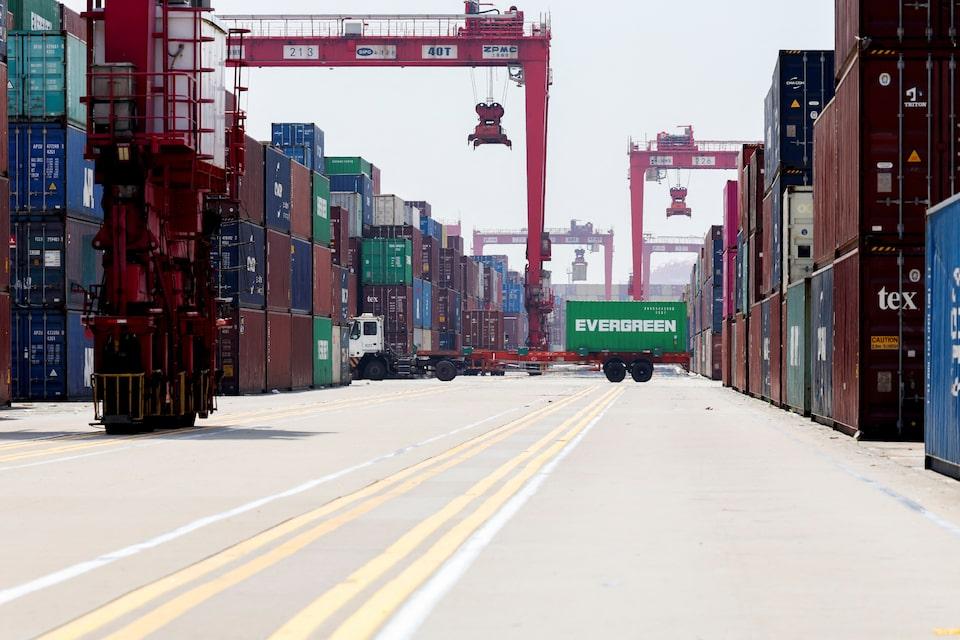
US, China begin collecting port fees on each other's vessels China says Chinese-built ships exempted from its levies China sanctions Korean shipbuilder for 'helping US'; launches probe US aims to loosen Chinese dominance in global maritime, bolster US shipbuilding BEIJING/LOS ANGELES, Oct 14 (Reuters) - The U.S. and China on Tuesday began charging additional port fees on ocean shipping firms that move everything from holiday toys to crude oil, making the high seas a key front in the trade war between the world's two largest economies. A return to an all-out trade war appeared imminent last week, after China announced a major expansion of its rare earths export controls and President Donald Trump threatened to raise tariffs on Chinese goods to triple digits. Sign up here. But after the weekend, both sides sought to reassure traders and investors, highlighting cooperation between their negotiating teams and the possibility they could find a way forward. China said it had started to collect the special charges on U.S.-owned, operated, built or flagged vessels but clarified that Chinese-built ships would be exempted from the levies. In details published by state broadcaster CCTV, China spelled out specific provisions on exemptions, which also include empty ships entering Chinese shipyards for repair. Similar to the U.S. plan, the new China-imposed fees would be collected at the first port of entry on a single voyage or for the first five voyages within a year. "This tit-for-tat symmetry locks both economies into a spiral of maritime taxation that risks distorting global freight flows," Athens-based Xclusiv Shipbrokers said in a research note. Early this year, the Trump administration announced plans to levy the fees on China-linked ships to loosen the country's grip on the global maritime industry and bolster U.S. shipbuilding. An investigation during the former Biden administration concluded that China uses unfair policies and practices to dominate the global maritime, logistics and shipbuilding sectors, clearing the way for those penalties. China hit back last week, saying it would impose its own port fees on U.S.-linked vessels from the same day the U.S. fees took effect. "We are in the hectic stage of the disruption where everyone is quietly trying to improvise workarounds, with varying degrees of success," said independent dry bulk shipping analyst Ed Finley-Richardson. He said he has heard reports of U.S. shipowners with non-Chinese vessels trying to sell their cargoes to other countries while en route so the vessels can divert. Reuters was not immediately able to confirm. Analysts expect China-owned container carrier COSCO (601919.SS) , opens new tab to be most affected by the U.S. fees, shouldering nearly half of that segment's expected $3.2 billion cost from those fees in 2026. Major container lines, including Maersk (MAERSKb.CO) , opens new tab, Hapag-Lloyd (HLAG.DE) , opens new tab and CMA CGM, slashed their exposure by switching China-linked ships out of their U.S. shipping lanes. Trade officials there reduced fees from initially proposed levels and exempted a broad swath of vessels after heavy pushback from the agriculture, energy and U.S. shipping industries. USTR did not immediately respond to a request for comment. China's commerce ministry on Tuesday said, "If the U.S. chooses confrontation, China will see it through to the end; if it chooses dialogue, China's door remains open." In a related move, Beijing also imposed sanctions on Tuesday against five U.S.-linked subsidiaries of South Korean shipbuilder Hanwha Ocean which it said had "assisted and supported" a U.S. probe into Chinese trade practices. Hanwha, one of the world's largest shipbuilders, owns Philly Shipyard in the U.S. and has won contracts to repair and overhaul U.S. Navy ships. Its entities also will build a U.S.-flagged LNG carrier. Hanwha said it is aware of the announcement and is closely monitoring the potential business impact, and that it will continue to provide services to its customers, "including through our investments in the U.S. maritime industry and via Hanwha Philly Shipyard." Hanwha Ocean's shares (042660.KS) , opens new tab sank nearly 6%. China also launched an investigation into how the U.S. probe affected its shipping and shipbuilding industries. SHIPPING LINES SCRAMBLE FOR WORKAROUNDS A Shanghai-based trade consultant said the new fees may not cause significant upheaval. "What are we going to do? Stop shipping? Trade is already pretty disrupted with the U.S., but companies are finding a way," said the consultant, who requested anonymity because he was not authorised to speak with the media. The U.S. announced last Friday a carve-out for long-term charterers of China-operated vessels carrying U.S. ethane and LPG, deferring the port fees for them through December 10. Meanwhile, ship-tracking company Vortexa identified 45 LPG-carrying VLGCs - 11% of the total fleet - that would be subject to China's port fee. Clarksons Research said in a report that China's new port fees could affect oil tankers accounting for 15% of global capacity. Jefferies analyst Omar Nokta estimated that 13% of crude tankers and 11% of container ships in the global fleet would be affected. TRADE WAR EXPANDS TO ENVIRONMENTAL POLICY In a reprisal against China curbing exports of critical minerals, Trump on Friday threatened to slap additional 100% tariffs on goods from China and put new export controls on "any and all critical software" by November 1. Administration officials hours later warned that countries voting in favor of a plan by the U.N. International Maritime Organization to reduce planet-warming greenhouse gas emissions from ocean shipping this week could face sanctions, port bans, or punitive vessel charges. China has publicly supported the IMO plan. "The weaponisation of both trade and environmental policy signals that shipping has moved from being a neutral conduit of global commerce to a direct instrument of statecraft," Xclusiv said. Shares in Shanghai-listed COSCO rose more than 2% in early trading on Tuesday. The company said its board had approved a plan to buy back up to 1.5 billion yuan ($210.3 million) worth of its shares within the next three months to maintain corporate value and safeguard shareholder interests. The shipping firm did not immediately respond to Reuters' queries about the port fees. ($1 = 7.1337 Chinese yuan) https://www.reuters.com/world/china/us-china-roll-out-tit-for-tat-port-fees-threatening-more-turmoil-sea-2025-10-14/