2025-12-09 05:33
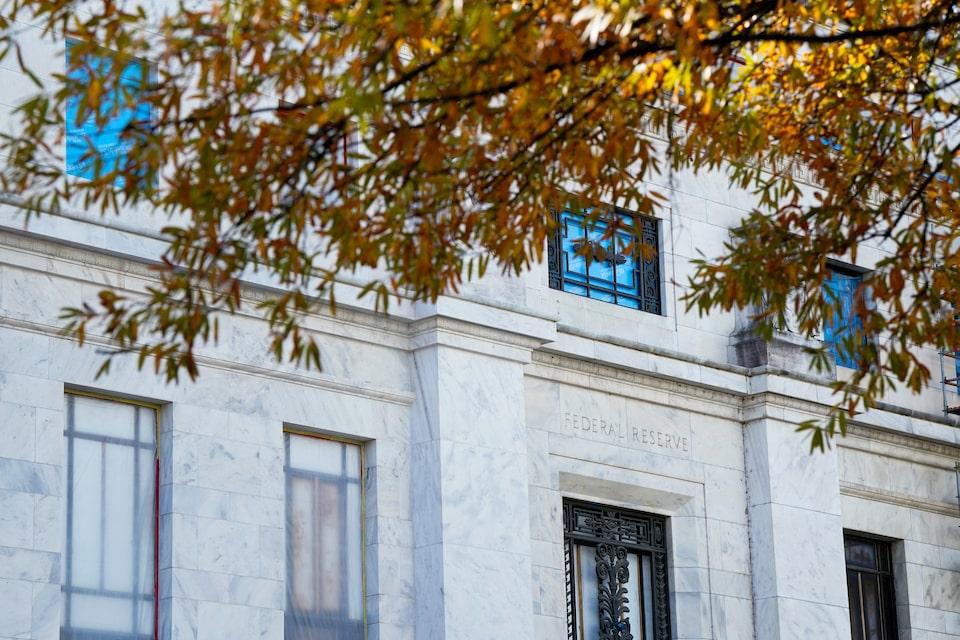
A look at the day ahead in European and global markets from Ankur Banerjee Markets are getting anxious about the U.S. monetary policy outlook ahead of an expected rate cut from the Federal Reserve this week, with a divided central bank and the prospect of a dovish successor to Fed Chair Jerome Powell keeping investors on edge. Sign up here. Welcome to almost-Fed day! Traders are all but certain that a 25 basis point rate cut is on its way on Wednesday. But let's be honest, the focus is on what Powell will say and how many rate cuts the dot plot will lay out for 2026. Markets are predicting 77 basis points of easing through the end of 2026, meaning two more cuts after December remain in the price. The broad expectation is for a semi-hawkish tone from the Fed this week, cautioning the bar for next rate cut will be higher. So anything that even sounds vaguely dovish will be a surprise and could lead to a bout of volatility. Bond investors, though, are positioning for a shallow easing cycle, reducing their exposure to long-duration Treasuries and rotating into intermediate maturities for juicier returns. White House economic adviser Kevin Hassett, a top candidate to succeed Powell, said in an interview that the Fed should continue to lower interest rates, adding yet another layer of complexity to what is likely to be a complex Fed decision day. The broad consensus among analysts is that if Hassett is appointed as the next Fed chair, he will keep his dovish hat on, but markets are not so certain, Reuters Open Interest Markets Columnist Jamie McGeever writes. The skittish mood has meant stocks are mostly trading sideways and European futures indicate a lacklustre opening is on the cards, although chip stocks might be worth keeping an eye on. The United States will allow Nvidia's (NVDA.O) , opens new tab H200 processors, its second-best artificial intelligence chips, to be exported to China and collect a 25% fee on such sales, President Donald Trump said on Monday. Elsewhere, the Australian dollar was choppy after the country's central bank kept rates steady as expected. The yen was steady after a bout of weakness immediately as news filtered in of a powerful earthquake hitting Japan. Thankfully, the impact has been limited as Japanese authorities lifted tsunami warnings. Key developments that could influence markets on Tuesday: Economic events: Germany exports and imports data for October https://www.reuters.com/world/china/global-markets-view-europe-2025-12-09/
2025-12-09 05:25
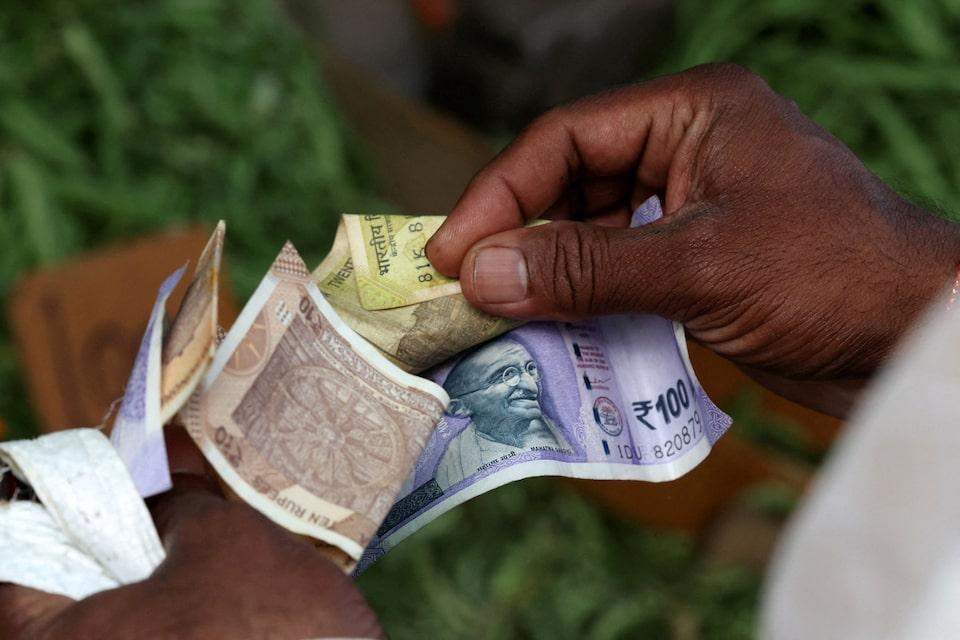
MUMBAI, Dec 9 (Reuters) - The Indian rupee closed modestly stronger on Tuesday, supported by dollar sales from exporters and modest foreign inflows while traders held onto caution ahead of the U.S. Federal Reserve’s policy decision later this week. The rupee rose 0.2% to end the day at 89.8750 per dollar. Sign up here. The currency had risen to 89.8475 earlier in the session but further gains were capped by importers stepping in to lock in hedges at more favourable levels, traders said. "Till it (USD/INR) holds below 90.30, there is likely to be decent two-way merchant interest but a break above that could yet again cool activity from exporters," a trader at a Mumbai-based bank said. The currency has declined about 5% in 2025 so far, bogged down by weakness in trade and foreign portfolio flows alongside the drag from a missing trade deal with the U.S. Deputy U.S. Trade Representative Rick Switzer will visit India on December 10-11, the Indian foreign ministry spokesperson said on Monday. Elsewhere, Asian currencies were trading mixed on the day while the dollar held steady against a basket of peers as investors awaited a closely watched Fed decision due on Wednesday. Bond investors are positioning for a shallow U.S. rate cut cycle and many Wall Street banks predict fewer Fed interest rate cuts in 2026 due to concerns over inflation and expectations of a more resilient U.S. economy. "There are now high expectations of a 'hawkish cut' at Wednesday evening's Federal Open Market Committee (FOMC) decision. We had felt that the short-end of the dollar's upside was vulnerable to this FOMC event risk," analysts at ING said in a note. Investors will also focus on the release of Fed policymakers' quarterly economic projections, including policy rate forecasts, also known as the "dot plot." https://www.reuters.com/world/india/rupee-edge-lower-open-bearish-tilt-persists-weak-flows-2025-12-09/
2025-12-09 05:14
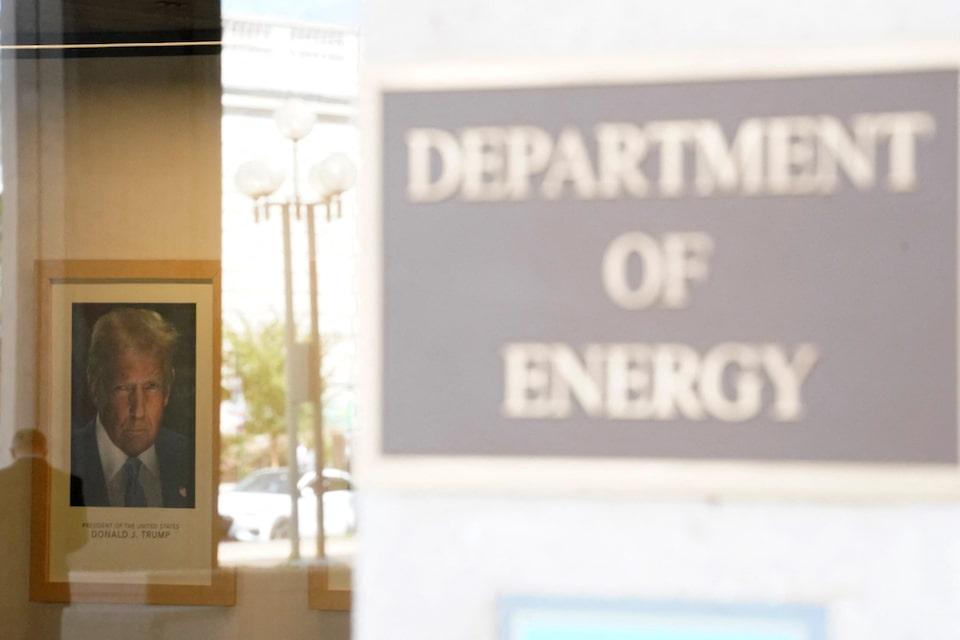
WASHINGTON, Dec 9 (Reuters) - Fusion energy industry leaders met with U.S. Department of Energy officials on Monday to urge them to facilitate billions of dollars for projects seeking to generate electricity by the process that powers the sun. The department in November created an Office of Fusion in a reorganization that focused on fossil fuel and nuclear energy while eliminating renewable energy offices. Sign up here. The Trump administration has rescinded billions of dollars that former President Joe Biden authorized to subsidize hydrogen and renewable energy projects. Andrew Holland, CEO of the Fusion Industry Association, said the leaders urged the officials to steer some of that money to fusion so companies can compete in the race with China. "Now is the time for the U.S. to make a significant investment, and that means over a billion dollars per year in annual appropriations and a one-time infrastructure investment," Holland said. "If they ask for it, we are confident Congress would pass it." Companies and physicists at national laboratories have been trying for decades to use lasers or large magnets to foster fusion reactions, in which light atoms are forced together to release huge amounts of energy. In 2022, the Lawrence Livermore National Laboratory in California briefly achieved net energy gain in a fusion experiment using lasers. But generating more energy from of a fusion reaction than required to spark it has been a tall hurdle. The fusion leaders also spoke to the officials about Trump's plan to launch an integrated artificial intelligence platform called Genesis Mission to harness federal scientific datasets to train next-generation technologies they said could benefit fusion. "The Energy Department and the Genesis Mission can ensure the U.S. remains at the forefront, bridging the gap between research and commercialization," said Marvi Matos Rodriguez, senior vice president of technology at fusion company Zap Energy. https://www.reuters.com/sustainability/climate-energy/fusion-energy-industry-presses-us-government-billions-support-2025-12-09/
2025-12-09 05:10
Dec 9 (Reuters) - The U.S. solar industry installed 11.7 gigawatts of new solar capacity in the third quarter, a jump of 49% sequentially, a study by the Solar Energy Industries Association and Wood Mackenzie showed on Tuesday. The report said solar accounted for 58% of all new electricity-generating capacity added to the U.S. grid through the third quarter, with more than 30 GW installed. Sign up here. The rise follows a period of industry-wide disruption caused by the One Big Beautiful Bill Act (OBBBA), with most of the gains driven by utility-scale solar projects that were largely completed in the second quarter, the report added. The OBBBA requires projects to begin construction by July next year or enter service by the end of 2027 to qualify for a 30% tax credit and bonuses that can push the subsidy even higher, creating uncertainty for the solar and storage industries. The pace of solar installations, however, did slow down in the quarter owing to industry constraints and supply chain bottlenecks. The residential segment was the most impacted with a 4% decline in the third quarter, compared to the same period last year. Moreover, permitting delays remain a significant hurdle for new projects and, according to industry estimates, more than 117 gigawatts of solar and storage projects are currently stuck in the permitting process. "Any such project in the country is subject to the red tape that the Interior Department has erected for solar ... If they don't have their final permits yet, the Interior Department red tape could hold them up," said Sean Gallagher, senior vice president of policy at SEIA. Gallagher added, "They're not going to be able to come online unless the administration changes course on its policies that are prohibiting or delaying the construction of new energy facilities." The SEIA lowered its near-term outlook for 2025 and 2026 residential solar by 2% and 8%, respectively, adding that solar module availability is expected to remain tight through next year. https://www.reuters.com/business/energy/us-solar-installations-jump-49-third-quarter-report-says-2025-12-09/

2025-12-09 05:08
Bitcoin's correlation with equities strengthening, driven by retail and institutional adoption After October crash, bitcoin has struggled; may end down for the year AI stock volatility affects crypto movements, raising bubble concerns Fed rate cut expectations influence crypto market sentiment Dec 9 (Reuters) - With a series of record highs and crushing sell-offs, 2025 has been a rollercoaster ride for bitcoin, the world's largest cryptocurrency, which is at risk of ending the year with its first annual decline since 2022. The world's main stock benchmarks have also had a turbulent year, repeatedly hitting record peaks and then pulling back as worries over tariffs, interest rates and a possible AI bubble whipsawed markets. While equities are mostly up year-to-date, bitcoin's overall correlation with share prices has strengthened markedly this year. Sign up here. Analysts say bitcoin's gyrations increasingly tracked stock market sentiment as traditional retail and institutional investors jumped into cryptocurrencies, which next year may be even more closely tethered to factors driving stocks and other risk assets, such as monetary policy shifts and nervousness over the lofty valuations of AI-related stocks. "Crypto reacting to broader equities has been a consistent theme in 2025," said Jasper De Maere, desk strategist at crypto algorithmic trading firm Wintermute. Bitcoin was hovering around $89,000 on Monday. After soaring earlier this year with the election of crypto-friendly U.S. President Donald Trump, cryptocurrencies - along with stocks - plummeted in April on his tariff announcements, but quickly rebounded. Bitcoin went on to hit an all-time peak above $126,000 in early October. But just days later, on October 10, the market plunged again when Trump announced a new tariff on Chinese imports and threatened export controls on critical software. That sparked more than $19 billion worth of liquidations across leveraged crypto market positions, the largest liquidation in crypto history. Bitcoin has struggled to regain its footing ever since and in November experienced its biggest monthly drop since mid-2021, although options market bearishness has ebbed a little in recent weeks, according to options platform Derive.xyz. Traders as of late last week had assigned a 15% probability that bitcoin will finish the year below $80,000, compared with the 20% probability they had assigned just a few weeks ago. That's still a blow for crypto bulls, including Michael Saylor's Strategy, the world's biggest bitcoin hoarding company, which had projected as recently as October 30 that the token would hit $150,000 this year. Analysts at Standard Chartered last year forecast bitcoin would hit $200,000 by the end of 2025, due in part to flows into bitcoin exchange-traded funds. In a change of tune, Strategy CEO Phong Le warned on a podcast last month of a possible "bitcoin winter." In October, Standard Chartered forecast bitcoin would fall below $100,000 but said that may be the last time it will hit that low, according to media reports. Saylor, speaking to Reuters last week, said his company could survive a 95% fall in the price of bitcoin. EQUITIES CORRELATION Those April and October plunges highlighted the growing correlation between bitcoin and equities, and in particular, artificial intelligence stocks, which share similar attributes and have been hit by worries that valuations are in bubble territory. Historically, bitcoin and stocks did not move in tandem because crypto was seen as an alternative investment. But with broader crypto adoption by traditional retail investors and some institutions, the correlation looks to be strengthening, analysts said. Correlation is measured from -1 to 1, with figures above zero indicating a positive correlation. In 2025, the average correlation between bitcoin and the S&P 500 (.SPX) , opens new tab - which tracks a broad basket of companies - was 0.5, compared with an average correlation in 2024 of 0.29, LSEG data shows. For the tech-heavy NASDAQ 100 index (.NDX) , opens new tab, the average correlation this year was 0.52, compared with 0.23 in 2024, according to LSEG data. Crypto has grown especially sensitive to AI stock moves partly because they have been drivers of broader equity markets, and partly because, like crypto, they are currently seen as somewhat speculative investments, largely dependent on investor sentiment and risk appetite, analysts said. "Crypto (was) already a little weak after October 10," said Cosmo Jiang, a general partner at Pantera Capital, a crypto investor. "Things really started to break in risk markets in the recent weeks, because of the AI bull case coming under question." RATE CUT QUESTIONS Like stocks, cryptocurrencies also appear increasingly sensitive to the path of interest rates. Fidelity research from last year found that, while there is little historical data to indicate that the price of bitcoin increases when the Federal Reserve cuts rates, some analysts have observed that crypto tends to rally in line with dovish signals from the central bank. Analysts also point out that hawkish Fed signals from October onwards weighed on bitcoin. Since then, the release of fresh economic data has the market pricing an 86% chance of a 25-basis-point cut this week. That rate decision, along with the outlook for AI stocks, will likely be a key driver for crypto prices in the near term, analysts said. "The Fed's support of monetary supply in this particular scenario is going to be an indicator that crypto is all looking at," said Mo Shaikh, co-founder and general partner at Maximum Frequency Ventures. https://www.reuters.com/business/finance/bitcoins-2025-rollercoaster-may-end-low-2025-12-09/

2025-12-09 05:03
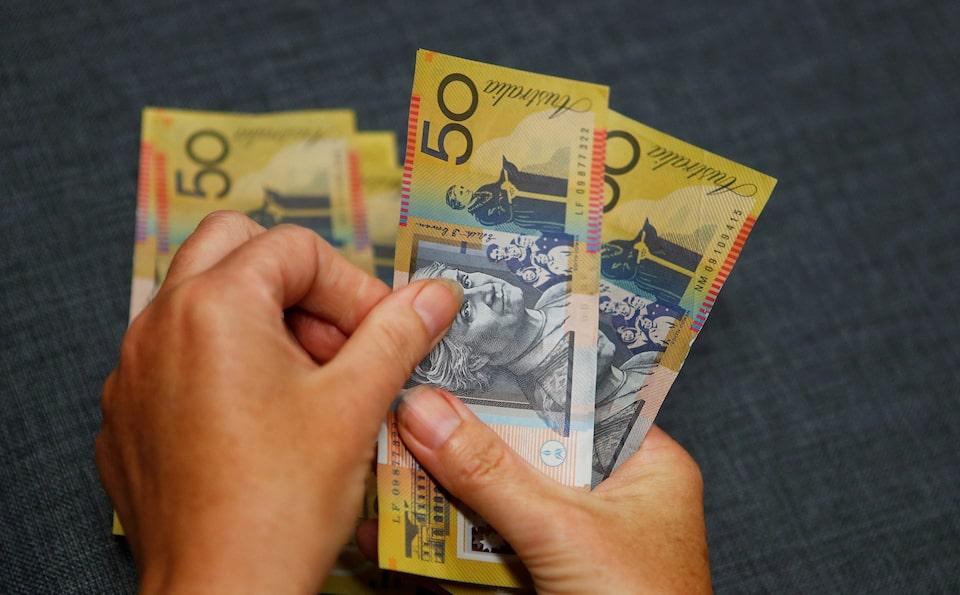
Focus on Fed meeting, with rate cut all but priced in Investor confidence brittle after earthquake strikes Japan Aussie dollar gains as RBA rules out easing Cryptocurrencies rally: bitcoin, ether up NEW YORK, Dec 9 (Reuters) - The U.S. dollar advanced on Tuesday as better-than-expected job-market figures underscored a still resilient labor market ahead of the Federal Reserve's anticipated rate cut, with policymakers likely to emphasize inflation risks that could constrain further easing moves. Markets are also bracing for several more central bank decisions before the weekend. On Tuesday, the Reserve Bank of Australia kept rates on hold ruled and ruled out more rate declines, pushing the Aussie dollar higher. Sign up here. The greenback, on the other hand, extended gains after data showed U.S. job openings increased modestly in October, while hiring remained subdued. Job openings, a measure of labor demand, were up 12,000 to 7.670 million by the last day of October, according to the Job Openings and Labor Turnover Survey, or JOLTS report, on Tuesday. Economists polled by Reuters had forecast 7.150 million unfilled jobs. The dollar rose after the report, climbing to two-week highs versus the yen near 157 yen and was last up 0.6% at to 156.845 n . It also gained against the euro, which slipped 0.1% to $1.1629 . With the data out of the way, the market has turned its focus once again to the Fed. Investors are dialing back expectations of rate cuts in 2026 as skepticism mounts that Kevin Hassett, the frontrunner to succeed Jerome Powell, whose eight-year term as Fed chair ends in May, will prove as dovish as hoped by U.S. President Donald Trump. "There's a lot of uncertainty about what we're going to get tomorrow. Rate cuts are pretty much nailed on at this point," said Shaun Osborne, chief FX strategist, at Scotiabank in Toronto. "But beyond that, there's a lot of moving parts to what the Fed can do tomorrow. I think there seems to be an expectation that Powell is going to try and set the bar relatively high for another cut, but I'm not sure that's really going to give the dollar that much." The U.S. dollar index , which measures the greenback's strength against a basket of six currencies, edged up 0.1% at 99.21. US OUTLOOK IN 2026 With markets seeing that Fed policy easing this week is a near-certainty, attention is also turning to the outlook for the year ahead. "Everyone will be looking at the dot plot," said Commerzbank FX analyst Michael Pfister. "We are seeing decision-makers with diverging views now," he said, adding that if the dot plots are lower than the last time, this will probably not be helpful for the dollar. The "dots" from the September meeting, when the Fed resumed its easing cycle with a 25 basis-point cut, showed a policy rate of 3.6% by the end of 2025, 3.4% at the end of 2026, and 3.1% by the conclusion of 2027. "A hawkish repricing is rolling across curves elsewhere — rate hikes are getting priced in for Australia, Canada, and the euro area in 2026 — so the dollar could come under pressure if Powell fails to out-hawk markets," said Karl Schamotta, chief market strategist, at Corpay in Toronto. Elsewhere, the euro slipped following Monday's selloff in bund markets, after European Central Banks board member Isabel Schnabel told Bloomberg News the bank's next move may be an interest rate hike rather than a cut as some expect, but added that it would not happen in the near future. AUSSIE DOLLAR GETS LIFT; QUAKE SHAKES YEN The Australian dollar advanced 0.3% to US$0.6641 after the central bank held rates for a third consecutive month at 3.6% as widely expected, and warned that a pickup in inflation could be persistent. It accelerated gains as RBA Governor Michele Bullock said in a press conference that more rate cuts were not needed. The yen earlier in Asia firmed after a powerful 7.5-magnitude earthquake struck Japan's northeast overnight. That added to the risk-averse mood ahead of the Fed meeting and expected policy decisions from several other central banks, while an auction of five-year government bonds attracted robust demand. The Chinese yuan trading offshore in Hong Kong drifted 0.1% higher against the greenback to at 7.0617 per dollar, as markets deemed the statement from the latest Politburo meeting released on Monday indicated that policymakers showed little urgency to roll out additional stimulus measures. In other currencies, the British pound was slightly down at $1.3303, while the New Zealand dollar was modestly up at US$0.5781. In cryptocurrencies, bitcoin rose 2.6% to $93.704.38, while ether rose 6.4% to $3,350.32. https://www.reuters.com/world/asia-pacific/yen-resilient-after-earthquake-hits-japan-fed-rba-view-2025-12-09/