2025-10-13 08:04
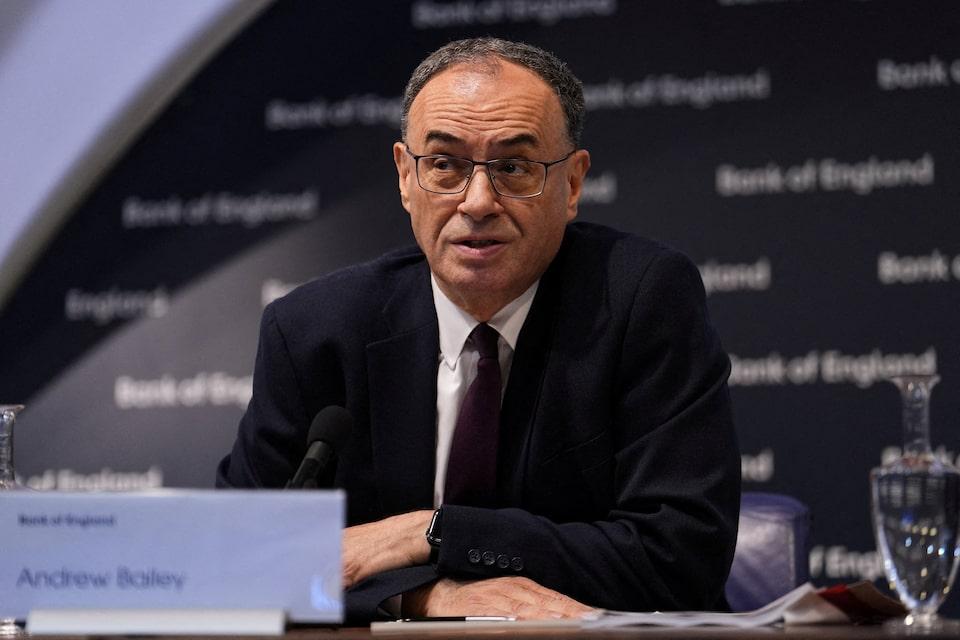
LONDON, Oct 13 (Reuters) - The latest surge in global share prices and other assets has left markets susceptible to a crash given the current uncertain economic and geopolitical backdrop, the G20's risk watchdog said on Monday. Financial Stability Board (FSB) Chair, Andrew Bailey, told G20 ministers in a letter the elevated risks made maintaining multilateral co-operation crucial. Not just to prevent crises, but also to support sustainable economic growth. Sign up here. "While most jurisdictions have seen a rebound in financial markets in recent months, valuations could now be at odds with the uncertain economic and geopolitical outlook, leaving markets susceptible to a disorderly adjustment," the letter dated October 8 and published ahead of G20 meetings in Washington this week, said. That warning came just days before U.S. President Donald Trump's threat of "massive" new tariffs on China in retaliation for Beijing tightening rare earth restrictions triggered Wall Street's biggest fall in nearly six months. Bailey also pointed to the ongoing rise in sovereign debt levels, adding that vulnerabilities in the financial system remain high. "The need for global standards and cooperation therefore remains abundantly clear," the letter said. In response to the elevated risks, the FSB, which groups central banks and financial regulators from the Group of 20 Economies, will "pivot" its focus, Bailey said. It will shift it from policy development to monitoring and facilitating the implementation of agreed global financial reforms, which have not been completely achieved. "The effectiveness of these measures depends on their timely, consistent and comprehensive implementation across all jurisdictions," Bailey said. https://www.reuters.com/world/china/g20-risk-watchdog-warns-potential-financial-market-crash-2025-10-13/
2025-10-13 07:24
Oct 13 (Reuters) - Construction engineering firm Costain (COSG.L) , opens new tab said on Monday that it has been selected as a contractor by a nuclear decommissioning firm, and that the British company's share of the order is valued at up to 1 billion pounds ($1.33 billion). Costain's shares jumped 8% in early trading. Sign up here. The partnership with Sellafield Ltd involves a nine-year contract that may be extended for another six years, and is for Costain to refurbish and replace utility distribution systems to support Sellafield's nuclear decommissioning program. Morgan Sindall Infrastructure and HOCHTIEF (UK) Construction are the other two companies involved in the Sellafield contract, which overall is worth up to 2.9 billion pounds. ($1 = 0.7495 pounds) https://www.reuters.com/business/uks-costain-gets-up-13-billion-nuclear-utilities-contract-2025-10-13/

2025-10-13 07:07
LONDON, Oct 13 (Reuters) - The pound rose on Monday, getting a tailwind from a degree of relief that U.S. President Donald Trump may not make good on his threat last week to hit Chinese goods with 100% tariffs, which gave risk-linked assets a boost. In a lengthy post on his Truth Social network on Friday, Trump threatened to impose duties from November 1 on Chinese goods in retaliation for Beijing's decision to restrict exports of critical rare earth materials, triggering a hefty sell-off on Wall Street, in bitcoin and in riskier currencies like sterling. Sign up here. By Monday, investors recovered some poise, based on Trump's apparent back-pedalling the previous day. "Don’t worry about China, it will all be fine!" he wrote on Truth Social. Sterling , which tends to benefit from risk appetite, much like the Australian dollar, stocks or crypto, was up 0.24% at $1.3365, making it one of the better performing major currencies against the U.S. dollar. The key risk event for the pound this quarter will be the November budget. For now, investors will parse through UK employment data, including wage growth, on Tuesday, as well as economic activity for the three months to August on Thursday, to try to get a sense of where British interest rates may be headed. "UK data have stabilised anew - we will closely monitor labour market data and August GDP this week, fundamentals are more solid than markets appreciate, and short positions are crowded," strategists at Barclays said. Six of the nine Bank of England rate-setting committee members will speak this week and, with the central bank's next meeting not until November 6, investors will be listening carefully for any hint of where monetary policy may go in the coming months. Money markets show traders expect no change in rates when the BOE meets next and are only pricing in the next cut by March at the earliest. UK inflation is still running above the central bank's 2% target and a large share of the price pressures are in parts of the economy the BOE cannot easily target, such as wages and the services sector. https://www.reuters.com/world/uk/sterling-gets-lift-nerves-over-us-china-tariffs-recede-2025-10-13/

2025-10-13 06:51
BEIJING, Nov 6 (Reuters) - U.S. President Donald Trump has targeted top economic rival China with a cascade of tariffs on imports worth billions of dollars as he tries to narrow a trade deficit, bring home lost manufacturing and cripple the fentanyl trade. Here are key events this year in the U.S.-China trade war, in reverse chronological order: Sign up here. November 5 - Beijing suspends retaliatory tariffs on U.S. imports from November 10, including farm goods duties of up to 15%, but keeps levies of 10% countering Trump's "Liberation Day" tariffs. Imports of U.S. soybeans still face a tariff of 13%, but China will drop curbs on some U.S. optical fibre imports, and ease measures on U.S. entities. October 30 - United States and China strike new trade truce after talks in South Korea between Trump and Chinese President Xi Jinping. Trump agrees to trim tariffs in exchange for Beijing cracking down on illicit fentanyl trade, resuming U.S. soybean purchases and pausing controls on exports of rare earths. Beijing says United States also pledged a year's delay in plan to bar Chinese firms from its technology. October 25-26 - Malaysia talks yield trade deal framework for both nations' leaders to decide on after Treasury Secretary Scott Bessent and Trade Representative Jamieson Greer meet Chinese Vice Premier He Lifeng and top trade negotiator Li Chenggang. October 17 - U.S. State Department calls Chinese sanctions on South Korean shipbuilder Hanwha Ocean "coercion", undermining ties between Washington and Seoul. October 15-16 - Greer and Bessent chide China's expanded rare earth export controls as threat to global supply chains. Bessent vows to seek tighter control of strategic sectors to counter China. Apple CEO Tim Cook pledges China investment boost. October 14 - Both nations begin collecting additional port fees from each others' vessels, but China exempts ships it built. It sanctions five U.S.-linked units of Hanwha Ocean as threats to its security and sovereignty. October 12-13 - China calls new U.S. tariffs hypocritical, but Bessent says plans for Trump-Xi meet remain on track. October 10 - Trump unveils additional levies of 100% on imports from China, and new export controls on "any and all critical software", from November 1, while threatening export controls on Boeing plane parts in response to China's limits on rare earth exports. There is no reason to meet Xi, Trump says, but does not cancel plans. China launches antitrust investigation of U.S. chip maker Qualcomm over puchase of Israeli chip designer Autotalks. China targets U.S.-linked vessels with port fees from October 14, in response to similar U.S. fees on China-linked ships. October 9 - China widens export controls on rare earths from November 8, to cover five more medium to heavy elements and beefs up scrutiny of semiconductor users, tightening its grip and dominance on critical minerals. United States plans to ban Chinese airlines from flying over Russia on U.S. routes, as being disadvantageous to U.S. carriers. October 1 - Soybeans , opens new tab will be major topic for Xi meet, Trump says, calling China's sharply reduced U.S. purchases of the oilseed a negotiation tactic. September 30 - Greer says tariffs of about 55% on Chinese imports are a "good" status quo, but the United States would like freer trade increase. September 24 - Bessent says chemicals, aircraft engines and parts offer key U.S. leverage in China talks. September 21 - Visiting U.S. lawmakers , opens new tab tell Premier Li Qiang that China, United States need to step up engagement. September 19 - Trump and Xi hold telephone call, during which Trump says they made progress on a TikTok pact and agreed to meet face-to-face to discuss trade, illicit drugs and Ukraine war. China welcomes , opens new tab commercial talks on TikTok. September 17 - China says it will review TikTok's technology exports and intellectual property licensing. September 15 - Both sides clinch framework deal to switch TikTok to U.S.-controlled ownership as U.S. vows to refrain from more tariffs , opens new tab on Chinese goods over Russian oil imports unless European levies come first. September 14 - Fourth round of talks, in Madrid, led by Bessent and China's He discuss trade and TikTok divestiture deadline of September 17. August 11 - Both nations extend tariff truce for further 90 days. August 10 - With trade truce set to expire on August 12, Trump urges China to quadruple U.S. soybean purchases. August 8 - United States reverses April ban to start issuing Nvidia licences for exports of advanced AI H20 chips to China, as part of talks on rare earths. July 28-29 - U.S. and Chinese officials agree to seek extension of 90-day tariff truce after two days of talks in Stockholm they call constructive, though they bring no major breakthroughs. June 27 - Bessent says both sides resolve issues on rare earth minerals and magnets destined for the United States. June 9-12 - Framework deal reached in London round of talks, while some Chinese rare earths magnet producers begin to receive export licences. Trump says a trade truce is back on track. June 5 - Xi and Trump hold an hour-long telephone call. May 31 - Trump says China violated Geneva deal to mutually roll back tariffs and ease curbs on critical minerals exports, but China rejects this, accusing the United States of "discriminatory restrictive" curbs instead. May 28-29 - United States vows to start "aggressively" revoking visas of Chinese students, while ordering some companies to stop shipping some goods to China. May 10-12 - First round of trade talks in Geneva agrees to 90-day pause on tariffs, cutting to 30% U.S. tariffs on Chinese goods from 145%, while China drops tariffs to 10% from 125%. China to also scrap non-tariff measures adopted since April 2. April 15 - Chipmaker Nvidia says U.S. officials told it China sales of the H20 chip would need an export licence. April 11 - China also raises levies to 125% on U.S. imports, calls Trump's tariff strategy "a joke" and signals it will ignore any further U.S. "numbers game with tariffs". April 10 - China threatens immediate curbs on imports of Hollywood films. April 9 - China matches levies at 84% on U.S. imports, hits 12 U.S. companies with controls barring exports of dual-use items, and designates six more as "unreliable entities". The United States further hikes tariffs to 125% on Chinese imports, from 84%. China warns citizens against U.S. travel. April 8 - United States raises tariffs to 84% on all Chinese imports, from 34%. April 4 - China sets retaliatory tariffs of 34% for all U.S. imports from April 10 and export curbs on some rare earths, as well as limits on about 30 U.S. bodies in defence-related fields. April 2 - Trump unveils sweeping "Liberation Day" tariffs of a baseline 10% on all imports and even higher duties on goods from some countries, with a levy of 34% on China, from April 9. The United States scraps duty-free access from May 2 for low-value shipments from China and Hong Kong. March 4 - China hits back with retaliatory levies of 10% to 15% on U.S. agriculture, hitting $21 billion in exports, clamping export and investment curbs on 25 U.S. firms, as well as a ban targeting medical equipment maker Illumina. March 3 - The United States doubles to 20% fentanyl-related tariffs on all Chinese imports from March 4. February 4 - China responds with measures targeting U.S. businesses, as well as 15% levies on U.S. coal and LNG and 10% for crude oil and some autos from February 10. It curbs exports of five metals key to defence and clean energy. February 1 - Trump imposes 10% punitive duty on goods from China along with 25% on Mexico and Canada, to press for curbs on fentanyl and illegal immigrants flowing into the United States. https://www.reuters.com/world/china/trumps-trade-war-with-china-2025-2025-10-13/
2025-10-13 06:39
Brent and WTI rebound from 5-month lows Trump and Xi on track to meet in late October, US Treasury Secretary says China September crude imports rise 3.9% on year Hamas releases last living Israeli hostages in Gaza NEW YORK, Oct 13 (Reuters) - Oil prices rose on Monday after assurances that U.S. President Donald Trump will meet his Chinese counterpart Xi Jinping later in October, easing a flare-up in trade tensions between the world's top two economies that had pushed crude benchmarks to five-month lows on Friday. Brent crude futures settled 59 cents higher, or 0.9%, at $63.32 a barrel, and U.S. West Texas Intermediate crude futures also closed up 59 cents, or 1%, at $59.49 a barrel. Sign up here. Both contracts fell around 4% on Friday to settle at their lowest since May, after Trump threatened to cancel the meeting with Xi and to impose steep new tariffs on imports from China. However, U.S. Treasury Scott Bessent said on Monday that the meeting between the U.S. and Chinese leaders remains on track to be held in South Korea in late October, and noted substantial communications between the two sides over the weekend. "We have substantially de-escalated," Bessent said in an interview with Fox Business Network. The selloff in markets now looked to be capped by Washington and Beijing's willingness to negotiate, DBS analyst Suvro Sarkar said, adding the near-term outlook hinged on the eventual outcome of the trade talks. Oil prices tumbled in March and April at the height of trade tensions between the two countries. "Any reduction in international trade can only be bearish for oil," PVM energy analysts said in a note to clients. On the demand side, China's crude imports in September rose 3.9% from a year earlier to 11.5 million barrels per day, customs data showed. Meanwhile, the Organization of the Petroleum Exporting Countries kept its relatively high global oil demand growth forecasts unchanged for this year and next. In a monthly report on Monday, OPEC implied that the oil market will see a much smaller supply deficit in 2026 as the wider OPEC+ group pushes ahead with output increases. Meanwhile, prospects of peace in the Middle East limited gains in oil prices. Palestinian militant group Hamas freed the last 20 surviving Israeli hostages on Monday under a U.S.-brokered ceasefire deal. Trump proclaimed the "historic dawn of a new Middle East" after two years of war in Gaza. Still, traders want to see the peace hold before factoring it into their bets on oil prices, PVM analysts noted. "(Oil) market has been sceptical by voting with price as to any bullish influence on the recent outbreak of violence, it likewise too will wait for proof of a ceasefire that holds for more than just a couple of days," the PVM analysts said. https://www.reuters.com/business/energy/oil-rebounds-1-after-sharp-losses-us-china-tensions-2025-10-13/
2025-10-13 06:37
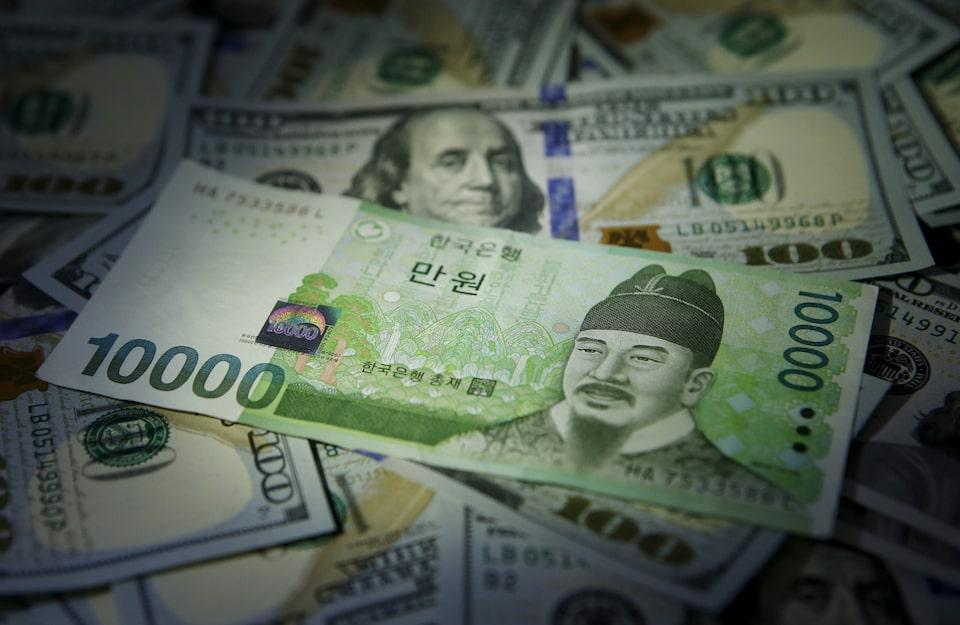
SEOUL, Oct 13 (Reuters) - South Korea is discussing with the U.S. various ways to set up a bilateral foreign exchange swap line as part of a trade deal over concerns about how proposed U.S. investments could skew the local currency market, the country's finance minister said. Minister Koo Yun-cheol made the comment at a parliamentary session on Monday as he answered a lawmaker's question about the need to request a conditional swap line, if not an unlimited one. Sign up here. Koo put the maximum amount of direct investment South Korea would be able to make in the U.S. each year at around $20 billion, without depleting central bank reserves, compared with $350 billion agreed in the initial deal reached in July. South Korea's stance has been that the $350 billion would mostly comprise loans and guarantees, with limited direct investment, given the foreign exchange implications, while U.S. President Donald Trump had said South Korea would pay "upfront". Koo said at the hearing he believed Washington now understood South Korea's concerns "to some degree". Foreign Minister Cho Hyun, in a different session held on Monday, said there had been "some positive signals" from the United States. South Korea's presidential office also said in a separate notice there was some response from the U.S. on a revised proposal made by Seoul last month, without elaborating. The proposal included a request for a currency swap line, Presidential Secretary Kim Yong-beom said earlier this month. Seoul aims to formalise its trade deal with the U.S. by late October when it holds an Asia-Pacific summit in Gyeongju, South Korea, where Trump is expected to meet Chinese President Xi Jinping. https://www.reuters.com/world/asia-pacific/south-korea-talks-with-us-various-ways-set-up-fx-swap-minister-says-2025-10-13/