2025-10-13 06:12
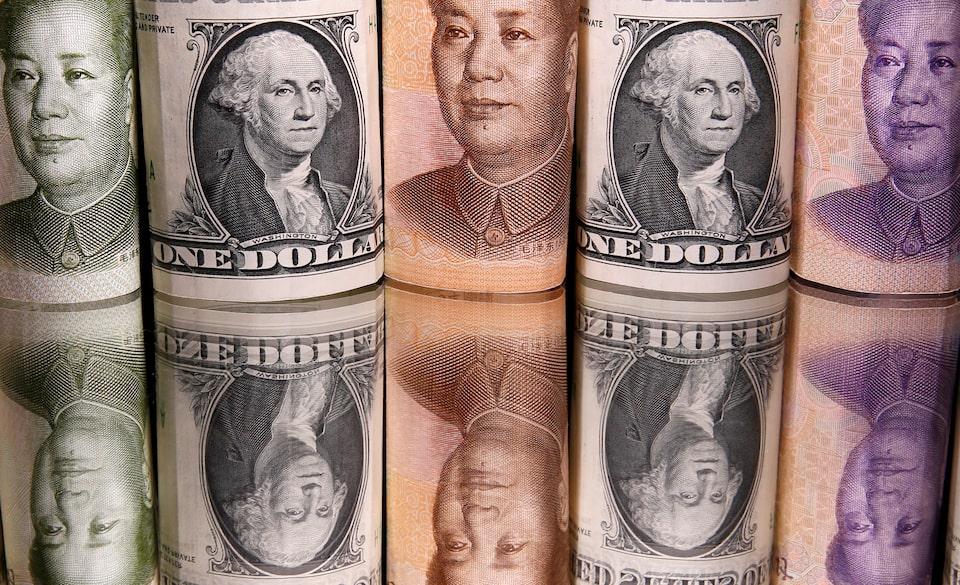
Trump's Truth Social message reassures traders Dollar edges up versus yen and Swiss franc Aussie dollar gains, pound weakens NEW YORK/LONDON, Oct 13 (Reuters) - The dollar advanced against the euro and yen on Monday, after a change in rhetoric from U.S. President Donald Trump lowered the temperature of simmering trade tensions with China. The U.S. dollar strengthened 0.61% to 0.804 against the Swiss franc , rebounding from the previous session when Trump threatened to impose 100% tariffs on China. Sign up here. The broadside revived bad memories of Trump's Liberation Day rollout of sweeping tariffs in April and sparked a selloff in stocks and cryptocurrencies on Friday. "It's kind of a repeat of what happened after Liberation Day," said Eugene Epstein, head of trading and structured products at Moneycorp in New Jersey. "Traditionally, the U.S. dollar strengthens when there's any kind of risk-off or any kind of stress across asset classes or markets and, like Liberation Day, the opposite happened because of trade tensions between the U.S. and fellow trade partners in this case, China. Any time something like that comes up, people actually sell the U.S. dollar," Epstein said. The dollar index , which measures the U.S. currency's performance against a basket of six others, was last up 0.2% at 99.25, recovering from the previous session's drop. "I still believe across all developed currencies, the U.S. dollar is still the primary safe haven; obviously, the Swiss franc is as well. With what happened last week, it was just essentially the same playbook: any kind of trade tensions means sell the U.S. dollar. Today, things are reversing because the trade tensions are seemingly de-escalating a little bit," Epstein added. TRUMP SOFTENS TONE After announcing the 100% tariffs on Friday, Trump said on Sunday: "Don't worry about China, it will all be fine!" "Highly respected President Xi just had a bad moment," he posted on the Truth Social network. "He doesn't want Depression for his country, and neither do I. The U.S.A wants to help China, not hurt it!!!" Trump remains on track to meet Chinese leader Xi Jinping in South Korea in late October as the two sides try to de-escalate tensions over tariff threats and export controls, U.S. Treasury Secretary Scott Bessent said on Monday. Trade tensions could weigh on the Federal Reserve's interest rate decision at its next meeting, Thierry Wizman, FX and rates strategist, said in an investor note. "If the prospect of a renewal of high tariffs still exists on October 29, it won't leave the FOMC at ease, especially with inflation in the U.S. still 'sticky.' If anything, the prospect of higher tariffs may make the Fed more reluctant to cut, or more inclined to deliver another "hawkish" cut," Wizman said. European markets broadly shrugged off the French presidency's announcement of Prime Minister Sebastien Lecornu's new cabinet lineup on Sunday, reappointing Roland Lescure, a close ally of Emmanuel Macron, as finance minister. The euro was last down 0.4% at $1.1571 after advancing against the dollar in the previous session. Against the Japanese yen , the dollar strengthened 0.81% to 152.36. A public holiday in Japan made for thinner trading. Markets assessed the path ahead for Japan's new Liberal Democratic Party leader Sanae Takaichi after Komeito quit the ruling coalition on Friday, dealing a blow to her hopes of becoming the first female prime minister of the world's fourth-largest economy. Traders will often borrow in a low-yielding currency to invest in a higher-yielder, known as a carry trade. The Japanese yen and Swiss franc have typically been funding currencies and took a harder knock than others on Monday. The Australian dollar, which tends to rally in a risk-on environment, rose 0.7% to $0.6514 , making it one of the best-performing major currencies against the dollar on Monday. Sterling weakened 0.18% to $1.3334. The dollar weakened 0.14% to 7.137 versus the offshore Chinese yuan. The crypto sector last Friday experienced over $19 billion in liquidations of leveraged positions, which market players said were the largest in history, after Trump announced the tariffs on Chinese imports and hinted at possible export restrictions on key software. On Monday, bitcoin gained 0.23% at $115,322.97. Ethereum rose 2.6% to $4,250.75. https://www.reuters.com/world/china/dollar-steadies-markets-focus-us-china-trade-tensions-politics-2025-10-13/
2025-10-13 06:07
Russia intensifies 'hybrid warfare' tactics in Europe Attacks pose severe threat to European energy infrastructure Diversification and coordination will be key to avoid shocks LONDON, Oct 13 (Reuters) - The recent surge in suspected Russian "hybrid warfare" incidents across Europe has put governments on high alert, raising questions about the vulnerability of the region’s energy infrastructure as the continent enters the critical winter heating season. Preventing sabotage of a massive energy network poses security and logistical challenges. But Europe’s leaders may need to start planning. Sign up here. With temperatures set to start dropping, the region is seeing an uptick in so-called hybrid warfare, which Russia is widely believed to be behind. These aggressive actions, such as airspace violations, threaten the continent but have avoided triggering a military response from NATO as Moscow denies involvement. European governments have blamed Russia for a wave of drone incursions in recent weeks, including some that led to severe disruptions , opens new tab at airports in Denmark and Norway. Drones were also spotted over Danish North Sea oilfields in September, Poland shot down suspected drones that entered its airspace on September 10, and 10 days later, Russian military jets violated Estonian airspace. Since the first incursions of 20 Russian drones into Poland on September 9, northern European NATO member states have registered at least another 38 incidents spanning Scandinavia, Belgium, and the Baltic states, according to the Washington-based Center for European Policy Analysis. Beyond drone flights, recent incidents have also included suspected ship navigation system jamming, cyberattacks, and sabotage on infrastructure across Europe. Moscow has repeatedly denied responsibility for these hybrid attacks. But reports , opens new tab suggest some of the aircraft were launched from Russian tankers off Europe’s coastline. ENERGY VULNERABILITY The latest wave of hybrid attacks has not directly involved Europe’s energy infrastructure, which includes thousands of kilometres of underwater and overground gas pipelines and power cables, LNG processing terminals, electricity pylons and substations, offshore oil and gas fields, and solar and wind farms. However, the rise in hybrid incursions comes as Russia and Ukraine are ratcheting up direct strikes on each other’s energy facilities. Ukrainian drone attacks on Russian refineries led to fuel shortages and a drop in exports, while Russia has launched massive strikes on Ukraine’s gas production facilities in recent days. Given this backdrop, energy infrastructure would appear to be a natural target for further hybrid attacks. Supply and demand in Europe’s energy markets are currently in a delicate balance entering winter, meaning the continent is vulnerable to disruptions that could lead to price spikes and higher heating bills. Hybrid attacks on Europe’s energy infrastructure would not be unprecedented. On Christmas Day 2024, the Russian-linked tanker Eagle S dragged its anchor across the Gulf of Finland, severing the Estlink-2 power cable between Finland and Estonia, triggering a national emergency. A year earlier, a ship sailing from Russia damaged the Balticconnector gas pipeline between Estonia and Finland. Energy-related cyberattacks – which pose a significant risk to Europe’s increasingly digitalized and interconnected markets – have also already been seen in the past three years. On the day of Russia’s invasion of Ukraine, a cyberattack on ViaSat, a broadband satellite communications firm, disrupted operations of German wind turbine service provider Enercon, leading to the loss of remote monitoring access to more than 5,800 wind turbines in Germany. British and U.S. intelligence services said Russia , opens new tab was behind the attacks. UNPREPARED This raises the question of whether Europe is sufficiently prepared for future hybrid attacks on its energy systems. The answer is almost certainly “no.” Europe and NATO have ramped up defensive efforts, such as the Baltic Sentry , opens new tab initiative to increase the group’s naval presence in the Baltic Sea, while European leaders have backed plans to create a “drone wall” along the bloc’s eastern border. "There has definitely been increased effort to prop up defensive and protection measures, especially in the physical gas and power infrastructure sectors around the Baltic and Scandinavian regions,” notes Henning Gloystein, managing director of energy, industry and resources at Eurasia Group. But he adds, “There are still some shortfalls." What would it mean to shore up these gaps, given that 24/7 surveillance of Europe's vast energy network is obviously unrealistic? One answer is for governments, suppliers, and consumers to diversify their energy sources as much as possible. That could mean building backup gas delivery systems, using local renewable power plants and battery storage sites, and increasing strategic gas storage. Europe’s energy system successfully adapted to the rapid changes required following Russia’s 2022 invasion of Ukraine, replacing Russian pipeline gas with imports of liquefied natural gas. But this came at a huge economic cost. Russian hybrid warfare poses a new threat that could lead to severe hardship for European households if Moscow targets energy systems during the vulnerable winter period. Tackling this threat will require significant cooperation – and likely substantial spending – by both governments and companies. But they may have little choice. Winter is coming. (The views expressed here are those of the author, a columnist for Reuters.) Want to receive my column in your inbox every Monday and Thursday, along with additional energy insights and links to trending stories? Sign up for my Power Up newsletter here. Enjoying this column? Check out Reuters Open Interest (ROI), , opens new tab your essential new source for global financial commentary. ROI delivers thought-provoking, data-driven analysis. Markets are moving faster than ever. ROI , opens new tab can help you keep up. Follow ROI on LinkedIn , opens new tab and X. , opens new tab https://www.reuters.com/business/energy/russian-hybrid-warfare-could-leave-europes-energy-consumers-cold-2025-10-13/

2025-10-13 06:04
Oct 10 (Reuters) - Political turmoil in France and Japan looms large over markets as U.S. banks kick off the latest earnings season, while the government shutdown drags on and policymakers gather in Washington for the IMF and World Bank annual meetings. Here's your week ahead from Rae Wee in Singapore, Lewis Krauskopf in New York, and Dhara Ranasinghe, Amanda Cooper and Karin Strohecker in London. Sign up here. 1/BANKS KICK OFF US EARNINGS SEASON Major U.S. banks report financial results in the coming week as the third-quarter earnings season kicks into high gear with investors counting on solid profits to support record-high stock prices. JPMorgan Chase (JPM.N) , opens new tab, Citigroup (C.N) , opens new tab, Wells Fargo (WFC.N) , opens new tab and Goldman Sachs (GS.N) , opens new tab are due to report as well as asset manager BlackRock (BLK.N) , opens new tab. Overall, S&P 500 companies are expected to post an 8.8% rise in third-quarter earnings year-on-year, according to LSEG IBES. Financial sector earnings are expected to increase almost 13%. With closely watched economic reports being delayed due to the government shutdown that started on October 1, corporate reports are taking on added significance. Reports on consumer and producer prices and retail sales are among those scheduled for the coming week that could be pushed out if the shutdown is still in effect. 2/ A NEW SICK MAN The euro zone has a new 'sick man': France - hard to ignore being the bloc's second biggest economy, a key architect of the euro and home to three globally systemic banks. It has one of the biggest budget deficits in Europe and a weak economy. A political crisis makes improvements impossible. Sebastien Lecornu, France's fifth prime minister in two years, resigned on Monday, only to be reappointed late on Friday. Time is running out to get the 2026 budget through a fractured parliament. Latest developments are more positive: President Emmanuel Macron has, for now, avoided the immediate risk of fresh snap elections to break the impasse. French bonds and stocks have recovered slightly. Still, the prognosis remains grim. If the Socialists run the next government, a possibility, rolling back a key pension reform could be part of the deal. This could swell the deficit by 3 billion euros ($3.5 billion) in 2027, say analysts. And, that won't sit well with Brussels, ratings agencies and bond vigilantes. 3/CHANGE OF GUARD Sanae Takaichi, leader of the Liberal Democratic Party, looked set to become Japan's first female premier in a parliament vote that was expected on October 15. But the date will be likely pushed back after junior coalition partner Komeito pulled its support, breaking their 26-year-old alliance. Komeito has been at odds with the hardline conservative Takaichi, known for her expansionist fiscal and monetary agenda. The uncertainty is set to stoke worries about the outlook for one of the world's most indebted countries. Japanese markets have already had a whirlwind few sessions, with stocks surging and the yen and long-dated government bonds sliding as investors bet on a revival in big spending and loose monetary policy. 4/LET'S GET TOGETHER Policymakers head to Washington for the annual International Monetary Fund and World Bank meeting featuring Group of Seven and G20 finance ministers and central bank governors gathering on the sidelines and the release of the Fund's World Economic Outlook on Tuesday, among other reports. Away from the set pieces, there's no shortage of hot topics to discuss - where the fiscal-fuelled rally will leave government debt burdens, the economic effects from Trump's trade policy, the push to use Russian frozen assets to fund Ukraine, a Middle East in flux and the impact of stablecoins. Meanwhile on the sidelines, Argentina's President Javier Milei will meet Trump in the Oval Office as final details of Washington's $20 billion lifeline for Buenos Aires are eagerly anticipated. 5/SILVER LININGS Gold has dominated the headlines, with its 50% annual gain to above a record $4,000 an ounce, beating even stellar performers like the S&P 500 (.SPX) , opens new tab and bitcoin . Zoom in on the precious metals complex and gold is a laggard. Silver has risen 70% to a record $51 an ounce, beating its previous high in 1980, when a bid by the Hunt brothers - two Texan oil billionaires - to corner the market failed, causing the price to collapse. Silver often enjoys something of a halo effect from gold, drawing in funds from investors that want an alternative to the dollar, or a real asset to hold. But it also has industrial use and an anticipated deficit of physical metal has boosted the price. It has always been more volatile, outpacing gains in gold on the way up, only to fall faster and harder on the way down. ($1 = 0.8638 euros) https://www.reuters.com/business/take-five/global-markets-themes-graphic-2025-10-10/
2025-10-13 06:01
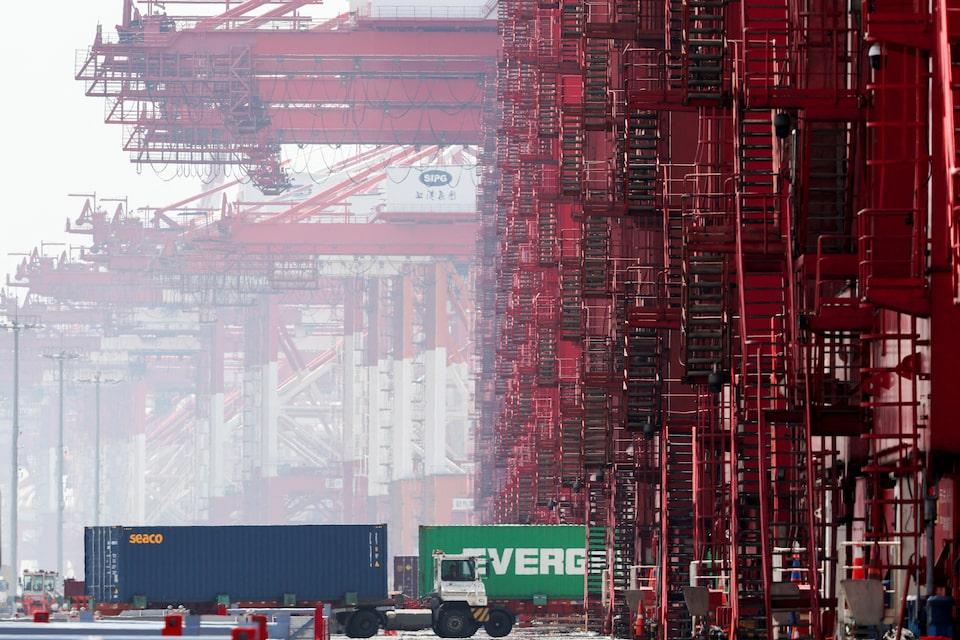
China's export growth tops forecast, driven by non-U.S. markets Markets worry about renewed China-U.S. trade tensions China expands export curbs on rare earths, prompting fresh Trump threats China's trade surplus declines; domestic demand remains weak BEIJING, Oct 13 (Reuters) - China's export growth bounced back in September, but renewed trade threats from Beijing and Washington have rekindled worries about jobs and further deflation in an economy heavily reliant on selling its manufactured goods overseas. The world's second-largest economy has greatly diversified its export markets this year to insulate itself from U.S. President Donald Trump's 35-percentage-point tariff hikes, helping to keep GDP growth on track towards a roughly 5% target for the year. Sign up here. However, this strategy could get a reality check should Trump carry out his threat of re-imposing triple-digit tariffs on China in retaliation for Beijing announcing sweeping rare earth export controls last week. "While China's economy has proven more resilient in the face of U.S. tariffs than many had feared, there is still significant potential downside from a deeper rift with the U.S.," said Capital Economics analyst Julian Evans-Pritchard. China's exports rose an annual 8.3% last month, customs data showed on Monday, beating a 6% increase in a Reuters poll and registering the fastest growth since March. They compared with a 4.4% increase in August. While the faster export growth is welcome news for a still-fragile economy, Trump's latest threat to raise U.S. tariffs above 100% would deal a deflationary shock to China and put smaller exporters and jobs of factory workers at risk. China's choke on rare earths and magnets, where its near-monopoly position gives it great leverage in the trade war, could also paralyse global supply chains in industries from autos to green energy and aircraft. These global risks have most analysts predicting that Beijing and Washington will work towards de-escalation in the coming weeks, and potentially preserve some chances that Trump and Chinese President Xi Jinping may still meet at an APEC summit in South Korea at the end of the month, as previously expected. But the range of outcomes is now much larger than it was only a few days ago - a level of uncertainty investors may have to get used to as the U.S.-China rivalry intensifies. "We believe both sides, after testing the other's boundaries, will likely make concessions again, and we still see a decent chance of a Xi-Trump in-person meeting during the upcoming APEC summit in South Korea at end October," Nomura analysts said. "We view this cycle of tension, escalation and truce as the new normal for U.S.-China relations." Monday's trade data was overshadowed by the fresh salvos in the U.S.-China trade war, denting Asian markets and sending Chinese stocks sinking sharply in volatile trade. EXPORTS UP IN NON-U.S. MARKETS Exports to the U.S. fell by 27% year-on-year, the data showed, while shipments bound for the European Union, Southeast Asia and Africa grew by 14%, 15.6% and 56.4%, respectively. "Chinese firms are actively tapping into new markets with the relative cost advantage of their goods, that's for sure," said Xu Tianchen, senior economist at the Economist Intelligence Unit in Beijing. "The United States now only accounts for less than 10% of China's direct exports," he added. "100% tariffs would no doubt add to the pressure China's export sector is under, but I don't think the impact will be as large as before." But Chinese exporters have described the scramble to grow market share elsewhere as a "mad rat race," squeezing their profit margins and prompting cost-cutting measures at home, such as reducing staff and wages. DEPRESSED DOMESTIC DEMAND Factory owners face little choice but to slash prices in pursuit of overseas buyers as domestic consumers are keeping their wallets shut. This puts pressure on Beijing to introduce more stimulus measures to boost household incomes and domestic demand. Indeed, while China's imports grew 7.4%, their fastest pace since April 2024, against a 1.3% gain a month prior, and a forecast rise of 1.5%, analysts attributed the uptick to stockpiling by the world's biggest buyer of commodities. China's steel imports rose again last month, keeping the country on track for an all-time record this year, while coal purchases rose to a nine-month high, as rising prices spurred buying. Soybean imports reached the second-highest level on record, driven by strong purchases from South America, with Chinese buyers still spurning U.S. soybean cargoes. Earlier this month, Trump said he hoped to discuss soybeans with Xi during their planned meeting in South Korea. China's trade surplus fell to $90.45 billion in September, from $102.33 billion a month prior, and missed a forecast of $98.96 billion. China hoped to get back to the negotiating table with its U.S. counterparts, Wang Jun, vice customs minister, told a press conference ahead of the data release. The trade outlook greatly depends on how the high-stakes game of threats between Beijing and Washington unfolds in coming weeks. Lynn Song, chief Greater China economist at ING, expects that neither would want to return to "mutually damaging tit-for-tat escalations and retaliations." "However, the past few weeks show that the possibility of miscalculation is always present," Song said. https://www.reuters.com/world/china/chinas-september-exports-imports-surpass-expectations-2025-10-13/
2025-10-13 05:52
Gold hits record high of $4,116.77/oz, silver at $52.12/oz BofA lifts 2026 gold forecast to $5,000/oz, sees silver at $65 Oct 13 (Reuters) - Gold broke through $4,100 per ounce for the first time on Monday, hitting another record high on renewed U.S.-China trade tensions and expectations of U.S. interest rate cuts, while silver also rose to an all-time high. Spot gold was up 2.2% to $4,106.48 per ounce, as of 01:47 p.m. ET (1747 GMT), after hitting a record $4,116.77. Sign up here. U.S. gold futures for December settled 3.3% higher at $4,133. Gold has climbed 56% this year and scaled the $4,000 milestone for the first time last week, driven by factors including geopolitical and economic uncertainties, expectations of U.S. interest rate cuts and robust central bank buying. "Gold could easily continue its upward momentum. We could see prices north of $5,000 by the end of 2026," said Phillip Streible, chief market strategist at Blue Line Futures. Steady central bank purchases, firm ETF inflows, U.S.-China trade tensions and the prospect of lower U.S. interest rates are providing structural support for the market, Streible added. On the geopolitical front, U.S. President Donald Trump reignited trade tensions with China on Friday, ending an uneasy truce between the world's two largest economies. Meanwhile, traders are pricing in a 97% probability of a 25-basis-point Federal Reserve rate cut in October and a 100% chance for December. Gold, a non-yielding asset, tends to do well in low-interest-rate environments.FEDWATCH/ Analysts at Bank of America and Societe Generale now expect gold to reach $5,000 in 2026, while Standard Chartered has raised its forecast to an average of $4,488 next year. "This rally has legs in our view, but a near-term correction would be healthier for a longer-term uptrend," said Suki Cooper, global head, commodities research at Standard Chartered Bank. Spot silver rose 3.1% to $51.82, touching a record high of $52.12 earlier in the session, buoyed by the same factors supporting gold and spot market tightness. Technical indicators show both are overbought, with the relative strength index (RSI) at 80 for gold and 83 for silver. Platinum rose 3.9% to $1,648.25, and palladium gained 5.2% to $1,478.94. https://www.reuters.com/world/china/gold-hits-record-high-us-china-trade-woes-escalate-silver-scales-all-time-peak-2025-10-13/

2025-10-13 05:09
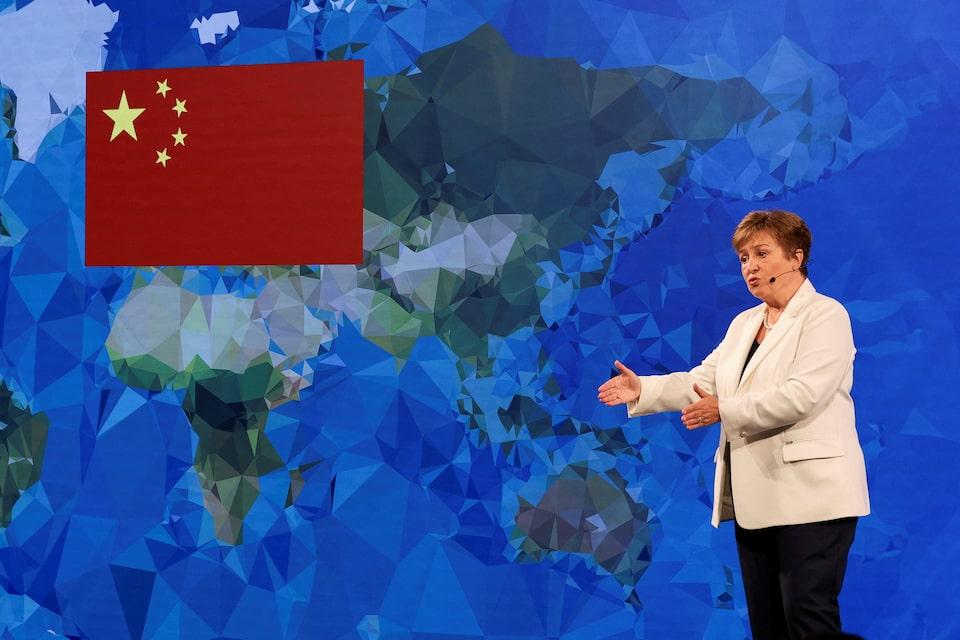
U.S.-China trade tensions certain to dominate IMF, World Bank annual meetings Finance ministers, central bankers from more than 190 countries coming to Washington G7 to discuss sanctions on Russia, Ukraine aid options WASHINGTON, Oct 13 (Reuters) - Finance chiefs gathering in Washington this week were ready to discuss the global economy's surprising resilience in the face of Donald Trump's tariff assaults - until the U.S.-China trade war erupted again with the U.S. president threatening 100% duties on Chinese imports and sending markets into a tailspin. The annual meetings of the International Monetary Fund and World Bank are now certain to be dominated by questions over whether Trump's vow to retaliate against China's dramatically expanded export controls on rare earths will plunge the world's two largest economies back into a full-blown trade war. Sign up here. A delicate truce crafted by Washington and Beijing over the past five months brought tariffs down from triple-digit levels and prompted upgrades to the IMF's global growth outlook. Plans for Trump to meet with Chinese President Xi Jinping later this month fueled hopes for a further thaw. But that optimism was shattered on Friday as Trump threatened to cancel the meeting and impose a "massive increase" in tariffs on Chinese goods, along with other countermeasures. Souring the mood further was China's move on Friday to match new U.S. port fees for Chinese-built or owned vessels with its own levies on port calls by ships built or flagged in the U.S. or owned by companies more than 25% owned by U.S.-domiciled investment funds. The IMF and World Bank meetings will bring more than 10,000 people to Washington, including finance ministers and central bank governors from more than 190 countries. Martin Muehleisen, a former IMF strategy chief who is now with the Atlantic Council, said Trump's threats may be posturing for negotiating leverage, but said they will inject volatility into the week's proceedings. "Let's hope that sanity prevails. If Trump goes back to 100% tariffs on Chinese goods, there's going to be a lot of pain in the markets for him," Muehleisen said. Trump's threat on Friday triggered the biggest U.S. stock sell-off in months at a time when investors and top policymakers were already growing anxious about a frothy stock market fueled by an investment boom in artificial intelligence that some officials fear could hurt future employment. While China has some leverage over Trump due to its global dominance in rare earths, which are essential for tech manufacturing, Muehleisen said it is not in Beijing's interest to plunge back into an environment of triple-digit tariffs. It is unclear whether U.S. Treasury Secretary Scott Bessent, who has led U.S.-China trade talks, would meet with any Chinese officials this week in Washington. A Treasury spokesperson declined to comment on Bessent's bilateral meetings schedule. GROWTH FORECASTS HOLD UP Prior to the escalation on Friday's, IMF Managing Director Kristalina Georgieva had touted the global economy's ability to withstand multiple shocks, from tariff costs and uncertainty to a slowing U.S. job market, rising debt levels and rapid shifts brought on by AI's rapid adoption. In a preview of the IMF's World Economic Outlook forecasts due on Tuesday, Georgieva said last week that the global GDP growth rate for 2025 would be only slightly less than the 3.3% for 2024. Based on tariff rates that were lower than initially feared - including the U.S.-China duties - the IMF in July raised its 2025 GDP growth forecast by two-tenths of a percentage point to 3.0%. "What we are seeing is demonstrable resilience in the world," Georgieva told Reuters in an interview. "But we are also saying it is a time of exceptional uncertainty, and downside risks are still dominating the forecast. So watch it, don't get too comfortable." G7 FOCUS ON RUSSIA Finance ministers from the Group of Seven industrial democracies are expected to meet on Wednesday to discuss efforts to step up sanctions pressure on Russia that is aimed at ending Moscow's war against Ukraine. A British government source said that finance minister Rachel Reeves wanted to ensure joint action with G7 and European Union countries to cut Russia's energy revenues and access to overseas assets that comply with international law. Among these options that G7 ministers will discuss is a European Union plan to use Russian frozen sovereign assets to back a loan of 140 billion euros ($162 billion) to Ukraine. BESSENT'S AGENDA FOR INSTITUTIONS The U.S. footprint at the meetings will be large, extending from tariff discussions to Bessent's calls for the IMF and World Bank to pull back from climate and gender issues to focus on their core missions of financial stability and development. The meetings will be the public debut for Dan Katz, the IMF's new No. 2 official. Member countries will be watching to see how Katz, a former investment banker who was Bessent's chief of staff, carries out the U.S. Treasury chief's agenda, which also calls for stronger IMF criticism of China's state-led economic policies. The U.S. Treasury's market intervention on behalf of Argentina, the IMF's largest borrower, also will take center stage at the meetings as Argentina's right-wing libertarian President Javier Milei will join his ally Trump two blocks away at the White House on Tuesday. The move was welcomed by Georgieva to keep Argentina's market-based reforms on track. But Muehleisen, the former IMF official, said the Fund risks being pushed by its largest shareholder to enforce Trump's geopolitical goals - ratcheting up pressure on China and potentially extending more aid to U.S. allies like Argentina without adequate reforms. "Is it really still a global, multilateral organization, or is it becoming a bit more of an appendage of the U.S. Treasury?" he said. "This will be an interesting debate." https://www.reuters.com/world/china/trumps-reignited-trade-war-with-china-clouds-imf-world-bank-meetings-2025-10-13/