2025-10-13 05:08
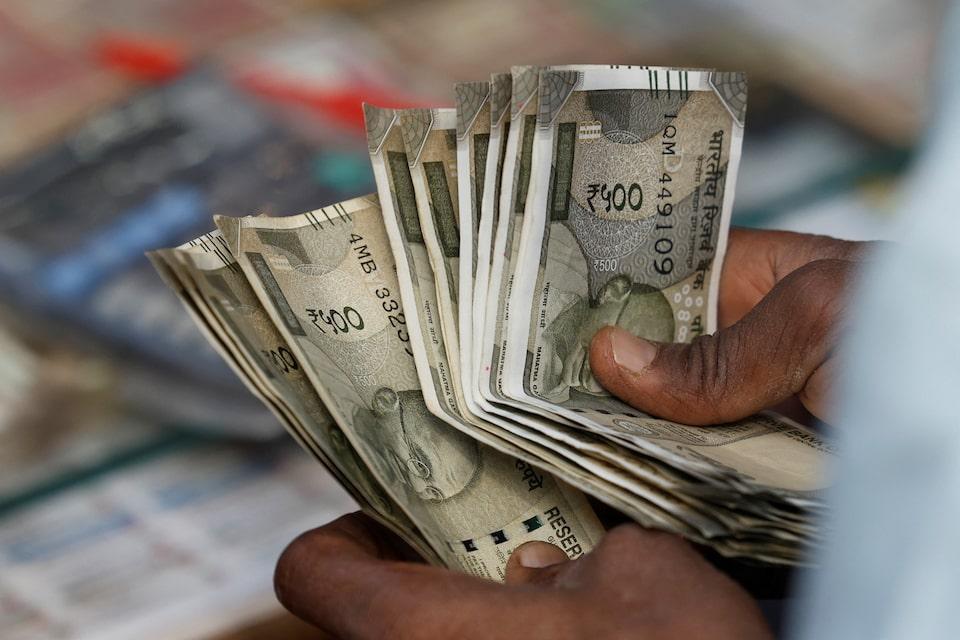
MUMBAI, Oct 13 (Reuters) - The Indian rupee came within a whisker of its all-time low on Monday but managed to hold above it on likely intervention by the central bank, with news of the Indian trade delegation's visit to the U.S. also offering modest relief. The rupee closed at 88.67 against the U.S. dollar, nearly unchanged from its close of 88.6850 in the previous session. Sign up here. The local unit touched a low of 88.7925 earlier in the session but likely dollar-selling intervention by the Reserve Bank of India, via state-run lenders, helped it avert a fall below its record low of 88.80. In the latter half of the session, news that a trade delegation from India will visit the U.S. this week also offered some sentimental relief to the currency. India and the United States are sticking to a fall 2025 deadline for the first part of a trade deal between the two countries, an Indian government official with knowledge of the matter told reporters on Monday. A steep 50% tariff levied on Indian exports, alongside tightening of immigration policies and the ongoing rally in gold prices have all weighed on the rupee, contributing to its 3.5% drop over the year so far. "Until a breakthrough occurs (in the U.S.-India trade negotiations), the rupee may continue to face intermittent pressure, limiting its upside," said Amit Pabari, managing director at FX advisory firm CR Forex. A rise above 88.20-88.40 levels for the rupee could mark the start of gradual appreciation for the currency, he said. Meanwhile, price action in broader FX markets was relatively contained with the U.S. and Japan out on holidays. The focus remains on whether Washington will soften its escalation after threatening to levy 100% tariffs on Chinese exports starting November 1. After announcing the 100% tariffs on Friday, Trump said on Sunday: "Don't worry about China, it will all be fine!" https://www.reuters.com/world/china/us-china-trade-whiplash-choppy-risk-bumpy-dollar-test-rupee-2025-10-13/
2025-10-13 05:03
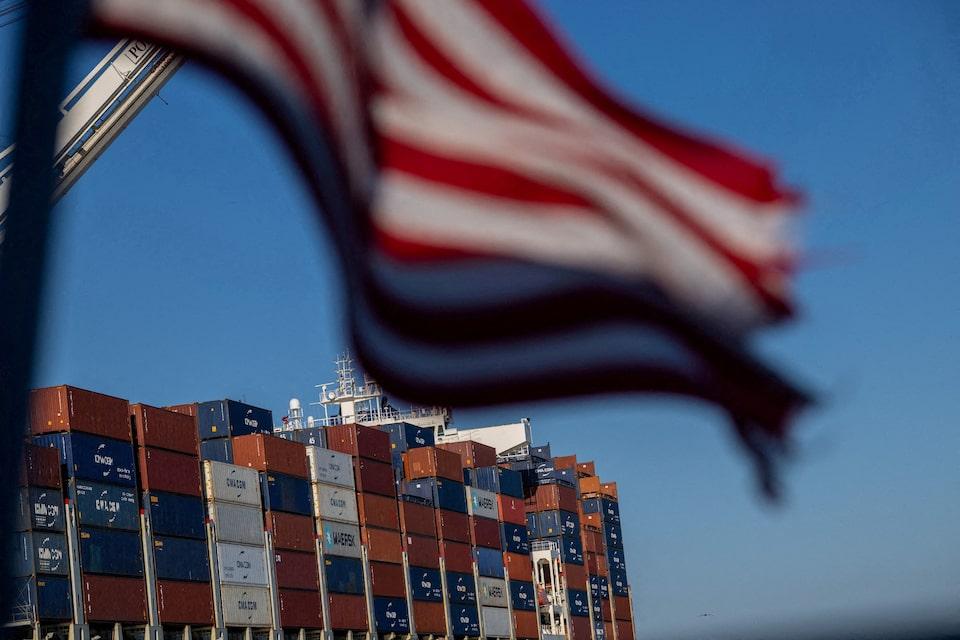
US companies, consumers bear brunt of US tariffs Some foreign sellers are raising prices Further price hikes likely in coming months FRANKFURT/WASHINGTON, Oct 13 (Reuters) - U.S. companies and consumers are bearing the brunt of the country's new import tariffs, early indications show, contradicting assertions by President Donald Trump and complicating the Federal Reserve's fight against inflation. Trump famously predicted that foreign countries would pay the price of his protectionist policies, wagering that exporters would absorb that cost just to keep a foothold in the world's largest consumer market. Sign up here. But academic studies, surveys and comments from businesses show that through the first months of Trump's new trade regime it is U.S. companies that are footing the bill and passing on some of it to the consumer - with more price hikes likely. "Most of the cost seems to be borne by U.S. firms," Harvard University professor Alberto Cavallo said in an interview to discuss his findings. "We have seen a gradual pass-through to consumer prices and there's a clear upward pressure." A White House spokesperson said "Americans may face a transition period from tariffs" but the cost would "ultimately be borne by foreign exporters." Companies were diversifying supply chains and bringing production to the United States, the spokesperson added. WHO IS EATING THE TARIFFS? Cavallo and researchers Paola Llamas and Franco Vazquez have been tracking the price of 359,148 goods, from carpets to coffee, at major online and brick-and-mortar retailers in the United States. They found that imported goods have become 4% more expensive since Trump started imposing tariffs in early March, while the price of domestic products rose by 2%. The biggest increases for imports were seen in goods that the United States cannot produce domestically, such as coffee, or that come from highly penalised countries, like Turkey. These price hikes, while material, have been generally far smaller than the tariff rate on the products in question - implying that sellers were absorbing some of the cost as well. Yet U.S. import prices, which don't include tariffs, showed foreign exporters have been raising their prices in dollars and passing on to their U.S. buyers part of the greenback's depreciation against their currencies. "This suggests foreign producers are not absorbing much if any of the U.S. tariffs, consistent with prior economic research," researchers at Yale University's Budget Lab think-tank said in a blog post. National indices of export prices paint the same picture. The cost of goods exported by China, Germany, Mexico, Turkey and India have all risen, with Japan the only exception. FULL IMPACT OF TARIFFS YET TO BE FELT Adapting to Trump's tariffs - a still-incomplete set of levies that pushed import taxes from an average of around 2% to an estimated 17% - is still underway. It is seen taking months longer as exporters, importers and consumers jostle over who pays duties worth round $30 billion per month. "We shouldn't expect this to be a one-time jump but rather firms are trying to find ways to soften the blow," and stretch price increases out over time, Cavallo added. European carmakers have looked - so far - to absorb more of the price impact, but consumer firms including Tide detergent-maker Procter & Gamble (PG.N) , opens new tab, Ray Ban-maker EssilorLuxottica (ESLX.PA) , opens new tab and Swiss watchmaker Swatch (UHR.S) , opens new tab have hiked prices. Around 72% of companies in Europe, the Middle East and Africa tracked by Reuters flagged price hikes since Trump's trade salvoes started, a Reuters tracker shows. Only 18 companies have warned on profit margins. Separate Reuters analyses of e-commerce websites Shein and Amazon were already showing robust price increases for Chinese products sold in the United States, ranging from clothing to electronics. China's so-called "anti-involution" policy, under which producers are encouraged to scale back competition and even cut capacity in key sectors, could add fuel to the fire by curbing the supply of goods such as solar-power equipment. That has all set the scene for higher inflation in the United States. The Fed cut its benchmark rate last month on concerns the job market was weakening but policymakers are split over whether or not tariff-driven inflation will likely fade. The Fed's newest governor, Stephen Miran, on leave from the Trump administration, argues the tariffs are not inflationary and has brushed off concerns about what he called "relatively small changes in some goods prices." A Boston Fed "back of the envelope" calculation projected tariffs would push up core inflation by 75 basis points. Fed Chair Jerome Powell said tariffs accounted for perhaps 30-40 basis points of the latest core inflation reading of 2.9% but the effect should be "relatively short-lived." The Peterson Institute for International Economics estimated , opens new tab that inflation over the next year would be 1 percentage point higher than if tariffs hadn't been raised but would then fall back. GLOBAL TRADE SEEN SUFFERING AS TARIFFS BITE The rest of the world, however, has no reason to celebrate. As U.S. consumers struggle to keep up with rising prices, demand for exports is likely to slow. An S&P Global survey of purchasing managers at companies all over the world showed new export orders contracting at an increasing pace since June. European Union exports to the United States fell , opens new tab by 4.4% from the prior year in July, the latest month for which data was available, and in the bloc's former powerhouse Germany they were down 20.1% in August. The World Trade Organization, too, slashed its forecast for global merchandise trade volume growth next year to just 0.5%, citing a delayed impact from U.S. tariffs. U.S. shipment data tracked by German think tank the Kiel Institute also showed a clear downtrend. While that all may partly reflect strong front-loading of orders earlier in the year in anticipation of tariffs, it is also prompting caution about the trade outlook. Dutch bank ING expected a 17% reduction in EU goods exports to the U.S. over the next two years, costing the bloc 30 basis points of GDP growth. "The expected impact of U.S. tariffs hasn’t materialized yet," Ruben Dewitte, an economist at ING, said. "We anticipate these effects will become more visible in the coming months." (This story has been refiled to fix the spelling of Vazquez in paragraph 6) https://www.reuters.com/world/us/how-united-states-is-eating-trumps-tariffs-2025-10-13/
2025-10-13 04:44
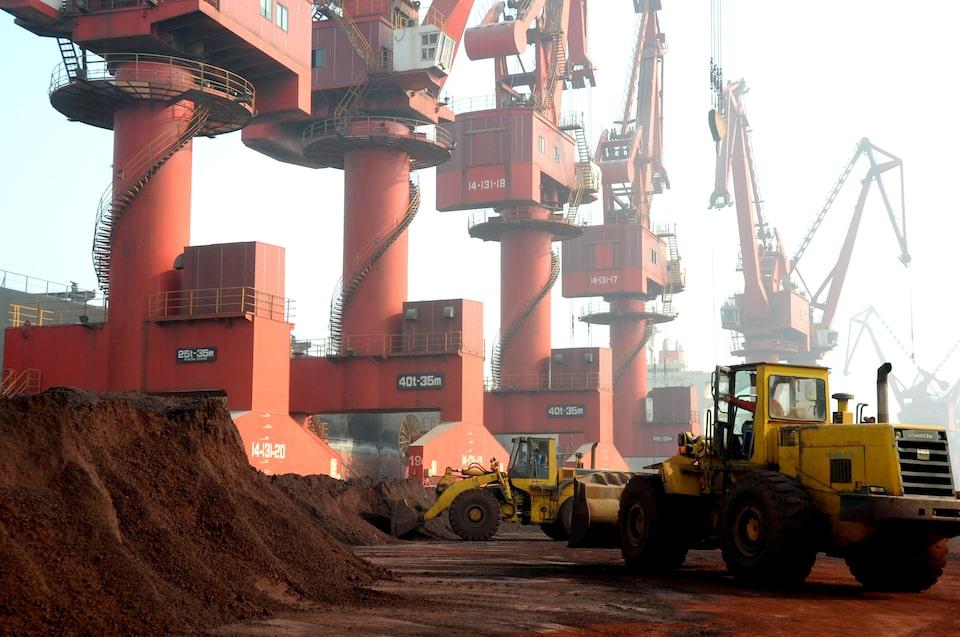
BEIJING, Oct 13 (Reuters) - China's rare earth exports fell 31% in September from August, customs data showed on Monday, the third straight month of declines. New controls that were introduced by China last week have threatened a trade truce with Washington and the three months of declines are expected to raise questions about its agreements with Europe and the U.S. to ramp up exports after China's decision to restrict shipments in April triggered shortages worldwide. Sign up here. China, the world's largest exporter of rare earths, sold 4,000.3 tonnes of rare earths in September, down 30.9% from August, marking the lowest level since February, figures from the General Administration of Customs of China showed. For the year-to-date period, exports hit 48,355.7 tonnes, up 13% from a year earlier. China's exports of rare earths fell sharply in April after it imposed export restrictions in response to U.S. tariffs. Shipments recovered steadily until June, when they hit an all-time high, though they have fallen every month since then. "The obvious question is whether China restricted exports, particularly to the U.S. or the EU," said Cory Combs, head of critical mineral research at Trivium China. "I suspect there are several factors at work, not just one big driver, like a license crackdown. But we'll only know for sure after the country-level export data comes out later this month." Monday's data covered a period before China on Friday expanded its export controls on rare earths. After that decision was made, U.S. President Donald Trump threatened to impose new tariffs on China, which threatened to end a trade truce that was extended in August. China produces over 90% of the world's processed rare earths and rare-earth magnets. The 17 rare earths are essential materials in products ranging from electric vehicles to aircraft engines and military radars. Rare earth exports are volatile and large swings are common. It was also unclear what products and countries were affected because Monday's data was aggregated. A complete breakdown will be released on Oct. 20. For example, even though total rare earth exports fell in July and August, exports of rare earth magnets rose. https://www.reuters.com/world/asia-pacific/chinas-rare-earth-exports-fall-sharply-september-2025-10-13/
2025-10-13 04:36
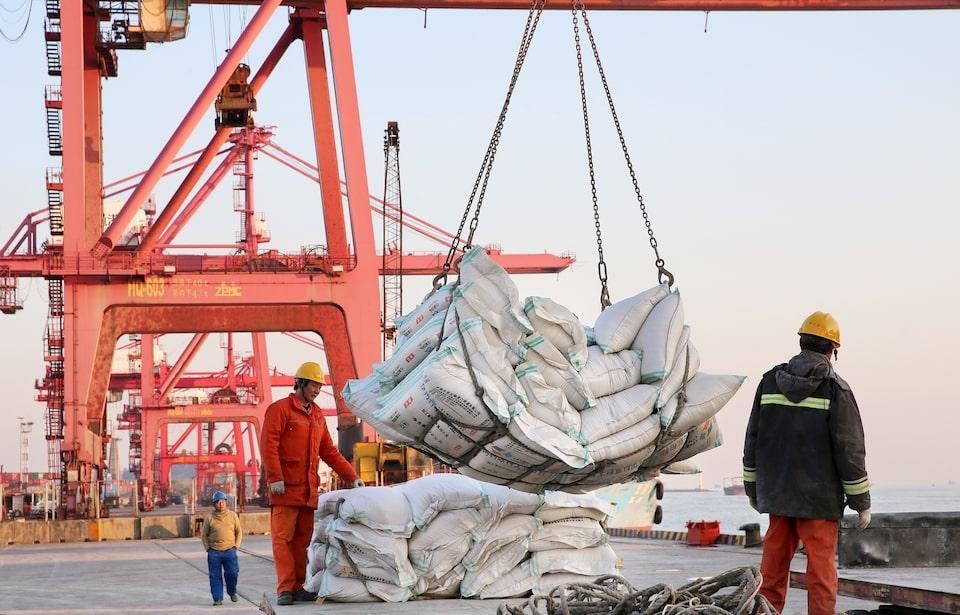
Oct 13 (Reuters) - China's imports of soybeans and crude oil rose in September from a year earlier, while those of coal fell, customs data showed on Monday. The country's soybean imports hit the second-highest level on record, driven by strong purchases from South America amid the ongoing trade dispute with the U.S. Sign up here. China's export growth picked up pace in September, buoyed by manufacturers finding buyers in markets beyond the U.S. as a tariff deal with Washington remained elusive while investors grappled with the latest salvoes in their trade war. Outbound shipments from the world's second-largest economy rose an annual 8.3% last month, customs data showed, up from a 4.4% gain in August and beating a 6% increase forecast in a Reuters poll. Imports grew 7.4%, against a 1.3% gain in August. Economists had predicted a 1.5% rise. KEY POINTS: * Soybeans: September imports at 12.87 mmt, up 13.19% y/y * Crude oil: September imports at 47.25 mmt, up 3.87% y/y * Unwrought copper: September imports at 485,000 mt, up 1.25% y/y * Coal: September imports at 46 mmt, down 3.34% y/y * Iron ore: September imports at 116.33 mmt, up 11.72% y/y * Rare earths: September exports at 4,000.3 mt, down 4.32% y/y Preliminary table of commodity trade data Below are comments from analysts on the commodities data: COMMENT ON SOYBEANS ROSA WANG, ANALYST, JCI, SHANGHAI: "China's soybean supply outlook has become increasingly secure, supported by strong imports from January to September, a surge in purchases from Argentina during its temporary tax holiday and continued heavy buying from Brazil." WANG WENSHEN, ANALYST AT SHANGHAI-BASED SUBLIME CHINA INFORMATION, SHANGHAI: "September soybean imports reached the second-highest level on record, keeping domestic supply ample. Crushing companies are now pushing to move their stock quickly, which is likely to put downward pressure on soybean oil and meal prices." LIU JINLU, AGRICULTURAL RESEARCHER AT GUOYUAN FUTURES, BEIJING: "The increase in China's soybean imports from January to September 2025 and the continued high imports in September, are due to several reasons: the stalled trade between China and the U.S., abundant soybean supplies from South America, strengthened domestic demand resilience and a short-term chance to buy low-cost soybeans from Argentina." "However, China's soybean supply still faces some risks, such as how China-U.S. trade talks go, possible production problems in South America caused by this year's weak La Niña weather and changes in demand for soybean meal in China. These factors are likely to keep affecting soybean imports." COMMENT ON IRON ORE JIANG MENGTIAN, ANALYST, HORIZON INSIGHTS, SHANGHAI: "We expected to see higher iron ore imports last month as hot metal output stayed high amid healthy margins. And mills’ restocking for the week-long National holiday break in advance also contributed to higher ore imports in September. "But it beat our expectations to see such a monthly high volume." GE XIN, DEPUTY DIRECTOR, LANGE STEEL, BEIJING: "Iron ore imports in September hit a record high for the period, as higher prices encouraged miners to ramp up shipments to top consumer China. "Underpinning robust ore imports last month was also stronger demand from China at home and abroad." COMMENT ON COAL FENG DONGBIN, VICE GENERAL MANAGER, FENWEI DIGITAL INFORMATION TECHNOLOGY, TAIYUAN: "The rapid rebound in domestic prices in the second half of the year has again widened the price gap between domestic and imported coal, making imported coal more competitive. This price advantage is the main driving force behind the swift recovery in import volumes." COMMENT ON CRUDE OIL MUYU XU, SENIOR ANALYST, KPLER, SINGAPORE: "China's sea-borne crude oil imports fell month-over-month in September to the lowest level since January, with shipments from Iran hitting the lowest since January. "The month-on-month decline mainly reflected tight import quotas for independent refineries, which curbed purchases of Russian and Iranian barrels, while narrower arbitrage in June also reduced inflows from Brazil and West Africa, which were loaded in July and August. "Still, arrivals of Urals crude from western Russia rose as state-owned refiners took advantage of reduced Indian demand in late July and early August, but ESPO shipments from the Far East fell to the lowest since June due to pipeline maintenance at Kozmino that limited September loadings." LINKS: For details, see the official Customs website (www.customs.gov.cn) BACKGROUND: China is the world's biggest crude oil importer and top buyer of coal, copper, iron ore and soybeans. https://www.reuters.com/world/asia-pacific/chinas-september-imports-crude-oil-soybeans-rise-2025-10-13/
2025-10-13 04:34
A look at the day ahead in European and global markets from Wayne Cole. It's TACO time, again. At least, investors are hoping the latest sound and fury from President Trump on tariffs will signify little in the end. Sign up here. After all, he struck a different tone on social media over the weekend. "Don't worry about China, it will all be fine! Highly respected President Xi just had a bad moment. The U.S.A. wants to help China, not hurt it!!!" Imagine a drinking game with a shot for every exclamation mark. Trump is joining other world leaders in Egypt on Monday to discuss the Gaza ceasefire, so there will be plenty of opportunity for fresh headlines. Beijing replied by defending its restrictions on rare earth minerals and refusing to take a call from the White House, which is all par for the course by now. Trade data spoke to China's resilience as exports jumped 8.3% y/y in September, twice the forecast, while imports handily beat estimates. Exports of rare earths fell 31% from August, presumably as it tightened the screws on Western tech and defence manufacturers. Investors seem to assume the November deadline will be extended again and it's safe to be back in the water, so S&P 500 futures rallied 1.3%, Nasdaq futures 1.8%. Expectations remain high for the Q3 earnings season that starts this week with the major banks. European stock futures are up between 0.2% and 0.5%. Asia stocks are still suffering the fallout from Friday. Nikkei futures - the cash market is shut for a holiday - have bounced 1.6% to 46,835, but that's well short of Friday's 48,088 finish. South Korea is down 1.2% and Chinese blue chips 0.9%. Currencies have steadied, with the safe-haven yen off and the risk-hedge Aussie bouncing. The euro is holding $1.1600 as markets wait to see if the new French cabinet can last longer than 14 hours, let alone get a budget through parliament. The cash Treasury market is closed for a holiday, but 10-year futures are off 5 ticks or so. Gold made another peak around $4,059 and oil rebounded more than 1%. Markets imply a 96% chance of a Federal Reserve rate cut later this month, and much the same for December. Fed Chair Powell has a chance to offer his guidance when he speaks on the economic outlook at the NABE annual meeting on Tuesday. A host of other Fed members are appearing this week, along with a who's who of central bankers attending the IMF-World Bank meeting in Washington. Key developments that could influence markets on Monday: - Central bankers speaking include ECB chief Lagarde, Fed's Paulson, BoE's Greene and Mann https://www.reuters.com/markets/europe/global-markets-view-europe-2025-10-13/
2025-10-13 04:16
BEIJING, Oct 13 (Reuters) - China's crude oil imports rose 3.9% in September from a year earlier as refineries operated at their highest utilisation rates this year. The world’s largest crude importer, China brought in 47.25 million metric tons of oil in September, data from the General Administration of Customs showed on Monday, or the equivalent of 11.5 million barrels per day. Sign up here. China’s refinery utilisation rates in September climbed to the year's highest, with relatively high levels of daily gasoline and diesel output, though supply continued to outpace demand, Chinese consulting firm Oilchem said. Atmospheric and vacuum distillation units at Chinese refineries used 73.45% of capacity, up 1.28 percentage points from August and 3.22 percentage points from a year earlier, Oilchem said. State-owned refineries’ utilisation rose 3.55 percentage points on the year to 81.05% of capacity, while independent refiners increased their utilisation by 3.02 percentage points to 62.17%, Oilchem added. A total of 14 refineries underwent maintenance in September, two fewer than in August, involving a combined capacity of 70.4 million tons per year, down 12.3 million from the previous month, the consulting firm said. However, China's seaborne crude oil imports fell in September on the month to their lowest since January, with shipments from Iran hitting the lowest since January, according to Kpler's data. "The month-on-month decline mainly reflected tight import quotas for independent refineries, which curbed purchases of Russian and Iranian barrels, while narrower arbitrage in June also reduced inflows from Brazil and West Africa, which were loaded in July and August," said Muyu Xu, senior crude oil analyst at Kpler. For the first nine months of the year, total crude imports were up 2.6% at 423 million tons, reflecting China’s continued stockpiling activity. Imports of natural gas, including both pipeline gas and liquefied natural gas (LNG), fell 7.8% in September to 11.05 million tons from a year earlier. China imported 92.86 million tons of LNG in the first nine months, down 6.2% on the year. (1 metric ton of crude oil=7.3 barrels) (This story has been corrected to say that China's seaborne crude oil imports fell in September on the month to their lowest since January, not May, after a senior Kpler analyst revised their statement, in paragraph 7) https://www.reuters.com/business/energy/chinas-september-oil-imports-rise-39-year-drop-45-august-2025-10-13/


