2025-10-10 12:07
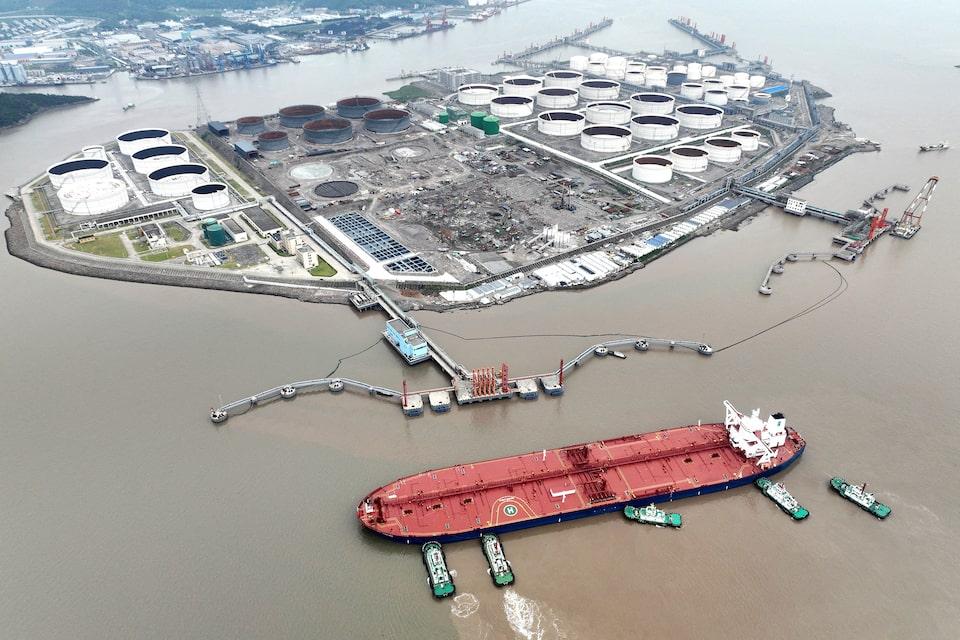
US sanctions an oil terminal in Shandong for Iranian oil trade The sanctioned terminal handles one-fifth of Sinopec crude imports - sources Sinopec may use alternatives to supply at least two major subsidiary refineries - sources Spot VLCC freight rates rise on logistics disruption concerns SINGAPORE, Oct 10 (Reuters) - The latest U.S. sanctions on Iranian petroleum exports deal a blow to Chinese refining giant Sinopec by targeting a terminal through which the state major handles one-fifth of its crude oil imports, industry executives and analysts said. The sanctions announced on Thursday further complicate U.S.-China relations, coming ahead of planned talks between Presidents Donald Trump and Xi Jinping later this month. Sign up here. The move follows China's decision to tighten controls on rare earth exports and reflects Washington's continued efforts to restrict Iran’s oil trade with its largest customer. Rizhao Shihua Crude Oil Terminal Co. Ltd, half-owned by a Sinopec logistics unit, was among the entities listed by the U.S. Treasury in a round of sanctions that also includes ships transporting Iranian crude oil and liquefied petroleum gas, as well as an independent Chinese refinery. Rizhao Shihua terminal, in the Shandong province city of Lanshan, was designated for receiving Iranian oil on board sanctioned vessels, the U.S. said. KEY CRUDE HUB UNDER SCRUTINY The terminal, which runs three berths that can service VLCCs, very large crude carriers, is 50%-owned by Sinopec Kantons Holding (0934.HK) , opens new tab, a Sinopec-controlled logistics operator, while the remainder is held by local-government-backed Shandong Port Group's Rizhao Port, according to Chinese business portal Qichacha. The majority of crude oil passing through the terminal is handled by Sinopec (600028.SS) , opens new tab, according to tanker tracker Vortexa and two industry executives familiar with the port. Sinopec has steered clear of buying Iranian oil, traders and analysts have said. A Sinopec spokesperson did not immediately comment. Calls to Shandong Port Group and Rizhao Port went unanswered and Sinopec Kantons did not immediately respond to a request for comment. The latest measures bring to five the number of sanctioned oil import terminals in the refining hub of Shandong, accounting for half of the province's capacity to handle VLCCs that carry 2 million barrels of oil each. VESSELS MAY SEEK ALTERNATIVE PORTS Shandong, where independent Chinese refiners are clustered, is the largest destination for oil shipments from sanctions-hit Iran, Venezuela and Russia. "Compared to the previous round of sanctions on Chinese terminals, the impact could be larger," said Samuel Kong, senior analyst at FGE, which estimates that only 10-20% of the oil imported at Rizhao is from sanctioned sources. "In the near term, we could see disruptions to discharges around Rizhao, and vessels carrying non-sanctioned barrels might seek alternative ports in Shandong to unload their cargoes." Spot VLCC freight rates for the Mideast-China route gained 3% on Friday, several shipping sources said, buoyed by concerns of congestion or discharge delays resulting from sanctions. Last year, Sinopec imported about 804,000 barrels per day via the Rizhao Shihua terminal, 20% of its total imports, according to Vortexa and one of the industry executives. To avoid using the terminal, Sinopec would be forced to re-direct shipments to other facilities to supply at least two major subsidiary refineries, Sinopec Luoyang Petrochemical in Henan province and Sinopec Yangzi Petrochemical in Jiangsu province. Both plants are connected to the Rizhao terminal via pipelines, the two executives said. These two plants have a combined crude processing capacity of 420,000 bpd. Rizhao terminal indirectly serves several smaller Sinopec refineries along the Yangtze River via pipelines, said a third industry official familiar with Sinopec's refining system. As a workaround, Sinopec may ramp up imports at Ningbo or Qingdao port, or raise throughput at other nearby plants to compensate for possible production cuts at Luoyang and Yangzi, said a second executive, who is close to Sinopec. https://www.reuters.com/business/energy/latest-us-sanctions-iranian-oil-deal-blow-chinas-sinopec-2025-10-10/
2025-10-10 11:48
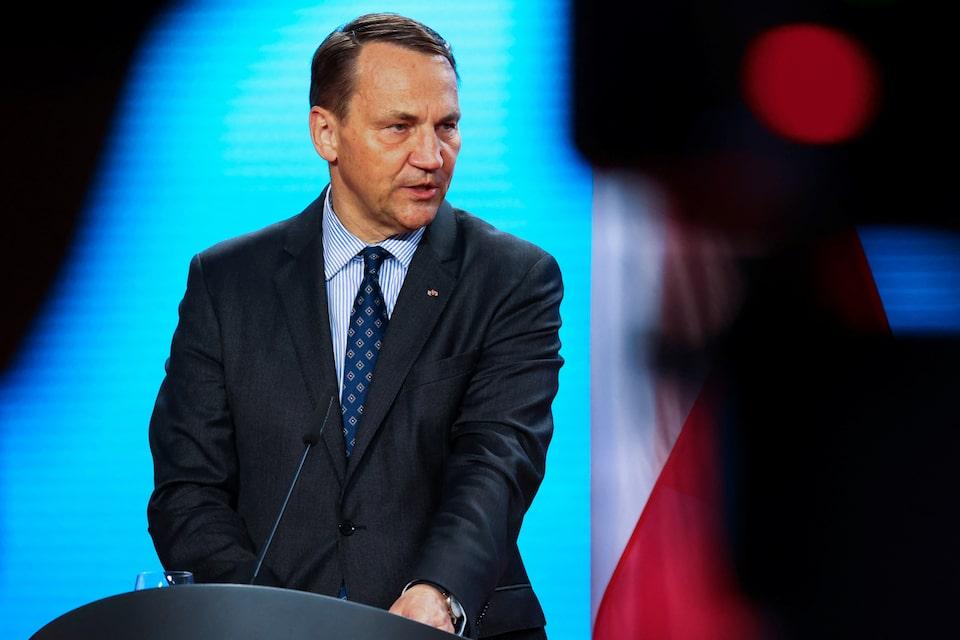
WARSAW, Oct 10 (Reuters) - Generators, extra electricity supplies and an LNG terminal are at Ukraine's disposal, Polish foreign minister Radoslaw Sikorski said on Friday, as Russia continues to attack Kyiv's energy infrastructure. Moscow has intensified its assaults in recent weeks. Early on Friday, large parts of Kyiv were plunged into darkness and around 600,000 households were temporarily without power across Ukraine after Russian strikes. Sign up here. Sikorski, visiting Lviv in western Ukraine, said Poland was discussing how to support its eastern neighbour. "Generators, extra electricity supplies, accelerated construction of power connections between Ukraine and Poland, and of course, our LNG terminal in Swinoujscie is at your disposal," he said during a press conference with his Ukrainian counterpart. "This is another escalation, because we know why it's being carried out. It's meant to intimidate people ahead of winter," he added. In August, Polish refiner Orlen (PKN.WA) , opens new tab said it aimed to keep supplying 100 million cubic metres (mcm) of gas every month to Ukraine after having already delivered 430 mcm this year. The liquefied fuel is imported from the United States to the terminal in Swinoujscie and shipped across Poland to Ukraine. https://www.reuters.com/business/energy/poland-offers-help-ukraine-reels-russian-attacks-energy-infrastructure-2025-10-10/
2025-10-10 11:42
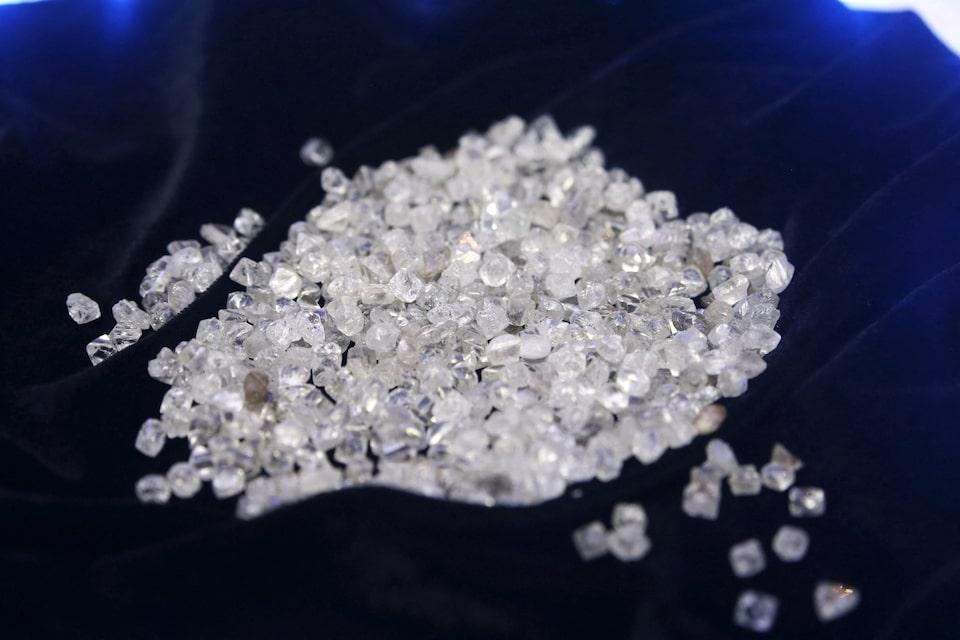
GABORONE, Oct 10 (Reuters) - Botswana has enforced a new rule requiring mining companies to sell a 24% stake in new concessions to local investors if the government chooses not to buy the stake, its mines ministry said on Friday. The rule was proposed last year as part of draft legislation, but the government had not said when it would take effect. Sign up here. The Mines and Minerals Act previously gave Botswana's government the right to buy a 15% shareholding in any mining concession upon being licensed, with an option for a higher stake in diamond projects. The Southern African country is the world's top diamond producer by value and an emerging copper mining hotspot. The Ministry of Minerals and Energy said in a statement that the rule requiring 24% local ownership in mining projects had entered into force on October 1. As well as increasing local ownership of the country's mineral wealth, the law aims to promote local value-adding activities and ensure mining companies establish environmental rehabilitation funds. When the amendment to the Mines and Minerals Act was being debated in parliament, the former mines minister said local investors could buy stakes in concessions with the help of domestic pension funds. https://www.reuters.com/world/africa/botswana-enforces-new-24-local-ownership-rule-mines-2025-10-10/
2025-10-10 11:38
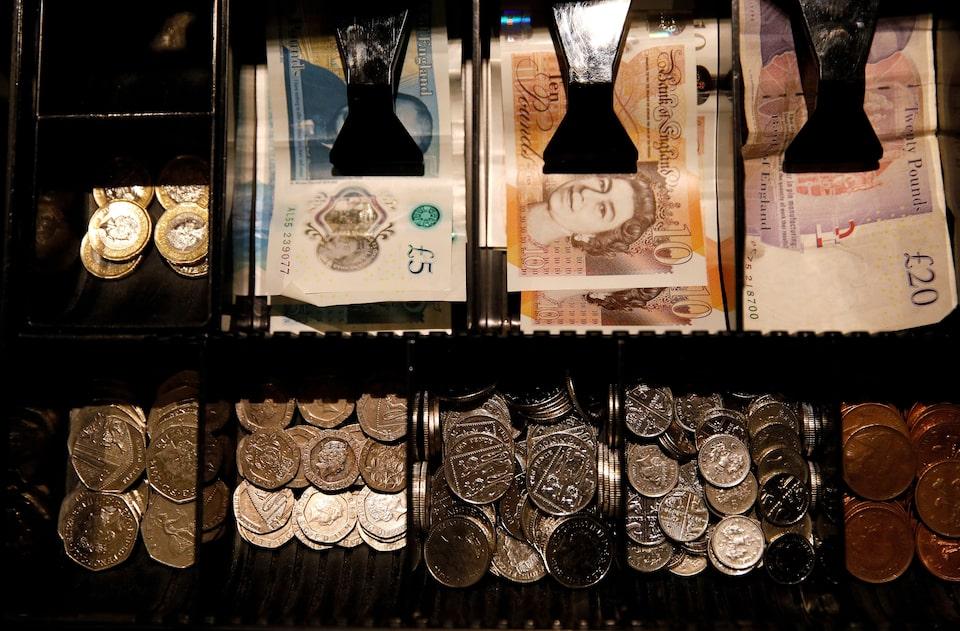
LONDON, Oct 10 (Reuters) - The pound fell to two-month lows on Friday, set for its biggest weekly fall since a rout in UK bonds in January, largely driven by a resurgent dollar, which has vaulted higher as political crisis unfolded in France and Japan, in particular. Sterling has lost 1.4% against the dollar this week, the most on a weekly basis since a 1.8% drop in early January, when a swell of concern about Britain's long-term finances unleashed a sell-off in gilts and the pound itself. Sign up here. The pound was last down 0.2% on the day at $1.32875. It was also a touch weaker against the euro , which rose 0.2% to 87.11 pence. The single currency, which has been weighed down by political paralysis in France, has barely made any headway against the pound this week, while sinking 1.4% against the dollar . A survey of recruitment companies on Friday showed that Britain's hiring market remains sluggish and pay is stagnating, as employers fret about possible further tax increases in finance minister Rachel Reeves' November budget. "A stabilising UK jobs market could offer that near-term counterweight to sterling's bearish momentum," George Vessey, Lead FX & Macro Strategist at Convera, said. Reeves is widely expected to increase taxes to keep public finances on track to meet her fiscal targets. Investors are becoming increasingly concerned about the stability of the government's finances and this is materialising as weakness in both sterling and gilts. The yield on the benchmark 10-year gilt has risen 2 basis points so far this month, compared with a 4 bp decline in both U.S. and German yields, which in theory, should support the pound. "We continue to expect sterling to struggle while investors await clearer signals on UK fiscal policy and the timing of rate cuts," Monex strategists said in a note. https://www.reuters.com/world/uk/sterling-skids-two-month-lows-dollar-shines-2025-10-10/
2025-10-10 11:02
PARIS, Oct 10 (Reuters) - French authorities placed its Caribbean department of Guadeloupe on red alert, its most serious warning, on Friday, as Tropical Storm Jerry passed close to the islands, while Martinique to the south remains on orange alert. "After the torrential rains which hit the east and north of the archipelago from late evening onwards, a spiral band, also generating very heavy, persistent and stormy rain, is setting in over the archipelago," Meteo-France said in a statement. Sign up here. Improvement is expected from midday local time on Friday, it added. Local officials did not provide details on whether the storm had caused any damage or led to any victims. https://www.reuters.com/business/environment/france-places-guadeloupe-red-alert-due-tropical-storm-jerry-2025-10-10/

2025-10-10 10:55
LONDON, Oct 10 (Reuters) - Is China's stockpiling of crude oil bearish or bullish for prices? Unfortunately there is no clear cut answer to the question, as much depends on details that are simply not available, meaning the market has to rely on very limited data, which in turn drives speculation and uncertainty. Sign up here. China does not disclose the volumes of crude it places into strategic and commercial reserves, and it also does not state what its ultimate target volume is for inventories. This means the market is forced to rely on unnamed sources within the Chinese oil sector for a drip feed of information, which, while useful, is hardly definitive on what the world's largest buyer of crude is actually doing. There are a wide variety of estimates of how much crude China has stored so far this year, but most analysts cite a figure of at least 500,000 barrels per day (bpd). That does fit in with calculations of China's surplus crude, a number that is arrived at by adding together the volume from imports and domestic output, and then subtracting the amount processed by refiners. On that basis China's surplus crude was 990,000 bpd for the first eight months of the year, but it is worth noting that not all of this surplus is likely to have been added to storage as the official data does not capture some volumes processed in small refineries or petrochemical plants. But if the assumption is that China has added at least 500,000 bpd to storage so far this year, the question becomes how has this affected the market? Global benchmark Brent futures have been quite stable since April, trading in a range around $65 a barrel, apart from a brief spike higher during the conflict between Israel and Iran. It is likely that prices would have been weaker if China's import demand had been consistently 500,000 bpd weaker than it has been. In effect, China's stockpiling has allowed the eight members of OPEC+ to unwind their voluntary cuts of about 2.5 million bpd without crashing prices. The question then becomes how much more oil China is likely to store in coming years before it reaches its target. OUTCOMES VARY There is a wide range of estimates as to how much oil China already has in both strategic and commercial storages, with the low end being 800 million barrels and the high end being around 1.4 billion. There is also considerable speculation as to how much more Chinese authorities want to stockpile, with the high end reaching around two billion barrels. And finally there is no certainty as to when they want to complete this process, but the consensus is by 2028 at the latest. This means that depending on where you actually think their reserves currently are, and where you think they want to end up, there is a wide range of possible outcomes. If China wants to add another 1 billion barrels to storages over a three-year period, this works out to around 913,000 bpd, which would be bullish for oil prices. But if you assume it already has around 1.4 billion barrels in tanks and wants to add only 600 million more, then that amounts to around 550,000 bpd over the next three years. This is a level around current storage flows, so it does provide support to oil prices, but does not necessarily drive them higher. The other factor to note is that China has a track record of being flexible in building inventories, buying more crude when it deems prices to be reasonable and pulling back when it believes prices have risen too high. A recent example of this may be seen in its September imports, which dropped to 10.83 million bpd from 11.66 million bpd in August, according to data compiled by LSEG Oil Research. September was the weakest month since February and the drop in imports came after the price spike in June, when Brent reached as high $81.40 a barrel as Israel and Iran clashed. September-arriving cargoes would largely have been arranged during this period of higher prices, and it is likely Chinese refiners decided to ease back on their imports and await a return to lower prices. In effect, China's stockpiling becomes a stabilising factor for oil prices. China will buy more crude if prices stay relatively low and stable, thus providing a floor to the market, but will pull back on imports if prices move higher, thus providing a ceiling. Enjoying this column? Check out Reuters Open Interest (ROI), your essential new source for global financial commentary. ROI delivers thought-provoking, data-driven analysis of everything from swap rates to soybeans. Markets are moving faster than ever. ROI can help you keep up. Follow ROI on LinkedIn , opens new tab and X , opens new tab. The views expressed here are those of the author, a columnist for Reuters. https://www.reuters.com/markets/commodities/china-crude-oil-storage-conundrum-gives-price-floor-ceiling-2025-10-10/