2025-10-10 03:53
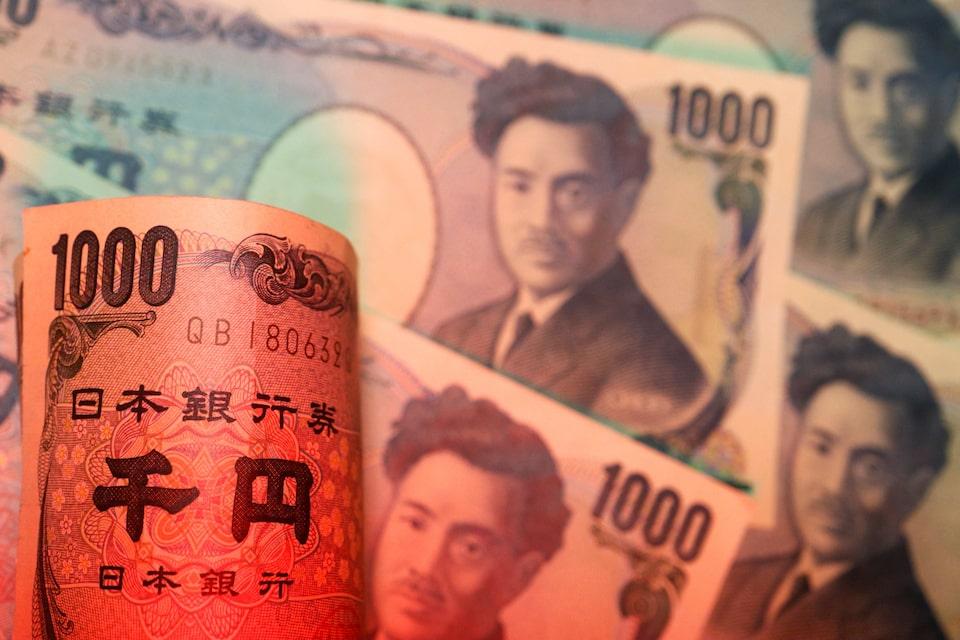
Yen on course for steepest weekly drop in a year on Takaichi win Narrowing U.S.-Japan rate gap to underpin yen, for now Japan's new party head Takaichi says 'pros and cons' to weak yen Yen falls may speed up if Takaichi appears sanguine on weak yen TOKYO, Oct 10 (Reuters) - Japanese authorities may tolerate moderate yen declines but could intervene if the currency sharply depreciates towards 160 to the dollar, said Atsushi Takeuchi, a former central bank official who was involved in Tokyo's market forays a decade ago. The yen was set for its steepest weekly drop in a year on Friday after fiscal and monetary dove Sanae Takaichi's surprise victory in a ruling party race led to receding expectations of a near-term interest rate hike by the Bank of Japan. Sign up here. Takeuchi, who headed the BOJ's foreign exchange division during currency interventions from 2010 to 2012, said the yen could stabilise from a narrowing interest rate gap. The U.S. Federal Reserve is expected to cut interest rates and the BOJ eventually raise rates as it rolls back years of stimulus, which will underpin the yen and prevent a one-sided dive towards 160 per dollar, Takeuchi said. But the yen's fall may accelerate if Takaichi, who is set to become Japan's next premier, gives markets the impression the government would leave such moves unattended, Takeuchi said. "Authorities won't mind as long as the yen's declines are moderate. Their alarm bells will start ringing if market players begin talking about the chance of sharp yen declines toward 160 or 170 per dollar," Takeuchi told Reuters in an interview. "If the yen falls that much, authorities could and must step in. While intervention can't change the broad market trend, it can put a pause to sharp yen declines," he said on Friday. The yen is on pace for a nearly 4% drop in the week, its biggest fall since early October last year, on market bets Takaichi will expand fiscal spending and pressure the BOJ to delay a hike in still-low interest rates. The Japanese currency stood around 153 per dollar on Friday. In a television programme on Thursday, Takaichi said she did not want to trigger excessive yen declines. But she refrained from issuing any warning against a recent fall in the yen, saying there were "pros and cons" to a weak yen. Many market players see 160 yen per dollar as authorities' line-in-the-sand that heightens the chance of currency intervention. In fresh verbal warnings, Finance Minister Katsunobu Kato said on Friday the authorities were monitoring excessive, disorderly exchange-rate moves. While U.S. President Donald Trump likely favours a weak dollar that gives the country's exports a boost, his administration does not seem to be placing attention on the yen's recent falls, Takeuchi said. "But Washington may express its displeasure if yen falls accelerate further," he said. "They might even welcome any currency intervention by Tokyo to combat yen slides." Japan has historically focused on preventing sharp yen rises that hurt its export-reliant economy. But since 2022, its focus has shifted to defending the yen from excessive depreciation, which can fuel inflation and hurt consumer purchasing power. Takeuchi took part in several yen-selling interventions from 2010 to 2012. He is now chief research fellow at Ricoh Institute of Sustainability and Business. https://www.reuters.com/world/asia-pacific/japan-may-intervene-if-yen-dives-toward-160-per-dollar-ex-boj-official-says-2025-10-10/

2025-10-10 03:22
TOKYO, Oct 10 (Reuters) - Japanese Finance Minister Katsunobu Kato said on Friday that the government was concerned about excessive volatility in the foreign exchange market as the yen came under pressure due to fiscal concerns. "We have been recently seeing one-sided, rapid moves on the foreign exchange market," he said, signaling concerns over the yen's sharp downturn since the election of fiscal dove Sanae Takaichi as the ruling party's new leader on Saturday. Sign up here. The Japanese yen is on pace for a near 4% drop over the week, its biggest decline since early October last year, as investors fret about Takaichi's more fiscally expansive policy stance and fast-receding chances of a near-term rate hike. "As I have stated before, what's important is that exchange rates move in a stable manner, reflecting economic fundamentals," Kato said at a regular news conference. "The government will thoroughly monitor for excessive fluctuations and disorderly movements in the forex market." Speaking generally about the impact of exchange rate moves in the Japanese economy, there are both positive and negative effects that manifest through various channels, Kato said. "The extent and nature of these effects vary depending on the domestic and global economic environment at the time," he added. On Thursday, Takaichi said in a television interview that she wouldn't want to trigger excessive yen declines. "But in general, there are pros and cons to a weak yen," Takaichi said. While a weak yen serves as a buffer for manufacturers hit by higher U.S. tariffs, it hurts households by pushing up the cost of raw material imports, she said. https://www.reuters.com/world/asia-pacific/japan-concerned-about-rapid-one-sided-yen-moves-finance-minister-says-2025-10-10/
2025-10-10 02:35
Labor demand is softening, warranting rate cuts: Daly AI could transform economy; current slowdown is speeding adoption Cutting rates is risk management, policy still modestly restrictive: Daly Oct 9 (Reuters) - San Francisco Federal Reserve Bank President Mary Daly said on Thursday that a softening labor market and easing inflation were reasons behind last month's decision to cut rates, and prompted the Fed to signal the possibility of further rate cuts ahead. "The economy is slowing a little bit. Consumers are running out of all the excess savings they might have had and they've been dealing with a higher price level. And then we have restrictive monetary policy," Daly said at an event at the Silicon Valley Directors Exchange. Sign up here. "We're to a point now where the softening in the labor market looks like it could be more worrisome if we don't risk manage it," Daly said. Even after September's rate cut monetary policy is "modestly restrictive" and putting downward pressure on inflation, she said. "That interest rate cut we took -- and we projected we might take more -- those were cuts designed to risk manage as we move both our inflation goal and our employment goal to a more perfect balance," Daly said. Asked about the impact of artificial intelligence on the economy, Daly said there's good reason to think it could be transformational, though enthusiasts may well be disappointed because typically innovations that transform economies typically take decades to do so. This time it may be different, she suggested, not just because of the technology itself but also because the economy is slowing. Companies are loathe to hire employees that they might need to fire if demand falls further, and are therefore trying to find ways to use artificial intelligence to plug labor gaps. "We're now in a forcing function where we might see the gains come faster, not just because of the AI itself and what the technology can do, but also because of where we are in the economy and how firms might be able to use it," Daly said. https://www.reuters.com/business/feds-daly-labor-market-is-worrisome-point-2025-10-10/

2025-10-10 00:40
Sept wholesale inflation hits 2.7%, steady from Aug Yen-based import prices fall at slower pace than in August Yen falls, if persistent, may cause renewed rise in import costs Nearly 90% of households expect prices to rise a year from now TOKYO, Oct 10 (Reuters) - Japan's wholesale inflation held steady in September and most households expect prices to keep rising a year from now, data showed on Friday, an indication price pressures could keep the central bank on course to raise interest rates. The yen's recent sharp falls, triggered by receding market bets of a near-term rate hike by the Bank of Japan, could also drive up inflation by causing a renewed increase in import costs, some analysts say. Sign up here. Persistent inflation would add to headaches for Japan's new ruling party chief Sanae Takaichi, who has pledged to curb rising living costs upon becoming next prime minister. "We're starting to see a negative cycle in which the BOJ's slow pace of rate hikes is depreciating the yen and pushing up the cost of living," said Izuru Kato, chief economist at Totan Research. The corporate goods price index (CGPI), which measures the price companies charge each other for their goods and services, rose 2.7% in the year to September, steady from August and exceeding market forecasts for a 2.5% increase. "We expect wholesale inflation to stay above 2% for the time being" with prices continuing to rise for food and energy, said Yutaro Suzuki, an economist at Daiwa Securities. A survey released on Friday showed 88% of households expect prices to rise a year from now, up from 85.1% three months ago, suggesting the rising cost of living was heightening public perceptions that price rises will continue. The wholesale price data is among factors the BOJ scrutinises as a leading indicator of consumer inflation, which is the central bank's main gauge in setting monetary policy. The yen-based import price index fell 0.8% year-on-year in September, a much slower pace than a 3.9% decline in August, the data showed. Food and beverage prices rose 4.7% in September from a year earlier after a 4.9% increase in August. Agricultural goods prices, which include the cost of rice, rose 30.5% in September, slowing from a 41% surge in August. While the BOJ expects food inflation to moderate in coming months, such projection may come under doubt if the yen keeps sliding and pushes up the cost of importing raw materials. The yen was set for its steepest weekly drop in a year on Friday after Takaichi's surprise victory in a ruling party race led to receding expectations of a near-term rate hike. A proponent of expansionary fiscal and monetary policy, Takaichi has stressed the need to focus on reflating the economy. She also said her immediate priority would be to compile a package of steps to cushion the blow to households from rising living costs. The BOJ exited a decade-long, massive stimulus last year and raised interest rates to 0.5% in January on the view Japan was on the cusp of sustainably achieving its 2% inflation target. While consumer inflation has exceeded 2% for well over three years, Governor Kazuo Ueda has stressed the need to move cautiously in hiking rates further to ensure price rises are driven by solid domestic demand rather than raw material costs. https://www.reuters.com/world/asia-pacific/japan-wholesale-inflation-holds-steady-27-september-2025-10-10/
2025-10-09 23:50
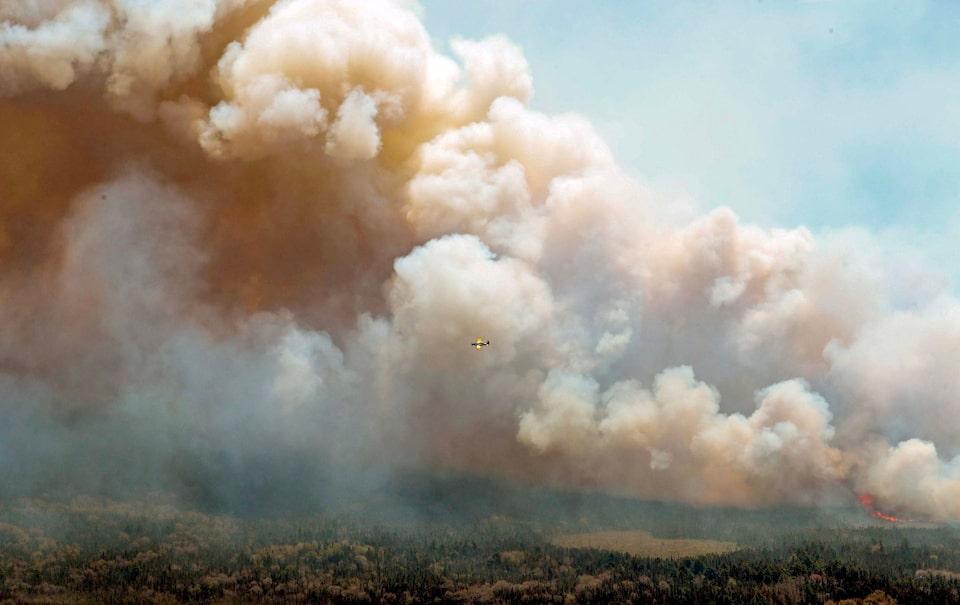
October 9 - Wildfires are common in Canada's western provinces, but this year the eastern provinces of Nova Scotia, Quebec and parts of Ontario are also reeling from out of control wildfires, sending plumes across much of New York and forcing authorities to issue air quality alerts for Toronto and Ottawa. Canada is on course for its worst-ever wildfire season on record, with about 3.3 million hectares (8.2 million acres) burned so far this year, according official data. Sign up here. WHERE ARE THE CANADA WILDFIRES The forest fires started in late April in British Columbia and Alberta, displacing more than 30,000 people at its peak, and shutting down oil and gas production. While most fires in the western provinces are under control, the fires have now opened new fronts spreading to the eastern provinces of Nova Scotia, Quebec and Ontario. Quebec is Canada's biggest province by area, and Ontario second-biggest by land area and biggest by population. As of Tuesday, Quebec is battling around 160 forest fires, displacing some 10,000 people, while a similar number of fires are burning in Ontario. Quebec's multiple fires are caused by lightning. HOW ARE FIRES IMPACTING AIR QUALITY? Canadian authorities on Wednesday issued starker air quality warnings for the country's capital Ottawa and financial capital Toronto, and urged residents to limit outdoor activities. Environment Canada has raised the air quality risk level for Toronto on Wednesday to high-risk from moderate risk on Tuesday and to very high risk for Ottawa. WHAT IS THE OUTLOOK FOR THE FIRES Dry conditions are forecast to persist for months across Canada though occasional rains and cooler temperatures are expected to bring short-term relief. The Weather Network's longer-term forecast expects Nova Scotia temperatures to be slightly warmer than normal for the rest of the summer. HOW UNUSUAL ARE WILDFIRES IN NOVA SCOTIA? Situated on Canada's eastern seaboard, Nova Scotia's climate is heavily influenced by the North Atlantic Ocean, which brings higher humidity and more moderate temperatures than many other parts of the country. Fires are not unusual but tend to be much smaller than those in the west. The region is covered by what is known as the 'Acadian Forest', which contains plenty of broadleaf trees like sugar maples mixed with evergreens such as conifers. Broadleaf trees are less flammable than evergreens because their branches and leaves are further from the ground, and their leaves hold more moisture. The Acadian forest is much less prone to large wildfires than forests in western Canada. WHAT'S CAUSING THEM? Atlantic Canada received low snowfall this winter, followed by an exceptionally dry spring. Nova Scotia's capital Halifax received just 120 millimetres of rain between March and May, roughly a third of the average, according to Weather Network meteorologist Michael Carter. A scorching late May heat-wave pushed temperatures in Halifax to 33 degrees Celsius (91.4 F) on Thursday, around 10 degrees Celsius above normal for this time of year. Most of the wildfires are believed to be accidentally caused by human activity. Ellen Whitman, a research scientist with the Canadian Forest Service, said there is also speculation that trees felled during Hurricane Fiona, which hit Atlantic Canada in September 2022, or killed by an infestation of forest pests may be providing more fuel than usual for wildfires, but that theory requires further investigation. WHAT ROLE IS CLIMATE CHANGE PLAYING? Whitman said it is difficult to determine the impact of climate change on a single fire season, but Atlantic Canada has been much hotter than usual and scientists expect temperatures in the region to continue to rise in coming years. For coastal regions climate change is expected to bring more rain, which should reduce the risk of wildfires, but a warmer atmosphere is more efficient at pulling moisture out of soils, a factor that increases fire risk. Widespread spring fires across the whole of Canada are also unusual, and research shows fire seasons across North America are getting longer. https://www.reuters.com/world/americas/why-are-wildfires-raging-canadas-eastern-nova-scotia-province-2025-10-09/
2025-10-09 23:30
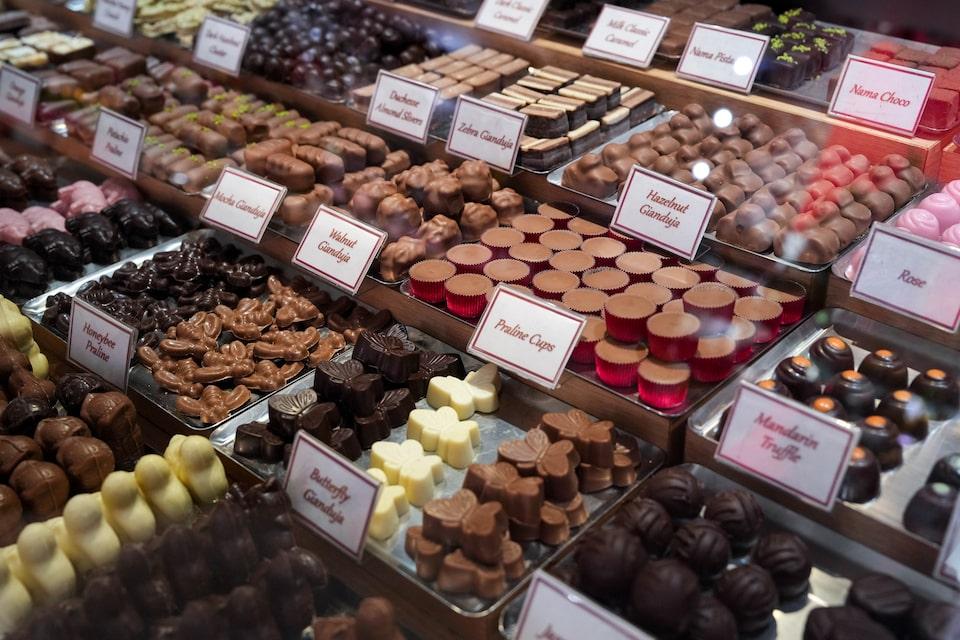
NEW YORK, Oct 9 (Reuters) - U.S. chocolate consumers will face elevated chocolate prices this coming Halloween period as cocoa costs have more than doubled since early 2024, according to a report released on Thursday by Wells Fargo's Agri-Food Institute. While wholesale cocoa prices have eased from late 2024 peaks, manufacturers are still passing on to consumers their increased costs. Companies are also reducing seasonal product lines and implementing "shrinkflation" - reducing portion sizes while maintaining prices, the report said. Sign up here. The surge in cocoa costs was caused by severe supply disruptions in West Africa, which accounts for approximately 70% of global cocoa production. Heavy rains in late 2023 triggered black pod disease and crop rot, while subsequent El Nino-induced droughts in 2024 increased the prevalence of cocoa swollen shoot virus disease. Global cocoa production fell 12.9% year-over-year to 4.37 million metric tons in the last crop season, creating a supply deficit of 494,000 metric tons, the largest in over 60 years, according to the International Cocoa Organization (ICO). Production in Ivory Coast, the world's largest producer, dropped 25.3%, while Ghana's output declined 31.3%. The outlook remains challenging, Wells Fargo said, citing preliminary assessments by cocoa exporters that point to a 10% decline in output for the 2025/26 crop year beginning in October across four West African producers. "It is likely that cocoa prices will remain high at least through the next crop year ending September 2026 given the current record cocoa supply deficit," the report stated. Recently imposed tariffs on major suppliers of cocoa and cocoa products to the U.S. States are an added cost factor. The main U.S. suppliers are Ecuador, Ivory Coast, Dominican Republic and Ghana. All of them received so-called "reciprocal" tariffs, ranging from 15% to 25%. U.S. importers and chocolate makers need to pay that additional amount when the beans or byproducts such as cocoa butter or cocoa powder arrive in the country. Cocoa is only produced in tropical regions. Wells Fargo analysts said consumers should shop for treats with less cocoa content, compare prices across retailers, and consider generic alternatives, which can offer savings compared to branded products. https://www.reuters.com/business/chocolate-prices-set-remain-high-this-halloween-us-report-says-2025-10-09/