2025-10-09 22:23
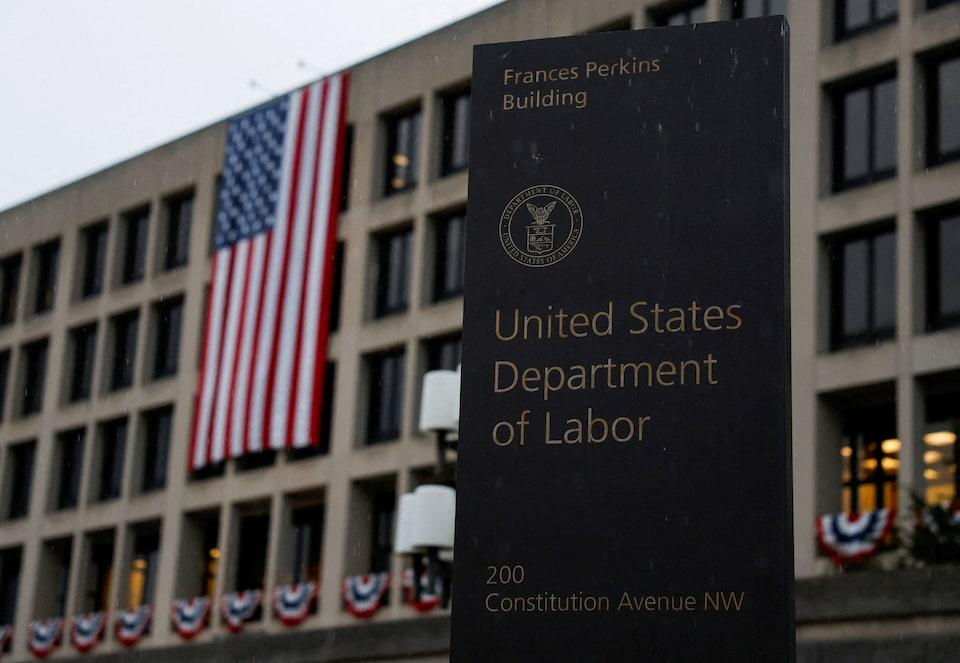
Oct 9 (Reuters) - The U.S. Bureau of Labor Statistics is bringing some furloughed workers back in order to get the statistical agency's benchmark report on inflation out despite the wider shutdown of the federal government, the New York Times and Bloomberg reported on Thursday. A specific target date for releasing the Consumer Price Index - originally scheduled for release on October 15 - was not clear, but the Times reported it was likely to be released in time for the Federal Reserve's next interest-rate-setting meeting on October 28-29. Sign up here. The CPI report for September is essential to determining the annual cost-of-living adjustment to Social Security payments, an event anticipated by millions of American retirees and others dependent on the benefits program. https://www.reuters.com/world/us/bls-bringing-back-staff-get-inflation-report-out-reports-say-2025-10-09/
2025-10-09 22:01
Oct 9 (Reuters) - Former U.S. Federal Reserve Governor Larry Lindsey has withdrawn his name from consideration for the position of chair of the U.S. central bank, CNBC reported on Thursday. Reuters could not immediately verify the report. Sign up here. https://www.reuters.com/world/us/former-us-fed-governor-larry-lindsey-withdraws-name-fed-chair-cnbc-reports-2025-10-09/
2025-10-09 21:53
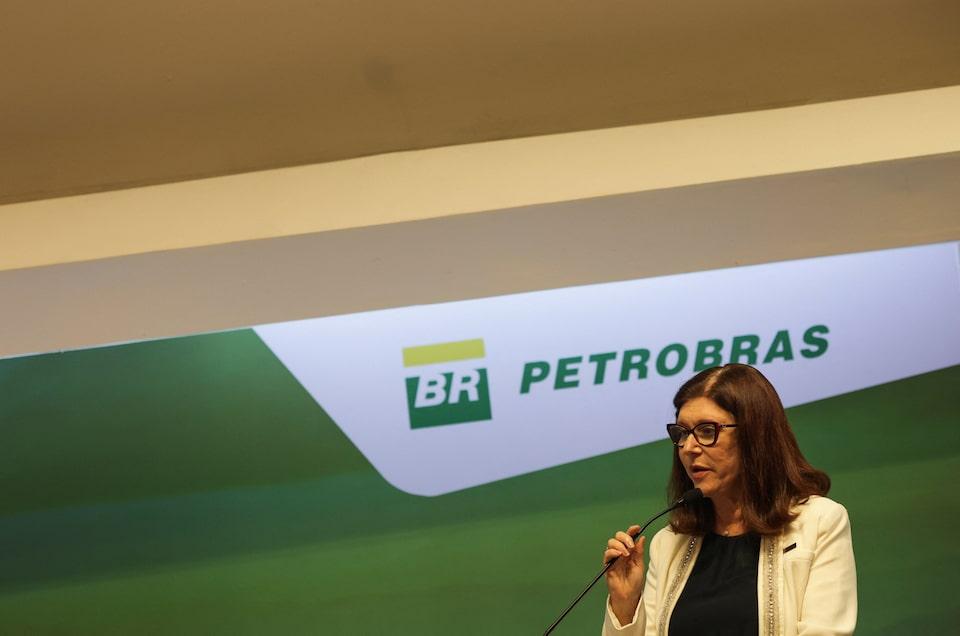
SAO PAULO/RIO DE JANEIRO, Oct 9 (Reuters) - Brazilian state-run oil company Petrobras (PETR3.SA) , opens new tab will be able to deliver about 20% of the country's total demand for nitrogen fertilizers next year as it restarts operations at three local plants, CEO Magda Chambriard said on Thursday. Petrobras' Bahia and Sergipe plants, both in Brazil's northeastern region, are expected to supply 5% and 7%, respectively, of the national urea market, according to the company's strategic plan. Sign up here. Meanwhile, its unit in Parana state, in southern Brazil, has already resumed operations, and aims to supply 8% of the country's urea demand. All three plants were previously offline. During an event in Bahia state, Chambriard also highlighted that the company is working to resume operations at a nitrogen fertilizer plant in Mato Grosso do Sul state. The unit would be expected to account for 15% of total demand. "This plant is already being contracted, the construction will be completed, and once it's ready, we will be capable of delivering 35% of all the nitrogen fertilizer Brazil needs," the executive said. The renewed investment in the fertilizer sector aligns with President Luiz Inacio Lula da Silva's goals, as he has advocated for the firm to resume investing in the industry. Brazil is heavily dependent on fertilizer imports. "With the public policies issued by the federal government and with our shareholders, we are aware of Petrobras' strategic role," Chambriard said. https://www.reuters.com/business/energy/brazils-petrobras-set-deliver-20-countrys-total-demand-nitrogen-fertilizers-ceo-2025-10-09/
2025-10-09 21:22
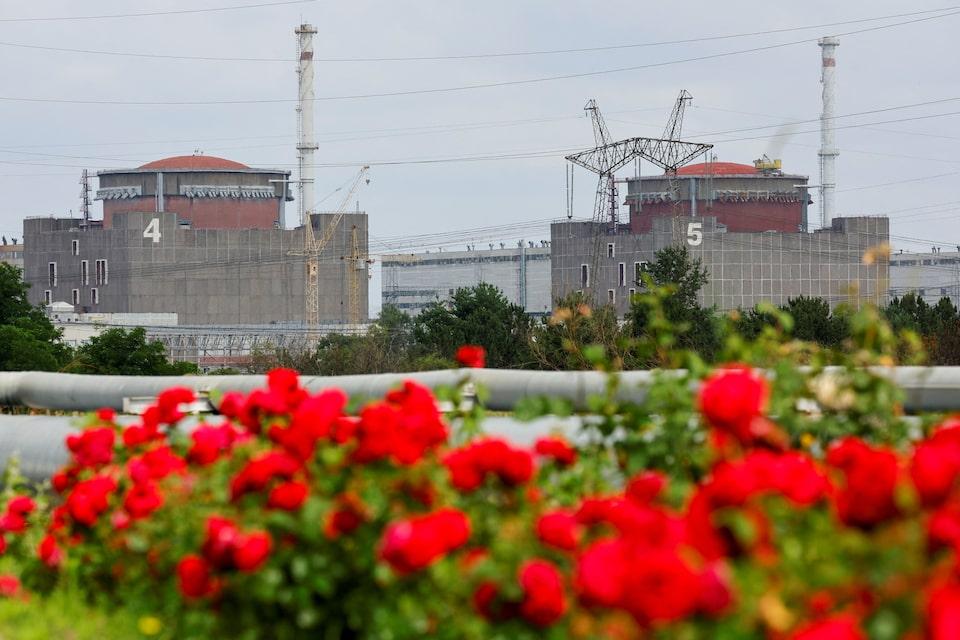
Oct 9 (Reuters) - The U.N.'s nuclear watchdog said on Thursday the process had started to restore external power to the Russian-held Zaporizhzhia nuclear power plant in southeastern Ukraine, cut off from the electricity grid for more than two weeks. Rafael Grossi, Director General of the International Atomic Energy Agency, said the process had begun after consultation with authorities in Ukraine and Russia, who blame each other for the downing of the external lines. Sign up here. Russian forces seized the plant, Europe's largest with six reactors, in the first weeks of the Kremlin's February 2022 invasion of Ukraine. The plant produces no electricity, but each side regularly accuses the other of military actions compromising nuclear safety. "Following intensive consultations, the process leading to the re-establishment of off-site power...has started," Grossi said in a statement on the IAEA website. "While it will still take some time before the grid connection of the Zaporizhzhia Nuclear Power Plant has been restored, the two sides have engaged with us in a constructive way to achieve this important objective for the sake of nuclear safety and security." Since the last external link went down on September 23, the plant has relied on emergency diesel generators to ensure that fuel inside the reactors is cooled and no meltdown occurs. In his statement, Grossi said that IAEA monitors stationed at the plant reported hearing five explosions in succession on Thursday, "occurring close to the site and shaking windows in their building". Grossi also said the decommissioned Chornobyl nuclear power station, site of the world's worst nuclear accident in 1986, remained without an external power line. Ukraine said the plant, now supplied by other power sources, lost the line because of a Russian attack on an electrical substation in a nearby town. Earlier, Russian Deputy Foreign Minister Sergei Ryabkov was quoted by the Interfax news agency as saying there were no grounds to restart the Zaporizhzhia nuclear plant for now in the absence of an external power source. Russia's state nuclear corporation Rosatom was quoted earlier as saying it was preparing to restart the plant. https://www.reuters.com/business/energy/iaea-process-started-restore-external-power-ukraines-zaporizhzhia-nuclear-plant-2025-10-09/
2025-10-09 21:03
ORLANDO, Florida, Oct 9 (Reuters) - Wall Street wobbled and gold had its biggest fall in two months on Thursday, backing off from record highs as investors pondered whether a deeper correction might be in the offing amid continued uncertainty caused by the U.S. government shutdown. More on that below. In my column today I consider what is behind the increasingly loose fiscal policy in many developed economies despite sticky inflation and record public debt. Falling living standards for the younger generations could be a factor. Sign up here. If you have more time to read, here are a few articles I recommend to help you make sense of what happened in markets today. Today's Key Market Moves Today's Talking Points: * Bubble sirens get louder The stock market bubble warnings from on high are picking up. This week we have had the Bank of England, IMF and now JPMorgan boss Jamie Dimon weigh in on the risk of a painful correction and the economic damage that could unleash. Is it different this time? Perhaps - interest rates are falling, not rising; there's no household or business credit bubble; leverage is generally low. Yet the surge in prices, tech valuations, and market concentration is eye-watering. The AI frenzy is surely unsustainable, right? * Private markets reel The bankruptcy protection filing by U.S. auto parts firm First Brands - and mysterious disappearance of $2.3 billion - is intensifying speculation that all is not rosy in the private credit garden. Could this be where bubble risks lie, rather than public markets? Shares in firms heavily involved in private markets like KKR, Carlyle Group and Blackstone are getting slammed as investors fret First Brands' murky finances are not an isolated case. "The opaqueness is part of the process. That's a feature not a bug," investor Jim Chanos told the FT last week. * U.S. earnings season kicks off The Q3 earnings season kicks into gear next week with mega financials - Goldman Sachs, BlackRock, Citi, JPMorgan, Morgan Stanley etc - all reporting. The focus, however, will perhaps be on the tariff-affected consumer and retail sectors and, of course, Big Tech. How does the big picture look? The consensus estimate according to LSEG is 8-9% earnings growth. But LPL Financial analysts reckon GDP growth of around 3%, AI capex booming, and a weaker dollar, mean another quarter of low-teens growth is likely. Health warning though - 70% of the consensus estimate is from the biggest six tech firms (Mag 7 minus Tesla). The kids are not alright. Is global fiscal splurge the answer? If you're wondering why there is so little desire anywhere in the developed world to tighten fiscal or monetary policy, take a look at a chart published this week by the International Monetary Fund. It is worth a thousand words. In a preview , opens new tab of the Fund's upcoming World Economic Outlook, Managing Director Kristalina Georgieva presented a chart taken from a paper , opens new tab by Harvard-based researchers showing that the likelihood of young Americans growing up to earn more than their parents has never been lower. Barely half of Americans aged 30 are earning more than their parents, compared with more than 90% half a century ago, the study finds. It's a stark statistic that calls into question not only the "American Dream" but also a fundamental pillar of liberal capitalism, the idea that each generation will enjoy higher living standards than the last. While the paper was published in 2017 and thus focused on "Millennials", it is safe to assume the subsequent "Gen Z" and "Gen Alpha" cohorts are not faring much better. They are coming of age in a post-pandemic world marked by polarized politics, inequality, unaffordable housing, the AI disruption, dwindling pensions, and rising retirement ages. These threats reflect what Georgieva calls the "deep undercurrents of marginalization, discontent, and hardship" impacting young people around the world, not just in America. Growing fear of this deep disillusion may help explain why policymakers across the developed world are seeking to juice their economies by simultaneously revving up their monetary and fiscal engines - even in the face of the AI capex boom, above-target inflation, ultra-loose financial conditions, deteriorating public debt dynamics and record-high prices in many financial markets. 'A PROPER BOND MARKET RIOT' This massive dovish tilt in many advanced economies has accelerated in the past year. In the United States, President Donald Trump's "One Big Beautiful Bill Act" - chock-full of tax breaks - will add an estimated $3.4 trillion to the budget deficit over the next decade. Trump has also floated the idea of using tariff revenues to send Americans checks of up to $2,000, and of course, the Federal Reserve has resumed cutting interest rates. Germany has scrapped its "debt brake" and is preparing a fiscal splurge of up to 1 trillion euros, while reluctance to take tough budget decisions has plunged France into political chaos. And investors are betting heavily that Japan's likely new prime minister Sanae Takaichi will make an unambiguously dovish turn in Tokyo's fiscal and monetary policy stance. "Politicians everywhere have fallen into a fiscal trap of their own making; increasingly hostile electorates will surely not tolerate the pain necessary to avoid government debt spiraling out of control," says Albert Edwards, strategist at Societe Generale and long-term market bear. The surge in gold's price this year is the clearest sign that investors are concerned about creeping global "fiscal dominance," when governments' tax and spending plans tie monetary policymakers' hands, Edwards says. Many analysts share his view that this will lead to more currency debasement and higher inflation. Can anything halt this trend? "The only way to break the 'Kicking the can down the road' philosophy is a proper bond market riot," Edwards says, adding that it won't be until inflation is 15% or higher that a figure like former Fed Chair Paul Volcker or UK Prime Minister Margaret Thatcher will "sort out the chaos." Inflation on that scale, and the draconian response to it, is not on the immediate or even middle-distance horizon, of course. In the meantime, financial markets are booming, meaning the rise in paper wealth is outstripping economic and income growth, to the relative detriment of the young. Perhaps AI will spark a productivity boom to narrow that gap, but that remains to be seen. And even if it does, entry-level positions – young workers' first step toward wealth creation – will likely be the ones most at risk from AI disruption. It's a safe bet that many of the policymakers gathering in Washington for the IMF/World Bank meetings next week will keep pressing the fiscal accelerator. Whether that will ultimately be good or bad news for the disillusioned young is another question. What could move markets tomorrow? Want to receive Trading Day in your inbox every weekday morning? Sign up for my newsletter here. Opinions expressed are those of the author. They do not reflect the views of Reuters News, which, under the Trust Principles , opens new tab, is committed to integrity, independence, and freedom from bias. https://www.reuters.com/world/asia-pacific/global-markets-trading-day-graphic-2025-10-09/
2025-10-09 20:50
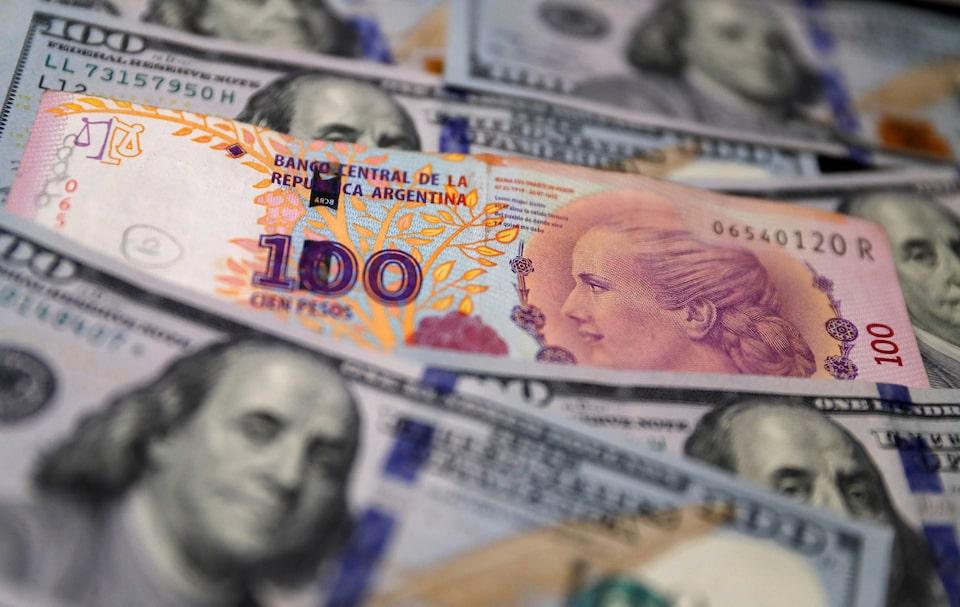
US Treasury directly buys pesos, Argentine markets rise IMF involved in Washington talks on $20 billion swap line Bessent insists Argentina aid is not a bailout, US won't lose money Boost for Trump ally Milei in midterm legislative elections Oct 9 (Reuters) - (This Oct. 9 story has been refiled to clarify the name of the talk show in paragraph 9) The U.S. Treasury finalized a $20 billion currency swap framework with Argentina and bought pesos in the open market on Thursday, making good on President Donald Trump's pledge to prop up the wobbling country and sending the peso and Argentine dollar bonds sharply higher. Sign up here. "The U.S. Treasury is prepared, immediately, to take whatever exceptional measures are warranted to provide stability to markets," U.S. Treasury Secretary Scott Bessent said in announcing the actions on X. Argentina's 2035 bond rose 4.5 cents to trade at 60.5 cents on the dollar, while the peso closed at 1,418 per dollar, up 0.8% on the day after falling 3% earlier. Local stocks (.MERV) , opens new tab rose 5.3% Thursday. Last month they touched a 2025 low, days before Bessent's initial support pledge. Argentine stocks traded in U.S. exchanges (.BKAR) , opens new tab rallied 13%. Bessent issued his statement at the end of four days of meetings with Argentine Finance Minister Luis Caputo that also involved officials from the International Monetary Fund, which has a $20 billion loan program with Argentina. IMF Managing Director Kristalina Georgieva applauded the U.S. move in a post on X, saying the IMF was "fully aligned in support of the country's strong economic program, anchored on fiscal discipline and a robust FX regime to facilitate reserve accumulation." A U.S. Treasury spokesperson declined to provide any further details, including on the amount of pesos purchased and how the $20 billion currency swap line would be structured. Bessent had previously pledged , opens new tab support for Argentina from the Treasury's $221 billion Exchange Stabilization Fund, and its majority holdings of IMF reserve assets known as Special Drawing Rights. Speaking later on "The Ingraham Angle" talk show on Fox News Channel, Bessent insisted that the action was not a bailout, saying that no money was transferred to Buenos Aires and the ESF "has never lost money, it's not going to lose money here." He added that the assistance provided strategic U.S. benefits, including pledges by Argentina's right-wing president, Javier Milei, of "getting China out of Argentina" and its openness to allow U.S. companies to develop its rare earths and uranium resources. Democratic lawmakers in the U.S. Senate complained that Trump was moving to provide financing to bail out a foreign government and global investors, even as the U.S. government has been shut down. BACKSTOP FOR MILEI The backstop is partly aimed at giving Milei's party a boost in Argentina's October 26 midterm legislative elections. His party wants to strengthen its minority position to solidify his agenda to cut government spending and boost private-sector investment. Argentine lawmakers are working to limit what the president can do via decrees, raising the stakes for Milei's party in the midterms. Although the effect on financial markets was immediate, there was no guarantee the U.S. backstop will improve Milei's party's election prospects as public dissent over his austerity measures has grown. UBS' Shamaila Khan, head of fixed income for emerging markets and Asia Pacific, said the announcement was likely to bolster prospects for Milei's party. Kathryn Exum, co-head of sovereign research at Gramercy, said the midterms remain the major event, as are a policy and FX adjustment after the vote. Bessent called the success of Milei's reforms of "systemic importance" to the U.S. by helping to anchor a prosperous Western Hemisphere. 'CLOSEST OF ALLIES' Milei, who is due to meet Trump next week during the IMF and World Bank annual meetings in Washington, thanked Bessent and Trump in a message on X. "Together, as the closest of allies, we will make a hemisphere of economic freedom and prosperity. We will work hard every day to provide opportunity for our people," Milei wrote. Investors greeted the intervention with a sigh of relief. Eduardo Ordonez Bueso, emerging markets debt portfolio manager at BankInvest, said markets had been hungry for details of Bessent's support pledge and had been challenging peso valuations. "If they hadn't come through with a promise they made...we would be talking about a complete collapse of Argentina," he said. Several U.S. Senate Democrats introduced legislation that would prohibit the use of the Exchange Stabilization Fund to bail out Argentina and global investors. The measure is largely symbolic, as Democrats remain the minority in both chambers of Congress. "It is inexplicable that President Trump is propping up a foreign government, while he shuts down our own," said Senator Elizabeth Warren, referring to the partial government shutdown due to lack of funding. https://www.reuters.com/world/americas/us-purchased-argentine-pesos-after-top-finance-officials-meeting-bessent-says-2025-10-09/