2025-10-09 11:56
Putin pledges compensation for 'tragic' plane incident Russian missiles detonated near Azerbaijan Airlines plane Aliyev criticized initial Moscow response, thanks Putin for investigation MOSCOW, Oct 9 (Reuters) - Russian President Vladimir Putin told Azerbaijan's leader that two Russian missiles had detonated beside an Azerbaijan Airlines plane last year after Ukrainian drones entered Russian air space, in an incident that led to the deaths of 38 people. In what was the Kremlin leader's most candid admission to date that Moscow was to blame for the deadly incident, he offered his apologies again to President Ilham Aliyev and promised compensation to those affected. Sign up here. Flight J2-8243, en route from Baku to the Chechen capital Grozny, crash-landed on December 25 near Aktau in Kazakhstan after diverting from southern Russia, where Ukrainian drones were reported to be attacking several targets. At least 38 people were killed. Video footage on Thursday showed Putin and Aliyev shaking hands and smiling before a bilateral meeting in Tajikistan at which Putin spoke about the plane crash. Putin last year issued a rare public apology to Aliyev for what the Kremlin called a "tragic incident" over Russia in which the plane crashed after Russian air defences were deployed against Ukrainian drones. On Thursday, he went further. "Of course, everything that is required in such tragic cases will be done by the Russian side on compensation and a legal assessment of all official things will be given," Putin told Aliyev. "It is our duty, I repeat once again... to give an objective assessment of everything that happened and to identify the true causes." DEBRIS FROM MISSILES Putin told Aliyev that two Russian air defence missiles had detonated several metres away from the plane after Ukrainian drones entered Russian airspace. "The two missiles that were launched did not hit the plane directly; if that had happened, it would have crashed on the spot, but they exploded, perhaps as a self-destruction measure, a few metres away, about 10 metres," Putin said. "And so the damage was caused, mainly not by the warheads, but most likely by the debris from the missiles themselves. That is why the pilot perceived it as a collision with a flock of birds, which he reported to Russian air traffic controllers, and all this is recorded in the so-called 'black boxes.'" The Embraer jet had flown from Azerbaijan's capital Baku to Grozny, in Russia's southern republic of Chechnya, where the incident occurred, and had then travelled, badly damaged, another 280 miles (450 km) across the Caspian Sea. Putin cautioned on Thursday that it would "probably take some more time" to fully investigate the crash's causes. A preliminary report published on a Kazakh government website in February found that the plane suffered external damage and was riddled with holes in its fuselage. Aliyev was angry about the crash and has publicly criticised the initial reactions from Moscow which he said sought to cover up the cause of the incident. On Thursday, he thanked Putin for personally monitoring the progress of the investigation into the deadly incident. "I would like to express my gratitude once again for the fact that you deemed it necessary to highlight this issue at our meeting," Aliyev told Putin. https://www.reuters.com/business/aerospace-defense/putin-tells-azerbaijans-aliyev-how-russian-air-defences-downed-passenger-plane-2025-10-09/

2025-10-09 11:56
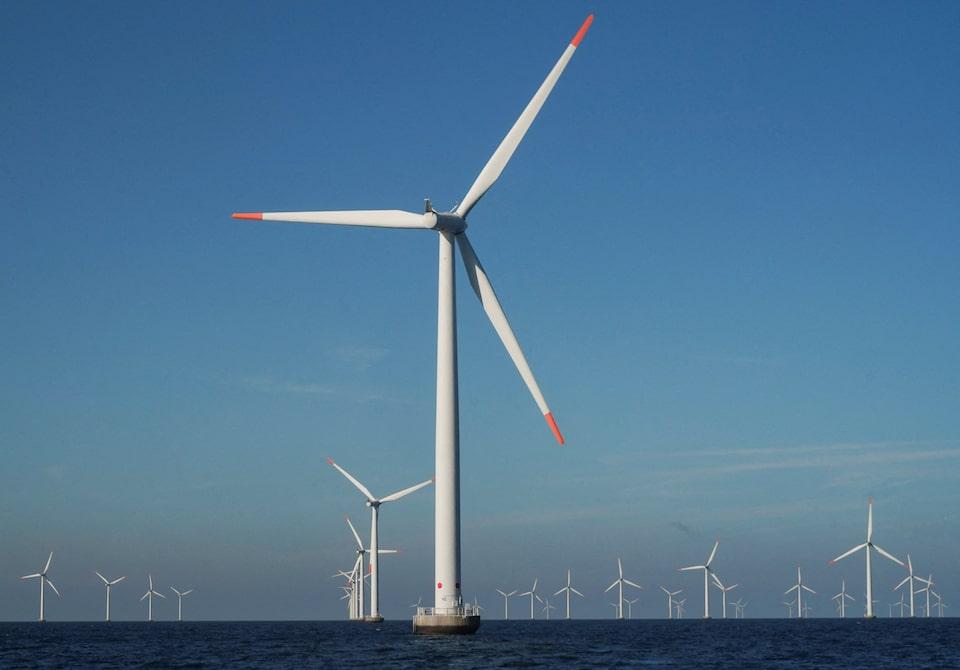
Orsted plans to cut 2,000 jobs by 2027 Danish company to focus more on offshore wind and Europe COPENHAGEN, Oct 9 (Reuters) - Orsted (ORSTED.CO) , opens new tab, the world's biggest offshore wind farm developer, will cut about 2,000 jobs by the end of 2027, a quarter of its workforce, and will focus more on Europe after setbacks in the U.S. Orsted expanded rapidly over the past decade, but more recently has faced higher costs from supply chain disruption and inflation, plus the impact of U.S. President Donald Trump's actions against offshore wind projects. Sign up here. "This is a necessary consequence of our decision to focus our business and the fact that we’ll be finalising our large construction portfolio in the coming years – which is why we’ll need fewer employees," CEO Rasmus Errboe said in a statement on Thursday. When asked if the job cuts were due to the problems in the U.S., Errboe told journalists the decision was not related to specific U.S. projects. Orsted raised $9.42 billion this week through a heavily discounted rights issue to shore up its balance sheet, following the challenges in the U.S. where Trump's opposition to renewable energy has created uncertainty for the industry. Orsted said the job cuts would coincide with a decline in construction activities and would help make the group more competitive as it concentrates more of its activities on Europe. Errboe said towards the end of the decade, the industry could see a period with little or no new offshore wind projects, but he remained positive on its long-term future. "In many ways, you see the fundamentals in Europe moving in the right direction when it comes to offshore wind," Errboe said. He said political support for offshore wind is driven by energy security and the need for electrification, with suppliers and contractors to the industry turning their focus to Europe, while oil and gas companies step back from renewable energy. The staff cuts and other efficiency measures are expected to give Orsted annual cost savings of approximately 2 billion Danish crowns ($311.31 million) from 2028, the company added. Orsted's share price rose 0.9% by 1142 GMT. ($1 = 6.4245 Danish crowns) https://www.reuters.com/sustainability/climate-energy/orsted-cut-2000-jobs-by-end-2027-2025-10-09/
2025-10-09 11:49
G20 to miss target for global payments system improvements Cost of making international payments remains stubbornly high FSB says not clear whether stablecoins will benefit efforts LONDON, Oct 9 (Reuters) - Global financial authorities are set to miss a 2027 target set by the G20 group of nations to make international cross-border payments faster, cheaper and more transparent, the G20's Financial Stability Board said on Thursday. Goals set in 2021 included cutting the global average cost of a retail payment to no more than 1% and for 75% of wholesale and retail payments to be credited within an hour of being made. Sign up here. While most of the initial "Roadmap" work has now been completed, an FSB progress report published ahead of G20 meetings later this month said it had not yet translated into tangible improvements for end-users at the global level. "It's becoming clear that the (G20) targets are not going to be hit by 2027," FSB Deputy Secretary General Martin Moloney told Reuters, saying the huge number of countries involved and challenges of overhauling infrastructure had caused problems. The report said key performance indicators (KPIs) showed only a slight improvement at a global level since they were first calculated in 2023. While the speed of both wholesale international payments and remittance payments - where individuals send money back to their home countries - had improved, the costs remained high and there had been insufficient progress in terms of payment transparency. With the 2027 target now unrealistic, Moloney said G20 decision makers would have to choose whether to extend it or come up with a fresh one altogether. "That needs to be a rich and focused debate at G20 level," Moloney said. "If we fall short of those KPIs we will still have an unsatisfactory situation," he said, in terms of the global payments system. STUBBORNLY HIGH COSTS One of the needs is for countries' payments plumbing to operate all day every day and to use standardised language so that moving money between countries and weeding out fraud and sanctions infringements is easier. Costs of cross-border payments remain stubbornly expensive, the FSB's report showed, with person-to-person payments in sub-Saharan Africa the highest globally and now more costly than they were, at 4% compared to 3.2% in 2023 and the less than 1% the G20 is targeting. Some countries are also now seeing cryptocurrencies like bitcoin and so-called stablecoins being used for payments or transferring money. Moloney said that it is an open question at this point what contribution stablecoins will make to the global payments system. "The real issue is in the first and last leg," he said, referring to difficulties in finding the right method to make a payment and a recipient getting their payment at the other end. "I haven't seen anything persuasive (with regards to stablecoins) to suggest they would solve those issues." https://www.reuters.com/business/retail-consumer/g20s-cross-border-payments-push-set-miss-2027-target-2025-10-09/

2025-10-09 11:45
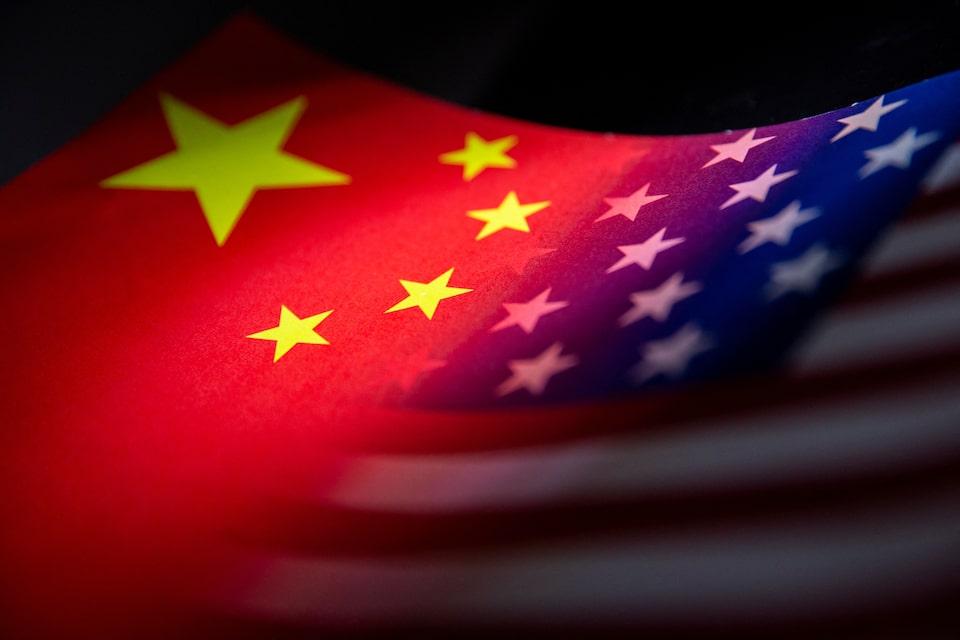
BEIJING, Oct 9 (Reuters) - China on Thursday announced export curbs on some types of artificial diamonds set to take effect just before the U.S.-China tariff truce is scheduled to end, further tightening Beijing's grip over high-tech manufacturing supply chains. Certain artificial diamond micropowders, single crystals, wire saws and grinding wheels will require an export licence from November 8, China's commerce ministry and customs authority said in a statement. Sign up here. Diamond, one of the hardest known materials, is crucial to high-precision manufacturing, and is commonly used for ultra-fine polishing of semiconductors, machining hard metals and ceramics in quantum devices, and dissipating heat in advanced electronic systems. Artificial diamonds also have dual-use military applications, and are used to tool munitions and in the production of radar components. In a separate statement, the two authorities also announced export controls on certain lithium-ion batteries, key manufacturing equipment, and artificial graphite anode materials, measures that could further strengthen Beijing's hold over the global clean energy supply chain. The world's second-largest economy on Thursday also added five new rare earth elements to its export control list, as it looks to strengthen its negotiating position amid trade tensions with the United States. Citing a need to protect its "national security," the raft of export control curbs come ahead of an expected meeting later this month between U.S. President Donald Trump and his Chinese counterpart Xi Jinping. The two superpowers appear to be struggling , opens new tab to chart a path just before the end of their current tariff truce, a 90-day pause from August 11 that ends around November 9. U.S. and Chinese officials met after last month's Madrid summit, widely viewed as a breakthrough for its TikTok deal, to discuss technical issues that predated the meeting. China exported $30 million worth of the types of artificial diamonds and related equipment targeted by the new export controls to the U.S. in 2024, according to Chinese customs data. The U.S. was the third-largest buyer of diamond powders, behind India and South Korea, and the third-largest buyer of grinding wheels, behind Vietnam and India. https://www.reuters.com/sustainability/boards-policy-regulation/china-announces-artificial-diamond-export-curbs-set-take-effect-day-before-us-2025-10-09/
2025-10-09 11:43
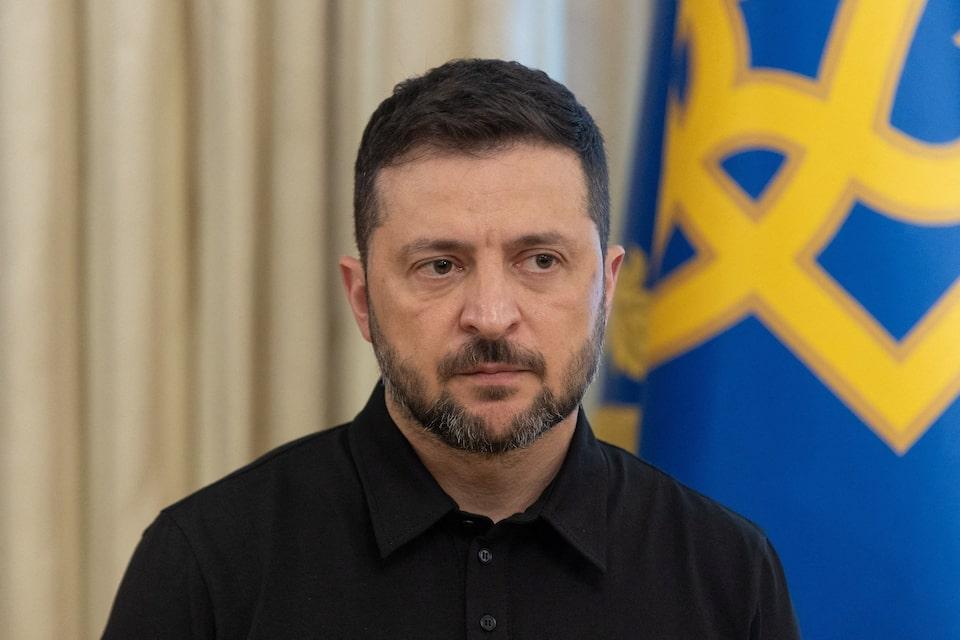
Ukraine has targeted Russia's refining capacity Zelensiky says estimates range from 13%-20% loss of supply Russia says it has adequate fuel, officials due to discuss KYIV, Oct 9 (Reuters) - Ukrainian long-range strikes on Russian energy facilities may have reduced gasoline supplies in Russia by up to a fifth, President Volodymyr Zelenskiy said, as both sides step up attacks on each other's energy infrastructure. With diplomatic efforts to end the war largely stalled and little movement along the fiercely contested front line, Russian forces have focused on crippling Ukrainian gas production while Ukraine has been targeting Russia's oil refining capacity. Sign up here. Reuters calculations in August showed that Ukrainian attacks had reduced Russian oil refining by almost a fifth on certain days. Zelenskiy's comments implied that level of shortage was now ongoing. "This still needs to be verified, but we believe that they've lost up to 20% of their gasoline supply – directly as a result of our strikes," Zelenskiy said in remarks to journalists released on Thursday. He said there were various estimates as to the impact, and they ranged from 13% to 20%. One of the latest attacks hit the Kirishi oil refinery, one of Russia's largest, halting a big crude processing unit, two industry sources said this week. The Kremlin has said that Russia's domestic fuel market is fully supplied. Zelenskiy said the estimates were based on data, without specifying. Russia's government was due to hold a meeting on domestic fuel supplies on Thursday. Zelenskiy said Ukrainian forces had used domestically produced Neptune and Flamingo missiles in recent attacks, part of Ukraine's effort to scale up its homegrown arms industry. Zelenskiy also said Russian forces had carried out 1,550 strikes on energy-related targets in Ukraine's Chernihiv, Sumy and Poltava regions over the past month, but had achieved only 160 hits. US, RUSSIA HAVE 'NO SHARED PERSPECTIVE' Russian forces have sought to grind forward on the battlefield since summer in a campaign Zelenskiy said Ukrainian forces had broken. Kremlin troops will try "urgently" to take the strategic eastern city of Pokrovsk, he said, adding that Moscow had failed to convince U.S. President Donald Trump that it is able to capture all of the eastern Donbas region. Trump, who had been seeking a quick peace in the war, has in recent weeks signalled frustration with Russian President Vladimir Putin and stronger support for Kyiv's war effort against Moscow. "We believe that, as of today, the U.S. and Russia have no shared perspective on the war," Zelenskiy said. "And the U.S. understands that Russia is lying." Zelenskiy said his chief of staff and Ukraine's prime minister would visit Washington early next week to discuss air defence, energy and sanctions on Russia. The U.S. will provide Ukraine with intelligence on long-range energy infrastructure targets inside Russia, the Wall Street Journal and Reuters reported last week. The Kremlin said last week that Washington and NATO are already supplying intelligence to Ukraine to hit energy targets. https://www.reuters.com/business/energy/zelenskiy-says-russia-gasoline-supplies-may-be-down-by-fifth-after-ukrainian-2025-10-09/
2025-10-09 11:40
MOSCOW, Oct 9 (Reuters) - Taiwan and India were the main destinations for Russian seaborne naphtha exports in August, as cheaper barrels attracted buyers, data from market sources and LSEG showed. Since the European Union's full embargo on Russian oil products went into effect in February 2023, countries in the Middle East and Asia have become the main destinations for Russia's naphtha supplies. Sign up here. Naphtha is a primary feedstock in the petrochemical industry for producing olefins and aromatics, which are then used to manufacture a wide array of products, including plastics, synthetic resins, synthetic fibers, and various other chemicals. Naphtha export loadings from Russian ports to Taiwan more than doubled in August month-on-month to around 370,000 metric tons and totalled 1.8 million tons in the first eight months of 2025, according to LSEG data. Meanwhile, Taiwan's economy minister said on Wednesday that privately run refiners are willing to stop buying Russian naphtha should the EU ask them to, after a group of non-governmental organisations criticised the island's continued business with the country. While Taiwan's state-owned firms stopped importing Russian oil in 2023, there is no such restriction on private companies so far. Naphtha exports from Russian ports to India in August totalled 151,000 metric tons, down 28% from July after previous ample supplies, and exceeded 1.7 million tons in January-August 2025. Russian naphtha arrived at the western Indian ports of Mundra, Hazira and Sikka, shipping data showed. China, Singapore, Malaysia and Turkey were among the other top destinations for Russian naphtha export supplies in August. All the shipping data above are based on the date of cargo departure. https://www.reuters.com/business/energy/taiwan-india-were-top-destinations-russian-naphtha-august-lseg-data-shows-2025-10-09/