2025-10-09 11:37
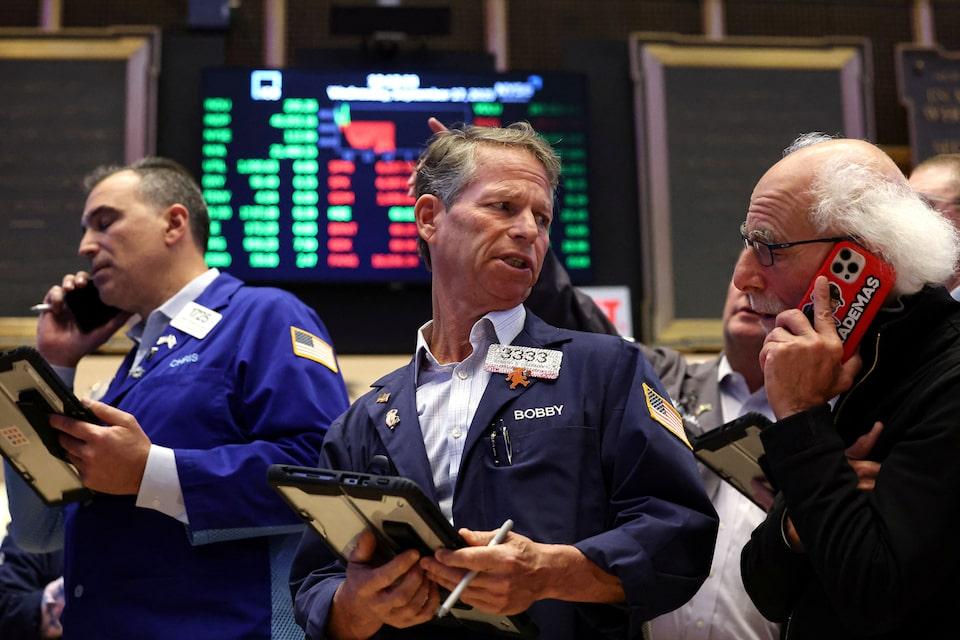
Cutting costs, firms aim to trim work days, not jobs Railway, construction, auto and mining sectors affected Move highlights pressure on Russia's war economy Non-military sectors shrank 5.4% since January MOSCOW, Oct 9 (Reuters) - From railways and automobiles to metals, coal, diamonds and cement, some of Russia's biggest industrial companies are putting employees on furlough or cutting staff as the war economy slows, domestic demand stalls and exports dry up. The efforts to reduce labour costs show the strain on Russia's economy as President Vladimir Putin and the U.S.-led NATO military alliance square off in Ukraine, Europe's deadliest conflict since World War Two. Sign up here. Reuters identified six companies in Russia's mining and transport sectors, many of them industrial titans, that have cut their working week in an attempt to reduce wage bills without raising unemployment, according to industry sources. Cemros, Russia's biggest cement maker, has moved to a 4-day week until the end of the year to preserve staff amid a sharp downturn in the construction industry and a rise in cement imports. "This is a necessary anti-crisis measure," said Cemros spokesman Sergei Koshkin. "The goal is to keep all our staff." The company has 13,000 employees and 18 plants across Russia. Koshkin said increased imports from countries including China, Iran and Belarus, combined with a drop in new houses being built, had curbed demand for cement. Cemros expects Russia to consume less than 60 million tonnes of cement this year, a figure last seen during the COVID pandemic. The push to reduce wage bills shows the toll that conflict in Ukraine and Western sanctions are taking on corporate Russia and on the workers of its heavy industry plants, many of which were founded during Josef Stalin's industrialisation of Soviet Russia in the 1930s. Russia's ministries of Labour and Industry did not respond to requests for comment on Reuters findings. The news agency reported in January that Putin had grown increasingly concerned about distortions in Russia's economy, including the impact of high interest rates on its non-military sectors. Russia's Center for Macroeconomic Analysis and Short-term Forecasting - an influential research non-profit - said sectors of the economy not connected with the military had contracted by 5.4% since the start of the year. The Center forecasts a major slowdown in GDP growth to 0.7%-1.0% this year. During Putin's first two terms as president from 2000 to 2008, Russia's economy soared to $1.7 trillion from less than $200 billion in 1999. But Russia's nominal GDP is now $2.2 trillion, about the same level it was in 2013, the year before Russia annexed Crimea. In 2022, the year Putin ordered troops into Ukraine, the economy contracted 1.4%, but then outperformed the average of the G7 group of leading industrial nations by growing 4.1% in 2023 and 4.3% in 2024. Growth this year is forecast by the economy ministry to fall to just 1.0%. Amid a tight labour market, unemployment has fallen to a record low of 2.1% of the workforce, according to state statistics. Putin has publicly rejected warnings from senior bankers that Russia's economy is stagnating. He says the government is slowing the economy to keep control of inflation - forecast at 6.8% this year. CHINESE IMPORTS, HIGH RATES, SANCTIONS Companies are struggling with a growing list of problems ranging from high interest rates and the strong rouble, falling domestic demand, weak export markets due to sanctions, and cheap Chinese imports, according to economists. Russian Railways, which has 700,000 employees, has asked staff in its central office to take three additional days off per month at their own cost, in addition to normal holidays and non-working days, two sources told Reuters. Long seen as a mirror of the Russian economy - particularly its commodity exports - the company's revenues are declining as shipments of coal, metals and oil drop, economists said. Russian Railways declined to comment. The Gorky Automobile Plant (GAZ), a leading manufacturer of vans that employs at least 20,000 people, moved to a 4-day week in August, as did truckmaker Kamaz, with around 30,000 employees. The trade union at Avtovaz, Russia's biggest carmaker with some 40,000 employees, confirmed to Reuters that it started a 4-day-week from September 29. The company, which said in July it was considering the move, declined to comment. A GAZ spokeswoman said the company resumed a 5-day week from October. Kamaz said its situation had not changed and declined additional comment. Alrosa, the world's largest producer of rough diamonds, has cut its payroll for all staff levels not directly involved in mining by 10%, partly by shortening the working week. It also paused operations at less profitable deposits in spring and summer. Alrosa told Reuters it had sought to minimize layoffs, but did not specify how many employees had been let go. Across plants in the metals, mining, timber and coal industry there have been cuts to the working week, staffing or production, according to industry sources and company statements. Sveza, one of Russia's leading timber and paper companies, shuttered a plywood mill in Tyumen, a Siberian city 1,700 km (1,056 miles) east of Moscow, last month due to a sharp decline in furniture demand, the region's prosecutor said. More than 300 people lost their jobs. Sveza didn't respond to a request for comment. Signs of stress are appearing in Russian state statistics. Overdue salary arrears in Russia at the end of August amounted to 1.64 billion rubles, an increase of 1.15 billion rubles, or 3.3 times, compared to the same period last year. The geography of Russian heavy industry - often the dominant employer in cities and towns across European Russia and the Urals - means that wage cuts can have a significant impact on regional prosperity. GOVERNMENT FORCED TO PROVIDE SUPPORT In previous downturns, Russia has bailed out major employers to stem discontent in many of the industrial towns and cities that often rely on one major enterprise. Russian Railways and the country's car manufacturers received state support during the 2008-2009 global crisis to avoid mass lay offs. In 2022, Russia told car factories to furlough, not fire, staff. The current economic strains have already forced the government to intervene across the economy, from shoe manufacturers to coal and metals, offering discounts on rail transport, deferral of taxes and targeted state support. The coal sector, which employs about 150,000 people, has been badly hit as exports decline, according to Russian officials. Deputy Prime Minister Alexander Novak told Putin in April the sector's financial health was deteriorating, with 30 enterprises - employing roughly 15,000 people and producing around 30 million metric tons annually - at risk of bankruptcy. In Siberia's Kuznetsk Basin, or Kuzbass, which holds some of the world's biggest coal deposits, local officials said in September that 18 out of 151 enterprises had been shuttered. Alexander Kotov, a partner at Russian consulting agency NEFT Research, told Reuters that 19,000 coal workers were laid off in the first half of 2025. "If we don't start saving the coal industry urgently, it could be hit by a wave of crisis," Kotov said. Mechel (MTLR.MM) , opens new tab, one of Russia's biggest coal miners, reported worsening losses in August and said it had suspended output at one of its mines and cut operations that did not make a profit. One source with knowledge of the industry told Reuters on condition of anonymity that Mechel cut staff this summer. Mechel declined to comment. Vladimir, a coal miner in Kuzbass, told Reuters his salary had been reduced. "I'm now in a higher position, but I'm earning less than I did before in a lower one," said the miner, who declined to give his second name. He said there was enough to live on and some workers had found work in other regions, but the coal sector was struggling. "Wages have been cut everywhere, absolutely everywhere in Kuzbass," he said. "They say it's the crisis: coal isn't in demand." STEEL INDUSTRY UNDER STRAIN In Russia's vast steel industry, too, there are signs of trouble. Russia is considering a moratorium on bankruptcies in the metals industry and a host of other measures, according to a protocol from the government's Financial Stability Commission meeting on August 28. Russia is the world's fifth-largest steel producer, with an output of about 71 million tons in 2024. "There is a quiet cutback going on in the metals industry," said one source close to the industry, blaming high interest rates, a strong rouble and weak demand at home and abroad. While the industry was not moving to a four-day week yet, the source said, almost all metal processing plants were cutting auxiliary staff. A second source said the industry had too many employees for the current environment but it wanted to avoid mass lay offs. "They would prefer to introduce a 4-day week but so far none of the big players have," said the second industry source. https://www.reuters.com/world/europe/russias-industrial-titans-furlough-workers-its-war-economy-stalls-2025-10-09/
2025-10-09 11:30
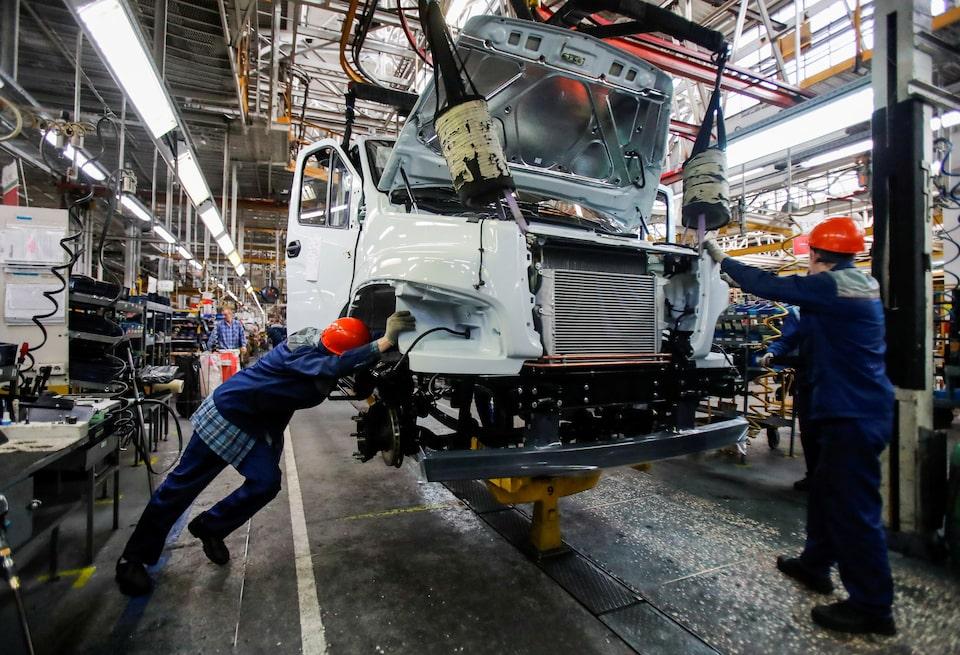
Indexes down: Dow 0.52%, S&P 500 0.28%, Nasdaq 0.08% Delta Air Lines shares rise on Q4 profit forecast Albemarle advances on PT hike, China's rare earth export controls Costco gains after September sales data NEW YORK, Oct 9 (Reuters) - U.S. stocks ended in negative territory on Thursday as investors, left with no economic data or any sentiment-swaying catalysts, took the opportunity to consolidate ahead of third-quarter earnings season. The S&P 500 and the Nasdaq inched back from Wednesday's record closing highs, while the blue-chip Dow closed with the deepest percentage decline. Sign up here. "The earnings cycle is upon us and there's a wait-and-see in terms of whether we’ll see the same level of consistency of earnings growth in the coming quarter that we've seen in the last two quarters," said Matthew Keator, managing partner in the Keator Group, a wealth management firm in Lenox, Massachusetts. "Couple that with the uncertainty surrounding the lack of data coming out of Washington and how the Fed navigates that, it's natural to see a bit of a pullback." The stock market's pause comes amid a steep rally that has been largely driven by the rise of artificial intelligence technology. The runup has prompted concerns that a bubble is forming, which could be a harbinger of an impending correction. Sunday will mark the current bull market's third anniversary; the benchmark S&P 500 touched the nadir of its current market cycle on October 12, 2022 on the heels of monetary tightening from the Fed. Over that time period, while tech and tech-adjacent megastocks have driven the index nearly 90% higher, history suggests the current bull market has more gas in its tank. The U.S. government shutdown entered its ninth day, with few signs of progress. Consequently, market participants continue to be deprived of essential economic data. And with the start of third-quarter earnings season just days away, the scarcity of market-moving catalysts is focusing investors' attention on remarks from monetary policymakers for clues regarding the central bank's rate cut intentions through the end of the year. New York Federal Reserve President John Williams favors more interest rate reductions before year-end due to risks facing the weakening labor market, he said in an interview with the New York Times published on Thursday. Financial markets are currently pricing in a 94.6% likelihood that the Fed will implement a 25 basis-point interest rate cut at the conclusion of its October 28-29 meeting, according to CME's FedWatch tool. The Dow Jones Industrial Average (.DJI) , opens new tab fell 243.36 points, or 0.52%, to 46,358.42, the S&P 500 (.SPX) , opens new tab lost 18.61 points, or 0.28%, to 6,735.11 and the Nasdaq Composite (.IXIC) , opens new tab lost 18.75 points, or 0.08%, to 23,024.63. Among the 11 major sectors of the S&P 500, materials (.SPLRCM) , opens new tab suffered the biggest drop, while consumer staples (.SPRLCS) , opens new tab were the sole gainers. Housing (.HGX) , opens new tab and homebuilding (.SPCOMHOME) , opens new tab were among the clear underperformers, both off more than 2% amid margin and demand worries. On Tuesday of next week, JPMorgan Chase (JPM.N) , opens new tab, Goldman Sachs (GS.N) , opens new tab, Citigroup (C.N) , opens new tab and Wells Fargo (WFC.N) , opens new tab are slated to report quarterly results, marking the unofficial launch of third-quarter earnings season. Analysts currently predict year-on-year S&P 500 earnings growth of 8.8% in the July-September period, weaker than the second quarter's 13.8% and the year-ago quarter's 9.1% annual growth, according to the most recent data from LSEG. Delta Air Lines (DAL.N) , opens new tab provided an upbeat forecast for the current quarter, after posting stronger-than-expected third-quarter earnings. The airline's shares jumped 4.3%. Other U.S. carriers also gained, boosting the S&P 1500 Airlines index by 1.9%. U.S. retailer Costco Wholesale (COST.O) , opens new tab rose 3.1%, after reporting September sales data. Shares of Albemarle (ALB.N) , opens new tab increased 5.3% after brokerage TD Cowen raised its price target on the lithium producer and as China tightened export controls on rare earths. Declining issues outnumbered advancers by a 2.91-to-1 ratio on the NYSE. There were 354 new highs and 91 new lows on the NYSE. On the Nasdaq, 1,694 stocks rose and 2,966 fell as declining issues outnumbered advancers by a 1.75-to-1 ratio. The S&P 500 posted 20 new 52-week highs and 11 new lows while the Nasdaq Composite recorded 133 new highs and 66 new lows. Volume on U.S. exchanges was 20.44 billion shares, compared with the 19.75 billion average for the full session over the last 20 trading days. https://www.reuters.com/business/wall-st-futures-muted-investors-await-powells-take-inflation-jobs-2025-10-09/
2025-10-09 11:23
Oct 9 (Reuters) - Saatvik Green Energy (SAAT.NS) , opens new tab, one of India's biggest solar module makers by capacity, said on Thursday it is shunning the once-promising U.S. export market as it is no longer "worth the risk" due to the thorny tariff issue. The United States is India's top overseas market, accounting for 90% of module exports, according to industry officials and analysts. Sign up here. "We want to be risk-free and focus on the domestic market," said CEO Prashant Mathur in a press conference. The company said on its initial public offering draft filing that it gets a portion of its revenue from exports to the U.S., but has not revealed how much. Saatvik Green Energy has joined major industry players in India in expanding their renewable energy capacity recently, both with an eye on exports and as the South Asian country targets 500 gigawatts of non-fossil fuel capacity by 2030. However, U.S. tariffs of up to 50% on solar panel shipments from India and potential anti-dumping duties will pile on to the existing surplus in India next year as domestic project bidding slows, industry officials and analysts say. Saatvik, which currently has a solar cell manufacturing capacity of 3.8 GW, plans to reach 4.8 GW by April 2027. Separately, it also plans to add 4 GW of solar module capacity by April 2026. Mathur said the company is seeing extensive domestic demand as many projects that were delayed due to land, transmission and tariff issues are being built now. We expect this demand to continue for the next few years, he added. https://www.reuters.com/sustainability/climate-energy/us-market-not-worth-risk-says-one-indias-biggest-solar-companies-2025-10-09/

2025-10-09 11:17
TOKYO, Oct 9 (Reuters) - The Bank of Japan should be cautious about raising interest rates again as the economy is still fragile, said Etsuro Honda, a close economic adviser to Sanae Takaichi, who is likely to become the country's next prime minister. "Japan is at a delicate stage right now, where the long-standing deflationary mindset is gradually giving way to a more positive inflationary outlook," Etsuro Honda, who advises Takaichi on economic policy, told Reuters in an interview on Thursday. Sign up here. Pointing to a recent surge in Japanese stock markets that has been partly driven by optimism that Takaichi will promote economic stimulus policies, Honda said her election as the new leader of the ruling party has created positive momentum. "I genuinely hope they (the BOJ) don't raise rates now," he said. But he emphasised that monetary policy decisions rest with the central bank. "There's a growing sense that the timing may be approaching when another rate hike could be tolerated," he said. "Whether that's in December or January is still unclear. At the very least, Takaichi appears to be taking a cautious stance." Honda, a former special adviser to the cabinet, was an architect of the "Abenomics" stimulus policies that former Prime Minister Shinzo Abe deployed in 2013 - a mix of bold monetary easing, flexible fiscal policy and reform which helped the economy escape more than a decade of deflation but ran up the government's massive debt. The ruling party's pick of Takaichi, a long-time advocate of Abenomics, as its head last week puts her on course to become Japan's prime minister, which has driven stocks higher and pushed down the yen as investors balance the prospects of more stimulus with higher government debt and pressure on the BOJ to hold off on more rate rises. Totan Research/ICAP expectations for an end-October BOJ hike have fallen to 27%. Expectations for a hike in December are 44%. While slower monetary tightening could further weaken the yen, which could in turn accelerate inflation and weigh on consumption, Honda said a moderate decline in the yen is good for the economy when it is in a recovery phase. "As inflation expectations remain moderate, a sharp depreciation beyond 155 yen to the dollar is unlikely," he said. The Japanese currency touched 153 per dollar on Thursday, levels last seen in February. It has fallen more than 3.8% for the week. https://www.reuters.com/world/asia-pacific/takaichi-adviser-calls-caution-over-boj-interest-rate-hikes-2025-10-09/
2025-10-09 11:09
Oct 9 (Reuters) - Sterling clawed back some losses on Thursday after Bank of England policymaker Catherine Mann suggested rates could stay higher for longer, though the pound remained largely at the mercy of dollar crosses. BoE's Mann said on Thursday that inflation expectations in Britain remain too high. Sign up here. Traders are fully pricing in a 25 basis point BoE rate cut by April as concerns over the British economy and next month's budget keep investors on edge. Sterling was down 0.20% at $1.3374, after hitting $1.3344, its lowest since September 26. It also lost ground against the euro and the yen as investors took a breather after a four-day rising streak. The U.S. dollar extended this week's gains (.DXY) , opens new tab, helped by a euro weakened by the political crisis in Paris and a struggling yen amid a change of guard in Japan's ruling party. Sterling eased 0.05% to 86.82 pence per euro . The pound hit 86.57 pence on Wednesday, the strongest since September 16. It also fell 0.35% to 204.20 versus the yen on Thursday, having touched a 15-month high of 205.08 the day before. Investors fretted that potential tax hikes in next month’s budget, aimed at meeting fiscal rules, could weigh on the economy and currency. Britain's housing market lost momentum for a third month in a row and confidence among businesses has fallen sharply, according to two surveys published on Thursday that reflected worries about finance minister Rachel Reeves' November budget. “Whether this is the start of a marked downturn in the housing market will depend on the outcome of the budget,” said Ashley Webb, UK economist at Capital Economics. “The prospect of tax rises...has put the housing market on ice.” https://www.reuters.com/world/uk/sterling-pares-losses-after-comments-boes-mann-2025-10-09/

2025-10-09 10:47
LONDON, 9 Oct (Reuters) - What matters in U.S. and global markets today By Mike Dolan , opens new tab, Editor-At-Large, Finance and Markets Sign up here. World stocks and gold paused their latest steep rally on Thursday as a series of warnings about excessive stock valuations and overly loose policy settings reverberated through global markets. International Monetary Fund boss Kristalina Georgieva , opens new tab warned about risk to the world economy from potentially large corrections in lofty stock markets, while she also noted that fiscal policies were too lax worldwide, adding "don't get too comfortable." The caution followed the Bank of England's red flag , opens new tab earlier on Wednesday about the risk of a sharp reversal if investor moods soured on doubts about AI or Fed independence. And JPMorgan chief Jamie Dimon on Thursday added his voice to warnings of a risk of significant pullback in the U.S. stock market over the next year or two. "I am far more worried about that than others," he told the BBC. Despite the trepidation, soundings on the AI frenzy ahead of this month's corporate earnings season remained upbeat and the world's largest contract chipmaker TSMC reported another forecast-beating, AI-driven jump in annual revenue of 30%. China's markets also returned in buoyant form from the Golden Week break and played catch-up to the global stock gains in their absence. Chinese chipmakers surged on more pressure in Washington for broader bans on exports of chip equipment to China and rare earth indexes jumped as Beijing tightened export controls of the strategic minerals. Europe held on to Wednesday's recovery in French markets as President Emmanuel Macron batted away speculation of another snap election and said he would appoint a new prime minister within 48 hours to end the latest political hiatus. Back on Wall Street, there was some cooling of the week's main moves today after fresh closing highs for the main stock indexes on Wednesday. Gold stalled at new records after surging past $4,000 earlier in the week. With official data still thin on the ground amid the U.S. government shutdown, investors took their cue from Fed minutes that nodded to further easing even as inflation worries linger. Stock futures were flat and U.S. Treasury yields nudged up a bit, however, after a mixed 10-year note auction late Wednesday and ahead of the long-bond sale later today. The dollar held much of the week's gains, with the yen sliding through 153 for the first time since February as Japan's next likely new prime minister Sanae Takaichi pledged to reassert government sway over the Bank of Japan. In today's column, I look at how estimates of a record $600 trillion global wealth pile can only hold if a genuine productivity boom materializes. Today's Market Minute * Oil prices dipped on Thursday as geopolitical tensions eased on news that Israel and Hamas had agreed to the first phase of a ceasefire plan to end the two-year conflict. * French President Emmanuel Macron will appoint a new prime minister in the next 48 hours, his office said on Wednesday, adding that a majority of lawmakers were against holding a snap parliamentary election amid France's worst crisis in decades. * A pledge by Japan's next likely prime minister to reassert government sway over the central bank has fanned worries about political interference in monetary policy, however, a weak yen and politics could limit any such push. * The amount of U.S. Treasuries held at the New York Fed on behalf of global central banks has slumped to its lowest in over a decade, writes ROI markets columnist Jamie McGeever, casting renewed doubt on foreign appetite for U.S. sovereign debt and other dollar-denominated assets. * China's longstanding dominance of clean energy manufacturing is translating into a behemoth export business, with close to $1 trillion of related goods shipped globally since 2018. Read ROI global energy transition columnist Gavin Maguire's latest piece. Chart of the day U.S. President Donald Trump's net public approval ratings, the difference between approval and disapprovals, have been falling since the inuguration and the overall rating is a negative -18% - the latest Reuters/IPSOS opinion polls show. Despite the GDP and stock market recoveries since the Spring, the economy remains a drag on his popularity and Trump's performance in that category gets a negative -21% - roughly where it was at midyear. Today's events to watch * Federal Reserve chair Jerome Powell, Fed board member Michelle Bowman, St. Louis Fed President Alberto Musalem, Minneapolis Fed chief Neel Kashkari and Fed Board Governor Michael Barr all speak; European Central Bank chief economist Philip Lane speaks * Euro group meeting in Luxembourg, with ECB President Christine Lagarde and ECB board member Piero Cipollone * U.S. Treasury sells $22 billion of 30-year bonds Want to receive the Morning Bid in your inbox every weekday morning? Sign up for the newsletter here. You can find ROI on the Reuters website , opens new tab, and you can follow us on LinkedIn , opens new tab and X. , opens new tab Opinions expressed are those of the author. They do not reflect the views of Reuters News, which, under the Trust Principles , opens new tab, is committed to integrity, independence, and freedom from bias. https://www.reuters.com/business/finance/global-markets-view-usa-2025-10-09/