2025-10-09 10:43
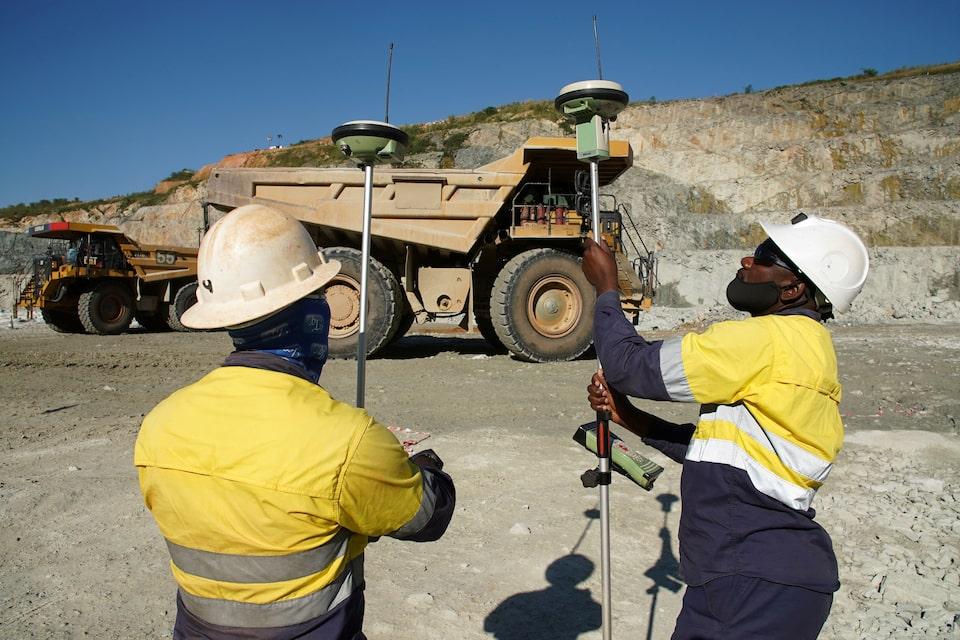
This is a breaking news story. Full coverage will be available soon. Democratic republic of the congo's central bank to start building gold reserves as gold price soars -governor Sign up here. Congo's gold reserves move will help shore up local currency, central bank governor says https://www.reuters.com/world/africa/democratic-republic-congos-central-bank-start-building-gold-reserves-gold-price-2025-10-09/
2025-10-09 10:20
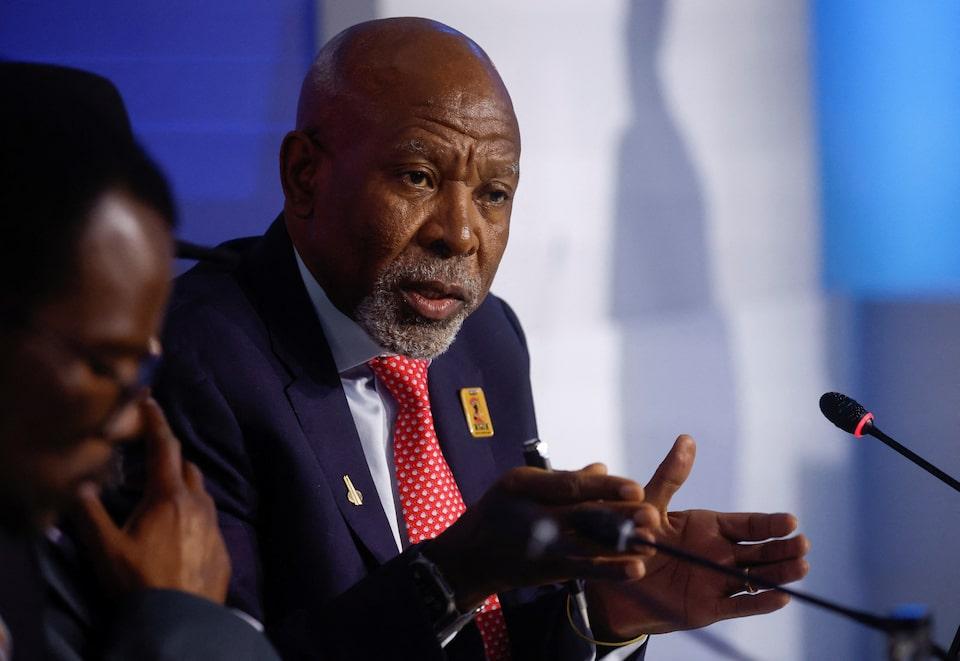
JOHANNESBURG, Oct 9 (Reuters) - South African Reserve Bank (SARB) Governor Lesetja Kganyago said on Thursday that the central bank and National Treasury agreed that the country's inflation target should be lowered but they were still discussing when to make the change. Kganyago surprised financial markets in July by saying the SARB would effectively target 3% inflation, rather than the formal 3-6% range set by Finance Minister Enoch Godongwana. Sign up here. Godongwana rebuked Kganyago for his "unilateral announcement", though the two officials later issued a joint statement saying they were on the same page. Addressing lawmakers on Thursday, Kganyago said: "There isn't a disagreement about the lowering of the target; it's a question of timing." He acknowledged the SARB's communication over the target was not what it was supposed and said he and Godongwana had met and told their teams to "go tie down these loose ends". "That's why you will find our (joint) statement does not say by this date, as soon as it's practically possible. And the poor chaps are working very hard to make sure that all those loose ends are tied," Kganyago said. Kganyago has advocated a lower inflation target for years, saying the current band makes Africa's biggest economy uncompetitive. But he has argued particularly forcefully in 2025, saying that this year's well-contained price pressures (ZACPIY=ECI) , opens new tab present the ideal opportunity to "lock in" low inflation. Kganyago said on Thursday that lower inflation and the SARB's preference for a lower target had boosted the rand and brought down government borrowing costs on benchmark bonds by between 80 and 160 basis points since April. "When the cost of borrowing for the government comes down, the cost of borrowing for everybody else also comes down," he said. https://www.reuters.com/world/africa/south-african-policymakers-agree-lowering-inflation-target-timing-still-an-issue-2025-10-09/
2025-10-09 09:19
LONDON, Oct 9 (Reuters) - Bank of England interest rate-setter Catherine Mann said on Thursday that inflation expectations in Britain remain too high and interest rates should continue to bear down on price pressures. "It is perhaps counterintuitive that in order to create an environment conducive to growth, monetary policy must remain restrictive for longer," Mann said in the text of a speech she was due to deliver at an event organised by the Resolution Foundation think tank. Sign up here. "But this is necessary to bring inflation sustainably back to our 2% target in the medium term." Mann said former Federal Reserve chair Alan Greenspan - who was her boss early in her career - had been clear that price stability occurred when households and businesses were not factoring expected price changes into their decisions. "The evidence from consumer behaviour is that we are not there yet," she said. Mann voted with a majority of the Monetary Policy Committee members last month to keep the BoE's benchmark Bank Rate unchanged. In August she was in a minority which opposed a cut to 4%. Last week Mann said she thought Britain's inflation rate had become persistently high - although that did not mean further interest rate cuts were completely off the table. https://www.reuters.com/world/uk/bank-englands-mann-says-were-not-there-yet-inflation-expectations-2025-10-09/

2025-10-09 07:01
JAKARTA, Oct 9 (Reuters) - Indonesia has asked miner Freeport (FCX.N) , opens new tab to conduct an evaluation after a mud flow disaster at its Grasberg copper and gold mine, which killed seven workers, a mining ministry official said on Thursday. Sign up here. https://www.reuters.com/world/asia-pacific/indonesia-asks-freeport-conduct-evaluation-after-fatal-mud-flow-accident-2025-10-09/

2025-10-09 06:50
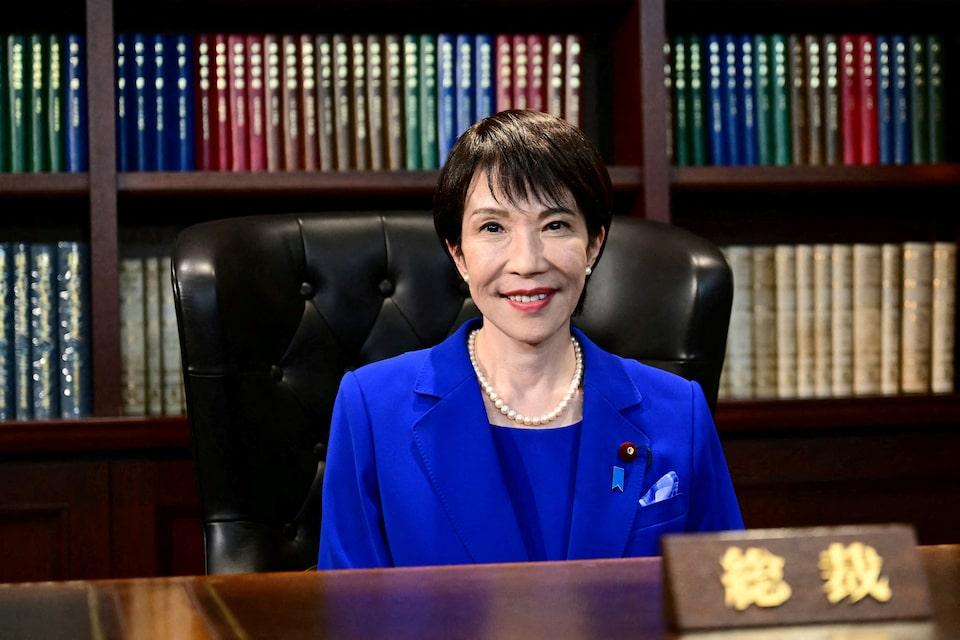
BOJ Ueda faces biggest political challenge with dovish premier Analysts expect Takaichi to meddle more in BOJ policy Political, economic constraints to moderate Takaichi's demands Weak yen may help BOJ push through rate hikes, analysts say TOKYO, Oct 9 (Reuters) - A pledge by Japan's next likely prime minister to reassert government sway over the central bank has fanned worries about political interference in monetary policy, however, a weak yen and politics could limit any such push. Sanae Takaichi is set to become Japan's next premier and has already rattled markets by declaring control over the direction of monetary policy following her party leadership win, reviving memories of Shinzo Abe's radical economic stimulus last decade. Sign up here. "The government must be responsible for fiscal and monetary policy. The BOJ will then consider the most appropriate means," Takaichi told a news briefing upon her victory in the weekend race, stressing the need to focus on reflating growth. Her leadership could present the biggest political challenge to Bank of Japan Governor Kazuo Ueda, a soft-spoken academic who took the helm two years ago charged with dismantling the radical monetary stimulus of his Abe-appointed predecessor. The extent of Takaichi's challenge, however, is likely to be tempered by the risks of inflation, a sharp yen decline and her own party's weak standing - problems her late mentor Abe never faced. Differences between the government and central bank, instead, are more likely to be seen in communications and expectations around the extent and timing of future interest rate hikes, analysts and sources say. That alone could be enough to stir up market volatility. "It's a huge threat for the BOJ as her remarks show she has little respect for central bank independence," said former BOJ board member Takahide Kiuchi. "It's quite likely she will interfere in monetary policy and try to keep rate hikes in check," said Kiuchi, who sat at the board when former BOJ chief Haruhiko Kuroda deployed massive stimulus in 2013. "I'm sure people at the BOJ are very alarmed." CENTRAL BANK INDEPENDENCE UNDER FIRE The challenge to the BOJ's independence comes as central bank policy around the world, from the United States to New Zealand to Indonesia, comes under increasing pressure from new political leadership. Under law that took effect in 1998, the BOJ nominally enjoys independence although that has not shielded it from past political pressure to expand monetary support for a moribund economy. While the government cannot fire a sitting BOJ chief, it has the authority to pick the governor and members of the board, which then needs parliamentary approval. The most extreme case of intervention came in 2013, when Abe hand-picked Kuroda to overhaul the BOJ's caution over ramping up stimulus under then governor Masaaki Shirakawa. Known more for her focus on nationalist policies, Takaichi's economic views are nonetheless framed by advisers who advocate expansionary fiscal and monetary policy. Such intervention could come directly through public comments by the premier and political aides, or in informal conversations among staff and executives, say sources with knowledge of past exchanges between the two sides. Former BOJ Deputy Governor Masazumi Wakatabe, who has ties with Takaichi, said the BOJ will likely find it hard to justify raising interest rates this year given weakness in the economy. CONSTRAINTS ABOUND Unlike the Abe era, however, Takaichi's urge to keep policy accommodative is likely to be constrained by new economic and political realities. For one, the presence of veteran lawmakers with more conservative views on economic policy may counter Takaichi's radicalism, analysts say. Among them is former premier and finance minister Taro Aso, who was appointed party vice president. He has pushed to keep heavily indebted Japan's fiscal house in order and avoid overreliance on loose monetary policy to reflate growth. Unlike during Abe's days, Takaichi's Liberal Democratic Party (LDP) rests on shaky political ground with its minority coalition facing the risk of a break-up that could deprive her votes needed to be elected premier in parliament. Even if she becomes prime minister, Takaichi may be forced to appease opposition parties by handing over the key finance minister post to one of their leaders - adding uncertainty to how much clout she will have in making demands on the BOJ. The economic backdrop, too, has changed dramatically from the days of Abenomics, when Japan had experienced two decades of deflation, subdued growth and a strong yen that hurt the export-reliant economy. Now, Japan has seen inflation exceed 2% for well over three years as rising raw material costs, due in part to a weak yen, prod firms to hike prices. Delaying rate hikes for too long could lead to a further sharp decline in the yen and worsen consumer inflation, which has been politically disastrous for Takaichi's predecessors. Rising living costs are seen as a key factor that led to the LDP's huge loss in an upper house election in July. Speculation Takaichi's presence will force the BOJ to delay rate hikes has already pushed the yen to an eight-month low per dollar, drawing verbal intervention by Japanese authorities. Takaichi may nod to a near-term rate hike if yen falls persist and threaten to push up already high living costs, said former BOJ executive Kazuo Momma, who oversaw negotiations with Abe's administration. "The biggest loser from a weak yen is the government," Momma said. "If Takaichi's approval ratings were to fall from the outset, it would be because of a weak yen. I'm sure people around her like Aso are well aware of that." https://www.reuters.com/business/finance/takaichis-jab-boj-independence-may-face-political-reality-check-2025-10-09/
2025-10-09 06:38
India's stock benchmarks underperform Asian peers Fund managers optimistic on "new age" sectors amid AI trade gap Foreign investors still positive on India on improved valuations, policy support MUMBAI, Oct 9 (Reuters) - Indian equity markets' underperformance, exacerbated by limited exposure to artificial intelligence, is prompting fund managers to adopt volatile high-growth strategies to beat standard market returns, even as foreign investors retreat. The benchmark Nifty 50 index (.NSEI) , opens new tab has risen almost 7% this year, a fraction of the nearly 27% surge in the MSCI Asia ex-Japan index (.MIAPJ0000PUS) , opens new tab, fuelled by AI-driven euphoria. Sign up here. "Markets which caught up, like China, Korea, U.S., bounced back largely on that technology trade," Sunil Singhania, founder of Abakkus Asset Manager, told the Reuters Global Markets Forum , opens new tab. Acknowledging India's lag in the AI trade, he noted that initiatives such as 'Digital India' have created smaller "new age" companies that will become more relevant with scale. From South Korea's chipmakers to China's hardware ecosystem - semiconductors to robotics - much of Asia's "everything rally" has driven more capital into growth and innovation, further powering the AI frenzy where India is conspicuously absent. The South Asian country has largely missed the global AI boom after years of under-investment in deep-tech research. While IT firms such as Infosys (INFY.NS) , opens new tab and Tata Consultancy (TCS.NS) , opens new tab dominate outsourcing, their business models remain anchored in cost-efficient services rather than AI innovation. Unlike the U.S. and China - where AI-focused firms are fueling market valuations and investor enthusiasm - India's public markets offer few, if any, pure-play AI stocks. Instead, investors are betting on sectors such as renewables, electronics, digital platforms and financial services as future growth drivers to compensate for India's AI gap. Foreign investors (FPIs) have responded by selling $17.6 billion worth of Indian equities this year -- their second-largest outflow on record for the January-to-September period, data from the National Securities Depository showed. This retreat underscores a growing divergence: while India's long-term growth story is intact, near-term enthusiasm is being soaked up by markets with stronger AI exposure and faster earnings momentum. "FPIs are already underweight India," said Nilesh Shah, managing director of Kotak Mahindra Asset Management, which oversees $63 billion in assets. "They are unlikely to exit much further, and could return as growth prospects remain intact." For now, though, domestic investors (DIIs) are doing much of the heavy lifting, cushioning what could otherwise have been a deeper correction. They have bought equities worth 5.9 trillion rupees ($65.2 billion) this year, provisional data from the National Stock Exchange showed, as supportive monetary and fiscal measures alongside an orientation towards domestic consumption are seen as powerful drivers. "India is attractive for several reasons," Mark Haefele, chief investment officer of UBS Global Wealth Management. "It got a little heated in terms of valuation, but relative to other things, it looks better now." Haefele, whose firm manages $4.5 trillion in assets, told GMF that structural reforms and anticipated improvement in geopolitical ties could make India "a diversifier". Amundi, Europe's largest asset manager, believes that despite its challenges, India presents "a buying opportunity ... because of structural components to its growth," global head of multi-asset solutions, John O'Toole, said. Amundi manages $2.6 trillion in assets. That optimism is reflected in the country's vibrant primary market, which is expected to raise up to $8 billion through IPOs in the final quarter of 2025, taking total fund-raising this year to more than $18 billion -- the third highest globally after Hong Kong and the United States. ($1 = 88.7975 Indian rupees) (Join the Reuters Global Markets Forum , opens new tab and Trading India on LSEG Messenger , opens new tab) https://www.reuters.com/world/china/indias-lack-ai-trade-pushes-investors-towards-volatile-high-growth-bets-2025-10-09/