2025-10-08 06:53
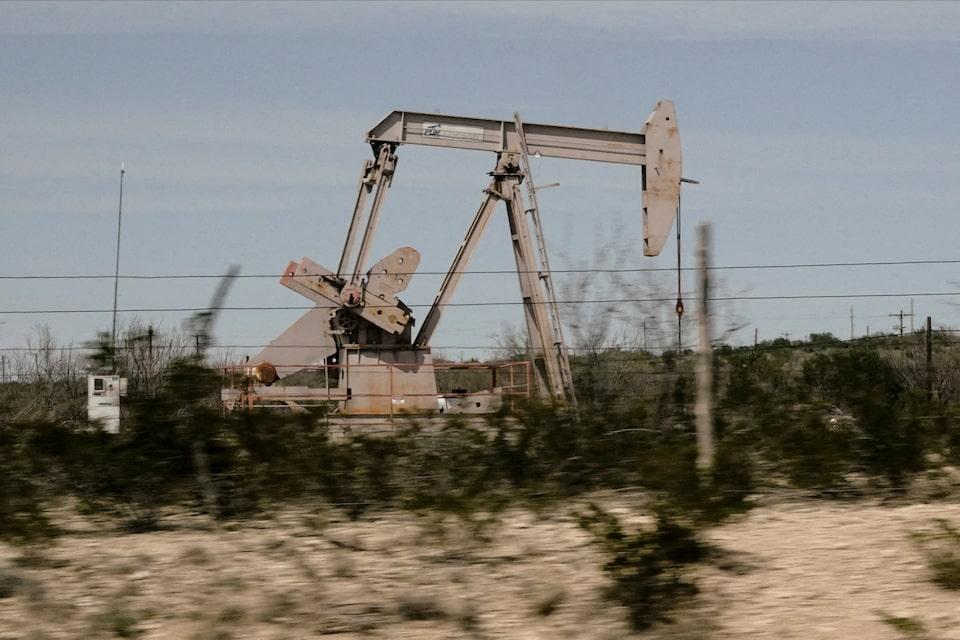
SINGAPORE, Oct 8 (Reuters) - Oil prices gained by about 1% on Wednesday as investors brushed off oversupply fears, having digested a decision earlier by OPEC+ to restrain production increases next month. Brent crude futures rose 63 cents, or 0.96%, to $66.08 a barrel by 0715 GMT. U.S. West Texas Intermediate crude climbed 66 cents, or 1.07%, to $62.39. Sign up here. The benchmarks settled broadly flat in the previous session as investors weighed signs of a supply glut against a smaller-than-expected increase to November output from the Organization of the Petroleum Exporting Countries and affiliates. "The market is in price limbo, with one side bent towards a possible supply glut and the other believing the ramp-up will not be as fast as anticipated," said Emril Jamil, a senior analyst at LSEG Oil Research. Prices are trading higher for now as some traders are holding long positions, or bets that prices will rise, on continued efforts to curb Russian crude flows, Jamil added. OPEC+ had opted for a rise of 137,000 barrels a day, the lowest amount among options the group discussed at the weekend. "Until the physical market shows signs of softening via rising inventories, investors are likely to discount the impact of the production increases," ANZ analysts said on Wednesday. Price gains are however capped as fears of Russian supply disruption eased, with crude oil shipments holding close to a 16-month high over the past four weeks, the ANZ analysts said. Investors are also awaiting U.S. inventory data from the Energy Information Administration later on Wednesday. On Tuesday, sources citing American Petroleum Institute figures said U.S. crude stocks rose by 2.78 million barrels in the week ended October 3. Conversely, gasoline and distillate inventories fell, the sources said, citing the API data. Meanwhile, U.S. oil production is likely to set a larger record this year than previously expected, the EIA said on Tuesday. https://www.reuters.com/business/energy/oil-rises-oversupply-fear-eases-after-opec-restrains-output-increase-2025-10-08/
2025-10-08 06:45
Gold hits major psychological mark of $4,000/oz Investors seek protection from a mix of asset risks Gold, other precious metals benefit from this Gold rally seen extending into 2026 LONDON, Oct 8 (Reuters) - Anxieties over global geopolitical and economic risks are the biggest drivers pushing gold's 54% surge this year to a record over $4,000 an ounce, with analysts seeing little to halt the rally. The precious metal has climbed twofold over the last two years as investors have sought safety amid risks fuelled by President Donald Trump's trade tariffs, concerns about U.S. dollar strength, Federal Reserve independence, lingering inflation, Russia's war in Ukraine, and sluggish European growth. Sign up here. "The gold market appears to be experiencing a 'once-in-a-generation move'," said John Meyer, an analyst at consultancy SP Angel. SILVER, PLATINUM, PALLADIUM GAIN IN GOLD'S WAKE Bullion is on track for the largest annual growth since the 1979 oil crisis, taking silver, platinum and palladium higher as well. "The rally is unbelievable, telling us that something bad is happening and that we should be nervous," said Dan Smith, managing director of Commodity Market Analytics. Gold purchases by central banks have also buoyed prices. Annual purchases of gold by central banks have exceeded 1,000 metric tons each year since 2022, according to consultancy Metals Focus, which expects them to buy 900 tons this year - twice the annual average of 2016-2021. Policymakers have also supported gold prices by keeping borrowing costs low and delaying rate hikes, prompting investors to shift toward the metal as a safe store of value. BULL RUN COULD EXTEND INTO 2026 Though every step higher has raised the prospect of a sell-off, with indicators showing the market is increasingly overbought, conquering $4,000 may open the way for the metal to extend its bull run into 2026. Usually in a given year, one or two risk drivers move the gold price, BNP Paribas analyst David Wilson said: "But right now, everything that is a traditional gold driver is happening." "If you're an investor, where do you put your money? If you're worried about the outlook for the U.S. economy and U.S. debt, do you want to buy that traditional safe-haven, which was the U.S. Treasuries? No, the yields on longer-dated treasuries have shown that investors are reluctant." As the rally has progressed, new drivers have swapped positions to push prices higher, from central bank demand to accelerating inflows into the physically-backed gold exchange-traded funds in recent weeks and also demand for bars and coins. Goldman Sachs raised its December 2026 gold price forecast on Monday to $4,900 per ounce. "The attitude at the moment seems to be that maybe it will keep on going. Maybe right now there is no dip," BNP Paribas' Wilson said. "What series of events has to happen to make the world take a deep breath and go actually, it's not so bad? Can we see a change in the U.S. policy on tariffs, trade, immigration? Right now, it's difficult to see what events would suddenly change sentiment about the global outlook." https://www.reuters.com/world/india/golds-rush-record-heights-propelled-by-global-anxieties-2025-10-08/

2025-10-08 06:42
NEW DELHI, Oct 8 (Reuters) - India was a net importer of finished steel in September, with shipments of 0.65 million metric tons, according to provisional government figures seen by Reuters on Wednesday. Finished steel imports were down 36.3% on the year, the data showed. Sign up here. India, the world's second-biggest producer of crude steel, has recommended a three-year import tariff of 11% to 12% on some steel products aimed at curbing shipments, mainly from top producer China. India exported 0.58 million metric tons of finished steel in September, up 47.6% on the year, according to the data. India's finished steel production of 13.3 million metric tons in September was up 14.7% on the year, it showed. Finished steel consumption of 13.5 million metric tons in September was up 9% on the year, the figures showed, while consumption dipped marginally from a month ago by 2.2%. India's crude steel output in September reached 13.8 million metric tons, up 15% on the year, according to the data, as production declined slightly by about 1.7% on the month. https://www.reuters.com/world/china/india-was-net-importer-finished-steel-september-govt-data-shows-2025-10-08/

2025-10-08 06:32
Russian strikes cause critical damage to Ukrainian gas production Ukraine will need to import gas from Europe to fill production gap Ample LNG supplies will mitigate any European gas price increases LONDON, Oct 8 (Reuters) - Russia's heavy bombardment of Ukraine's natural gas infrastructure ahead of winter is set to have a knock-on impact on Europe's energy market as Ukraine draws more fuel from its western neighbours. Any increase in European gas prices as a result of Ukraine’s purchases is nevertheless likely to be mitigated by the abundance of global liquefied natural gas supplies. Sign up here. Russia stepped up attacks on Ukraine's energy grid and gas production facilities in recent days as the war enters its fourth winter. CRITICAL DAMAGE TO FACILITIES On Friday, Moscow launched its largest attack on Ukrainian gas infrastructure since the start of the war, which the CEO of state oil and gas company Naftogaz said caused critical damage to facilities. There were further strikes on civilian gas supply infrastructure over the weekend. Ukraine has also ramped up drone attacks on Russian oil refineries and facilities in recent weeks. It is so far unclear to what extent the strikes have hurt Ukraine's domestic gas production. A massive wave of Russian attacks on Ukrainian energy facilities in March reduced production by over a third, meaning that the latest attacks could have similar or larger impact. The disruption comes at a crucial time for Ukraine as it scrambles to refill storage facilities before the onset of winter, when gas demand for heating soars. LOW STORAGE Ukraine operates Europe's largest underground gas storage which has a capacity of 31 billion cubic metres, though it currently holds around 13 bcm, or 42% of capacity, according to Erisa Pasko, gas analyst at Energy Aspect. The figure, however, includes around 4.7 bcm of gas in strategic reserves that are harder to tap, she added. Ukraine has traditionally exported gas to Europe, delivering Russian fuel under a major transit contract which accounted for around 5% of total European Union imports in 2024 and which offered Kyiv substantial revenue. The flow meant that Ukraine's gas storage and pipeline network was initially spared from Russian attacks, but that all changed when the transit agreement expired on January 1, 2025. Beyond its domestic gas production, which reached around 19 bcm last year, Ukraine today imports gas via interconnectors from Hungary, Poland and Slovakia. It has also started using pipelines via the Balkans to import small volumes of LNG delivered to Greece and Croatia. If the current damage to Ukraine’s production is at a similar scale to last winter’s, Ukraine will likely need to increase imports from western neighbours between October and March to 2.1 to 4.1 bcm, from a previous estimate of 1.5 bcm, according to Energy Aspect’s Pasko. “Storage fill is well below the historical average and Ukraine will likely take more precautionary measures this winter given continuous attacks on its gas infrastructure,” Pasko said. EU PRESSURE Stronger demand from Ukraine will therefore increase pressure on the neighbouring European gas market, which has itself undergone dramatic transformation in the wake of Moscow's 2022 invasion of Ukraine. Russian gas exports to Europe have plummeted from over 150 bcm in 2021, or 45% of total imports, to 52 bcm, or 19%, in 2024, according to EU data. The EU is currently exploring ways to fully halt Russian imports by 2027. The rapid change led to a severe energy price shock in Europe, as it scrambled to import large volumes of more expensive LNG cargoes. In the first nine months of 2025, Europe’s LNG imports rose by 27% from the previous year to 108 bcm, of which U.S. cargoes accounted for 63%, according to data from consultancy Bruegel. The surge in LNG imports has been vital for replenishing the region's gas storage ahead of winter. EU storage was 83% of capacity by then, lower than the 93% the same time last year, according to data from industry lobby group Gas Infrastructure Europe. LNG CUSHION HEADING INTO WINTER The European gas market enters winter relatively relaxed thanks to a surge in global LNG supplies. Benchmark European TTF gas prices have dropped by around 90% from their post-crisis record of over 300 euros per megawatt hour to around 33 euros per MWh, reflecting the changing dynamics. But increased demand for gas from Ukraine would require Europe to boost LNG imports, pushing prices higher. The gas market will also remain highly sensitive to weather in the coming months. A harsh winter could further fuel demand and tighten supplies in Europe, putting more pressure on prices. Russia's intensified targeting of Ukrainian gas and power infrastructure poses real risks for the Ukrainian economy and population as winter sets in. The impact of the strikes will also be felt in Europe. Want to receive my column in your inbox every Monday and Thursday, along with additional energy insights and links to trending stories? Sign up for my Power Up newsletter here. Enjoying this column? Check out Reuters Open Interest (ROI), , opens new tab your essential new source for global financial commentary. ROI delivers thought-provoking, data-driven analysis. Markets are moving faster than ever. ROI , opens new tab can help you keep up. Follow ROI on LinkedIn , opens new tab and X. , opens new tab https://www.reuters.com/markets/commodities/russian-strikes-ukraines-gas-will-reverberate-across-europe-2025-10-08/

2025-10-08 06:24
Oct 8 (Reuters) - Australia's Lynas Rare Earths (LYC.AX) , opens new tab has partnered with U.S.-based manufacturer Noveon Magnetics to supply rare earth permanent magnets to defence and commercial sectors in the U.S., the two companies said on Wednesday. The deal includes provision of both light and heavy rare earth materials and the production and supply of finished magnets to end-users across defense, automotive and industrial sectors. Sign up here. "This partnership delivers what the market and the U.S. government need most: capacity, certainty and speed," Noveon CEO Scott Dunn said in a joint statement, adding that the companies plan to finalise a definitive agreement and work closely with the U.S. government and customers. The companies did not divulge any financial details of the deal. Washington has been pushing to secure critical minerals and reduce reliance on China, which produces around 90% of the world's rare earths magnets. Lynas is the world's largest rare earth producer outside China and CEO Amanda Lacaze said the deal will provide U.S. manufacturers with a "secure and traceable" magnet supply chain. https://www.reuters.com/world/asia-pacific/australias-lynas-partners-with-noveon-supply-rare-earth-magnets-us-2025-10-08/

2025-10-08 06:14
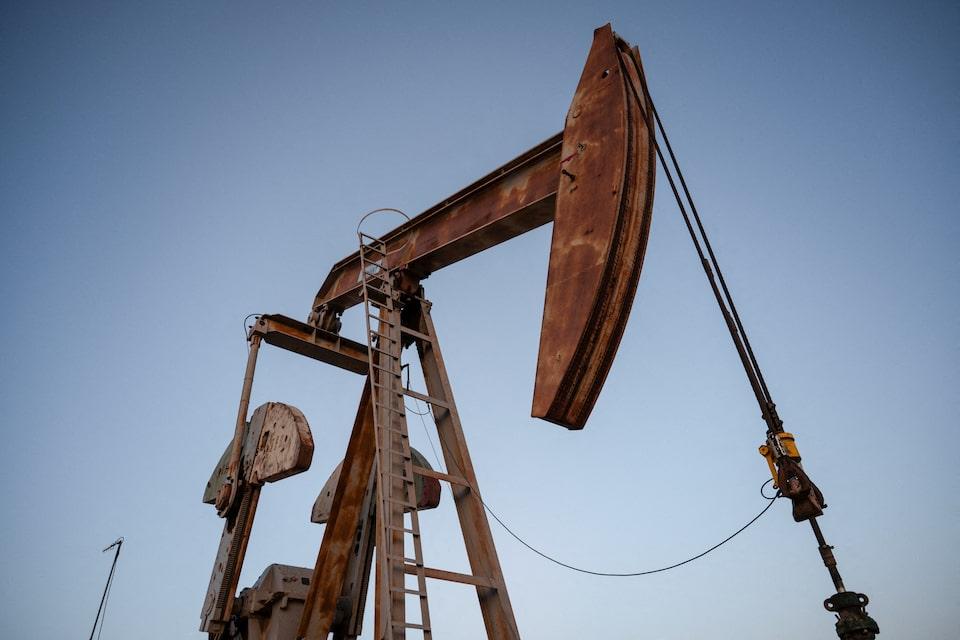
China imposed export controls on five critical metals in February China supplies 83% of global tungsten, USGS says Rising tungsten costs could add $3,000–$25,000 to oilfield drillbit prices, expert says Oct 8 (Reuters) - U.S. shale drillers are facing higher prices for tungsten, a rare, ultra-hard metal used for industrial tools like drillbits, as Chinese export controls have squeezed supply, threatening U.S. President Donald Trump's ambitions to boost America's fossil fuel production. Tungsten makes up as much as 75% of the drillbits deployed in oilfields. The metal's price has surged to over $600 per metric ton unit from around $330–$340 in early February, when Trump imposed a 10% tariff on Chinese goods and Beijing hit back with curbs on exports of five critical metals, including tungsten. Sign up here. While the curbs fall short of an outright ban, previous such measures have sharply curtailed exports. China controls more than two-thirds of global tungsten production, according to the U.S. Geological Survey, making it difficult to replace its supply, industry experts said. As a result, polycrystalline diamond compact (PDC) drill bits, typically priced at $20,000 to $100,000 depending on their size, design and other factors, now cost an additional $3,000 to $25,000, said Yaseer Ismail, supply chain manager at supply chain management firm Scan Global Logistics. PDC drill bits are prized in oilfields for their abrasion resistance, Ismail said. Top U.S. services provider SLB (SLB.N) , opens new tab calls them the 'workhorse of the oilfield' on its website. WHEN IT RAINS IT POURS Tungsten costs highlight an unexpected consequence of Trump's policies, despite his campaign promises to uplift the energy industry. Ben Dieterich, a spokesperson for the U.S. Department of Energy, said the department gave a grant this year to Melt Technologies, a Texas company that reclaims and recycles industrial metals, to fund a pilot facility to produce tungsten carbide products. "This will ultimately deliver greater savings for consumers," he said about the grant made in the final days of the administration of former President Joe Biden. The DOE did not immediately respond to a request for comment about the fact that it came during the Biden administration. The American Exploration & Production Council, which represents U.S. energy producers, declined to comment. Since Beijing's retaliation, Trump has slapped even higher duties on Chinese imports, and levied tariffs on other items widely used in oilfields, like steel. The industry also faces a potential oversupply after OPEC+ opted on Sunday to continue raising output after years of cuts. U.S. oil producers have been reducing drilling activity due to declining commodity prices, after output hit record levels in July according to the latest government data. Oilfield service providers will most likely have to absorb U.S. tariff costs instead of passing them on, said Mark Chapman, lead OFS analyst at Enverus Intelligence Research. These companies had warned in their second-quarter earnings reports that the steel tariffs would cut margins by 20 to 50 basis points, and surging tungsten costs will likely have a similar financial impact, Chapman said. SLB (SLB.N) , opens new tab said in July it expected to take the hit in the second half of the year, after it reported sharply lower second-quarter earnings from a year ago. Days later, smaller rival Halliburton (HAL.N) , opens new tab also posted a large drop in second-quarter profits and warned of a full-year revenue decline, citing softer demand. Global benchmark Brent crude oil futures were trading below $65 a barrel on Tuesday, down over 12% so far this year. "While the industry can generally pass through higher costs, it is challenging to do so in a market with flat to lower activity levels and especially difficult given anticipated pressure on commodity prices," said Samantha Hoh, senior clean tech analyst at HSBC. https://www.reuters.com/business/energy/rising-tungsten-prices-worsen-oil-drillers-inflation-worries-2025-10-08/