2025-10-08 06:11
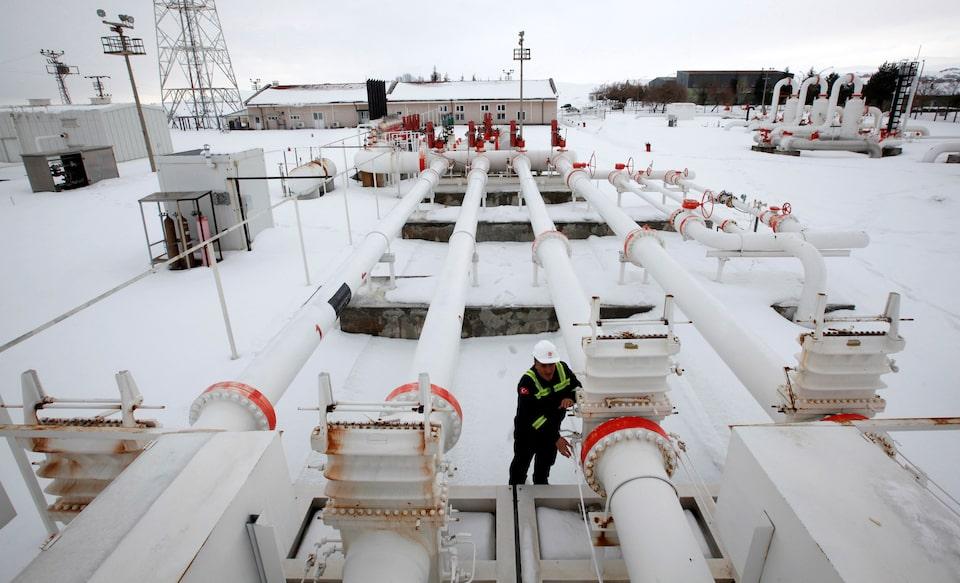
Production, LNG imports to cover half of needs by 2028 Turkey is Russia's last big remaining European gas market U.S. pushing allies to cut energy ties to Moscow, Tehran Turkey increasingly shunning long-duration pipeline contracts ISTANBUL, Oct 8 (Reuters) - Turkey could meet more than half of its gas needs by the end of 2028 by ramping up production and increasing U.S. imports, in a shift that threatens to shrink the last major European market for Russian and Iranian suppliers. Washington has publicly pressured allies, including NATO member Turkey, to cut energy ties with Moscow and Tehran. At their White House meeting on September 25, U.S. President Donald Trump pressed Turkish President Tayyip Erdogan to cut Russian energy purchases. Sign up here. Diversifying supply would also strengthen Turkey's energy security and support its ambitions to become a regional gas hub. Ankara aims to re-export imported liquefied natural gas and its own gas production to Europe while burning Russian and Iranian gas domestically, analysts said. "Turkey has been signalling that it will take advantage of the (global) LNG abundance," said Sohbet Karbuz, from the Paris-based Mediterranean Organisation for Energy and Climate. Russia remains Turkey's largest gas supplier, but its share of the market has fallen from more than 60% two decades ago to 37% in the first half of 2025. Most European countries halted imports following Moscow's invasion of Ukraine in 2022. RUSSIA'S PIPELINE CONTRACTS NEAR EXPIRY Russia's long-term pipeline contracts with Turkey to supply 22 billion cubic metres (bcm) annually via the Blue Stream and TurkStream pipelines are close to expiry. Iran's 10 bcm contract expires in the middle of next year, while Azerbaijan’s contracts, totalling 9.5 bcm, run until 2030 and 2033. While Turkey is likely to extend some of these contracts, it is likely to seek more flexible terms and smaller volumes to increase the diversity of its supply, Karbuz said. At the same time, Turkey is rapidly expanding alternative sources. State-owned TPAO is boosting output from local gas fields, while state and private companies have expanded LNG import terminals to bring gas in from the U.S. and Algeria. Domestic production and contracted LNG imports are set to exceed 26 bcm annually from 2028 from 15 bcm this year, according to Reuters calculations. US LNG IMPORTS SET TO DOUBLE That would cover more than half of Turkey's gas demand of around 53 bcm, reducing the gap for pipeline imports to around 26 bcm - well below the 41 bcm of current contracted supplies from Russia, Iran and Azerbaijan combined. To support this shift, Turkey has signed a series of LNG deals with U.S. suppliers worth $43 billion, including a 20-year agreement with Mercuria in September. The country has built 58 bcm annual LNG import capacity, enough to cover its entire demand, according to Turkey's energy exchange. Despite this, Russian gas continues to flow at full capacity, and the Kremlin has said cooperation with Ankara remains strong. Since Turkey needs less Russian gas, BOTAS could, in theory, stop imports from Moscow in two to three years, said Alexey Belogoryev of the Moscow-based Institute for Energy and Finance. "However, it won't do so, because Russian gas is price-competitive and creates a surplus that BOTAS can use to pressure other suppliers," Belogoryev said. Turkey's energy minister Alparslan Bayraktar said in a TV interview in October that Turkey must source gas from all available suppliers, including Russia, Iran and Azerbaijan, but noted that U.S. LNG offers cheaper alternatives. The energy ministry declined to comment on future supply deals and pricing. Russian gas pipeline export monopoly Gazprom (GAZP.MM) , opens new tab did not reply to a request for comment. Turkey could burn Russian and Iranian gas at home, export its own production and re-export imported LNG after Europe bans Russian energy imports by 2028, said Karbuz. Turkey's BOTAS has already signed deals to supply Hungary and Romania with small volumes of gas in its bid to become a regional gas trading hub. Beyond gas, Ankara has deep ties with Moscow. Russia's Rosatom is building Turkey's first nuclear plant and Moscow is also the country's top crude and diesel supplier. https://www.reuters.com/business/energy/turkeys-gas-shift-threatens-russia-irans-last-big-european-market-2025-10-08/
2025-10-08 05:40
MUMBAI, Oct 8(Reuters) - The Indian rupee lumbered in a tight band on Wednesday, holding above its all-time low even as the U.S. dollar continued to charge higher, with traders pointing to likely central bank intervention to support the local currency. The rupee closed at 88.7975 against the U.S dollar, a whisker away for its all-time low of 88.80 hit last week but little changed on the day. Sign up here. Traders noted that the Reserve Bank of India has repeatedly defended the rupee near 88.80, keeping volatility in check, but persistent dollar demand from importers has kept it pinned near that level. The local unit has remained steady around that mark even as the dollar has risen over 1% this week against its major peers, boosted by weakness in the euro and the Japanese yen due to political developments. The euro was last down nearly 0.4% at $1.1615 while the Japanese yen slipped to 152.90, its weakest level since February. "The real test for USD bears begins this week as FX quant signals deteriorate for both EUR and JPY," analysts at BofA Global Research said in a note. Traders also said that in addition to spot market interventions, the RBI has conducted dollar-rupee buy/sell swaps for October delivery of maturities between January and March 2027, over the last three sessions. Dollar-rupee forward premiums have dropped in response to this, with the 1-year implied yield falling to 2.18%, its lowest since August 29. Investors are now awaiting the minutes of the Federal Reserve's September policy meeting, due later on Wednesday, alongside remarks from a clutch of central bank policymakers. https://www.reuters.com/world/india/soaring-dollar-puts-all-time-low-peril-traders-eye-rbi-defence-2025-10-08/

2025-10-08 05:35
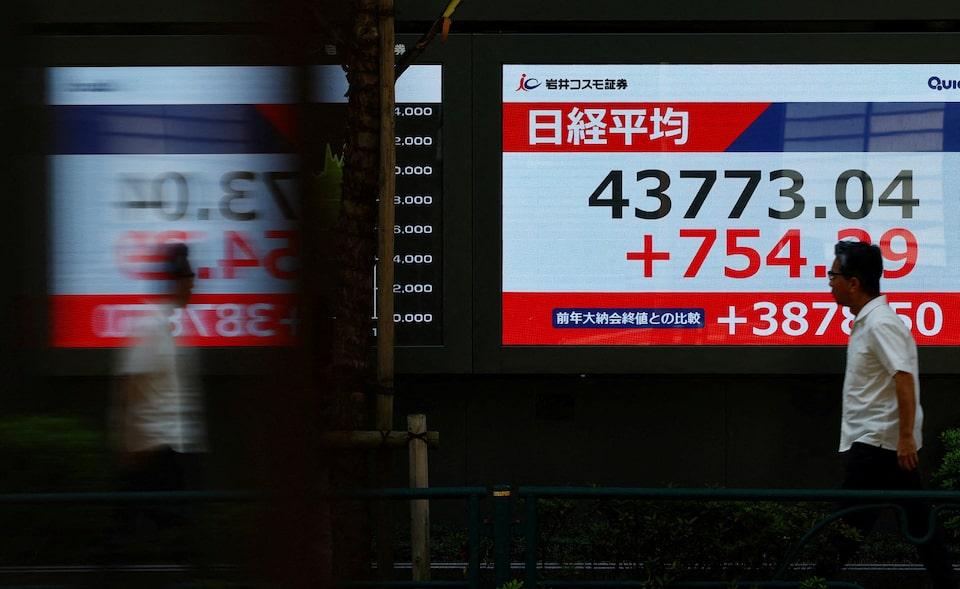
Gold shows no sign of stopping Yen hits lowest since February European shares climb to record S&P 500, Nasdaq hit record closing highs; Dow off NEW YORK, Oct 8 (Reuters) - Major stock indexes rose on Wednesday, with U.S. and European indexes hitting record highs, while gold extended its recent rally above $4,000 an ounce as a prolonged U.S. government shutdown and expectations of further U.S. interest rate cuts drove demand for the safe-haven asset. Gold, traditionally seen as a store of value during times of instability, is up 54% year-to-date after gaining 27% in 2024. Spot gold was last up 1.36% at $4,037.90. U.S. gold futures GCv1 , opens new tab for December delivery settled 1.7% higher at $4,070.5. Silver also climbed to a record high. Sign up here. Shares of gold miners also rose, including U.S.-listed shares of Gold Fields , which ended 3.7% higher. The Japanese yen reached its weakest level since mid-February against the dollar as investors worried about an increase in fiscal spending in Japan, while the euro eased on ongoing political uncertainty in France. On Wall Street, stocks rebounded from Tuesday's declines, with the S&P 500 and Nasdaq registering all-time closing highs and technology shares (.SPLRCT) , opens new tab leading the way higher. Nvidia (NVDA.O) , opens new tab shares ended 2.2% higher. "It comes down to investors have been optimistic since April, and that optimism continues to be expressed in spite of a government shutdown, a slowing employment market or any other red flags that would normally detract investors," said Oliver Pursche, senior vice president and advisor for Wealthspire Advisors in Westport, Connecticut. Investors have been without most U.S. economic data as the federal government remains shut. Minutes released Wednesday from the last Federal Reserve meeting showed a divided committee, in which policymakers were concerned about rising labor market risks but remained wary of inflation. The central bank is widely expected to cut rates by 25 basis points at its October 28-29 meeting, according to the CME Group’s FedWatch Tool. The Dow Jones Industrial Average (.DJI) , opens new tab slipped 1.20 points to 46,601.78, the S&P 500 (.SPX) , opens new tab gained 39.13 points, or 0.58%, to 6,753.72 and the Nasdaq Composite (.IXIC) , opens new tab gained 255.02 points, or 1.12%, to 23,043.38. European shares climbed to record highs, powered by strong gains in French and Spanish stocks. The pan-European STOXX 600 (.STOXX) , opens new tab was up 0.8%, closing at its highest level, while French stocks (.FCHI) , opens new tab jumped 1.1% and Spanish stocks (.IBEX) , opens new tab touched their highest mark since 2007. French caretaker Prime Minister Sebastien Lecornu said a deal could on a 2026 budget despite the country's political crisis. France's fifth prime minister in two years, Lecornu tendered his and his government's resignation on Monday, just hours after announcing the cabinet line-up, making it the shortest-lived administration in modern France. The euro pared losses after Lecornu also said on Wednesday that President Emmanuel Macron could be in a position to nominate a new prime minister in the next 48 hours. The currency was last down 0.33% at $1.1616 and reached $1.1597, the lowest since August 27. In Japan, the surprise election of Sanae Takaichi to lead the country's ruling Liberal Democratic Party on Saturday has dented the yen on expectations of greater government stimulus. Against the yen the dollar was last up 0.53% at 152.7. It earlier reached 152.99, the highest since February 14, and has risen from 147.44 on Friday. U.S. Treasury yields turned positive in afternoon trading after investors showed tepid demand at an auction of 10-year notes. The yield on the benchmark U.S. 10-year Treasury note was up 0.6 basis points to 4.133%. Oil prices rose. Traders expected a lack of progress on a Ukraine peace deal to keep sanctions in place against Moscow. U.S. crude rose 82 cents to settle at $62.55 a barrel and Brent gained 80 cents to settle at $66.25. https://www.reuters.com/world/china/global-markets-wrapup-1-2025-10-08/
2025-10-08 05:32
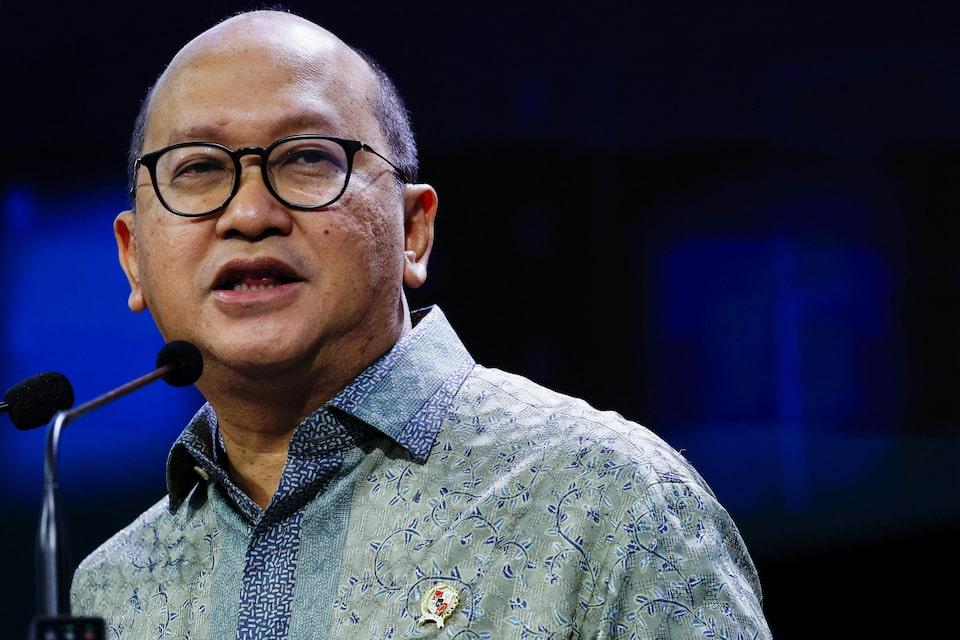
JAKARTA, Oct 8 (Reuters) - Indonesia's Investment Minister Rosan Roeslani on Wednesday said the government has entered into discussions with China about restructuring the debt of Indonesia's high-speed train company. Construction of the $7.3 billion China-backed high-speed railway began in 2016, and it was meant to start operating in 2019. Sign up here. But the project to connect the capital Jakarta and Bandung in West Java faced problems, including land procurement issues, pandemic-related delays and ballooning costs, which pushed out its launch to 2023. Rosan declined to disclose details of the proposed restructuring being negotiated with the Chinese government. "We want a comprehensive reform, so that after we restructure there will be no more things like the possibility of default and so on in the future," Rosan said. https://www.reuters.com/world/asia-pacific/indonesia-has-entered-talks-with-china-high-speed-train-debt-minister-says-2025-10-08/
2025-10-08 05:10
Tokenized stocks can lack traditional investor rights and protections Regulatory concerns grow over tokenization's impact on market stability Pushback from Wall Street on SEC's potential tokenization exemptions NEW YORK/PARIS, Oct 8 (Reuters) - A race by crypto companies to sell tokens pegged to stocks is raising alarm bells among traditional financial firms and regulatory experts who warn that the fast-growing novel products pose risks to investors and market stability. Buoyed by President Donald Trump's pro-crypto stance and his administration's push for friendly regulations, the crypto industry is rushing to capitalize on a global surge in enthusiasm for the sector. Sign up here. Robinhood (HOOD.O) , opens new tab, Gemini (GEMI.O) , opens new tab and Kraken among others have launched tokenized stocks in Europe, while Coinbase (COIN.O) , opens new tab, Robinhood and startup Dinari are seeking approval to launch similar products in the United States. Nasdaq, meanwhile, last month became the first major exchange to propose offering tokenized shares. The industry says tokenized shares — blockchain-based instruments that track traditional equities — could revolutionize stock markets by allowing shares to be traded 24/7 and settled instantly, boosting liquidity and reducing transaction costs. The combined value of tokenized public stocks geared toward retail investors as of September grew to $412 million, compared with just a few million dollars 12 months ago, according to tokenization tracker RWA.xyz. Although many products are marketed like stocks, they rarely offer the same rights, disclosures and protections as traditional equities. Instead, they more closely resemble riskier derivatives, according to a Reuters review of several products and interviews with a dozen industry executives and legal experts. That increases the hazards for investors, while tokenization more broadly could undermine market integrity and fragment liquidity if left unsupervised, critics say. "You're buying exposures to those shares through creating some sort of synthetic instrument," said Diego Ballon Ossio, a partner at law firm Clifford Chance in London. "A lot of the burden gets shifted on you to understand what exactly it is that you're buying." A few companies have issued their own experimental stock tokens on the blockchain - software that acts as a shared digital ledger - but most tokenized shares are pegged to public companies and issued by third parties like Ondo Global Markets and Dinari. Some tokens are backed 1:1 by underlying stocks, while others provide economic exposure through derivatives. The industry is divided over which regulations apply to stock tokens, and investor rights and protections vary. Often, the products provide no ownership, voting rights or traditional dividends, while creating counterparty risk exposure to the token issuer. For example, there are multiple tokens pegged to Nvidia (NVDA.O) , opens new tab and Tesla (TSLA.O) , opens new tab with a range of structures and terms and conditions. "The fact that different tokenized offerings have different rights and different disclosures ... that's a real big worry," said Gabriel Otte, CEO of Dinari, which offers 1:1 collateralization. Robinhood in June launched trading in tokens pegged to public companies and said it plans to offer tokenized stocks of private companies. To promote the launch, it gave away tokens pegged to OpenAI. Those tokens are derivative contracts backed by Robinhood's ownership of fund units in a special-purpose vehicle that holds OpenAI convertible notes, according to its terms and conditions , opens new tab. The announcement drew pushback from OpenAI, which said it had not blessed the offering. It also prompted scrutiny from Robinhood's European regulator. Johann Kerbrat, general manager of Robinhood Crypto, said the company clearly flags that its tokens are derivatives. "It's just one step forward to be able to have the benefits of no longer having multiple days to settle," he added. While Robinhood is issuing public company tokens on the blockchain, it is not yet settling the trades on the blockchain, a spokesperson said. Gemini declined to comment. CORE INVESTOR PROTECTIONS In Europe, Robinhood, Kraken and others operate under the "MiFID" derivatives rules but some legal experts say that law is insufficient to oversee the novel products. Trump's crypto-friendly chair of the U.S. Securities and Exchange Commission, Paul Atkins, has indicated the agency plans to grant would-be issuers exemptions from securities rules. That plan is facing opposition from powerful Wall Street players including Citadel Securities and the Securities Industry and Financial Markets Association, which say such major structural changes should go through a formal rulemaking process. "Just because a security is represented on blockchain, that doesn't change the core investor protections and other provisions that apply to securities," said Peter Ryan, head of international capital markets at SIFMA. In a July letter to the SEC, Citadel Securities raised concerns , opens new tab that tokenization would siphon liquidity away from public markets. Spokespeople for the SEC declined to comment, while Citadel Securities did not provide comment beyond the letter. A spokesperson for the European Securities and Markets Authority, which helps oversee MiFID, said it was aware of the potential risks of tokenization and was monitoring developments. The World Federation of Exchanges recently urged regulators to crack down on tokenization, citing insufficient investor protections and liquidity fragmentation, although the group told Reuters it supports Nasdaq's proposal because it would treat tokens like traditional stocks. Coinbase is also in talks with the SEC about launching tokenized securities that would similarly grant investors the full legal rights and benefits associated with conventional stocks, according to a source familiar with the matter. Other issuers said they hew closely to traditional securities, anti-money laundering, bankruptcy protections and other rules. Mark Greenberg, Kraken's global head of consumer, said the company offered the "gold standard" including 1:1 collateralization and investor disclosures, while dismissing derivative offerings as "IOUs." "Done right, tokenization enhances investor protections, rather than eroding them," said Ian De Bode, chief strategy officer at Ondo Finance. https://www.reuters.com/sustainability/boards-policy-regulation/crypto-race-tokenize-stocks-raises-investor-protection-flags-2025-10-08/

2025-10-08 04:59
RBNZ cuts benchmark rate by an aggressive 50bps, signals more to come NZ dollar and interest rate swaps tumble post-rate cut RBNZ's larger cut comes as economy struggles despite previous raft of cuts NZ Prime Minister Luxon has supported lower cash rate amid economic challenges RBNZ sees inflation returning to midpoint of target band in 2026 WELLINGTON, Oct 8 (Reuters) - New Zealand's central bank slashed its benchmark rate by an aggressive 50 basis points on Wednesday, surprising some in the markets as policymakers signalled concerns about the frail state of the economy and kept the door open for further easing. The New Zealand dollar and interest rate swaps tumbled in the wake of the move that took the official cash rate to over a three-year low of 2.5%, as investors bet on more stimulus in the coming months to shore up demand and buffer the economy from rising global headwinds. Sign up here. “The Committee reached consensus to reduce the official cash rate by 50 basis points to 2.5 percent,” the Reserve Bank of New Zealand said in its accompanying policy statement. “The Committee remains open to further reductions in the OCR as required for inflation to settle sustainably near the 2% target mid-point in the medium term.” The dovish stance will be a welcome relief for the New Zealand government and the country’s prime minister, Christopher Luxon, whose popularity has taken a sharp hit in recent months as the economic recovery he and his party campaigned on has failed to eventuate. Luxon has said publicly he would like to see the cash rate lower to try and shake off the economic torpor, with business confidence worsening and households in a depressed mood as they fret about the rising cost of living and scarcity of jobs. The Taxpayers' Union-Curia Poll released earlier Wednesday found that the current government would not have enough seats to govern if an election was held today. Finance Minister Nicola Willis said the rate cut is good news for growth, jobs and investment, adding: "We know many New Zealanders are still doing it tough." The RBNZ decision went against 15 of 26 economists surveyed in a Reuters poll who had forecast it would cut the cash rate (NZINTR=ECI) , opens new tab by 25 basis points. However, the larger cut wasn't totally unexpected as the remaining 11 economists had picked a 50-bp reduction and markets were primed for the RBNZ to pull harder on its monetary policy levers to inject impetus to a weakened economy. The New Zealand dollar tumbled to six-month lows, losing 0.90% to $0.5745, while two-year interest rate swaps fell to 2.5251% from 2.6194% before the decision. The market is now fully pricing in a further 25-basis-point cut to 2.25%, and is ascribing a 60% chance of a 2.00% terminal cash rate. “The RBNZ’s decision signals that the likelihood of inflation pressures being weaker than previously anticipated carried more weight than waiting to see how quickly the economy rebounds and what ripple effects come from the current spike in inflation,” ASB chief economist Nick Tuffley said in a note. The central bank has cut rates by 300 basis points since August 2024, and with inflation within its target band of 1% to 3%, policymakers have leeway to lower borrowing costs further. TRUMP POLICIES ADD TO ECONOMIC WOES Wednesday's policy review is Christian Hawkesby’s second-to-last meeting as RBNZ Governor, after the government last month appointed Swedish policymaker Anna Breman to the role starting December 1. A global front-runner in withdrawing pandemic-era stimulus, the RBNZ lifted rates 525 basis points between October 2021 and September 2023 to curb inflation in the most aggressive tightening since the cash rate was introduced in 1999. The punishing borrowing costs, however, slammed the brakes on demand and tipped the economy into recession last year. Since then it has struggled to motor on, contracting , opens new tab by 0.9% in the second quarter in a shock result that fuelled bets of steeper rate cuts. While trading partner growth has been resilient, it is expected to slow in part due to U.S. President Donald Trump's sweeping tariffs and the government’s tight fiscal policy, hurting business confidence and pushing up unemployment. One challenge for the central bank is that inflation is expected to reach 3.0% in the third quarter. However, in its statement on Wednesday, the RBNZ said spare capacity in the economy should see inflation return to near its mid-point in 2026. New Zealand is one of several countries to ease rates as inflation has moved lower, but its sharp reductions to borrowing costs contrast with a more cautious approach by the U.S. Federal Reserve and its counterpart in Australia. The Reserve Bank of Australia held the cash rate steady last week as it flagged inflation concerns. And last month, the Federal Reserve delivered its first rate cut for the year. Zoe Wallis, investment strategist at brokerage Forsyth Barr, is retaining her terminal rate forecast at 2.25% for now. However, she said "there is a chance that further easing beyond that level could be on the cards if inflation proves well contained and the economy fails to fire up convincingly in coming months." (This story has been refiled to restore the dropped word 'Barr' in the brokerage name in paragraph 20) https://www.reuters.com/world/asia-pacific/new-zealand-central-bank-cuts-cash-rate-by-larger-than-expected-50bps-2025-10-08/


