2025-10-08 04:52
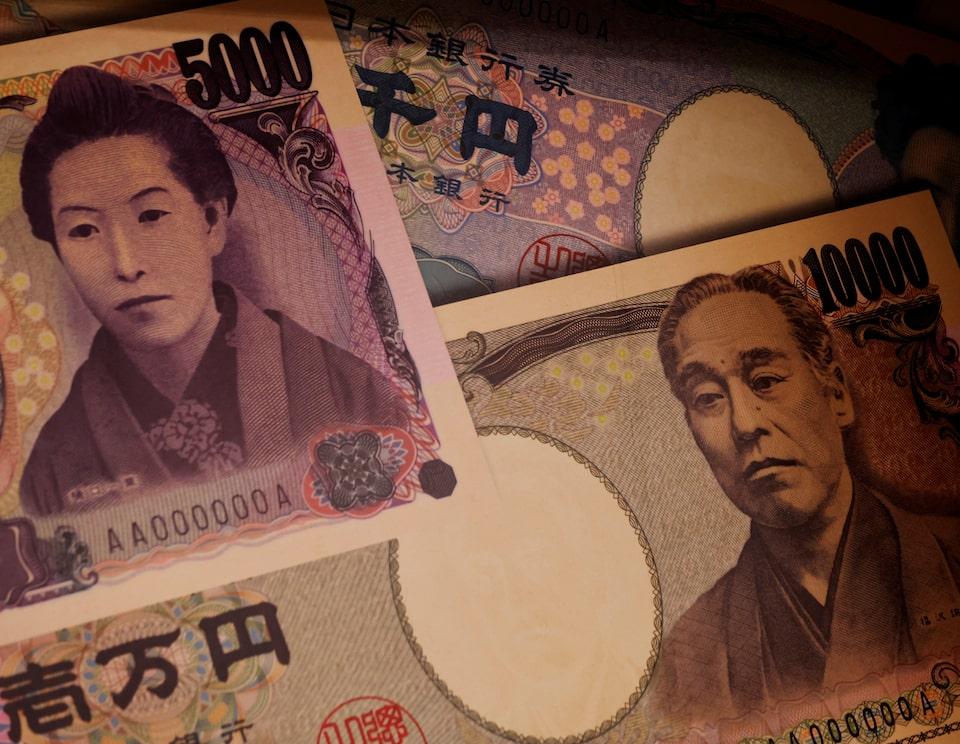
TOKYO, Oct 8 (Reuters) - The yen's recent sharp falls may prompt the Bank of Japan to raise interest rates as soon as this month, former central bank executive Kazuo Momma said on Wednesday. The yen has tumbled since fiscal and monetary dove Sanae Takaichi's victory in a party leadership race on Saturday, setting her on course to become the nation's next premier and stoking concerns she could pressure the BOJ to delay further rate hikes. Sign up here. Ironically, the increasing yen-bearishness in markets could prompt the BOJ to raise interest rates as soon as its next policy meeting on October 29-30, Momma told Reuters in an interview. While BOJ Governor Kazuo Ueda appears cautious on moving too quickly with rate hikes on concern over the U.S. economic outlook, such views could change if yen falls persist, he said. "The biggest loser from a weak yen is the government" as it pushes up inflation via higher import costs and hurts the ruling party's approval ratings, Momma said, adding that Takaichi may consent to an early rate hike if yen falls accelerate. "The only factor that could prompt the BOJ to push forward its rate-hike timing would be a weak yen," said Momma, who has experience drafting monetary policy and retains close contact with incumbent policymakers. With inflation exceeding its 2% target for well over three years, the BOJ has signaled its readiness to keep raising interest rates, albeit at a slow pace as it assesses the fallout from U.S. tariffs on corporate behaviour. The rate-hike timing will depend on how the BOJ weighs downside risks to the economy, such as from softening U.S. demand, and inflationary risks from a weak yen, Momma said. "The likelihood of an October rate hike has heightened somewhat, although it's more likely the BOJ will wait until December," said Momma, who is currently executive economist at Mizuho Research & Technologies. After ending a decade-long stimulus programme in March, the BOJ raised short-term interest rates to 0.25% in July last year and 0.5% in January this year. In both rate-hike cases, the BOJ moved in the wake of political calls to counter unwelcome yen falls. https://www.reuters.com/world/asia-pacific/yen-falls-may-prod-boj-hike-rates-october-ex-central-bank-executive-says-2025-10-08/
2025-10-08 04:42
A look at the day ahead in European and global markets from Ankur Banerjee Markets are wrestling with political drama in Japan, France and the U.S., pushing safe-haven of choice, gold, past $4,000 per ounce to yet another record high, as investors use the metal as a hedge against a plethora of worries. Sign up here. To say spot gold has been on a tear would be an understatement - the eye-watering 50% gain so far this year is on top of a 27% surge in 2024 and a 13% rise in 2023. Still, investors' appetite for all things gold remains insatiable. Inflows into gold ETFs globally hit $64 billion year-to-date, according to data from the World Gold Council, with a record $17.3 billion in September alone. The broad expectation of the Federal Reserve cutting rates in the near term, worries over geopolitical and economic uncertainties along with fears of a looming AI bubble have all been cited as reasons for gold to become the favoured hedge. It probably means that there is still room for more gains, and that is a sign of worry. Beyond commodities, investors are enraptured by what comes next in the French political world where President Emmanuel Macron faces growing pressure to resign or hold a snap parliamentary election. France was engulfed in further political chaos earlier this week after its fifth prime minister in less than two years resigned. Markets have taken fright, with the risk premium on French government bond yields near a nine-month high. The euro has been under pressure and that has provided some respite to the dollar even as the U.S. shutdown enters its eighth day. The Japanese yen slipped further, taking its losses to over 3% in just three sessions. The yen is back where it was in mid-February, hovering around the 152.50 per dollar level as whisper-it-quietly intervention risks emerge. The market reaction to fiscal dove Sanae Takaichi's victory has been explosive, as the yen crumbled, the Nikkei rocketed to record highs and long-end bond yields surged on fiscal health worries and on receding bets of another rate hike this year. And yet, there has been very little to take cues from what the fiscal policy path will look like in the near term. Her stance has been relatively softer than last year and investors are hoping that the next rate hike will be delayed but not denied. Key developments that could influence markets on Wednesday: Economic events: German industrial data for August https://www.reuters.com/world/china/global-markets-view-europe-2025-10-08/

2025-10-08 00:49
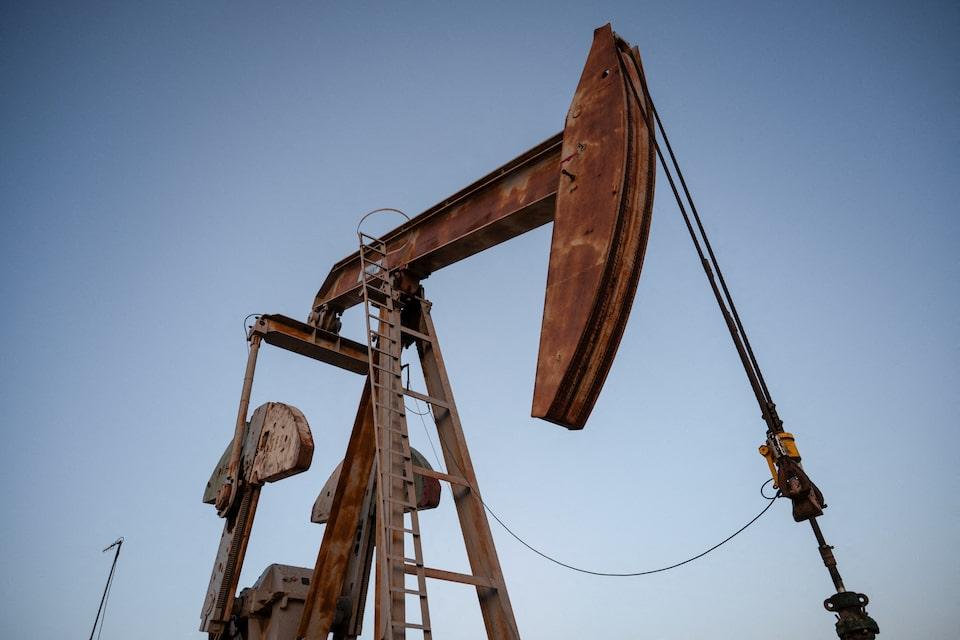
US oil output to average record 13.53 million bpd in 2025 NEW YORK, Oct 7 (Reuters) - U.S. oil production is expected to hit a larger record this year than previously expected, the Energy Information Administration said on Tuesday, even as the agency warned that a glut of oil will weigh on prices in the months ahead. The Department of Energy's statistical arm expects U.S. oil production to average 13.53 million barrels per day this year, up from its prior forecast of 13.44 million bpd. Oil output averaged 13.23 million bpd last year, which was the prior record. Sign up here. The anticipated surge in U.S. output defies growing concerns that the oil market is oversupplied, with the EIA noting that it expects crude oil inventories to rise throughout next year and put significant downward pressure on prices in the months ahead. Next year, EIA now expects a marginal 0.1% decline in U.S. output to 13.51 million bpd, compared to its previous forecast of a decline of over 1% in 2026, the agency said in its short-term energy outlook report. U.S. West Texas Intermediate crude prices are expected to average around $65 a barrel this year, the EIA said, a 15% decline from last year. Brent crude oil prices are expected to average around $68.64 a barrel, down nearly 15% from last year, the EIA said. US OFFSHORE PICKS UP, OPEC+ TO STAY BELOW TARGET The revision to EIA's U.S. oil output forecast was due to higher production in July than the agency had previously estimated, it said. The EIA also raised its forecasts for production from the offshore U.S. Gulf region, noting that some projects there are ramping up faster than it expected. The offshore Gulf is expected to be the main beneficiary of U.S. President Donald Trump's efforts to deregulate the energy industry in his bid to unleash more domestic output. The EIA said it expects offshore U.S. Gulf oil output to average 1.89 million bpd this year, up from its earlier forecast of 1.84 million bpd. The EIA also raised its global oil output forecast, largely because it now expects non-OPEC oil output to grow even more this year and next than it had previously estimated. Meanwhile, EIA broadly maintained its forecasts for output from the OPEC+ group, which comprises the Organization of the Petroleum Exporting Countries and its allies, despite the group's recent announcements about raising production. "Recent production increases due to higher OPEC+ targets will moderate as some members reach the practical limitations of their output and others aim to keep inventory builds from accelerating too quickly, limiting further decreases in oil prices," the EIA said. (This story has been corrected to add the dropped word 'million' in paragraph 2) https://www.reuters.com/business/energy/eia-hikes-us-oil-output-forecast-warns-oversupply-will-slash-prices-2025-10-07/
2025-10-08 00:42
Takaichi's election raises yen fiscal spending concerns Euro falls amid French political uncertainty US dollar benefits from lack of economic data Many Fed policymakers remain wary of inflation Oct 8 (Reuters) - The Japanese yen reached its weakest level since mid-February against the dollar on Wednesday on rising concerns about an increase in fiscal spending in Japan, while the euro fell on political uncertainty in France. The dollar has also likely benefited from a lack of government economic data as the federal government remains shut. That data would otherwise add to market volatility and may show a weakening economy, analysts said. Sign up here. The surprise election of Sanae Takaichi to Japan’s ruling Liberal Democratic Party on Saturday has dented the yen on expectations of greater government stimulus. “The market is running with the idea that the Takaichi government would be pursuing policies that are more similar to what we saw during the Abenomics years. In other words, expansionary fiscal policy and less restrictive monetary policy. But at the moment it's obviously still an open question what the policies will be,” said Vassili Serebriakov, an FX and macro strategist at UBS in New York. Former Japanese Prime Minister Shinzo Abe adopted expansive policies to combat Japan's long-term deflation and stimulate economic growth after 2012. Against the yen , the dollar was last up 0.53% at 152.7. It earlier reached 152.99, the highest since February 14, and has risen from 147.44 on Friday. "The yen will likely weaken until there is clarity on FX and bond issuance policies," Societe Generale strategist Kit Juckes said in a report on Wednesday. "Anything that helps the Japanese economy grow, would eventually be very yen positive. The yen will only fall while we remain in an information vacuum, about both the U.S. economy and Japanese government policies." The lack of U.S. government economic data that might point to a slowing economy is helping the dollar gain on peers. “Once the focus shifted to developments outside of the U.S. and then there's no kind of negative drag on the dollar from potentially weaker U.S. data, then the dollar is doing well,” said Serebriakov. Minutes from the Fed's September meeting released on Wednesday showed that officials agreed that risks to the U.S. job market had increased enough to warrant an interest rate cut, but many remained wary of high inflation. The U.S. central bank is widely expected to cut rates by 25 basis points at its October 28-29 meeting, and traders are pricing in 78% odds of an additional cut in December, according to the CME Group’s FedWatch Tool. The euro was last down 0.33% at $1.1616 and reached $1.1597, the lowest since August 27. French caretaker Prime Minister Sebastien Lecornu said on Wednesday a deal could eventually be reached on a 2026 budget despite the country's political crisis. France's fifth prime minister in two years, Lecornu tendered his and his government's resignation on Monday, just hours after announcing the cabinet line-up, making it the shortest-lived administration in modern France. The euro pared losses after Lecornu also said on Wednesday that President Emmanuel Macron could be in a position to nominate a new prime minister in the next 48 hours. The New Zealand dollar fell 0.33% versus the greenback to $0.5779 and reached $0.5735, the lowest since April 11. New Zealand's central bank cut its benchmark rate by a larger-than-expected 50 basis points on Wednesday as policymakers signalled concerns about the frail state of the economy and kept the door open for further easing. In cryptocurrencies, bitcoin gained 1.26% to $123,551.56 but remained below the record $126,223.18 reached on Monday. https://www.reuters.com/world/asia-pacific/dollar-rallies-us-shutdown-drags-weighing-confidence-2025-10-08/

2025-10-08 00:35
NEW DELHI/SINGAPORE, Oct 7 (Reuters) - Traders offering Russian oil have begun asking Indian state refiners to pay in Chinese yuan, taking recent signs of improving relations between New Delhi and Beijing as a chance to simplify deals with Indian buyers, trade sources said. India's top refiner, state-controlled Indian Oil Corp (IOC.NS) , opens new tab, recently made payments in Chinese currency for two to three cargoes of Russian oil, people familiar with Indian companies' Russian oil purchases said. Sign up here. Indian Oil did not immediately respond to Reuters' request for comment. Western sanctions imposed on Russia after its 2022 invasion of Ukraine have accelerated usage of alternative currencies, including the yuan and the UAE dirham to settle oil trades, which have long been dominated by the dollar. In 2023, Indian state refiners made some payments for Russian oil in yuan, but they stopped due to displeasure from the Indian government during a period of heightened tensions with Beijing, though private refiners continued to use the Chinese currency. Now, traders, which until now had to convert payments in dirhams or dollars into yuans - since only those can be directly exchanged into roubles needed to pay the producers - are seeking to remove one costly step from the process, one trader said. Sources also said that traders were pricing Russian oil in dollars to ensure adherence to the European Union's price cap and seeking equivalent yuan payment. India became the top importer of discounted Russian seaborne oil, since Western nations suspended imports from Moscow due to the sanctions. Payments in yuan will expand the availability of Russian oil for Indian state refiners, given some traders would not accept other currencies, the sources said. India and China recently resumed direct flights after a gap of more than five years. Indian Prime Minister Narendra Modi visited China last month for the first time in seven years to attend a meeting of the Shanghai Cooperation Organisation regional security bloc. https://www.reuters.com/business/energy/traders-seek-yuan-payment-indian-state-buyers-russian-oil-sources-say-2025-10-07/

2025-10-08 00:30
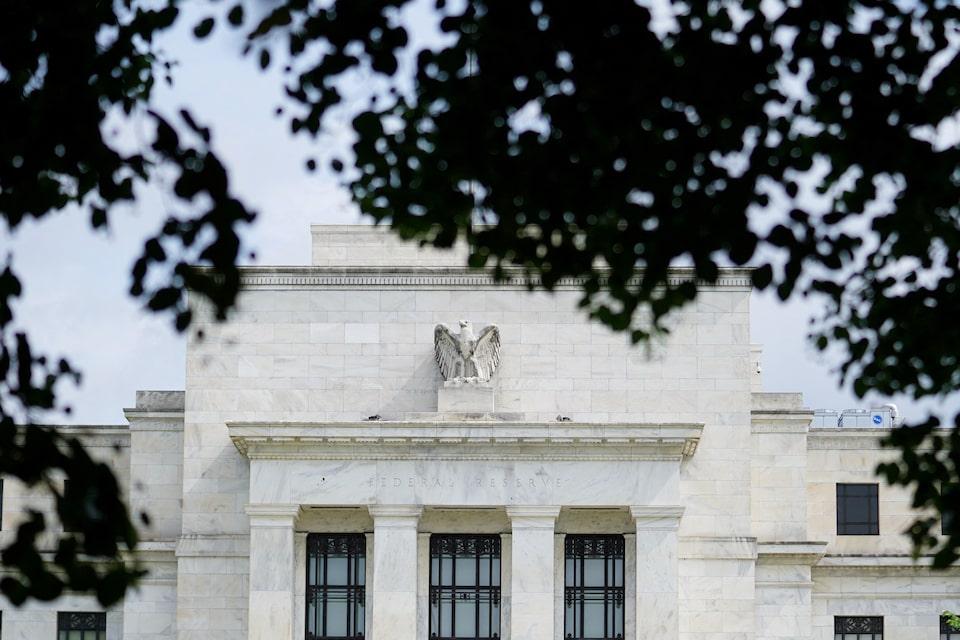
ORLANDO, Florida, Oct 7 (Reuters) - The Federal Reserve says its interest rate cuts are aimed at softening the impact of a looming labor market rupture. Unfortunately, cheaper money is unlikely to achieve that goal, but what it almost certainly will do is fuel the "everything" rally in financial assets. The reasoning posited by Chair Jerome Powell and the bevy of doves on the Federal Open Market Committee for pre-emptive easing is sound enough. Job growth is evaporating, which risks triggering a spiral of surging unemployment, lower consumption, and slower growth or even recession. Sign up here. The problem is the Fed's go-to tool in its armory - the federal funds policy rate - is a blunt one. This has always been true, but the risks in using it now are particularly asymmetric and increasingly skewed towards unwanted outcomes. This is partly down to the imbalances that have taken root across corporate, economic and financial America. Consumption is driven by the richest households, who own most of a booming Wall Street, where profits, investment and market cap are dominated by a handful or two of mega companies. The Fed is easing monetary policy with U.S. financial conditions the loosest in over three years, credit spreads the tightest since 1998, inflation a percentage point above target, and GDP growth running at an annualized rate of around 3% or higher. In financial markets, the "everything" rally is in full flow - Wall Street's big three indices, the Russell 2000 small cap index, the tech sector, semiconductor stocks, gold, and bitcoin are all at record highs. Powell did say late last month that equity prices were "fairly highly valued", perhaps echoing former Fed Chair Alan Greenspan's 1996 speech highlighting "irrational exuberance" in markets at that time. It's worth remembering, however, that the S&P 500 subsequently doubled and the Nasdaq quadrupled in value before peaking in March 2000. There's no suggestion a similar boom - or bust - is on the cards. But because the wealth effect seems so prevalent, perhaps the Fed should be factoring financial market conditions into their decision-making more than they have in the past. IT'S A 'LOW HIRE, LOW FIRE' LABOR MARKET Yet that doesn't appear to be the case. The Fed has shifted its focus towards the employment side of its dual mandate, but it's not clear how fragile the labor market really is. Much of the recent spike in jobless claims can be traced to one-off weather events in certain states and, more importantly, one of the main reasons job growth has slowed is the Trump administration's immigration and deportation policies. Even though policymakers' concerns may be justified, labor dynamics today are different from years gone by. It is a "low hire, low fire" job market - job growth is clearly slowing, but labor supply is shrinking too. The non-partisan Congressional Budget Office last month revised down its January estimates of net immigration this year by 1.6 million, and lowered next year's forecast by almost 1 million. This has helped slash the monthly breakeven rate of job growth needed to keep the unemployment rate steady to well below 50,000, according to St Louis Fed estimates, from over 150,000 at the start of the year. And it's worth remembering that the unemployment rate is still a historically low 4.3%. It's unclear whether rate cuts, ven the additional 100 basis points futures markets expect by the end of next year, will encourage businesses to hire more workers in this environment. As economists at BlackRock point out, that degree of easing is typically associated with a much starker weakening of the labor market, inflation, and growth, none of which looks certain or even likely at this juncture. BlackRock economists' base case scenario is what appears to be playing out right now - resilient household incomes spurring a revival in consumer spending, and the wave of AI-related investment in tech equipment, software and data centers powering growth. Markets are reacting accordingly. According to Chair Powell, the Fed's policy stance is "modestly restrictive", that is, close to neutral. On balance, further easing probably risks overheating Wall Street more than having a discernible positive effect on the labor market. (The opinions expressed here are those of the author, a columnist for Reuters) https://www.reuters.com/markets/us/easy-fed-risks-pouring-fuel-everything-rally-2025-10-07/