2025-10-07 23:07
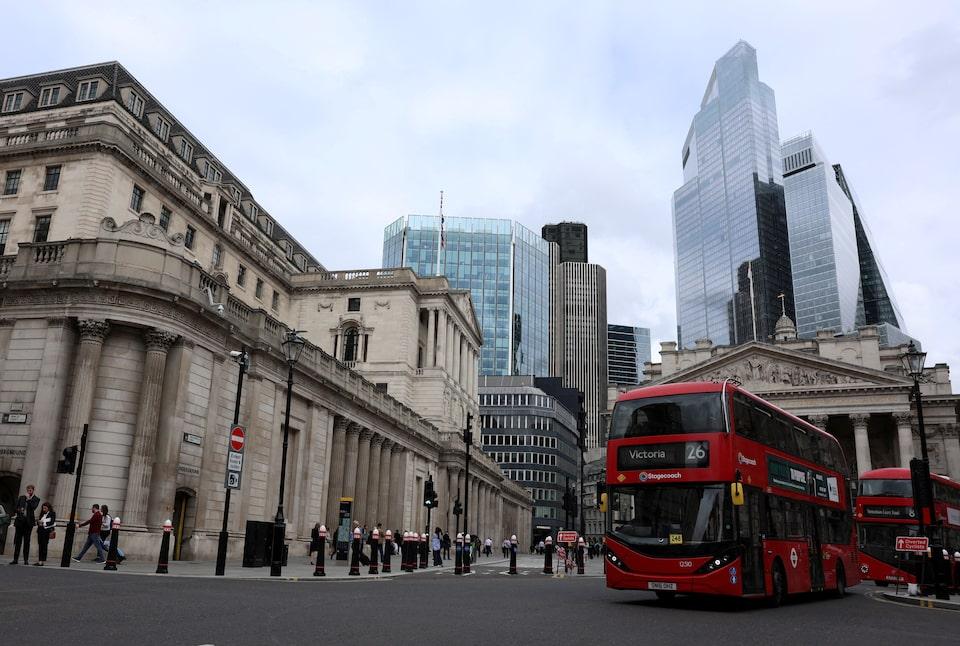
LONDON, Oct 8 (Reuters) - Rising asset prices have widened the wealth gap between the most well off 10% of British households and the average, a think tank said on Wednesday, highlighting the country's growing wealth inequality. The Resolution Foundation, which focuses on issues facing lower- and middle-income Britons, said the richest 10% of households held around half of total assets, little changed since the 1980s. Sign up here. But rises in prices for assets - chief among them property and private pension savings - had made it harder for average earners to catch up. Household wealth for an adult in the wealthiest 10% of households in 2020/22 was on average 1.3 million pounds greater than that for someone in a household in the middle of the wealth distribution, compared with 1 million pounds in 2006-08. The most recent difference is equivalent to 52 years of average income, up from 38 years. The wealth gap between people in their early 30s and their early 60s had more than doubled to 310,000 pounds, it said. Molly Broome, senior economist at the Resolution Foundation, said the data showed the likely fallout of any move to increase taxes on wealth which some politicians from the ruling Labour Party want in finance minister Rachel Reeves' November budget. "We need to be honest that higher wealth taxes are likely to fall on pensioners, southern homeowners or their families, rather than just being paid by the super-rich," Broome said. The report was based on an analysis of official data first published in January. London saw the sharpest rise in inequality since 2006-08 due to fast house price growth in the city where property wealth is the most unevenly distributed in Britain, it said. ($1 = 0.7442 pounds) https://www.reuters.com/business/finance/uk-workers-face-growing-wealth-gap-challenge-think-tank-says-2025-10-07/
2025-10-07 23:05
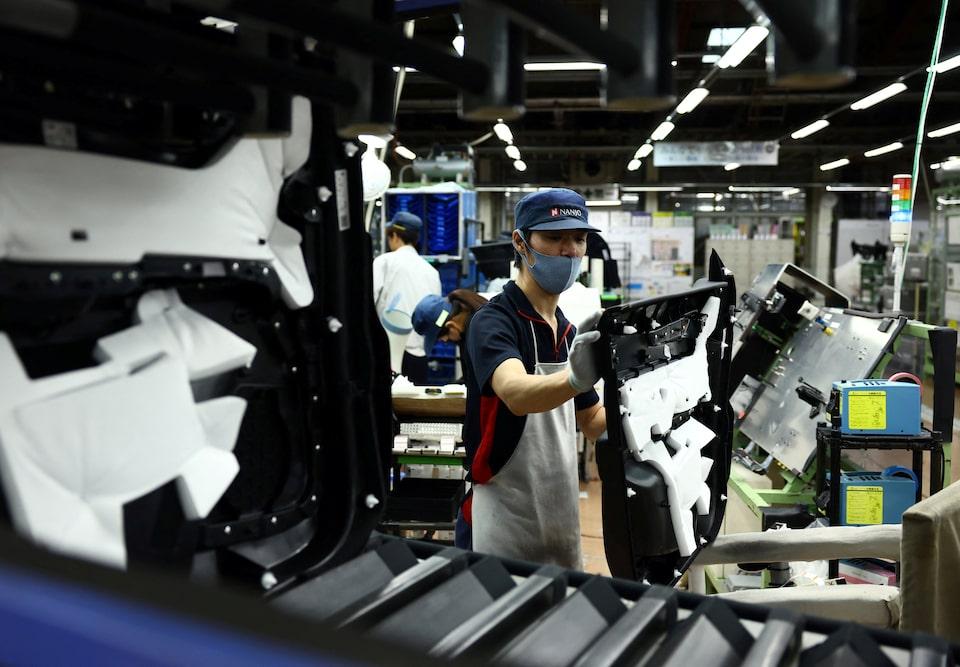
Manufacturers' sentiment index at +8 in October vs +13 in September Auto subindex plummets to +9 in October from +33 Non-manufacturers' index stays at +27 TOKYO, Oct 8 (Reuters) - Business confidence in Japan's auto sector has plunged, helping push a manufacturers' sentiment index to its first decline in four months, the Reuters Tankan poll showed, as firms grapple with U.S. tariffs, rising costs and weak overseas demand. The monthly poll, which tracks the Bank of Japan's closely watched quarterly business survey, showed the manufacturers' index dropped to plus 8 in October from plus 13 in September, the lowest reading since July. Sign up here. It is also expected to slip to plus 4 by January. The auto and transport machinery industry had the most precipitous decline in confidence, with its index tumbling to plus 9 from plus 33. The sector, which accounted for about a third of exports to the United States last year and employs about 8% of Japan's workforce, has to contend with U.S. tariffs of 15% after a trade deal with the Trump administration. Rising input costs - from raw materials to labour and energy - were also a recurring theme across many sectors. "We're seeing cost increases across the board, and not all of it can be passed on to customers," wrote a manager at transport equipment maker. The Reuters Tankan indexes are calculated by subtracting the percentage of pessimistic responses from optimistic ones. A positive figure indicates optimists outnumber pessimists. The survey, taken between September 24 and October 3, was sent to nearly 500 major non-financial companies, of which 237 responded. Respondents take part on condition of anonymity. Of the nine manufacturing industries surveyed, five saw their sub-indexes falling in October. The machinery and precision equipment sectors also highlighted tariff pain. "The additional costs from U.S. tariffs, including those on steel and aluminium, are weighing on our outlook," wrote a manager at a machinery firm. Others pointed to China's economic slowdown, which has led to weaker demand and increased competition from low-cost imports. Sagging overseas demand is expected to be a key culprit for a likely annualised 1.1% contraction in the July-September quarter, according to a poll of 37 economists by the Japan Center for Economic Research. The non-manufacturers' mood index held steady at plus 27, with firms projecting a slight dip to plus 26 by January. Sentiment for the retail sector improved, with its index jumping to plus 27 from plus 20, supported by recovering urban sales and inbound tourism. https://www.reuters.com/world/asia-pacific/japan-auto-sector-confidence-dives-manufacturers-index-logs-first-fall-four-2025-10-07/
2025-10-07 23:00
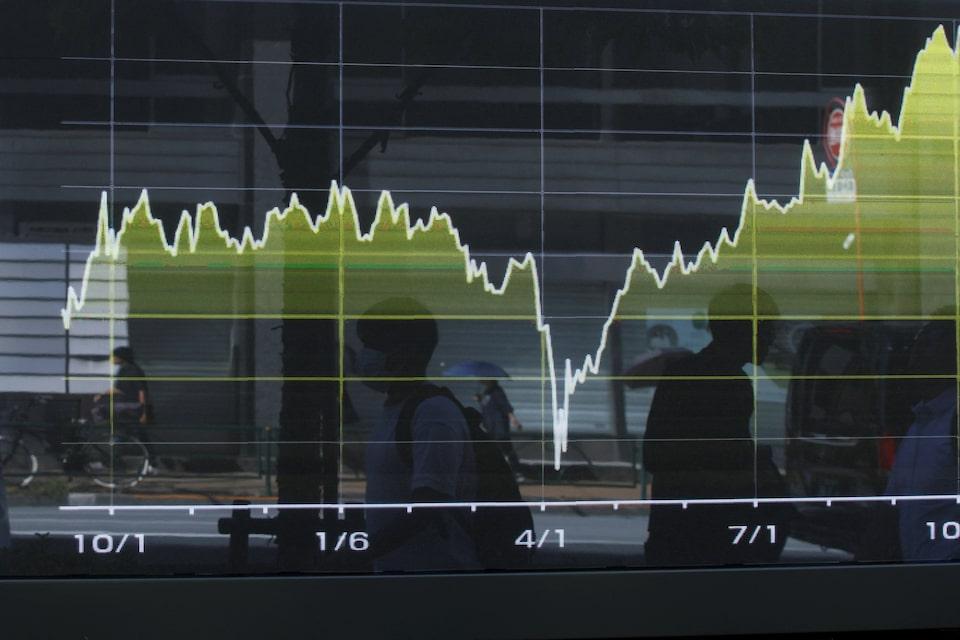
Investors draw parallels between Takaichi and mentor Shinzo Abe Stocks surged, yen sank during Abe's 8-year tenure as PM Takaichi appointment sent stocks to record high, yen to 150/dlr Super-long bond yields near record high on fiscal worries SINGAPORE/NEW YORK, Oct 7 (Reuters) - Sanae Takaichi's surprise victory to become Japan's next prime minister has left investors wondering whether the protégé of the late Shinzo Abe could usher in similar stimulus policies that may boost stocks but leave the yen fragile. Takaichi, a long-time advocate of the former prime minister's "Abenomics" expansionary policies, has called for higher spending and tax cuts to cushion the rising cost of living and has criticised the Bank of Japan's decision to raise interest rates. Sign up here. Her stance, though, has been relatively softer than last year. The initial reaction from investors to Takaichi's victory was to send Japanese shares to record highs, sell long-end government bonds and take the yen down past the psychologically important 150 per U.S. dollar level. Investors are also drawing parallels to when Abe became Japan's prime minister in 2012, after which he ushered in an era of fiscal stimulus measures through government spending and monetary easing from the Bank of Japan. The Nikkei (.N225) , opens new tab more than doubled in the nearly 8 years Abe was at the helm. His policies have also been credited with helping usher in corporate governance reforms that lifted the Japanese shares to record highs since then. The Nikkei soared nearly 5% in the two trading sessions since Takaichi's win, closing at a record high on Tuesday. "Abenomics was significant for Japan's capital markets and there is a good chance that Takaichi's win is a big shift in market perception from the previous two prime ministers who were more 'business as usual'," said Van Luu, global head of solutions strategy for fixed income and foreign exchange for Russell Investments in London. There are significant differences though between now and when Abe took over, analysts said, pointing out that Japan faces inflation right now compared to deflation over a decade ago. The impact of U.S. tariffs is also another big unknown. The yen , on the other hand, depreciated about 18% in the same period to trade just below 105 per dollar when Abe left office in September 2020. It was at 86 when Abe became the prime minister in December 2012. On Tuesday, the yen last fetched 150.67. Receding expectations of another BOJ rate hike this year has left the yen vulnerable, with intervention risks also looming. The yen has risen over 4% in 2025, making it a laggard among major peers as it failed to take advantage of a weakening dollar due to long-drawn out negotiations with the U.S. over tariffs and a cautious central bank unwilling to hike rates in a hurry. "There may be tension with the BOJ given Takaichi's dovish tilt and inflation may constrain the ability of the BOJ to be accommodative, but her win is positive for nominal growth," Russell's Luu said. Japanese government bond yields under Abe's leadership slumped to near zero. After years of huge bond buying failed to fire up inflation, the BOJ cut short-term rates below zero in January 2016 to fend off an unwelcome yen rise. The BOJ adopted yield curve control (YCC) eight months later by adding a 0% target for 10-year bond yields to its -0.1% short-term rate target. The BOJ has since phased out YCC and is on a tightening path, with its short-term policy rate at 0.5%. The 10-year yield was hovering near a 17-year high at 1.675% on Tuesday. Much of the focus in the aftermath of Takaichi's victory has been on rising fiscal risks, with super-long Japanese government bond yields hitting record highs over worries around the fiscal health of a country with a massive debt load. "Whilst the fiscal outlook is cloudy at the moment, it is clear to see that Japan will adopt mildly pro-growth policies and remain conservative on fiscal expansion," said Matthias Scheiber, senior portfolio manager and the head of the multi-asset team at Allspring Global Investments. Ipek Ozkardeskaya, senior analyst at Swissquote Bank, said unlike Abe, Takaichi faces rising inflation, record-high debt near 216% of GDP, and a central bank that’s tightening, not easing. "That leaves far less room for bold fiscal or monetary moves." https://www.reuters.com/world/asia-pacific/deja-vu-japan-markets-abe-disciple-takaichis-victory-jolts-investors-2025-10-07/
2025-10-07 22:56
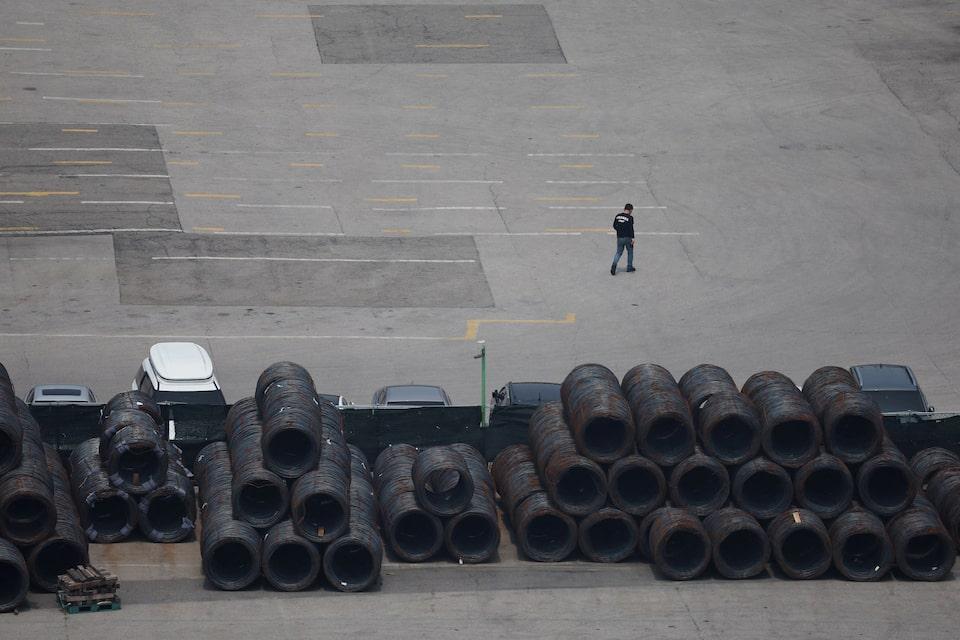
SEOUL, Oct 8 (Reuters) - South Korea said on Wednesday the European Commission's proposal to cut tariff-free steel import quotas by almost half and to impose a 50% duty for excess shipments would negatively impact South Korean steel exports if implemented as planned. The proposal, which seeks to protect European steelmakers, is expected to have "significant impact" on steel exports to the European Union, which is South Korean steelmakers' second-largest export market, the industry ministry said in a statement. Sign up here. "However, since the EU has explicitly stated that it will consider FTA (free trade agreement) signatory countries when allotting supplies by country, South Korea plans to secure our interests as much as possible through bilateral consultations," the ministry said. South Korea's top trade envoy Yeo Han-koo plans to meet EU Trade Commissioner Maros Sefcovic in coming days to express the country's position, the ministry said. High U.S. tariffs of 50% have already led South Korean steel exports to dip 4.2% in September, extending losses to a fifth straight month. https://www.reuters.com/world/asia-pacific/south-korea-says-steel-exports-be-impacted-by-eu-plan-halve-import-quotas-2025-10-07/
2025-10-07 22:18
LIMA, Oct 7 (Reuters) - Peru is pursuing major investments from Saudi Arabia and U.S. oil giant Chevron (CVX.N) , opens new tab to develop its mining and energy resources, part of a broad strategy to revitalize the sector, a top minister said on Tuesday. The push comes as Peru, the world's third-largest copper producer, seeks to jumpstart investment, which has slowed in recent years amid political uncertainty and persistent social conflicts. Sign up here. In an interview with Reuters, Energy and Mines Minister Jorge Luis Montero said he expected to sign a memorandum of understanding with Saudi Arabia in November to develop projects for lithium and other strategic minerals. He described the Middle Eastern kingdom as seeking a "reliable strategic partner" in Peru. Montero said he would travel to Saudi Arabia next month with Peru's foreign minister to also sign broader economic agreements with Gulf countries. He added the Saudi interest extended to "investing in mining and energy activities... even in seawater desalination plants for the mining sector in the future." A parallel effort is underway to overhaul Peru's energy sector. A key component involves Chevron, which is set to begin drilling early next year in three offshore blocks. "The expectation is for production that could reach 250,000-300,000 barrels per day or more," Montero said, assuming the potential reserves in those blocks are confirmed. He projected such a volume could allow Peru, currently a net oil importer, to cease imports within three years, saving the country around $5 billion annually. To further bolster its energy strategy, Peru is finalizing a commercial and infrastructure agreement with neighboring Ecuador. State-owned oil companies Petroperu and Petroecuador are scheduled to sign the deal on October 24. The agreement will link oil fields in southern Ecuador with Peru's underutilized Norperuano pipeline, allowing Ecuadorean crude to be transported to and processed at Petroperu's recently modernized Talara refinery. Montero said the deal would be a lifeline for financially troubled Petroperu, ensuring a steady supply to keep reservoirs full and the Talara refinery "working 24 hours a day." https://www.reuters.com/business/energy/peru-minister-touts-saudi-mining-interest-chevron-offshore-potential-2025-10-07/

2025-10-07 21:21
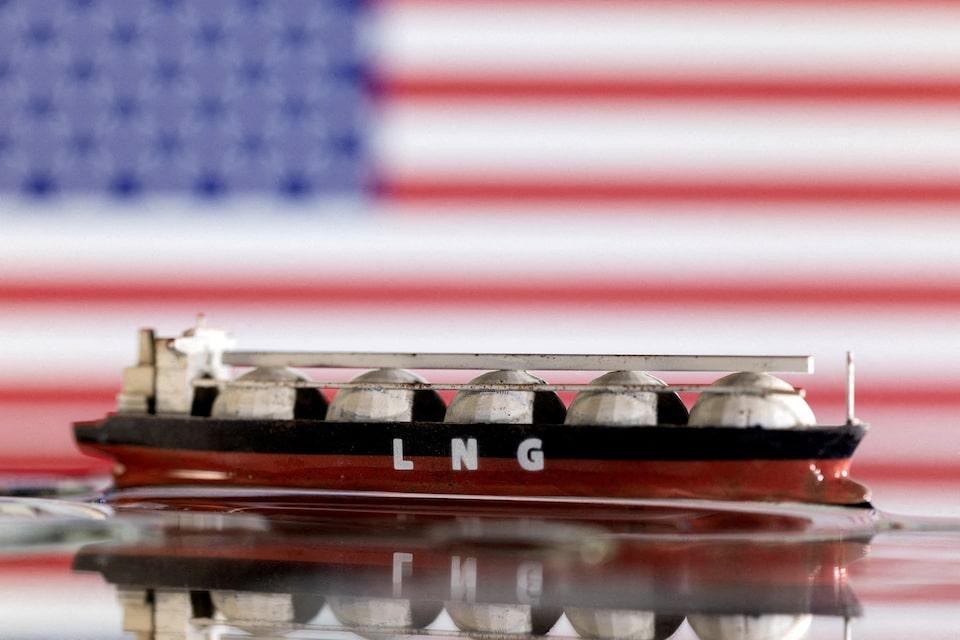
HOUSTON, Oct 7 (Reuters) - Commonwealth LNG has asked federal regulators for a four-year extension to construct and begin shipping liquefied natural gas from a proposed export facility in Cameron Parish, Louisiana, a regulatory document shows. In a letter to the Federal Energy Regulatory Commission, Commonwealth said the extension was needed due to an approval pause implemented by former U.S. President Joe Biden last year. Sign up here. While President Donald Trump lifted the freeze this year, the company said it cannot meet the present deadline of November 2027 and wants it extended to December 2031. "These delays were beyond the control of Commonwealth and unavoidably affected Commonwealth’s ability to advance the Project on the schedule contemplated when its application was filed," the company said in the filing. Commonwealth has so far sold 5 million metric tons per annum of planned capacity but is still short of selling out the total 9.5 mtpa that would come online upon completion. LNG developers usually try to sell most of the future flows in long-term agreements before giving the financial greenlight, a final investment decision (FID) for a plant to be built. "We are in negotiations and have near-term line of sight to signing the remaining volumes and we remain on-track to achieve FID in 2025," Commonwealth told Reuters on Tuesday. The company has in the past said its developer Kimmeridge would also keep 2 mtpa for itself from the project to trade. Commonwealth has sales agreements with EQT (EQT.N) , opens new tab, Glencore (GLEN.L) , opens new tab, JERA and PETRONAS (PGAS.KL) , opens new tab. The FERC said if the extension request is contested, it will aim to issue a decision within 45 days. https://www.reuters.com/business/energy/commonwealth-lng-wants-more-time-build-planned-export-facility-louisiana-2025-10-07/