2025-10-07 21:04
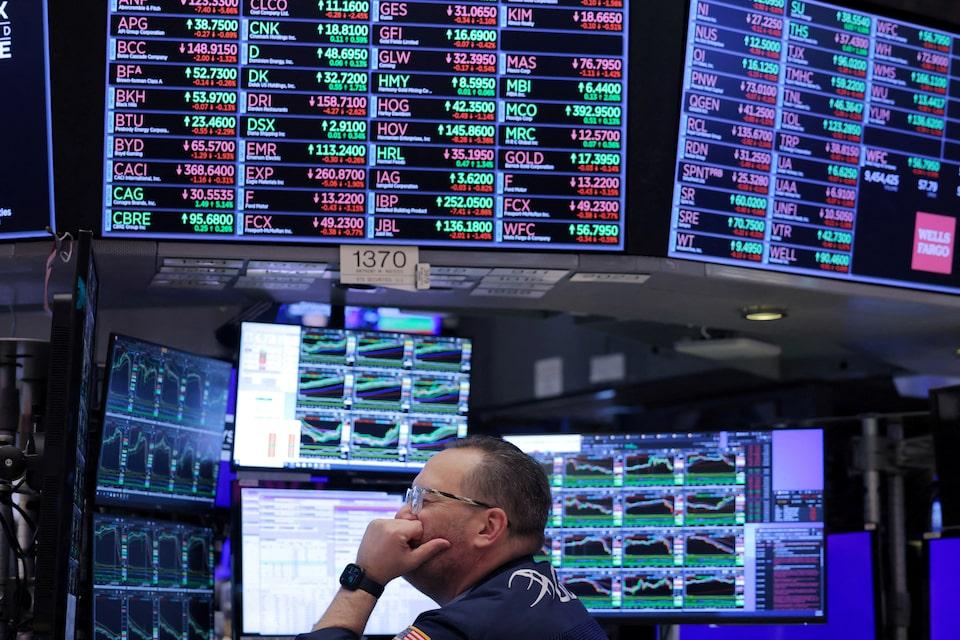
ORLANDO, Florida, Oct 7 (Reuters) - A burst of profit-taking and economic jitters knocked U.S. and world stocks off their record-high perches on Tuesday as investors digested the ongoing political gridlock in the U.S. and France, while gold futures reached the landmark $4,000 an ounce level. More on that below. In my column today I look at the asymmetric risks in the Fed's easy policy stance. Chair Jerome Powell says rate cuts are needed to support the creaking labor market, but that may be questionable. What's less debatable is the whoosh they are giving to already booming asset prices. Sign up here. If you have more time to read, here are a few articles I recommend to help you make sense of what happened in markets today. Today's Key Market Moves Today's Talking Points: * U.S. bank reserves below $3 trillion U.S. bank reserves held at the Fed are below $3 trillion for the first time since January - down nearly $300 billion since late August - a clear sign that excess liquidity is being drained from the system. There's nothing magical about the $3 trillion figure, and it is probably well above the unknowable level where officials reckon reserves are still "ample". But it brings into focus Fed QT and the question of how low can reserves go without sparking liquidity concerns. Fed Governor Christopher Waller has said $2.7 trillion might hypothetically be an ideal level. It's not far away. * Bond blues Sovereign debt markets around the world are under heavy pressure, particularly the long end of the curve, where yields have recently shot up to historic highs in many countries. And in the case of Japan, record highs. There was some respite for U.S. Treasuries on Tuesday, but the backdrop remains challenging. Policymakers are running economies hot with monetary and fiscal easing, just as financial markets are booming and inflation is above target. Right now, investors are more inclined to sell any rip than buy any dip. * Nothing's gonna touch you in these golden years Gold futures reached $4,000 an ounce on Tuesday, and the spot market price got to within $10 of that landmark level. Bullion has climbed 20% in just six weeks, and is up more than 50% this year. The rally must run out of steam soon, right? Perhaps. But as talk of 'debasement' trades continues to percolate, and central banks continue buying, it's not clear what that catalyst is or when it appears. Easy Fed risks pouring fuel on 'everything' rally The Federal Reserve says its interest rate cuts are aimed at softening the impact of a looming labor market rupture. Unfortunately, cheaper money is unlikely to achieve that goal, but what it almost certainly will do is fuel the "everything" rally in financial assets. The reasoning posited by Chair Jerome Powell and the bevy of doves on the Federal Open Market Committee for pre-emptive easing is sound enough. Job growth is evaporating, which risks triggering a spiral of surging unemployment, lower consumption, and slower growth or even recession. The problem is the Fed's go-to tool in its armory - the federal funds policy rate - is a blunt one. This has always been true, but the risks in using it now are particularly asymmetric and increasingly skewed towards unwanted outcomes. This is partly down to the imbalances that have taken root across corporate, economic and financial America. Consumption is driven by the richest households, who own most of a booming Wall Street, where profits, investment and market cap are dominated by a handful or two of megacompanies. The Fed is easing monetary policy with U.S. financial conditions the loosest in over three years, credit spreads the tightest since 1998, inflation a percentage point above target, and GDP growth running at an annualized rate of around 3% or higher. In financial markets, the "everything" rally is in full flow - Wall Street's big three indices, the Russell 2000 small-cap index, the tech sector, semiconductor stocks, gold, and bitcoin are all at record highs. Powell did say late last month that equity prices were "fairly highly valued", perhaps echoing former Fed Chair Alan Greenspan's 1996 speech highlighting "irrational exuberance" in markets at that time. It's worth remembering, however, that the S&P 500 subsequently doubled and the Nasdaq quadrupled in value before peaking in March 2000. There's no suggestion a similar boom - or bust - is on the cards. But because the wealth effect seems so prevalent, perhaps the Fed should be factoring financial market conditions into their decision-making more than they have in the past. IT'S A 'LOW-HIRE, LOW-FIRE' LABOR MARKET Yet that doesn't appear to be the case. The Fed has shifted its focus towards the employment side of its dual mandate, but it's not clear how fragile the labor market really is. Much of the recent spike in jobless claims can be traced to one-off weather events in certain states and, more importantly, one of the main reasons job growth has slowed is the Trump administration's immigration and deportation policies. Even though policymakers' concerns may be justified, labor dynamics today are different from years gone by. It is a "low-hire, low-fire" job market - job growth is clearly slowing, but labor supply is shrinking too. The nonpartisan Congressional Budget Office last month revised down its January estimates of net immigration this year by 1.6 million, and lowered next year's forecast by almost 1 million. This has helped slash the monthly breakeven rate of job growth needed to keep the unemployment rate steady to well below 50,000, according to St. Louis Fed estimates, from over 150,000 at the start of the year. And it's worth remembering that the unemployment rate is still a historically low 4.3%. It's unclear whether rate cuts, even the additional 100 basis points futures markets expect by the end of next year, will encourage businesses to hire more workers in this environment. As economists at BlackRock point out, that degree of easing is typically associated with a much starker weakening of the labor market, inflation, and growth, none of which looks certain or even likely at this juncture. BlackRock economists' base case scenario is what appears to be playing out right now - resilient household incomes spurring a revival in consumer spending, and the wave of AI-related investment in tech equipment, software and data centers powering growth. Markets are reacting accordingly. According to Chair Powell, the Fed's policy stance is "modestly restrictive", that is, close to neutral. On balance, further easing probably risks overheating Wall Street more than having a discernible positive effect on the labor market. What could move markets tomorrow? Want to receive Trading Day in your inbox every weekday morning? Sign up for my newsletter here. Opinions expressed are those of the author. They do not reflect the views of Reuters News, which, under the Trust Principles , opens new tab, is committed to integrity, independence, and freedom from bias. https://www.reuters.com/world/asia-pacific/global-markets-trading-day-graphic-2025-10-07/
2025-10-07 20:58
Spot gold hits another record of $3,990.85 an ounce Tuesday Institutional investors drive demand, gold up 51% year to date Gold appeals to investors wary of sky-high stock market values Oct 7 (Reuters) - Outsized flows into exchange-traded funds tracking gold have helped drive a spectacular rally that pushed bullion to record highs over the last month, analysts said. Spot gold prices hit another record of $3,990.85 per ounce on Tuesday, while U.S. gold futures for December delivery edged above the $4,000 an ounce milestone. Some analysts cited the record pace at which investors are allocating money to the metal via ETFs. Sign up here. Many investors have grown wary of sky-high stock market valuations and they view gold as a safe haven providing refuge from uncertain economic policy and geopolitics. Bullion prices are 51% higher this year, the largest surge since 1979, according to LSEG data. "Institutional investor interest is just getting started," said Roukaya Ibrahim, commodities strategist at BCA Research, who calculated that assets in gold ETFs globally now account for 2.6%, up from 1.9% a year ago. The intensity of investor interest is unprecedented, said Ibrahim, adding that clients now keep her on the phone for as long as 90 minutes at a time to chat about market movements. State Street Investment Management said inflows into U.S. ETFs such as the firm's own SPDR Gold Shares (GLD.P) , opens new tab have set all-time records of $35 billion as of the end of September, ahead of the previous full-year record of $29 billion, set in 2020. Globally, inflows into gold ETFs hit $64 billion year-to-date, according to data from the World Gold Council, with a record $17.3 billion in September alone. That is a dramatic reversal from recent trends: over the last four years, gold ETFs have seen outflows totaling $23 billion, the World Gold Council calculated. Analysts said investors believe gold can hold its value in the face of economic policy headwinds and rising geopolitical tensions. They also hope gold can cushion big gains they may have seen this year as the artificial intelligence boom sent stocks soaring. "There’s a kind of 'barbelling' here, where gold becomes a hedge against any failure of the AI-driven tech boom to deliver on its promises and the policy implications of a crash," said Thierry Wizman, global FX and rates strategist at Macquarie Group. Gold, one of the world's oldest financial assets, is making its way higher in tandem with one of its newest, bitcoin, said David Schlesser, head of multi-asset solutions at VanEck. "Both are decentralized store of value assets not tied to any government," said Schlesser. Schlesser warns that "no asset goes up in a straight line and we should expect some tactical pullbacks and volatility," adding that in this case, "volatility is your friend," giving investors and traders a chance to jump in on dips. He expects gold prices to top $5,000 an ounce in 2026 and urges investors to allocate at least 5% of their portfolio to gold. Goldman Sachs said in a note published on Monday that it expects holdings of gold ETFs in North America and Europe to rise still further as the Federal Reserve cuts U.S. interest rates into 2026. Mike Wilson, chief investment officer at Morgan Stanley (MS.N) , opens new tab suggested last month that a 20% allocation to gold serves as a resilient inflation hedge. "When you have establishment names like Morgan Stanley telling investors that they don't own enough gold, it's no surprise to see inflows jump, whether into ETFs or vaulted bullion," said Adrian Ash, head of research at online marketplace BullionVault. https://www.reuters.com/world/india/investors-flock-gold-etfs-metals-price-shatters-records-2025-10-07/

2025-10-07 20:55
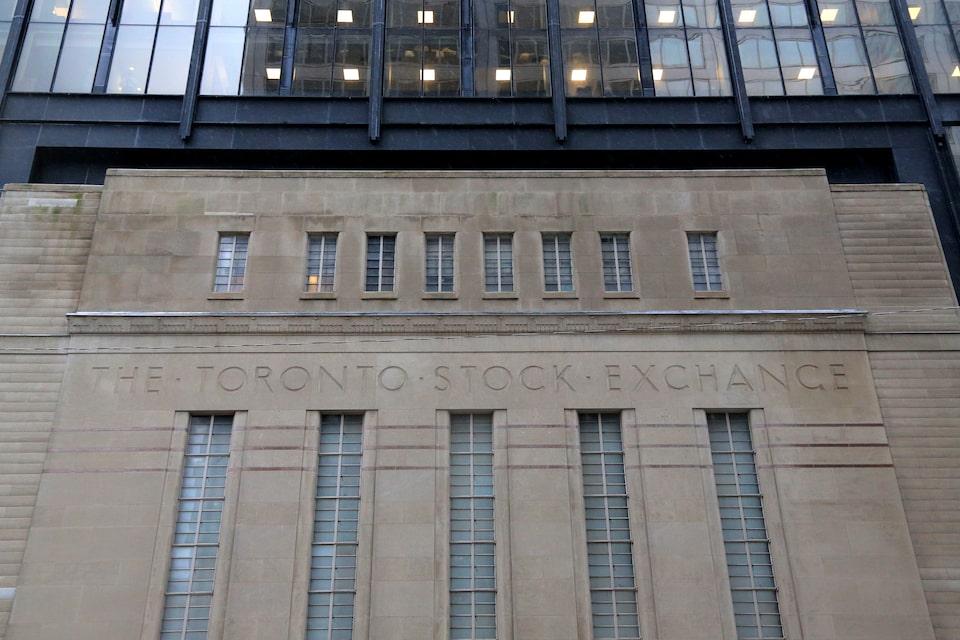
TSX ends down 0.6% at 30,351.72 Pulls back from record closing high Magna International shares fall 5.3% Materials group loses 1.4% Oct 7 (Reuters) - Canada's main stock index fell on Tuesday, including declines for auto parts manufacturers, as investors took stock of recent gains and after a meeting between U.S. President Donald Trump and Canadian Prime Minister Mark Carney. Toronto's S&P/TSX composite index (.GSPTSE) , opens new tab ended down 180.16 points, or 0.6%, at 30,351.72, after seven straight days of gains, including a record closing high on Monday. Sign up here. "Markets are taking a little breather," said Michael Dehal, a senior portfolio manager at Dehal Investment Partners at Raymond James, adding that investors are awaiting the start of earnings season and hoping for more clarity on prospects of a trade deal between the United States and Canada. Trump promised to treat Canada fairly in talks over punishing U.S. tariffs on Canadian goods, but was less committed about a continental trade deal that also includes Mexico. Canada's merchandise trade deficit widened in August to C$6.32 billion ($4.53 billion), its second-highest on record, as exports both to the United States and the rest of the world fell. The consumer discretionary sector lost 1.9%, with shares of auto parts manufacturers Magna International (MG.TO) , opens new tab and Linamar (LNR.TO) , opens new tab down 5.3% and 3.2% respectively. The materials group, which includes fertilizer and metal mining companies, was down 1.4%. The price of gold pared its gains after surging past the $4,000 per ounce milestone for the first time. Canadian miner Hudbay Minerals (HBM.TO) , opens new tab said it resumed operations at its Constancia mine in Peru, weeks after halting output due to local protests and blockades that had disrupted access to the site. Its shares were up 0.9%. Energy was another bright spot, adding 0.4%. The price of oil settled 0.1% higher at $61.73 a barrel as a smaller-than-expected increase to OPEC+ output in November offset signs of a potential supply glut. https://www.reuters.com/world/americas/tsx-futures-dip-after-record-rally-commodity-prices-cool-2025-10-07/
2025-10-07 20:54
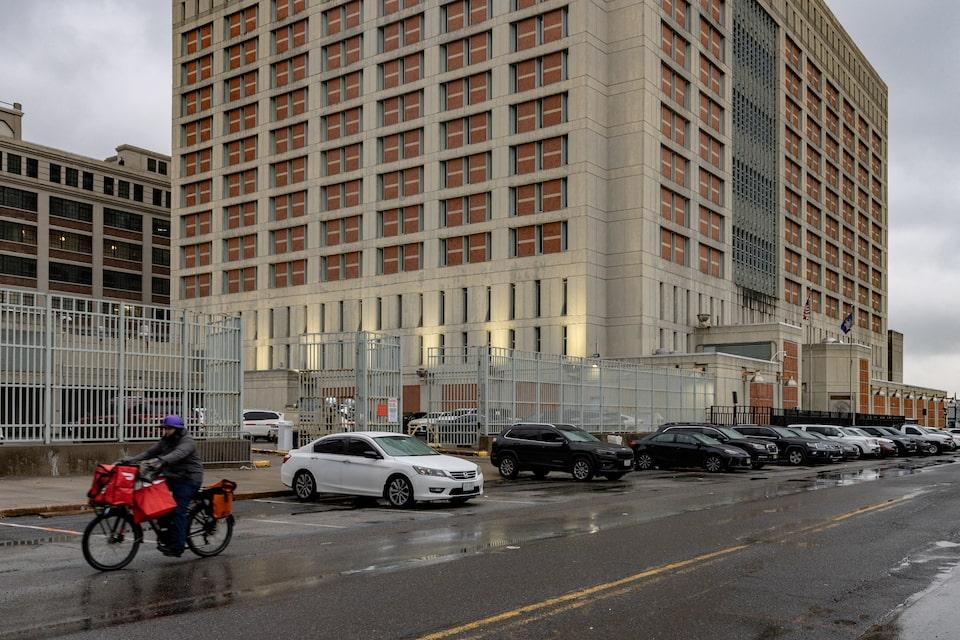
James Wellesley admitted to wire fraud conspiracy British co-defendant Stephen Burton also pleaded guilty Wine claimed to be in inventory allegedly didn't exist NEW YORK, Oct 7 (Reuters) - A British man pleaded guilty on Tuesday in New York to involvement in a nearly $100 million fraud whose victims invested in loans meant for fictitious wealthy wine collectors whose wine also did not exist. James Wellesley, 59, pleaded guilty to wire fraud conspiracy before U.S. District Judge Pamela Chen in Brooklyn, court records show. Sign up here. Wellesley, also known as Andrew Fuller, had pleaded not guilty to three charges including conspiracy in July. He remains jailed at Brooklyn's Metropolitan Detention Center, after unsuccessfully fighting extradition from Britain. A lawyer for Wellesley did not immediately respond to a request for comment. According to his plea agreement, Wellesley could face 10 to 12-1/2 years in prison under recommended federal guidelines. He also agreed to forfeit $1 million plus funds in more than two dozen bank accounts. Co-defendant Stephen Burton, 61, who is also British, pleaded guilty in July to wire fraud conspiracy and money laundering conspiracy, and accepted a $26 million forfeiture order. He is also jailed in Brooklyn. Prosecutors said Wellesley and Burton, posing as executives at London- and Hong Kong-registered Bordeaux Cellars, raised $99.4 million by promising loan investors they would receive regular interest payments from "high net worth" wine collectors. The defendants allegedly claimed the loans were backed by an inventory of more than 25,000 bottles of wine, including from Domaine de la Romanee-Conti in Burgundy and Chateau Lafleur in Bordeaux. Prosecutors said Bordeaux Cellars controlled far fewer bottles, and as few as 217, while the defendants used loan proceeds for personal expenses and to pay interest to some investors. The scheme ran from June 2017 to February 2019, and collapsed when interest payments stopped, prosecutors said. Burton's sentencing is scheduled for January 6, 2026, and Wellesley's sentencing is on February 3, court records show. The case is US v Burton et al, U.S. District Court, Eastern District of New York, No. 22-cr-00079. https://www.reuters.com/legal/government/uk-man-pleads-guilty-new-york-99-million-wine-fraud-2025-10-07/
2025-10-07 20:24
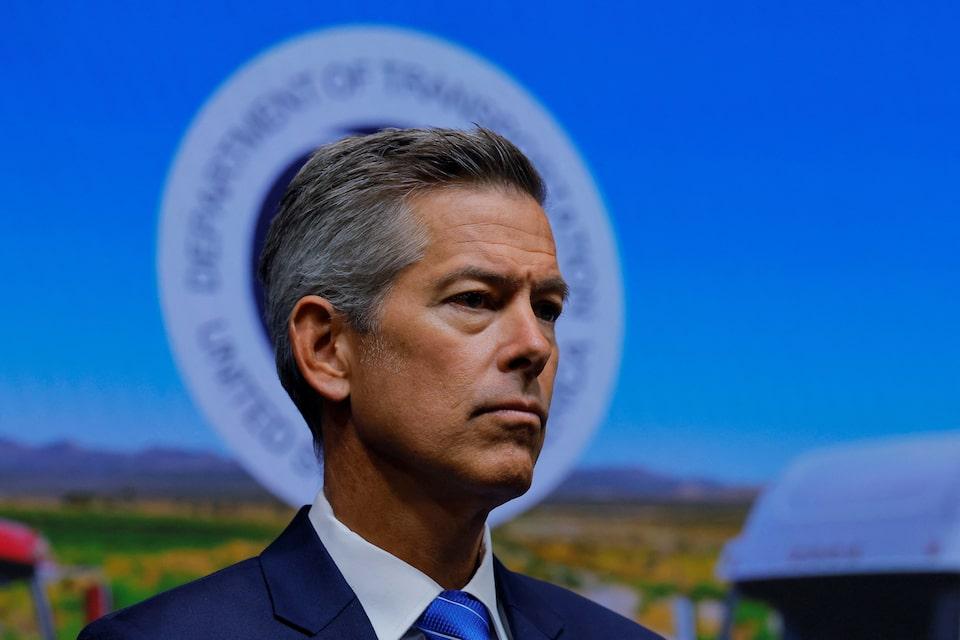
Houston, Nashville, Dallas, Chicago O'Hare and Newark among affected airports More than 3,000 flights delayed, data shows, as staffing shortages widen Air traffic controllers required to work during government shutdown but are not being paid WASHINGTON, Oct 7 (Reuters) - Air traffic control staffing issues are delaying flights for a second straight day at numerous U.S. airports as the government shutdown reaches its seventh day, the Federal Aviation Administration said in a notice on Tuesday. More than 3,000 flights have been delayed, according to flight tracking data, as staffing shortages have impacted a widening number of airports, including Houston, Nashville, Dallas, Chicago O'Hare and Newark. Sign up here. The FAA is reducing the number of arriving flights per hour at Chicago O'Hare, citing staffing, with average delays of 41 minutes, and there are also staffing issues at Atlanta Air Route Traffic Control Center. Arriving flights were being held for up to 30 minutes at Newark due to the staffing issues, the FAA said, while Washington Reagan might see new slowdowns due to low staffing on Tuesday. Nashville air traffic control is facing significant staffing issues and will curtail operations later on Tuesday, the FAA said. Approach control will be taken over later by Memphis Center, it added. Both political parties are pointing the finger at each other for the impacts. White House press secretary Karoline Leavitt said Democrats were to blame for the aviation slowdown, while California Governor Gavin Newsom, a Democrat, said President Donald Trump was responsible. Severe weather is also impacting flights across the country. Some 13,000 air traffic controllers and about 50,000 Transportation Security Administration officers must still turn up for work during the government shutdown, but they are not being paid. Controllers are set to receive a partial paycheck on October 14 for work performed before the shutdown. Transportation Secretary Sean Duffy said on Monday the FAA had seen a slight increase in controllers taking sick leave and air traffic staffing has been cut by 50% in some areas since the shutdown started last week. "If we don't have controllers, we're going to make sure the airspace is safe. So what we do is we'll slow traffic," Duffy said on Tuesday on Fox News' "Fox and Friends." FlightAware, a flight tracking website, said more than 3,000 U.S. flights had been delayed on Tuesday, including 225 at Nashville, or 20% of its flights, and more than 570 flights at Chicago O'Hare, or more than 20% of its flights. Southwest Airlines (LUV.N) , opens new tab has delayed more than 500 flights and American Airlines 400 flights, FlightAware data showed. In 2019, during a 35-day shutdown, the number of absences by controllers and TSA officers rose as workers missed paychecks, extending checkpoint wait times at some airports. Authorities were forced to slow air traffic in New York, which put pressure on lawmakers to quickly end the standoff. The U.S. has faced air traffic control shortages for more than a decade, and many controllers had been working mandatory overtime and six-day weeks even before the shutdown. The FAA is about 3,500 air traffic controllers short of targeted staffing levels. https://www.reuters.com/sustainability/sustainable-finance-reporting/air-traffic-control-staffing-hit-second-day-delaying-flights-2025-10-07/
2025-10-07 20:16
Constellation Brands' Q2 sales dip less than expected Tesla down after launching low-cost model Crypto shares slide as bitcoin declines Indexes down: Dow 0.20%, S&P 500 0.38%, Nasdaq 0.67% NEW YORK, Oct 7 (Reuters) - U.S. stocks closed lower on Tuesday as investors, deprived of economic data resulting from the shuttered government, looked to secondary indicators and remarks from U.S. Federal Reserve officials for clues regarding economic weakness and monetary policy. All three indexes ended in negative territory after a consumer expectations survey from the New York Federal Reserve showed deteriorating future expectations and rising inflation projections. The report garnered increased scrutiny amid a federal data blackout resulting from a partisan congressional impasse that extended the government shutdown to its seventh day. Sign up here. Investors have had to rely on secondary, independently produced data, along with remarks from monetary policymakers, to gauge the likelihood that the Federal Reserve will implement its second rate cut of the year at this month's policy meeting. "The New York Fed report probably gave traders an excuse to take some profits since the S&P had been up for seven days in a row," said Sam Stovall, chief investment strategist of CFRA Research in New York. "There is an awful lot of uncertainty the longer the government remains shut down because of the absence of any economic data." Economically sensitive sectors, including homebuilding (.SPCOMHOME) , opens new tab, housing (.HGX) , opens new tab, airlines (.SPCOMAIR) , opens new tab, and transport (.DJT) , opens new tab underperformed the broader market. "The market is still very much centered on AI driving everything, and I think some of the bloom is off the rose," said Paul Nolte, senior wealth adviser and market strategist at Murphy & Sylvest in Elmhurst, Illinois. Fed Governor Stephen Miran stated his case for continued rate cuts, stressing the risks of keeping policy too restrictive. The Dow Jones Industrial Average (.DJI) , opens new tab fell 91.99 points, or 0.20%, to 46,602.98, the S&P 500 (.SPX) , opens new tab lost 25.69 points, or 0.38%, to 6,714.59 and the Nasdaq Composite (.IXIC) , opens new tab lost 153.30 points, or 0.67%, to 22,788.36. Among the 11 major sectors of the S&P 500, consumer discretionary (.SPLRCD) , opens new tab suffered the steepest percentage decline, while consumer staples (.SPLRCS) , opens new tab and utilities (.SPLRCU) , opens new tab were the top gainers. Tesla (TSLA.O) , opens new tab shares extended their losses, dropping 4.5% after the electric carmaker unveiled its low-cost Model Y. AMD (AMD.O) , opens new tab advanced 3.8% after Jefferies upgraded the stock rating to "buy" and other brokerages hiked their price targets the day after the chipmaker's supply deal with OpenAI bolstered the tech rally. Corona beer maker Constellation Brands (STZ.N) , opens new tab gained 1% after posting a smaller-than-expected drop in second-quarter sales. IBM (IBM.N) , opens new tab rose 1.5% after the company announced a partnership with AI startup Anthropic. U.S.-listed shares of Trilogy Metals soared 207.8% after the White House said it would acquire a 10% stake in the company. AppLovin (APP.O) , opens new tab surged 7.6%, recouping nearly half of its losses from the prior session, and topped the S&P 500 after brokerages Citi Research and Oppenheimer allayed concerns after a report on a U.S. Securities and Exchange Commission probe into its data collection practices. Bitcoin-related stocks, including Coinbase (COIN.O) , opens new tab, Strategy (MSTR.O) , opens new tab, Riot Platforms (RIOT.O) , opens new tab, and MARA Holdings (MARA.O) , opens new tab, reversed Monday's gains as the cryptocurrency backed away from record highs. Declining issues outnumbered advancers by a 1.93-to-1 ratio on the NYSE. There were 350 new highs and 75 new lows on the NYSE. On the Nasdaq, 1,527 stocks rose and 3,126 fell as declining issues outnumbered advancers by a 2.05-to-1 ratio. The S&P 500 posted 36 new 52-week highs and eight new lows while the Nasdaq Composite recorded 121 new highs and 70 new lows. Volume on U.S. exchanges was 20.8 billion shares, compared with the 19.44 billion average for the full session over the last 20 trading days. https://www.reuters.com/business/us-stock-futures-cool-after-wall-st-rally-traders-await-fed-cues-2025-10-07/