2025-10-07 20:11
Bond restructurings see progress with collective action clauses Coordination issues prolong negotiations with non-bonded creditors IMF highlights gaps in loan and collateralized debt restructuring Oct 7 (Reuters) - The legal framework surrounding private-sector-owned sovereign debt has proven largely effective, especially for bonded debt, but gaps remain for loans and collateralized debt and restructurings have become longer and more complex, the International Monetary Fund said in a paper published on Tuesday. The paper, updated every five years by the IMF, draws on restructuring cases from 2020 to mid-2025 and highlights lessons from eight restructurings involving private creditors and shows a mix of successes and bottlenecks in the process. Sign up here. Government debt and deficits increased significantly after the COVID pandemic, and even as debt levels have stabilized the risks remain, according to the fund. Delays in restructurings are costly to governments in need of fresh financing, to their companies and people, while they add to creditors' risks. The most progress has come in bond restructurings, where collective action clauses were used in five of the restructurings and strongly voted in favor, with only one bond series, Sri Lanka 2022, now in litigation. Different types of votes were used to successfully exchange bonds of countries like Suriname, Ghana, Zambia and Ukraine. “The restructuring of international bonds was effectively facilitated by enhanced collective action clauses, delivering very high creditor participation rates and only one case of a holdout,” according to the paper. But Ghana, Sri Lanka, Zambia and Suriname have still unresolved negotiations with loan creditors, with lack of majority voting provisions in loan contracts and fragmented creditor groups among the issues. The amounts are small except in Zambia, but according to the paper the delay has hampered credit upgrades by ratings agencies. “Limited coordination among non-bonded creditors means that the debtor has to negotiate with each creditor bilaterally, which is very time-consuming and costly for countries with lower capacity,” the fund said. One recurring challenge is the rise in collateralized obligations, or debt that is backed by a pool of assets. Countries have pledged anything from natural resource revenues, state-owned enterprise shares, or even their own bonds as collateral. The IMF flags this as a barrier to fair burden-sharing in restructurings, since secured creditors can demand better terms or resist restructuring altogether. “Collateralized debt has proven to be a complication,” the report says. “Such imbalances can affect burden-sharing, intercreditor equity and reduce the prospects for resolution.” Importantly, coordination between official and private creditors should increase, according to the fund, as it remains a sticking point when it comes to comparability of treatment. Chad, Ghana, Sri Lanka and Zambia completed deals with bilateral creditors before negotiating with private lenders, which has made the process much longer. The average duration from default or announcement of restructuring to debt exchange has jumped to 2.5 years from 1.1 in the previous five years. More debt transparency, and a more active IMF facilitation could reduce delays and remove risk. As the fund says, “there is room for further improvements.” https://www.reuters.com/world/asia-pacific/imf-highlights-advances-complexities-sovereign-debt-restructuring-2025-10-07/
2025-10-07 19:53
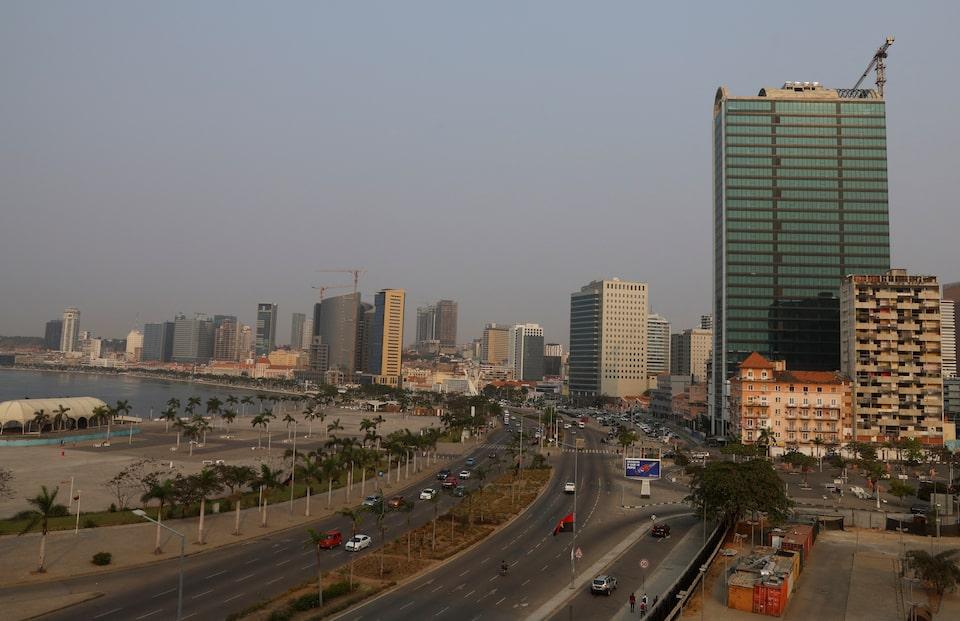
Private credit, seeking yields, shifts to emerging markets Bespoke financing and repayment terms lure borrowers Concerns over impact on bond markets and sovereign debt LONDON/NEW YORK, Oct 7 (Reuters) - An intricate series of pipes off Angola's Atlantic coast snakes toward a new fuel refinery that signals the country's push for energy independence — and its use of private creditors, instead of banks, to fund a big-ticket project. "We're not the lender of last resort," said Felipe Berliner, co-founder of emerging markets asset manager Gemcorp, which invested in the project and led the syndicate that provided the bulk of funding for the refinery, using private capital. "Sometimes we are the only lender." Sign up here. Private credit for emerging markets — driven by investors' hunt for yields and saturation in developed Western markets — could grow exponentially, veteran investors told Reuters, providing tens of billions in funding as bilateral lending and foreign aid shrink. "This is a paradigm shift," said Pramol Dhawan, head of emerging markets portfolio management at PIMCO. "The need to globally reallocate is not a hedge — it's a secular thesis." PIMCO has committed around $30 billion across 140 emerging market deals in five years, and expects to boost annual lending by 30% this year to $10 billion. Other investors are targeting similar increases. RAPID GROWTH, BUT YIELDS SQUEEZED Private credit skyrocketed over the past 20 years, with global assets under management rising to over $1.2 trillion from $200 million in the early 2000s, according to the Bank for International Settlements. The funding filled a gap for companies, mainly in the U.S., as banks limited lending due to regulations and capital requirements. Today, emerging markets get less than 10% of that cash. But the U.S. and Europe are saturated; competition has driven down margins, and bets are riskier. Experts from JPMorgan CEO Jamie Dimon to the IMF warn private credit looks shaky; the collapse of U.S. firms Tricolor and First Brands underscored the risks. Emerging markets, investors say, have bankable projects so keen for cash that you can pick and choose. "Emerging market companies have been forced to be more fundamentally conservative," said Matt Christ, portfolio manager at London-based global investment manager Ninety One. Developed markets are "priced for perfection", while emerging markets offer more upside. He said EM yields are 150 to 300 basis points higher than their developed market peers — and risk is often lower than ratings suggest. Christ, whose private credit portfolio is around $8 billion globally, sees scope to expand to $15 billion. EM firms, he said, are used to volatility and political instability — unlike most Western firms. "Developed market companies are going into an era they've never experienced before, but emerging market companies have been doing this for a long time," he said. Gustavo Ferraro, head of capital solutions at emerging markets-focused fund manager Gramercy, also said EM risk profiles and returns have surpassed those in developed markets. "The U.S. market isn't the benchmark anymore," he said. "Our (investors) want yield and uncorrelated exposure." Gramercy has doubled its private credit investment in five years to $4.8 billion, focusing on Latin America, Turkey and parts of Africa. Ninety One said that in Turkey, where authorities are limiting bank lending to cool inflation, private credit is filling a gap. A report published Tuesday by the Milken Institute said that to sustain private capital momentum, Latin America must focus on technological advancements, especially its current strengths in fintech, artificial intelligence and clean technology. Additionally, "Latin American countries will need to address long-standing obstacles, including regulatory complexity, uneven infrastructure, and security concerns." FROM SOVEREIGNS TO SAUDI COMPANIES Most EM private credit is asset-backed — giving investors anything from company shares to control over the project itself. The structure favours infrastructure, but funding has gone to sovereign budgets and Turkish cities' transport networks. Angola's new refinery, mostly funded through Gemcorp with state oil company Sonangol also providing funds, will ultimately run at 60,000 barrels per day and make sub-Saharan Africa's No. 2 oil producer less reliant on costly fuel imports. The plant's first phase, which cost $475 million, is due to start operation by the end of the year. Gemcorp has also funded a wind farm in Lake Turkana in Kenya , opens new tab, a water sanitation project in Angola and power transmission between Angola and Namibia. A Gemcorp survey showed 67% of EM private credit went to large or medium corporates, and 22% to sovereign or quasi-sovereign projects. Gemcorp is launching a $1 billion fund targeting mid-market Saudi companies. "They are underfunded, they don't have access to the flexible capital they need to maintain growth from the government's fiscal push," Berliner said. The firm also funds Central American commodity exports to the U.S., West African fuel prepayment deals and gold producers. Berliner and others say private credit is flexible, fast and offers customised repayment terms — from upfront fees to extended maturities or EBITDA warrants (earnings before interest, taxes, depreciation, and amortization) — making it ideal for upstarts and lower-rated sovereigns. "We're not replacing banks anymore. We're building something that didn't exist," Ferraro said. "This is bespoke financing for bespoke problems. That's what EM has in abundance." Privately, some bond investors worry private credit — nimbler and less onerous than bonded debt — could eat into their business. Others fear bigger problems if borrowers hit trouble. "If something goes wrong, like a big restructure, how does private credit deal with that? We don't really know," said Daniel Cash, associate professor of law at the UK's Aston University, adding that the "much more opaque" lending could also create issues. https://www.reuters.com/business/finance/private-credit-cash-pivots-risky-west-emerging-markets-2025-10-07/
2025-10-07 19:24
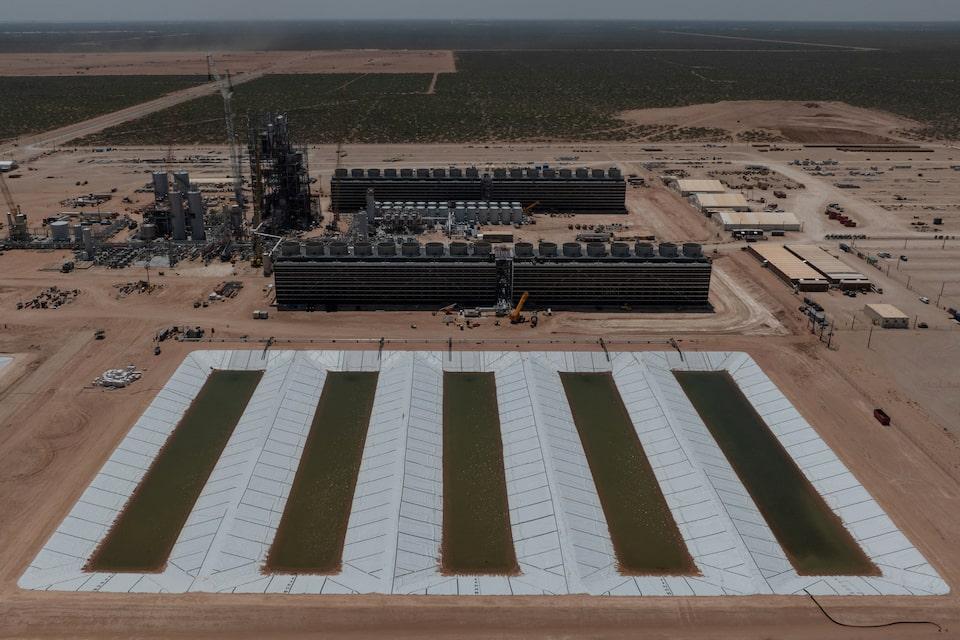
Possibly on chopping block: GM EV plant funding in Lansing, Michigan Stellantis Illinois electric truck plant also potential target Blue Bird electric school bus plant could also get funds cut WASHINGTON, Oct 7 (Reuters) - The U.S. government is considering cancelling billions of dollars in funding for clean energy programs, including awards for auto manufacturing and carbon capture, according to a list of targeted projects seen by Reuters. Projects on the list include two major direct air capture hubs that received billion-dollar awards from former President Joe Biden's administration, including one that involves oil company Occidental (OXY.N) , opens new tab . Sign up here. Semafor reported the list earlier and said it could impact $12 billion in projects. Also on the list is $500 million awarded last year to General Motors (GM.N) , opens new tab to convert its Lansing Grand River Assembly Plant in Michigan to EVs; $335 million for Stellantis (STLAM.MI) , opens new tab to convert the shuttered Belvidere Assembly plant in Illinois to build mid-size electric trucks; and $250 million for Stellantis to convert its Indiana Transmission Plant in Kokomo to produce EV components. Last week, the Department of Energy announced plans to cancel , opens new tab $7.56 billion in financing for hundreds of energy projects it said would not provide sufficient returns to taxpayers. The Energy Department is also considering rescinding a $32 million award to Hyundai Mobis (005380.KS) , opens new tab which operates a Stellantis supplier in Ohio to produce plug-in hybrid components and battery packs and $89 million for Harley-Davidson (HOG.N) , opens new tab expand its York, Pennsylvania plant for EV motorcycle manufacturing. Also on the list is a $80 million award for Blue Bird (BLBD.O) , opens new tab to convert a former Georgia plant to build electric school buses; and $75 million to engine company Cummins (CMI.N) , opens new tab to convert part of an existing Indiana plant to make zero-emission components and electric powertrain systems. The DOE also is considering cutting $208 million for the Volvo Group (VOLVb.ST) , opens new tab to upgrade plants in Maryland, Virginia and Pennsylvania to increase EV production capacity. The Energy Department said in a statement it "continues to conduct an individualized and thorough review of financial awards made by the previous administration. No determinations have been made other than what has been previously announced." Occidental, GM, Harley-Davidson and Stellantis declined or did not immediately comment. The total sum of the grants in question was uncertain. The list included some projects that DOE said in May it canceled. The previous cancellations included $331 million at an olefins plant carbon reduction at Exxon's Baytown, Texas refinery; $500 million to Heidelberg Materials, US in Louisiana; and $375 million to Eastman Chemical Company (EMN.N) , opens new tab in Texas White House budget director Russell Vought said in a post on X last week that the administration would terminate nearly $8 billion in climate-related funding in 16 Democratic-led states, including California and New York. https://www.reuters.com/sustainability/climate-energy/trump-administration-mulls-additional-12-billion-clean-energy-funding-cut-2025-10-07/
2025-10-07 19:10
Market jitters sank Grupo Mexico shares on Monday Analysts had speculated a bidding war could break out Citi still leaning toward other offer, IPO MEXICO CITY, Oct 7 (Reuters) - Grupo Mexico (GMEXICOB.MX) , opens new tab will not enter a bidding war for Citi's (C.N) , opens new tab retail unit in the country, known as Banamex, as its offer already places the lender at a higher value than a previously accepted competing bid, the miner and transport conglomerate said on Tuesday. The firm seemed to be looking to calm market jitters after shares plunged on Monday on the bid, wiping off around $10.7 billion in market value - more than its $9.3 billion offer for Banamex. Sign up here. Shares ticked back up around 1.5% in mid-day trading Tuesday. Analysts had speculated that Grupo Mexico - controlled by German Larrea, one of the nation's wealthiest men - could engage in a back-and-forth for Banamex, more than two years after scrapping a previous offer. The miner's fresh bid launched last week comes after Citi announced a deal to sell a 25% stake in Banamex to Mexican billionaire Fernando Chico Pardo, chairman of airport operator ASUR (ASURB.MX) , opens new tab, for around $2.3 billion. BACK IN ACTION Grupo Mexico bowed out of the race for Banamex in 2023 after tensions with the government of then-President Andres Manuel Lopez Obrador tangled up talks, leading Citi to opt to list the unit. After Chico Pardo's tie-up, Citi aimed to move ahead with an IPO and gauge interest from other Mexican magnates. It still backs that plan despite Grupo Mexico's offer, though investors may favor the upfront cash. Still, Citi is hoping Chico Pardo's pricetag sets a floor for a potential share price in an IPO, a source told Reuters. DIGGING FOR A DEAL Grupo Mexico said on Tuesday that its bid would involve selling off 40% of Banamex to Mexican private investors and pension funds, and that it already had commitments lined up to carry out the sale. It could also launch a public offer at a later date to include smaller investors, it said. On Friday, the miner said it would also consider allowing Chico Pardo to move forward with his stake purchase, if Grupo Mexico were to purchase the rest at the same valuation. Grupo Mexico said on Tuesday that its existing investment plans were still on track, with or without the Banamex purchase. And to fund the deal, it would not need to significantly raise its debt load, the miner said. The most needed would be under $2 billion, already covered through agreed-upon credit lines, it added. https://www.reuters.com/business/grupo-mexico-wont-raise-banamex-bid-plans-share-stake-with-local-investors-2025-10-07/
2025-10-07 17:32
IMF says FX market spillover effects 'underappreciated' Supervisors should monitor liquidity risks Swap lines, international reserves a 'stabilizing force' LONDON, Oct 7 (Reuters) - Financial institutions that dominate the $9.6 trillion currency market should hold the necessary liquidity and capital buffers and run enhanced stress tests to prevent disruptions to the financial system, according to an International Monetary Fund report released on Tuesday. "Although stress testing and systemic risk monitoring have advanced, the role of FX markets as a conduit for risk transmission and cross-border spillovers remains underappreciated," the IMF said in one of the chapters of its semi-annual Global Financial Stability Report. Sign up here. "Enhancing FX liquidity stress tests is essential to assess the sectoral resilience to funding shocks," according to the IMF. DERIVATIVES ADD TO VULNERABILITY Global banks have significant dollar exposure in their balance sheets, making them vulnerable to potential funding shocks. The increasing involvement of non-bank financial institutions and growing trade in derivatives "may also raise the global FX market’s vulnerability to adverse shocks," the IMF said. Stress in the FX market "can spill over to other asset classes, tightening financial conditions and posing risks to macro financial stability—especially in countries with significant currency mismatches and fiscal vulnerabilities," the IMF added. Reuters reported earlier this year that European and U.K. regulators have asked banks to monitor and stress test their resilience to U.S. dollar shocks, in the latest sign of how the Trump administration's policies are eroding trust in the U.S. as bedrock of financial stability. "A shifting global macro financial landscape underscores the need to strengthen FX market resilience," the IMF said on Tuesday, noting that following the US tariff announcements in early April 2025, investors in some countries have reduced their US dollar holdings. Supervisors and banks should effectively monitor and manage liquidity risks in significant currencies, it added. STRENGTHENING SWAP LINES The Federal Reserve has lending facilities with other central banks to alleviate shortages of dollars and to keep financial stress from spilling over into the United States. But European central banking and supervisory officials for months have been questioning whether they can still rely on the Fed, Reuters has previously reported. For the IMF, "strengthening and expanding the network of central bank swap lines can enhance global FX liquidity backstops and help reduce contagion risks". "Policy backstops are critical for stabilizing the global FX market during adverse shocks. Among the most effective tools are the Federal Reserve’s US dollar liquidity swap lines." The IMF also highlighted that "international reserves are a stabilizing force during stress episodes" as they can be used when private funding dries up. https://www.reuters.com/sustainability/boards-policy-regulation/imf-warns-banks-supervisors-liquidity-risks-96-trillion-fx-market-2025-10-07/
2025-10-07 17:17
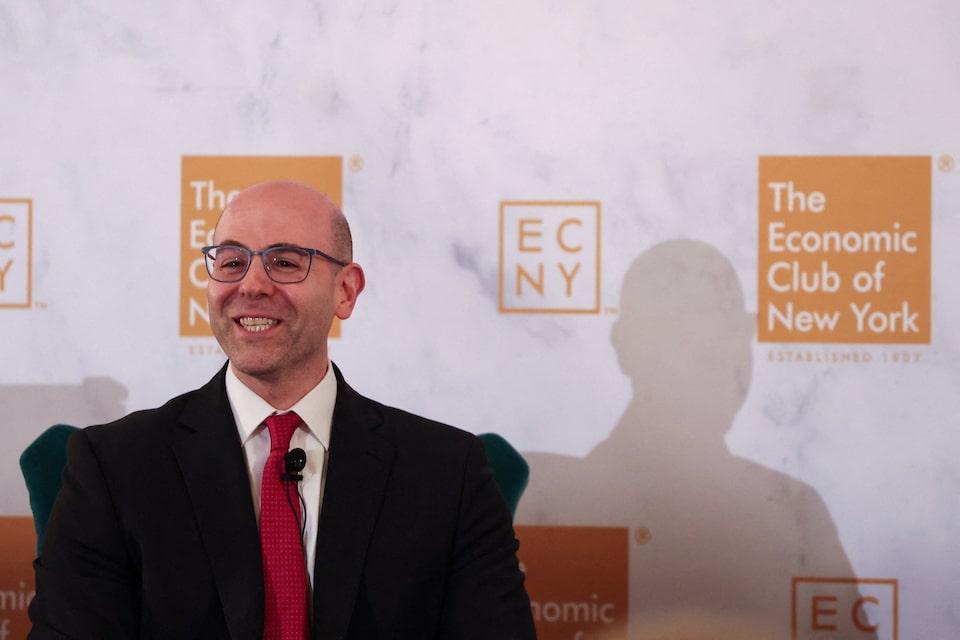
NEW YORK, Oct 7 (Reuters) - Federal Reserve Governor Stephen Miran on Tuesday said that the U.S. bond market’s current relative calm supports a swift push to lower interest rates. Given that market signals in reaction to Fed policy changes can carry valuable feedback in the wake of a policy change, Miran said "I would actually argue that the bond market behavior last year bore out my argument" that rates needed to be higher, "and this year, thus far, it is again bearing out my argument" for a swift pace of easing. He was speaking at an event held by the Managed Funds Association in New York. Sign up here. Miran, who is on leave from the Trump White House to serve as a Fed governor, wanted the central bank to implement a more aggressive rate cut than the Federal Open Market Committee delivered at last month's policy meeting. Miran reiterated in his appearance that an expected moderation in inflation as well as changes in the underlying state of the economy continue to argue for aggressive rate cuts. That the bond market took the Fed's latest easing with little reaction is a sign it supports a swift move down in rates, Miran said. The central banker also said that amid a government shutdown over political wrangling over the budget, U.S. government data are still the "gold standard," although "there has been some deterioration in quality in recent years due in part to declining response rates." "People have to believe that the data are reflective of the true state of the economy and not...doctored to achieve a particular, to achieve a particular political outcome," Miran noted. His comment comes as Trump moves to install an ally at the Bureau of Labor Statistics after he fired a key government statistical official in August in the wake of a weak jobs report, raising questions about the reliability of the data. Given some of the issues with government data, "I do think it's important to have democratic accountability so that you can make sure that you are putting into place leadership , opens new tab" in government agencies that gets to "improving things over time, but that's not really a Federal Reserve issue," Miran said. https://www.reuters.com/sustainability/boards-policy-regulation/feds-miran-says-calm-bond-market-shows-support-rate-cuts-2025-10-07/