2025-12-08 23:46
Indexes fall: Dow 0.45%, S&P 500 0.35%, Nasdaq composite 0.14% Paramount Skydance rallies as it bids for Warner Brothers, against Netflix Confluent jumps after report that IBM nears $11 billion buyout deal Oppenheimer sets Street-high 8,100 S&P 500 target for 2026 Dec 8 (Reuters) - Wall Street's main indexes closed lower on Monday, with most S&P 500 industry sectors in the red, while Treasury yields gained as investors waited nervously for the Federal Reserve monetary policy update due in two days. Hopes for a December rate cut were solidified after last week's data that showed consumer spending increased moderately toward the end of the third quarter. However, investors are still waiting for clues about future policy moves from what is expected to be the most divided Fed in years. Sign up here. "It'll be hard for the market to find a direction that it wants to follow until after the Fed meeting," said Carol Schleif, chief market strategist at BMO Private Wealth. "We just came off a really strong earnings season and we won't have earnings again for another four weeks. The only thing that the market really has to hang its hat on or to point to is the Fed." Traders are now pricing in a roughly 89% chance of a 25-basis-point rate cut on Wednesday according to the CME's FedWatch Tool , opens new tab. Meanwhile, higher yields on U.S. Treasury bonds also put some pressure on equities. The U.S. 10-year Treasury yield rose soon after a powerful earthquake struck off the coast of Japan before U.S. stock trading had opened. The Dow Jones Industrial Average (.DJI) , opens new tab fell 215.67 points, or 0.45%, to 47,739.32, the S&P 500 (.SPX) , opens new tab lost 23.89 points, or 0.35%, to 6,846.51 and the Nasdaq Composite (.IXIC) , opens new tab lost 32.22 points, or 0.14%, to 23,545.90. In individual stocks, Paramount Skydance's (PSKY.O) , opens new tab hostile $108.4 billion bid to buy Warner Bros Discovery (WBD.O) , opens new tab garnered investor attention as it aimed to outbid Netflix (NFLX.O) , opens new tab. The bid sent shares of Warner Bros Discovery up 4.4%, while Paramount's shares jumped 9% and Netflix stock dropped 3.4%. Netflix was among the major drags on the S&P 500 Communication Services Index (.SPLRCL) , opens new tab, which closed down 1.8% and was the biggest laggard of the benchmark's 11 major industry sectors. The sole advancing sector was technology (.SPLRCT) , opens new tab, which added 0.9% with boosts from Microsoft (MSFT.O) , opens new tab, Nvidia (NVDA.O) , opens new tab and Broadcom (AVGO.O) , opens new tab. Later this week, the focus will shift to tech sector valuations, with earnings reports due from Broadcom and Oracle (ORCL.N) , opens new tab, as investors have been worried about debt-funded artificial intelligence spending. In a move that BMO's Schleif said was positive for AI-related companies, U.S. President Donald Trump said he would sign an executive order this week to create a single national rule for artificial intelligence. Technology companies have been looking to override disparate laws passed by U.S. states. However, Google parent Alphabet (GOOGL.O) , opens new tab still ended down more than 2%, marking the biggest drag on the communications services index, followed by Meta Platforms (META.O) , opens new tab. Elsewhere, chipmaker Marvell Technology (MRVL.O) , opens new tab shares dropped 7% after used-car dealer Carvana beat it to securing a spot in the S&P 500. Carvana shares finished up 12% after the decision. Confluent shares soared 29% after IBM said it will acquire the data-infrastructure company for about $11 billion. IBM shares ended up a modest 0.4%. Tesla (TSLA.O) , opens new tab ended down 3% following Morgan Stanley's bearish view on the electric-vehicle maker. Also on Monday, Oppenheimer forecast a Street-high year-end 2026 target of 8,100 points for the S&P 500, citing strong earnings and macro resilience. Declining issues outnumbered advancers by a 2.04-to-1 ratio on the NYSE, where there were 167 new highs and 68 new lows. On the Nasdaq, 2,092 stocks rose and 2,672 fell as declining issues outnumbered advancers by a 1.28-to-1 ratio. The S&P 500 posted 20 new 52-week highs and 10 new lows, while the Nasdaq Composite recorded 149 new highs and 79 new lows. On U.S. exchanges, 16.12 billion shares changed hands, compared with the 17.52 billion average for the last 20 sessions. https://www.reuters.com/business/wall-st-futures-edge-up-fed-interest-rate-cut-decision-nears-2025-12-08/
2025-12-08 23:42
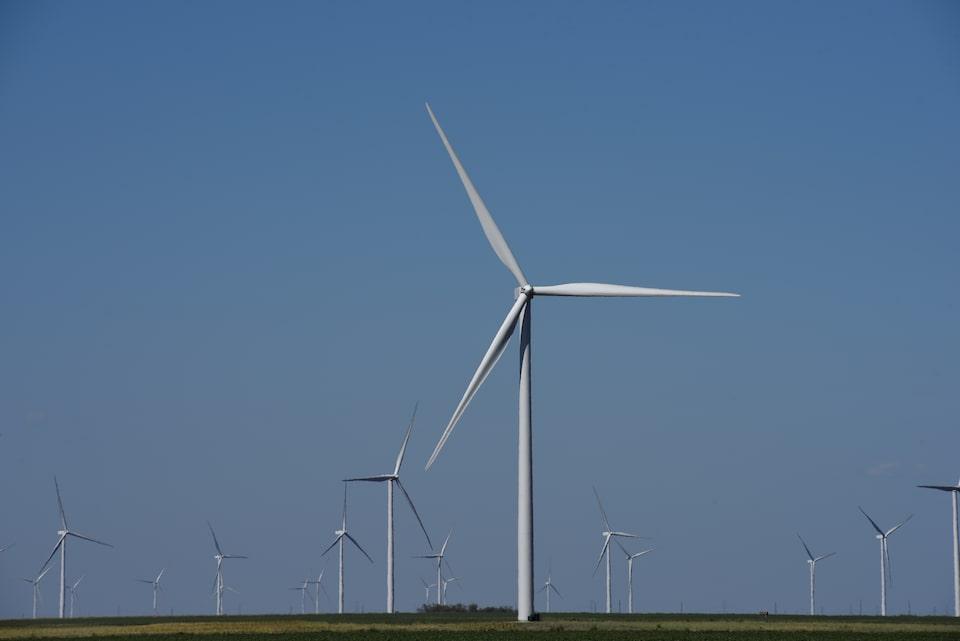
Judge rules Trump's wind project suspension unjustified 17 Democratic-led states challenged the suspension Offshore wind group supports ruling for economic and energy priorities BOSTON, Dec 8 (Reuters) - A federal judge on Monday struck down an order by U.S. President Donald Trump's administration to halt all federal approvals for new wind energy projects, saying that agencies' efforts to implement his directive were unlawful and arbitrary. Agencies including the U.S. Departments of the Interior and Commerce and the Environmental Protection Agency have been implementing a directive to halt all new approvals needed for both onshore and offshore wind projects pending a review of leasing and permitting practices. Sign up here. Siding with , opens new tab a group of 17 Democratic-led states and the District of Columbia, U.S. District Judge Patti Saris in Boston said those agencies had failed to provide reasoned explanations for the actions they took to carry out the directive Trump issued on his first day back in office on January 20. They could not lawfully under the Administrative Procedure Act indefinitely decline to review applications for permits, added Saris, who was appointed by Democratic President Bill Clinton. New York Attorney General Letitia James, a Democrat whose state led the legal challenge, called the ruling "a big victory in our fight to keep tackling the climate crisis" in a social media post. White House spokeswoman Taylor Rogers said in a statement that Trump through his order had "unleashed America’s energy dominance to protect our economic and national security." Trump has sought to boost government support for fossil fuels and maximize output in the United States, the world's top oil and gas producer, after campaigning for the presidency on the refrain of "drill, baby, drill." The states, led by New York, sued in May, after the Interior Department ordered Norway's Equinor (EQNR.OL) , opens new tab to halt construction on its Empire Wind offshore wind project off the coast of New York. While the administration allowed work on Empire Wind to resume, the states say the broader pause on permitting and leasing continues to have harmful economic effects. The states said the agencies implementing Trump's order never said why they were abruptly changing longstanding policy supporting wind energy development. Saris agreed, saying the policy "constitutes a change of course from decades of agencies issuing (or denying) permits related to wind energy projects." The defendants "candidly concede that the sole factor they considered in deciding to stop issuing permits was the President’s direction to do so," Saris wrote. An offshore wind energy trade group welcomed the ruling. "Overturning the unlawful blanket halt to offshore wind permitting activities is needed to achieve our nation's energy and economic priorities of bringing more power online quickly, improving grid reliability, and driving billions of new American steel manufacturing and shipbuilding investments," Oceantic Network CEO Liz Burdock said in a statement. https://www.reuters.com/business/energy/us-judge-rejects-trump-administrations-halt-wind-energy-permits-2025-12-08/
2025-12-08 22:02
ORLANDO, Florida, Dec 8 (Reuters) - Apprehension ahead of the Federal Reserve's policy decision later this week weighed on Wall Street on Monday, while continued selling in U.S. Treasuries pushed the 30-year yield to its highest in three months. More on that below. In my column today, I look at how rates futures markets are pricing Fed policy after Chair Jerome Powell is replaced next year. Given all the talk of an uber-dovish Trump loyalist being nominated, the answer may be surprising. Sign up here. If you have more time to read, here are a few articles I recommend to help you make sense of what happened in markets today. Today's Key Market Moves Today's Talking Points * Central banks take center stage A crucial clutch of central bank policy decisions this week kicks off on Tuesday with the Reserve Bank of Australia, which will be followed by verdicts later in the week from Canada, Brazil and Switzerland, and of course, the big one from the U.S. on Wednesday. Another 25-basis-point cut is widely expected, but Chair Jerome Powell faces a tricky task. Presuming the Fed does deliver a "hawkish cut," he has to back the decision, yet also acknowledge many of his colleagues who feel unease about loosening policy further, a similar scenario to the October meeting, only the credibility bar is even higher. * China's historic $1 trillion trade barrier China's trade surplus so far this year is now above $1 trillion for the first time, as surging exports to Europe, Australia and Southeast Asia more than offset the tariff-induced slump in shipments to the U.S. The landmark breakthrough is bound to intensify debate around China's central part in global trade imbalances, its exchange rate, and its growth strategy for the next five years. Hint: exports are set to play a prominent role. * It's alright M&A, I'm only bidding On Friday, Netflix said it had reached a deal to buy Warner Bros Discovery for $72 billion. On Sunday, U.S. President Donald Trump warned the tie-up could present an antitrust "problem". And on Monday, it got even more intriguing as Paramount Skydance swooped in with a hostile $108 billion bid for Warner Bros. Meanwhile in Europe, de-merger activity was the name of the game as the Magnum Ice Cream Company completed its spinoff from Unilever to become the world's largest ice cream business. It began trading in Amsterdam, and Unilever shares fell 2% in London. Newly-consolidated Unilever shares will begin trading on Tuesday. Will Trump's Fed pick slash rates? The market doesn't think so Financial pundits seem convinced that the new Federal Reserve chair will be an uber-dovish Trump loyalist intent on slashing interest rates regardless of the economic fundamentals. Markets aren't buying it. Powell, whose eight-year term as Fed chair ends in May, is widely expected to be replaced by the president's top economic adviser Kevin Hassett. Trump indicated as much last week, saying he has narrowed his list down to one person and later introducing Hassett at a White House event as "a potential Fed chair." Hassett is undoubtedly a Trump loyalist. But market pricing clearly shows traders don't think a Hassett-led central bank will loosen policy anywhere near as much as Trump has indicated. In fact, barely 75 basis points of easing is expected by the end of next year, according to rates futures markets. That's only three quarter-percentage-point rate cuts – two of them before Powell leaves, in all likelihood, and only one in the second half of 2026 with the new chair at the helm. LOOSE PURSE STRINGS COULD CLIP FED WINGS There are two ways of looking at this. Either the risk of more easing in the second half of next year is underestimated, meaning risk assets are underpriced right now as well, or futures markets are correct, and the Fed is not going to be particularly dovish next year, capping the policy-driven upside for stocks and downside for the dollar. All things considered, the latter looks more likely. The consensus median estimate in a recent Reuters poll has the S&P 500 index ending next year at 7,490 points, up only 9% from Friday's close. The expectation of limited Fed cuts in 2026 is reasonable considering what the new Fed chair will be inheriting. True, the U.S. labor market has weakened, but inflation has been above the Fed's 2% target for nearly five years and counting. And if the market's expectations are correct, the new chair will come in with the Fed having already eased policy by 100 basis points: two cuts earlier this year, one later this week, and one in the first half of next year. And that's on top of the 100 bps of cuts between September and December of 2024. That would bring the federal funds target range down to 3.25-3.50%, a level few observers would consider restrictive. Far from it. With inflation still hovering around 3%, real interest rates could be close to zero when the new chair takes over. What's more, there's a wave of fiscal stimulus coming next year in the shape of the "One Big Beautiful Bill Act" tax cuts and possible $2,000 tariff-funded stimulus checks for every household. In an environment like this, how much looser can monetary policy realistically go? BRACING FOR HISTORIC DISSENT Powell's replacement will also have the daunting task of forging a consensus in one of the most polarized Federal Open Market Committees ever. And that divide could harden next year. While the new Fed chair will almost certainly tilt the FOMC in a dovish direction, there will be an opposing force. Cleveland Fed President Beth Hammack and Dallas Fed President Lorie Logan, both arguably the most hawkish of all 19 FOMC members, will become voters in 2026. Dissents on the FOMC are not uncommon, of course. They have been a feature of around one in five policy meetings chaired by Powell. They were also seen in nearly half the meetings chaired by his predecessor Janet Yellen and at more than 60% of those run by Ben Bernanke, according to a St. Louis Fed database. But these were mostly single votes. October's decision to cut rates by 25 basis points was only the third time since 1990 that there have been dissents in favor of both tighter and looser policy. And there have already been more dissents this year than at any time in the past three decades. Votes of 7-5, more reminiscent of Bank of England policy decisions, could thus now be in the cards. Such division would make it challenging to push through any agenda – no matter how hard the new Fed Chair might try. What could move markets tomorrow? Want to receive Trading Day in your inbox every weekday morning? Sign up for my newsletter here. Opinions expressed are those of the author. They do not reflect the views of Reuters News, which, under the Trust Principles , opens new tab, is committed to integrity, independence, and freedom from bias. https://www.reuters.com/world/china/global-markets-trading-day-graphic-2025-12-08/
2025-12-08 21:39
MOSCOW, Dec 8 (Reuters) - Russian President Vladimir Putin issued a decree on Monday clearing potential deals with Rosneft (ROSN.MM) , opens new tab and Shell's (SHEL.L) , opens new tab joint-venture stake in the Caspian Pipeline Consortium, which exports oil mainly from Kazakhstan. The decree said it allowed the deals, which may result in changes of ownership, in the CPC by the Rosneft-Shell Caspian Ventures Limited. It did not elaborate. Sign up here. The venture has a 7.5% stake in the CPC, in which other international majors, such as Chevron (CVX.N) , opens new tab and Eni (ENI.MI) , opens new tab, as well as Russia's second-largest oil producer, Lukoil (LKOH.MM) , opens new tab, also have shares. The United States imposed sanctions against Rosneft and Lukoil in October over Russia's war in Ukraine, forcing Lukoil to declare the sale of its foreign assets. Rosneft has not announced any actions in relation to the sanctions. https://www.reuters.com/business/energy/putin-clears-deals-with-rosneft-shells-joint-venture-stake-caspian-pipeline-2025-12-08/
2025-12-08 21:24
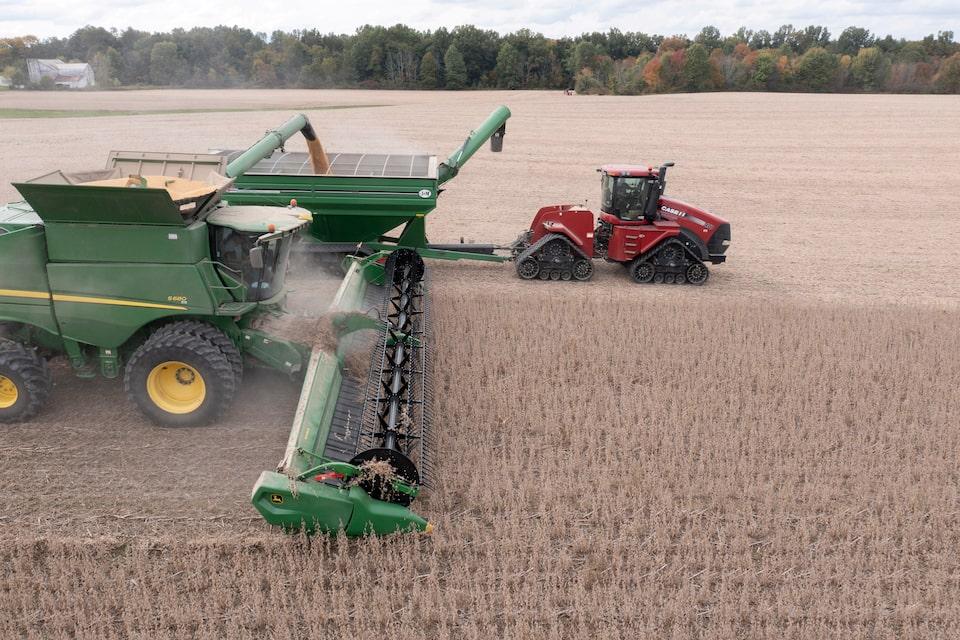
$11 billion aid for row crop farmers, $1 billion for other crops Farmers face higher costs, seek aid for seeds and fertilizer Trump plans to cut farm machinery costs by reducing regulations WASHINGTON, Dec 8 (Reuters) - U.S. President Donald Trump on Monday unveiled a $12 billion aid package for American farmers, the latest government effort to shore up a key political constituency hurt by the financial fallout from his trade policies. Farm groups and Republican farm-state lawmakers have sought the aid in part to support farmers with purchases of seeds, fertilizer and other expenses for next year's growing season. Sign up here. The aid package aims to support a loyal voting bloc that has largely stood by Trump despite facing billions in lost sales from his trade war with China. Trump announced the aid at a roundtable at the White House alongside Treasury Secretary Scott Bessent, Agriculture Secretary Brooke Rollins and members of Congress. Growers of corn, cotton, sorghum, soybeans, rice, cattle, wheat and potatoes attended the roundtable, a White House official said. "This relief will provide much needed certainty to farmers as they get this year's harvest to market and look ahead to next year's crops, and it'll help them continue their efforts to lower food prices for American families," Trump said. Rollins said that $11 billion of the aid will go to row crop farmers and will be disbursed by February 28. The administration is holding back the remaining $1 billion for fruits, vegetables and other crops to finalize the details, Rollins said. Bessent said the payments will be a "liquidity bridge during a period of adjustment" to support farmers until they see benefits from Trump's trade deals and other policies. The money for the package will come from the Commodity Credit Corporation, a discretionary USDA fund, and will be offset by tariff revenue, Rollins told reporters at the White House later on Monday, without providing further details. Payments will be calculated based on how many acres farmers have planted, their production costs and other factors, said Richard Fordyce, USDA under secretary for farm production and conservation. Amy Klobuchar, the top Democrat on the Senate Agriculture Committee, said in a statement that Trump's trade policies have hurt farmers. "The easiest way to give our farmers more certainty would be for the president to end his tariff taxes," she said. The administration had been expected to announce a farm bailout totaling as much as $15 billion in October. Rollins previously said the 43-day federal government shutdown delayed the rollout. LOWER EQUIPMENT COSTS, MORE SOYBEANS Farmers have faced higher costs for agricultural inputs , opens new tab like seed and fertilizer, which the Trump administration has said it is examining. Soybean farmers expect to see their third consecutive year of losses in 2025, according to the American Soybean Association. Trump said at the White House that he would further help farmers by eliminating many environmental regulations for farm machinery and that he would expect manufacturers like John Deere (DE.N) , opens new tab to lower equipment prices. "Farming equipment has gotten too expensive, and a lot of the reason is because they put these environmental excesses on the equipment, which don't do a damn thing except make it complicated," Trump said. A John Deere spokesperson said the company supports the farmer aid and that it is "doing all we can to help U.S. farmers reduce input costs." Trump also said he has asked China's President Xi Jinping to increase China's recently negotiated soybean purchase agreement. "I think he's going to do more than he promised to do," Trump said. During his first term, Trump gave about $23 billion in aid to farmers hurt by his trade policies. Farmers are set to receive a near-record $40 billion in government payments this year, fueled by ad-hoc disaster and economic aid. Net farm income could fall by more than $30 billion in 2026 due to a decline in government payments and low crop prices, according to an estimate from the Food and Agricultural Policy Research Institute at the University of Missouri. https://www.reuters.com/world/us/trump-unveil-12-billion-aid-farmers-hit-by-trade-war-white-house-official-says-2025-12-08/
2025-12-08 21:23
Dec 8 (Reuters) - Pipeline operator Kinder Morgan (KMI.N) , opens new tab said on Monday it expects growth in 2026 profit compared with the 2025 forecast on the back of strong natural gas demand. Shares of the company were up 1% at $27.57 in after-market trading. Sign up here. A rise in LNG exports and a surge in power consumption from data centers dedicated to artificial intelligence and cryptocurrency have raised demand for natural gas. Kinder Morgan has long-term contracts to move 8 billion cubic feet per day (bcfd) of natural gas to LNG facilities and expects to move 12 bcfd by 2028. The Houston, Texas-based company forecast an adjusted profit of $1.37 per share for 2026, which is about 8% higher than its forecast for 2025. Analysts expect the company to post a profit of $1.38 per share in 2026, according to data compiled by LSEG. Kinder Morgan, one of the largest energy infrastructure companies in North America, operates about 79,000 miles of pipelines. "We are projecting an annualized dividend of $1.19 for 2026, marking the ninth consecutive year of dividend increases," said CEO Kim Dang. The company also said it plans to invest about $3.4 billion in discretionary capital expenditures, including expansion projects and contributions to joint ventures, compared to a forecast of $2.3 billion for 2025. https://www.reuters.com/business/energy/kinder-morgan-expects-higher-2026-profit-strong-natural-gas-demand-2025-12-08/