2025-10-05 23:06
OPEC+ agrees to increase output by another 137,000 bpd in November As production increases, group's spare capacity dwindles But OPEC+ might not have as much spare capacity as thought LONDON, Oct 6 (Reuters) - OPEC+'s continued oil output increases are eroding the group's spare production capacity, a vital cushion that has helped to mitigate volatility in recent years. Energy traders may therefore face rockier days ahead. The prevailing belief in oil markets over the past three years has been that any supply shortfalls could be swiftly met by OPEC+, the group of producers and allied nations including Russia, after they jointly cut output in 2022, ultimately slashing production by as much as 5.85 million bpd, or around 5.5% of global demand. Sign up here. This resulted in an increase in global “spare capacity,” what the International Energy Agency defines as "capacity levels that can be reached within 90 days and sustained for an extended period." In other words, the amount of additional supply that could be quickly and sustainably injected into global markets. SHOCK ABSORBER RAPIDLY THINS The existence of this buffer likely helped mitigate spikes in oil prices during the Israel-Iran war last June and has probably tamped down volatility as the war in Ukraine has escalated. If OPEC+ could ramp up production rapidly, markets had no reason to panic in the face of any potential supply disruption. But that shock absorber has rapidly thinned since OPEC+'s core eight members started unwinding those cuts in April. The group on Sunday agreed to increase production by a further 137,000 bpd in November, which would bring total targeted production increases since April to more than 2.7 million bpd. As the group increases output, its spare capacity naturally diminishes. And by some estimates, that buffer might already be smaller than previously assumed. CHALLENGES IN RAMPING UP PRODUCTION OPEC+'s estimated total spare capacity stood at 4.1 million bpd as of August, with almost 60% held by Saudi Arabia and another 20% by the United Arab Emirates, according to data from the IEA. That might sound like a lot. But the challenges countries have faced in ramping up production since April suggest that some members are finding it hard to rapidly and sustainably tap this supposed excess capacity. OPEC+ delivered between April and August only 75% of production increases on average, according to a Reuters analysis, undershooting the 1.92 million bpd targeted production increase by around 500,000 bpd. This indicates that the level of spare capacity may have declined in the past three years, likely because oil wells that are shut for extended periods take significant time and investment to revive – potentially more than expected. Of course, part of the shortfall since April was due to members like Iraq deliberately scaling back production to compensate for past excesses. Additionally, OPEC+ actually exceeded its target by 760,000 bpd in August, primarily due to Iraq's overproduction, according to IEA data. However, moving forward, most producers appear to have limited scope to ramp up production sustainably. Kazakhstan, which far exceeded its production quota at the start of the year, today has little to no room to raise output. Algeria and Oman also appear to be producing at full capacity. Russia, whose oil and gas industry faces heavy Western sanctions, has struggled to raise output, and Ukrainian drone attacks on its infrastructure in recent months risk further reducing its output. WHAT IS SAUDI'S TRUE CAPACITY? What the market really wants to know, however, is the true capacity of Saudi Arabia. The world's top crude exporter – which has access to vast oil reserves with low break-even prices – produced 9.69 million bpd in August, which, when combined with its estimated spare capacity, means it could theoretically ramp up output to above 12 million bpd. Saudi is set to increase its production to 10.06 million bpd in November under the new OPEC+ agreement. But recent history shows that the Kingdom has only breached the 12 million bpd threshold once, for one month in April 2020. Production quickly plummeted to 7.5 million bpd as global consumption collapsed due to COVID-19 lockdowns, according to the Joint Organizations Data Initiative. Moreover, Saudi production has only hit 11 million bpd in two brief periods in 2018 and 2023. And it has only breached the 10 million bpd threshold a handful of times, with the longest periods between March 2015 and December 2016, when production averaged 10.4 million bpd. It also boosted output above 10 million bpd between December 2021 and April 2023 as the global economy recovered from the pandemic. What’s more, Saudi Arabia's energy ministry in January 2024 instructed its national oil company Aramco to target maximum sustainable capacity of 12 million bpd, abandoning plans to ramp it up to 13 million bpd. It is therefore likely that Saudi Arabia currently only has between 600,000 and 1 million bpd of true spare capacity, based on historic precedents. BUFFER AT THE LOW END HISTORICALLY Where does that leave OPEC+ overall? When combining the 1.3 million bpd estimated combined spare capacity of the UAE, Kuwait and Iraq with the revised Saudi figure, OPEC+ is left with a buffer of around 2 million bpd, around 2% of global demand. That is at the low end of the historical average. So even though the group’s decision to flood the market with oil is currently weighing on crude prices, the struggles it faces in actually doing so could potentially result in upward pressure ahead. Either way, at a time when the world faces growing geopolitical tensions in Ukraine, Russia and the Middle East, the energy market could use a shock absorber. And OPEC+ appears to be rapidly exhausting its own. The opinions expressed here are those of the author, a columnist for Reuters. Want to receive my column in your inbox every Monday and Thursday, along with additional energy insights and links to trending stories? Sign up for my Power Up newsletter here. Enjoying this column? Check out Reuters Open Interest (ROI), , opens new tabyour essential new source for global financial commentary. ROI delivers thought-provoking, data-driven analysis. Markets are moving faster than ever. ROI , opens new tab can help you keep up. Follow ROI on LinkedIn , opens new tab and X. , opens new tab https://www.reuters.com/markets/commodities/surging-opec-oil-output-leaves-market-with-shrinking-shock-absorbers-2025-10-05/
2025-10-05 16:38
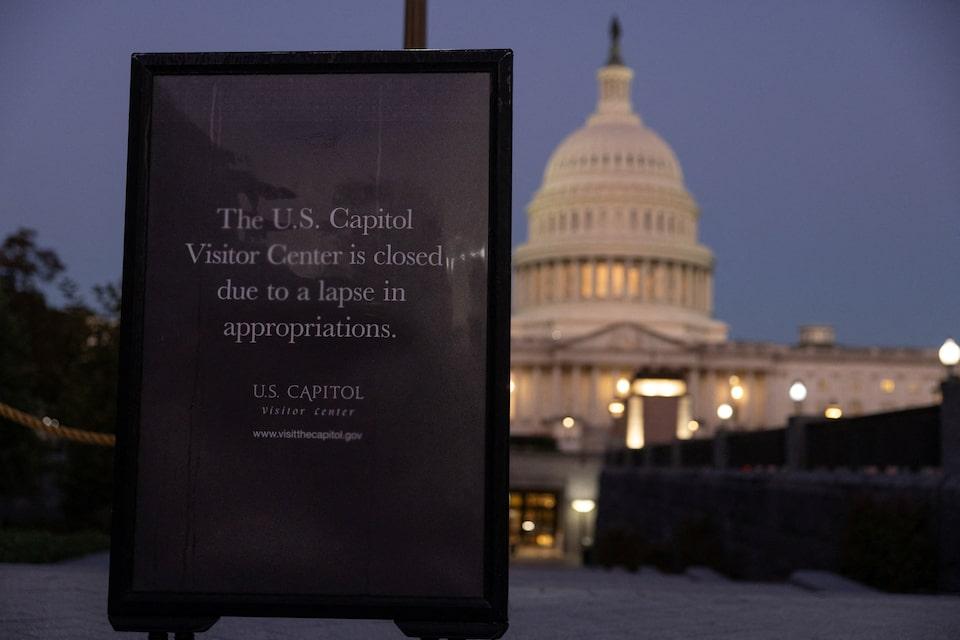
Layoffs depend on shutdown negotiations with Democrats Democrats demand healthcare assurances in shutdown talks Next Senate vote on funding bill unlikely to pass WASHINGTON, Oct 5 (Reuters) - The Trump administration will start mass layoffs of federal workers if President Donald Trump decides negotiations with congressional Democrats to end a partial government shutdown are "absolutely going nowhere," a senior White House official said on Sunday. As the shutdown entered its fifth day, White House National Economic Council Director Kevin Hassett told CNN's "State of the Union" program he still saw a chance that Democrats would back down, averting a costly shutdown and federal employee layoffs that have been threatened by White House budget director Russell Vought. Sign up here. "President Trump and Russ Vought are lining things up and getting ready to act if they have to, but hoping that they don't," Hassett said. Later on Sunday, Trump was asked by reporters when the administration would begin laying off federal workers. Trump responded, without elaborating: "It's taking place right now." The White House's Office of Management and Budget, which has played a key role in Trump's campaign to sharply scale back the size of the federal government, did not immediately respond to a request for comment. NO SIGN OF TALKS No tangible signs of negotiations have emerged between congressional leaders since Trump met with them last week. The shutdown began on October 1, the start of federal fiscal 2026, after Senate Democrats rejected a short-term funding measure that would keep federal agencies open through November 21. "They've refused to talk with us," Senate Democratic leader Chuck Schumer told CBS' "Face the Nation" program, saying the impasse could be solved only by further talks between Trump and the four congressional leaders. Democrats are demanding a permanent extension of enhanced premium tax credits to help Americans purchase private health insurance through the Affordable Care Act and assurances that the White House will not try to unilaterally cancel spending agreed to in any deal. Senate Majority Leader John Thune has said he is willing to address Democrats' concerns but that they must first agree to reopen the federal government. Trump also expressed an interest in the healthcare question while emphasizing Republican interests in reforming the ACA, also known as Obamacare. "We want to fix it so it works. Obamacare has been a disaster for the people, so we want to have it fixed so it works," the president said. SENATE VOTE MONDAY Rank-and-file Senate Democrats and Republicans have held informal talks aimed at finding common ground on healthcare and other issues in hopes of reaching a deal to reopen the government. Asked if the lawmakers are any closer to a deal, Democratic Senator Ruben Gallego told CNN: "At this point, no." On Monday, the Senate is due to vote for a fifth time on the stopgap funding bill that has already passed the Republican-controlled House of Representatives and on a Democratic alternative. Neither measure is expected to receive the 60 votes needed to advance. With a 53-47-seat majority and one Republican opposed to the House funding bill, Republican leaders need at least eight Democrats to support the measure but have seen only three cross the aisle so far. "It's open up the government or else," John Thune told the Fox News program "Sunday Morning Futures." "That's really the choice that's in front of them right now," the South Dakota Republican said. https://www.reuters.com/world/us/white-house-says-layoffs-will-start-if-trump-sees-shutdown-talks-going-nowhere-2025-10-05/
2025-10-05 15:55
MOSCOW, Oct 5 (Reuters) - Russia on Sunday condemned a U.S. strike on a vessel allegedly carrying illegal drugs off the coast of Venezuela and cautioned about the dangers of potential U.S. escalation in the entire Caribbean region. Russian President Vladimir Putin's foreign minister, Sergei Lavrov, spoke to his Venezuelan counterpart, Yvan Gil, by telephone on Sunday, the Russian foreign ministry said. Sign up here. "Sergei Lavrov said that Russia strongly condemns the new strike by the U.S. armed forces on October 3 on a ship in international waters near Venezuela," the ministry said. "The ministers expressed serious concern about Washington's escalating actions in the Caribbean Sea that are fraught with far-reaching consequences for the region," it said. Four people were killed in the October 3 strike on the vessel which Washington accused of transporting "substantial amounts of narcotics - headed to America to poison our people." Moscow said that there was "no certainty that the United States will not in any way link its declared war against drug cartels with the situation in Haiti". Russia also cautioned against attempts to broadly interpret a recent UN Security Council resolution to more than double the size of an 15-month-old underfunded and understaffed international security mission combating armed gangs in Haiti. Russia, China and Pakistan abstained from the vote on the measure put forward by the United States and Panama. The remaining 13 council members voted in favour. "The Russian side has confirmed its full support and solidarity with the leadership and people of Venezuela in the current context," the Russian ministry said. https://www.reuters.com/world/americas/russia-condemns-us-strike-alleged-drug-vessel-near-venezuela-2025-10-05/
2025-10-05 12:59
Analyst do not expect shutdown to derail stocks rally Seasonality favors bulls as Q4 is typically the S&P 500's strongest, with average gain of 2.9% Stock market momentum and projected earnings growth supports risk appetite NEW YORK, Oct 3 (Reuters) - The U.S. government shutdown tops investors' agenda next week as markets head into the seasonally strong fourth quarter, with equities near record highs bracing for an earnings-season test later this month. A deep partisan rift in Washington led to a federal government shutdown that risks delaying crucial economic data and could potentially muddy the Federal Reserve's policy-easing outlook. Sign up here. Few on Wall Street expect the Washington impasse to derail a rally that has lifted the S&P 500 (.SPX) , opens new tab by 14% to repeated record highs, but with little in the way of major data or earnings, the Capitol Hill drama is set to dominate investor focus. "The shutdown and the potential reopening ... that's going to get almost all investor attention," said Mark Hackett, chief market strategist at Nationwide. Investors' main worry is that the shutdown will suspend the flow of timely economic data. Should the data drought last several weeks, it could cause confusion about the Fed's monetary policy path, as the central bank will be without government data that helps guide its decisions. It also poses a possible drag on economic growth the longer it extends. But for now, there is little reason to panic, investors said. BULLS IN CHARGE Despite some softness in labor data, the U.S. economy has borne the onslaught of trade and tariff headlines well and corporate earnings have supported stocks' march higher. Analysts as of Thursday expected earnings from S&P 500 companies to increase 8.8% in the third quarter from a year ago, up from forecasts of 8.0% growth at the start of July, according to LSEG data. "In my opinion, lack of data actually puts more burden of proof on bears than it does on bulls," Hackett said. Investors will get a taste of the upcoming earnings season, with Levi Strauss (LEVI.N) , opens new tab and Delta Air Lines (DAL.N) , opens new tab set to report results on Thursday. "The most likely scenario is the market's just kind of calm ... moving sideways during the shutdown," Hackett said. KEY Advisors Wealth Management CEO Eddie Ghabour, who sees the shutdown possibly stretching for two to four weeks, echoed the sentiment. "If we're right on the shutdown stretching out, if you get extra stimulus in the economy in the form of two more rate cuts, and then the government is back in business, you're going to see a huge re-acceleration of growth in the economy and the equity markets," Ghabour said. Investors will get a read on what Fed policymakers were thinking when they cut rates in September when the minutes of that meeting are released on Wednesday. SEASONALLY STRONG For stock bulls, it helps that the just-started fourth quarter is historically the S&P 500's strongest, with an average gain of about 2.9% and a high share of positive returns, according to LSEG data going back to 1928. "Despite headline risks and the potential for short-term volatility, the weight of the evidence continues to support a constructive stance," Keith Lerner, co-chief investment officer at Truist Advisory Services, said in a note on Thursday. "As always, we will continue to follow the weight of the evidence." Meanwhile, the market's strong momentum has stock bears in hibernation. The S&P 500 logged its 30th record closing high of the year on Thursday. "The shutdown is going to be the news, but I think the underlying backdrop is really three things, seasonality, which is positive, the tailwind of rate cuts to protect the labor market ... and we have momentum in the markets," said Sonu Varghese, global macro strategist at Carson Group. "We've been overweight equities and we are continuing to be that," he said. https://www.reuters.com/business/wall-st-week-ahead-wall-st-eyes-washington-standoff-with-stocks-near-records-2025-10-03/
2025-10-05 11:43
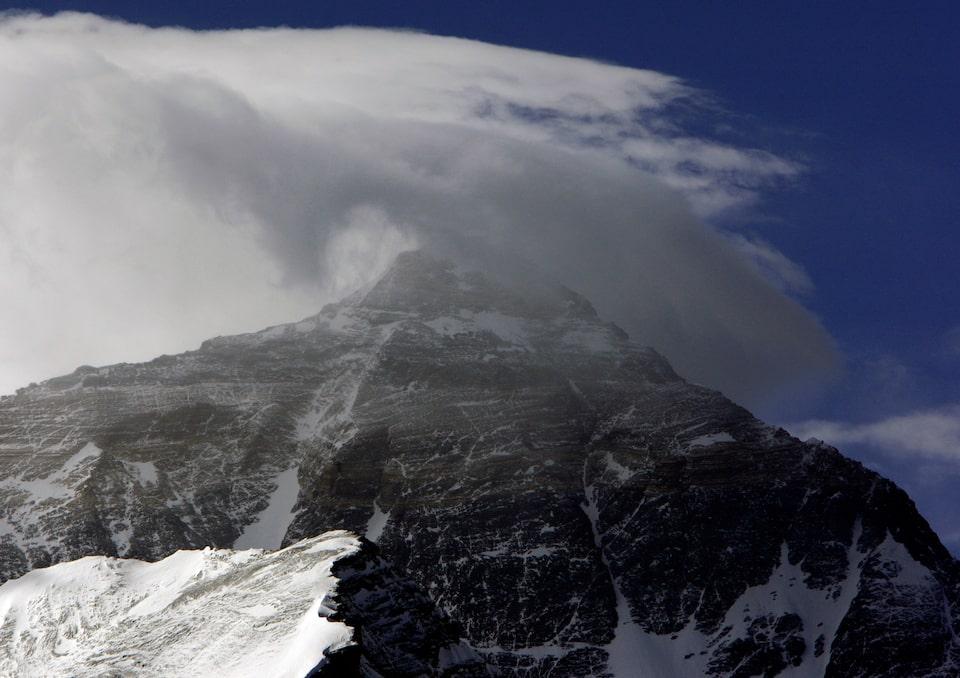
Hundreds of trekkers stranded by sudden blizzard Tourists trekking in Tibet valley leading to Everest's east face South Korean trekker dies in Nepal, his guide gets rescued Landslides triggered by heavy rains kill 50 in Nepal BEIJING, Oct 6 (Reuters) - Hundreds of trekkers stranded by a blizzard near the eastern face of Mount Everest in Tibet have been guided to safety by rescuers, Chinese state media reported, as unusually heavy snow and rainfall pummelled the Himalayas. Some 350 trekkers had reached the small township of Qudang, while contact with the remaining 200-plus trekkers had been made, CCTV reported on Sunday. Its Monday evening news bulletin did not provide any updates. Sign up here. Tibet media released a video showing trekkers being welcomed with hot soup in a communal hall, before boarding busses that took them away from the area. Visitors to the remote valley of Karma, which leads to the eastern Kangshung face of Everest, were in the hundreds this week, taking advantage of an eight-day National Day holiday in China. "It was so wet and cold in the mountains, and hypothermia was a real risk," said Chen Geshuang, who was part of an 18-strong trekking team that made it to Qudang. "The weather this year is not normal. The guide said he had never encountered such weather in October. And it happened all too suddenly." Chen's party descended from the mountains on Sunday and was greeted with sweet tea by villagers after enduring a harrowing evening of heavy snowfall combined with thunder and lightning. Hundreds of local villagers and rescue teams had been deployed to help remove snow blocking access to the area, where nearly 1,000 people had been trapped, according to an earlier report by state-backed Jimu News. The remaining trekkers will arrive in Qudang in stages under the assistance of rescuers organised by the local government, CCTV reported. The CCTV report did not say if local guides and support staff of the trekking parties had been accounted for. 'HARDLY SLEPT' Snowfall in the valley, which lies at an elevation averaging 4,200 metres (13,800 feet), began on Friday evening and persisted throughout Saturday. "It was raining and snowing every day, and we did not see Everest at all," said Eric Wen, who survived the ordeal. His trekking party of 18 had decided on Saturday night to make their way back from their fifth and final campsite, concerned by the continuous snowfall. "We only had a few tents. More than 10 of us were in the large tent and hardly slept," Wen told Reuters on Monday. Wen said his group had to clear the snow every 10 minutes. "Otherwise our tents would have collapsed," he said. Two men and a woman in the group suffered hypothermia when the temperature slipped below freezing, even though they were sufficiently attired, Wen said. But his expedition party emerged largely unscathed, including eight other expedition guides and several others who tended the yaks transporting their equipment and kit. NORTH FACE Karma valley, first explored by Western travellers a century ago, is a relatively pristine part of the Everest region. Unlike the peak's arid north face, it boasts lush vegetation and untouched alpine forests, fed by meltwaters from the Kangshung glacier at the foot of the world's highest mountain. It was unclear if trekkers near the north face, which draws large numbers of tourists due to its easy access by paved road, had been affected. October is a peak season, when skies usually clear at the end of the Indian monsoon. To the south of Tibet in Nepal, heavy rains triggered landslides and flash floods that have blocked roads, washed away bridges and killed at least 50 people since Friday. Thirty-seven people died in separate landslides in the eastern Ilam district bordering India. A South Korean trekker died in Nepal and his body was recovered by a rescue helicopter on Monday, said Tulsi Gurung, president of Nepal National Mountain Guides Association. His guide was rescued. The hiker, whose name was not given, climbed the 6,476 metres (21,246 feet) Mera Peak on Saturday. https://www.reuters.com/business/environment/almost-1000-trapped-tibetan-side-mount-everest-by-blizzard-2025-10-05/
2025-10-05 09:58
Oct 5 (Reuters) - The decision by President Donald Trump administration to halt fully permitted offshore wind energy projects is "very damaging" to investment, President of Shell (SHEL.L) , opens new tab U.S. Colette Hirstius told the Financial Times in a report published on Sunday. The executive told the newspaper that energy projects with proper permits should be allowed to continue and warned the political pendulum in the U.S. could eventually swing back against the oil and gas sector. Sign up here. "I think uncertainty in the regulatory environment is very damaging. However far the pendulum swings one way, its likely that its going to swing just as far the other way," she told the newspaper. "I certainly would like to see those projects that have been permitted in the past continue to be developed," she said. Shell did not immediately respond to a Reuters' request for comment. In August, the Trump administration said it was cancelling $679 million in federal funding for 12 offshore wind projects, in a blow to an industry that was central to former President Joe Biden's climate and energy agendas. London-listed Shell employs more than 11,000 people in the U.S. and is the largest producer of oil and gas in the Gulf of Mexico. https://www.reuters.com/sustainability/climate-energy/shells-us-executive-says-trumps-halting-wind-projects-harms-investment-ft-2025-10-05/