2025-10-03 06:05
LITTLETON, Colorado, Oct 3 (Reuters) - Although overshadowed so far by booming data center demand and the U.S. government's gutting of clean energy policies, California's rapid scaling of solar farms and battery systems may yet emerge as 2025's most significant power story. California's mammoth solar farms have generated more electricity than the state's fossil fuel power plants for a record-long stretch so far in 2025, setting a new marker for energy transition progress in the United States. Sign up here. Topped up by batteries charged by excess solar output in the middle of the day, the swell in California's solar-powered electricity supplies has triggered the state's largest-ever year-over-year drop in fossil fuel-fired power output. Even after years of historic growth, the jumps in California's solar and battery system output are remarkable, and will likely act as blueprints for power roadmaps in other states even as U.S. federal lawmakers scrap support for clean energy. CLEAN PUSH California's electricity supplies from solar farms during January to July jumped by 15% from the same months in 2024 to a record 54,709 gigawatt hours (GWh), Ember data shows. That year-over-year jump of roughly 7,200 GWh of solar electricity supplies was supplemented by a roughly 75% rise in California's battery storage capacity, according to LSEG, and allowed utilities to slash fossil fuel-fired generation by 21%. In terms of the share of California's electricity generation mix, solar farms accounted for a record 39% of total utility-supplied generation during January to July, up from 33% during the same period in 2024. For comparison, the state of Texas, which has the second-largest solar power footprint in the U.S., secured 10.4% of its electricity from solar farms so far this year. As the solar share of California's electricity mix has climbed, the electricity generation share from fossil fuels has steadily fallen and hit new lows of just 26% so far in 2025. That compares to a national average fossil fuel share of 55% so far in 2025, and cements California's position as by far the leading state in terms of clean electricity deployment. CRITICAL MASS California's utilities have rapidly built out capacity of battery storage systems alongside solar power output since 2022, so that the state's abundant solar power can be deployed to maximum effect. In previous years, California's power system was frequently overrun by the massive solar output levels generated during the middle of the day, which was when solar output peaked just as total state power consumption neared its daily lows. Thanks to a nearly threefold rise in battery storage capacity since 2022 to more than 14,000 megawatts (MW), according to data portal Cleanview, California's utilities can now store some of that excess solar output and deploy it when demand peaks. FOSSIL FALLS The growing scale of California's solar plus battery networks is allowing utilities to scale back fossil fuel reliance at an unprecedented pace. Historically, California's use of fossil fuels peaked during the summer when use of power-hungry air conditioners is highest. Thanks to rapidly rising solar and battery capacity, however, California's utilities have been able to make major cuts to fossil fuel deployment even during peak demand periods. In July 2025, total fossil fuel electricity output was just 36,416 GWh, according to Ember. That total marked a 40% plunge from July 2024, and was 36% below the July average from 2019 through 2024. Such a steep drop in fossil generation had a commensurate impact on associated emissions, which in July 2025 were 2.1 million metric tons of CO2 less than in July 2024, and by far the lowest for that month on record. PRICED IN? Following the years-long retooling of California's power system in favour of clean energy over fossil fuels, the state's electricity costs are starting to reflect the hefty impact of solar power within its generation mix. While still sharply above the national average, California's electricity costs have climbed by less than the national average so far this year, posting a 1% rise compared to a 3.3% rise nationally, according to the U.S. Energy Information Administration. Going forward, the price-depressing impact of the hefty share of solar power within California's generation system is expected to act as a drag on overall electricity costs, even as power bills are expected to keep climbing elsewhere. California's high levels of solar radiation and abundant areas of sparsely populated desert also mean the state is better positioned than most to deploy solar farms at massive scale. Even so, several other U.S. states across the South and Southwest can expect similar cuts to fossil fuel reliance if they also rolled out large solar and battery systems. And with supplies of solar and battery systems steadily rising just as system costs steadily decline, state utilities that can pull the trigger on expansions to solar and battery systems can expect quick returns on their investments. At the same time, with benchmark U.S. natural gas prices this year averaging around 37% more than 2024's levels, according to LSEG, states that can cut use of natural gas can expect significant savings in their fossil fuel purchase bills. Few other states can match the scale of California's solar and battery networks, but those that are looking to cut back on fossil fuel dependence and boost output of clean, home-grown power will use the Golden State as a guide. The opinions expressed here are those of the author, a columnist for Reuters. Enjoying this column? Check out Reuters Open Interest (ROI), your essential new source for global financial commentary. ROI delivers thought-provoking, data-driven analysis of everything from swap rates to soybeans. Markets are moving faster than ever. ROI can help you keep up. Follow ROI on LinkedIn , opens new tab and X , opens new tab. https://www.reuters.com/markets/commodities/californias-solar-battery-combo-packs-transformational-punch-2025-10-03/

2025-10-03 05:36
Wall Street hits record highs, European stocks post best week since April Israeli shekel gains on news that Hamas will agree to parts of Trump's Gaza plan US shutdown means no jobs report on Friday Gold notches seventh straight weekly gain Yen posts strongest week versus dollar since May NEW YORK/LONDON, Oct 3 (Reuters) - World stocks were on course for a solid weekly gain and more record highs as the seemingly unstoppable rally in tech shares and expectations of lower U.S. interest rates helped to offset uncertainty surrounding the U.S. government shutdown. News late in the day that Palestinian militant group Hamas would agree to some of the terms in U.S. President Donald Trump's plan to end the war in Gaza helped strengthen the Israeli shekel . The group said it would release hostages while seeking further negotiations on more contentious issues such as disarmament, and the shekel rose 0.7% to 3.2912 per dollar, capping a 1.6% gain for the week. Sign up here. Investors have mostly shrugged off the U.S. shutdown, the 15th since 1981, but on Friday it meant traders weren't getting what is probably the single most-watched piece of market-moving economic data: monthly U.S. payrolls figures. Wall Street did not seem bothered, with all three major stock indexes hitting record highs, pushing MSCI's main 47-country index of world shares (.MIWD00000PUS) , opens new tab up 0.3%, while Europe (.STOXX) , opens new tab cruised towards its best week since April. Still, with no resolution in sight for the U.S. shutdown, some analysts predicted that other U.S. economic releases might be delayed later this month. "Given the lack of talk among leadership, the shutdown is more likely than not to extend through the end of next week," TD Securities said in a note to clients. "We expect the release of jobless claims to remain sidelined, with the CPI (consumer inflation) and retail sales reports at risk the following week." The S&P 500 Index (.SPX) , opens new tab finished flat after hitting an all-time high of 6,750.87 points, and the Nasdaq Composite (.IXIC) , opens new tab fell 0.3%, pulling back a touch from a record peak of 22,925.43 points struck in early trade. The Dow Jones Industrial Average (.DJI) , opens new tab also jumped to a record high of 47,049.64 points, before retreating to finish 0.5% higher. Euro zone services sector PMIs helped the euro to tick up, too, as they accelerated to an eight-month high owing to moderate growth in Germany, Italy and Spain, although France's political turmoil continued to weigh them down. Christopher Hodge, U.S. economist at Natixis, said the lack of payrolls data in some ways bolstered the current view among forecasters that U.S. interest rates will be cut again this month. "The baseline (of a rate cut) is the default in the absence of new information," Hodge said, adding that the markets also had plenty of practice dealing with U.S. shutdowns. "The only thing that could be different this time is that we are in an economic and policy cycle that is a lot more ambiguous." Benchmark government bond yields - the main driver of global borrowing costs - nudged higher in both the U.S. and the euro zone , although they dropped in the UK after poor PMI data there, and all were down for the week. Markets are almost fully pricing in a 25-basis-point Fed rate cut this month and at least four cuts by the end of 2026. GOING FOR GOLD The overnight rise in MSCI's main Asian share index (.MIAP00000PUS) , opens new tab meant it closed with a 2.7% weekly gain and has now risen about 23% this year. China and some other parts of Asia had been closed for a holiday, meaning trading was thinner than usual, although Taiwan hit a record high (.TWII) , opens new tab and Japan's Nikkei (.N225) , opens new tab jumped 1.5% ahead of a crucial weekend vote that will determine that country's next prime minister. Weiheng Chen, global investment strategist at J.P. Morgan Private Bank, said investors appear willing to give Washington time to resolve its disagreements, although a prolonged government shutdown might start to move markets. "For now, investors remain more focused on the potential impacts of the Fed's rate-cutting cycle, trade and immigration policy, economic data, and corporate earnings," Chen said. With no government reports on the labor market to offer cues, investors have turned to alternative data from public and private sources and so far they point to a sluggish U.S. labor market. The Institute for Supply Management, for example, said on Friday its non-manufacturing purchasing managers index fell to 50 last month, the breakeven level, from 52.0 in August, as U.S. services sector activity stalled in September amid a sharp slowdown in new orders. That has left the dollar under pressure. It sagged again on Friday against a basket of other top currencies (.DXY) , opens new tab and was on course for its biggest weekly drop since August. /FRX The Japanese yen has been a major beneficiary of that dip, although it weakened to 147.4 per dollar on Friday after Bank of Japan Governor Kazuo Ueda left markets guessing on when the central bank will next hike interest rates. In commodities, oil prices recovered slightly on the day but were on course for their steepest weekly drop in more than three months. Brent crude futures were at $64.39 a barrel as U.S. trading gathered pace, while U.S. West Texas Intermediate crude was at $60.69 a barrel. Gold , meanwhile, rose for a seventh straight week to $3,885.99 an ounce, after hitting a record of $3,896.49 an ounce on Thursday. It is viewed as a safe-haven asset during times of uncertainty and thrives on low interest rates. It has surged 47% this year. "As the U.S. dollar's status as the global reserve currency is tested, gold is emerging as the pre-eminent safe haven, and we continue to view it as the ultimate diversifier," said Greg Hirt, global CIO for multi-asset at AllianzGI. https://www.reuters.com/world/china/global-markets-wrapup-1-2025-10-03/
2025-10-03 05:27
NEW DELHI, Oct 3 (Reuters) - India's Finance Minister Nirmala Sitharaman said on Friday that the government is committed to increasing state capital spending to support economic growth, stressing that the economy has remained resilient despite global headwinds. "With the steady share of consumption and investment in the overall GDP over the years, India's growth is firmly anchored in its domestic factors, which minimises the impact of external shocks on overall growth," Sitharaman said while speaking at the Economic Conclave, organised by the finance ministry. Sign up here. However, the minister cautioned against complacency, urging "quiet confidence" in making and executing the right decisions. The United States doubled tariffs on Indian goods to as much as 50% from August 27 over New Delhi's continued imports of Russian oil. The levy is among the highest on U.S. trading partners alongside Brazil, and economists say the move could hurt exports including textiles, leather goods and chemicals. As part of the federal budget, India announced plans to spend a record 11.21 trillion rupees ($126.3 billion) on infrastructure for the fiscal year ending March 2026, slightly higher than the previous year. The Indian economy expanded 7.8% year-on-year during the April-June quarter, the fastest in five quarters, from 7.4% in the previous three-month period. It is projected to grow at 6.8% for the fiscal year amid increasing concerns about the impact of U.S. tariffs. The Reserve Bank of India kept its policy rate unchanged at 5.5% on Wednesday, while signalling room to lower rates in December as it assesses the impact of the tariffs and recent consumption tax cuts on the economy. ($1 = 88.7610 Indian rupees) https://www.reuters.com/world/india/india-finance-minister-says-govt-committed-increasing-capital-spending-support-2025-10-03/

2025-10-03 05:06
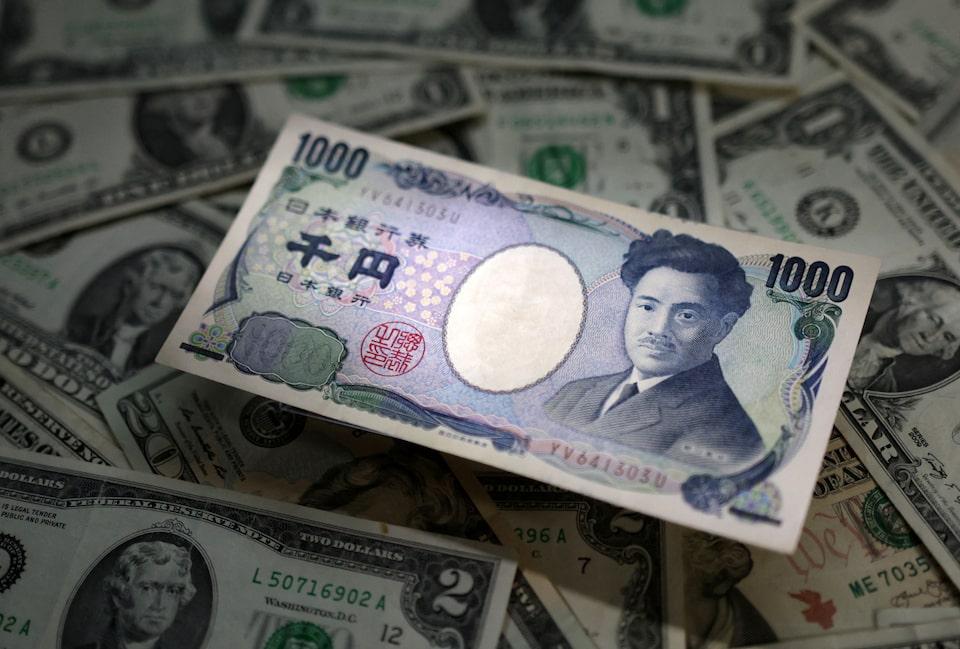
Dollar sees worst week vs yen since May BOJ's Ueda cautious on global economy, lowers rate-hike bets FedWatch Tool shows 84% probability of December rate cut ISM services index falls in September Bitcoin nears all-time peak, hits highest since August NEW YORK, Oct 3 (Reuters) - The dollar retreated on Friday, posting multi-week losses against major currencies, as uncertainty surrounding a U.S. government shutdown clouded the outlook and delayed key data releases, such as payrolls, critical for gauging the economy's direction. The U.S. nonfarm payrolls report for September was due for release on Friday, but was not published due to the government closure. Sign up here. The yen pulled back from this week's highs as traders mulled the Bank of Japan's next move ahead of a ruling party leadership election this weekend. In late afternoon trading, the euro rose 0.2% against the dollar to $1.1743 , headed for its best week in a month. Gains in the euro pushed the dollar index , which measures the greenback against a basket of key currencies, 0.1% lower at 97.69. The index had its worst weekly showing since July. "If the shutdown lasts for a long time, and I mean by several weeks, yes, then, of course, people will begin to question governability in the U.S., said Thierry Wizman, global FX and rates strategist, at Macquarie in New York. "And anytime that the market starts to worry about governability in that country, it usually is not a good story for the currency." Against the Swiss franc, the dollar fell 0.3% to 0.7951 francs , down 0.4% on the week, its largest weekly fall since mid-August. The dollar also slid against sterling, which rose 0.3% to $1.3479 . The pound posted its biggest weekly gain since August 11. "We're still in a range. I think there's just a lack of directional momentum, and the fact that the government is shut down only adds to the low volatility environment," said Vassili Serebriakov, FX strategist at UBS in New York. The U.S. currency slightly extended its fall against major currencies after data showed U.S. services sector activity stalled in September amid a sharp slowdown in new orders. The Institute for Supply Management said its non-manufacturing purchasing managers' index (PMI) fell to 50 last month, the breakeven level between growth and contraction, from 52.0 in August. Economists polled by Reuters had forecast the services PMI easing to 51.7. In other FX pairs, the dollar edged higher against the yen, up 0.1% at 147.41 yen, having earlier fallen as much as 0.4%. It rose 1.4% this week, which would be the biggest since mid-May. BOJ Governor Kazuo Ueda struck a cautious tone in comments about the global economy, lowering expectations of an imminent rate hike. Markets were also focused on a Liberal Democratic Party election on Saturday that will determine Japan's next prime minister. The LDP election has consequences for Japan's budget and central bank policies. Among the front-runners, dovish party veteran Sanae Takaichi could trigger more bond market uncertainty, while farm minister Shinjiro Koizumi and top government spokesperson Yoshimasa Hayashi are less likely to rock the boat. TWO MORE FED RATE CUTS EXPECTED THIS YEAR Traders see a 25 basis-point (bp) cut at the Federal Reserve's October meeting as almost certain. Overall, the rate futures market has priced in about 47 bps of rate declines for the remainder of the year or just under two cuts, according to LSEG calculations. Fed Governor Stephen Miran on Friday again pressed for an aggressive path of rate cuts given big changes in the economy, while saying that the difference between his outlook and that of his central bank colleagues is not as great as some perceive it to be. Miran dissented in favor of a 50-basis-point rate cut at the Fed's policy-setting meeting last month. This week provided more evidence of sluggishness in the labor market, and more ammunition for the Fed to cut rates later this month. The ADP National Employment report on Wednesday showed private payrolls decreased by 32,000 in September. Dallas Fed President Lorie Logan on Friday, however, repeated her view that upside inflation risks, a labor market that is largely in balance and policy that is currently only modestly restrictive mean the central bank should not go ahead with further interest-rate cuts. In cryptocurrencies, bitcoin rose for an eighth straight session, hitting its highest level since August 13, when it touched a record high. It was last up 1.2% at $122.164.19. , bolstered by recent gains in U.S. equities and inflows into bitcoin exchange-traded funds. https://www.reuters.com/world/middle-east/yen-trims-weekly-advance-investors-weigh-boj-election-impacts-2025-10-03/
2025-10-03 05:03
Fed rate cuts should lower hedging costs for foreign investors Foreigners hold over $30 trillion in US assets, $8 trillion by Europeans High hedging costs deter some investors, but more dollar weakness expected NEW YORK, Oct 3 (Reuters) - The long-awaited resumption of the Federal Reserve's rate-cutting cycle is likely to cheapen hedging of dollar exposure for foreign investors and increase their motivation to guard more of their U.S. assets against further currency weakness. In September, the U.S. central bank lowered interest rates by an expected 25 basis points to 4.00-4.25% on labor market concerns and indicated more cuts would follow later this year. Sign up here. That cut narrows the interest-rate differential between the U.S. and other developed countries, which helps to lower the hedging costs for foreign pensions, sovereign funds and other institutional investors, managers and analysts said. The ICE U.S. Dollar Index (.DXY) , opens new tab is down about 10% this year, partially driven by foreign investors increasing hedging activity on worries about the impact of U.S. trade and tariff policies on their U.S. assets, market participants said. "There are some people that are watching it, that have been waiting for the resumption of the cutting cycle by the Fed," said Van Luu, global head of solutions strategy for fixed income and foreign exchange for Russell Investments in London. "Now they are inclined to raise the hedge ratio, and they're waiting for the right moment or they're waiting for some kind of catalyst." Hedging is a way to limit losses on an existing portfolio by using financial instruments such as derivatives to create an offsetting position. Since it often involves selling dollars via forwards or swaps, any rise in hedging activity can spell additional weakness for the beleaguered greenback. NEW-FOUND NEED TO HEDGE High hedging costs and a bullish view on the buck were two major factors suppressing FX hedging ratios in recent years, according to a June report from the Bank for International Settlements. Years of dollar strength meant foreign investors could leave U.S. assets unhedged since it boosted their overall returns and was a source of diversification. Now that's set to change. With the greenback down significantly this year and with more potential weakness on the horizon, hedging could help blunt the hurt from unfavorable FX moves. Markets are pricing in about two more quarter-point rate cuts this year, which could incentivize investors who want to ramp up their hedges but have found the cost to do so a deterrent. GUARDING MORE BUSINESS AGAINST CURRENCY SWINGS Foreigners currently have more than $30 trillion invested , opens new tab in U.S. stocks and bonds, according to Morgan Stanley, $8 trillion of which is held by European investors. Rising concerns over Fed leadership, its independence, and U.S. policy uncertainty have helped keep pressure on the dollar, even as U.S. stocks have rallied. The S&P 500 is up about 14% for the year, near a record high. "The strong gains in U.S. (stock) market and the very sharp U.S. dollar falls are unusual but they’re not unheard of – we think an increase in hedging is part of the reason for this divergence," said Steve Dooley, head of market insights at Convera in Melbourne. A July research note from Deutsche Bank showed that equity investors in Germany and Austria have increased their hedge ratios to 60-70% from 20-30% at the start of the year. A new report from the Danish central bank showed that insurance companies and pension funds are shielding almost three quarters , opens new tab of their dollar investments from currency swings. The Deutsche note stated that some high-profile pension funds plan to top up those ratios after the summer. "I think foreign investors are still inclined to hedge away their dollar exposure," Thierry Wizman, global FX and rates strategist at Macquarie in New York, said. "So they will come out again at some point in the next few weeks ... you're going to see another round of dollar hedging by foreign institutions," he said. Research from MillTech also shows that 86% of European corporates are currently hedging their forecastable currency risk, up from 67% in 2023, with their mean hedge ratio rising to 49% from 43%. Joseph Hoffman, chief executive officer at Mesirow Currency Management, said the shift among international investors is not mainly about short-term interest-rate advantages, but is driven "more by a bearish structural view on the dollar rooted in the Fed’s policy, heightened political uncertainty, and persistent fiscal deficits." WHAT'S MY COST? Still, a lower cost of hedging will likely draw those investors who may have held off boosting hedges due to price considerations. For instance, the 4% annual hedging cost for investors in Japan and Switzerland, based on current interest rates, remains a big hurdle. It costs other euro-based investors around 2% annually. "I think there's like a psychological level that if the hedge cost goes to 1% or below, which is on the horizon for EUR investors over the next 12 months, people wouldn't worry about it as such," said Russell's Luu. (This story has been corrected to say 'almost three quarters,' instead of 'more than three quarters,' in paragraph 16) https://www.reuters.com/business/foreign-investors-can-exploit-cheaper-dollar-hedges-fed-easing-resumes-2025-10-03/
2025-10-03 04:33
A look at the day ahead in European and global markets from Ankur Banerjee: The U.S. shutdown and political , opens new tab gridlock in Washington show no signs of ending any time soon. That hasn't stopped stocks and gold striking fresh record highs, as investors mainly focus on the Federal Reserve sticking the rate-cut path. Sign up here. While the risk of a drawn out shutdown could muddle the policy path, for now, markets are shrugging that off and taking a risk-on approach. Traders don't have to bide their time for the U.S. jobs report on Friday due to the shutdown, although manufacturing data from across Europe may sway the markets and underscore the impact of tariffs. But we have been saying that for a while and data so far has shown limited impact. Data earlier this week showed U.S. manufacturing activity edged up in September, though new orders and employment were subdued as factories grappled with the fallout from President Donald Trump's sweeping tariffs. So perhaps, more of the same is in store for Europe. That may not deter the stock markets where the pan-European STOXX 600 (.STOXX) , opens new tab closed at a record high on Thursday, taking its yearly gains to 12%. Futures indicate another strong open. The surge in global stocks is led by the ever-present AI mania and the rising wagers of the Fed cutting rates again this year. With no government data, traders have turned to alternative private reports that show a sluggish labour market. That has reinforced the view that the Fed will lower rates again, as traders almost fully price in a cut later this month. Gold prices, as a result, have been on a tear, with the yellow metal heading for a seventh straight week in the black, bringing yearly gains to an eye-watering 47%. Investor attention will also be on any further deals that may be unveiled after Trump announced a deal with Pfizer CEO Albert Bourla earlier this week to cut drug prices in exchange for relief from planned tariffs on imported pharmaceuticals. The Trump administration is pursuing deals across up to 30 industries, involving dozens of companies deemed critical to national or economic security, sources told Reuters. Key developments that could influence markets on Friday: Economic events: September PMIs for France, Germany, UK and euro zone. https://www.reuters.com/world/china/global-markets-view-europe-2025-10-03/