2025-10-03 02:56
MUMBAI, Oct 3 (Reuters) - The Indian rupee is anticipated to face a difficult session on Friday, with most traders predicting that the central bank will likely intervene to prevent the currency from hitting a new all-time low. The 1-month non-deliverable forward indicated the rupee will open flat-to-slightly weaker versus the U.S. dollar compared to Wednesday's close of 88.69. India financial markets were shut on Thursday. Sign up here. The rupee has been pressured in recent weeks by relentless dollar demand from importers, with sentiment remaining firmly skewed against the currency amid equity outflows and U.S.-India trade frictions. The Reserve Bank of India has been stepping in to ensure the rupee’s decline remains orderly. Central bank Governor Sanjay Malhotra reiterated earlier this week that the RBI is not defending any particular level of the currency and is instead focused on containing volatility and keeping moves measured. The RBI support is "keeping things calm" for now, a currency trader at a bank said. However, overall sentiment remains weak and the market wants to test the downside, he added. Currency traders are closely watching the 88.80 level, the lifetime low for the rupee hit on Monday. With broad dollar demand keeping the pressure on, this level is seen a key marker for potential intervention or a pause in the currency’s slide. ASIAN CUES Asian cues did not lend any particular direction to the rupee on Friday, with peers mixed and the dollar index marginally higher. A U.S. government shutdown has paused the release of key economic data, including Friday’s closely watched September jobs report, depriving markets of an important gauge for the Federal Reserve’s rate outlook. With the official jobs report on hold, Wednesday’s private payrolls data drew heightened attention. The weak reading has increased expectations of a Federal Reserve rate cut this month. We could see "a longer tail effect" from the private jobs data, given the uncertainty around the payrolls release, ING Bank said in a note. KEY INDICATORS: ** One-month non-deliverable rupee forward at 88.86; onshore one-month forward premium at 14 paise ** Dollar index up at 97.86 ** Brent crude futures up 0.3% at $64.3 per barrel ** Ten-year U.S. note yield at 4.1% ** As per NSDL data, foreign investors sold a net $453.4 million worth of Indian shares on September 30 ** NSDL data shows foreign investors sold a net $12.1 million worth of Indian bonds on September 30 https://www.reuters.com/world/india/rupees-negative-drift-demands-central-bank-firepower-2025-10-03/

2025-10-03 00:27
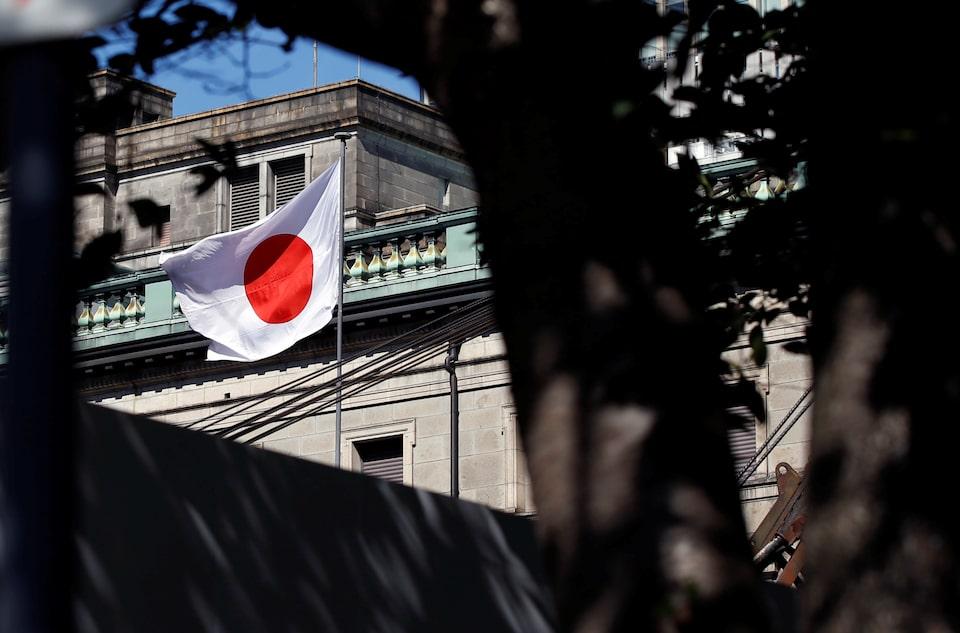
Subdued market reaction seen from Koizumi victory Win by dovish Takaichi could steepen yield curve, weaken yen Dark horse Hayashi supports BOJ rate hikes, opposes large stimulus TOKYO, Oct 3 (Reuters) - Japanese markets are bracing for a crucial ruling party vote this weekend that will determine the next prime minister and set the tone for budget and central bank policies. The race to head the Liberal Democratic Party has centred on household relief versus fiscal discipline. Overhanging those deliberations is the question of whether Japanese shares can chart new highs and calm will return to its volatile bond market. Sign up here. Since Shigeru Ishiba, a fiscal hawk, announced his resignation last month, investors have bet that any successor will be more liberal with spending. Among the front-runners, party veteran Sanae Takaichi could trigger even more bond market uncertainty, while farm minister Shinjiro Koizumi and top government spokesperson Yoshimasa Hayashi are less likely to rock the boat. As Saturday's vote approached, a retracement in the Nikkei share gauge along with a decline in long-term bond yields signalled bets that Takaichi will either come up short or rein in her most expansionist instincts if she prevails. "So far we expect either Koizumi or Hayashi may win the election, and they are not trying to interfere with Bank of Japan policy," said Takashi Fujiwara, chief fund manager at Resona Asset Management's fixed income investment division. "Even if Takaichi wins, she has toned down her appeal for maintaining loose monetary policy." RATTLED BOND MARKET The Japanese government bond (JGB) market has been on edge since late May due to waning demand among traditional buyers, decreased support from the central bank, and concerns about swelling debt. The sector was dealt another blow in July, when Ishiba's coalition lost seats in the upper house to outsider parties campaigning on tax cuts and increased spending. Speculation mounted that he would resign, and Takaichi, who finished second behind Ishiba in a run-off vote last year, would swoop in as Japan's first female prime minister. The so-called Takaichi trade was long on stocks and bearish on JGBs, particularly longer tenors, on expectations she would push for tax cuts, fiscal stimulus, and easy monetary policy. The 30-year JGB yield surged to a record high 3.285% on September 8, the first trading day after Ishiba announced he was stepping down. The Nikkei marched to successive all-time highs, setting an intraday record of 45,852.75 on September 19. On the last trading day before the vote, the Nikkei was up 1.5% in the afternoon session and long-term JGBs rallied, sending yields lower. As the campaign heated up, Takaichi said she would not immediately pursue sales tax cuts and was mostly silent on central bank policy, causing some unwinding of her namesake trade. Even so, a victory by Takaichi would likely prompt the biggest reaction via a steepening of the JGB yield curve and yen depreciation, said Carl Ang, a fixed income research analyst at MFS Investment Management. "Given her image as a foreign policy hardliner, bond and currency markets may start factoring in more substantial JGB-financed spending increases to defence, for example," he added. Koizumi, the son of former premier Junichiro Koizumi, said his government would compile a package of measures to cushion the blow to households from rising prices. Hayashi, the dark horse, ruled out the need for large-scale stimulus and said he backed the BOJ's plan to raise rates. Traders have largely priced in Koizumi's victory, so it would lead to a subdued reaction on Monday, said Kazuaki Shimada, chief strategist at IwaiCosmo Securities. "If Takaichi wins, it becomes a positive surprise, and the stock market could surge," Shimada said. Shares of Daiwa Motor Transportation (9082.T) , opens new tab are seen as a barometer of support for Koizumi, who backs deregulation of the ride-share sector, Shimada added. On the other hand, nuclear energy supplier Sukegawa Electric (7711.T) , opens new tab would stand to gain from Takaichi's push to increase investment in that sector. Daiwa Motor jumped nearly 12% in Tokyo trading on Friday, while Sukegawa slid 1.1%, down for a fifth session. Yields on shorter-term JGBs, those most sensitive to central bank policy, jumped to 17-year highs at the end of September as bets increased the BOJ would hike rates as soon as this month. That movement, which has flattened Japan's yield curve, reflects growing bets that Koizumi will win and give the BOJ free rein on policy, said Shoki Omori, chief desk strategist at Mizuho Securities. But a looming worry is whether Koizumi would concede to tax cuts pushed by outsider parties as he looks to form a wider coalition. "That would be more scary, but we don't know about that part just yet," Omori added. https://www.reuters.com/markets/asia/japans-markets-gird-leadership-vote-with-stocks-bonds-edge-2025-10-03/
2025-10-03 00:21
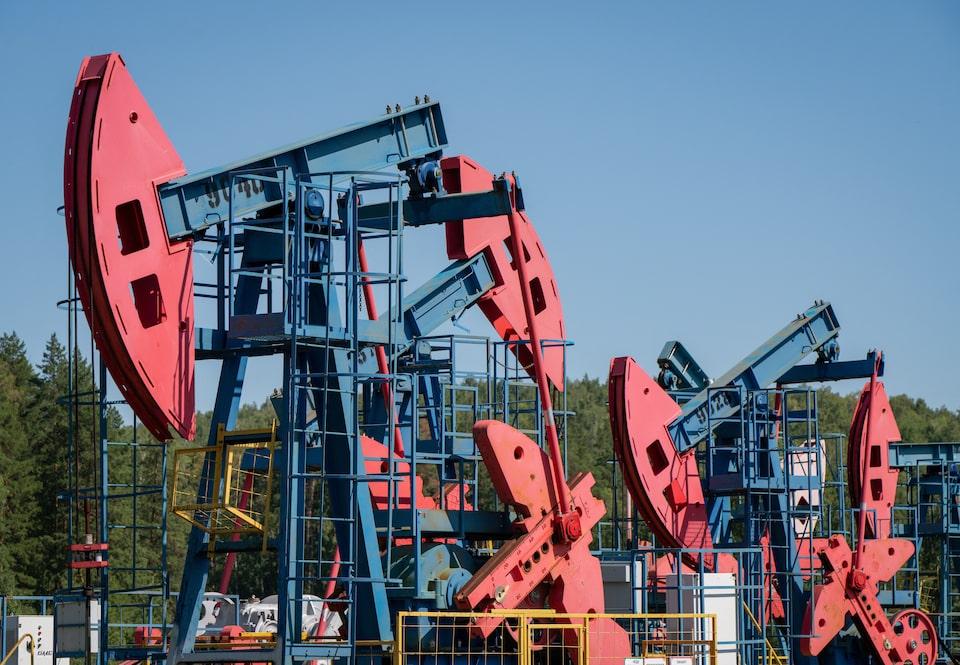
OPEC+ could further boost output in November, sources say Analysts predict oil market surplus in fourth quarter and beyond Chevron refinery fire unlikely to affect broader market HOUSTON, Oct 3 (Reuters) - Oil prices settled higher on Friday but posted a weekly loss of 8.1% after news of potential increases to OPEC+ supply. Brent crude futures closed up 42 cents, or 0.7%, at $64.53 a barrel by, while U.S. West Texas Intermediate crude was up 40 cents, or 0.7%, at $60.88. Sign up here. For the week, Brent fell 8.1%, the largest weekly loss in over three months. WTI tumbled 7.4% in the week. "The expected increase in OPEC+ production and the Iraq/Kurdish pipeline beginning to flow after being shut in the past two years is keeping sellers present in crude," said Dennis Kissler, senior vice president of trading at BOK Financial. "Hamas is also starting negotiations with the Trump administration on a peace plan. Add in the bearish EIA storage data from earlier this week and it's hard to be bullish crude in the near term," Kissler said. Eight OPEC+ countries are likely to further raise oil output on Sunday with the group’s leader Saudi Arabia pushing for a large increase to regain market share and Russia suggesting a more modest rise, four people with knowledge of the OPEC+ talks said. Potentially higher OPEC+ supply and slowing global crude refinery runs owing to maintenance and a seasonal dip in demand in the months ahead are set to weigh on market sentiment, analysts said. "Demand indicators have fallen a touch through the Atlantic Basin as summer demand comes to an end. The over-supplied implied balance from a fundamentals perspective starting in October is gaining ground," said Rystad Energy analyst Janiv Shah. JPMorgan analysts, meanwhile, said they believed September marked a turning point, with the oil market heading towards a sizeable surplus in the fourth quarter and into next year. Meanwhile, through a pipeline from the semi-autonomous Kurdistan region in northern Iraq to Turkey on Saturday for the first time in 2-1/2 years, Iraq's oil ministry said earlier this week. Meanwhile, U.S. President Donald Trump gave Hamas until Sunday night to agree to his proposal to end Israel's war in Gaza. U.S. crude oil, gasoline and distillate inventories rose last week as refining activity and demand softened, according to the Energy Information Administration on Wednesday, further weighing on prices. On the supply side, producers cut oil rigs by 2 to 422, oilfield service provider Baker Hughes said. Elsewhere on Friday, a fire broke out at Chevron's (CVX.N) , opens new tab El Segundo refinery overnight, though a county official said the flames had been confined to one area. The refinery is one of the largest on the U.S. West Coast, with capacity of 290,000 bpd. It was not immediately clear if there was any impact on production, but the impact on oil prices could be limited, analysts said. https://www.reuters.com/business/energy/oil-track-steepest-weekly-plunge-3-12-months-2025-10-03/
2025-10-03 00:01
FUJAIRAH, Oct 2 (Reuters) - The unwinding of OPEC+ production cuts, China storage flows and geopolitical tensions have been the primary drivers of crude oil prices this year, and are likely to remain so for the foreseeable future. Knowing what is influencing the market is one thing. Predicting with any accuracy how these factors will develop is another entirely. Sign up here. The problem for the crude industry is that all three of these factors are inherently unpredictable and subject to fairly rapid changes, which makes forecasting the current market even more of a mug's game than it usually is. This contradiction was evident during workshops and discussions at the Energy Markets Forum held this week in the oil storage and shipment hub of Fujairah in the United Arab Emirates. While conferences usually feature both bullish and bearish proponents, the level of uncertainty over the outlook for the next two or three quarters was marked. The three factors currently shaping crude markets also tend to work in opposite directions when it comes to prices. The unwinding this year of 2.2 million barrels per day of voluntary output curbs by eight members of OPEC+, with a further 137,000 bpd due in October, is theoretically bearish for prices, as it is far from certain that global demand is rising fast enough to absorb the extra oil. But the situation is complicated by the actual rise in exports from the group not matching the allowed increases in production. Analysts and industry sources estimate that the eight OPEC+ exporters have delivered about three-quarters of the extra oil output it targeted since the group started easing production curbs in April. This means that some 500,000 bpd, which is about 0.5% of global demand, that was expected to hit the market has not arrived. In effect, the lifting of OPEC+ production quotas has turned out to be bullish for prices, rather than bearish. This may mean that even if the eight OPEC+ members agree at a meeting this weekend to further increase production quotas, the market reaction may be muted as participants wait to see how much extra oil actually becomes available. CHINA STORAGE The volume of crude being stored this year by China is largely seen as a bullish factor at least in the short term as it soaks up any excess crude and has worked to keep the price of benchmark Brent futures anchored in a narrow range around $65 to $70 a barrel in recent months. China doesn't disclose the volume of crude flowing into commercial and strategic storages, but an estimate of the surplus can be made by subtracting the volume of oil processed by refineries from the total available from imports and domestic output. On this basis, it is likely that China was building stockpiles by at least 500,000 bpd so far this year. But given the lack of transparency in the process, it is difficult to predict whether China will continue to build inventories, or whether they will pull back. In some ways the best predictor is price, as China does have a track record of buying extra crude when prices are low, but drawing on inventories when prices rise. This dynamic may have played out in September, with LSEG Oil Research estimating China's crude imports dropped to around 10.83 million bpd from 11.65 million bpd in August, the lowest since February. The decline in September imports comes after oil prices spiked higher in June amid the conflict between Israel and Iran, which is also the time that September-arriving cargoes would have been arranged. The brief conflict between Israel and Iran also serves as a reminder that geopolitics have played a bigger role this year, and remain an unpredictable factor. In addition to tensions in the Middle East, there are also Ukraine's attacks on Russian oil refineries, and the economic uncertainty created by the trade wars launched by U.S. President Donald Trump. The impact of these events is also uncertain. For example, damaging Russia's refineries is likely to cut its exports of refined fuels, but may increase shipments of crude oil, a combination that would likely lead to rising refining margins. Uncertainty can lead to price volatility, but it may also result in market players being cautious and unwilling to push too hard in either direction as they await hard data on which factor is likely to gain the upper hand. Enjoying this column? Check out Reuters Open Interest (ROI), your essential new source for global financial commentary. ROI delivers thought-provoking, data-driven analysis of everything from swap rates to soybeans. Markets are moving faster than ever. ROI can help you keep up. Follow ROI on LinkedIn , opens new tab and X , opens new tab. The views expressed here are those of the author, a columnist for Reuters. https://www.reuters.com/markets/commodities/opec-china-geopolitics-are-triple-whammy-uncertainty-crude-2025-10-02/
2025-10-02 23:59
Scrap metal factory treated as epicentre of contamination 10 contaminated areas found, up from 6 earlier, minister says Nine people exposed, given special medical treatment Contamination first detected in shrimp shipment to US JAKARTA, Oct 2 (Reuters) - Indonesia's nuclear agency is still determining the size of the area affected by radioactive contamination linked to a scrap metal plant, with 10 points in an industrial zone near Jakarta found with high levels of exposure, officials said on Thursday. The contamination was first detected in a batch of shrimp shipped to the United States in August by a local company also based in the Modern Cikande Industrial Estate, after which Indonesia began sweeping scans there. Sign up here. "Hopefully, by early next week we will know the total size of the contaminated area," said Bara Hasibuan, a spokesperson for the investigation into the incident, adding Indonesia's nuclear agency would make that determination. "We're not taking this lightly. For us, this is serious." A scrap metal factory owned by foreign investors is being treated as the epicentre of the contamination, documents obtained by Reuters show, confirmed by another official. Indonesia said this week it was providing updates on the probe to the global nuclear watchdog and the United States. The same contaminant was also found in a shipment of cloves last week, the U.S. Food and Drug Administration said. Caesium 137 is present in the environment mainly from nuclear testing or accidents, like Chernobyl and Fukushima, according to the FDA's website. Indonesia has no nuclear weapons or nuclear power plants. RADIATION IN MORE LOCATIONS Indonesian authorities have found 10 points with radionuclide radiation for Caesium 137, Environment Minister Hanif Faisol Nurofiq told Reuters, up from the initial six locations. The estate is still operating, but under close monitoring. "We have declared PT PMT (Peter Metal Technology) as the epicentre with a 5 km perimeter," Nurofiq said, adding a special incident status had been imposed at the estate. He said movement had been limited there and teams of police, military and religious leaders were going door-to-door to inform people of the danger and ways to avoid it. Authorities examined over 1,500 local people and workers and found nine were exposed, spokesperson Hasibuan said, adding those had undergone special medical treatment. Decontamination measures were being taken and special equipment used on trucks entering and leaving to ensure they were free of contamination, he said. PT PMT deals with non-ferrous base metal manufacturing and grinding, and set up in the estate two years ago, according to Indonesia's law ministry registry reviewed by Reuters. The nationality of the investors is not clear in the document, but it was set up by foreign direct investment. The company did not immediately respond to questions sent by Reuters to a cellphone number listed in the registry. The estate, 68 km from Jakarta, covers 3,175 hectares and contains more than 270 local and foreign companies, in areas from food processing to automotive components, according to its website. https://www.reuters.com/sustainability/boards-policy-regulation/indonesia-races-determine-extent-radioactive-contamination-industrial-zone-2025-10-02/

2025-10-02 23:19
SAO PAULO, Oct 2 (Reuters) - Brazilian planemaker Embraer (EMBR3.SA) , opens new tab said on Thursday it delivered 62 aircraft in the third quarter of 2025, about 5% higher than the 59 deliveries in the same period last year. The world's third-largest planemaker delivered 20 commercial aircraft in the quarter, a 25% increase year-on-year, and 41 executive jets, in line with a year earlier, Embraer said in a securities filing. Sign up here. The Phenom 300 represented nearly half of all the executive jets delivered by Embraer in the quarter through the end of September, according to the company. Embraer also delivered one defense aircraft in the period, a KC-390 Millennium, compared with two deliveries in the defense segment a year ago. "Deliveries are on track to reach bottom end of guidance," Citi analysts including Andre Mazini wrote in a note to clients, adding the figures are "likely to be taken as lukewarm by the market." Embraer forecasts deliveries in 2025 of between 77 and 85 commercial, and 145 to 155 executive jets. In the year through the third quarter, Embraer delivered 46 commercial jets and 102 executive jets. Sao Paulo-traded shares of Embraer declined 5.8% on Thursday ahead of the data, one of the largest losers in the Brazilian equities benchmark index Bovespa (.BVSP) , opens new tab, which fell 1.1%. The company is set to release its third-quarter financial results on November 4, according to its website. https://www.reuters.com/business/aerospace-defense/planemaker-embraer-delivers-62-jets-q3-up-5-year-earlier-2025-10-02/