2025-10-02 23:16
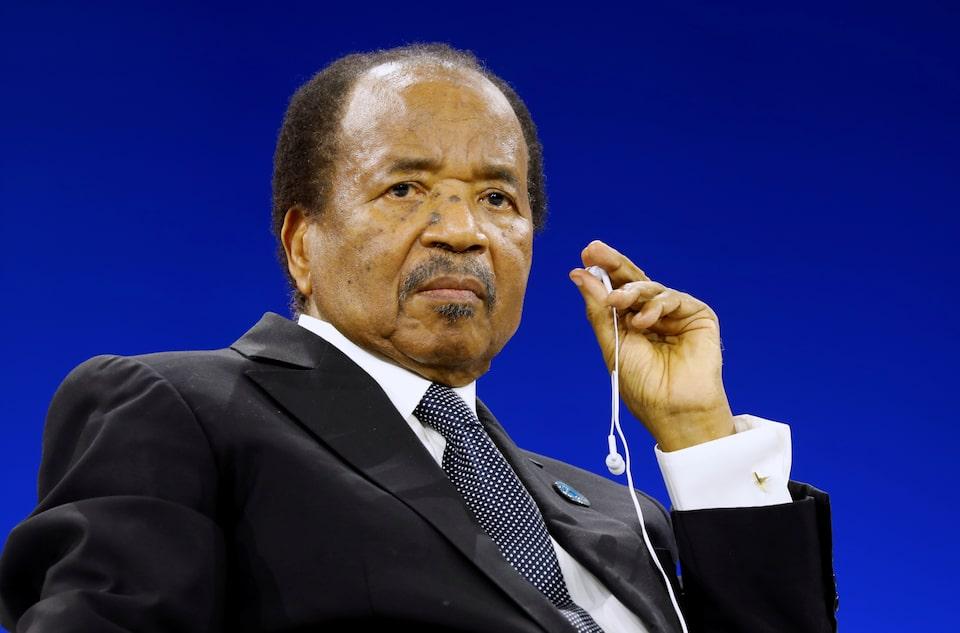
NAIROBI, Oct 2 (Reuters) - Cameroon's voters will decide on October 12 whether to grant 92-year-old President Paul Biya, the world's oldest head of state, an extension of his four-decade rule. Here is what investors are watching in the race to lead central Africa's biggest economy: WHO ARE THE CANDIDATES IN THE ELECTION? Biya, who has been in power since 1982, is facing a dozen other candidates in an election in which more than 8 million voters are eligible to cast ballots. But at the helm of the ruling Cameroon People's Democratic Movement (CPDM) party, he controls the electoral machinery and is almost certain to win. Sign up here. The main opposition challengers include Issa Tchiroma Bakary, a former minister of employment, and Bello Bouba Maigari, whom Biya appointed as his first prime minister when he took power. But the opposition is more noteworthy for one absence: Maurice Kamto, Biya's main rival. The electoral commission rejected his candidacy in July without giving a reason. Kamto secured 14% of the votes cast during the last election in 2018, which Biya won amid fraud allegations. WHAT ARE THE TOP ISSUES FOR INVESTORS? Cameroon, like other Sub-Saharan African countries, started issuing Eurobond debt in the last decade, putting it on the radar of frontier market investors. It issued its maiden international bond in 2015, before tapping the market again last year with an issue that will mature in 2032. The country also had a $689.5 million International Monetary Fund programme, as well as $181.7 million from the Resilience and Sustainability Facility, both of which ended in July. Investors will be watching to see if it will secure a new arrangement. Cameroon's economy is reliant on commodities exports; it is the world's fifth biggest cocoa producer and also exports oil, gas and timber. This leaves it vulnerable to the vicissitudes of commodity price slumps. WHAT ECONOMIC CHALLENGES WILL THE WINNER FACE? The IMF classifies Cameroon's debt as sustainable - but at high risk of distress. Analysts have warned that its rising reliance on borrowing as well as inefficiencies in its debt management could increase the country's vulnerability to shocks. That could pose a problem for the winner as the government seeks to borrow $1.6 billion locally and abroad to plug a financing gap, amid falling disbursements from donors. Cameroon's debut $750 million bond also matures next month, which could drain some cash from government coffers, although officials have not yet commented on plans to manage the maturing bond. The winner will also have to address the financial sector in order to exit the global Financial Action Task Force’s "grey list", a determination that its system is susceptible to money laundering. Cameroon has also been dealing with increased climate catastrophes, including droughts and floods, which have pressured the agriculture sector and could curb production of key commodities. ARE THERE ANY OTHER FACTORS AT PLAY? Investors also closely watch Biya's health, as his advanced age and the lack of a clear succession plan, raise concerns over the country's stability. Biya would be nearly 100 years old at the end of the eighth term in office he is seeking. His health is the subject of frequent speculation, and he already often spends long periods of unexplained time in Europe, including last year when he disappeared from public view for a 42-day stretch. He has brushed off concerns about his health and said he was determined to serve the country. Cameroon also faces a host of serious security challenges, including a conflict with Anglophone separatists in the southwest and the northwest and threats from Nigeria-based Islamist fighters in the north. https://www.reuters.com/world/africa/what-investors-are-watching-cameroons-presidential-election-2025-10-02/
2025-10-02 22:54
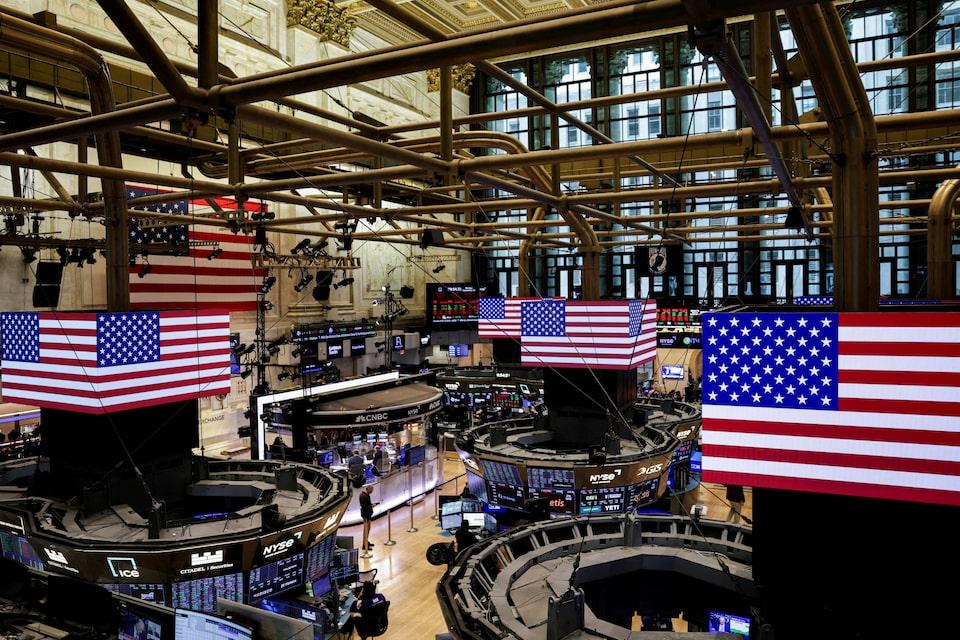
Indexes up: Dow 0.17%, S&P 500 0.06%, Nasdaq 0.39% Technology provides biggest sector boost, consumer discretionary is biggest drag Tesla gives back early gains to end down 5% Credit bureaus fall after FICO unveils new licensing model Oct 2 (Reuters) - Wall Street's three major indexes marked record closing highs with modest gains on Thursday, largely thanks to support from the technology sector, while investors cautiously monitored private labor market data on the second day of a U.S. government shutdown. The benchmark index rose very slightly, with its valuation already at its highest level since 2020, while the Nasdaq, up 0.4%, was the biggest gainer on the day, with help from heavyweight technology companies including AI chip leader Nvidia (NVDA.O) , opens new tab, Apple (AAPL.O) , opens new tab and Broadcom (AVGO.O) , opens new tab. Sign up here. With no official government data available because of the shutdown, investors were monitoring information from other sources. A report from global outplacement firm Challenger, Gray & Christmas said U.S. employers announced fewer layoffs in September but that hiring plans so far this year were the lowest since 2009. This followed the previous day's weaker-than-expected ADP National Employment Report. "The market is looking at all of that against the backdrop of what was already weak job data in recent months to try to gauge the real path forward for the labor market from here," said Jim Baird, chief investment officer with Plante Moran Financial Advisors. The lackluster jobs data so far has led traders to bet widely that the Federal Reserve will cut interest rates two more times this year, including a cut at the end of October. However, the Labor Department had to delay its September nonfarm payroll report because of the government shutdown. While the shutdown was not a shock and investors have been soothed by the knowledge that such closures have typically not hurt the market in the past, Baird noted that it still caused worries. "Given how polarized the two (political) parties are right now, and both seem to be staking out their respective positions, it wouldn't be surprising if this one drags out a little bit longer," he said. The Dow Jones Industrial Average (.DJI) , opens new tab rose 78.62 points, or 0.17%, to 46,519.72. The S&P 500 (.SPX) , opens new tab gained 4.15 points, or 0.06%, to 6,715.35 and the Nasdaq Composite (.IXIC) , opens new tab gained 88.89 points, or 0.39%, to 22,844.05. The gains marked two closing highs in a row for the S&P 500 and the Dow, while the Nasdaq narrowly missed a record close on Wednesday. Earlier in the session, the S&P and the Nasdaq indexes had hit intraday record highs. The S&P 500's forward price-to-earnings ratio has climbed to 23.1. The tech sector (.SPLRCT) , opens new tab finished up 0.5% and was the biggest boost to the S&P 500 with a lot of help from chip stocks. The broader semiconductor (.SOX) , opens new tab index closed up 1.9% and also registered a record closing high. Materials (.SPLRCM) , opens new tab was the biggest percentage gainer among the benchmark's 11 major industry sectors, adding 1%. Energy (.SPNY) , opens new tab was the biggest percentage loser of the group, falling 1%. Consumer discretionary (.SPLRCD) , opens new tab, while not the biggest percentage loser, was the biggest drag on the S&P 500 due largely to a selloff in shares of Tesla (TSLA.O) , opens new tab, which ended down 5% for its biggest one-day percentage loss since late July. The electric vehicle maker gave up early gains after a strong quarterly deliveries report, because some analysts flagged risks to sales in the upcoming quarters due to the withdrawal of the $7,500 federal tax credit. Shares of credit bureaus Equifax (EFX.N) , opens new tab and TransUnion (TRU.N) , opens new tab fell 8.5% and 10.6%, respectively, after FICO (FICO.N) , opens new tab launched a program that could allow mortgage lenders to gain access to credit scores without relying on the bureaus. FICO shares surged almost 18% after the news. Occidental Petroleum (OXY.N) , opens new tab said it would sell its petrochemical division to Warren Buffett's Berkshire Hathaway (BRKa.N) , opens new tab for $9.7 billion, sending shares of the oil and gas producer down 7.3%. Advancing issues outnumbered decliners by a 1.16-to-1 ratio on the NYSE where there were 530 new highs and 93 new lows. On the Nasdaq, 2,706 stocks rose and 1,971 fell as advancing issues outnumbered decliners by a 1.37-to-1 ratio. The S&P 500 posted 37 new 52-week highs and 11 new lows while the Nasdaq Composite recorded 140 new highs and 67 new lows. On U.S. exchanges, 18.77 billion shares changed hands compared with the 18.83 billion 20-day moving average. https://www.reuters.com/business/sp-500-nasdaq-futures-climb-renewed-rate-cut-optimism-2025-10-02/
2025-10-02 22:01
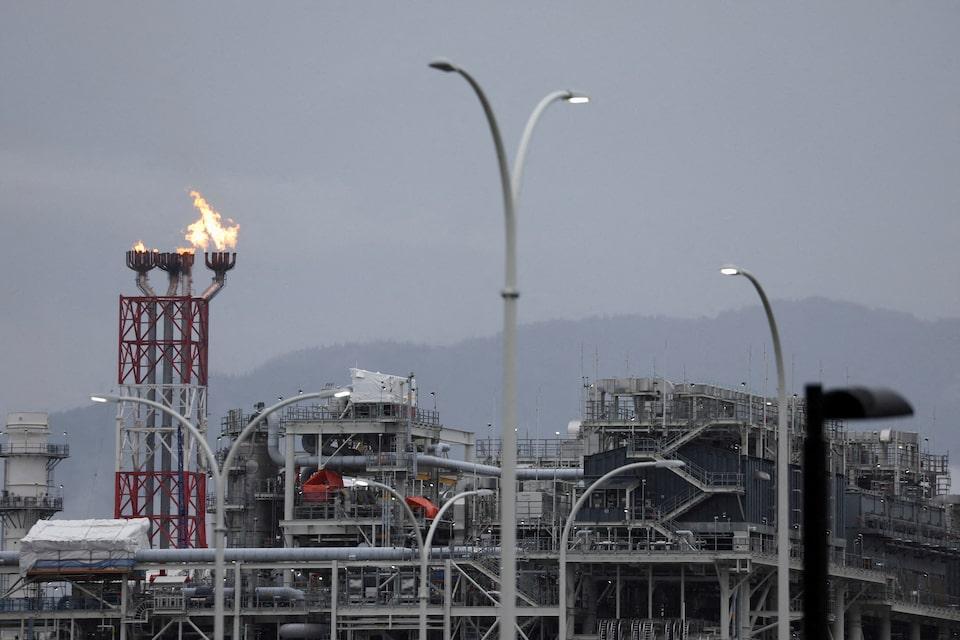
LNG Canada begins process for Train 2 startup -spokesperson Train 1 continues to have technical problems - sources Exports ongoing and flaring on Sept 11 ended - spokesperson Exports fall in September, data show Natgas prices hit record lows amid slow ramp-up of LNG Canada HOUSTON/Calgary Oct 2 (Reuters) - Shell-led (SHEL.L) , opens new tab LNG Canada has begun the process of starting up its second 6.5 million tonnes per annum (mtpa) liquefied natural gas processing unit known as Train 2 in Kitimat, British Columbia, a company spokesperson told Reuters on Thursday. The startup of Train 2, however, is happening as the company continues to experience technical problems at Train 1, according to two people with knowledge of its operations. The train was reported by sources to have technical issues in July, a month after it had started first production. Sign up here. LNG Canada is the first major LNG export facility in Canada, and the first on the west coast of North America that provides direct access to Asia, the world's largest LNG market. The facility took almost seven years to be built and has been operating at less than half its stated capacity, the people said. "We have had to swap out the supercore, and while string 2 is running, string 1 is down," one of the two people told Reuters. When asked about the technical issues, the company spokesperson pointed to ongoing export activity at the terminal and said flaring that started on September 11 had ended. "A 14th cargo departed the LNG Canada facility on September 30. A 15th cargo is expected to depart in the coming days," the spokesperson said. In September, LNG Canada exported less of the superchilled gas than the month before, with only four cargoes leaving the port for a total export of just under 0.3 million metric tons compared with the 0.4 million tons it sold in August, according to preliminary ship tracking data from financial firm LSEG. When fully operational, the facility is expected to convert about 2 billion cubic feet of gas per day (bcfd) to LNG, which market participants have hoped will boost Canadian natural gas prices. The slow ramp-up of LNG Canada, however, has contributed to daily spot prices slumping to record lows last week, as it has failed so far to drain a gas glut that built in anticipation of increasing demand from the plant, causing pipeline congestion. Gas storage in Western Canada remains at last year's record highs, according to investment bank Jefferies, and Reuters reported last week that some gas producers are aggressively cutting output in an effort to ease an ongoing glut. LNG Canada is a joint venture between Shell, Malaysia's Petronas (PGAS.KL) , opens new tab, PetroChina <601857.SS>, Japan's Mitsubishi Corp <8058.T>, and South Korea's KOGAS <036460.KS>. On Tuesday, MidOcean - an LNG company backed by EIG and Saudi Aramco - announced a plan to buy a fifth of the Petronas venture that holds a 25% share of LNG Canada. https://www.reuters.com/business/energy/shell-led-lng-canada-prepares-start-train-2-2025-10-02/
2025-10-02 21:04
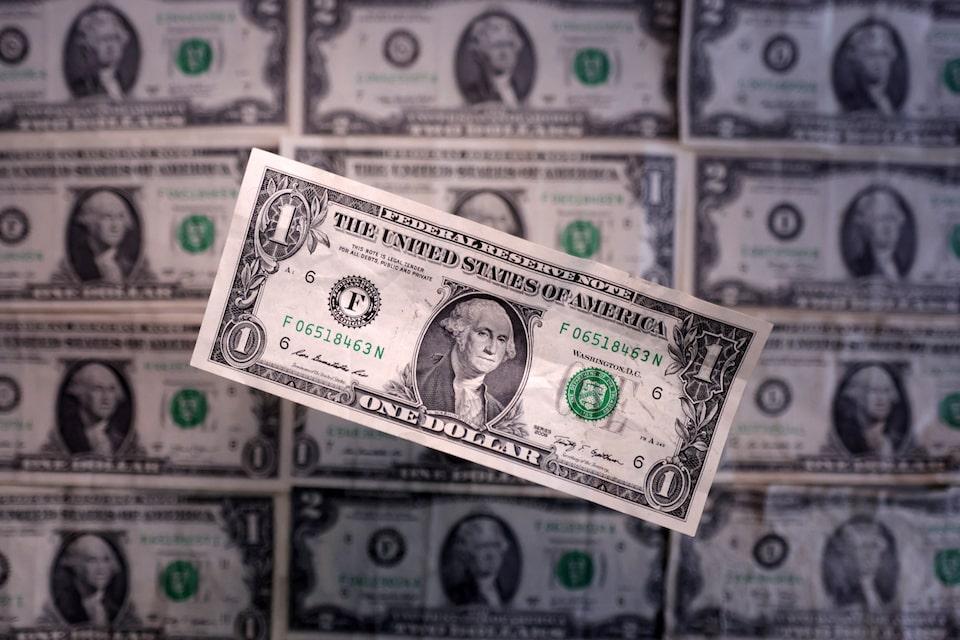
ORLANDO, Florida, Oct 2 (Reuters) - Stock markets around the world leaped to new highs on Thursday, propelled by optimism around the AI boom and hopes for further U.S. interest rate cuts, as investors shrugged off the U.S. government shutdown which entered its second day. More on that below. In my column today I look at why the U.S. government shutdown is the last thing the Federal Reserve needs right now - visibility around the labor market and inflation for data-dependent policymakers was already limited, and this just reduces it even more. Sign up here. If you have more time to read, here are a few articles I recommend to help you make sense of what happened in markets today. Today's Key Market Moves Today's Talking Points: * The AI Emperor - clothes or no clothes? OpenAI, the company behind ChatGPT, has reached a valuation of $500 billion following a recent share sale, making it the most valuable private company in the world. That's up sharply from its current valuation of $300 billion. Where next? $1 trillion? It's a landmark moment but raises familiar questions about whether the AI boom is a bubble. AI-related capex spending in the U.S. is soaring but a lot is on imports, so is actually an offset to GDP growth. And the bar for future returns is high. But as long as the music is playing, investors will keep dancing. * What's going on with oil? Oil prices are sliding. Fast. Brent and WTI crude futures are down nearly 10% in the last week, scraping four-month lows of $64.00 and $60.40 a barrel, respectively, as oversupply concerns grip the market. OPEC+ countries meet this weekend and could agree to raise oil production by up to 500,000 barrels per day in November, sources tell Reuters. That would be triple the increase for October. Oil's disinflationary momentum is building. * De-dollarization - a bit of a myth? IMF figures this week showed that the dollar's share of global foreign exchange reserves in Q2 dipped to 56.3% - the lowest since at least the euro's launch in 1999 - from 57.7% in Q1. But adjusted for exchange rates, the dollar's share held steady, the IMF said. According to Goldman Sachs, it actually rose for the second quarter in a row, and as capital flows expert Brad Setser notes, the official sector's nominal dollar holdings in recent years have been "basically constant". So no de-dollarization then, at least from central banks. U.S. government shutdown gives Fed last thing it needs - even less visibility After the Federal Reserve resumed its interest rate-cutting cycle last month, Chair Jerome Powell signaled that incoming U.S. economic data would play an even more critical role than usual in determining the central bank's next steps. But the government shutdown means the Fed may now be walking blind. "We're in a meeting-by-meeting situation, and we're going to be looking at the data," Powell told reporters after the 25-basis-point cut on September 17, adding: "There are no risk-free paths now." Those paths have just gotten a whole lot riskier. The government shutdown that began on Wednesday could delay the release of a large chunk of economic data, meaning the Fed's ability to accurately assess the labor market and inflation situation – which was already limited – will now be much worse. That, in turn, could make the market rethink its own conviction about the near-term rate outlook. Key employment and inflation data are set to be delayed, namely weekly jobless claims from the Labor Department, and all-important monthly non-farm payrolls and CPI inflation reports from the Bureau of Labor Statistics. The September payrolls and CPI inflation reports are due for release this Friday and October 15, respectively. They would probably be the biggest single influences in rate setters' decisions at the October 28-29 Federal Open Market Committee policy meeting. As Rabobank analysts note, thick with understatement, this is "very inconvenient" for the Fed as these two data points could potentially tilt the balance between the hawks and the doves on the FOMC. The FOMC's September 'dot plot' showed a median estimate of two more rate cuts this year, but it wouldn't take much to change that. The split of views showed that nine of the FOMC's 19 members expect only one more cut - or none - by December. There is a clear polarization of views. Does a shutdown strengthen the doves' hand? DATA QUALITY DOUBTS GROW A quarter-point cut in October is already fully priced into rates futures markets. Another "insurance" cut, as Powell described September's move, would make sense - better to avoid the risk of falling behind the curve and being forced to ease more aggressively later. This is particularly true in the event of a prolonged shutdown, which could put a 50-basis-point cut on the table in October or December. Oxford Economics chief U.S. economist Ryan Sweet estimates that even a partial shutdown reduces GDP growth by 0.1-0.2 percentage points per week. To put that into context, the longest shutdown on record of over 35 days in President Donald Trump's first term would reduce fourth-quarter real GDP growth by 0.5-1.0 percentage points. But there's also a compelling case for not easing at all, never mind pouring fuel on the fire with cuts made in a haze of uncertainty rather than on data-led evidence, as Powell has insisted upcoming decisions will be based. The hawks' base case appears to be strengthening - GDP growth is running close to 4% on an annualized basis, inflation is nearly a percentage point above target and showing few signs of cooling, and Wall Street is at record highs. It's unclear whether a government shutdown of a few days, or even weeks, would weaken the hawks' narrative. One thing that most policymakers and economists do agree on is that the quality and reliability of U.S. economic data are deteriorating, in no small part due to falling response rates to surveys. This leads to skewed or inaccurate results, and more and bigger revisions. Economists at Goldman Sachs estimate that standard errors are 26% higher on average today than in 2015-2019, and have increased for eight out of 10 government surveys they review. Labor market data appear to have been affected most by falling survey response rates, they note. "This is an old problem, and old solutions continue to be relevant today: gather more data," Anna Kovner, director of research at the Richmond Fed, concludes in an article published on Wednesday , opens new tab. That, of course, will have to wait, probably until long after the shutdown is over. Is patchy data preferable to no data at all? We could be about to find out. What could move markets tomorrow? Want to receive Trading Day in your inbox every weekday morning? Sign up for my newsletter here. Opinions expressed are those of the author. They do not reflect the views of Reuters News, which, under the Trust Principles , opens new tab, is committed to integrity, independence, and freedom from bias. https://www.reuters.com/business/global-markets-trading-day-graphic-2025-10-02/
2025-10-02 20:58
TSX ends up 0.2%, at 30,160.59 Eclipses Wednesday's record closing high Technology rises 1% Consumer discretionary adds 1.7% Oct 2 (Reuters) - Canada's main stock index rose to another record high on Thursday, led by gains for technology and consumer discretionary shares, as investors looked past the uncertainty around a U.S. government shutdown. Toronto's S&P/TSX composite index (.GSPTSE) , opens new tab ended up 52.92 points, or 0.2%, at 30,160.59, notching its fifth straight day of gains and eclipsing Wednesday's record closing high. Sign up here. "What we're seeing in the market right now is really a playing out between the fundamentals and the political noise," said Philip Petursson, chief investment strategist at IG Wealth Management. "Some investors have been making the mistake, thinking that what's going on in the United States with the shutdown and everything else would have a bigger impact on the market but the reality is what matters are profits." The U.S. was in the second day of a government shutdown which could disrupt air travel, threaten food aid for millions of Americans, and weigh on exports and mortgage applications if prolonged. However, past shutdowns have not had a lasting impact on the broader U.S. economy. "This is a profit-driven market. That's why we continue to hit new highs on the TSX, on the S&P 500, on other indexes around the world," Petursson said. "We believe that this is a culmination of a renewed economic cycle and a renewed market cycle." The technology sector (.SPTTTK) , opens new tab rose 1%, with Constellation Software Inc (CSU.TO) , opens new tab ending 1.8% higher. Consumer discretionary advanced 1.7%, helped by a gain of 2.3% for autoparts supplier Magna International Inc (MG.TO) , opens new tab. Energy (.SPTTEN) , opens new tab was a drag, falling 0.7%, as the price of oil settled 2.1% lower at $60.48 a barrel on oversupply concerns ahead of a meeting of the OPEC+ group over the weekend. The materials group (.GSPTTMT) , opens new tab, which includes fertilizer companies and metal mining shares, was down 0.4%. https://www.reuters.com/markets/europe/tsx-futures-pause-after-record-high-investors-eye-rate-cut-bets-2025-10-02/

2025-10-02 20:48
ISTANBUL, Oct 2 (Reuters) - Turkey may work with the United States and South Korea for its second planned nuclear power plant, Energy Minister Alparslan Bayraktar said on Thursday, adding this may be in the form of a trilateral model. Ankara has said it was in talks with Russia, China, Canada and South Korea on possible new nuclear power plants, in the northern Sinop and Western Thrace regions, to add to the Akkuyu nuclear power plant it is building with Russia. Sign up here. Speaking to broadcaster CNN Turk, Bayraktar said President Tayyip Erdogan had discussed cooperation on both small and big reactors with the leaders of Canada and France, adding that the country would cooperate with the United States for both small modular and conventional plant development after a meeting with U.S. President Donald Trump at the White House last month. "We can say the United States and (South) Korea got added together. Therefore, there may be a trilateral model with Korea-America-Turkey," he said, while repeating that the first reactor of Akkuyu would be operational in 2026. Bayraktar also said Turkey wanted access to cheap energy and technology transfer, know-how with such investments, and that an accord providing these was reached with Russia on Akkuyu, so it would also seek the same for its second nuclear power plant. https://www.reuters.com/business/energy/turkey-may-work-jointly-with-us-skorea-its-second-nuclear-power-plant-minister-2025-10-02/