2025-10-02 19:26
SOCHI, Russia Oct 2 (Reuters) - Russian President Vladimir Putin spoke on Thursday at the Valdai Discussion Club, a forum of Russia experts, in the city of Sochi. He spoke in Russian, and his words are translated by Reuters. Here are some of the main quotes: Sign up here. ON TOMAHAWK MISSILES FOR UKRAINE: "Using Tomahawks without the direct participation of American military personnel is impossible. This would mark a completely new, qualitatively new stage of escalation, including in relations between Russia and the United States." ON TRUMP'S DESCRIPTION OF RUSSIA AS A PAPER TIGER: "A paper tiger. What follows then? Go and deal with this paper tiger." "Well if we are fighting with the entire NATO bloc, we are moving, advancing, and we feel confident, and we are a paper tiger, then what is NATO itself?" ON MURDER OF CHARLIE KIRK: "This is a disgusting atrocity, especially since it was broadcast live. We all essentially saw it. It was truly disgusting, horrific. First and foremost, of course, I offer my condolences to Mr Kirk's family and all his loved ones. We sympathise and empathise." "What happened is a sign of a deep rift in society. In the United States, I don't think there's any need to escalate the situation externally because the country's political leadership is trying to restore order domestically." ON NUCLEAR TESTS: "Some people are preparing these tests. We see it, we know it. And if they happen, we'll do the same." ON EXTENDING NUCLEAR WARHEAD LIMITS OF NEW START TREATY: "We know there are people in the U.S. who say: 'We don't need any extension.' But if (they) don't need it, then we don't need it either. Overall, we're doing fine. We're confident in our nuclear shield; we know what to do tomorrow and the day after." ON ENERGY MARKETS: "No matter what happens, I'm simply convinced that the international energy sector will function and function sustainably, because the global economy is growing, and demand for primary energy resources — including uranium for nuclear power plants, oil, gas, and coal — will increase." "It's impossible to imagine that a drop in Russian oil production will maintain normal conditions in the global energy sector and the global economy." ON 'HYSTERIA' AMONG EUROPE'S LEADERS: "The ruling elites of united Europe continue to whip up hysteria. It turns out that war with the Russians is practically on the doorstep. They repeat this nonsense, this mantra, over and over again. ... They're either incredibly incompetent if they truly believe it, because it's impossible to believe this nonsense, or they're simply dishonest." ON RUSSIA'S RESPONSE TO EUROPEAN MILITARY BUILDUP: "We simply cannot ignore what is happening. We have no right to do so for reasons of our own security. I repeat, our defence and safety. Therefore, we are closely monitoring the escalating militarization of Europe." "Are these just empty words, or is it time for us to take countermeasures? ... Germany, for example, says that the German army should be the most powerful in Europe. Good. We listen carefully, understanding what is meant." "I think no one doubts that such measures will force Russia to act, and Russia's countermeasures will not be long in coming. It seems (to me) that the response to these threats will be, to put it mildly, very convincing." ON THE UKRAINE CONFLICT: "We are grateful to all the countries that have made sincere efforts to find a way out of this situation in recent years. These include our partners: the founding members of BRICS; Belarus and also, by the way, North Korea; in the Arab world as a whole, primarily the UAE, alongside many other countries." "Unfortunately, it has not been possible to stop the fighting, but the responsibility for this lies not with the majority (of countries), but with a minority in Europe that is constantly escalating the conflict." ON RELATIONS WITH THE UNITED STATES: "Our countries, as we know, have many points of disagreement. Our views on many global issues clash. This is normal for such major powers. In fact, naturally, the most important thing is how to resolve these disagreements, and to what extent they can be resolved peacefully." "The current White House administration states its interests and desires directly ... and bluntly, but without any unnecessary hypocrisy." "We see that the current U.S. administration is guided primarily by its own interests, as it understands them. I believe this is a rational approach. But then, if you will excuse me, Russia also reserves the right to be guided by its national interests. One of which, incidentally, is the restoration of full-fledged relations with the U.S." ON 'FIGHTING' BETWEEN RUSSIA AND NATO: "All NATO countries are fighting us, and they're no longer hiding it ... A centre was created specifically in Europe, and it essentially supports everything the Ukrainian armed forces do. It feeds information, transmits intelligence from space, and supplies weapons and gives training." ON THE COURSE OF THE FIGHTING: "Our troops are confidently advancing along practically the entire line of contact .... And everywhere, Russian troops confidently maintain the strategic initiative." ON TRUMP'S GAZA PLAN: "In general, Russia is prepared to support it. Provided, of course it leads to the ultimate goal we have always discussed. Russia has always ... advocated the creation of two states – both Israel and a Palestinian state. And this, in my view, is the key to a final solution to the Palestinian-Israeli conflict." ON U.S. CALLS FOR INDIA TO RENOUNCE RUSSIAN ENERGY: "If India refuses our energy supplies, it will suffer a certain loss ... of course, the people of a country like India, believe me, will closely monitor the decisions made by the political leadership and will never allow any humiliation in front of anyone. And then, I know Prime Minister Modi; he himself would never take any steps of this kind." ON ALLEGED UKRAINIAN STRIKES ON ZAPORIZHZHIA NUCLEAR PLANT: "This is a dangerous game, and people on the other side should also understand that if they're going to play it so dangerously, they still have operating nuclear power plants on their side. And what's stopping us from retaliating in kind? Let them think about that." ON CONTINUED EXPORTS OF URANIUM TO THE U.S.: "As for the uranium trade, yes, this trade continues." "By the end of 2025, this (supply) will be worth around $1.2 billion. Next year... somewhere over $800 million... The Americans buy our uranium because it's profitable, and they're doing the right thing. We're ready to continue these supplies steadily and reliably." ON ALASKA SUMMIT WITH TRUMP: "President Trump and I discussed practically nothing there, not even the bilateral agenda. We only discussed the possibilities and ways to resolve the Ukrainian crisis." "Second, one way or another, albeit superficially, we discussed restoring Russian-American relations, which are not just at an impasse, but at their lowest point in memory." ON FRENCH SEIZURE OF RUSSIAN OIL TANKER: "Well, it's piracy ... A tanker was seized in international waters, without any justification. And they were apparently looking for some kind of cargo, maybe military equipment, drones, or something like that. None of that was there, nor could it be." "What do you do with pirates? You destroy them. So what do you do with pirates? This doesn't mean a war will break out across the entire world's oceans tomorrow, but the risk of clashes will certainly increase sharply and significantly." ON RUSSIA'S ECONOMY: "We absolutely must further strengthen our financial system. And here, two things are crucial. First, we must further strengthen macroeconomic stability and reduce inflation, while still trying to maintain positive economic growth rates." "But at the end of last year, we said, yes, in order to combat inflation, we must sacrifice these record-breaking growth rates. And the central bank raised the key rate, which undoubtedly impacts the economy as a whole." ON NATO ACCESSION OF SWEDEN, FINLAND: "Finland and Sweden joining NATO was stupid. We never had any problems with Sweden, much less Finland. No problems at all ... both Finland and Sweden have lost the advantage of their neutral status." https://www.reuters.com/world/europe/putin-quotes-nato-europe-confrontation-2025-10-02/

2025-10-02 17:46
Bessent says US 'not putting money' in Argentina US government shutdown, GOP pushback, raise concerns Peso currency down 6.7% this week vs US dollar NEW YORK/LONDON, Oct 2 (Reuters) - Argentina's international dollar bonds rose in a volatile session on Thursday after U.S. Treasury Secretary Scott Bessent said the U.S. is "not putting money into Argentina" shortly after saying that upcoming in-person discussions in Washington would "meaningfully advance" the country's pledge of financial support for President Javier Milei's government. The peso was little changed throughout the day at about 1,424 per dollar, hinting at intervention from the Argentine treasury. Local stocks (.MERV) , opens new tab rose 2.5%. Sign up here. Bonds, which rose roughly two cents after Bessent's initial comments, traded negative shortly after his "no money" statement, but crawled higher to end up over one cent on the day. Milei, a right-wing leader whose reforms have made him a darling of the Trump administration, had said Wednesday , opens new tab night that part of the negotiations with the U.S. included purchases of bonds in the secondary market and "profit-sharing." Bessent said last week the U.S. is over a $20 billion swap line with Argentina's central bank and stands ready to do what is needed to support the South American country. The 2030 maturity was trading up over a cent by 2030 GMT, after rising more than 2 cents earlier and paring all its gains. Argentina's bonds are down 15% this year to Wednesday at the index level (.JPMEGDARGR) , opens new tab after having risen over 100% in 2024. The peso is down almost 30% to the dollar year-to-date, even as the government has stepped in to defend it in the spot market and retains some FX controls. Analysts consider it overvalued, and a Reuters poll this week shows it is expected to devalue further after the October 26 midterm election. The IMF, a big supporter of Milei's economic reform program, said Thursday Argentina needs to commit to a fiscal anchor and a consistent monetary policy and foreign exchange framework, and build "broad political support to secure the implementation of the authorities' ambitious reform agenda." MARKET IS TESTING TREASURY RESOLVE Argentina's financial markets, which rallied strongly after Bessent's initial support pledge last month, have fallen in recent days amid uncertainty over U.S. backing and concerns over the fate of Milei's reformist agenda after mid-term legislative elections later this month. The local peso , which last week strengthened close to 11% against the U.S. dollar, is down 6.7% so far this week. "The market is testing the U.S.'s resolve to help Argentina," said Aaron Gifford, senior emerging market sovereign analyst at T. Rowe Price, adding that the lack of details - and uncertainty caused by the U.S. government shutdown - were weighing on bond prices. The U.S. government shutdown, in its second day, added to worries over the country's plans for Argentina, while pushback from some U.S. Republicans also raised red flags. Last month, in an effort to secure foreign currency, Argentina's government temporarily suspended export taxes on grains, enabling $7 billion in sales in just a few days. The sales calmed markets temporarily, but also rankled some U.S. Republicans, such as powerful Iowa Senator Chuck Grassley, who in a post on X questioned why the U.S. would "bail out" Argentina "while they take American soybean producers' biggest market." "Washington is highly polarized, and the last thing anybody wants to hear in the White House is someone saying that you're using U.S. taxpayer money to bail out that hedge funds the bought the Argentine debt," said Joydeep Mukherji, managing director of sovereign ratings for S&P Global. And while many thought the U.S. support would buy Milei time to make it to the election, markets have proven more fickle. "The short tax break on commodity exports - it worked for a few days, but not anymore," said Viktor Szabo, portfolio manager with Aberdeen. "Now the expectation is that they will have to devalue after the midterms, so everyone is frontrunning it." https://www.reuters.com/business/finance/argentinas-bonds-wobble-with-eyes-us-bessents-support-pledge-2025-10-02/

2025-10-02 17:26
By Promit Mukherjee and David Ljunggren OTTAWA, Oct 2 (Reuters) - The Bank of Canada is considering changes to how it measures preferred inflation metrics to give it a better idea of how external shocks are affecting the economy, a senior official said on Thursday. Sign up here. Deputy governor Rhys Mendes said inflation was becoming more volatile given swings in U.S. trade policy, structural changes and rising geopolitical conflict. "So we need to think about how we assess — and talk about — underlying inflation as we confront this new reality," he said. The study into whether officials can do a better job of measuring underlying inflation will be part of a scheduled five-year view of the central bank's mandate with the government. The framework is up for renewal next year and the BoC has already confirmed that its mandate of keeping overall inflation at 2% will not be touched. The bank has two preferred measures of core inflation which strip out the prices of more volatile items and are designed to give a more accurate idea of underlying pressures. CPI-median takes into account the central components of the consumer price index basket while CPI-trim excludes the most extreme price changes. "We're asking ourselves if there are ways we could improve our existing measures of core inflation," Mendes said, noting that every measure - no matter how well-designed - would at times send misleading signals. One option under review is the so-called multivariate core trend inflation, a method that isolates the persistent part of inflation and then splits it into two categories. The bank's existing measures, he said, made it hard to judge how movements in mortgage interest costs affected inflation. "One question we are asking ... is whether we should revise our preferred measures and our alternative measures of core inflation so they all pre-exclude mortgage interest costs. It's something we're considering carefully" he said. The bank is also mulling the use of artificial intelligence tools to measure core inflation, Mendes said, questioning whether it should continue to use the word "preferred" when talking about core measures as it could give misleading signals. Mendes reiterated that most measures of inflation show that underlying inflation is around 2.5%. This was one of the factors that helped persuade the bank to cut rates last month to 2.5%, its first reduction in six months. "When we looked ahead, we saw reasons to believe that underlying inflation would ease," Mendes said. ((Reuters Ottawa bureau)) Keywords: CANADA CENBANK/ https://www.reuters.com/world/americas/bank-canada-studying-whether-core-inflation-can-be-measured-better-2025-10-02/
2025-10-02 16:58
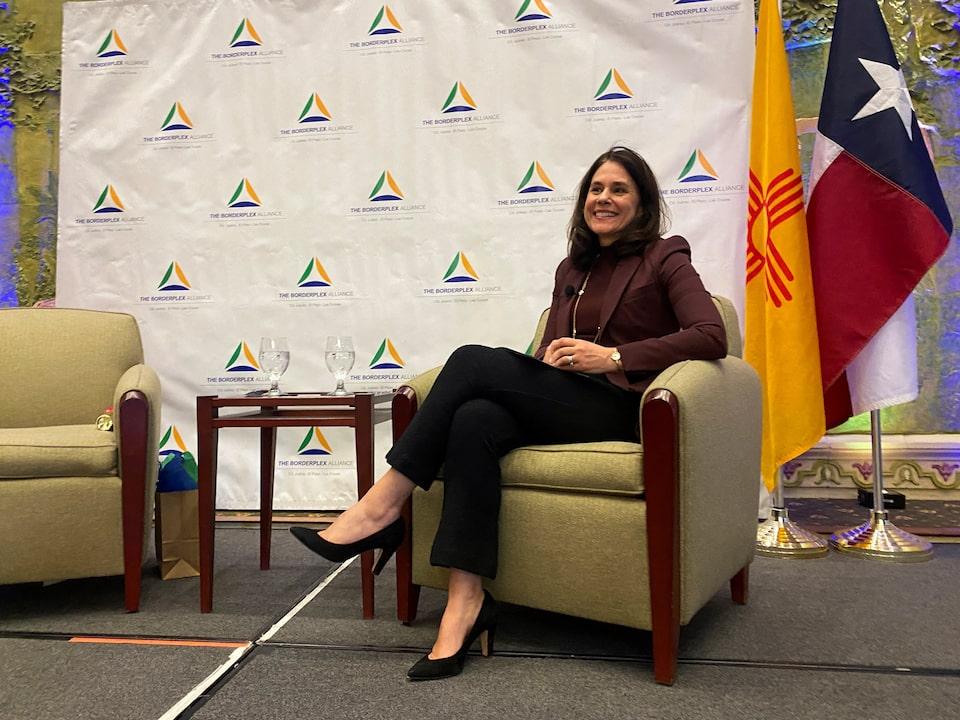
Logan's caution stems from inflation concerns Fed's September rate cut was insurance against unemployment rise: Logan Government shutdown delays monthly jobs report, labor market remains sluggish AUSTIN, Texas, Oct 2 (Reuters) - Federal Reserve Bank of Dallas President Lorie Logan on Thursday said the U.S. central bank appropriately cut rates last month to guard against the risk of a sharp deterioration in the job market, but said that so far the cooling is gradual and signaled she is not eager to cut rates further. "We need to be very cautious about rate cuts from here and make sure that we appropriately calibrate policy so that you don't ease conditions too much and only to have to reverse course, which would be very painful in terms of restoring price stability," Logan told a classroom of economics students at the University of Texas at Austin's graduate school of business. Sign up here. "With expectations for tariffs and other pressures to lead to inflation trending a bit higher in coming months, my forecast has a little bit slower normalization of the policy path in order to make sure we get all the way to 2%." Logan, who is not a voter on the Fed's policy-setting committee this year, said she supported the Fed's September decision to reduce the policy rate a quarter of a percentage point as "insurance" against a sudden rise in the unemployment rate, which in August was 4.3%. The government shutdown means the Labor Department will not publish its usual monthly jobs report on Friday, but other indicators suggest that while the labor market is sluggish the unemployment rate did not jump last month. "My forecast is for that to rise a little bit in coming months, but not too far from the objective," Logan said. Inflation, however, has been above the Fed's 2% target for four years and tariffs are pushing it upward, she said. "The thing that I worry about is even if it's a one-time effect, like the economic modeling would suggest, the longer it takes or the more uncertainty there is about these tariff policies, the more risk there is that the short-term inflation expectations that have increased become entrenched over the long term," Logan said. "The risk of those inflation expectations becoming entrenched has certainly gone up, and so we need to guard against that in thinking about policy." 'FRAGILE' JOB MARKET ALSO A RISK Logan, whose visit to Texas' flagship public university was part of her regular check-ins on local economic conditions, said most indicators suggest the labor market is cooling only gradually and remains broadly in balance. But the tough job market for new college graduates is a concern, she told the students, many of whom were seniors and already well into their job searches. "It's taking longer to find a job because we're in this low hiring environment, and that's something that we really want to pay close attention to because it means that the labor market to me could be more fragile to a potential shock," she said. "At the same time, we're not seeing large layoffs either." Logan did not speak directly to how the lack of fresh official data on the economy while the government is shut down would affect her job of monitoring for economic changes that warrant a different outlook for rates. But she did say that her conversations with local business leaders have sometimes given her a sense that the economy was stronger than government data appeared to suggest, and made her more cautious than some of her colleagues about lowering interest rates last year. https://www.reuters.com/business/feds-logan-says-us-central-bank-must-be-very-cautious-rate-cuts-2025-10-02/
2025-10-02 16:34
TORONTO, Oct 2 (Reuters) - The Canadian dollar is set to strengthen over the coming year against its U.S. counterpart as expected Federal Reserve interest rate cuts weigh on the greenback, but uncertain prospects for the United States-Mexico-Canada trade agreement could put that forecast at risk, a Reuters poll found. The median forecast of 38 foreign exchange analysts in the September 26-October 1 poll predicted the loonie would strengthen 2.8% to 1.36 per U.S. dollar, or 73.53 U.S. cents, in three months, matching the level expected in a survey last month. Sign up here. In 12 months, the currency was forecast to gain 3.5% to 1.35, versus 1.3415 seen previously. The currency was trading on Thursday at a four-month low. "Weakness on the USD leg should spill over onto the CAD leg and cause USD-CAD to move lower," said Sarah Ying, head of foreign exchange strategy at CIBC Capital Markets, who expects continued deterioration of the U.S. labor market to drive further interest rate cuts from the Fed in 2026 and the Bank of Canada to soon end its more advanced easing campaign. Investors are fully discounting just one more rate cut from the Canadian central bank, which last month lowered its benchmark rate to 2.50%. . Canadian gross domestic product declined at an annualized rate of 1.6% in the second quarter but recent data has suggested the economy avoided a second straight quarterly contraction. "The output gap in Canada is expected to get less negative as peak tariff uncertainty is behind us," Ying said. "We are wrong if (U.S. President Donald) Trump starts to challenge USMCA, as trade negotiations remain ongoing." The USMCA , opens new tab, which has shielded much of Canada's exports from U.S. tariffs, is up for joint review in 2026. Separate public consultations by the U.S., Canada and Mexico on the trade pact kicked off in recent weeks. (Other stories from the October foreign exchange poll) https://www.reuters.com/world/americas/canadian-dollar-set-rebound-if-fed-rate-cuts-weaken-us-counterpart-2025-10-02/
2025-10-02 16:21
Oct 2 (Reuters) - The International Monetary Fund's staff expects discussions on a new fund-supported program with Senegal to begin this month, the IMF communications director said on Thursday. "Our staff is ready to move to the next phase of our engagement, which of course would be program discussions, and we expect to be able to start those discussions during the annual meetings," Julie Kozack told a scheduled press briefing. Annual meetings of the IMF and World Bank kick off the week after next in Washington. Sign up here. Bond prices rallied, with the 2028 maturity gaining 2 cents to be bid at 88.80 cents on the dollar. Kozack said the IMF board will meet this Friday to discuss the Senegal situation, including a debt misreporting issue that put an original program on hold and threatened to derail more support. "We are very appreciative of the time and the energy that the Senegalese authorities have invested in producing these detailed (audit) reports and for granting our staff full access to the findings," Kozack said. She added that the IMF was likely to communicate the outcome of its board discussion on Friday, but did not say whether the board would consider or approve the debt misreporting waiver needed for Senegal to secure a new program at the meeting. https://www.reuters.com/world/africa/imf-expects-discuss-new-senegal-program-later-this-month-official-says-2025-10-02/