2025-12-08 07:43
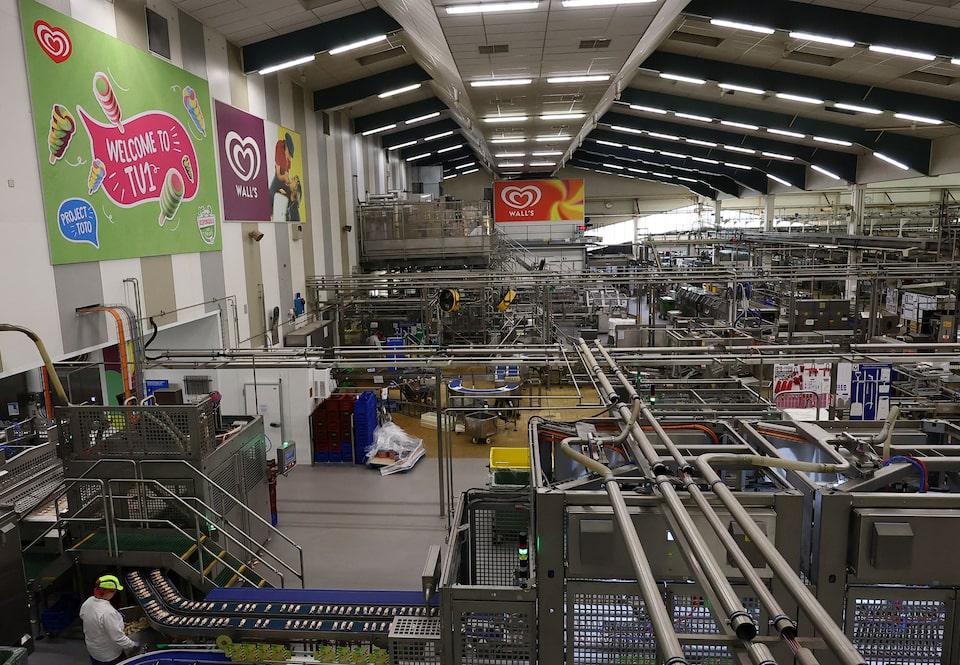
Shares open in Amsterdam below reference price Spinoff creates world's largest standalone ice cream business Magnum CEO says independent company will be more agile, focused Magnum faces anti-obesity push, troubles with Ben & Jerry's LONDON, Dec 8 (Reuters) - Magnum Ice Cream Company traded at 12.81 euros per share in its Amsterdam debut on Monday, implying a market capitalisation of 7.84 billion euros ($9.14 billion), as it finalised a long-awaited spinoff from Unilever (ULVR.L) , opens new tab. The listing, which creates the world's largest standalone ice cream business, will test investor appetite for a sugar-heavy product even as weight-loss drugs have shaken up consumer trends and the Trump administration is pushing a "Make America Healthy Again" campaign. Sign up here. Unilever is shedding a business unit whose cold supply chain demands more complex operations than its other food brands and personal care products like Dove soap and Axe deodorant. Magnum, meanwhile, is counting on a pure focus on ice cream to improve productivity. With its shares not immediately eligible for inclusion in major indices such as the FTSE, Magnum had warned its stock may face early downward pressure. MAGNUM UNDER PRESSURE FROM INDEX FUNDS, NO DIVIDEND IN 2026 The initial market valuation was just below Magnum's 2024 revenue of 7.9 billion euros and, according to research firm Morningstar, roughly eight times its expected 2025 adjusted earnings before interest, taxes, depreciation, and amortisation. Magnum - home to brands including Wall's and Cornetto - is also listing in London and New York on Monday. Ahead of the publication of Magnum's prospectus, analysts at Barclays predicted the company would fetch an equity value of 10.1 billion to 10.8 billion euros and a share price above 20 euros per share. The reference price was set at 12.8 euros per share. Magnum rival Froneri, a joint venture between PAI Partners and Nestle (NESN.S) , opens new tab, secured investment in October that valued the company at 15 billion euros. Froneri's market share is around 11%, according to Magnum's prospectus, compared with 21% for Magnum. "I think that with setting the reference price low, they made the stock attractive for new investors," Fernand de Boer of investment bank Degroof Petercam told Reuters, adding that the price also avoided the risk of a big drop caused by index investor selling. Limited demand may have also been a factor, Degroof Petercam said in a note, while substantial separation costs from Unilever and the fact there will be no dividend in 2026 could be adding short-term pressure. Unilever shares were the biggest decliner on the STOXX 600 on Monday, according to LSEG data, falling around 5%, with lost Magnum earnings causing temporary volatility. Unilever is retaining a 19.9% stake in the business but plans to exit within five years. It will announce the share consolidation ratio later on Monday. COMPANY HITS MILESTONE, SET TO BE MORE AGILE, CEO SAYS Magnum CEO Peter ter Kulve said on Monday the company hit a "proud milestone" and would be "more agile, more focused, and more ambitious than ever" as an independent listed company. Magnum, which will command more than a fifth of the $87 billion global ice cream market, is betting on the allure of indulgent snacks. Morningstar said it was optimistic on Magnum's longer-term outlook. "Within Unilever, it lacked a dedicated sales force and targeted investment programme, contributing to periods of underperformance," it said. With Ben & Jerry's, Magnum will inherit a relationship that has soured in the past few years. Magnum said on Tuesday that the Ben & Jerry's Foundation, a U.S.-based charitable group funded by the brand, must address deficiencies in financial controls and governance if it is to maintain full funding. It is an issue that affects Magnum acutely. Ben & Jerry's annual revenue of 1.1 billion euros ($1.28 billion) accounts for almost 14% of Magnum's global turnover, compared to just 1.8% of Unilever. ($1 = 0.8582 euros) https://www.reuters.com/business/unilever-completes-ice-cream-demerger-with-magnum-set-list-2025-12-08/
2025-12-08 07:30
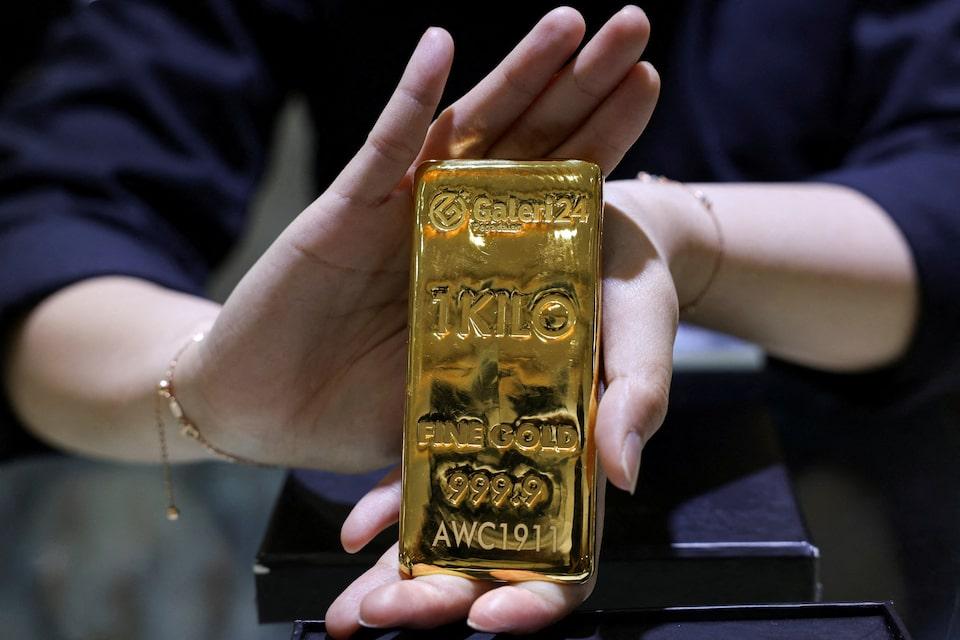
JAKARTA, Dec 8 (Reuters) - Potential state revenues in 2026 from Indonesia's planned gold export tax could reach 3 trillion rupiah ($179.75 million) while a coal export tax could reap 20 trillion rupiah ($1.20 billion), its finance minister said on Monday. Purbaya Yudhi Sadewa told a parliamentary hearing that the timing for the implementation of the coal export tax is still under discussion after previously saying it could be introduced next year. Sign up here. The finance ministry has said that plans to impose a gold export tax in the range of 7.5% to 15% next year would enable rates on gold products to be cut, which will boost domestic processing, while the tariff on coal will support Indonesia's transition to clean energy. "The formulation of export duty policies for gold and coal aims to optimise revenue, promote higher economic growth, and improve the investment climate," Purbaya said. ($1 = 16,690 rupiah) https://www.reuters.com/world/asia-pacific/indonesia-expects-earn-179-million-planned-gold-export-tax-2025-12-08/
2025-12-08 07:00
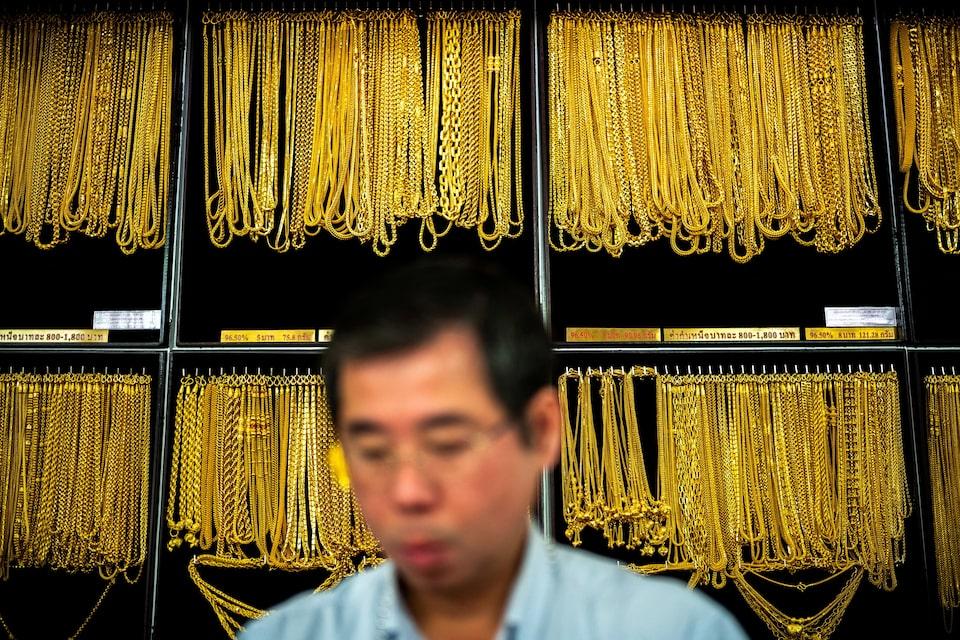
Dollar near over one-month lows Silver hit a record high of $59.32/oz on Friday Market price in 87% chance of Dec rate cut- CME FedWatch Dec 8 (Reuters) - Gold prices rose on Monday, driven by growing expectations of a U.S. interest rate cut that pressured the dollar, ahead of a Federal Reserve policy meeting this week. Spot gold rose 0.2% to $4,206.36 per ounce by 1127 GMT. U.S. gold futures for February delivery fell 0.2% to $4,235.60 per ounce. Sign up here. The dollar index (.DXY) , opens new tab edged lower, hovering near the one-month low reached on December 4, making dollar-priced gold more affordable for overseas buyers. "Gold is benefiting from a weaker U.S. dollar and market participants expecting the Fed to cut interest rates this week," said UBS analyst Giovanni Staunovo. Data last week showed that U.S. consumer spending grew moderately in September. That reflected a slowdown in economic momentum amid rising costs and weakness in the labour market as private payrolls saw their steepest decline in over two-and-a-half years in November. According to CME's FedWatch tool, markets are pricing in an 87% probability of a 25-basis-point rate cut at the Fed's December 9-10 policy meeting, following the release of weak economic data and dovish remarks from several Fed officials. Lower interest rates typically bolster demand for non-yielding assets like gold. "We still look for more rate cuts next year, which should push gold to $4,500/oz next year," added Staunovo. Silver was up 0.3% at $58.43 per ounce, after hitting a record high of $59.32 on Friday. "Silver is benefiting from the same factor as gold. Additionally the expectation of improving industrial demand as a result of monetary and fiscal stimulus helped silver to outperform gold in recent weeks," Staunovo said. The white metal has doubled in price this year, driven by supply deficits and its designation as a critical mineral by the U.S. Elsewhere, platinum gained 0.9% to $1,656.61 and palladium rose 1.2% to $1,475.11. https://www.reuters.com/world/india/gold-rises-dollar-softens-traders-brace-fed-rate-cut-2025-12-08/
2025-12-08 06:51
'Hawkish cut' expected for Fed Rates seen on hold in Australia, Canada, Switzerland and Brazil Japan hit by strong earthquake; yen falls Aussie dollar hits 2-1/2-month high as hike swings into view LONDON/NEW YORK, Dec 8 (Reuters) - The U.S. dollar rose against major currencies on Monday in choppy trading ahead of a week packed with central bank meetings and headlined by the Federal Reserve, where an interest rate cut is all but priced in, but investors braced for signals of a milder easing cycle than expected. The yen, on the other hand, weakened across the board after a powerful magnitude 7.6 earthquake shook Japan's northeast region late on Monday, prompting tsunami warnings and orders for residents to evacuate. Sign up here. Besides the Fed decision on Wednesday, the central banks of Australia, Brazil, Canada and Switzerland also hold rate-setting meetings, although none of these are expected to change monetary policy. Analysts expect the Fed to make a "hawkish cut", where the language of the statement, median forecasts and Chair Jerome Powell's press conference point to a higher bar for further rate reduction. The Federal Open Market Committee, which sets monetary policy, is expected to announce on Wednesday that it will lower the benchmark overnight rate by 25 basis points to a range of 3.50%–3.75%, with the central bank easing for a third straight meeting. That could support the dollar if it pushes investors to dial back expectations for two or three rate cuts next year, though messaging could be complicated by policymakers' divisions; several have already all but indicated their voting intentions. "In an economy that is not falling apart and inflation is relatively tame, the Fed can feel comfortable cutting interest rates while also not promising nor guaranteeing further moves into the future," said Juan Perez, director of trading, at Monex USA in Washington. "Hard to envision officials plotting into the future much when they really still need to look into the past to better assess where we are. Where we are seems to be a period of stagflation, so you are getting mixed views as officials themselves do not hold consensus over conclusions regarding the economy." The dollar index was last up 0.1% at 99.07 . Against the Swiss franc, the greenback rose 0.2% to 0.8066 franc . HIGH RISK OF DISSENT "We expect to see some dissents, potentially from both hawkish and dovish members," said BNY's head of markets macro strategy, Bob Savage, in a note to clients. The Federal Open Market Committee has not had three or more dissents at a meeting since 2019, and it has happened just nine times since 1990. Even though the U.S. currency has drifted lower for the past three weeks, dollar bulls have recovered some of their nerve. Weekly positioning data shows speculators hold their largest long position - one that assumes the value of the dollar will rise - since before President Donald Trump's "Liberation Day" tariff bombshell in early April, which sent the currency tumbling. The labor market is softening, but overall growth is holding up, the stimulus from Trump's "One Big Beautiful Bill" should start to filter through and inflation is still well above the central bank's target rate of 2%, analysts said. YEN WEAKENS AFTER EARTHQUAKE The yen slid after news of a strong earthquake in Japan. Depending on the extent of the earthquake's damage, the Bank of Japan could delay an expected rate hike next week, analysts said. The dollar rose 0.3% versus the yen to 155.97 yen , while the euro climbed 0.3% as well to 181.42 yen . The next BOJ monetary policy meeting is scheduled for December 18-19, 2025, with the policy decision and statement expected on the second day. In Europe, the euro was slightly lower at $1.1639. It was earlier lifted by higher euro zone bond yields. German 30-year yields hit their highest since 2011 in early trading. Unlike the Fed, the ECB is not expected to cut rates again in the coming year. Influential policymaker Isabel Schnabel on Monday said the central bank's next move could even be a hike. In other currencies, the Australian dollar briefly touched a high of US$0.6649, the highest since mid-September, to last trade down 0.3% at US$0.6621. The Reserve Bank of Australia meets on Tuesday after a run of hot data on inflation, economic growth and household spending. Futures imply the next move will be a hike, possibly as soon as May. The Bank of Canada is also widely expected to leave rates on hold on Wednesday and a hike is fully priced by December 2026. The Canadian dollar fell against the greenback, which advanced 0.3% to C$1.3850. The Canadian currency hit 10-week highs on Friday following strong jobs data. Sterling held around $1.3327 versus the dollar, flat on the day. https://www.reuters.com/world/asia-pacific/dollar-finds-footing-ahead-fed-meet-2025-12-08/
2025-12-08 05:52
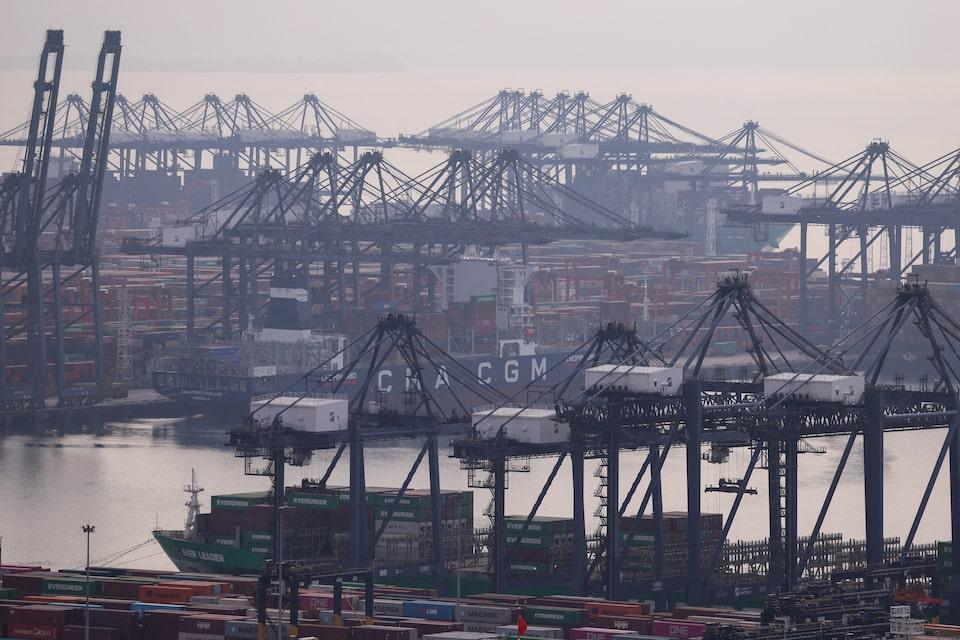
China's trade surplus tops $1 trillion in first 11 months of 2025 November exports top expectations as non-US shipments lead amid high US tariffs Imports underperform, pointing to still-subdued domestic demand PMI surveys suggest exporters face challenging 2026 BEIJING, Dec 8 (Reuters) - China's trade surplus topped $1 trillion for the first time as manufacturers seeking to avoid President Donald Trump's tariffs shipped more to non-U.S. markets in November, with exports to Europe, Australia and Southeast Asia surging. Shipments to the United States dropped by close to one-third from the same month a year before. Sign up here. "The tariff cuts agreed under the U.S.-China trade truce didn't help to lift shipments to the U.S. last month, but overall export growth rebounded nonetheless," said Zichun Huang, China economist at Capital Economics. "We expect China's exports will remain resilient, with the country continuing to gain global market share next year." "The role of trade rerouting in offsetting the drag from U.S. tariffs still appears to be increasing," she added. Chinese exports overall grew 5.9% year-on-year in November, customs data on Monday showed, a reversal from October's 1.1% contraction, and beating a 3.8% forecast in a Reuters poll. Imports were up 1.9%, compared with a 1.0% uptick in October. Economists had expected a 3.0% increase. China's trade surplus was $111.68 billion in November, the highest since June and up from $90.07 billion recorded the previous month. That was above a forecast of $100.2 billion. The trade surplus for the 11 months of the year topped $1 trillion for the first time. China has stepped up efforts to diversify its export markets since Trump won November 2024's U.S. election, pursuing closer trade ties with Southeast Asia and the European Union. It has also leveraged Chinese firms' global footprint to establish new production hubs for low tariff access. Chinese shipments to the United States dropped 29% year-on-year in November, while exports to the European Union grew an annual 14.8%. Shipments to Australia surged 35.8%, and the fast-growing Southeast Asian economies took in 8.2% more goods over the same period. Tumbling exports to the U.S. came despite news that the world's two biggest economies had agreed to scale back some of their tariffs and a raft of other measures after Trump and Chinese President Xi Jinping met in South Korea on October 30. The average U.S. tariff on Chinese goods stands at 47.5%, well above the 40% threshold that economists say erodes Chinese exporters' profit margins. "Electronic machinery and semiconductors seem to be key (to higher exports)," said Dan Wang, China director at Eurasia Group. "There is a shortage in lower-grade chips and other electronics, which meant prices jumped, and Chinese companies going global have been importing all kinds of machinery and other inputs from China." KEY MEETINGS EYED AMID US-CHINA TRADE UNCERTAINTY China's yuan firmed on Monday, off the back of the stronger-than-expected export data, with investors also awaiting policy signals from key year-end meetings. The Politburo, a top decision-making body of the ruling Communist Party, pledged on Monday to take steps to expand domestic demand, a shift analysts say is crucial for weaning the $19 trillion economy away from reliance on exports. Top officials are also expected to convene for the annual Central Economic Work Conference in the coming days to set key targets and outline policy priorities for next year. Economists estimate that diminished access to the U.S. market since Trump returned to the White House has reduced China's export growth by roughly 2 percentage points, equivalent to around 0.3% of GDP. October's unexpected downturn, following an 8.3% surge the month prior, signalled that Chinese exporters' tactic of front-loading U.S.-bound shipments to beat Trump's tariffs had run its course. Although Chinese factory owners reported an improvement in new export orders in November, they were still in contraction, underscoring continued uncertainty for manufacturers as they struggle to replace demand in the absence of U.S. buyers. An official survey tracking broader factory activity showed that the sector contracted for an eighth consecutive month. DOMESTIC DEMAND STILL SOFT China's rare earth exports jumped 26.5% month-on-month in November, the first full month after Xi and Trump agreed to speed up shipment of the critical minerals from the world's largest refiner. The nation's soybean imports are also poised for their best-ever year, as Chinese buyers, who had shunned U.S. purchases for the majority of this year, stepped up purchases from American growers in addition to large purchases from Latin America. Overall, China's domestic demand remains soft due to a prolonged property downturn. That weakness was seen in a decline in imports of unwrought copper, a key material in construction and manufacturing. "China's pivot to establishing domestic demand as a key driver of growth will take time, but it’s essential for China to move into the next phase in its economic development," said Lynn Song, ING's chief economist for Greater China. https://www.reuters.com/world/asia-pacific/chinas-november-exports-top-expectations-imports-underperform-2025-12-08/
2025-12-08 05:35
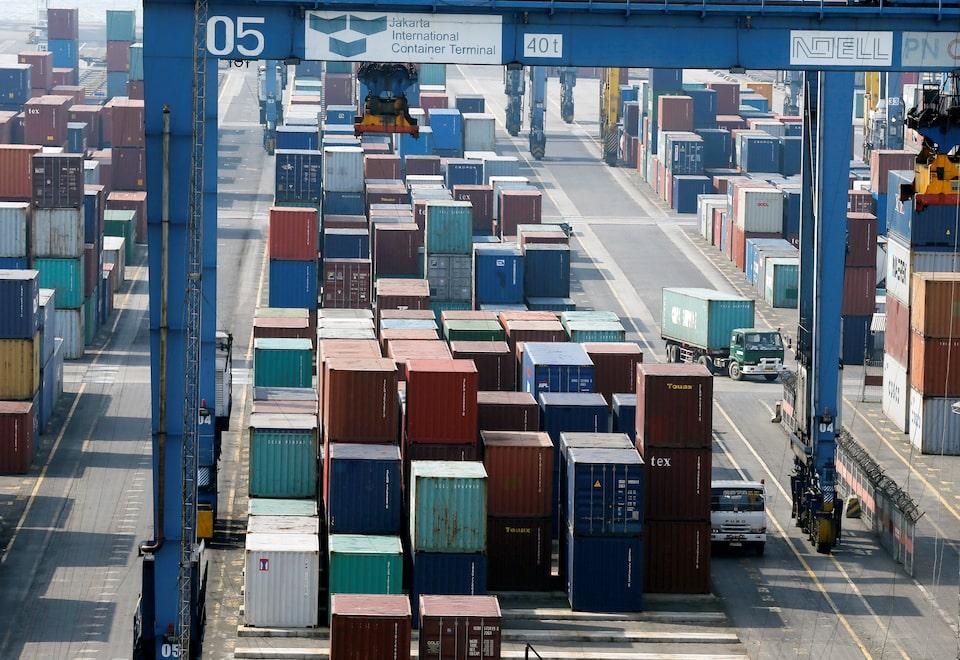
JAKARTA, Dec 8 (Reuters) - Indonesia will from January 1 require natural resource exporters to deposit and hold all foreign currency earnings in state-owned banks, CNBC Indonesia reported on Monday, citing a government document. Under the current rules introduced in early January, exporters must for at least one year keep all proceeds from sales of natural resources like coal, palm oil and nickel within the Indonesian banking system, including privately-owned banks. Sign up here. The proceeds could be used for business operations if converted into rupiah, with authorities encouraging foreign exchange swaps if exporters were reluctant to convert. Under the new regulations, only a maximum of 50% of the proceeds can be converted into rupiah for operational use, down from 100% in the previous rules, CNBC Indonesia reported. Exporters could place their foreign currency deposits in foreign currency denominated government bonds that are issued on the domestic market, the news website said. Indonesia's finance and economic ministries, the president's office and the central bank did not immediately respond to request for comment. https://www.reuters.com/world/asia-pacific/indonesia-revise-retention-rules-export-earnings-new-year-cnbc-indonesia-2025-12-08/