2025-09-30 10:33
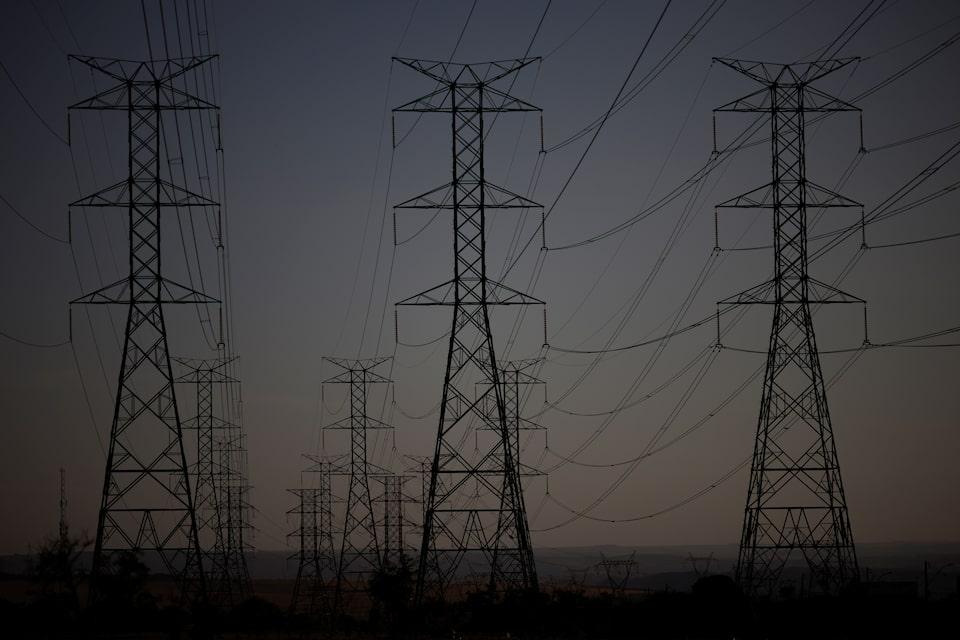
Brazil's energy surplus due to wind and solar investments outpacing infrastructure Renova plans $200 mln crypto mining project in Bahia Penguin, Enegix and Bitmain explore crypto opportunities in Brazil Concerns over water use and lack of regulations for crypto mining in Brazil SAO PAULO, Sept 30 (Reuters) - (This Sept. 30 story has been corrected to clarify that Auren Energia is controlled by two different companies, not a joint venture, in paragraph 14) Crypto mining companies are actively negotiating contracts with Brazilian electricity providers, such as Renova Energia (RNEW3.SA) , opens new tab, that would benefit from the South American country's surplus renewable power without burdening the grid during peak times. Sign up here. Following crypto heavyweight Tether, which announced in July an investment in the South American country, there are at least six negotiations for small and medium-sized enterprises, as well as one for a larger project of up to 400 megawatts (MW), people from six different companies told Reuters. Mining machines that solve complex mathematical problems to back crypto transactions have overloaded grids in multiple countries. However, in Brazil, where crypto mining hardly exists today, they could help address a chronic clean electricity oversupply problem, which has cost energy companies almost $1 billion in the last two years, according to wind and solar industry groups ABEEolica and Absolar. Tether, the world's largest digital assets company, said it is leveraging its recent acquisition of Adecoagro (AGRO.N) , opens new tab to tap its renewable energy, such as the electricity coming from sugarcane mills, to power a bitcoin mining operation in Brazil. Renewable energy supplier Renova told Reuters it is making one of the first major investments in the crypto sector, a $200 million mining project for an undisclosed client in the state of Bahia in the northeast of Brazil. The 100-MW venture consists of six data centers that will draw power from a wind farm. "We aim to expand the company and enter new markets," Renova CEO Sergio Brasil said. "We realized that by providing all the infrastructure (for crypto mining), we were one step ahead of our competitors." Crypto miners can rapidly scale operations up or down based on energy availability, providing a flexible consumer base for excess energy without straining the grid during peak demand periods. Brazil’s energy oversupply stems from years of government incentives that spurred a boom in wind and solar investments. But the pace of development has outstripped the expansion of transmission infrastructure, and some plants now waste as much as 70% of the power they generate. “There's tons of potential,” John Blount, one of the founders of Enegix, a crypto miner based in Kazakhstan, told Reuters. “We will try somehow to elaborate mobile data centers,” he added, that would be plugged directly into power plants. Enegix is looking into deals in Brazil's northeast, the region suffering from the biggest energy surplus, including tapping into solar and wind power in the state of Piaui. Penguin, which is based in Paraguay, one of the world's biggest crypto hubs, said it is negotiating projects too, but declined to share any details. And China's Bitmain, one of the largest manufacturers of mining equipment, is also exploring opportunities, according to an executive who asked not to be named. MINERS SEEN AS 'DIAMONDS' Energy providers have also expressed an interest in crypto projects. Casa dos Ventos, which partners with France's TotalEnergies (TTEF.PA) , opens new tab on wind power, and U.S.-based investment firm Global Infrastructure Partners' (GIP) Atlas Renewable Energy confirmed their intentions to Reuters. French utility Engie's subsidiary in Brazil (EGIE3.SA) , opens new tab and Auren Energia, a company that is controlled by Votorantim Energia and CPP Investments, Canada Pension Plan's global investment arm, are also looking into projects to monetize their unused energy, three sources told Reuters. The companies declined to comment. Providers look “at consumers like this as if they were diamonds,” said Raphael Gomes, a lawyer who has been working on several crypto projects. Companies are assessing different models, including buying equipment to mine on their own. In Bahia, electricity provider Eletrobras , the biggest in the country, is installing ASIC mining machines, along with a microgrid fed by a wind turbine, solar panels and batteries, for a pilot project. "We want to understand how this industry works," said Juliano Dantas, Eletrobras' vice president for innovation. The work could help energy providers prepare to enter the data center industry, which the Brazilian government , opens new tab is trying to attract as a strategy to grow the clean energy economy. There are concerns about the industry's water use, as some of the regions with the biggest amount of unused energy also suffer from droughts. Brazil also has infrastructure problems and lacks regulations for cryptocurrency mining. "We went after 400 MW — it was like a Sisyphean journey, a bit difficult," said Bruno Vaccotti, an executive at Penguin. "We're still exploring Brazil, but it's not that easy." https://www.reuters.com/business/energy/clean-energy-glut-draws-cryptocurrency-miners-brazil-2025-09-30/
2025-09-30 10:32
Sept 30 (Reuters) - India's financial crime fighting agency is conducting searches at six premises of Reliance Infrastructure (RLIN.NS) , opens new tab over alleged violation of foreign exchange laws, a source told Reuters on Tuesday. Reliance Infrastructure did not immediately respond to a Reuters request for comment. Sign up here. https://www.reuters.com/world/india/indias-financial-crime-agency-searches-six-premises-reliance-infrastructure-2025-09-30/

2025-09-30 10:25
MUMBAI, Sept 30 (Reuters) - India's imports of gold and silver nearly doubled in September from August, defying record high prices, as banks and jewellers rushed to build inventories ahead of festivals and escape higher taxes on imports, trade and government sources said. Higher imports by India, the world's second-biggest consumer of the precious metal, are set to support gold prices that hit records this week, even as demand languishes in top buyer China. Sign up here. The surge in imports could widen India's trade deficit and weigh on the weaker rupee , however. "Jewellers and banks have been clearing a lot of gold from customs over the past two weeks," said a government official, who sought anonymity as he was not authorised to talk to the media. "We haven't seen such a rush in years." Customs authorities have cleared a much larger volume of imports in September compared to August, he said, with even higher clearance expected on the last day of the month, ahead of a likely increase in the base import price of gold and silver. The base import price is used to calculate import duty, and the Indian government revises it every 15 days. Banks and bullion dealers are rushing to clear imports before the new base price takes effect on Wednesday, as it is likely to be higher after the recent global rally in prices, said Chirag Thakkar, chief executive of Amrapali Group, a leading precious metal importer in the western state of Gujarat. "Even with gold and silver hitting record highs, buyers kept chasing them, and investment demand surged," said Thakkar, whose company more than doubled its gold and silver purchases in September from the previous month. India spent $5.4 billion to import 64.17 tons of gold and $451.6 million for 410.8 tons of silver in August, trade ministry data shows. The government will release trade data for September in mid-October. Indian gold futures hit a record high of 116,900 rupees per 10 grams on Tuesday, while silver futures climbed to an all-time high of 144,330 rupees per kg. Jewellers, who had stayed away from gold and silver in recent months awaiting a price correction, are now paying a premium to stock up ahead of the festival season as prices hit fresh highs, said a Mumbai-based dealer at a private bullion-importing bank. In October, Indians will celebrate Diwali, the festival of lights, when it is considered auspicious to buy gold. Indian dealers this week quoted a premium of up to $8 per ounce over official domestic prices, inclusive of 6% import and 3% sales levies. "Strong buying from India is surprising the market, especially as China remains inactive at these levels," said a Singapore-based bullion dealer. In China, dealers widened discounts this month to $31 to $71 per ounce against global benchmark prices, the highest in several years. https://www.reuters.com/world/china/indias-september-gold-silver-imports-nearly-double-despite-record-prices-sources-2025-09-30/

2025-09-30 10:10
Foreign banks' cash declines in latest week Fed funds rate pinned at higher level of 4.09% Fed funds futures hit record open interest last week NEW YORK, Sept 30 (Reuters) - The effective federal funds rate - the interest banks charge each other for overnight loans to meet reserve requirements - rose unexpectedly last week ahead of quarter end, mainly on the back of shrinking cash balances at foreign banks, according to market participants. The latest fed funds rate of 4.09% was one basis point higher than the 4.08% seen after the Fed cut interest rates at the September 16-17 meeting. It's still within the Fed's range of 4.00% to 4.25% though. Sign up here. So-called foreign banking organizations or FBOs are major players in the roughly $100 billion fed funds market. The fed funds rate is central to the financial system as the official policy reference that the Federal Reserve sets a target range for each time it meets. The uptick in the fed funds rate comes shortly after the Federal Reserve lowered the range by 25 basis points, even as the market grows cautious over a potential liquidity crunch as September comes to a close, along with the quarter. The modest increase was the first outside of a Fed rate move since 2023. The effective fed funds rate is market driven and in recent years usually hovered 8 bps above the lower end of the fed's target range. Analysts noted that the ongoing buildup in the U.S. Treasury's cash balance has siphoned off reserves from the banking system, including those from FBOs. That cash effectively reduces bank reserves as it grows. The latest data showed total bank reserves, which include those from FBOs, have fallen to $3 trillion as of September 24, from $3.3 trillion a few weeks ago. FBO reserves represent about 38% of total reserves at the Fed, while U.S. banks hold 57% and credit unions have 5%, according to the New York Fed's Liberty Street Economics. FBO cash holdings, a proxy for reserves, fell to $1.176 trillion as of the latest Fed data from September 17, down $28 billion from a week earlier. Since August 20, their cash has declined by $255 billion. FBOs are major borrowers in the fed funds market, a source of liquidity that also provides opportunities for arbitrage. Foreign banks borrow at a lower rate of 4.09% from Federal Home Loan Banks (FHLBs) in the fed funds sector and then park the cash as reserves at the Fed earning an interest of 4.15%. That rate is called the interest on reserve balances (IORB. The decline in foreign bank reserves has tightened liquidity in the fed funds market, while reducing trading volume, analysts said. After averaging $113 billion per day from late April until September 12, the fed funds volume fell to an average of just $94 billion. On Friday, that volume was $95 billion. "If you look at the distribution of those reserves, they have come down, particularly from non-U.S. banks," said Joseph Abate, head of rates at SMBC Nikko Securities. "They don't have access to FHLB advances and they don't have an insured deposit base so their funding tends to be less stable and therefore they like to maintain thicker liquidity cushions." Domestic banks typically don't engage in this arbitrage because it increases their balance sheet size and triggers leverage ratio and liquidity coverage ratio (LCR) costs, analysts said. Those regulatory costs often eat up or exceed any spread between fed funds and IORB. BANK RESERVES AND QUARTER-ENDS There are obvious explanations for the decline in FBO holdings, analysts said, with such moves coinciding with the end of financial reporting periods, but they usually recover after that. The latest decline, however, began well before the end-August date and continued into September. Lou Crandall, chief economist at money market research firm Wrightson ICAP noted that "while some of this decline reflects a shift into alternative front-end investments like repos," the bulk could be attributed to deleveraging in the balance sheets of foreign banks. That said, the tick higher in the fed funds rate, while unexpected, did not surprise some analysts given that overnight repurchase (repo) rates are also trending firmer ahead of the end of the quarter. Repo rates, or the cost of borrowing overnight cash secured by Treasuries or other debt securities as collateral, tend to spike at the end of a quarter or year as primary dealers, mostly large banks, reduce their activity as middlemen in money market transactions due to higher balance sheet costs. FED FUNDS AND FUTURES MARKET The fed funds move has spurred selling of futures tied to it, analysts said, leading to record open interest at the CME, suggesting possibly tighter funding conditions in repos at the end of the quarter. Futures open interest hit a record last Tuesday, surpassing three million, CME data showed. It was at 2.9 million last Friday. There was also a massive block trade of 30,000 October contracts on fed funds futures seen on Wednesday, the equivalent of $1.25 million per basis point in risk. In the end, Josh Barone, wealth manager at Savvy Advisors, said the fed funds blip was all about plumbing, not policy, echoing other people's view that it likely reflects balance-sheet constraints at the end of the quarter. https://www.reuters.com/markets/us/foreign-bank-cash-decline-lifts-fed-funds-rate-ahead-quarter-end-2025-09-30/

2025-09-30 10:03
The S&P 500's one-month volatility averaged 10.8 in Q3, lowest level in 6 years Historical patterns show prolonged low volatility periods often succeeded by sharp spikes Potential catalysts for volatility include looming government shutdown, uncertain economic data Systematic, rules-based trading strategies have increased equity exposure thanks to low volatility NEW YORK, Sept 30 (Reuters) - Wall Street is set to close one of its calmest quarters in nearly six years, and the lull after a volatile start to 2025 has many market participants increasingly alert for renewed market gyrations. For the third quarter, the S&P 500's one-month volatility - a gauge of the index's monthly price swings - averaged 10.8, the lowest for any quarter since the three months ended December 2019. Sign up here. The stock market has climbed relentlessly to record highs as investors boosted equity exposure after April's tariff-related selloff, and Wall Street enjoyed a lack of new negative shocks. This crushed volatility. With the measure of market fear near historic lows, investors are growing wary that a spike could be close. "There's a natural floor for volatility. It doesn't go to zero," Matt Thompson co-portfolio manager at boutique investment firm Little Harbor Advisors, said. "We know where we are in the larger volatility cycle, so the next move for volatility is almost guaranteed to be higher at some point," he said. On Monday, the S&P 500 and the tech-heavy Nasdaq composite index both closed not far from the respective record highs. HISTORICAL LOW Historically, volatility at these low levels tends to persist for weeks rather than months. Extended calm has often been followed by sharp spikes, including at the end of the fourth quarter of 2019 just before the pandemic market crash and the third quarter of 2018 when stocks sold off amid concerns about trade and economic growth. For now, optimism around large-cap stocks tied to artificial intelligence and confidence in the resilience of the U.S. economy continue to support investors' appetite for taking risk in equities. Still plenty of catalysts could spark volatility: A potential government shutdown could disrupt a wide range of services as soon as Wednesday. Investors also await economic data that will inform the path of interest rates. With macro risks elevated, a shock on the scale of August 2024 due to the yen carry trade unwind or April 2025's tariff scare would likely inflict greater losses on investors betting on continued calm than any gains from an extension in the current lull in stock swings, Rocky Fishman, founder of Asym 500, a firm that provides data and analytics on the options market, said in a note on Friday. Indeed, Cboe data showed some pick-up in demand for protection last week, with three-month skew - a gauge of demand for insurance against a market drop over the next three months - rising the most versus other tenors. RISKS ABOUND A pick-up in volatility could spark selling by systematic strategies - rules-based funds that use volatility and momentum signals to drive buying or selling decisions. The collapse in market gyrations has driven these types of strategies to raise their equity allocations to historically high levels. According to Deutsche Bank estimates, a jump in volatility could see them turn sellers of equities. Deutsche Bank strategist Parag Thatte estimated such strategies command about $1 to $1.5 trillion in assets, enough to at times amplify market moves even if they are not huge in size relative to the overall equity market. "They don't start the moves but their impact can be a lot higher than one would expect given their size," Thatte said. Still, for many investors the recent low volatility is not reason enough to pull the trigger on hedges that can still prove to be expensive if market calm persists. Little Harbor Advisors' Thompson is content to trim equity exposure rather than buy downside protection, as he waits for more confirmation that market volatility is set to rise, he said. Others advocate taking advantage of the market calm to pick up hedges to complement risk-on positions. "For those who are all-in to the AI-driven FOMO rally, I really think the low volatility levels do allow for protection," said Tobias Hekster, co-CIO at True Partner Capital, using a market acronym for "fear of missing out." True Partner Capital is a global asset management firm specializing in equity volatility strategies. "One can stay with the herd, but have a parachute when the music stops," he said. https://www.reuters.com/business/after-lull-wall-street-eyes-volatility-pickup-risks-build-2025-09-30/
2025-09-30 09:53
ZURICH, Sept 30 (Reuters) - The Swiss National Bank ramped up foreign currency purchases during the second quarter, data showed on Tuesday, as the central bank reacted to appreciation pressure on the Swiss franc after President Donald Trump announced tariffs on U.S. imports in April. The central bank's purchase of 5.06 billion Swiss francs ($6.36 billion) worth of foreign currencies in April-June was its highest quarterly level of foreign currency interventions for more than three years. Sign up here. The SNB declined to comment. SAFE-HAVEN INFLOWS In April, the franc surged 7% versus the U.S. dollar, and 2.2% against the euro, with traders citing inflows into the franc amid heightened uncertainty around U.S. tariff policy, which pressured the dollar and lifted safe-haven currencies. "The SNB most likely intervened to smooth FX volatility after U.S. President Trump announced his reciprocal tariffs in April," said Karsten Junius, an economist at J.Safra Sarasin. "Those increased political uncertainty and market volatility significantly and might have led to inflows into the franc." The SNB buys foreign currencies as a way of cooling appreciation pressure by supplying the market with francs. A big surge in the value of the franc can hinder the SNB's goal of price stability - annual inflation running at 0-2% - by making imports cheaper. The increased SNB forex activity during the second quarter contrasted with small purchases totalling 1.26 billion francs over the previous five quarters. SNB FACES BAD OPTIONS SNB Chairman Martin Schlegel said last week the SNB would continue to use all of its tools, including currency interventions, to meet its inflation target, if necessary. On Monday the SNB and the U.S. Treasury Department reconfirmed that they do not target exchange rates for competitive purposes after Washington added Switzerland to a list of countries being monitored for unfair currency and trade practice in June. Charlotte de Montpellier, an economist at ING Bank, said the statement would not likely change the SNB’s stance, with the central bank likely to use currency interventions in future. "The SNB currently faces two bad options. Either it does more forex interventions, which would attract negative attention in the U.S., or it takes interest rates below 0%, which it really doesn’t want to do," she said. ($1 = 0.7957 Swiss francs) https://www.reuters.com/business/finance/trump-tariffs-led-swiss-national-bank-increase-foreign-currency-purchases-2025-09-30/