2025-12-08 05:35
A look at the day ahead in European and global markets from Wayne Cole. Well, Fed decision week is finally upon us and it's shaping up to be one of the most vexed meetings in recent memory. Of 108 analysts polled by Reuters only 19 tipped a hold with the rest for an easing on Wednesday. Sign up here. Futures are 88% for a rate cut, as if trying to make it a fait accompli for policymakers who wouldn't dare disappoint such overwhelming pricing. Yet commentary from officials suggests at least two of the 12 voting Fed members will dissent against a cut, with more opposition possible from divided Fed policymakers, even as one Trump-appointed governor argues for a reduction of 50 basis points or more. The Federal Open Market Committee has not had three or more dissents at a meeting since 2019, and that has happened just nine times since 1990. Analysts note that as many as 9 of the full 19 members could use their "dot plot" forecasts to show they were against a December reduction. How Chair Powell chooses to frame all this in his media conference, and whether his focus will be on risks to employment or to inflation, will be a crunch moment for markets. Futures assume he will err on the hawkish side and imply only a 24% chance of a move in January. Further out is even more uncertain given President Trump is due to announce Powell's successor at any time and, as usual, is likely to favour loyalty over experience and expertise. It's not clear how the Treasury market would deal with such a nakedly political appointee to the most powerful central bank position in the world, but it's unlikely to bode well for the long end of the curve. Central banks in Canada, Switzerland and Australia also meet this week and all are poised to hold steady. The Swiss National Bank might like to ease again to offset the strength of its franc, but is already at 0% and reluctant to go negative. A run of hot economic data has led markets to abandon any hope of another easing from the Reserve Bank of Australia and even price in a rate hike for late 2026. All this has made for a cautious start on markets, with Wall Street futures up a fraction and European futures down as much. Asian shares are mostly in the green, led by a 1% gain for China after it reported a 5.9% rise in exports for November, topping forecasts and continuing to defy the drag from U.S. tariffs. The dollar is broadly softer, while Treasuries are hushed for the Fed countdown. Note JOLTS data are out tomorrow and could make more of a splash than usual given the payrolls report is now not due until December 16. Key developments that could influence markets on Monday: - Euro zone Sentix Index for December, Germany's industrial output for October - Appearances by Bank of England policymakers Alan Taylor and Clare Lombardelli. ECB Board Member Piero Cipollone also speaks - NY Fed 1-year Inflation Expectations https://www.reuters.com/world/china/global-markets-view-europe-2025-12-08/
2025-12-08 05:26
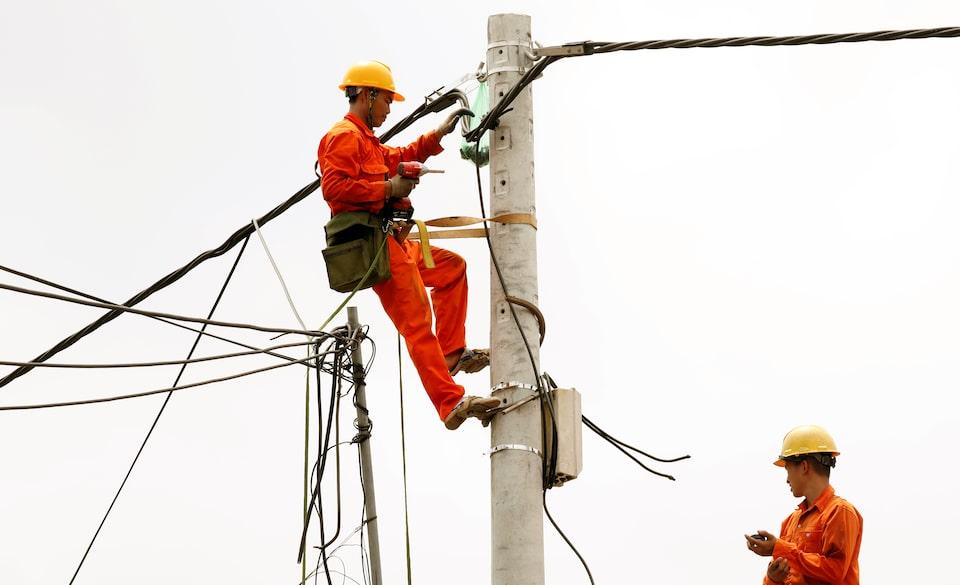
Timeline for Vietnam project too tight, Hanoi envoy says Ties already strained over petrol motorbike ban hurting Honda Demand surging from industry, expanding middle class Extreme weather events also threatening supply HANOI, Dec 8 (Reuters) - Japan has dropped out of plans to build a major nuclear power plant in Vietnam because the time frame is too tight, Japanese ambassador Naoki Ito told Reuters, potentially complicating Vietnam's long-term strategy to avoid new power shortages. Vietnam, home to large manufacturing operations for multinationals including Samsung and Apple, has faced major power blackouts as demand from its huge industrial sector and expanding middle class often outpaces supplies, strained by increasingly frequent extreme weather, such as droughts and typhoons. Sign up here. "The Japanese side is not in a position to implement the Ninh Thuan 2 project," the ambassador to Vietnam said, referring to a plant with a planned capacity of 2 to 3.2 gigawatts. The project is part of Vietnam's strategy to boost power generation capacity. Ninh Thuan 2 is scheduled to come online by 2035 alongside Ninh Thuan 1, a plant with the same capacity, according to the government's roadmap. Vietnam wants to increase electricity production from multiple sources, mostly renewables and gas, but projects have faced delays and uncertainty over regulatory and pricing issues. The announcement comes amid strains in usually close ties between Hanoi and Tokyo, including from a planned ban on petrol motorbikes in central Hanoi that has angered market-dominating Honda (7267.T) , opens new tab. A letter about the issue from Japan's embassy to Vietnamese authorities in September has still not been formally answered, Ito said, though he said that Vietnamese authorities might organise further consultations on the matter. RUSSIA, JAPAN WERE ORIGINAL PARTNERS Work on both nuclear plants in central Vietnam started in the early 2010s but was halted in 2016 when Hanoi suspended its nuclear power programme over safety and budget concerns. Russia had been awarded the Ninh Thuan 1 project, and Japan the second plant. After it resumed its nuclear energy programme last year, Vietnam asked Japan and Russia to implement the projects, Ito said, but that after meetings with Vietnamese officials, Japan decided in November that it would pull out as the deadline for completion was too close. Under the current timeline, Vietnam was expected to sign agreements with its international partners in September for Ninh Thuan 1 and in December for the second plant. Vietnam's industry ministry and state-owned energy firm Petrovietnam, which is the Vietnamese partner for Ninh Thuan 2, did not respond to requests for comment. A Vietnamese official said no agreement had yet been signed for Ninh Thuan 1 either. The Russian embassy in Vietnam and its Vietnamese partner for Ninh Thuan 1, state-owned grid operator EVN, did not comment. Japanese companies expressed little interest in the Vietnam project because they were focused on rebuilding skilled workforces disrupted by the Fukushima accident in 2011 that led to the temporary shutdown of Japan's nuclear power plants, said one person familiar with the discussions. They declined to be named as the information was not public. The ambassador said Japan was still exploring options for additional plants in Vietnam at a later stage, especially small modular reactors. French, South Korean and U.S. investors have expressed interest in the Ninh Thuan plants, multiple Vietnamese and foreign officials said. https://www.reuters.com/business/energy/japan-pulls-out-vietnam-nuclear-project-complicating-hanois-power-plans-2025-12-08/
2025-12-08 05:23
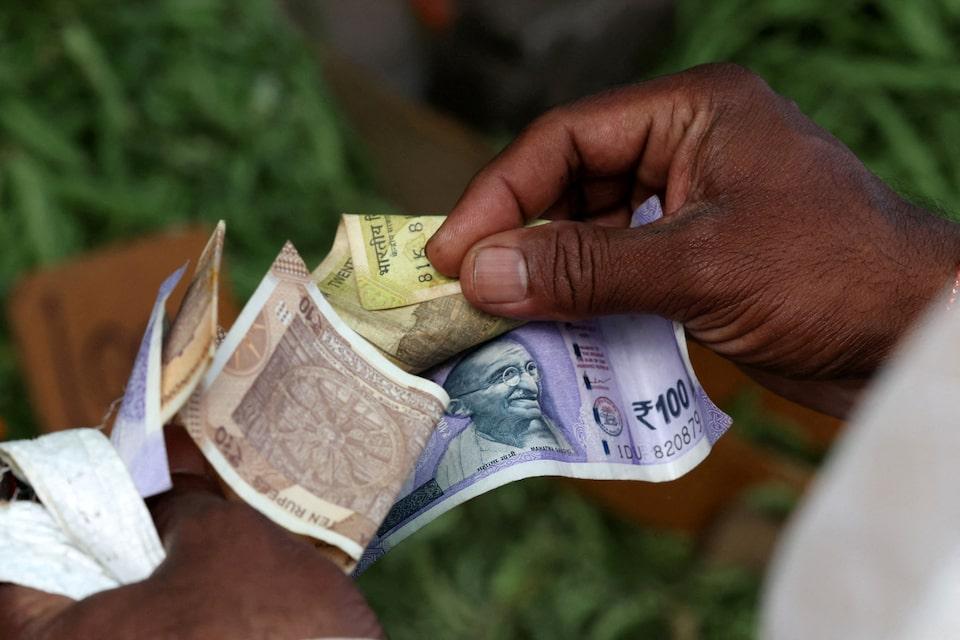
MUMBAI, Dec 8 (Reuters) - The Indian rupee ended weaker on Monday as a fall in local equities and marginal slip in Asian currencies weighed on the currency, while traders remained cautious on speculative positions as the rupee settles into a fresh trading range. The local currency closed at 90.07 per U.S. dollar, down 0.1% on the day. Sign up here. Likely portfolio outflows from local stocks troubled the rupee on the day, traders said, while a pick up in exporter hedging and intermittent dollar sales from state-run banks helped keep a lid on its decline. India's benchmark equity indexes, the BSE Sensex (.BSESN) , opens new tab and Nifty 50 (.NSEI) , opens new tab fell about 0.7% and 0.9%, respectively amid mixed price action in regional equities. Foreign investors have sold over $1 billion of local stocks on a net basis over December so far, putting the year-to-date outflows at nearly $18 billion. Both the rupee and equities have underperformed regional benchmarks this year. The rupee is down about 5% this year, making it the worst performing currency in Asia. The Nifty 50 has risen over 9%, but the gain pales in comparison to the 25% jump in MSCI's gauge of Asian stocks outside of Japan (.MIAPJ0000PUS) , opens new tab. While foreign brokerages have incrementally turned positive on the outlook for local stocks, analysts reckon that the pressure on the rupee is likely to persist unless there is a breakthrough in U.S.-India trade talks. A U.S. trade delegation is expected to visit New Delhi this week for talks, an Indian government source said last week. Asian currencies were mostly on the defensive, with the Indonesian rupiah leading losses in the region while the dollar index was steady at 98.98 as investors awaited the U.S. Federal Reserve's policy outcome on Wednesday. "The Fed could be a positive event risk for the dollar in that it seems hard for the Fed to validate the 90bp of easing priced into Fed Funds futures by early 2027," analysts at ING said in a note. The dollar index is down nearly 9% on the year so far. https://www.reuters.com/world/india/rupee-open-steady-outlook-fragile-after-fall-past-90-2025-12-08/

2025-12-08 04:56
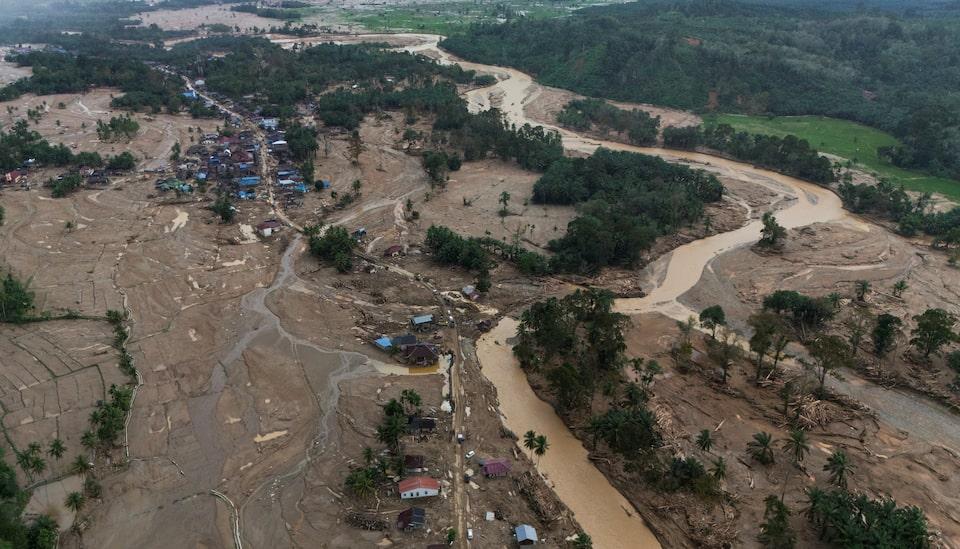
JAKARTA, Dec 8 (Reuters) - Indonesia's Sumatra island will require 51.82 trillion rupiah ($3.11 billion) in reconstruction and recovery funds following a series of deadly floods, senior government officials said. The death toll from the cyclone-induced floods and landslides reached 950 as of Monday, with 274 people still missing, according to official data. The storms also killed about 200 people in southern Thailand and Malaysia. Sign up here. Suharyanto, head of Indonesia's disaster mitigation agency, said that the recovery funds needed across the three provinces of Aceh, North Sumatra, and West Sumatra may still increase as the agency continues to calculate how much damage has been done. Among the three provinces affected, Aceh needs the most funds, amounting to a total of 25.41 trillion rupiah, Suharyanto said at a cabinet meeting led by President Prabowo Subianto in Aceh province late on Sunday. North Sumatra and West Sumatra will require 12.88 trillion and 13.52 trillion rupiah respectively, he added. The reconstruction process will soon begin in some areas in North Sumatra and West Sumatra, which have recovered relatively well, he said. "So, areas that are already in better condition can start the reconstruction process. We will relocate people living in evacuation centres to temporary houses," Suharyanto said without providing a timeline. The temporary houses are 40 square-metre plywood structures built by the government for people affected by natural disasters. "In the next phase, they will be relocated into permanent houses, built by the housing ministry," he added. Responding to the initial estimated recovery cost, Prabowo said his calculations were "similar", without elaborating whether he will approve the spending or not. "The point is we have the capacity and we will do it meticulously and do our best to manage it," Prabowo said. Prabowo also said that conditions in some areas remained serious, with rice fields, dams and a large number of houses especially affected. "The local leaders reported that there are quite a number of houses that we must help rebuild," he said. "In some places, there are still challenges," he said, adding that the distribution of medication and clothes to the residents must also become a priority. ($1 = 16,680 rupiah) https://www.reuters.com/business/environment/indonesia-says-more-than-3-billion-recovery-funds-required-after-sumatra-floods-2025-12-08/
2025-12-08 04:55
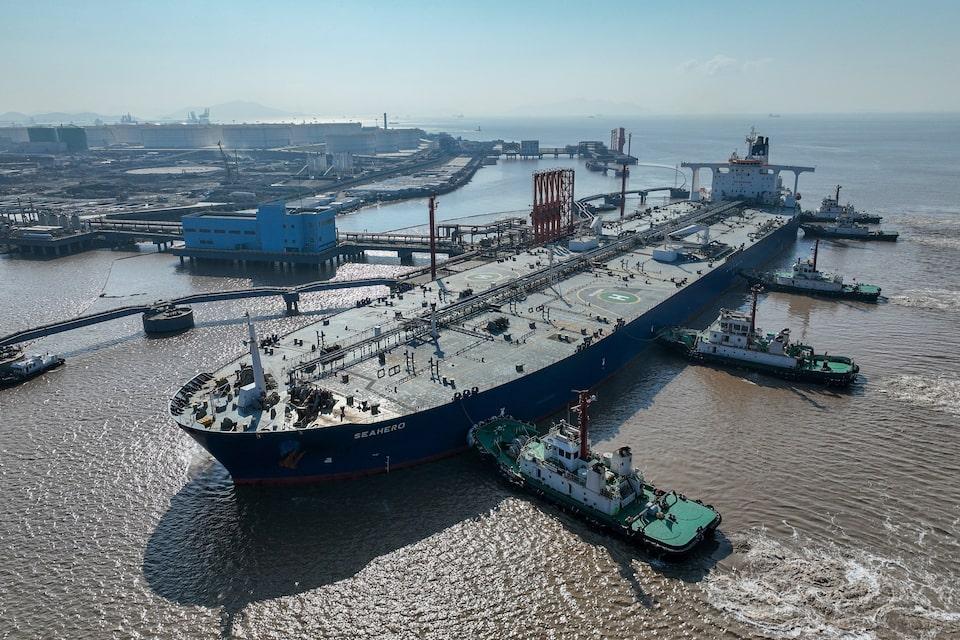
Imports rise 4.88% y/y in November, up 5.24% from October Daily import volumes reach highest level since August 2023 Imports from Saudi Arabia, Iran rise from October, Russian imports fall - Kpler BEIJING, Dec 8 (Reuters) - China's crude oil imports rose 4.88% in November from a year earlier, government data released on Monday showed, with daily import volumes reaching the highest level since August 2023. The world's largest crude importer brought in 50.89 million metric tons of oil in November, equivalent to 12.38 million barrels per day (bpd), up 5.24% from October, according to data from the General Administration of Customs. Sign up here. China imported 521.87 million tons of crude oil from January to November, up 3.2% from the same period last year. However, China's atmospheric and vacuum distillation capacity utilisation rate declined from October at state-owned refineries, leading to a 5.72% monthly fall in domestic refined oil production to 35.78 million tons, according to Chinese consultancy Oilchem. "Domestic demand has experienced a seasonal decline, but sanctions on crude supplies from Iran and Russia have led to significant price reductions for feedstock, boosting refining margins and prompting more refineries to apply for advance import quotas ahead of the first batch in 2026," said Emma Li, Vortexa's lead China market analyst. China's seaborne crude oil arrivals in November were higher than in October. Saudi Arabian oil arrivals increased by 345,000 bpd from October to a five-month high of 1.59 million bpd, driven by Chinese companies taking delivery of significant volumes of October-loaded cargoes, according to shipping analytics firm Kpler. Iranian oil arrivals increased by 233,000 bpd from October to 1.35 million bpd in November, the highest level since August, according to Kpler. "This was partly due to Iran's high export volumes in previous months, and partly because buyers likely anticipated early allocation of November crude quotas, prompting them to lock in supplies ahead of time," said Muyu Xu, senior analyst at Kpler. Russian seaborne crude oil arrivals fell by 157,000 bpd month-on-month to 1.19 million bpd in November, likely related to reduced procurement by state-owned refiners and the fact that earlier independent refineries had tight quotas, Xu added. https://www.reuters.com/business/energy/chinas-november-crude-oil-imports-reach-highest-daily-level-27-months-2025-12-08/
2025-12-08 04:37
MUMBAI, Dec 8 (Reuters) - The Indian rupee may face renewed pressure this week as anaemic trade and investment flows continue to weigh on the currency, while the U.S. Federal Reserve's policy decision will be the key macro cue for both the unit and government bonds. The rupee closed at 89.98 per U.S. dollar on Friday after hitting an all-time low of 90.42 last week. For the week, the currency was down 0.6%. Sign up here. Bankers and traders reckon that a meaningful turnaround in the currency's fortunes is unlikely unless there is a breakthrough in U.S.-India trade negotiations. The worries contributed to pushing the rupee past the 90 handle last week, with ANZ saying it could weaken further in a calibrated manner if elevated U.S. tariffs persist. The rupee's slide did not feature strongly in the Reserve Bank of India's policy commentary on Friday, where it delivered a 25-basis-point rate cut. "We believe this omission highlights the central bank's comfort with the current INR levels, especially given capital flows have dried up – at least for now," ANZ said in a note. Traders expect the rupee to hover between 89.80 and 90.50 this week. Meanwhile, the Fed is widely expected to cut benchmark rates by 25 bps on Wednesday, with investors monitoring its guidance for 2026. The dollar index logged its second consecutive weekly decline. In Indian bond markets, the 10-year benchmark 6.33% 2035 bond yield settled at 6.5166% on Friday, down 3 bps this week. The 10-year 6.48% 2035 bond yield ended at 6.4944%. Traders expect the yield to drift between 6.45% and 6.54%, with major action expected in the latter half of the week after the Fed decision and the first of two open market bond purchases announced on Friday. Apart from the rate cut, the RBI said it would buy bonds and conduct a dollar/rupee buy-sell swap, infusing total liquidity of around 1.45 trillion rupees ($16.12 billion) over the two weeks. "The policy supports sovereign bond demand and provides a strong anchor for domestic markets amid global uncertainties," said Niraj Kumar, chief investment officer at Generali Central Life Insurance. The market will also keep an eye on activity from foreign investors, who turned sellers of Indian bonds last week. Separately, Matthew Kok, portfolio manager of Asian fixed income at Eastspring Investments, said more proactivity might be needed on the monetary policy front to avoid a sharp slowdown in growth next year, leaving room for more rate cuts by the RBI. KEY EVENTS: ** India November CPI inflation - December 12, Friday (4:00 p.m. IST) (Reuters poll 0.65%) U.S. ** Federal Reserve monetary policy decision - December 11, Thursday (12:30 a.m. IST) ** September international trade - December 11, Thursday (7:00 p.m. IST) ** Initial weekly jobless claims for week to December 6 - December 11, Thursday (7:00 p.m. IST) ($1 = 89.9340 Indian rupees) https://www.reuters.com/world/india/rupee-stay-under-pressure-eyes-fed-decision-alongside-bonds-2025-12-08/