2025-09-30 06:47
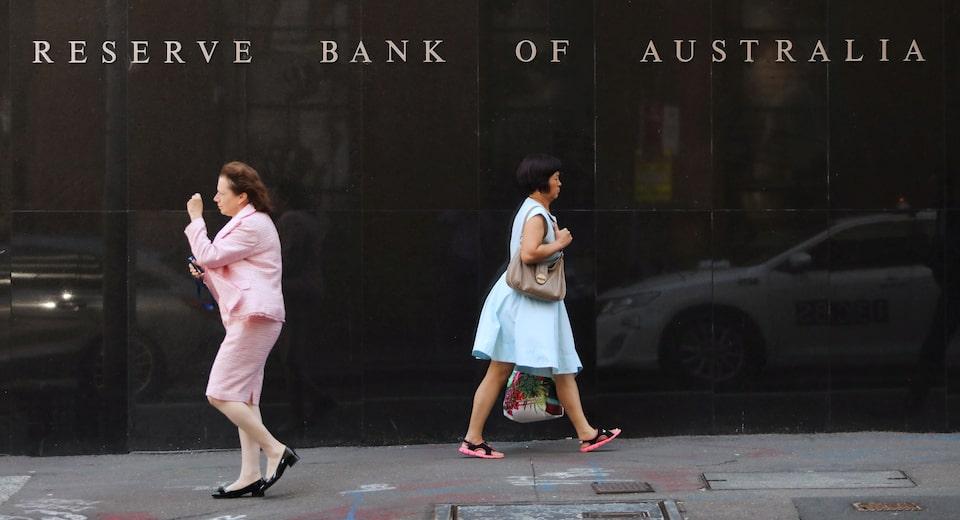
RBA keeps cash rate at 3.60% amid inflation concerns Swaps imply 36% chance of November cut, 50% for December Australian dollar rises, bond futures fall after RBA decision SYDNEY, Sept 30 (Reuters) - Australia's central bank on Tuesday left its cash rate steady as expected at 3.60%, saying recent data suggested inflation might be higher than forecast in the third quarter and that the economic outlook remained uncertain. Wrapping up a two-day policy meeting, the Reserve Bank of Australia said the board judged it was appropriate to remain cautious on policy, but was well-placed to respond to international developments. Sign up here. The more cautious commentary from the central bank prompted markets to further trim bets on rate cuts this year and for some analysts to even call a possible end to the current policy easing cycle if conditions remain upbeat. Markets had seen scant chance of a further easing this week after a strong second quarter GDP report and a high monthly inflation reading that argued for a measured pace of policy easing. Speaking to reporters after the decision, Governor Michele Bullock said the central bank would remain data dependent and by November have quarterly inflation data, a labour market report and updated economic forecasts, as well as more forward looking indicators to decide on policy. "What we are focusing on is an interest rate path that will deliver us inflation sustainably in the band. That could mean a couple more reductions. It might not. I don't know at this point and we will look at all this again in November." The central bank said recent data, while partial and volatile, suggests that inflation in the third quarter may be higher than expected due to sticky prices in market services, adding that it was appropriate to remain cautious. The Australian dollar rose 0.4% at $0.66 after the meeting, while three-year bond futures fell 4 ticks to 96.40. Swaps now imply around a 36% probability of a rate cut at the next policy meeting in November from 55% previously, while a move in December is about 50% priced in from 70%. CAUTIOUS TURN The RBA has so far adopted a gradual and cautious approach to policy easing, having cut rates in February, May and August after assessing inflation data for each quarter. It has said the pace of further policy easing depends on the flow of data. The often volatile monthly readings on inflation suggest the quarterly outcome could surprise on the upside. Meanwhile, the economy grew at the fastest annual pace in almost two years in the second quarter as consumption picked up after a long fallow period. Employment growth has slowed but the jobless rate hovered at a historical low of 4.2%. The central bank judged the labour market was close to full employment but there is still tightness in some industries. "The post-meeting statement is a little more hawkish than we’d expected and heightens the risk evident after the August monthly CPI indicator that the November meeting passes without a rate cut," said Adam Boyton, head of Australian economics at ANZ. "Absent a 'shock', the tone of today's post-meeting statement also suggests that we are quite close to the end of the easing cycle." The central bank had forecast headline inflation, which ran at 2.1% last quarter, to pick up to 3.1% by the middle of next year, as electricity rebates fade, but core inflation is expected to stay anchored around 2.6% over the coming years. Bullock said she judged the current cash rate as "a little bit" restrictive. Financial conditions have eased since the beginning of the year, although the full effects are still taking time to flow through, she added. "A downside Q3 inflation surprise is needed for the RBA to cut in November," said analysts at Citi Australia, noting unexpected jobs weakness could also provide a catalyst. "Overall, we expect one more 25bp cut in February 2026. However, we note risks that the RBA could be done in this cycle." https://www.reuters.com/world/asia-pacific/australias-central-bank-holds-rates-steady-cautious-inflation-2025-09-30/
2025-09-30 06:43
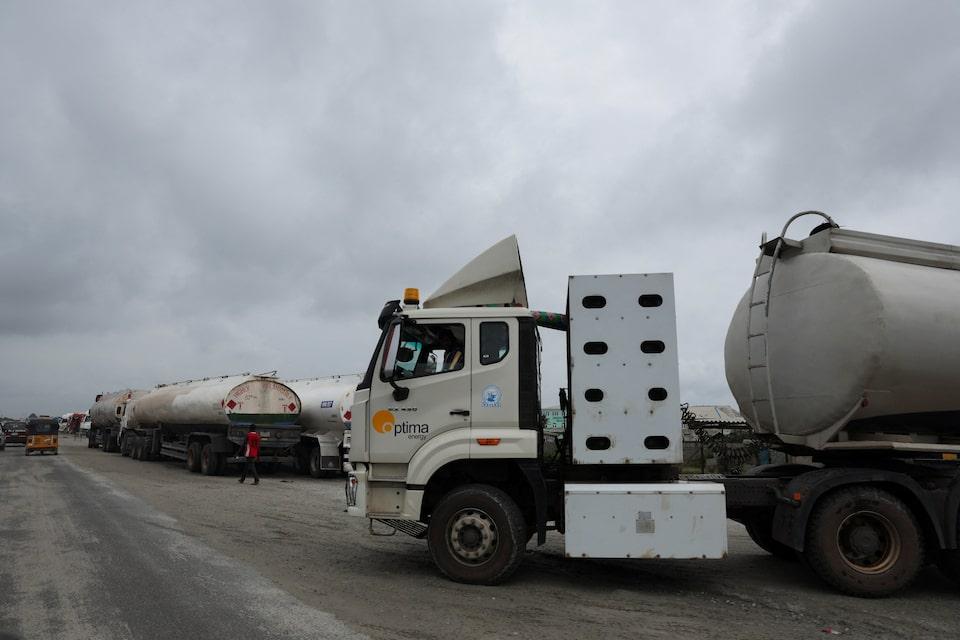
LAGOS, Sept 30 (Reuters) - The offices of Nigeria's oil regulator and state oil company were shuttered by a nationwide strike launched by the national oil workers' union after Dangote refinery dismissed more than 800 of its members, union officials said. The strike, begun on Monday, has escalated tension in Africa’s top oil producer, with a legal and industrial standoff that could disrupt regional fuel supply and trade, particularly to countries relying on refined products from Nigeria. Sign up here. The workers at the privately-owed Dangote Oil Refinery, Africa's largest, were fired last Thursday for unionising, the Petroleum and Natural Gas Senior Staff Association of Nigeria (PENGASSAN) said in a statement on Friday. Dangote oil refinery officials said at the time the dismissals were part of a staff reorganisation and accused those affected of acts of sabotage. Talks mediated by government officials on Monday failed to resolve the dispute, and the refinery secured a court injunction barring the union from obstructing crude and gas supply to it. PENGASSAN said the notice had not been formally served on the union. "Court orders are served via bailiffs, not through social media," union executive Lumumba Okugbawa said. The strike has led to closure of the offices of the NNPC Limited, the Nigerian Upstream Petroleum Regulatory Commission (NUPRC), and the Nigerian Midstream and Downstream Petroleum Regulatory Authority (NMDPRA). In a statement on Sunday, the regulator called for an amicable end to the dispute. NNPC Limited told Reuters it was committed to maintaining a safe, stable and inclusive operating environment. "We are closely monitoring the situation and remain engaged with relevant stakeholders to encourage a constructive resolution," spokesperson Andy Odeh said in a statement. Analysts fear that if the situation worsens and other unions were to join, the action could paralyse activities at oil fields, disrupt the free flow of products and cause chaos at petrol stations when trucks are grounded. The refinery owned by Africa's richest man Aliko Dangote began operations this year and has been touted as a game-changer for Nigeria’s fuel imports. The dispute threatens to undermine investor confidence and raises questions about labour protections in Nigeria’s private sector, however. https://www.reuters.com/business/world-at-work/nigerian-oil-union-launches-nationwide-strike-after-dangote-refinery-fires-2025-09-30/
2025-09-30 06:29
HANOI, Sept 30 (Reuters) - Vietnam's most devastating storm this year brought heavy rains that triggered floods across its north, disrupting flights and train services with the capital, Hanoi, where schools were closed and many homes inundated, authorities said on Tuesday. The death toll rose to 26, with 22 missing, state media said a day after Typhoon Bualoi made landfall in northern central Vietnam, bringing huge sea swells, strong winds and downpours. Sign up here. "Water is flowing into my living room," said 49-year-old Hanoi resident Hoang Quoc Uy. "I've never seen anything like this before." Flag carrier Vietnam Airlines cancelled or rescheduled several flights with the capital's Noi Bai international airport "for the safety of passengers," it said. "The weather condition in Hanoi is evolving in a complicated manner, with stormy rains that affect visibility and operations," it added. State-run Vietnam Railways Corp has also suspended most of its services between Hanoi and the business hub of Ho Chi Minh City, a company official said. Rainfall exceeded 300 mm (12 inches) in several parts of Vietnam over the past 24 hours, the national weather agency said, as it warned of a risk of landslides and flash flooding. Thunder and lightning accompanied persistent downpours that flooded streets in downtown Hanoi and paralysed traffic in many areas. Photographs on state media showed cars and motorbikes marooned in the water, many with dead engines. Several schools closed by mid-day. Villages in northern central Vietnam were flooded with no road access or power, state media said, while waters rose close to the roofs of houses in villages in Nghe An province, images on state broadcaster VTV showed. "All of my belongings have been damaged, all gone," Ngo Thi Loan, a 56-year-old in the province, told Reuters, adding that the typhoon blew off the roof of her home, leaving it half-a- metre deep in flood water. The government said 105 people were injured and more than 135,000 homes damaged, most of them in the provinces of Nghe An and Ha Tinh, while more than 25,500 hectares (63,000 acres) of rice and crops had been inundated. With a long coastline facing the South China Sea, Vietnam is prone to typhoons that often also bring heavy rains that cause severe flooding. Last week, Bualoi killed at least 10 in the Philippines. https://www.reuters.com/business/environment/typhoon-bualoi-death-toll-rises-19-vietnam-2025-09-30/

2025-09-30 06:24
Oil majors cut buybacks and costs in face of expected downturn But boards invest in big-ticket mega oil and gas projects Oil supply growth expected to go into reverse by 2030 LONDON, Sept 30 (Reuters) - While energy companies are retrenching in the face of a bleak near-term outlook for oil and gas, their investment plans suggest they believe the environment will shift dramatically by the end of the decade. Energy companies' spending plans are typically a good gauge of their confidence in the sector’s long-term outlook, given that it takes years to develop an oil or gas field and many more years before profits from these investments show up. Sign up here. Accurately forecasting the oil and gas sector’s fortunes many years out has become particularly tricky in recent years. On the one hand, the energy transition has raised questions about future demand for fossil fuels. On the other, governments' renewed focus on energy security in the wake of the 2022 war in Ukraine has revived investment appetite, leading companies such as BP (BP.L) , opens new tab and Shell (SHEL.L) , opens new tab to reverse their strategies away from renewable energy and back toward their core oil and gas businesses. The top western energy companies’ current investment and spending plans suggest bullish arguments about the future of fossil fuels are gaining ground, even as prices are expected to fall in the near term. SHORT-TERM CAUTION Price forecasts for crude in the next two years are pretty gloomy, as many agencies and investors anticipate a significant oil glut due to increased production from OPEC and non-OPEC nations. The U.S. Energy Information Administration expects Brent prices to fall from an average of $68 per barrel this year to $51 in 2026. On top of that, an expected surge in liquefied natural gas capacity in the coming years, emanating primarily from the U.S. and Qatar, is set to put pressure on another key growth market for the sector. Oil and gas companies have responded to the darkening outlook by slashing jobs, costs and – perhaps most notably – buybacks. The majors had increasingly been using share repurchases to attract investment in recent years. The scale of buybacks in the sector rose sharply after the COVID-19 pandemic, particularly in the wake of the energy price rally that followed Russia's invasion of Ukraine. The top five western energy majors - BP, Chevron (CVX.N) , opens new tab, Exxon Mobil (XOM.N) , opens new tab, Shell and TotalEnergies (TTEF.PA) , opens new tab – repurchased a total of $61.5 billion of shares in 2024, more than the $51 billion paid out as dividends, according to Reuters calculations. However, that trend has now stalled. TotalEnergies last week announced , opens new tab it will slow the pace of its share buyback programme from around $2 billion per quarter this year to a range of $750 million to $1.5 billion per quarter next year. The company cited "economic and geopolitical uncertainties” and needing “to retain room to maneuver" as justifications for the move. Chevron and BP slowed their buyback pace earlier this year. The reduced share repurchases are accompanied by deep cost cuts. Chevron is in the midst of a $3 billion cost-cutting drive by 2026 that will see it lay off up to 20% of its workforce, around 9,000 people. U.S. rival ConocoPhillips (COP.N) , opens new tab plans to cut as much as 25% of its workforce. BP announced earlier this year plans to cut over 7,000 jobs, which was followed last month by a further cost review that came on top of a $4–5 billion cost-cutting target for 2023–2027. Exxon and Shell are also trimming expenses aggressively. These cuts are the deepest the sector has seen in recent history, including during the pandemic, pointing to a heightened focus on competitiveness and a rising bearishness about the near-term outlook for energy prices. LONG-TERM FORTUNE But look beyond the next few years, and Big Oil appears much more sanguine, evidenced by these companies’ willingness to invest in new mega projects and make huge acquisitions. BP on Monday announced it will go ahead with developing a $5 billion offshore drilling project in the Gulf of Mexico. The Tiber-Guadalupe project, expected to begin oil and gas production in 2030, will include a floating platform with the capacity to produce 80,000 barrels of crude per day. TotalEnergies on Monday announced it had acquired onshore U.S. gas producing assets. Exxon, the largest of the western majors, has kept its capital spending plans for 2025 steady at $27-29 billion as it continues to increase output in U.S. shale basins and in Guyana. It also said in August that it was ready to take advantage of lower oil prices and make acquisitions. Underpinning this confidence are forecasts that the upcoming strong growth in oil production will go into reverse by the end of the decade. Indeed, the International Energy Agency expects world oil supply to grow by 4.5 million bpd between 2024 and 2028 to 107.6 million bpd before stagnating in 2029 and declining by 400,000 bpd in 2030. On top of the slower growth, the natural decline of oilfields means companies need to invest meaningfully simply to keep their production steady. Of course, oil demand growth is also expected to decelerate in the coming years, partly because of the adoption of electric vehicles. A faster than anticipated slowdown in consumption could weigh on oil prices, even if supply growth slows. But for now, companies’ willingness to look past a looming downturn suggests boards believe crude prices will rise by the end of the decade and remain sufficiently elevated into the next decade to pay back their big-ticket investments in new fields. Want to receive my column in your inbox every Monday and Thursday, along with additional energy insights and links to trending stories? Sign up for my Power Up newsletter here. Enjoying this column? Check out Reuters Open Interest (ROI), , opens new tabyour essential new source for global financial commentary. ROI delivers thought-provoking, data-driven analysis. Markets are moving faster than ever. ROI , opens new tab can help you keep up. Follow ROI on LinkedIn , opens new tab and X. , opens new tab https://www.reuters.com/markets/europe/big-oil-is-long-term-bullish-despite-short-term-gloom-bousso-2025-09-30/
2025-09-30 06:03
Zijin Gold IPO raises $3.2 billion, largest globally in 2025 Gold prices rise 42% in 2025 amid global uncertainties, boosting Zijin Gold's prospects Zijin Gold's IPO oversubscribed, Hong Kong capital markets see resurgence HONG KONG, Sept 30 (Reuters) - Shares of China's Zijin Gold International (2259.HK) , opens new tab rose as much as 66% in their Hong Kong trading debut on Tuesday after the company raised $3.2 billion in an initial public offering (IPO), the largest deal of its kind globally in 2025. The company, a unit of China's Zijin Mining (601899.SS) , opens new tab that operates all of the group's gold mines outside China, sold 349 million shares at HK$71.59 each. Sign up here. Zijin Gold shares hit HK$119 before paring some gains to be HK$114.80, still up 60% at 0539 GMT. Hong Kong's Hang Seng Index (.HSI) , opens new tab was up 0.1% in afternoon trading. Zijin Gold is on track to be one of the best-performing IPOs for first day trading in Hong Kong in the past 10 years, according to Dealogic data. Gold prices hit a record high on Tuesday, having risen 11.4% so far in September, on track for its best month since August 2011. The yellow metal is up about 42% this year on the back of global political uncertainties and lower interest rates around the world. "For mining enterprises like Zijin Gold in the upstream of the gold industry chain, a sustained high and rising gold price will drive the performance growth, as the rise in gold prices will directly boost its revenue and profits," said Xinyao Wang, an analyst who publishes on SmartKarma, in a research note Tuesday. Zijin Mining's Hong Kong shares rose as much as 8.2% after Zijin Gold's debut. The company's Shanghai-listed shares were up 3.7%. Zijin Gold is the second most actively traded stock by turnover on the Hong Kong Stock Exchange on Tuesday with 78.6 million shares worth HK$8.9 billion ($1.14 billion) changing hands. The retail tranche of Zijin Gold's IPO was 241 times oversubscribed while the institutional tranche was 20.4 times oversubscribed, according to regulatory filings. So far in 2025, IPOs and secondary listings worth $23.2 billion have taken place in Hong Kong, marking the busiest year since 2021, according to Dealogic data. The rebound in the city's capital markets activity comes as booming demand for Chinese artificial intelligence and tech stocks has seen a raft of Chinese companies listed in the mainland also sell shares in Hong Kong. Zijin Gold's IPO was the largest in Hong Kong since JD Logistics' (2618.HK) , opens new tab float in May 2021, which raised $3.6 billion, Dealogic data showed. It was the largest deal of its kind in the world this year. If an overallotment is exercised on the Zijin deal, it would raise $3.7 billion and be the largest since Kuaishou Technology (1024.HK) , opens new tab raised $6.2 billion in January 2021. Zijin Gold said in its prospectus it is planning to use the proceeds over the next five years to upgrade existing mines. It added that it expects global gold demand to grow steadily at a compound annual growth rate of 3.2% from 2024 to 2030. ($1 = 7.7804 Hong Kong dollars) https://www.reuters.com/markets/europe/shares-chinas-zijin-gold-rise-66-hong-kong-trading-debut-2025-09-30/

2025-09-30 05:29
Sept 30 (Reuters) - Polish state-controlled coal miner JSW (JSW.WA) , opens new tab reported a net loss of 724.1 million zlotys ($198.99 million) for the second quarter late on Monday, compared to a loss of 6 billion zlotys in the same period a year ago. The loss was bigger than the 658 million zlotys analysts polled by Reuters had expected, but an improvement after the 1.36 billion zloty net loss JSW reported in the first quarter. Sign up here. WHY IT'S IMPORTANT JSW, the European Union's largest producer of high-quality hard coking coal used to produce steel, has been struggling with rising energy costs and falling coal prices, and reported a 7.24 billion zloty loss for 2024 after writing down the value of its assets. BY THE NUMBERS JSW's revenue for the second quarter fell 17% year-on-year to 2.28 billion zlotys. Total sales of coal rose 15% on the year to 3 million tonnes, while total coal production rose 16.4% to 3.34 million tonnes. KEY QUOTES "The market has definitely not been in our favour in recent months," Ryszard Janta, president of the JSW Management Board, said in a statement. "Uncertainty resulting from, among other things, growing protectionism, the deteriorating condition of the European and global steel industry, growing Chinese steel exports generating an influx of low-cost imports to Europe, and a more than threefold increase in Indonesian coke exports were the main factors shaping the market environment," he added. ($1 = 3.6388 zlotys) https://www.reuters.com/markets/commodities/polands-jsw-posts-second-quarter-loss-weak-coal-prices-high-costs-weigh-2025-09-30/


