2025-09-29 06:05
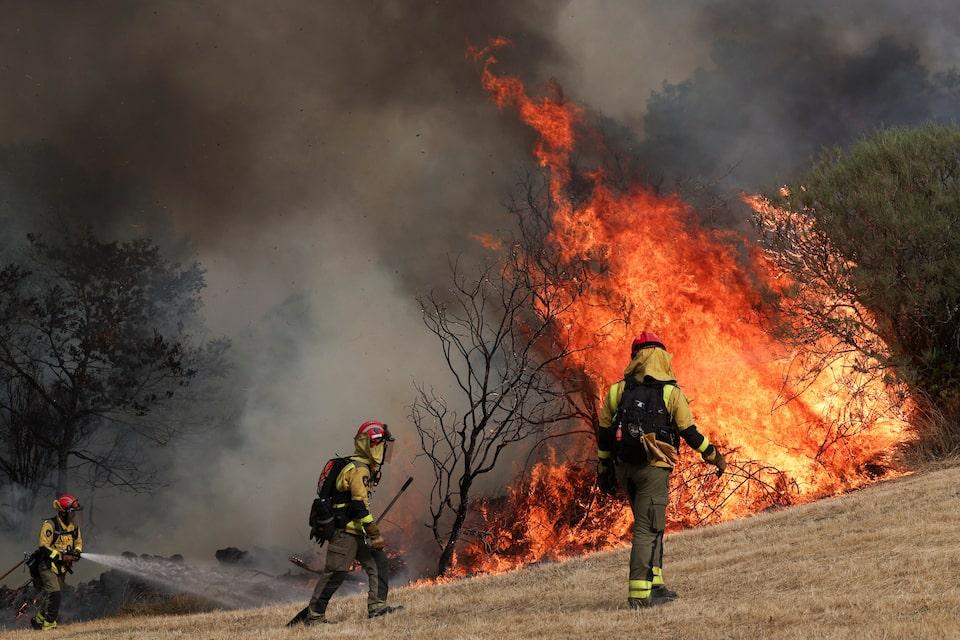
Spain's forestry investments declined 22% from 2009 to 2022 Experts call for increased prevention spending and sustainable forest management Spain's forests grow 2.2% annually, adding fuel to potential wildfires Private ownership complicates forest management, impacting wildfire prevention PARAFITA, Spain, Sept 29 (Reuters) - Javier Fernandez Perez recalls how residents of his hamlet used to burn undergrowth during the winter to help prevent the sort of huge wildfires that scorched Spain's northwestern Galicia region last summer. With hotter and drier weather stoking larger and more destructive fires, experts and locals alike are calling for such fire breaks and other forestry management methods and incentives to urgently be implemented to avoid a repeat in years to come. Sign up here. Southern Galicia was the epicentre in Spain's worst fire season in three decades. During a record heatwave in August, wildfires killed four people, encroached on cities and towns and charred 330,000 hectares, an area twice the size of London. "If nothing is done to prevent fires, this will happen again in about six years' time," said 72-year-old Fernandez Perez, a retired waiter and baker, pointing to the ferocity of the blazes if they ignite with more or less unlimited vegetation to burn. SPAIN'S EXPERIENCE IS TRIAL FOR EUROPE Just weeks ago, a wildfire ravaged 19,000 hectares of land around his hamlet of Parafita. "There's no way to control that. Not even with helicopters, all of Spain's helicopters, or aeroplanes or anything else," he said. Forestry experts and political leaders said a lack of investment in forestry management and fire prevention over the past two decades was what made the fires so devastating. Fresh solutions must be replicated across Europe as fires get closer to populated areas, said Victor Resco, a professor in forestry engineering at the University of Lleida. "What we are seeing in Spain is a trial for what Europe can expect," he said. "In 20 or 30 years, when temperatures increase in central and northern Europe, it will be too late to change tack." Spain's Prime Minister Pedro Sanchez in August acknowledged that wildfire prevention had been "clearly insufficient" and forestry management inadequate. He pledged to do "whatever it takes" to ensure fires on such a scale never happened again. FOREST COVERAGE EXPANDS, SOME MANAGEMENT LAX Spain is behind only Sweden and Finland in forest cover in Europe, covering 18.6 million hectares, and its forests grow 2.2% every year compared to the European average of 0.51%, according to private forest owners' association COSE. That increases the area that must be managed, while rural depopulation means regional authorities must fund prevention work previously carried out by communities. There are fewer people to tackle the areas where vegetation has surged in a rainy spring and then dies away in the heatwaves as weather patterns are disrupted by climate change, leaving acres of natural kindling ready to burn. Legislation in Spain to regulate controlled burning has also complicated such preventative practices. Two thirds of Spain's forests are privately owned, largely by individuals who have limited forestry management experience. Environment ministry data shows that less than a quarter of forest areas have long-term sustainable management plans. "In some cases, two generations of owners have never even set foot on the plots of land they own," Environment Secretary Hugo Moran told Reuters. The government should offer tax breaks for forest owners to reflect the role they play in carbon capture and water management and as wildlife refuges, said Patricia Gomez Agrela of COSE. It should fund forests to become more economically viable through the exploitation of wood, biomass, cork, seeds, mushrooms and fruit as in Nordic countries, she said. "There is a European strategy of biodiversity which promotes no intervention in some areas but this accumulates a lot of vegetation that generates a high risk of fires and you then lose the biodiversity that you were trying to conserve. We have to find a balance," she said. MONEY IS TIGHT Spain's Forest Engineers Association estimates that every euro invested in prevention reduces the cost of extinguishing the blazes by 100 euros. Greenpeace and other groups want authorities to invest 1 billion euros a year in prevention. Investment by the national and regional governments in core wildfire prevention methods such as maintaining fire breaks and reservoirs fell by 52% between 2009 - just as the financial crisis took hold - and 2022, according to the most recent data compiled by the environment ministry. Spending on forestry declined by 22% in the same period, although expenditure on firefighting remained stable. The ministry and regional governments, which are primarily responsible for fire prevention and firefighting, say investment began to increase again from 2017-2018. They also say the data does not reflect different ways of categorising methods and spending from the interior and agriculture ministries that support fire prevention. 'GREATEST THREAT' TO SECURITY However, Spain dedicated a smaller chunk of post-pandemic EU funds to wildfire prevention than southern European peers also hit by them. It spent 221 million euros ($259.5 million) of EU funds on preventing wildfires and preparing a rapid response, almost three times less than Portugal and four times less than Greece, according to a report in June by the European Court of Auditors. Money remains tight. Sanchez's minority Socialist-led government has come under intense pressure from NATO partners and U.S. President Donald Trump to increase Spain's lagging defence spending by almost 50 billion euros a year. Also facing the clean up costs for devastating floods in Valencia and the wildfires, he has argued climate change adaptation and mitigation should also be defined as defence. "It is unreasonable to think that we should increase defence budgets while relegating to the back burner what is currently the greatest threat to the security of our citizens," Moran said. ($1 = 0.8516 euros) https://www.reuters.com/sustainability/climate-energy/spains-summer-wildfires-fuels-calls-better-forest-management-2025-09-29/
2025-09-29 05:43
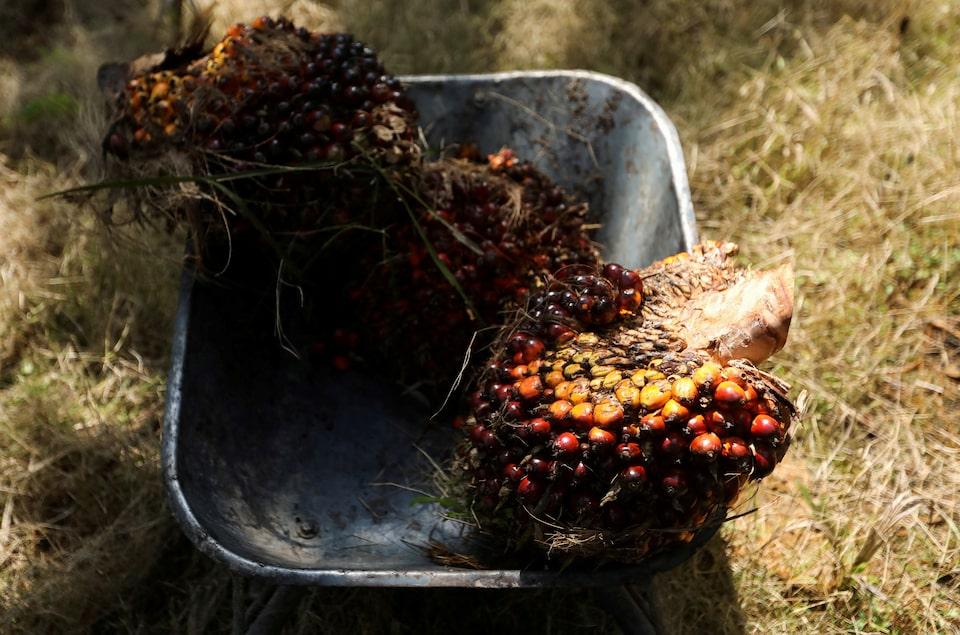
MUMBAI, Sept 29 (Reuters) - Malaysia's palm oil stocks are expected to decline in the coming months, ending the year at around 1.7 million metric tons, as a seasonal slowdown in production coincides with rising exports to meet festive season demand, the industry regulator said. The expected drop in inventories in the world's second-largest palm oil producer after Indonesia could support benchmark futures , which are under pressure recently because of cheaper supplies of rival soyoil. Sign up here. "Production is slowly coming down, and we expect exports to rise in the coming months on festive season demand," Ahmad Parveez Ghulam Kadir, director-general at the Malaysian Palm Oil Board (MPOB), said on Monday. Malaysian palm oil production typically tapers off towards year-end following a strong September quarter. Palm oil stocks in Malaysia rose 4.18% on-month in August to 2.2 million tons, the highest since December 2023, data from the MPOB showed. Palm oil prices have been under pressure in recent weeks as a sharp drop in soy oil prices made it costlier. This prompted top palm oil buyer India to boost soy oil purchases for the coming months. Despite this, palm oil prices are likely to remain firm in the coming months due to uncertainties over Indonesian supplies, Kadir said. Exports from Indonesia could be affected by a proposed implementation of the B50 biodiesel programme and government seizures of oil palm plantations, he said. Indonesia currently mandates a 40% palm oil content in biodiesel and plans to raise it to 50% starting next year. Indonesia handed over 674,178 hectares (1.7 million acres) of palm oil plantations to state firm Agrinas Palma Nusantara earlier this month, taking the total area of land given to the company to 1.5 million hectares (3.7 million acres). Oil palm replanting in Malaysia is progressing slowly, and to accelerate it, the MPOB has urged the government to raise the allocation to 280 million ringgit for 2026, up from 100 million ringgit this year, he said. https://www.reuters.com/markets/europe/malaysias-palm-oil-stocks-drop-output-slows-exports-rise-2025-09-29/
2025-09-29 05:41
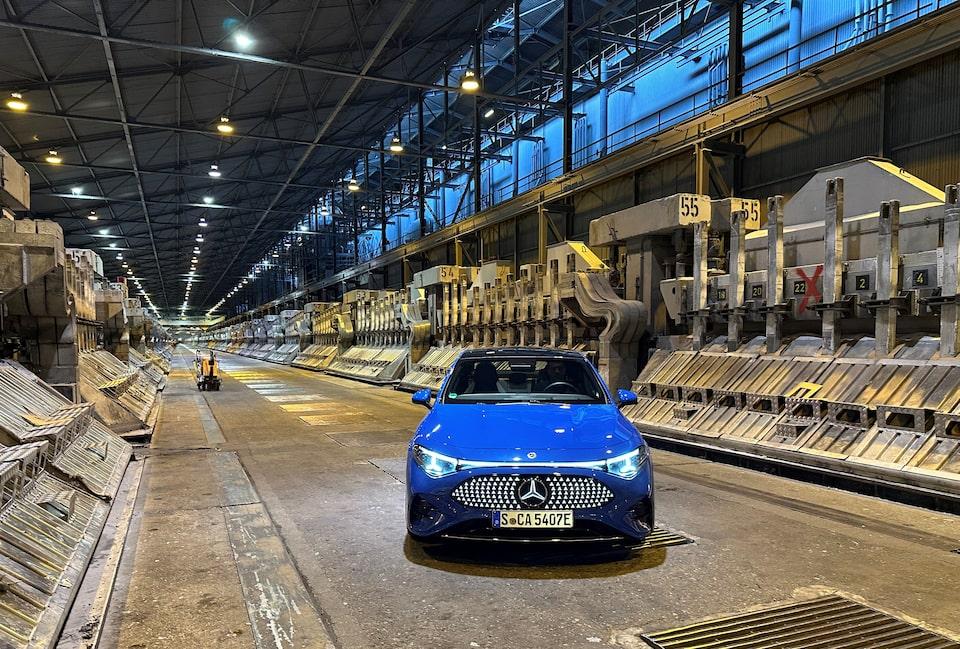
New car made with 40% less CO2 emission than predecessor Mercedes pays more for aluminium made with lower emissions Growing demand for low-carbon products, Hydro CEO says AARDAL, Norway, Sept 29 (Reuters) - Aluminium made with renewable power and from recycling is helping luxury automaker Mercedes-Benz (MBGn.DE) , opens new tab cut CO2 emissions in the production of its new line of electric vehicles, part of a wider effort to decarbonise operations, executives told Reuters. Mercedes uses the low-carbon aluminium, developed in partnership with Norwegian metals producer Norsk Hydro (NHY.OL) , opens new tab, to make its new electric CLA model. Sign up here. The collaboration is an example of how makers of premium consumer products may pay extra for raw materials in return for a more environmentally friendly profile, executives of both companies said. "There are of course extra costs from using an especially low-carbon steel or aluminium," said Gunnar Guthenke, vice president of Mercedes-Benz' procurement and supplier quality. "Sustainability and desirable products, such as the ones we produce, simply go hand in hand," he said. GROWING DEMAND FOR LOW-CARBON PRODUCTS The companies declined to provide a breakdown of costs, but said the new CLA was made with 40% less CO2 emissions than its non-electric predecessor. While decarbonising value chains can be costly, partnerships offered a way to share the burden, so it is not borne by manufacturers or customers alone, Norsk Hydro CEO Eivind Kallevik said. The metal's price premium is also not deterring buyers, even in a more difficult market for aluminium seen in recent years marked by low economic growth, he added. "We are seeing a growing demand for low-carbon products," Kallevik said. The metal made for Mercedes at Norsk Hydro's Aardal on Norway's coast causes just 3 kg (6.6 pounds) of CO2 emissions per kilogram of aluminium compared with a global average of 16.7 kg, the companies said. It includes one quarter of aluminium scrap in the mix, further reducing the volume of primary metal from the energy-intensive smelter. Mercedes in the past faced criticism over an advertising campaign highlighting sustainability at a time when it was facing a lawsuit from a climate group in Germany over its environmental impact. The suit was dropped by a German court in 2022. https://www.reuters.com/sustainability/climate-energy/mercedes-cuts-evs-environment-footprint-with-low-carbon-aluminium-2025-09-29/
2025-09-29 05:34
Dollar down after rebound last week on reduced Fed cut bets Trump to meet with Democratic leaders to avert shutdown Euro unlikely to react to inflation data Yen outperforms as investors assess global rate trajectories NEW YORK, Sept 29 (Reuters) - The dollar slid against major currencies such as the euro and yen on Monday following a rally last week after stronger-than-expected U.S. economic data and ahead of a key nonfarm payrolls report that could offer further clues on the Federal Reserve's policy path. Data on housing, durable goods, and revisions to the second quarter gross domestic product came out higher than forecast. In addition, U.S. jobless claims fell sharply. The economic reports prompted a pullback in expectations for Fed interest rate cuts. Sign up here. The greenback's retreat also came amid the risk of a government shutdown, with funding due to expire at midnight on Tuesday. President Donald Trump will convene a meeting with congressional leaders at the White House on Monday in a last-ditch attempt to end the standoff. "We're broadly consolidating today, a little bit of a heavier tone. But a lot rests on whether the government closes down at midnight tomorrow," said Marc Chandler, chief market strategist, at Bannockburn Forex in New York. "What was going to be the next impetus was going to be the jobs data this coming Friday, but if the government closes, then we won't get the jobs data right. So I think what that means is that it increases the uncertainty." The U.S. Labor Department confirmed on Monday that its statistics agency would suspend economic data releases, including the closely-watched monthly employment report for September, in the event of a partial government shutdown In afternoon trading, the dollar fell 0.6% to 148.61 , after posting last week its best weekly gain of more than 1% since early July. The dollar index - a measure of its value relative to a basket of foreign currencies - was down 0.2% on to 97.9q, having risen 0.5% last week. The euro, the largest component in the dollar index, rose 0.3% versus the U.S. unit to $1.1731 . Traders are currently pricing in 42 basis points of Fed easing by December and a total of 105 basis points by the end of 2026, about 25 bps less than levels seen in mid-September Top of investors' minds was a looming U.S. government shutdown should Congress fail to pass a funding bill before the fiscal year ends on Tuesday. Without passage of funding legislation, parts of the government would close on Wednesday, the first day of its 2026 fiscal year. Analysts say the dollar typically weakens ahead of such episodes, before rebounding once the funding dispute is resolved. Markets are likely to see it as a fresh headwind for an already sluggish labour market. "History would suggest that a short-lived government shutdown should have a relatively modest impact on the economy and on currency markets," said Karl Schamotta, chief market strategist, at Corpay in Toronto. Ahead of Friday's jobs report, investors will also get figures on job openings, private payrolls and the ISM manufacturing PMI, among others. In other currency pairs, the dollar slipped 0.1% to 0.7973 franc while sterling gained 0.3% to $1.3436. Analysts expect inflation data from euro zone countries to have little impact on the rate outlook or the single currency, as investors expect policy to remain stable. Spain's European Union-harmonised 12-month inflation rate rose to 3.0% in September. The market's attention, in addition, remained on the war in Ukraine and the potential for increased military spending. In Japan, the diverging outlook for rates between the Fed and the Bank of Japan will remain in focus amid signs of a hawkish shift on the BOJ board. In other currencies, the Aussie was last 0.5% higher at US$0.6580. The Reserve Bank of Australia announces its rate decision on Tuesday. Expectations are for the central bank to stand pat on rates. (This story has been corrected to fix a typo in the firm's name, Bannockburn, in paragraph 4) https://www.reuters.com/world/africa/dollar-defensive-before-data-releases-risk-us-government-shutdown-2025-09-29/
2025-09-29 05:08
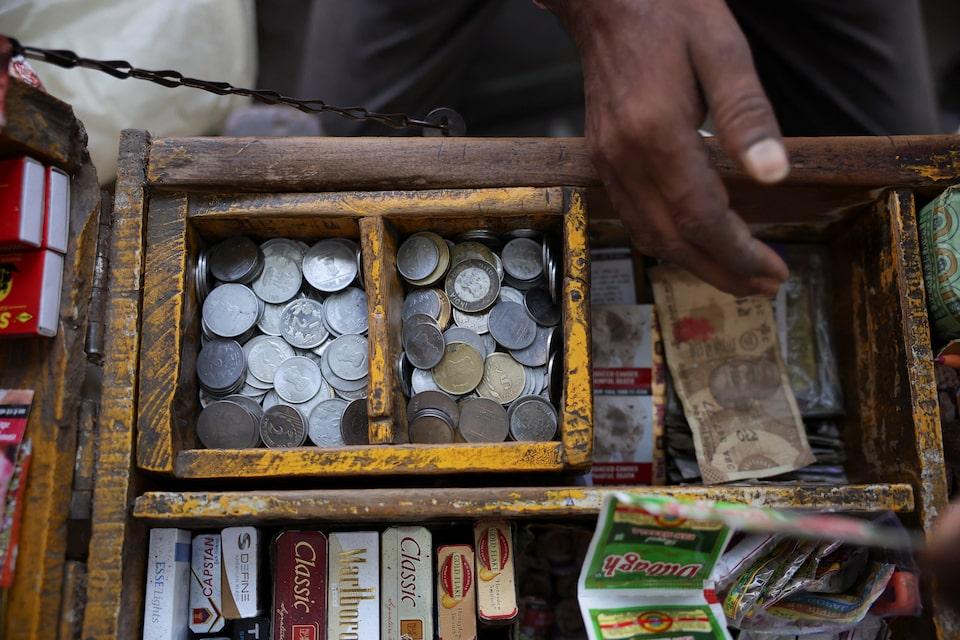
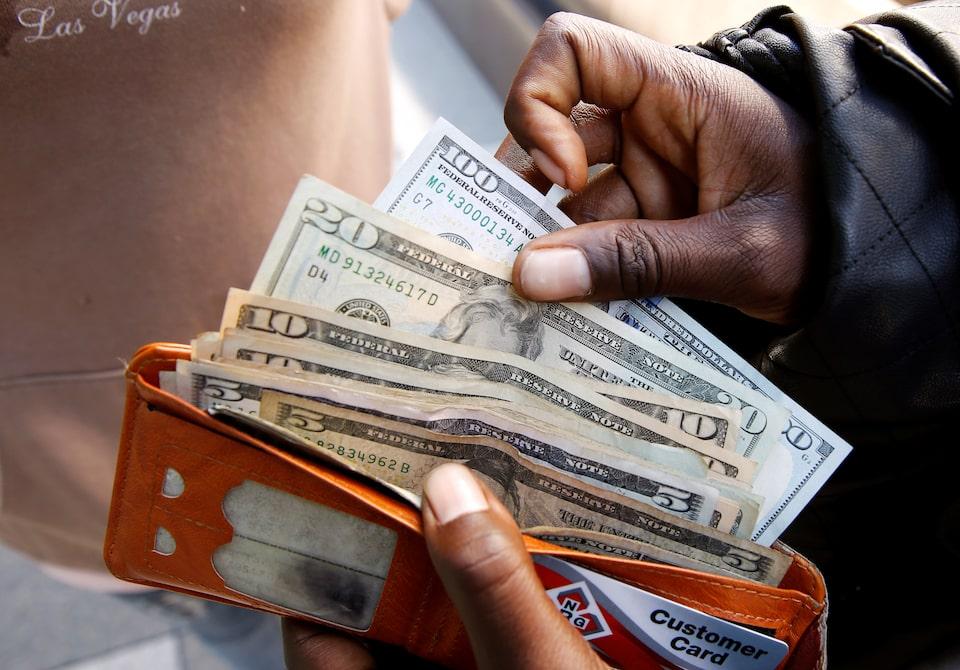
MUMBAI, Sept 29 (Reuters) - The Indian rupee was flat on Monday, wedged between dollar sales by state-run banks and likely portfolio outflows, with analysts citing the greenback's lack of direction as among the factors keeping rupee volatility muted. The rupee was at 88.7250, nearly unchanged from its closing level on Friday. Its one-month implied volatility , a gauge of future expectations, stood at 3.3%, hovering near its lowest since March. Sign up here. The rupee's volatility has been contained despite a clutch of headwinds confronting the currency, including steep U.S. tariffs on Indian exports and spillovers from tighter immigration policy. The currency has declined nearly 3.5% this quarter but options markets data shows that traders are not fretting over sharp swings. "This could be a result of range-bound dollar moves and market expectations for dollar softness reducing the possibility of larger rupee moves," analyst at BofA Global Research said in a note. Most analysts and investors expect the dollar to decline gradually on the back of market expectations of policy easing by the U.S. Federal Reserve. The dollar is down nearly 10% against a basket of peers on the year so far. Frequent interventions by the Reserve Bank of India have also helped limit market speculation on the local currency, the note said. However, reducing volatility further from already low levels would hinder the rupee's defence as it would offer traders a cheaper deal on options wagering on the rupee's decline, the note added. On the day, traders pointed to intermittent dollar sales from state-run banks that helped limit the rupee's downside. Foreign banks were spotted bidding for dollars, the traders added. Elsewhere, the dollar index was down 0.2% at 97.95. Most Asian currencies strengthened, with the Korean won leading with a 0.7% rise. India's benchamrk equity indexes, the BSE Sensex (.BSESN) , opens new tab and Nifty 50 (.NSEI) , opens new tab were up 0.4% each, snapping a six-day streak of losses. https://www.reuters.com/world/india/rupee-flat-anticipation-softer-dollar-drag-volatility-expectations-2025-09-29/

2025-09-29 05:08
MUMBAI, Sept 29 (Reuters) - The Indian rupee, under persistent pressure in recent sessions, is expected to find relief at Monday's open, lifted by a broad rally in Asian peers. The 1-month non-deliverable forward indicated the rupee will open in the 88.62-88.64 range versus the U.S. dollar, compared with 88.7175 in the previous session. Sign up here. The Indian currency shed 0.7% last week, sinking to an all-time low of 88.7975, with the U.S. H1-B visa fee increase adding to bearishness. Without the Reserve Bank of India's likely support, the fall could have been worse, bankers said. "What we are seeing is the RBI allowing depreciation in a measured fashion," a currency trader at a Mumbai-based bank said, "This prevents the market from extrapolating to a free-fall or from taking heavy one-sided bets." While the central bank’s action is cushioning the fall, the overall bias for the rupee remains weaker, he noted. Adding to the rupee's hurdles, Indian equities last week suffered their sharpest drop in more than seven months, with foreign investors withdrawing nearly $1.8 billion from local shares. This week, all eyes will be on the RBI’s policy review on Wednesday, where a possible 25-basis-point rate cut may add to pressure on the rupee. ASIA RALLIES Asian currencies marched higher on Monday and equities rose following U.S. inflation data. The U.S. personal consumption expenditures (PCE) price index, the Federal Reserve's preferred inflation gauge, rose 0.3% in August from July, matching forecasts. The report arrives amid growing expectations that the Fed will cut rates again next month, with a third straight reduction possible in December. The inflation data "keeps rate cut expectations intact", Morgan Stanley said in a note. KEY INDICATORS: ** One-month non-deliverable rupee forward at 88.84; onshore one-month forward premium at 15 paise ** Dollar index down at 97.92 ** Brent crude futures down 0.5% at $69.8 per barrel ** Ten-year U.S. note yield at 4.16% ** As per NSDL data, foreign investors sold a net $462.5mln worth of Indian shares on Sep. 25 ** NSDL data shows foreign investors sold a net $1mln worth of Indian bonds on Sep. 25 https://www.reuters.com/world/india/struggling-rupee-set-reprieve-rise-asia-fx-after-us-inflation-data-2025-09-29/