2025-09-29 04:33
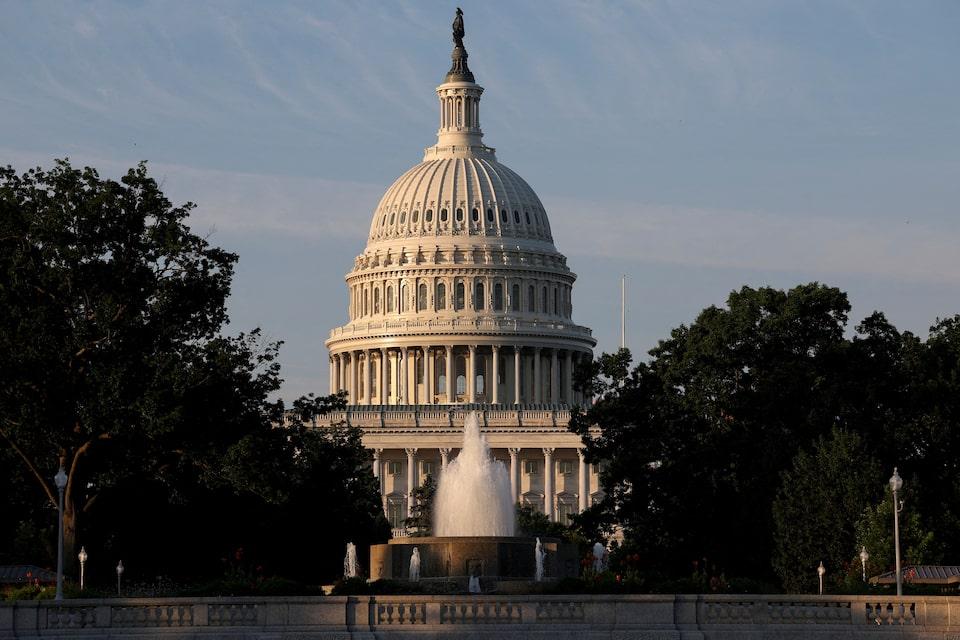
Sept 29 (Reuters) - A look at the day ahead in European and global markets from Wayne Cole. Treasury yields and the dollar are down and most stocks a shade higher in Asia as investors wait to see if last gasp talks will prevent the U.S. government shutting from Wednesday. Sign up here. Expectations don't seem high for a deal when President Trump meets with the top Democratic and Republican leaders in Congress later on Monday, with both sides seeing political capital in letting the government close. Analysts at BofA estimate a closure would cost 0.1% of GDP per week, but would be made up when it re-opens. Historically, such shutdowns have had little impact on financial markets, perhaps because investors assume public pressure will ultimately force a deal. The timing is awkward for markets given that a closure would delay the September payrolls report due on Friday, and a protracted shutdown could leave the Federal Reserve flying blind when it meets on October 29. So far, markets assume that would not stop the Fed from easing, pricing in an 89% chance of a cut. Wednesday is also when Trump's new tariffs on big trucks, patented drugs and other items are due to go into place, though there remains much confusion about what exactly will be covered or whether existing country deals will take precedent. Reuters reported the Trump administration is considering imposing tariffs on foreign electronic devices based on the number of chips in each one, though again how that would work in practice is anyone's guess. Trade partners must be wondering what's the point of doing deals with Trump when he can just slap new levies on anything out of the blue. It's a busy week for Trump who on Tuesday is reportedly attending the meeting of top U.S. military brass suddenly called by Defense Secretary Hegseth last week. "I want to tell the generals that we love them, they're cherished leaders, to be strong, be tough and be smart and be compassionate," Trump told Reuters in an interview, making the point of the meeting no clearer. Social media is abuzz with theories, ranging from Hegseth wanting to extol the generals to follow a "warrior" culture, to him asking the military leaders to swear an oath to Trump personally. There's even talk the White House has decided to pull the U.S. military back from Europe and Asia to concentrate on the Americas alone. Investors will be hoping nothing drastic happens this week to cloud the fourth quarter, which historically is a bullish one for equities. The Nasdaq, for instance, has on average returned gains of more than 6% in the December quarter. World stocks are already up 17% for the year, worth a cool $15 trillion. Gold and Chinese tech are the biggest winners, both up almost 40%. Key developments that could influence markets on Monday: - EU consumer and business sentiment surveys, various EU countries report CPI for September - ECB speakers include Madis Muller, Martins Kazaks, Piero Cipollone, Isabel Schnabel and Philip Lane. - Fed speakers include Christopher Waller, Beth Hammack, John Williams, Alberto Musalem and Raphael Bostic https://www.reuters.com/world/china/global-markets-view-europe-2025-09-29/
2025-09-29 01:36
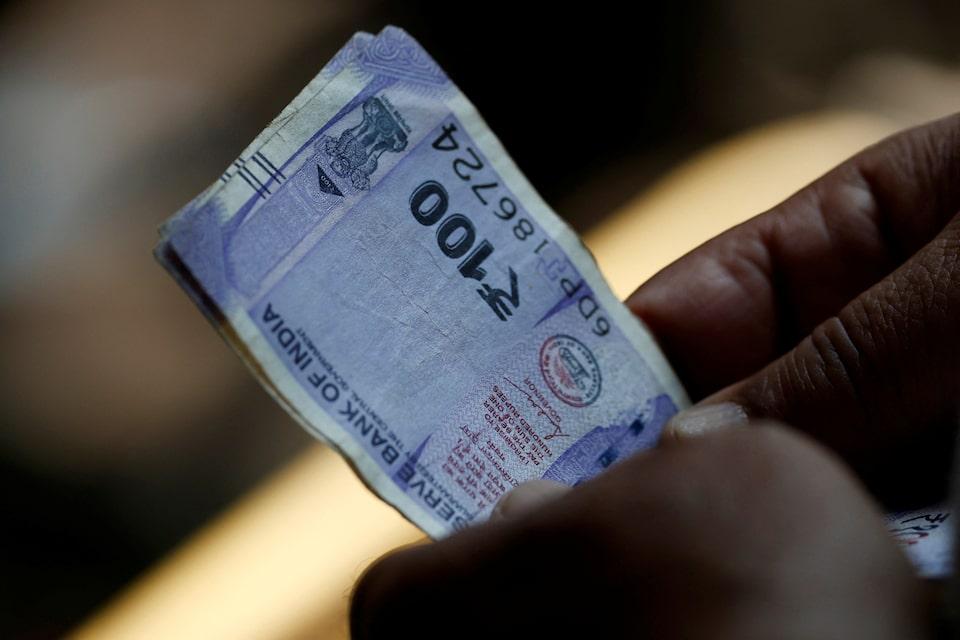
MUMBAI, Sept 29 (Reuters) - The Indian rupee and government bonds will take cues from the Reserve Bank of India's policy decision this week, while the currency is also likely to rely on the central bank intervention for support as it grapples with persistent headwinds. The rupee closed at 88.7175 on Friday, touching a record low of 88.7975 per dollar earlier in the week. Sign up here. It was down 0.7% week-on-week, bogged down by concerns over a hit to trade and portfolio flows into India on the back of steep U.S. tariffs and tighter immigration policy. "It is almost as if the currency has been caught in a torrential monsoon downpour as USD/INR made fresh all-time highs," analysts at Goldman Sachs said in a note. "It is important to acknowledge that a lot of bad news is now in the price ... and risks may be turning more balanced with growing undervaluation." The rupee's 40-currency real effective exchange rate (REER), a measure of its competitiveness, stood at 98.79 at the end of August, the lowest since April 2023. REER below 100 points to undervaluation. While the central bank is expected to keep policy rates unchanged on Wednesday, a surprise rate cut could add to the pressure on the rupee, a trader at a foreign bank said. Meanwhile, data released on Friday continued to show U.S. economic resilience, taking some steam out of expectations for quick rate cuts by the U.S. Federal Reserve, with focus now on the key U.S. non-farm payrolls data due on Friday. The dollar ended up 0.5% against a basket of peers last week. Meanwhile, India's 10-year benchmark 6.33% 2035 bond yield settled at 6.5231% on Friday, up 3 basis points week-on-week. Market participants are eyeing an upmove in yields at the start of the week after the government increased the share of 10-year bonds in the borrowing schedule for October-March. The government will raise 6.77 trillion rupees, of which 1.92 trillion rupees will be borrowed through 10-year bonds. Traders anticipate the yield to remain in the 6.50% to 6.58% band till the RBI's monetary policy decision on Wednesday. A Reuters poll of economists suggests the central bank will keep its key interest rate unchanged. A rate cut or dovish guidance could lead to a drop in yields to at least 6.40%, while status quo and neutral commentary could test 6.60% levels. Still, some large market participants have now shifted to the rate-easing camp. Citi, State Bank of India, Capital Economics and Barclays expect a rate cut, joining Nomura and MUFG that have held the view since the August policy decision. ICICI Securities Primary Dealership sees a 35%-40% chance of RBI cutting rates this week. "Bond market sentiment has already stabilised, but more volatility should be generally expected around end of rate cut cycles," said economists Prasanna A and Abhishek Upadhyay, "Monetary policy can best support growth and curb exceptional volatility in market by keeping a steady hand at the wheel." KEY EVENTS: India ** August fiscal deficit - September 29, Monday (3:30 p.m. IST) ** August industrial output - September 29, Monday (4:00 p.m. IST) ** Reserve Bank of India monetary policy decision - October 1, Wednesday (10:00 a.m.)(Reuters poll: no change) ** September HSBC manufacturing PMI - October 1, Wednesday (10:30 a.m.) U.S. ** September consumer confidence - September 30, Tuesday (7:30 p.m. IST) ** September S&P Global manufacturing PMI final - October 1, Wednesday (7:15 p.m. IST) ** September ISM manufacturing PMI - October 1, Wednesday (7:30 p.m. IST) ** Initial weekly jobless claims for week to September 22 - October 2, Thursday (6:00 p.m. IST) ** August factory orders - October 2, Thursday (7:30 p.m. IST) ** September non-farm payrolls and unemployment rate - October 3, Friday (6:00 p.m. IST) ** September S&P Global composite PMI final - October 3, Friday (7:15 p.m. IST) ** September S&P Global services PMI final - October 3, Friday (7:15 p.m. IST) ** September ISM non-manufacturing PMI - October 3, Friday (7:30 p.m. IST) https://www.reuters.com/world/india/indian-rupee-government-bonds-track-rbi-decision-2025-09-29/
2025-09-29 01:32
Three-quarters of economists expect no change Rate cut possible on subdued inflation, tariff impact Markets to rally if RBI cuts rates on Wednesday, traders say Rate decision due Wednesday, October 1, around 0430 GMT MUMBAI, Sept 29 (Reuters) - The Reserve Bank of India is widely expected to hold its key policy rate at 5.50% on Wednesday, though some economists say a surprise cut cannot be ruled out as it weighs the impact of U.S. trade tariffs and subdued inflation. A Reuters poll showed nearly three-quarters of economists expected a pause, but major banks including Citi, Barclays, Capital Economics and SBI have flagged the possibility of a cut citing downside risks to growth and a benign inflation outlook. Sign up here. The RBI has cut rates by 100 basis points since the start of the year, but private investment remains weak and financial conditions tightened after the August policy meeting, when the central bank held rates and retained a neutral stance. The October meeting is "live" again, Citi economists wrote, noting that the RBI could opt for an "insurance" rate cut to cushion against external shocks, or deliver a dovish pause with a clear signal to act soon. The RBI's three-day meeting ends on October 1. "We have a marginal bias that the RBI would opt for the insurance rate cut view." India's economy grew a stronger-than-expected 7.8% in the June quarter, but some economists said the figure may overstate the actual strength of the economy because it was calculated after adjusting for inflation. The government has stepped up fiscal support through income tax relief and goods and services tax rate rationalisation, but tariffs and rupee weakness have clouded the outlook. Trade tensions with the U.S., including 50% tariffs on Indian exports and higher visa fees, have raised concerns about broader punitive measures on services trade. Economists say the RBI may prefer to act early rather than wait for the full impact to play out. "The hit to GDP growth from punitive U.S. tariffs, along with a benign inflation outlook, sets the stage for the RBI to resume its easing cycle," Capital Economics said, predicting a cut next week followed by another in December. Inflation has stayed below the RBI's 4% target, and economists expect further disinflation from the GST rate cuts. Most economists expect the outlook for full-year growth to be revised upwards and inflation to be revised downwards. SBI's Chief Economist, Soumya Kanti Ghosh, said in a note that a rate cut would position the RBI as a forward-looking central bank but noted the need for calibrated communication given the higher bar for easing post-June. He added that inflation would remain benign even in FY2027. Still, a majority of economists suggested the RBI may prefer to wait until December, especially if trade negotiations show progress. Others said that targeted relief measures could be more effective than broad-based easing. India's bond and overnight index swap markets have yet to price in a rate cut on Wednesday, with traders predicting a rally if the central bank surprises with monetary easing. https://www.reuters.com/world/india/rbi-expected-hold-policy-rate-surprise-cut-possible-2025-09-29/
2025-09-29 00:52
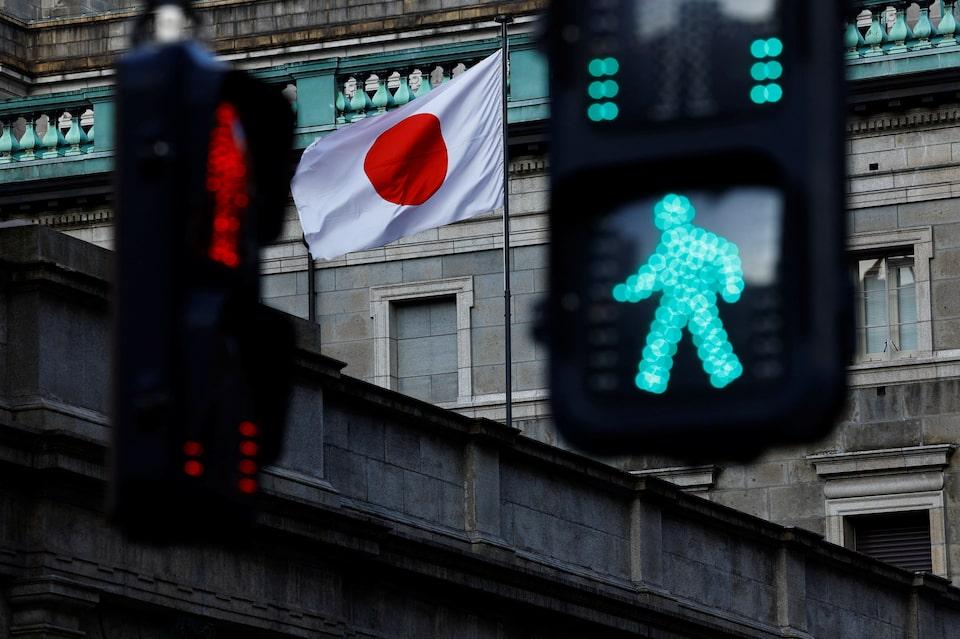
Two dissenters highlight hawkish shift in BOJ board Board debated price pressure, need for rate hike in July Data so far have eased concern over U.S., Japan economic outlook Tankan, BOJ branch managers' meeting key to rate-hike timing Some analysts doubt data could convince Ueda to act in October TOKYO, Sept 29 (Reuters) - A hawkish board split at the Bank of Japan's policy meeting this month has increased pressure on its dovish governor Kazuo Ueda to move faster on interest rate hikes, raising the prospect the next tightening could come as soon as October. The central bank kept rates steady at 0.5% earlier this month, as expected, but dissenting calls by two board members for a quarter point hike stunned markets and were read as a sign the BOJ was less worried about economic headwinds than first thought. Sign up here. While it is uncertain whether the move was designed as an intentional signal to markets a rate hike was imminent, veteran BOJ watcher Mari Iwashita said it represented a growing board view that conditions for the next rise were falling into place. "The dissenters probably wanted to nudge Ueda to move faster and get a rate hike done, given it was something that would happen sooner or later," Iwashita said. Since taking the helm at the BOJ in 2023, Ueda has delivered the bank's first rate hike in 17 years but has in the past six months grown more cautious about the outlook. Ueda's dovishness contrasts with a shift in views among others in the BOJ's nine-member board in recent months, who are calling for more rate hikes. Board members Naoki Tamura and Hajime Takata surprised markets by proposing a rate hike at the BOJ's decision in September. The exact timing of the next hike rests on whether upcoming data convince BOJ policymakers the U.S. will avert a recession, and U.S. levies won't derail Japan's fragile economic recovery, said sources familiar with the central bank's thinking. At the same time, mounting price pressure has been worrying the board since as early as July. While some members expected food inflation to dissipate, others warned that steady price rises of daily necessities could unleash broad-based, persistent inflation, minutes of the July 30-31 meeting showed. For the most part, policymakers seem to be looking through recent economic weakness. Of the six opinions on the monetary policy outlook, all but one called for raising rates in a timely fashion with one seeing the chance of doing so by year-end, the July minutes showed. Since then, data has shown limited economic damage from U.S. tariffs with some policymakers viewing an August drop in exports as largely a reaction to pent-up demand in prior months. While dismal jobs data stoked fears of U.S. recession, such concern has eased as the economy shows resilience and prospects that rate cuts by the Federal Reserve would underpin growth. The dissenters may find more allies in the nine-member board if upcoming data further ease concern of a steep U.S. downturn, and show Japan's manufacturers can weather the hit from U.S. levies, said one of the sources. "It's crucial that there were two, not one, dissenters," said the source, who spoke on condition of anonymity as he was not authorised to speak publicly. "This could sway other members more in favour of a near-term rate hike." While BOJ policymakers have been mum on the pace and timing of future rate hikes, there is broad consensus it will come at one of the three meetings by January next year, the sources say. Markets have priced in roughly a 50% chance of a rate hike in October. A Reuters poll showed a majority of economists expect another 25-basis-point hike by year-end, although there was less conviction about the timing with bets centering on October and January. NOT ABOUT LOGIC A former commercial banker, Tamura is a well-known hawk who made a solo, unsuccessful proposal in December to hike rates to 0.5% - only to see the BOJ do just that a month later. The significance of the split vote was heightened by the dissent of Takata, who has always voted in favour of Ueda's proposal and was seen holding views close to those of the governor, analysts say. "Though it's hard to tell, the dissents could have been an intentional signal to markets that a rate hike is approaching," former BOJ board member Makoto Sakurai told Reuters. The board's hawkish bias contrasts with a generation of dovish policymakers who dominated during the era of Ueda's predecessor Haruhiko Kuroda, but have since bowed out. Newcomer Junko Koeda, who succeeded Adachi, has expressed concerns about rising food prices. Another newcomer, Kazuyuki Masu, is seen as neutral on policy and replaced Toyoaki Nakamura, a dove who repeatedly dissented from the BOJ's decision to phase out stimulus. That has left Ueda as the most cautious board member. Some analysts doubt whether enough data would come out by the October 29-30 meeting to convince Ueda, who has huge sway on the rate decision, to pull the trigger. "Judging from his recent remarks, I don't think he's convinced that conditions for a hike are in place," said former BOJ board member Seiji Adachi, who sat on the board until March. Among key data coming out is the BOJ's "tankan" business survey, due on October 1, which will show how U.S. tariffs are affecting businesses. A report by the BOJ's regional branch managers, due on October 6, will give an overview of how smaller firms are weathering tariffs. In the end, politics and exchange-rate moves could be a key factor swaying the rate-hike timing, especially as Prime Minister Shigeru Ishiba steps down. Concerns his replacement could meddle in monetary policy have receded with none of the candidates, including advocate of monetary easing Sanae Takaichi, opposing rate hikes. One even backed moderate increases in borrowing costs. A renewed fall in the yen, which has weakened to near the critical 150 line to the dollar, may pressure the BOJ to hike rates as it accelerates inflation by lifting import costs, analysts say. "Given how much Ueda stressed downside economic risks, it's logically hard to justify a rate hike in October," Adachi said. "But sometimes, it's not just about logic." https://www.reuters.com/business/boj-boards-hawkish-flex-lowers-bar-an-october-rate-hike-2025-09-29/
2025-09-29 00:52
US stocks rise, investors shrug off government shutdown risks Dollar dips, Treasuries gain Gold hits record above $3,800, oil down on more supply NEW YORK/LONDON, Sept 29 (Reuters) - Global stocks rose on Monday while the dollar retreated as investors prepared for a possible shutdown of the U.S. government, which could delay publication of the September payrolls report and a raft of other key data due this week. Gold roared to a record high, powered by the dip in the dollar and by investor concerns about the possible ramifications of a U.S. government shutdown. Sign up here. President Donald Trump will meet with top Democratic and Republican leaders in Congress later on Monday to discuss extending government funding. Without a deal, a shutdown would begin from Wednesday, the same day when new U.S. tariffs go into effect on heavy trucks, patented drugs and other items. Investors, however, appeared sanguine about the risk of a U.S. government shutdown for now, which analysts attributed to memories of shallow declines in equity markets the last time the government shut down. The S&P 500 (.SPX) , opens new tab added 0.3%, the Nasdaq Composite Index (.IXIC) , opens new tab rose 0.5%, and the Dow Jones Industrial Average (.DJI) , opens new tab inched up 0.2%. That helped the MSCI All-World index (.MIWD00000PUS) , opens new tab to gain 0.4%, while in Europe, the STOXX 600 (.STOXX) , opens new tab rose 0.2%, heading for a gain of 1.1% in September that would mark its third straight month of increases. "Over the last 30 years, the government has shut down only five times due to funding issues, the longest (34 days) was under Trump's first administration. In that event, the S&P 500 initially fell by 2.1% and then recovered," said Nicole Inui, head of equity strategy, Americas, and Alastair Pinder, head of emerging markets and global equity strategist at HSBC Global Investment Research. A protracted closure, however, could leave the Federal Reserve flying blind on the economy when it meets on October 29. "If the shutdown lasts beyond the Fed meeting, the Fed will rely on private data for its policy decisions," analysts at BofA wrote in a note. "On the margin, we think this may lower the likelihood of an October cut, but only marginally." Markets imply a 90% chance of a Fed cut in October, with around a 65% probability of another in December. The BofA analysts estimated a shutdown would subtract only 0.1 percentage point from economic growth for every week it lasted, while noting the impact on financial markets had been minimal in the past. They cautioned that, should the government use the closure to lay off workers permanently, then it could have a more meaningful impact on payrolls and consumer confidence. There is also much uncertainty about what might happen at a meeting of U.S. generals and admirals in Quantico, Virginia, on Tuesday, called by Defense Secretary Pete Hegseth, which Trump will reportedly attend. Q4 USUALLY GOOD FOR STOCKS Otherwise, analysts expected equities to be supported by buying for the new quarter, which historically tends to be a positive one for stocks. In bond markets, 10-year Treasury yields dipped, falling 4.6 basis points to 4.1406%, having been pressured last week by a run of upbeat U.S. economic data that led investors to pare back expectations for how low Fed rates might ultimately go. A host of central bank speakers are on the diary this week, with at least five from the Fed and the European Central Bank appearing on Monday alone. The dollar index slipped 0.2% to 97.945 , having benefited last week from the batch of better economic news. "Our forecast for the U.S. dollar to weaken further heading into year-end is built on the assumption the Fed will deliver two further 25-basis-point cuts by the end of this year as the labour market remains weak," MUFG strategist Lee Hardman said. The euro rose 0.2% to $1.17255 but was still in the lower half of its recent $1.1646 to $1.1918 range. The dollar fell 0.6% to 148.6 yen , after rallying just over 1% last week and pulling away from the September low around 145.50. In commodity markets, gold shot up to an all-time high at $3,833.37 an ounce , before retreating a touch to $3,828.17 to be up 1.8%. Oil prices fell as crude started to flow through a pipeline from the semi-autonomous Kurdistan region in northern Iraq to Turkey for the first time in 2-1/2 years. Reuters reported OPEC+ will likely approve another oil production increase of at least 137,000 barrels per day at its meeting next Sunday. Brent dropped 3.5% to $67.68 a barrel, while U.S. crude fell 3.8% to $63.21 per barrel. https://www.reuters.com/world/china/global-markets-wrapup-1-2025-09-29/
2025-09-29 00:43
JIMBARAN, Indonesia, Sept 29 (Reuters) - Definitions vary as to which minerals and metals are genuinely critical, but one thing is certain. The prices of many of them are currently weak and not reflecting their supposed importance to the global energy transition. The contrast between the current soft pricing for metals such as lithium, nickel, cobalt and copper and the still widespread expectations of a demand surge in the next decade was a key feature of an industry gathering last week on the Indonesian island of Bali. Sign up here. The International Critical Minerals and Metals Summit heard that demand for key energy transition metals is expected to increase fourfold in the decade from now to 2035. Demand for the battery metals lithium, graphite, nickel, manganese and cobalt is expected to rise from around a combined three million metric tons this year to 12 million by 2035, Fastmarkets analyst Olivier Masson told the conference. Copper is also viewed as essential to the energy transition and Masson said the market would need 909,000 tons of additional capacity by 2035 to meet demand for electric vehicles and renewable technologies such as wind and solar. This all sounds very bullish for energy transition metals, but Masson's data also held some sobering realities. Looking specifically at copper, Fastmarkets expects the global market to record a small surplus this year, a slightly larger surplus of just under 200,000 tons in 2026, and a tiny deficit in 2027. It is only in 2033 and 2034 that significant shortfalls of copper are expected by Fastmarkets. The caveat to long-term forecasts is that they are inherently risky as market dynamics can shift, new technologies can alter demand profiles and geopolitics and resource nationalism can increasingly interfere with trade and investment decisions. But working on the assumption that ultimately the energy transition will result in higher demand, the question becomes how should the market respond now? Is it a good idea to seek new copper deposits and commit vast sums of capital to building a new mine in the hope that demand will be strong enough in 2040 to 2050 when it is likely production will actually commence? Despite widespread and sustained forecasts for a shortfall of copper, the price of the industrial metal has barely shifted in recent years. Benchmark London contracts ended at $10,181.50 a ton on September 26, much the same price as they were for much of 2021. Effectively the copper market is roughly in balance currently and is range-trading driven by short-term news events rather than any longer-term views on fundamentals. WAITING FOR DEMAND Other markets are in even worse shape, largely because of over-investment in new supply, either in expectations that demand growth would arrive faster than it has, or as part of government industrial policy. Examples of policy-driven excess capacity are rife in China, which has overbuilt refining for metals such as lithium and cobalt. Indonesia's policy to encourage investment in midstream and downstream processing has helped to achieve dominance in global nickel markets, but at the cost of significant oversupply and weak prices. London nickel futures dropped to the lowest in nearly five years in May this year and at the close of $15,175 a ton on September 26 they are a third of the 15-year peak reached in March 2022. The pattern of weak prices amid oversupply extends to other critical minerals, and leaves producers in the unenvious position of having to navigate to try to contain costs and hang on long enough for the anticipated demand to arrive. If there is some comfort for these miners it is that their situation largely mirrors what happened in iron ore in the last decade, when the major miners in Australia and Brazil expanded output of the key steel raw material faster than Chinese demand was rising. After prices crashed to multi-year lows they did recover to reach record highs as China ramped up steel output to 1 billion tons a year by 2020, a level it has largely maintained since and one that gives it about a 50% share of global production. Producers of energy transition metals probably hope for a similar pattern to iron ore, but they also face other complicating factors, such as efforts by Western nations to develop supply chains outside of Chinese control. If these prove successful it may add more supply to certain markets, which could depress prices further, or lead to policy measures to enforce using higher-cost metal from non-Chinese suppliers. Enjoying this column? Check out Reuters Open Interest (ROI), your essential new source for global financial commentary. ROI delivers thought-provoking, data-driven analysis of everything from swap rates to soybeans. Markets are moving faster than ever. ROI can help you keep up. Follow ROI on LinkedIn , opens new tab and X , opens new tab. The views expressed here are those of the author, a columnist for Reuters. https://www.reuters.com/markets/commodities/critical-minerals-are-stuck-between-demand-hopes-oversupply-reality-2025-09-29/