2025-09-25 23:44
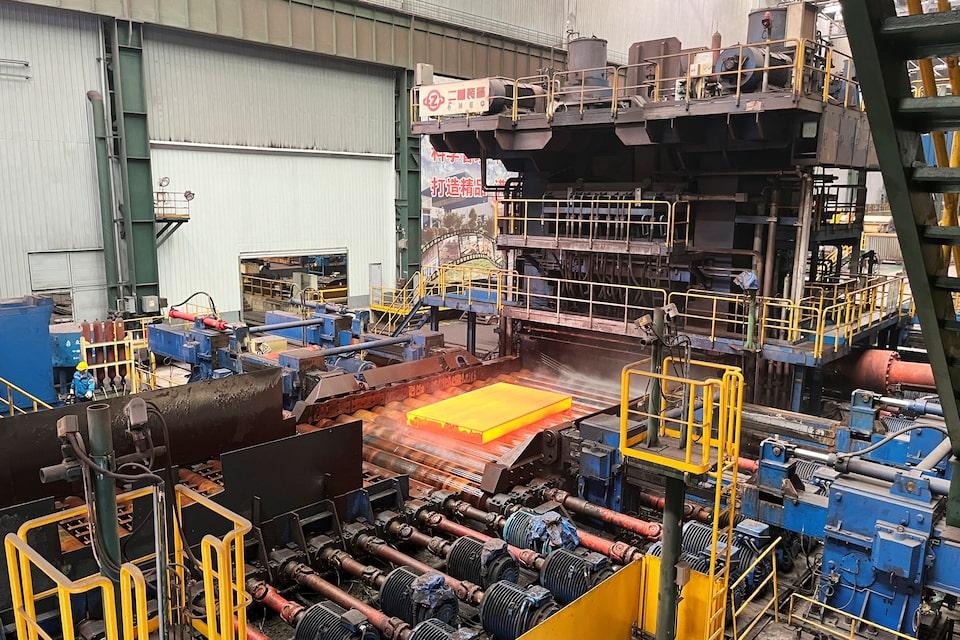
FRANKFURT, Sept 25 (Reuters) - The European Commission plans to impose tariffs of 25% to 50% on Chinese steel and related products in the next few weeks, German business daily Handelsblatt reported citing senior officials in Brussels. The European Commission had no immediate comment. Sign up here. The Commission's President Ursula von der Leyen had said earlier this month it would propose a new method to curb steel imports to protect domestic producers, as global overcapacity was straining margins and making it harder for Europe's steel industry to invest in decarbonisation. She added the Commission would propose a new, long-term trade instrument to succeed the expiring steel safeguards. Under global trade rules, the bloc cannot prolong existing steel safeguards beyond mid-2026. China's steel exports, meanwhile, are expected to hit an all-time high this year, rising between 4% and 9% to about 115 million to 120 million metric tons, according to forecasts from analysts. More than half of the world's steel is produced by China, which is in need of new markets after a prolonged property sector slump has dampened domestic market consumption. Roughly 54 tariffs and other trade barriers have been initiated against Chinese steel from 2024, according to China Trade Remedies Information, with analysts saying more exports will encourage further curbs. European steel producers also face U.S. tariffs of 50%. The European Union had, in late July, started monitoring imports and exports of scrap metal including steel, aluminium and copper after stark industry warnings of shortages and the risk of smelter shutdowns. EU smelters have been struggling for some time to secure supplies of scrap metal, which is a major input and an integral part of the bloc's push to reduce carbon emissions. https://www.reuters.com/world/china/eu-plans-tariffs-25-50-chinese-steel-related-products-handelsblatt-reports-2025-09-25/
2025-09-25 23:07
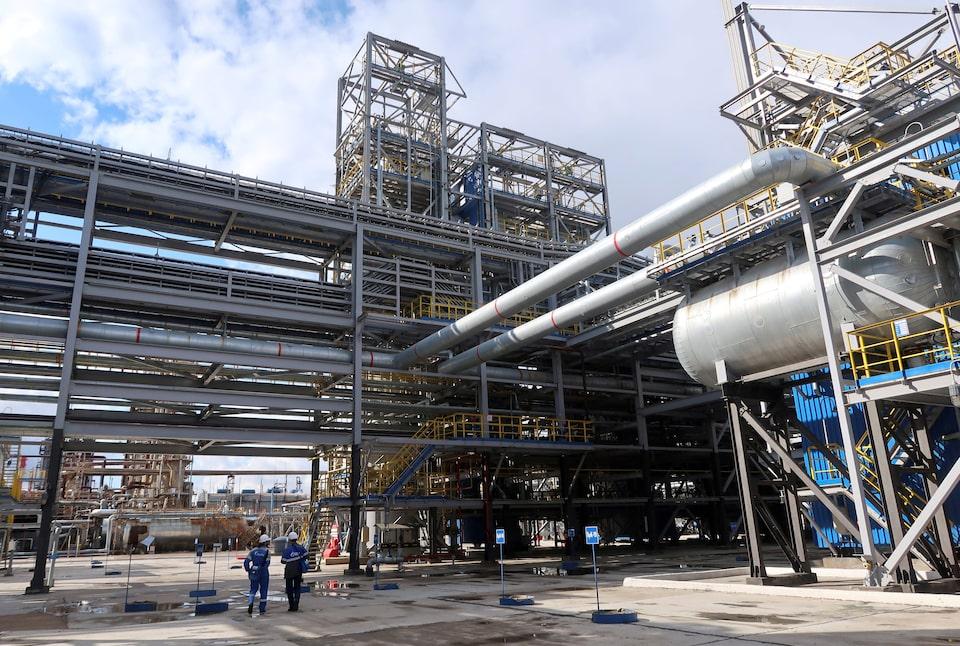
Russia curbs diesel exports following waves of Ukranian attacks on refineries Trump appears to support Ukraine's strategy Western sanctions have sought to avoid a supply shock LONDON, Sept 26 (Reuters) - Ukraine's repeated strikes on Russian energy infrastructure have dealt a serious blow to Moscow's vital fuel exports just as Western sanctions are tightening. But if these attacks are too successful, they risk raising the ire of U.S. President Donald Trump. The conflict between Russia and Ukraine that began in 2022 took a sharp turn in recent weeks as Kyiv began to launch waves of drone attacks on Russian refineries, pipelines and export terminals. This has taken a heavy toll on Russia's sprawling oil and gas industry, which accounts for a quarter of the country’s GDP. Sign up here. Ukraine intensified these strikes on Wednesday, as drones attacked Salavat - one of Russia's largest petrochemical complexes , opens new tab - for the second time in less than a week, and the Black Sea port town of Novorossiisk. Moscow was rattled enough to respond. Deputy Prime Minister Alexander Novak said on Thursday that Russia will introduce a partial ban , opens new tab on diesel exports until the end of the year and extend an existing ban on gasoline exports. Russia is a major exporter of diesel, shipping around 880,000 barrels per day in 2024, or 12% of global diesel seaborne exports, according to analytics firm Kpler. While the diesel ban applies to traders but not refiners, which account for around three-quarters of total exports, the announcement still led to a sharp rise in global diesel prices. European diesel refining margins – the profit refiners make from processing crude into diesel – soared by 8% to the highest level since February 2024, according to LSEG data. This strong market reaction is partly due to the fact that global diesel stocks are already quite tight. U.S. inventories of distillates, which include diesel and heating oil, were 11% below their 10-year average last week, according to the Energy Information Administration. But markets may also be jittery that this new front in the Russia-Ukraine conflict may elicit more retaliation from the Kremlin – far more than Western leaders are banking on. MULTIPLE THREATS Russian President Vladimir Putin clearly did not make this decision lightly, as a sharp drop in diesel exports deprives Moscow of vital cash. Revenue from seaborne refined product exports reached around $170 million per day in August, or $5.3 billion for the month, according to the Centre for Research on Energy and Clean Air. And, importantly, he made this decision at a time when Western sanctions on Russia's oil and gas industry are tightening. Over the past few years, Europe, the United States and other major Western economies have delicately crafted sanctions to limit Moscow's revenue from energy exports while avoiding a global price shock. Thus, while these Western powers have agreed to largely ban Russian oil imports, they have not attempted to curtail the flow of Russian crude entirely. Instead, the Group of Seven countries in 2022 introduced a price cap on Russian crude and refined oil that shippers and insurers must abide by to avoid sanctions. This strategy has prevented a global supply shock, but the financial impact on Moscow has also been limited. This is largely because of the significant expansion of the so-called "shadow fleet" of tankers that Moscow’s trading partners use to evade Western restrictions. In fact, 64% of Russian crude oil exports in August were shipped on shadow fleet tankers, an 11% increase from the previous month, according to CREA. That was not the only workaround. A loophole in the EU’s sanctions package allowed India and Turkey to import inexpensive Russian energy and then sell it to Europe in the form of refined products. In response to all this, the EU in July adopted an 18th package of sanctions against Russia. This lowered the cap on Moscow’s crude exports to $47.60 a barrel from the original $60. Russian diesel exports face a $100 cap, which the EU did not lower. Additionally, the EU said it is planning to introduce an import ban on refined oil products made from Russian crude. But these measures alone did not cause Russia to retaliate with its partial diesel export ban. It did so only after Ukrainian drones started hitting its refineries, suggesting it's the combination of both economic and military attacks on its energy industry that is hitting a nerve with the Kremlin. TRUMP'S DILEMMA But the apparent effectiveness of this strategy could end up being a problem for Western economies. That’s because it could upset the delicate balance between punishing Moscow and avoiding sharp increases in energy costs. This is particularly true for Trump, who made lowering domestic energy prices a key electoral promise. And it could help explain the president’s equivocation regarding Moscow. On the one hand, Trump agreed to the attacks on Russia's energy infrastructure, according to Ukrainian President Volodymyr Zelenskiy in an interview , opens new tab published on Thursday. But Trump also appears reluctant to tighten sanctions on Russia's oil industry despite making multiple threats, arguing instead that the first step should be Europe completely stopping its purchases of Russian oil and gas. This hesitancy could certainly be related to fears of rising gas prices and inflation pressures. Ukraine’s strategy of targeting energy infrastructure, therefore, might succeed in squeezing the Kremlin’s finances, but if it elicits retaliation that leads to a sustained increase in oil prices, Kyiv might lose the tenuous support of the White House. Want to receive my column in your inbox every Monday and Thursday, along with additional energy insights and links to trending stories? Sign up for my Power Up newsletter here. Enjoying this column? Check out Reuters Open Interest (ROI), , opens new tab your essential new source for global financial commentary. ROI delivers thought-provoking, data-driven analysis. Markets are moving faster than ever. ROI , opens new tab can help you keep up. Follow ROI on LinkedIn , opens new tab and X. , opens new tab https://www.reuters.com/markets/commodities/ukraine-strikes-russian-oil-might-be-too-successful-trumps-liking-2025-09-25/
2025-09-25 22:48
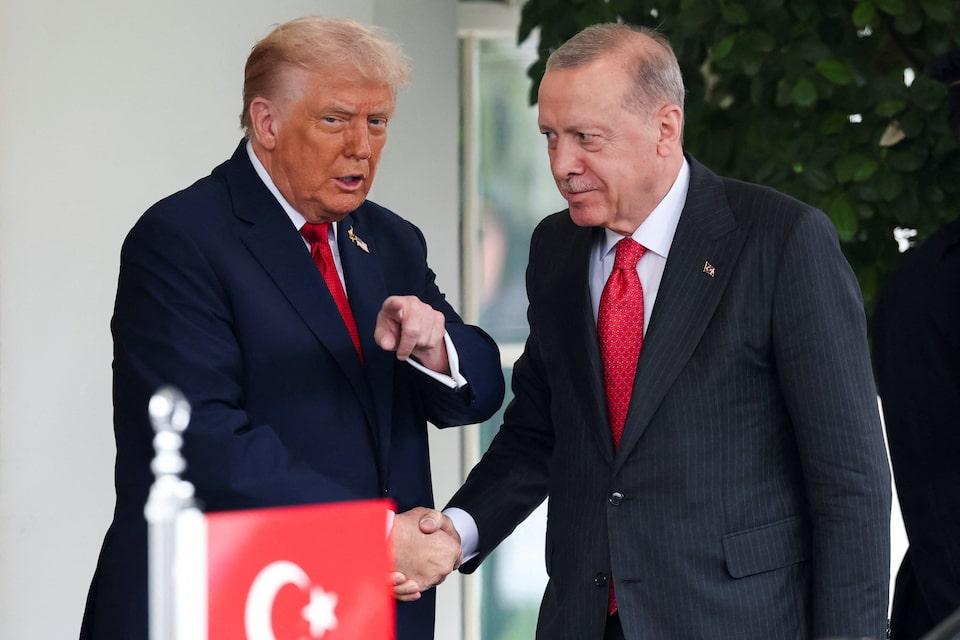
Trump says Erdogan will probably be successful in buying US F-35s Erdogan looks for lifting of US sanctions Trump, Erdogan aligned on Syria - but not Israel Boeing aircraft among expected trade deals WASHINGTON, Sept 25 (Reuters) - President Donald Trump said on Thursday he believes Turkey will agree to his request to stop purchasing Russian oil and that he may lift U.S. sanctions on Ankara so it can buy advanced American F-35 jets. Trump told reporters after his two hours of talks with Turkey's President Tayyip Erdogan that their meeting was "very conclusive" on a variety of issues but offered no further details about an announcement he said would be made later. Sign up here. Trump has been pressing European nations to stop purchases of Russian oil in exchange for his agreement to impose tough sanctions on Moscow to try to dry up funding for Russia's invasion of Ukraine. Frustrated by Russia's refusal to halt the fighting, Trump this week in a major shift said it was possible Ukraine could reclaim all the territory it has lost to Russia. Asked if Turkey will stop purchasing Russian oil, Trump sounded confident. "I believe he will stop it, yeah. You know why? Because he can buy it from a lot of other people," Trump said of Erdogan. Two other European nations, Hungary and Slovakia, also buy Russian oil. Trump seemed to give them a pass, saying they have limited ability to get energy elsewhere. ANKARA HOPING FOR CLOSER US TIES UNDER TRUMP Erdogan came to the White House for his first visit in about six years seeking Trump's approval to lift U.S. sanctions to allow for purchases of F-35 fighters. Seated side by side in the Oval Office, Trump called Erdogan a "very tough man" and said they remained friends while his predecessor Joe Biden was in office. Biden kept Turkey at arm's length partly over what he saw as the fellow NATO member's close ties with Russia. Ankara is keen to leverage the friendly personal relationship with Trump to further national interests and take advantage of a U.S. administration eager to make deals in return for big-ticket arms and trade agreements. When Trump and Erdogan took questions from reporters during their meeting, Trump sounded willing to make a deal to sell the F-35s. "I think he'll be successful in buying the things that he wants to buy," Trump said. Trump also said he could lift sanctions against Turkey "very soon," and that "if we have a good meeting, almost immediately." Trump and Erdogan - both seen as increasingly autocratic by their critics at home - had a checkered relationship during the Republican president's first term. But since Trump's return to the White House, their interests have aligned on Syria - the source of the biggest bilateral strain in the past - where the U.S. and Turkey now both strongly back the central government. US SANCTIONS BLOCK F-35 SALES A warming trend in ties has renewed Turkish hopes that Trump and Erdogan, who have exchanged mutual praise, can find a way around U.S. sanctions imposed by Trump himself in 2020 over Turkey's acquisition of Russian S-400 missile defenses. That, in turn, could pave the way for Ankara to buy Lockheed Martin's advanced (LMT.N) , opens new tab F-35 fighter jets, for which it was both a buyer and manufacturer until it was barred over the S-400s. Erdogan had said the defense industry, including the topic of F-35s and ongoing negotiations over 40 F-16 jets Ankara also wants, would be a focus of the meeting, along with regional wars, energy and trade. Turkey, NATO's second-largest army, wants to ramp up air power to counter what it sees as growing threats in the Middle East, Eastern Mediterranean and the Black Sea, where it neighbours Russia and Ukraine. https://www.reuters.com/business/aerospace-defense/white-house-erdogan-seek-deal-with-trump-f-35s-2025-09-25/
2025-09-25 22:38
IAEA monitors observed 22 drones near plant, some within 500 meters Zaporizhzhia plant without power for over 48 hours, using emergency generators IAEA head Grossi meeting Russia's President Putin in Moscow Sept 25 (Reuters) - A drone was downed and detonated about 800 metres (875 yards) from the perimeter of Ukraine's South Ukraine nuclear power plant overnight, the International Atomic Energy Agency said in a statement on Thursday. There were no reports of casualties, the IAEA said. Sign up here. The agency, in a statement issued by its Director General, Rafael Grossi, said its team of monitors at the site was informed that 22 drones were observed in the plant's monitoring zone late on Wednesday and early on Thursday. Some drones had flown as close as 500 metres. Grossi said monitors had heard gunfire and explosions at about 1 a.m. and later visited the site where the drone came down and observed a crater about four metres square. "Nearby metal structures had been hit by shrapnel and the windows of vehicles close to the impact area were shattered," Grossi wrote. A power line also came down, though it was not connected to the plant. "Once again, drones are flying far too close to nuclear power plants, putting nuclear safety at risk," he wrote. "Fortunately, last night's incident did not result in any damage to the South Ukraine Nuclear Power Plant itself. Next time we may not be so lucky." Ukraine has four nuclear power plants and has reported occasional incidents related to the 3-1/2 year war at its South Ukraine, Rivne and Khmelnitskyi stations. At the Zaporizhzhia station, seized by Russian troops in the first weeks of the war, Russia and Ukraine routinely accuse each other of attacks compromising nuclear safety. Grossi was attending a nuclear power forum in Moscow and, writing on the X social media platform, described his meeting with Kremlin leader Vladimir Putin as "timely and important". The meeting was devoted to "nuclear energy, non-proliferation, and nuclear safety and security challenges", he added. The governor of Russia's western Kursk region earlier in the day reported that a Ukrainian drone attempted to attack the Kursk-2 nuclear power plant, which is under construction in the town of Kurchatov. Alexander Khinshtein said the drone crashed into one of the buildings at the construction site, adding that there were no casualties and the station continues to operate normally. The IAEA's latest statement on the Ukrainian nuclear power plants said the Russian-held Zaporizhzhia station had been without power for more than 48 hours after external power lines supplying the plant came down for the 10th time in the conflict. The lines supply electricity vital to cooling its reactors' fuel and preventing a meltdown. Emergency diesel generators were in operation. https://www.reuters.com/world/europe/iaea-says-drone-detonated-near-ukraines-south-ukraine-nuclear-plant-2025-09-25/

2025-09-25 22:07
AREQUIPA, Sept 25 (Reuters) - American Lithium (LI.V) , opens new tab has raised its planned investment for the Falchani lithium project in Peru by 22% to $847 million, an executive said on Thursday, as it relaunches the project following a favorable court ruling that ended a legal dispute over its concessions. Ulises Solis, general manager of the company's local unit, Macusani Yellowcake, told Reuters that the updated cost includes the construction of a refinery at the project site in the Andean region of Puno. Sign up here. Solis stated that the company is now targeting a 2027 start for construction, with production of battery-grade lithium carbonate expected to begin after 2028. The relaunch follows a late-August ruling where Peru's top court confirmed Macusani Yellowcake's ownership of 32 concessions, resolving a legal challenge initiated by Peruvian mining authorities in 2018. "Investors were afraid of the outcome of the lawsuit," Solis said at a mining forum. With the legal uncertainty resolved, Solis noted the company is now in talks with potential Peruvian and foreign investors, including some from Germany. He added that Peru's mining minister will meet with company shareholders on October 7 to help advance the development of Falchani, the only lithium project in the country. https://www.reuters.com/markets/commodities/american-lithium-raises-peru-projects-investment-by-22-847-million-2025-09-25/

2025-09-25 21:52
NEW YORK, Sept 25 (Reuters) - A federal judge on Thursday dismissed "all remaining claims" in a slew of antitrust litigation accusing large banks of conspiring to rig Libor, an interest rate benchmark that once underpinned hundreds of trillions of dollars of transactions, at investors' expense. In a 273-page decision, U.S. District Judge Naomi Reice Buchwald said that despite 14 years of litigation, investors lacked sufficient evidence to prove they were defrauded in a "multi-year, sixteen-bank conspiracy" to suppress Libor and conceal that suppression. Sign up here. "The evidence they cite does not tend to exclude the possibility that the alleged conspirators acted independently," Buchwald wrote. Banks still involved in the cases included Bank of America (BAC.N) , opens new tab, Barclays (BARC.L) , opens new tab, Deutsche Bank (DBKGn.DE) , opens new tab, HSBC (HSBA.L) , opens new tab, JPMorgan Chase (JPM.N) , opens new tab, Lloyds (LLOY.L) , opens new tab, NatWest (NWG.L) , opens new tab, Portigon, Rabobank, Royal Bank of Canada (RY.TO) , opens new tab and UBS (UBSG.S) , opens new tab. According to the plaintiffs, emails, chatroom discussions, phone calls, deposition testimony and expert analysis showed the banks kept Libor "artificially low." This allegedly inflated earnings and made the banks appear healthier than they were, including during the 2008 global financial crisis, the plaintiffs said. The plaintiffs included Principal Financial Group (PFG.O) , opens new tab, the cities of Baltimore and Houston, many California counties, Yale University, Fannie Mae (FNMA.PK) , opens new tab, Freddie Mac (FMCC.PK) , opens new tab, and the FDIC in its role as a receiver for failed banks, among others. Lawyers for the plaintiffs did not immediately respond to requests for comment. Bank of America, the first named defendant in most lawsuits covered by Buchwald's decision, declined to comment. Banks used Libor, or the London Interbank Offered Rate, to set interest rates on more than $300 trillion of financial products including credit cards, student loans and mortgages, and determine the cost of borrowing from each other. Libor was phased out in January 2022, after banks paid about $9 billion of fines to settle Libor-rigging probes worldwide. The case is In re Libor-Based Financial Instruments Antitrust Litigation, U.S. District Court, Southern District of New York, No. 11-02262. (This story has been corrected to identify Bank of America as a defendant, corresponding with the list of bank defendants, in paragraph 9) https://www.reuters.com/legal/government/big-banks-win-dismissal-libor-rigging-litigation-new-york-2025-09-25/