2025-09-25 21:51
Citi to sound more investors in coming months Deal a positive step for Citi's divestment from Banamex Chico Pardo's stake a 'long-term' investment Banamex looking to boost loan book share MEXICO CITY, Sept 25 (Reuters) - Citigroup (C.N) , opens new tab will look for more minority investors in its Mexican retail unit, Banamex, before launching a potential initial public offering, executives said on Thursday. Citi will sound out top Mexican investors in the coming months, though it will look to sell stakes much smaller than the 25% that billionaire Fernando Chico Pardo will buy, Ernesto Torres, Citi's head of international, told journalists. Sign up here. The lender announced on Wednesday that Chico Pardo, who chairs airport operator ASUR (ASURB.MX) , opens new tab, would purchase the sizeable stake in Banamex for $2.3 billion. STEP TOWARD BANAMEX EXIT The deal comes after Citi struggled for years to find a buyer for Banamex, with a deal with conglomerate Grupo Mexico, controlled by billionaire German Larrea, falling through. Analysts saw the announcement as a positive step toward Citigroup's complete divestment from Banamex. The price of the stake values the full unit at around $9.12 billion, effectively creating a "floor" for an IPO, they said. Citi bought Banamex in a $12.5 billion deal in 2001. "At least it gives clarity on how much a full divestiture could raise," said Mike Mayo, Wells Fargo's bank analyst, in a phone interview. When asked by Reuters, Torres declined to provide more detail on Citi's decision to accept an offer below book value. BANAMEX BACK IN MEXICAN HANDS Locally, Chico Pardo's purchase was cheered, with Mexican President Claudia Sheinbaum praising the bank's return to Mexican hands after decades of foreign control. Sheinbaum's predecessor and mentor, Andres Manuel Lopez Obrador, put conditions on any Citi deal, such as requiring the firm be majority controlled by Mexicans and prohibiting layoffs. That interference led to Larrea scrapping his Banamex offer, sources told Reuters at the time. Sheinbaum, however, did not place any conditions, Chico Pardo said. The businessman said that his purchase was self-funded and he would not look to grow his stake beyond the 25%. "I consider this a very long-term investment, a transgenerational one. My children are going to have to carry this on," he said. Chico Pardo admitted that he had not participated in the first round of bidding for the unit, as he "didn't understand it," but began talks with Citi in the past several months. The businessman is married to the sister of Roberto Hernandez, the former owner and CEO of Banamex. NEXT FOR BANAMEX Chico Pardo and Manuel Romo, CEO of Banamex, said that Banamex is now looking to take back some of the market share it lost. The unit holds around 6% of total loans in Mexico, compared to its peak of 18% in 2009 when it was operating as Citibanamex, Goldman Sachs analysts said. Banamex plans to grow through expanding its online offerings and boosting its client service, executives said. "There are plenty of areas where we still haven't made headway, in terms of financial services," Chico Pardo said. While executives largely declined to speak about a potential IPO on Thursday, analysts estimated that the timeline could be mid- to late-2026 instead of at the beginning of the year as previously expected. The deal with Chico Pardo raises equity similar to the first share sale in an IPO, Bank of America analyst Ebrahim Poonawala noted, as Citi had estimated it would sell 15% to 20% in the first transaction. https://www.reuters.com/business/finance/citi-turn-more-minority-investors-after-banamex-stake-sale-2025-09-25/

2025-09-25 21:43
WASHINGTON, Sept 25 (Reuters) - U.S. President Donald Trump said on Thursday that the United States would give proceeds from tariff revenues to farmers. "We're going to take some of that tariff money and give it to our farmers," Trump said at the White House. Sign up here. The U.S. farm economy is slumping this year due to low crop prices and trade disputes. Republican lawmakers have warned that farmers are facing significant losses and have urged the administration to issue aid by the end of the year. Agriculture Secretary Brooke Rollins has said the administration is weighing an aid program , opens new tab modeled after the approach taken by the previous Trump administration, when farmers were given billions to offset losses from a trade war with China. Farmers are "for a little while going to be hurt, until it kicks in, the tariffs kick in to their benefit," Trump said. "Ultimately, the farmers are going to be making a fortune," he said. https://www.reuters.com/world/us/trump-says-us-will-distribute-aid-farmers-until-tariffs-kick-their-benefit-2025-09-25/

2025-09-25 21:30
WASHINGTON, September 25 - The risk of a partial U.S. government shutdown beginning next week is rising as congressional Democrats and Republicans hit an impasse over how to continue to fund the federal government. A shutdown could affect financial markets by limiting the operations of financial regulators and delaying the publication of key economic data. Sign up here. How might markets react? Historically, markets have tended to shrug off shutdowns. However, this time could be different. A prolonged shutdown risks delaying or canceling key economic data releases investors use to assess macroeconomic trends, such as the monthly employment and inflation reports, analysts at Nomura said in a note this week. That would mean the Federal Reserve is “flying blind”, making it more likely to stick with its own economic projections of two 25-basis-point rate cuts for the rest of 2025, the analysts said. With investors unable to assess the extent of a U.S. economic slowdown, the Treasury yield curve could steepen further as rate cuts get priced in with more conviction, leading to a wider gap between short- and long-dated Treasury yields, TD Securities said in a note. A lengthy government shutdown could also affect some market participants' ability to conduct complex trades for which they may require regulatory guidance. What happens to financial regulators? The White House asked federal agencies on Wednesday , opens new tab to prepare plans for mass firings, marking a sharp departure from the temporary furloughs of workers typically seen during past shutdowns. It was not clear whether the White House was trying to take advantage of a possible shutdown to advance U.S. President Donald Trump's push to slash the federal workforce, or whether it was a negotiating tactic to force Democrats to agree to pass the Republicans' funding legislation. A typical shutdown would likely reduce the U.S. Securities and Exchange Commission (SEC) to a skeletal staff, according to its October 2024 plan , opens new tab for a lapse in government funding. This would severely limit the agency’s ability to review corporate filings, investigate misconduct, and oversee markets. Likewise, the Commodity Futures Trading Commission would furlough almost all of its employees and cease most market oversight activity, according to its 2024 contingency plan , opens new tab. Previous government shutdowns have caused delays in the CFTC publishing reports on traders' positions in futures and options markets. The banking regulators and consumer watchdog, which are not funded by congressional appropriations, will remain functional. In 2019, a protracted government shutdown slowed down some of Trump's deregulatory efforts in part because of staff furloughs at the Office of the Federal Register, which must formally publish all steps in the rule-writing process, Reuters reported at the time. Will IPOs be affected? Yes. A shutdown would likely freeze the IPO pipeline. Companies planning to go public would be unable to proceed without the SEC's approval, potentially dampening momentum in the equity capital markets, which have enjoyed an IPO boom in recent months. https://www.reuters.com/sustainability/boards-policy-regulation/how-us-government-shutdown-could-affect-financial-markets-2025-09-25/
2025-09-25 21:26
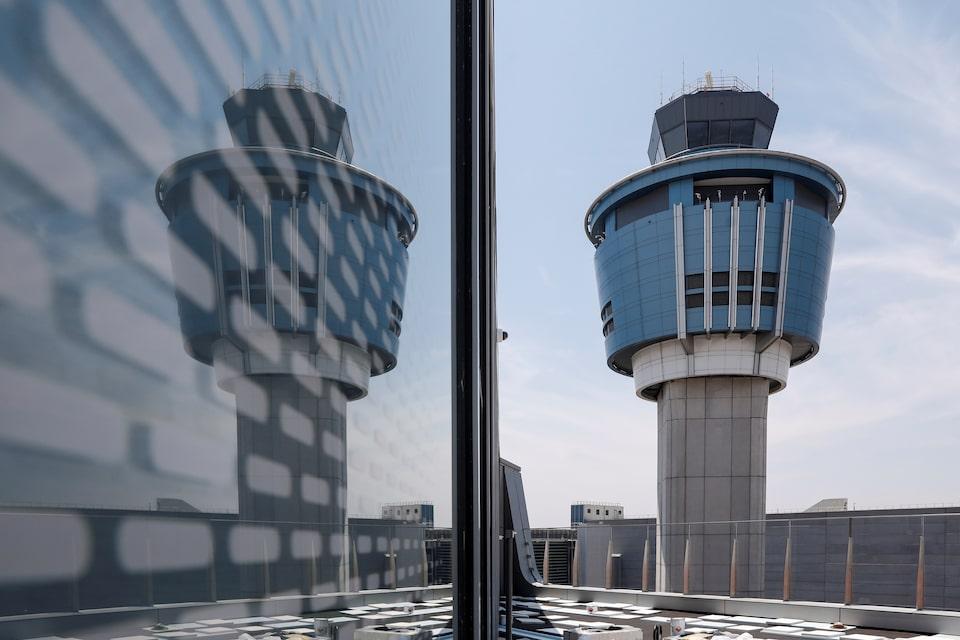
WASHINGTON, Sept 25 (Reuters) - A partial U.S. government shutdown next week would halt air traffic controller hiring and training and cost the U.S. travel sector $1 billion per week, an industry group said on Thursday. The U.S. Travel Association, which represents airlines, hotels, car rental firms and other travel companies, called on Congress to act swiftly to keep the federal government open, warning of the impacts of an understaffed air traffic control system. Sign up here. "The consequences of inaction are immediate and severe," the group said, saying it would worsen staffing shortages of Transportation Security Administration airport security officers and air traffic controllers, "threatening longer airport security lines, flight delays, and cancellations." The Federal Aviation Administration said that under its shutdown plan released in March it would not be able to conduct air traffic controller hiring or field training of air traffic controllers, but the air traffic controller academy in Oklahoma City could continue using prior year funding. It is not clear how long the academy could operate without new funding. Air traffic controllers and about 50,000 Transportation Security Administration employees that staff airport checkpoints are among the government workers who would be required to keep working but would not be paid. The FAA said last week it has hired 2,000 new controllers this year who are in training and plans to hire another 2,200 over the next 12 months. Congress in July approved $12.5 billion to begin a massive overhaul over five years. A persistent shortage of controllers has delayed flights and many are working mandatory overtime and six-day weeks. The FAA is about 3,000 air traffic controllers short of targeted staffing levels. In 2019 during a 35-day shutdown, the number of absences by controllers and TSA officers rose as workers missed paychecks, extending checkpoint wait times at some airports. The FAA was forced to slow air traffic in New York, which put pressure on lawmakers to quickly end the standoff. https://www.reuters.com/business/aerospace-defense/us-funding-lapse-would-halt-air-traffic-controller-training-group-says-2025-09-25/
2025-09-25 21:02
ORLANDO, Florida, Sept 25 (Reuters) - World stocks posted their biggest fall in more than three weeks and the dollar rose on Thursday, as surprisingly strong U.S. growth figures cast doubt on how aggressive the Federal Reserve's interest rate-cutting cycle will be. In my column today I look at the reasons why the Fed may one day consider replacing its current 2% inflation target with an inflation range. Atlanta Fed President Raphael Bostic likes the idea. Will other Fed officials be so keen? Sign up here. If you have more time to read, here are a few articles I recommend to help you make sense of what happened in markets today. Today's Key Market Moves Today's Talking Points: * Back and froth Investors calling the bursting of the AI/tech bubble and the equity market top in recent months have been burned badly. And often. So why should this current wobble be any different? There may be no obvious reason or catalyst. The risks are well-known by now - stretched valuations, positioning, concentration, and faith in AI's productivity-enhancing powers. And the Fed is cutting rates now, so that's more fuel for the rally, right? Perhaps. Or perhaps it marks the contrarian top. * Crypto blues After rebounding some 65% from its April lows, bitcoin seems to have hit a ceiling. The world's biggest cryptocurrency has mostly flatlined over the last three months, a period in which it has reached its record high around $124,000. Its underperformance against gold, tech and stocks more broadly is beginning to deepen, especially in the last month - down 7% in that period versus gold's 11% rise. Rising Treasury yields are putting fiat dollar in a more attractive light too. * Debt ceiling? What debt ceiling? Global debt stands at a record high of $337.7 trillion, an Institute of International Finance report showed on Thursday, driven by easing global financial conditions, a weaker dollar and accommodative policy from major central banks. Global debt has risen $21 trillion in the first half of the year. These are big numbers, but should we be worried? It's something to keep an eye on, of course, but as world growth and activity rises so should borrowing. And as a share of GDP, debt actually fell again, to a five-year low. Also, one man's debt is another man's asset, right? Fed could abandon 'illusion of precision' with inflation range There's little prospect of the Federal Reserve changing its 2% inflation target right now. But the composition of the Fed's board is changing and Jerome Powell's term as Fed Chair expires in May, so could discussions about an alternative to the fixed 2% target soon begin to percolate? Figures on Friday are expected to show that U.S. inflation in August exceeded the Fed's 2% goal for the 54th month in a row. Even accounting for all the shocks of recent years and inbuilt flexibility in the Fed's post-COVID inflation framework, that's a long time for a central bank to miss its target. And there's every likelihood that inflation won't get back to 2% for several more months, probably years. Fed officials' median projections don't expect headline or core PCE inflation to get back to 2% until 2028. Even that timeline could prove to be tough. The Fed has a dual mandate, and rising risks to the employment side of it have prompted the central bank to resume its interest rate-cutting cycle. But financial conditions are the loosest in years and growth is still humming along at a decent clip, so rate cuts now could stoke price pressures further. The Fed failing to meet its inflation target is hardly new. But the longer inflation stays above target, the more likely it is that credibility in the target and the Fed's policymaking more broadly could erode. That may encourage the Fed to rethink the target altogether. 'ILLUSION OF PRECISION' Changing a target that's been missed every month for over four years - essentially moving the goal posts - is certainly not a good look. That said, trial balloons are best floated early, and one potential alternative to the current target is an inflation range, which some Fed officials have nodded to recently, most notably Atlanta Fed President Raphael Bostic. In an interview with George Mason University senior research fellow David Beckworth on the Macro Musings podcast this week, Bostic said he would be open to a range in the future. "Sometimes there's this illusion of precision, that we can move inflation to the third decimal place. I don't really think that's real," Bostic said. "In today's environment, we're at 2.4 (percent), 2.6, 2.8, somewhere in that range, and people are asking, is that 2 (percent)? For me? No, my range would be narrower, but it's a good conversation to have," he said, adding that 1.75% to 2.25% would be a good start. An inflation range carries the obvious advantage of providing policymakers with more flexibility than a specific point. It would give the Fed more license to have inflation above 2% while technically being in breach of its stated goal. The wider the range, the greater the leeway, although on the flip side, inflation momentum could build up rapidly if left unchecked, forcing uncomfortably aggressive policy responses. 'VAGUER AND LONGER' While ranges are most prevalent in emerging markets where economic volatility is usually high, they are also used by monetary authorities in advanced economies like Canada, Australia and New Zealand. Central banks still appear to prefer more precise inflation targets rather than ranges. At least that was the conclusion the Bank for International Settlements came to in a recent study of 26 central banks that had implemented some form of inflation targeting since 1990. However, the BIS also found that the time horizon allowed to meet these more rigid targets has gotten "vaguer and longer" over time. The latter part of that would certainly apply to the Fed - four and a half years and counting. And if Fed officials think it might take another three years to right the ship, consumers are even more pessimistic. The latest University of Michigan survey of consumers shows one-year inflation expectations at 4.8% and five-year expectations at 3.9%. These may be on the high side given the apparent fragility of the labor market, but the Fed still won't be happy to see figures this elevated, as unanchored inflation expectations can lead to a wage-price spiral. In economics, gradual change is usually preferred, at least by markets. So rather than making an abrupt move to a higher inflation target down the line, adopting an inflation range – which the Fed essentially already has – may be something more officials will join Atlanta Fed President Bostic in considering. What could move markets tomorrow? Want to receive Trading Day in your inbox every weekday morning? Sign up for my newsletter here. Opinions expressed are those of the author. They do not reflect the views of Reuters News, which, under the Trust Principles , opens new tab, is committed to integrity, independence, and freedom from bias. https://www.reuters.com/business/global-markets-trading-day-graphic-2025-09-25/
2025-09-25 21:00
WASHINGTON, Sept 25 (Reuters) - Electric vehicle manufacturer Tesla (TSLA.O) , opens new tab urged the Trump administration not to repeal vehicle emissions standards or the long-standing U.S. finding that greenhouse gas emissions endanger human health. Tesla said in comments posted on Thursday that the Environmental Protection Agency's proposal to repeal the standards "would give a pass to engine and vehicle manufacturers for all measurement, control, and reporting of GHG emissions for any highway engine and vehicle." Sign up here. Earlier this week, a group representing General Motors , opens new tab(GM.N) , opens new tab Toyota (7203.T) , opens new tab, Volkswagen (VOWG.DE) , opens new tab and nearly all other major automakers, asked the EPA to roll back its aggressive vehicle emissions limits that seek to force the industry to build a rising number of electric vehicles. Tesla stands to lose billions of dollars in regulatory credits sold over the coming years as a result of the Trump administration's dismantling of green vehicle rules. Last year, Tesla said it received $2.8 billion in global revenue from earning regulatory credits for selling zero-emission EVs, and from selling those credits to other automakers seeking to meet vehicle emissions targets. Republican Senator Bernie Moreno of Ohio said at a hearing in July that the costs automakers paid Tesla to be in compliance were "outrageous." The EPA’s proposed action "undermines the stability of this program, diminishes the value of performance-based incentives that electric vehicle manufacturers accrue under the standards, and creates an uneven playing field - reducing the inducement for investment in vehicle innovation," Tesla said. In 2019, Tesla began spending $25 per vehicle to generate credits by using environmentally friendly air conditioning. "This investment ultimately amounted to tens of millions of dollars when scaled over millions of vehicles produced for North America since this time," Tesla said. Tesla CEO Elon Musk was a close adviser to U.S. President Donald Trump, before they had a public feud earlier this year. Trump suggested Musk's objection to a major budget bill was because it eliminated consumer tax credits for electric vehicles, which will end on September 30. In July, the administration told automakers they face no fines for failing to meet fuel efficiency rules dating back to the 2022 model year. Trump in June signed a resolution of disapproval under the Congressional Review Act to bar California's landmark plan to end the sale of gasoline-only vehicles by 2035. https://www.reuters.com/sustainability/climate-energy/tesla-urges-trump-not-repeal-vehicle-emissions-rules-climate-finding-2025-09-25/