2025-09-25 11:24
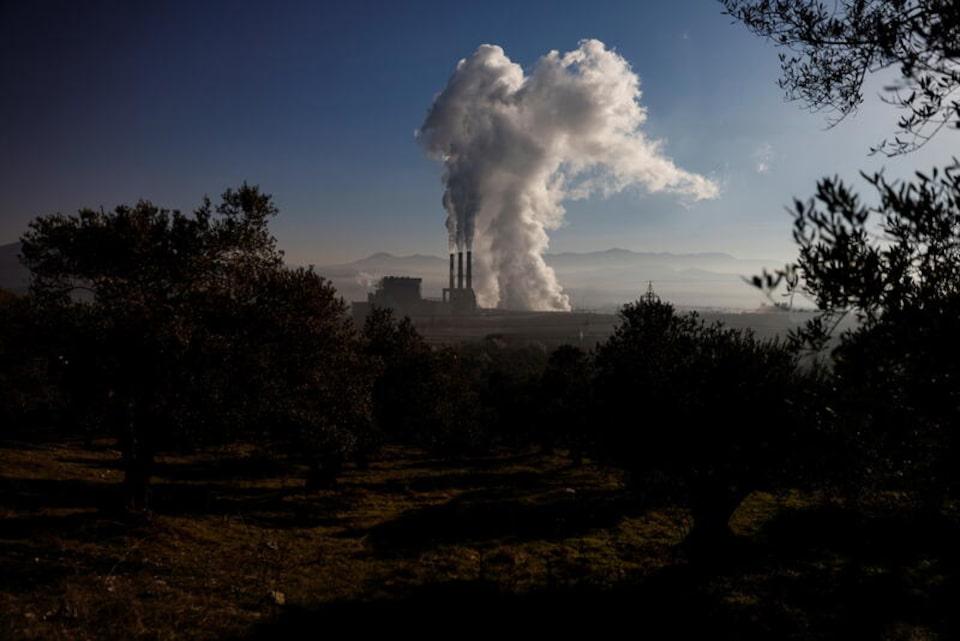
Sept 25 (Reuters) - China's net gold imports via Hong Kong in August fell 39.11% from July, Hong Kong Census and Statistics Department data showed on Thursday. WHY IT'S IMPORTANT As the world's leading gold consumer, China's purchasing activities can significantly influence global gold markets. Sign up here. The Hong Kong data may not provide a complete picture of Chinese purchases, as gold is also imported via Shanghai and Beijing. BY THE NUMBERS Net imports via Hong Kong to China for August stood at 26.746 metric tons, compared to 43.923 tons of net imports in July. China's total gold imports via Hong Kong reached 40.892 tons in August, down 29.85% from 58.296 tons in July. CONTEXT China's gold imports in August fell 3.4% from July, customs data showed on Saturday. Dealers in the top gold consumer last week offered discounts of $21-$36 per ounce over global benchmark spot prices , the deepest since May 2020, compared to $17-$24 the previous week. China's central bank added gold to its reserves in August, extending purchases into a 10th straight month, official data showed. Spot gold hit a record high of $3,790.82 earlier this week. KEY QUOTE The drop in net imports via Hong Kong is driven by "continued economic stress that is severely undermining jewellery demand", StoneX analyst Rhona O'Connell said, adding that there has been a partial shift towards platinum jewellery given the difference in price of the two metals. Global demand for platinum jewellery is expected to rise by 11% to 2.2 million troy ounces in 2025, the World Platinum Investment Council said. "The weakness in offtake has seen Shanghai (gold) prices go to a deep discount to offshore prices," O'Connell said. https://www.reuters.com/markets/asia/chinas-august-net-gold-imports-via-hong-kong-fall-39-july-2025-09-25/
2025-09-25 11:21
TSX ends down 0.1% at 29,731.98 Tech sector falls 2.5% Constellation Software loses 6% as president resigns Materials group adds 1.1% TORONTO, Sept 25 (Reuters) - Canada's main stock index ended lower on Thursday for a third straight day as technology shares lost ground, but the commodity-linked market's decline was limited after data showed stronger-than-expected growth in the U.S. economy. Toronto's S&P/TSX composite index (.GSPTSE) , opens new tab ended down 24.97 points, or 0.1%, at 29,731.98, extending its pullback from a record closing high on Monday. Sign up here. U.S. gross domestic product increased at an upwardly revised 3.8% annualized rate in the second quarter amid strong consumer spending and business investment. "We really have this dynamic that there are a lot of concerns but the risks have been pushed back just because of (consumer) spending ... and there's potential for that momentum to continue and for the Q3 numbers to show strength as well," said Ben Jang, a portfolio manager at Nicola Wealth. The Atlanta Fed's GDPNow model has estimated U.S. annualized growth of 3.3% in the current quarter. Canadian GDP data for July, due on Friday, is expected to show the economy expanding by 0.1% compared to the previous month. The technology sector fell 2.5%, with shares of Constellation Software down 6% as company president Mark Leonard resigned for health reasons. "He's extremely well regarded in the community. His name carries a lot of weight," Jang said. "The firm has a very strong culture and a really structured process for capital allocation so they should be able to continue fine without him as president." BlackBerry (BB.TO) , opens new tab was a bright spot. Its shares rose 9.1% as the company raised its annual revenue forecast. The materials group (.GSPTTMT) , opens new tab, which includes metal mining shares, also advanced. It rose 1.1%, as the price of gold moved closer to its recent record high. Lithium Americas (LAC.TO) , opens new tab added to its sharp gains the day before, ending up 23.1%. https://www.reuters.com/markets/europe/tsx-futures-muted-after-record-rally-september-2025-09-25/
2025-09-25 11:09
NEW YORK, Sept 25 (Reuters) - The Managed Fund Association, a global trade group for the hedge fund and private credit industry, said on Thursday it backs the Trump administration's push to let retirement savers shoot for bigger returns and diversify with more private equity, credit, cryptocurrency and real estate assets, but said safeguards must be erected. The group, whose members include global investors Bridgewater, Blackstone (BX.N) , opens new tab and Apollo (APO.N) , opens new tab, set out a list of principles after President Donald Trump issued an executive order aimed at allowing more alternative assets into 401(k) retirement plans. Sign up here. MFA's member firms stand to benefit from the executive order, which could open up some of the trillions of dollars that Americans have saved in such retirement plans. Advocates argue alternative assets can offer better returns, especially for younger savers. Critics worry those investments are riskier, less transparent, and carry higher fees than the public equities thee plans traditionally favor. MFA said access to "a flexible and wide range of options" is best for savers at all stages of their lives and careers as long as there are appropriate safeguards in place. It said the fees associated with those investments should be evaluated in light of the potential returns, and warned against making plan sponsors select or exclude specific types of asset. The group also said that "overzealous litigation must be addressed" and called on policymakers to prioritize actions to curb lawsuits that have been blamed for discouraging plan managers from offering this kind of investment. Wall Street's main regulatory agency, the Securities and Exchange Commission, is working on ways to facilitate these investments while protecting everyday savers from bad actors and fraud, SEC chief Paul Atkins said last week. https://www.reuters.com/sustainability/boards-policy-regulation/fund-group-calls-clear-rules-private-assets-us-401ks-2025-09-25/

2025-09-25 11:06
FTSE 100 down 0.22%, FTSE 250 down 0.25% British medical equipment shares slide on US tariffs fears Petershill Partners hits four-year high amid delisting plan Mitchells & Butler dives on weak Q4 sales growth Sept 25 (Reuters) - London stocks edged lower on Thursday as investors turned cautious over inflation risks and Bank of England's interest rate outlook, while weakness in medical equipment shares added to the drag. The benchmark FTSE 100 (.FTSE) , opens new tab fell 0.22% at 0909 GMT, while the domestically focused FTSE 250 (.FTMC) , opens new tab was down 0.25%. Sign up here. BoE policymaker Megan Greene said on Wednesday that the risks of inflation in Britain will prove stronger than the central bank's forecast, meriting a cautious approach to further interest rate cuts. At its meeting this month, the BoE suggested it could slow the pace of its rate reductions due to persistent inflation pressures in Britain. The country has the highest inflation rate among Group of Seven economies, at 3.8% in August, and the BoE thinks it will peak at 4% in September before falling back to the central bank's 2% target in the spring of 2027. In the market, medical equipment and services stocks (.FTNMX201020) , opens new tab fell 2.2% after the U.S. Commerce Department said it has opened new national security investigations into the import of personal protective equipment, medical items, robotics, and industrial machinery. British medical equipment maker Convatec Group (CTEC.L) , opens new tab was the biggest decliner on the FTSE 100, falling 6.1%. Construction and materials (.FTNMX501010) , opens new tab was also among the top declining sub-sectors, down 1.3%, tracking losses in European peers. Mitchells & Butlers (MAB.L) , opens new tab fell 6.6% after the British pub and restaurant operator reported a weak sales growth compared to previous quarter. Petershill Partners (PHLL.L) , opens new tab jumped 33.1% after the investment group, majority owned by Goldman Sachs, became the latest UK-listed firm to announce plans to delist from the London Stock Exchange, citing dissatisfaction with its share price and valuation. An index of industrial metal miners (.FTNMX551020) , opens new tab continued gains from the previous session, up 1.8%, as copper struck a fresh 15-month high on Thursday. Rio Tinto (RIO.L) , opens new tab and Anglo American (AAL.L) , opens new tab were among the top gainers in the FTSE 100, up 2.8% and 1.8%, respectively. Across the Atlantic, at least seven Federal Reserve officials are due to speak later on Thursday. Traders hope they will offer greater clarity on how far and fast U.S. interest rates will drop. https://www.reuters.com/world/uk/london-stocks-slip-boe-policymaker-flags-inflation-concerns-2025-09-25/
2025-09-25 11:02
LONDON, Sept 25 (Reuters) - The pound held steady against the dollar on Thursday, as investors weighed up concerns about Britian's finances, in light of weaker demand at a UK government bond auction. Sterling was flat at $1.34495 around midday in London. Sign up here. It was steady against the euro , which traded at 87.36 pence. The UK Debt Management Office sold 1.25 billion pounds ($1.68 billion) of 4.5% 2034 gilts via tender on Thursday, with a bid-to-cover ratio of 2.90 and an average yield of 4.584%. July's 1.5 billion pound sale of this bond drew a cover ratio of 3.32 and an average yield of 4.553%, signaling investor demand has softened. "The drop in gilt demand highlights investor impatience with uncertainty and could keep markets volatile until the budget," Lale Akoner, global market analyst at eToro, said. Akoner said that the budget will need to deliver credible fiscal tightening, otherwise the UK risks testing investor confidence further, which could push up the government's long-term borrowing costs if investors decide to sell their holdings of gilts. British finance minister Rachel Reeves is seeking a balance between raising taxes and supporting growth in her November 26 budget. She has been under growing pressure to keep the UK's finances on track, while sticking to her own fiscal rules. UK gilt yields are among the highest in developed economies. The 10-year gilt is currently around 4.695%, compared with 4.146% for U.S. debt and 2.74% for 10-year German Bunds . Piotr Matys, senior FX analyst at InTouch Capital Markets, said that if sterling ends the week well below the $1.35 level, it could trigger a further downward retracement, as the dollar regains its status as the "'cleanest dirty shirt' in G10 currencies amid persistent UK public finance concerns." ($1 = 0.7433 pounds) https://www.reuters.com/world/uk/sterling-holds-steady-investors-weigh-uk-fiscal-risk-2025-09-25/
2025-09-25 11:00
LITTLETON, Colorado, Sept 25 (Reuters) - Turkey's skilled workforce and low energy costs have made it a popular destination for businesses looking to develop supply chains on the doorstep of both Europe and Central Asia. But the industrial boom has come with a stiff pollution penalty. So far in 2025, power firms in Turkey have emitted more carbon dioxide (CO2) than any other European nation, supplanting Germany as the region's largest power polluter. Sign up here. Rising emissions reflect the country's fast-growing power needs, which have surged as companies built or expanded production capacity in Turkey to exploit its proximity to European consumers and reduce reliance on Asian factory hubs. Between 2019 and 2024, Turkey's electricity demand rose by 14%, according to data from energy think tank Ember, which contrasted with a decline in Europe's overall electricity demand over the same period. The diverging power trends highlight how the practice of nearshoring capacity to Turkey has not only revved up its entire industrial economy, but has also spurred a major shift in polluting activities to Turkey from other locations. CHEAP POWER In addition to a large labor pool and good logistical connections to world markets, Turkey's low power costs have been a major lure for manufacturers and heavy industry. Between mid-2022 and late 2024 - when most European power prices surged following Russia's invasion of Ukraine - Turkey's average electricity prices declined thanks to hefty government subsidies designed to shield consumers from inflation. Turkey's household consumer prices averaged around 5.5 euro cents per kilowatt hour (kWh) in late 2024, compared to 7.5 euro cents/kWh in mid-2022, data from Eurostat shows. That roughly 25% fall in Turkish electricity prices contrasts sharply with the electricity price trend in Germany - Europe's most established manufacturing and industrial hub - over the 2022 to 2024 period. Germany's consumer electricity prices rose from around 19 euro cents/kWh in 2022 to close to 28 euro cents/kWh by late 2024, which represented a nearly 50% rise. And while business power costs differ to household consumer electricity prices in both countries, Turkey's industrial power costs are also substantially below those in Germany and tend to move in line with electricity prices. INDUSTRIAL-SCALE IMPACT The impact of the build-up in production capacity in Turkey is clear from output data of key commodities and components made in the country. What's more, production trends of those same items in Germany also showcase the effects of Turkey's relatively lower energy costs compared to Germany since 2022. Over the past five years or so, Turkey's production of several energy-intensive commodities including cement, chemicals and refined products has steadily climbed. Over that time frame, German production of those same items has contracted, revealing a swing in production capacity from Germany to Turkey driven in part by the wide energy cost differential between the countries. BUILDING MOMENTUM Turkey's output of more developed products and goods has also climbed to record highs in recent years just as output of those same materials and goods has fallen to multi-year lows in Germany. This growth in both energy-intensive commodities and in higher-value products and components indicates Turkey's economy has the potential to grow further and boost wealth for its population. However, the country's economy also faces substantial risks in the form of high inflation, rising government debt levels and a weakening currency that is eroding national purchasing power. Turkey's production hubs are also heavily reliant on European countries for consumers, and therefore face the risk of a collective downturn in demand in the event of any Europe-wide recessions. However, strong logistical links to the Middle East, North Africa and Central Asia help to diversify Turkey's consumer market risks and mean that Turkey-made products have strong sales potential into those markets. The Middle East and Africa are also fast-growing markets for the cement, building materials and basic chemicals made in Turkey. That large consumer base on Turkey's doorstep bodes well for commodities and raw material producers in Turkey, but suggests the associated pollution will grow alongside and stands to make Turkey a new major emitter on the global stage. The opinions expressed here are those of the author, a columnist for Reuters. Enjoying this column? Check out Reuters Open Interest (ROI), your essential new source for global financial commentary. ROI delivers thought-provoking, data-driven analysis of everything from swap rates to soybeans. Markets are moving faster than ever. ROI can help you keep up. Follow ROI on LinkedIn , opens new tab and X , opens new tab. https://www.reuters.com/markets/commodities/turkeys-nearshoring-boom-comes-with-climate-catch-2025-09-25/