2025-09-25 07:59
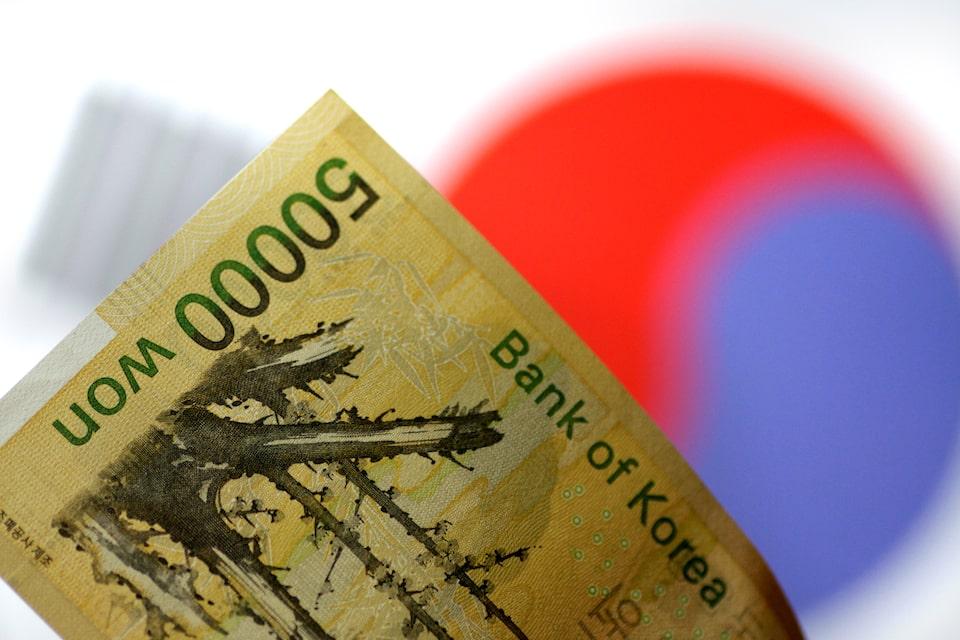
Korean won breaks 1,400 to dollar amid trade talk uncertainties Lee Jae Myung calls for FX swap line with Federal Reserve Deadlock over $350 billion investment fund structure with U.S SEOUL, Sept 25 (Reuters) - South Korea's trade talks with the Trump administration have become increasingly dogged by political doubts this week, spooking investors who now worry Seoul may end up with a raw deal or perhaps no deal at all. The Korean won broke through the psychologically important 1,400 to the dollar level on Thursday, seen by markets as authorities' line in the sand against bearish speculative bets and opening the way for further downside. Sign up here. The selling gained momentum this week after South Korean President Lee Jae Myung said on Monday Asia's fourth-largest economy would need a currency swap agreement with the U.S. if it accepted Washington's demands to invest $350 billion in America. Lee's pessimism has raised public concerns that U.S. demands could lead to a financial crisis like the one Korea experienced in 1997 or completely scupper a trade agreement, a major competitive blow to the export powerhouse. "If an agreement goes ahead as the direct cash flows as demanded by the U.S., it will create new dollar demand of about $100 billion to $120 billion annually, which will be a significant upward pressure for the dollar-won rate," Lee Sang-beom of KB Securities said. Without a swap in place, KB Securities estimates that channeling $350 billion in direct investment to the U.S. may push the won down by 100 won per dollar a year through the next three years. That is partly why President Lee is calling for an FX swap line with the Federal Reserve akin to the one the Bank of Japan has in place with the U.S. However, Citigroup said the U.S. "is less likely to accept the unlimited swap lines between the Bank of Korea and the Fed, as the Fed would recommend the FIMA Repo-Facility instead," economist Kim Jin-wook said in a note, referring to an alternative dollar liquidity measure in exchange for their U.S. treasury securities. A Korean finance ministry official and the Bank of Korea's currency chief declined to comment. Seoul and Washington are currently in a deadlock over how to structure a $350 billion investment fund the two agreed in principle as part of a broader trade deal that caps tariffs at 15% on goods from South Korea. If the deal is not finalised, South Korean imports could face higher tariffs of 25%, not 15% as agreed, making Korean goods more expensive for American consumers as competing goods from Japan and Europe face 15% tariffs. LONG SHADOWS OF CRISES PAST While Seoul has made some modest progress to make the won more global, memories of foreign exchange crisis in the late 1990s make it difficult for officials to loosen tight currency restrictions. Unlike the yen, the dollar-won has no offshore market and the Korean currency accounts for about 2% of global FX trade, against 17% for the yen. South Korea's history of impeaching presidents is also shaping political thinking around trade talks. While impeachment risks for Lee are low, he has publicly spoken about the pressure he faces to put the national interests first. A financial crisis could quickly generate opposition within his own support base at a time when many are already fuming over immigration raids on Korean firms in Georgia. Seoul has said that the investment should be a combination of investments and loan guarantees provided by policy financial institutions. The U.S., on the other hand, demands South Korea agree to similar terms outlined in Japan’s deal, in which Tokyo agreed to transfer cash within 45 days after the U.S. selects a project. "President Lee Jae Myung is mentioning he may get impeached if he accepts such deal in his rhetoric to show the deal can't be done as is," Professor Kim Tae-hwang at Myongji University said, adding risk of Lee's impeachment is unlikely given that the ruling party has the majority in parliament. For now, the combination of the political and financial risks clouding a prospective trade deal, which many investors see as a lose-lose situation for the Korean economy, is compounding pressure on the won. "If the $350 billion of outflows were to be priced in, the won could easily slide to 1,450 per dollar," a local FX dealer said, asking not to be named. "It's wobbly now because of the uncertainties, the won will immediately decline for sure if the transfer of money starts." https://www.reuters.com/world/asia-pacific/koreas-wobbles-over-us-trade-talks-awaken-won-bears-2025-09-25/
2025-09-25 07:50
SNB says Trump tariffs will hit Swiss economy Central bank holds rates for first time in seven meetings Inflation has recently crept back into target range SNB chairman says prepared to cut rates again if needed ZURICH, Sept 25 (Reuters) - The Swiss National Bank held its benchmark interest rate at zero on Thursday, the lowest among major central banks, as it warned that U.S. President Donald Trump's tariffs had dimmed the outlook for the Swiss economy going into 2026. The SNB's decision to keep its policy rate at 0% had been widely expected by markets and a Reuters poll, and was helped by a small uptick in inflation in recent months. Sign up here. It was the first hold in seven meetings by the SNB, after it started reducing borrowing costs in March 2024. The announcement was the SNB's first rate decision since Trump slapped a huge 39% tariff on Swiss goods exports to the United States in August. The franc drifted lower against the euro , which was last up 0.1% at 0.9345 francs, while the dollar was up 0.13% at 0.796 francs. ECONOMIC OUTLOOK HURT BY TARIFFS The SNB said companies in the machinery and watchmaking sectors are particularly affected by tariffs but the impact on other industries - notably in services - has been limited. Overall, however, it said the outlook had deteriorated due to the U.S. levies. "The U.S. tariffs present a major challenge... and are likely to dampen economic activity," Chairman Martin Schlegel told reporters. The SNB now expects growth of just under 1% for 2026, down from its previous forecast for 1% to 1.5% growth. Unemployment would also rise, it said. The government is trying to negotiate a lower tariff with Washington, with plans including buying more U.S. military equipment and liquefied natural gas. NEGATIVE RATES NOT RULED OUT Analysts also highlighted the Swiss franc's relative stability versus the euro as a reason to stay on hold. "The main downside risk to the economy and inflation stems from U.S. trade policy and its impact on global growth to which a small open economy like Switzerland is very sensitive," said GianLuigi Mandruzzato, an economist at EFG Bank. Mandruzzato said the impact of tariffs appeared to be "manageable" and several analysts predicted that the SNB would now leave its benchmark rate at zero as it anticipates a gradual increase in inflationary pressure. SNB Chairman Martin Schlegel repeated his position that there are high hurdles to reintroducing negative rates, which sparked concerns from savers and pension funds when used from December 2014 to September 2022. But the SNB is prepared to cut rates again if necessary, Schlegel told reporters. Schlegel pointed to the bank's forecast for inflation to stay in its 0-2% target range in the coming quarters but said he was ready to act if inflation fell below target. "Yes, we are prepared to cut further if it is required," Schlegel said. "But the bar to go negative is higher." "We can have negative inflation prints in the short term, but in the medium term we need to achieve price stability," he said. With inflation still low, however, Adrian Prettejohn, Europe economist at Capital Economics, forecast the SNB will lower rates again. "We do not think that this is the end of the rate cutting cycle," he said. "We think that inflation is likely to average around zero next year, prompting the SNB to cut rates in the coming quarters to reduce the risk of deflation." https://www.reuters.com/business/finance/swiss-national-bank-keeps-interest-rate-zero-2025-09-25/

2025-09-25 07:18
BANGKOK, Sept 25 (Reuters) - Thailand's finance minister said on Thursday that the country needs to take heed of warnings by ratings agency Fitch, which downgraded its outlook for the Thai economy this week, adding that it would consider new stimulus measures next month. Fitch revised its outlook to "negative" from "stable", saying that ongoing political uncertainties were posing a growing risk to Thailand's public finances. Sign up here. "We must take Fitch's warning seriously. Fiscal discipline is crucial," said Finance Minister Ekniti Nitithanprapas, speaking to reporters. The Thai cabinet will consider a new economic stimulus scheme as early as October, and is aiming for a long-term GDP growth rate of 3%, he added. "The economic policy will be announced soon, but the core directive from the Prime Minister is to ensure rapid recovery and long-term focus," he said. Thailand's new Prime Minister Anutin Charnvirakul said earlier on Thursday that he would work to build confidence in his country's economy following the Fitch downgrade. https://www.reuters.com/world/asia-pacific/thai-finance-minister-says-country-must-heed-fitch-warning-2025-09-25/

2025-09-25 06:44
New company based in the Netherlands, CEO to be appointed soon Move a sign of banks' increased openness to digital markets ECB sceptical of stablecoins, says pose policy, stability risks Euro-backed stablecoins just a fraction of world market FRANKFURT, Sept 25 (Reuters) - A consortium of nine European banks, including heavyweights ING (INGA.AS) , opens new tab and UniCredit (CRDI.MI) , opens new tab, said on Thursday they are forming a new company to launch a euro-denominated stablecoin, a move they hope will help counter U.S. digital market dominance. A host of top U.S. financial firms have been preparing to launch their own dollar-backed crypto tokens after President Donald Trump signed a law overseeing rules for stablecoins that could further cement U.S. hegemony. Sign up here. The use of stablecoins - designed to maintain a constant value and backed by traditional currencies - has exploded in recent years, notably among crypto traders moving funds to and from more volatile tokens. But they are also used in mainstream digital payments and cross-border transactions. The European banks' new Amsterdam-based company is expected to launch its stablecoin in the second half of next year. US STABLECOIN DOMINANCE, ECB REMAINS SCEPTICAL While global stablecoin issuance stands at nearly $300 billion, euro-denominated stablecoins totalled just $620 million, according to figures released last week by the Bank of Italy, with dollar-pegged tokens overwhelmingly dominant. "The initiative will provide a real European alternative to the U.S.-dominated stablecoin market, contributing to Europe's strategic autonomy in payments," the banks said. They launched the effort, which they said will create a token that can be used for quick, low-cost payments and settlements, even as the European Central Bank voices scepticism over stablecoins. ECB President Christine Lagarde in June told European policymakers that privately issued stablecoins posed risks for monetary policy and financial stability. As a safer alternative, she has urged European lawmakers to introduce legislation backing the launch of a digital version of the EU's single currency. Some commercial banks, however, have pushed back against the introduction of a digital euro, fearing that it would empty their coffers as customers transfer cash out of banks and into the safety of an ECB-guaranteed wallet. EUROPE UNDER PRESSURE, RISK OF BEING LEFT BEHIND In addition to ING and UniCredit, the other banks participating in the new company include Banca Sella (BSEL.HT) , opens new tab, KBC (KBC.BR) , opens new tab, DekaBank, Danske Bank (DANSKE.CO) , opens new tab, SEB (SEBa.ST) , opens new tab, Caixabank (CABK.MC) , opens new tab and Raiffeisen Bank International (RBIV.VI) , opens new tab. They said that others could join the initiative, and a CEO for the company would be appointed soon. A recent report by Deutsche Bank highlighted that emerging market economies, in particular, are adopting dollar-based stablecoins to replace local deposits and cash. "This has created a global monetary dilemma: countries should adopt stablecoins or risk being left behind. Europe is under particular pressure," the report said. Societe Generale's (SOGN.PA) , opens new tab crypto arm, SG-FORGE, launched a euro-based stablecoin in 2023, although it has not been widely adopted, with just 56.2 million euros ($66 million) in circulation, according to its website. The French bank also launched a U.S.-dollar stablecoin earlier this year, with circulation of just $32.25 million. Bank of America (BAC.N) , opens new tab and Citigroup (C.N) , opens new tab are among the U.S. banks that have been considering issuing their own stablecoins. Few banks, however, have actually launched one, and the industry remains dominated by non-bank players such as Tether (.CMUSDTUSD) , opens new tab and Circle (.CMEUROCUSD) , opens new tab(.CMUSDCUSD) , opens new tab. ($1 = 0.8513 euros) https://www.reuters.com/business/finance/big-european-banks-form-company-launch-stablecoin-2025-09-25/
2025-09-25 06:40
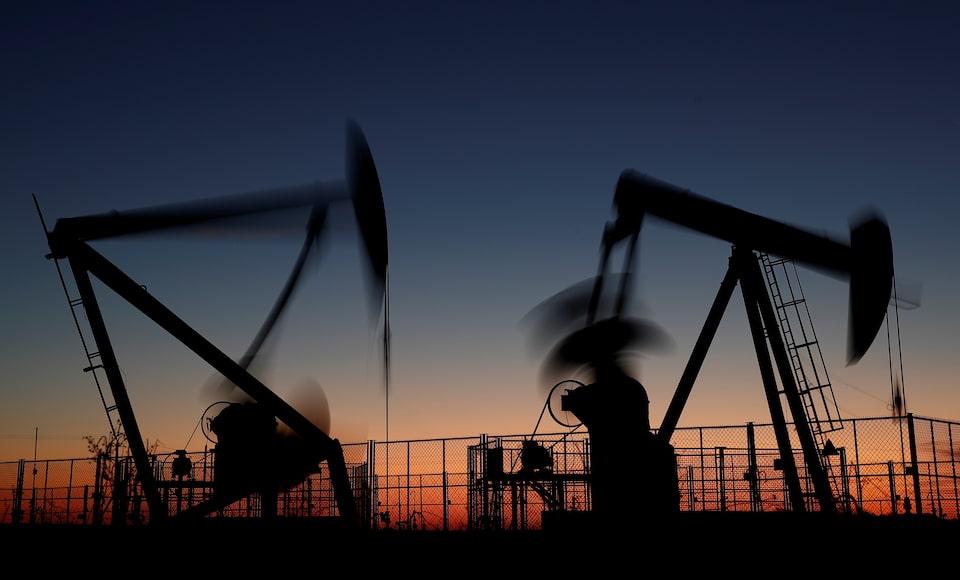
U.S. economic data tempers optimism for further Fed rate cuts Oversupply concerns back in focus for fourth quarter Russia to introduce a partial ban on diesel exports until the end of the year NEW YORK, Sept 25 (Reuters) - Oil prices steadied on Thursday after hitting a seven-week high in the previous session as Russia moved to restrict fuel exports until the end of the year, but the gains were limited by new U.S. economic data that tempered optimism around further interest rate cuts. Brent futures settled 11 cents, or 0.16%, higher at $69.42 a barrel while U.S. West Texas Intermediate futures lost 1 cent, or 0.02%, to $64.98. Sign up here. Both benchmarks gained 2.5% on Wednesday to reach their highest since August 1, driven by a surprise drop in U.S. weekly crude inventories and concerns that Ukraine's attacks on Russia's energy infrastructure could disrupt supplies. Oil received more support after Russian Deputy Prime Minister Alexander Novak said on Thursday the country would introduce a partial ban on diesel exports until the end of the year and extend an existing ban on gasoline exports, following a spate of Ukrainian drone attacks on Russian refineries. Capping some gains, U.S. gross domestic product increased at an upwardly revised 3.8% annualized rate last quarter, the Commerce Department's Bureau of Economic Analysis said in its latest estimate on Thursday. "The initial reaction on that was a sell-off," said Phil Flynn, a senior analyst at Price Futures Group. Stronger than expected economic data would make the Federal Reserve more cautious about cutting interest rates. The U.S. central bank cut rates by 25 bps last week, its first cut since December, and had signaled more reductions ahead. Price pressure also came from bearish expectations on supply fundamentals, with more oil expected from Iraq and Kurdistan. The Kurdistan Regional Government announced on Thursday that oil exports would resume within 48 hours after the tripartite agreement among Iraq's oil ministry, the KRG ministry of natural resources and producing companies. "The return of Kurdish supplies adds back fears of an oversupply narrative, propelling a pullback in prices that hover near a seven-week high," said Priyanka Sachdeva, senior market analyst at Phillip Nova. https://www.reuters.com/business/energy/oil-prices-dip-investors-take-profits-after-seven-week-high-2025-09-25/
2025-09-25 06:29
TOKYO, Sept 25 (Reuters) - There is a small gap between Nippon Steel (5401.T) , opens new tab and the U.S. government over the authority of a golden share tied to its acquisition of U.S. Steel, the Japanese steelmaker's president said on Thursday. Last week, the Wall Steet Journal reported that the administration of U.S. President Donald Trump had blocked U.S. Steel's plan to shut down production at one of its plants in Illinois, flexing its so-called golden share authority, citing a person familiar with the matter. Sign up here. "There is minor difference in views regarding the national security agreements and the authority of the golden share," Nippon Steel President Tadashi Imai told reporters when asked about the report. He did not elaborate, but said the recent U.S. move reflected the Trump administration's policy of protecting domestic production bases and jobs across various sectors. "Through the execution of concrete investment projects, we aim to steadily enhance US Steel's competitiveness and advance our partnership," Imai said. Japan's top steelmaker closed its $14.9 billion acquisition of U.S. Steel in June, agreeing to give Washington unusual power to help end its 18-month battle to reach a deal. The national security agreement with the Trump administration granted Washington a non-economic golden share. U.S. Steel said on Wednesday its board approved the next phase of capital investments worth $300 million, part of Nippon Steel's $11 billion commitment. About $100 million will go toward a slag recycler at the Edgar Thomson Plant in Pennsylvania, and about $200 million toward upgrades to the hot strip mill at Gary Works in Indiana, the company said, adding the projects aim to modernize operations and strengthen capabilities. Nippon Steel plans to announce a new mid- and long-term business strategy for U.S. Steel as well as for Nippon Steel by the end of this year, Imai said. https://www.reuters.com/business/nippon-steel-sees-small-gap-with-washington-over-us-steels-golden-share-2025-09-25/