2025-09-24 20:52
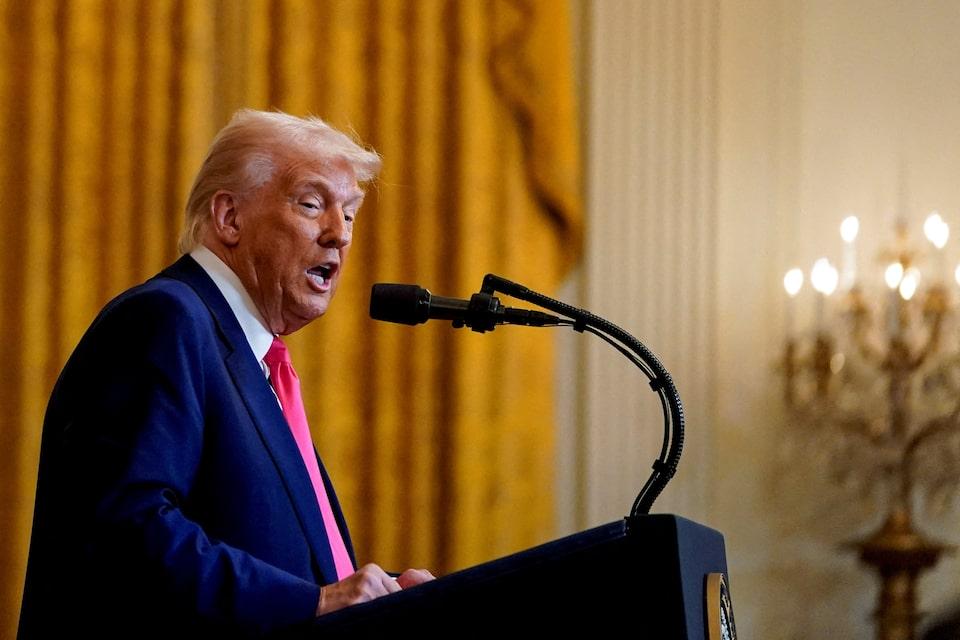
China announces plans for first-ever emissions cuts, targeting 7-10% by 2035 Xi rebukes climate retreat by "some countries" in veiled reference to United States New country pledges still fall short for holding global warming in check Sept 24 (Reuters) - China led several countries in announcing new climate plans on Wednesday and offered a veiled rebuke of the U.S. president's anti-climate rhetoric a day earlier at the U.N. General Assembly. Addressing a climate leaders’ summit hosted by U.N. Secretary-General Antonio Guterres, Chinese President Xi Jinping said in a live video message from Beijing that by 2035 his country would cut its greenhouse gas emissions by 7%-10% from its peak. Sign up here. In addition, Xi said China planned to increase its wind and solar power capacity by six times from its 2020 levels within the next 10 years – helping to boost its share of non-fossil fuels in domestic energy consumption to over 30%. China's reduction target marked the first time the world's biggest emitter pledged a cut in emissions, rather than just limiting their growth, though the reduction was less than many observers had expected. Xi urged stronger climate action from the world's developed countries. He referred, though not by name, to the United States for moving away from the goals of the Paris Agreement on climate change. "Green and low-carbon transformation is the trend of our times. Despite some countries going against the trend, the international community should stay on the right track, maintain unwavering confidence, unwavering action, and undiminished efforts," Xi said. On Tuesday, U.S. President Donald Trump used his U.N. General Assembly speech to blast climate change as a "con job", to call scientists “stupid” and to criticize EU member states and China for embracing clean energy technologies. Trump ordered a second withdrawal by Washington from the 10-year-old Paris treaty, which aimed to prevent global temperatures from rising beyond 1.5 degrees Celsius through national climate plans. The U.S. is the world's biggest historical greenhouse gas emitter and second biggest current emitter behind China. Ian Bremmer, a political scientist with the Belfer Center, said Trump's climate denial speech had effectively ceded the market for post-carbon energy to the Chinese. "Trump wants fossil fuels and the United States is indeed a powerful petro-state,” Bremmer said. “But letting China become the world’s sole powerful electro-state is the opposite of making America great again … at least if you care about the future.” Observers had been hoping that China would seize on the U.S. retreat as a moment to announce a reduction target of at least 30% to stay in line with its past goal of net-zero emissions by 2060. Li Shuo, director of the China Climate Hub at the Asia Society, said China's announcement was underwhelming in light of its rapid production of renewable energy and electric vehicles. "Beijing's commitment represents a cautious move that extends a long-standing political tradition of prioritizing steady, predictable decision-making but also hides a more significant economic reality," he said. Li noted, however, that China's dominance in green technology and Washington's retreat could push China toward a more proactive role on the global stage. WORLD IS STILL SHORT ON AMBITION Despite pressure for significant new climate commitments ahead of this year’s COP30 summit in Brazil, Wednesday’s announcements failed to impress. Environmental groups and observers said pledges by some of the world's biggest economies fell well short of where they should be in emissions reductions, given the rapidly worsening impacts of climate change. Brazilian President Luis Inacio Lula da Silva warned that countries’ commitments made ahead of the U.N. climate summit in November would show the world "whether or not we believe in what the science is showing us." Brazil has committed to reducing emissions by 59%-67% by 2035 and to stepping up efforts to combat deforestation. "Society is going to stop believing its leaders," Lula said. "And all of us will lose because denialism may actually win." Guterres, who hosted the summit on the sidelines of the U.N. General Assembly, assured that the world was making progress in the energy transition, even if it was slow. "The Paris Agreement has made a difference," Guterres said in prepared remarks, noting that actions taken under the 2015 treaty had lowered the projected rise in the average global temperature to from 4 degrees C to 2.6 degrees C. That’s still far from the treaty’s stated goal of holding to 1.5 degrees C. Already the world has warmed more than 1.2 degrees C from the preindustrial average. "Now, we need new plans for 2035 that go much further, much faster," Guterres said. The European Union has not yet reached agreement on its new U.N.-mandated climate target, instead drafting plans to submit a temporary goal, which could change. EU President Ursula Van der Leyen told the summit the EU was on track to reach its 2030 target of slashing emissions 55% by 2030, and the bloc’s 2035 reduction goal would range between 66% and 72%. Australia, which plans to host a 2026 UN climate summit, announced a pledge that by 2035, it would slash greenhouse gas to between 62% and 70% below 2005 levels. "We want to bring the world with us on climate change, not by asking any nation to forgo the jobs or security that its people deserve, but by working with every nation to seize and share those opportunities," Australia Prime Minister Anthony Albanese said. The South Pacific island nation of Palau, representing the 39-member Alliance of Small Island States, announced its own goal of slashing emissions to 44% of 2015 levels by 2035. Palau’s President Surangel Whipps reminded leaders of the advisory opinion issued by the International Court of Justice earlier this year affirming an "obligation grounded in international law" for countries to take stronger measures to curb their emissions. "Those with the greatest responsibility and the greatest capacity to act must do far more," he said, in reference to the world’s industrialized nations. https://www.reuters.com/sustainability/cop/un-chief-tells-countries-new-climate-targets-must-go-futher-faster-2025-09-24/
2025-09-24 20:44
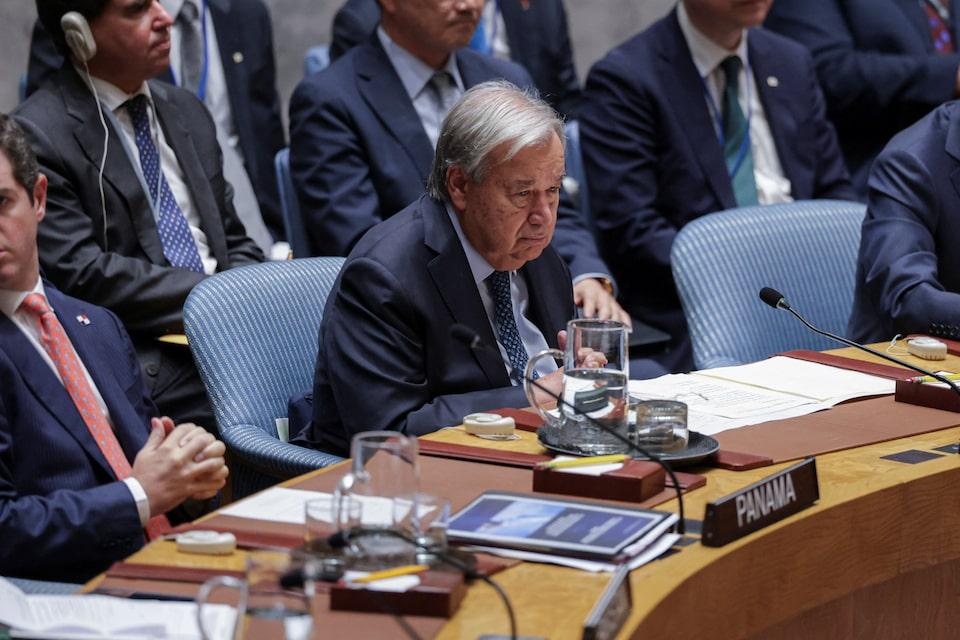
Sept 24 (Reuters) - The U.S. Department of Energy intends to cancel more than $13 billion in funds that the Biden administration had pledged to subsidize wind, solar, batteries and electric vehicles, it said on Wednesday. It was not immediately clear which funds were being targeted. The department did not immediately respond to a request for more details. Sign up here. "By returning these funds to the American taxpayer, the Trump administration is affirming its commitment to advancing more affordable, reliable and secure American energy and being more responsible stewards of taxpayer dollars," the department said. The announcement generated sharp criticism from California Governor Gavin Newsom, who said the U.S. was ceding leadership on clean energy to China. California, the most populous U.S. state, has among the most ambitious clean energy and greenhouse gas emissions reduction goals in the world. "(Chinese) President Xi, I don't know what else he's got to applaud. ... I think he's going to give (President Donald) Trump a bear hug when he arrives," Newsom said during an appearance at a New York Times event on climate change. Trump said this week that he planned to meet with Xi in person in the coming weeks. The news came a day after Trumpdismissed climate change as "the greatest con job" in the world during his address to the United Nations General Assembly, doubling down on his skepticism of global environmental initiatives and multilateral institutions. Trump has pushed to maximize the output of oil and gas, which were already at record production when he returned to office in January, while cutting subsidies for renewable energy and EVs. Energy Secretary Chris Wright mentioned cancelling the funds in a press conference in New York earlier in the day. Wright said Trump sent a message that the UN and many countries "have just gotten wildly off track with climate change, exaggerating it into the world's greatest threat. It has spurred massive amounts of spending with very little positive impact." But jobs in solar, wind and other clean energy industries grew three times faster than in the rest of the U.S. workforce in 2024, said a study published by environmental advocacy group E2 last week, saying that many of them could go due to Trump's efforts to block renewables. Wright also said that he has no plans to go to UN climate talks in Brazil in November. But Wright said he enjoys talking about energy and climate with people who see things differently than him, so "nothing is impossible" when it comes to his participation in Brazil. https://www.reuters.com/sustainability/climate-energy/us-intends-cancel-13-billion-funds-green-energy-2025-09-24/
2025-09-24 20:31
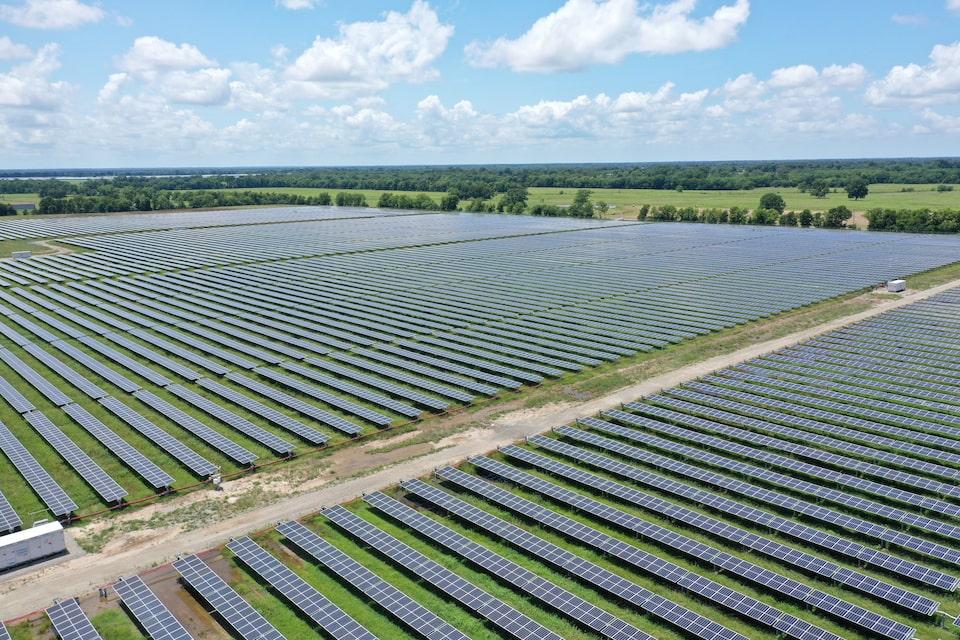
TSX ends down 0.2% at 29,756.95 Materials group falls 0.8% as gold pulls back Energy gains 1.3% as oil settles up 2.5% Lithium Americas shares jump 97.9% Sept 24 (Reuters) - Canada's main stock index edged lower on Wednesday, weighed by declines for financial and metal mining shares, as the approach of the end of the quarter spurred investors to take stock of recent strong gains for the market. The S&P/TSX composite index (.GSPTSE) , opens new tab ended down 58.68 points, or 0.2%, at 29,756.95, extending its pullback from a record closing high on Monday. Still, the index was on track for a gain of 10.8% in the third quarter, which would be its fifth straight quarterly advance. Sign up here. U.S. stocks also closed lower for a second straight session as investors booked profits with indexes near record levels after Federal Reserve Chair Jerome Powell flagged potentially stretched stock prices and ahead of a reading on inflation later in the week. "Markets have gone up so much that they were due for a rest," said Colin Cieszynski, chief market strategist at SIA Wealth Management. "We're getting close to the end of the month and the end of the quarter and there's been nothing new in the way of news to keep the market going." Heavily weighted financials lost 0.7% and the materials group (.GSPTTMT) , opens new tab, which includes fertilizer companies and metal mining shares, was down 0.8%. The price of gold declined 0.9%, pulling back from a record high. Among the sectors that notched gains was energy (.SPTTEN) , opens new tab. It was up 1.3%, with shares of Vermilion Energy (VET.TO) , opens new tab adding 2.9%. The price of oil settled 2.5% higher at $64.99 a barrel after a surprise drop in U.S. crude inventories added to the market's sense of tightening supplies. Lithium Americas (LAC.TO) , opens new tab shares jumped 97.9% after Reuters reported that the Trump administration is seeking up to a 10% stake in the lithium company. It was the latest sign of Washington's intervention in industries it considers critical to national security. https://www.reuters.com/markets/europe/tsx-futures-rise-after-indexs-halted-rally-2025-09-24/

2025-09-24 20:24
Freeport-McMoRan tumbles after outlook; declares force majeure Lithium Americas soars after report Trump administration mulling stake Oracle dips after report it is looking to raise $15 bln in bond sales Indexes down: Dow 0.37%, S&P 500 0.28%, Nasdaq 0.33% NEW YORK, Sept 24 (Reuters) - U.S. stocks closed lower for a second straight session on Wednesday, as investors booked profits with indexes near record levels after Federal Reserve Chair Jerome Powell flagged potentially stretched stock prices and ahead of a reading on inflation later in the week. Investors are trying to gauge the trajectory of rate cuts from the central bank as it attempts to buttress an economy that has shown signs of a flagging labor market without stoking inflation. Sign up here. With each of the three major indexes, along with the small-cap Russell 2000 (.RUT) , opens new tab, closing at record highs simultaneously for the first time in years earlier this week, Powell said on Tuesday that asset prices appeared fairly highly valued. As his colleagues staked out arguments on both sides of the policy divide, the Fed chair emphasized the tightrope the central bank must walk in upcoming policy decisions. To some analysts, the comments were reminiscent of those by former Fed Chair Alan Greenspan, who said in a 1996 speech that "irrational exuberance" had pushed up asset values. Last week's Fed rate cut helped lift equities in September, typically a weak month for stocks, with investors now banking on further easing to keep the rally alive. "With the S&P pricing in 23-24 times expected earnings and expectations priced into that multiple of about 15% annualized earnings growth over the next five years, that sounds pretty rich to me," said Ron Albahary, chief investment officer at LNW in Philadelphia. "So not that we're market timers at all, but the idea that people might be using this, using the Fed's comments, Powell's comments as just a reason to trim back a little bit makes sense to me." The Dow Jones Industrial Average (.DJI) , opens new tab fell 171.50 points, or 0.37%, to 46,121.28, the S&P 500 (.SPX) , opens new tab lost 18.94 points, or 0.28%, to 6,637.98 and the Nasdaq Composite (.IXIC) , opens new tab lost 75.62 points, or 0.33%, to 22,497.86. Some valuation measures for stocks are at their highest level since 2021, and a further climb would elevate them to thresholds not seen in decades, at the height of the internet boom. Materials (.SPLRCM) , opens new tab fell 1.6% and was the worst-performing of the S&P 500 sectors, as Freeport-McMoRan (FCX.N) , opens new tab plunged 17% after it declared force majeure at its Grasberg mine in Indonesia and said it is expecting consolidated sales to be lower for copper and gold in the third quarter. On the plus side, the S&P 500 energy index (.SPNY) , opens new tab rose 1.2% as the best-performing sector, tracking higher crude prices, which rose to a seven-week high after a surprise drop in U.S. weekly crude inventories. Data released on Wednesday showed the sales of freshly constructed single-family U.S. homes unexpectedly surged by 20.5% in August. In company news, Lithium Americas' U.S.-listed shares nearly doubled to close at $6.01 after Reuters reported on Tuesday that President Donald Trump's administration was seeking an equity stake of up to 10% in the company. Talks are under way to discuss a government loan exceeding $2.26 billion for the company's Thacker Pass lithium project with General Motors (GM.N) , opens new tab, which advanced 2.3%. UBS also upgraded the automaker to "buy" from "neutral." Micron Technology (MU.O) , opens new tab ended 2.8% lower after the memory chipmaker reported quarterly results. Oracle (ORCL.N) , opens new tab declined 1.7% after Bloomberg News said the company was looking to raise $15 billion in corporate bond sales. Investors' attention will now shift to the personal consumption expenditures data, the Fed's preferred inflation gauge, due for release later this week. Declining issues outnumbered advancers by a 1.88-to-1 ratio on the NYSE and by a 1.35-to-1 ratio on the Nasdaq. The S&P 500 posted 21 new 52-week highs and 10 new lows, while the Nasdaq Composite recorded 85 new highs and 55 new lows. Volume on U.S. exchanges was 18.04 billion shares, compared with the 17.75 billion average for the full session over the last 20 trading days. https://www.reuters.com/business/sp-500-nasdaq-futures-tick-up-investors-weigh-powells-remarks-2025-09-24/

2025-09-24 20:17
Slovakia faces pressure to cut Russian energy ties amid EU sanctions Blanar calls for empathy, highlights economic impact of breaking contracts Slovakia advocates diplomatic solutions over military action in Ukraine conflict UNITED NATIONS, Sept 24 (Reuters) - (This Sept. 24 story has been corrected to specify that LNG is being phased out, not all Russian energy imports, in paragraph 4) Slovakia on Wednesday pushed back on pressure it is facing to cut back its purchases of Russian energy, saying it was ready to discuss the issue, but singled out some European states for increasing their gas purchases from Moscow. Sign up here. Populist-led Slovakia and Hungary - both EU members - have sought to maintain political ties with Russia, which supplies the majority of their oil needs, and have argued that it would be too costly to wean themselves off Russian supplies after building their infrastructure around it. But they have over the last couple of weeks come under further pressure after U.S. President Donald Trump , opens new tab said he wanted to see the bloc completely end its Russian energy purchases. That prompted the EU to bring forward in a 19th sanctions package on Russia with the aim of phasing out Russian LNG imports by the start of 2027 - a year earlier than planned. EU countries are meanwhile negotiating legal proposals to end imports of all Russian fossil fuels - including oil and pipeline gas - by the start of 2028. The EU sanctions proposal still requires unanimous backing from EU member states. Hungary and Slovakia have vowed to oppose new sanctions on Russian energy, but the LNG ban is designed to spare them, since it wouldn't affect the Russian fuel they still receive by pipeline. "We don't have any other options which could be sustainable and also for the price to be reasonable," Foreign Minister Juraj Blanar told Reuters in an interview on the sidelines of the UN General Assembly. "It takes time to diversify this. So that's why we are calling for some kind of empathy," adding that in any case sanctions had not worked to change the course of the war. The West has imposed tens of thousands of sanctions on Russia over its 3-1/2-year-old war in Ukraine, and its 2014 annexation of Crimea, in a bid to hobble Russia's economy. Blanar, whose country has previously held up packages before a compromise was finally reached, said Slovakia could lose as much as 10 billion euros if it were to break some contracts that run until 2034. HYPOCRISY Suggesting that exemptions and possible future compensation should be considered, he also said the bloc should tackle high electricity prices. Blanar, who held talks in New York with Russian Foreign Minister Sergei Lavrov, said there was a certain hypocrisy to criticizing Slovakia when liquefied natural gas purchases from Russia to Western Europe had increased by 30% over the last year. "France, Spain, and the Netherlands... so can you see the picture is a little bit more colourful than black and white," he said. Blanar dismissed categorisations that Slovakia and Hungary were the black sheep in Europe for continuing to engage with Moscow, arguing that there would not be a military solution to the war and that as Trump had himself done it was necessary to engage with Moscow. "Any forcible change of internationally recognised borders is unacceptable for the Slovak Republic and what we were (saying) from the very beginning was that this war doesn't have any military solution. Let's proceed with any diplomatic effort," he said. "We have been calling for that for more than three and a half years. And once more, I have to state very clearly, if it weren't for Trump, the peace negotiation would never have started." https://www.reuters.com/business/energy/slovakia-pushes-back-pressure-over-russia-energy-purchases-2025-09-24/

2025-09-24 19:58
Trump administration has slashed billions in foreign aid Democrat says effort subverts Congress' control over US spending Money shifts to Trump priorities like minerals, Greenland WASHINGTON, Sept 24 (Reuters) - The Trump administration intends to shift $1.8 billion in foreign aid funding toward "America First" initiatives such as pursuing investments in Greenland and countering "Marxist, anti-American regimes" in Latin America, according to a document sent to Congress. "The national security interests of the United States require that the United States utilize these foreign assistance funds to meet new challenges in ways that make America safer, stronger, or more prosperous," according to the Congressional Notification reviewed by Reuters on Wednesday. Sign up here. The administration's plan to shift the funding from programs previously authorized by Congress was first reported by The Washington Post. A State Department spokesperson said the department looked forward to working with Congress "on America First Foreign Assistance," saying foreign assistance programs must align with administration policies. "The United States will prioritize trade over aid, opportunity over dependency, and investment over assistance," the spokesperson said in an emailed statement. President Donald Trump's administration has been pursuing a massive overhaul of foreign assistance since the Republican began his second term in January. The strategy is a departure from the long-held assumption that food, medical and economic assistance is an important "soft power" component of U.S. global influence. In the notification, dated September 12, the administration says the $1.8 billion would be obligated for programs to "strengthen U.S. global leadership," to focus on several areas central to Trump administration policy. These include diversifying critical mineral supply chains, promoting strategic infrastructure investment and development, countering China's influence and "addressing the immigration crisis." The document says $400 million would support efforts involving Europe, including energy and critical minerals programming in Ukraine and economic development and conservation work in Greenland. Trump has said he wants to take control of Greenland, a semi-autonomous territory within the Kingdom of Denmark. The strategically located island is rich in oil, natural gas and many minerals needed for high-tech industries. In the western hemisphere, the document says, $400 million would support activities to end illegal immigration to the U.S., counter China's dominance in critical minerals and artificial intelligence and "confront the Marxist, anti-American regimes of Venezuela, Cuba and Nicaragua." USAID DISMANTLED Since January, the administration has dismantled the U.S. Agency for International Development, frozen and then slashed billions of dollars of foreign aid, saying it wants to ensure U.S. taxpayer money goes only to programs aligned with Trump's "America First" policies. The cutbacks effectively shut down USAID, leading to the firing of thousands of its employees and contractors. That jeopardized the delivery of life-saving food and medical aid and has thrown global humanitarian relief operations into chaos. Senator Jeanne Shaheen of New Hampshire, the top Democrat on the Senate Foreign Relations Committee, said the plan outlined in the notification subverted Congress' power, outlined in the Constitution, to control how government money is spent. "Funding politically driven, unaccountable, pet projects in place like Greenland or using aid to pressure African governments on immigration is out of step with America's foreign policy interests and an abuse of Americans' tax dollars," she said in a statement. Aides to Senator Jim Risch, the committee's Republican chairman, did not immediately respond to a request for comment. In July, as he marked the formal transfer of USAID to the State Department as part of Trump's unprecedented push to shrink the federal government, Secretary of State Marco Rubio said the U.S. was abandoning what he called a charity-based model and would focus on empowering countries to grow sustainably. Foreign aid traditionally has accounted for only about 1% of the federal budget. https://www.reuters.com/world/us/trump-plans-america-first-foreign-aid-funding-shift-document-shows-2025-09-24/