2025-09-24 11:05
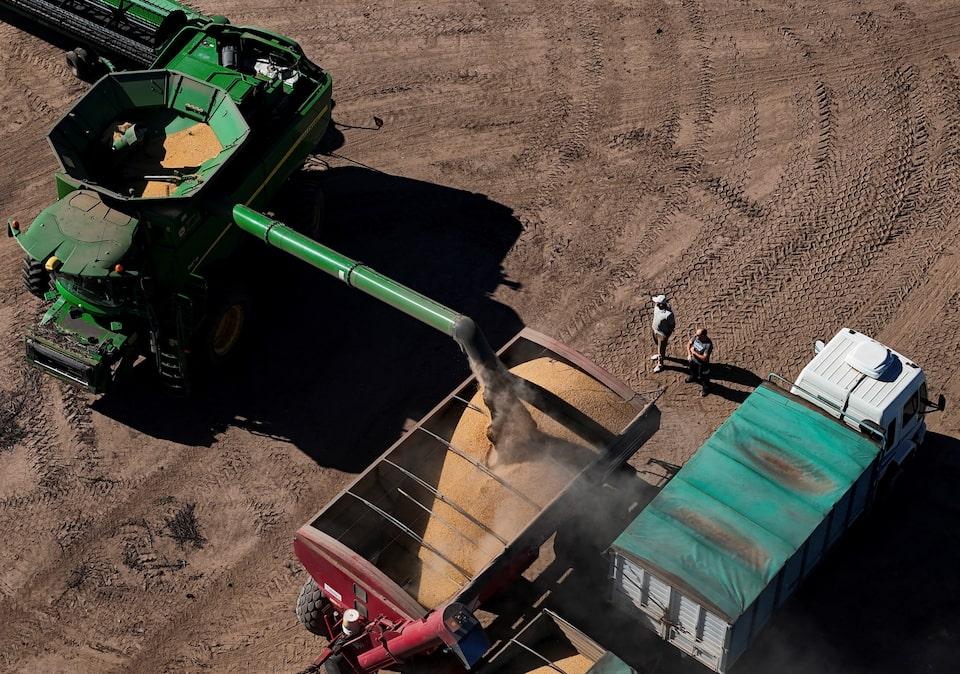
China buys 20 Argentine soybean cargoes after tax drop Most cargoes set for shipment in key period dominated by U.S. Analysts expect increased purchases ahead of policy expiry BEIJING/SINGAPORE, Sept 24 (Reuters) - Chinese importers kept up a hectic pace of Argentine soybean purchases after the South American supplier's move to abolish export taxes temporarily made its prices competitive, traders said on Wednesday. The purchases are chipping away at U.S. market share as its farmers begin harvesting a bumper crop shunned by China amid a trade war between the world's two largest economies. Sign up here. Since Argentina lifted its tax on Monday, Chinese buyers have booked about 20 cargoes, or roughly 1.3 million tons of Argentinian soybeans, two traders said. On Tuesday, Reuters reported that Chinese buyers had ordered at least 10 cargoes, with one trader putting the figure at 15 Panamax-sized cargoes of 65,000 metric tons each. U.S. soybeans have become prohibitively expensive for Chinese buyers, thanks to retaliatory tariffs imposed by Beijing in their trade war. "Essentially China will have enough beans without U.S. beans," said one trader at an international firm that ships beans to China and is one of the buyers of such cargoes. "Most of the cargoes are for November shipment and around 20% are for shipment next year from the new Argentinian crop that will be harvested from April." The traders spoke to Reuters on condition of anonymity, as the matter is a sensitive one. The purchases include a mix of old and new crops, priced at a premium of about $2 a bushel to the Chicago Board of Trade (CBOT) November soybean contract , the two Asian traders said. Argentina said the grain tax suspension will run through October or until declared exports reach $7 billion, a move that has driven Chinese soymeal futures lower. The continued purchases from Argentina are helping China fill more supply gaps during a period usually dominated by U.S. sellers, the traders added. Beijing has not yet booked any U.S. soybeans from its autumn harvest, traders have said. Chinese crushing margins for Argentine soybeans are attractive at about 200 yuan ($28) a ton, said Wang Wenshen, an analyst at Sublime China Information. "China is likely to further accelerate purchases of Argentine soybeans to fill the procurement gap from November to January before the October 31 deadline or the $7-billion quota limit," Wang said. "This will further reduce the market's reliance on U.S. soybeans." ($1=7.1188 Chinese yuan renminbi) https://www.reuters.com/world/china/china-expands-argentina-soybean-buying-20-cargoes-traders-say-2025-09-24/
2025-09-24 11:00
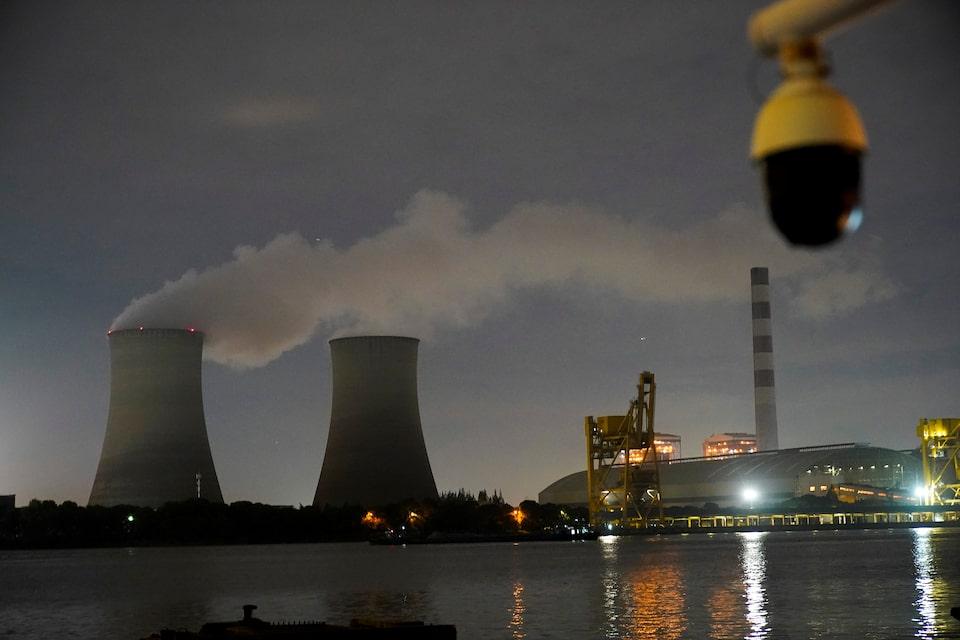
Britain, France, Germany launch process to reimpose UN sanctions on Iran But sanctions are unlikely to deter China's Iranian oil purchases Western sanctions' effectiveness eroding in global oil markets LONDON, Sept 24 (Reuters) - The looming revival of international sanctions on Iran is unlikely to curtail Tehran’s vital oil exports but could benefit Chinese refiners, offering them access to a larger share of discounted Iranian crude. Britain, France, and Germany launched a 30-day process on August 28 that will trigger the reimposition of U.N. sanctions , opens new tab on Iran, accusing Tehran of failing to abide by a 2015 deal with world powers aimed at preventing it from developing a nuclear weapon. Sign up here. Iranian and European diplomats met on Tuesday , opens new tab in New York for last-ditch talks to prevent the re-imposition of sanctions, though chances of averting a so-called "snapback" appear slim. The punitive measures, which are set to kick in at the end of the month, include an arms embargo, restrictions on ballistic missile testing and technology, asset freezes, travel bans and a ban on producing nuclear-related technology. The move will also offer the European Union and Britain legal basis to reimpose restrictions on Iran's banking, shipping and energy industries. The snapback could effectively spell the death of the 2015 nuclear deal, which was previously dealt a heavy blow when U.S. President Donald Trump ditched it in 2018, leading to the reinstatement of strict American sanctions on Iran. China and Russia have indicated they will not support the sanctions snapback. WHACK-A-MOLE Western sanctions on Iran have since 2010 targeted Iran's oil industry to pressure Tehran over its nuclear programme. The restrictions led to a decline in production, while crude exports dropped from around 2.2 million barrels per day in 2011 to less than 1 million bpd in 2014, according to data from the Federal Reserve Bank of St. Louis Under the 2015 deal, most of those sanctions were lifted, leading to a recovery in oil exports, which reached 1.85 million bpd in 2017. But following the withdrawal of the United States from the deal and the re-introduction of sanctions, Iranian exports quickly collapsed again to an all-time low of 444,000 bpd in 2020. Europe stopped buying Iranian crude in 2019. The impact of the U.S. restrictions has nevertheless progressively eroded as Iran, traders and buyers, particularly in China, developed a complex and opaque network to bypass the sanctions. The system includes a web of middlemen and shell companies, a growing fleet of aging, often uninsured tankers, ship-to-ship oil transfers in mid-ocean, and switching off vessels' tracking systems to make them harder to monitor. The U.S. government has vastly expanded the number of sanctions in recent years to target thousands of individuals, tankers, traders and Chinese refiners and ports in an attempt to limit Iranian exports. But these whack-a-mole efforts have had little and often short-lived impact on oil flows. LEVERAGE Since the 2020 lows, Iranian crude exports have gradually recovered, reaching 1.5 million bpd in 2024, of which nearly four-fifths were delivered to China, according to data from analytics firm Kpler. Exports have inched higher to 1.6 million bpd so far this year. The recovery in oil exports has offered Tehran vital income in recent years, even if its crude is believed to be sold at a discount to international prices. The oil and petrochemicals industry accounted for around a quarter of Iran's GDP in 2024. The sanctions snapback will add a new layer of complications for dealing with Iran, further muddying the water for anyone attempting to bypass them. As recent history has shown, though, those involved in sanction-evading will most likely figure out new ways to bypass any fresh hurdles. They could also put off some Asian buyers but are unlikely to deter China from continuing its oil purchases. In fact, Chinese refiners could benefit by picking up any unwanted Iranian barrels, potentially offering them further leverage to purchase Iranian oil at even larger discounts. EROSION Beijing, which opposes sanctions on Iran, has since 2022 stopped reporting official data on Iranian crude imports, probably to avoid Western scrutiny. China has in recent weeks displayed its lack of regard for Western and U.S. sanctions by importing several cargoes of liquefied natural gas from the heavily-sanctioned Russian Arctic LNG 2 facility in west Siberia. It is therefore unlikely to scale back purchases from Iran in the face of new sanctions. The erosion of the effectiveness of Western sanctions on Iran, as well as on Russia, is becoming a major feature in today's international oil and gas markets, creating a two-tiered system of compliant and non-compliant trading. The collapse of the 2015 deal and the return of sanctions is therefore unlikely to have significant impact on Iran's vital oil exports, which will move further into the shadows of international trade. Want to receive my column in your inbox every Monday and Thursday, along with additional energy insights and links to trending stories? Sign up for my Power Up newsletter here. Enjoying this column? Check out Reuters Open Interest (ROI), , opens new tabyour essential new source for global financial commentary. ROI delivers thought-provoking, data-driven analysis. Markets are moving faster than ever. ROI , opens new tab can help you keep up. Follow ROI on LinkedIn , opens new tab and X. , opens new tab https://www.reuters.com/markets/commodities/iran-sanctions-snapback-offers-chinese-oil-buyers-lucrative-boost-2025-09-24/

2025-09-24 11:00
LITTLETON, Colorado, Sept 24 (Reuters) - Climate watchers need to look beyond China to gain a full read on global emissions trends tied to energy extraction and generation. To be sure, China has played an outsized role in driving global energy sector emissions to record highs for decades, and generates far more energy-related emissions than any other nation. Sign up here. But while China has been the chief driver of energy emissions trends so far this century, other nations including India, Indonesia and Vietnam will play a key role in determining future pollution trends. That means any attempts to gauge the potential trajectory of global energy emissions must include the discharge patterns of a widening group of nations beyond China. THE DIRTY DOZEN Given China's clout as the world's largest energy consumer and power producer, it must retain a central role in efforts aimed at measuring and predicting global emissions trends. However, several other nations merit inclusion in such efforts given the steady swell in their collective energy-related pollution. Indeed, eleven other nations stand out globally as key current and potential drivers of worldwide energy emissions trends given their track record of steadily boosting pollution tied to energy production and use. Between 2019 and 2024, 12 countries consistently lifted their annual energy-related emissions by at least 5 million metric tons of carbon dioxide (CO2) per year, according to data compiled by the Energy Institute. In descending order of annual emissions growth during 2019 to 2024, those nations are: China, India, Indonesia, Russia, Iran, Vietnam, United Arab Emirates, Malaysia, Turkey, Uzbekistan, the Philippines and Bangladesh. Collectively, this Dirty Dozen lifted their total energy emissions to record highs in nine out of the past 10 years, with the exception being in 2020 when extensive COVID-19 lockdowns stifled global energy output and use. In 2024, the Dirty Dozen nations spewed out a collective 19.06 billion tons of CO2 from energy extraction and generation, which compares to a discharge total of 16.4 billion tons of CO2 from the rest of the world. The Dirty Dozen discharge total accounted for a record 54% of all energy-related emissions in 2024, and looks set to swell further in the years ahead given the heavy reliance on high-polluting fuels for power generation in several member nations. KEY COUNTRIES Between 2019 and 2024, the Dirty Dozen nations lifted their annual energy-related pollution by an average of 3% a year. Over that same period, global emissions from energy rose by an average of around 0.7% a year, while energy emissions outside the Dirty Dozen declined by an average of 1.4% a year. This emissions divergence between the Dirty Dozen and the rest of the world highlights the impact that this group has over worldwide energy pollution trends, and underscores why they are such a critical group for climate trackers to monitor. During the 2019 to 2024 window, China steadily emitted the highest tonnage of CO2 tied to its energy sector, averaging around 10.5 billion tons a year. China's average annual growth in energy emissions during 2019-2024 was 267 million tons of CO2, which was by far the highest among all nations. However, the rate of growth in China's discharge was among the slowest among the Dirty Dozen since 2019, which indicates that other nations have been accelerating their pollution trends just as China has been reining it in. India ranks second in the Dirty Dozen in terms of annual energy emissions, which averaged 2.6 billion tons a year between 2019 and 2024. Russia placed third with around 1.6 billion tons a year of energy emissions, followed by Iran with around 680 million tons. FAST GROWTH In terms of annual percentage growth in emissions, Indonesia tops the table with a roughly 7% yearly expansion since 2019. Vietnam (6% a year) and Bangladesh (5% a year) have also posted strong growth rates over the past five years or so, while India, Uzbekistan, United Arab Emirates and the Philippines all posted annual growth rates of around 4%. With China's annual emissions growing at 2.6% since 2019, it is clear that other members of the Dirty Dozen have the potential to drive collective discharge steadily higher even if China manages to start cutting pollution in the coming years. Countries such as India, Indonesia, Vietnam and the Philippines in particular have high-polluting potential, given that their current power systems are highly dependent on coal as the primary fuel source. Russia, United Arab Emirates, Iran and Uzbekistan are equally reliant on natural gas for their power systems, and are also unlikely to be able to make drastic cuts to fossil fuel dependence for energy generation any time soon. This all means that global emissions from energy extraction and production will likely keep climbing over the coming years, even if China manages to turn the corner and embark on a steady emissions-reduction path later this decade. Climate trackers who too narrowly focus on China as a proxy for global emissions trajectories are at risk of missing this important trend, and need to keep the Dirty Dozen in mind. The opinions expressed here are those of the author, a columnist for Reuters. Enjoying this column? Check out Reuters Open Interest (ROI), your essential new source for global financial commentary. ROI delivers thought-provoking, data-driven analysis of everything from swap rates to soybeans. Markets are moving faster than ever. ROI can help you keep up. Follow ROI on LinkedIn , opens new tab and X , opens new tab. https://www.reuters.com/markets/commodities/using-dirty-dozen-track-global-energy-emissions-potential-2025-09-24/
2025-09-24 10:51
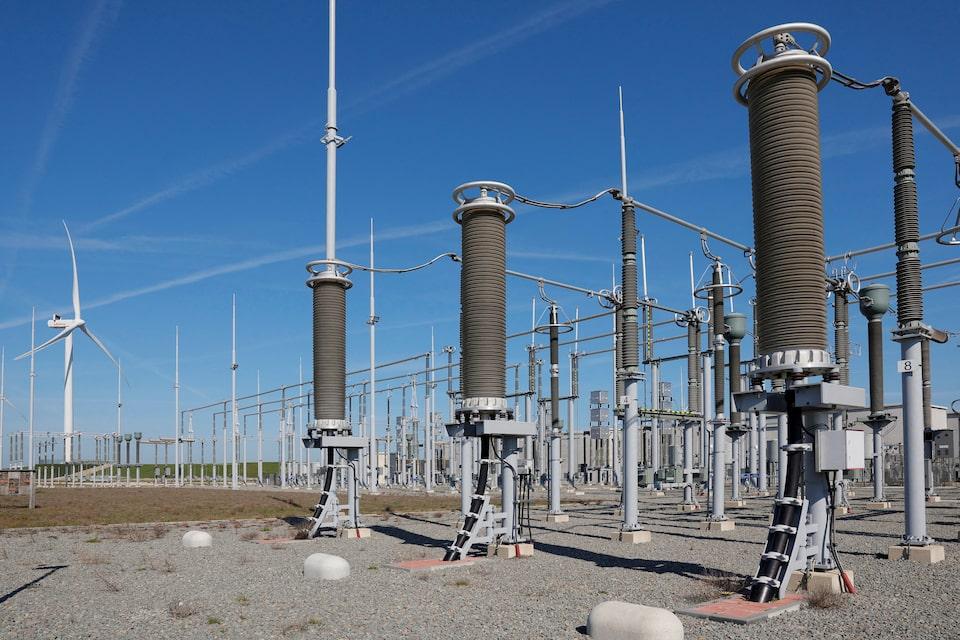
Buyers are APG, Norges Bank, and Singapore's GIC Sale follows failed attempt to sell to Berlin last year THE HAGUE/LONDON, Sept 24 (Reuters) - The Dutch government is selling 46% of power grid operator TenneT's German unit to a consortium of investors for up to 9.5 billion euros ($11.3 billion), it said on Wednesday, kicking off the separation from a business it has been trying to divest for years. The sale to a consortium of Dutch pension fund manager APG, Norges Bank and Singapore's sovereign wealth fund GIC comes as funding requirements for power lines soar across the continent, forcing owners of such assets to seek fresh capital elsewhere. Sign up here. It follows an unsuccessful attempt to sell TenneT Germany to the German government last year. Under the agreement, the consortium will take a stake of 46% in TenneT Germany via a private placement of new shares by the Dutch government. With more than 14,000 kilometres (8,699 miles) of power lines, TenneT Germany is the country's biggest operator of high-voltage transmission grids. TenneT is also the sole grid operator in the Netherlands. The consortium's investment will provide TenneT Germany with 8.5 billion euros it needs to sustain its credit rating and an extra buffer to limit risks for the Dutch state, the Dutch finance ministry said. APG'S STAKE IN TENNET GERMANY TO BE 11% APG said in a statement it would acquire about an 11% stake in TenneT Germany. Norges said it has a 21.8% stake, which would leave GIC with the balance of the 46%. APG CEO Ronald Wuijster told Reuters it had been working on the deal for more than a year and many investments were needed in European infrastructure. "We need to work very hard to make our infrastructure better and energy transition is a very important element of that," he said. "This asset offers us a relatively secure, stable cash flow that is also of great interest for the members of the pension fund," he said, adding that APG sees Germany as a stable and reliable country. Wuijster said the fund was looking to get a board position. Germany continues to consider a minority stake in TenneT Germany, Dutch finance minister Eelco Heinen said, after such plans fell apart last year under the previous government. Heinen said he expected more clarity on possible German investments before the end of the year. Sources told Reuters in May that a sale of new shares in TenneT Germany could raise up to 12 billion euros, either via a private placement or an initial public offering in what could become one of Europe's biggest deals this year. In a sign of how big funding needs for grid expansion are, TenneT Germany's smaller peer Amprion earlier this month secured 3.2 billion euros from Apollo Global Management (APO.N) , opens new tab in a deal with RWE (RWEG.DE) , opens new tab. Germany, which already holds minority participation in high-voltage power grids TransnetBW (EBKG.DE) , opens new tab and 50Hertz (ELI.BR) , opens new tab, has in the past expressed interest in buying a 25% stake in TenneT Germany if there is an official sales process. ($1 = 0.8494 euros) https://www.reuters.com/business/energy/dutch-government-sells-46-tennet-germany-investors-113-billion-2025-09-24/
2025-09-24 10:44
MUMBAI, Sept 24 (Reuters) - The Indian rupee ended nearly flat on Wednesday as likely intervention by the Reserve Bank of India helped stave off pressure on the local unit amid worries over steep U.S. tariffs and a visa fee hike. The rupee closed at 88.69 against the U.S. dollar, a whisker away from its all-time low of 88.7975 hit on Tuesday. Sign up here. Traders said that the central bank likely intervened across segments such as non-deliverable forwards (NDF), currency futures and the OTC spot market to help support the rupee. The RBI did not immediately respond to an email seeking comment. The central bank "was present everywhere, leading to muted price-action" despite lingering pressure on the Indian currency amid a broad-based pick up in dollar strength, a trader at a state-run bank said. While dollar demand was relatively subdued compared to Monday, "the rupee's path of least resistance seems to be towards further weakness," the trader added. The central bank has stepped up its presence in the offshore NDF market to support the rupee, Reuters reported earlier this month. "The RBI appears to be allowing gradual weakening of the rupee, intervening selectively to smooth volatility rather than attempting to defend a fixed level," said Abhishek Goenka, chief executive at FX advisory firm IFA Global. Dollar demand linked to gold imports coinciding with concerns over the impact of the H-1B visa fee hike has added to pressure on the rupee, according to bankers. India's benchmark equity indexes, the BSE Sensex (.BSESN) , opens new tab and Nifty 50 (.NSEI) , opens new tab fell about 0.5% each on Wednesday, with the IT index (.NIFTYIT) , opens new tab down 0.7%, reflecting investor nervousness about the impact of the change in the H1-B visa fee. The dollar gained 0.3% against a basket of peers and was last at 97.6 while most Asian currencies dipped. India's benchmark 10-year bond yield, meanwhile, nudged higher to 6.486%. (This story has been refiled to fix a typographical error in paragraph 2) https://www.reuters.com/world/india/rupee-shielded-by-central-bank-intervention-even-pressure-lingers-2025-09-24/
2025-09-24 10:35
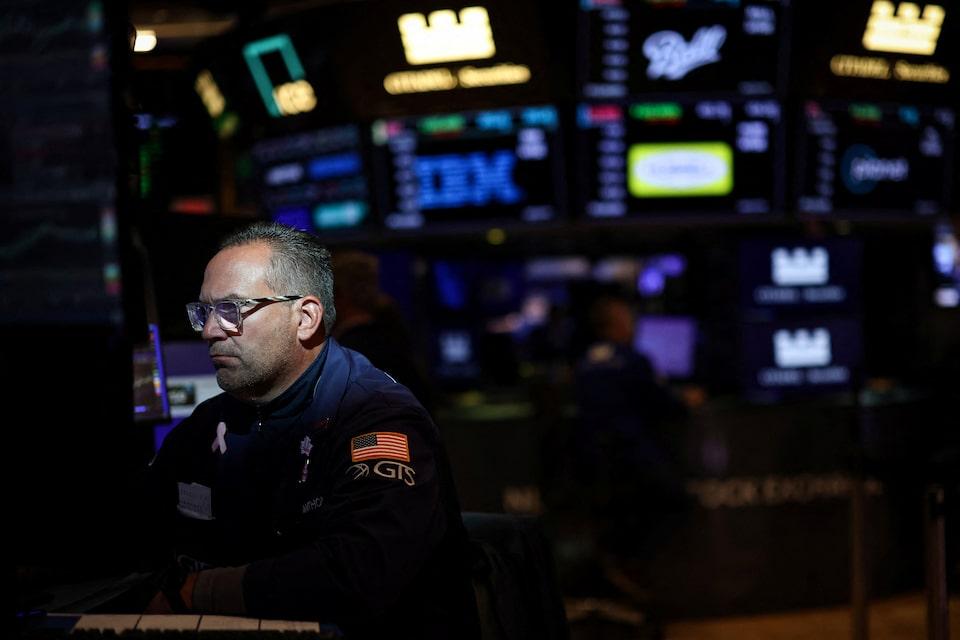
LONDON, Sept 24 (Reuters) - What matters in U.S. and global markets today By Samuel Indyk, Equities Reporter, Finance and Markets Breaking News, EMEA Sign up here. Wall Street snapped a three-day streak of record closes as Federal Reserve Chair Jerome Powell struck a measured tone , opens new tab on future rate cuts, balancing inflation risks with a weakening labor market. His remarks, which offered little clarity on the timing of further easing, triggered a broad pullback in equities, particularly in tech. Asian markets rebounded overnight, led by Chinese AI enthusiasm, while U.S. futures edged higher, suggesting a tentative rebound. * Powell reiterated the Fed's delicate balancing act , opens new tab between inflation and employment, calling the policy outlook “a challenging situation”. While he left the door open for more rate cuts, he gave no timeline, and notably described equities as “fairly highly valued”. Traders are still pricing in about a 95% chance of a rate cut at the October meeting. * The Nasdaq fell nearly 1% as Nvidia dropped 2.8%, reversing gains from its OpenAI investment announcement. Amazon, Microsoft, and Apple also declined. The S&P 500 lost 0.6%, its biggest one-day drop in three weeks, while the Dow slipped 0.2%. * Meanwhile, Boeing shares rose 2% after securing an $8 billion order , opens new tab from Uzbekistan Airways, helping cushion the Dow’s decline. Micron rose after hours on upbeat earnings and guidance. * Asian stocks rebounded on Wednesday, with Hong Kong’s STAR 50 Index up 3.6%, led by a 9% rise in Alibaba after it unveiled its largest AI model , opens new tab. European shares are a touch softer. Today's Market Minute * In a rhetorical shift, U.S. President Donald Trump said he believed Ukraine could retake all its land occupied by Russia on Tuesday, in a social media post following a combative, wide-ranging speech to the U.N. General Assembly that leveled scathing criticism of world leaders. * Trump on Tuesday also scrapped a meeting with top congressional Democratic leaders to discuss government funding, raising the risk of a partial government shutdown beginning next week , opens new tab. * The consensus among economists is that Trump's tariff burden has so far been shouldered by U.S. companies and that consumers have got off relatively lightly, although, writes ROI markets columnist Jamie McGeever, these scales are widely expected to tip the other way in the coming months. * OpenAI, Oracle and SoftBank <9984.T> on Tuesday announced plans for five new artificial intelligence data centers in the United States to build out their ambitious Stargate project. , opens new tab * Jimmy Kimmel returned to U.S. late-night television on Tuesday defending political satire against Trump administration "bullying", six days after his on-air remarks about the murder of right-wing activist Charlie Kirk led Walt Disney to suspend his show. * The looming revival of international sanctions on Iran is unlikely to curtail Tehran’s vital oil exports but could benefit Chinese refiners, offering them access to a larger share of discounted Iranian crude. Read the latest from ROI energy columnist Ron Bousso. Chart of the day While much has been made of the performance of the so-called "Magnificent 7" since 2022, European defense stocks have had an even more impressive rally, led by an almost 2,000% rise in Europe's biggest ammunition maker Rheinmetall. Europe's index of aerospace and defense companies has risen threefold since Russia's invasion of Ukraine. Suppliers of jets, tanks and shells tend to do well when there are ongoing conflicts. And while Trump on Tuesday asserted that he had already ended seven wars since becoming president for the second time, the war in Ukraine remains a trickier puzzle to solve. Today's events to watch Want to receive the Morning Bid in your inbox every weekday morning? Sign up for the newsletter here. You can find ROI on the Reuters website , opens new tab, and you can follow us on LinkedIn , opens new tab and X. , opens new tab Opinions expressed are those of the author. They do not reflect the views of Reuters News, which, under the Trust Principles , opens new tab, is committed to integrity, independence, and freedom from bias. https://www.reuters.com/business/finance/global-markets-view-usa-2025-09-24/